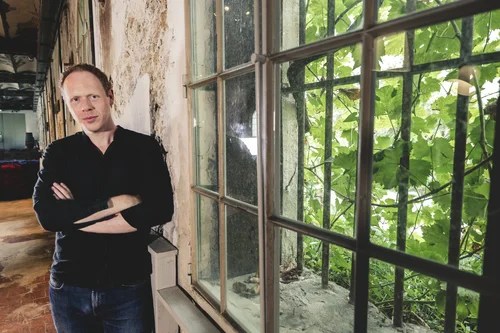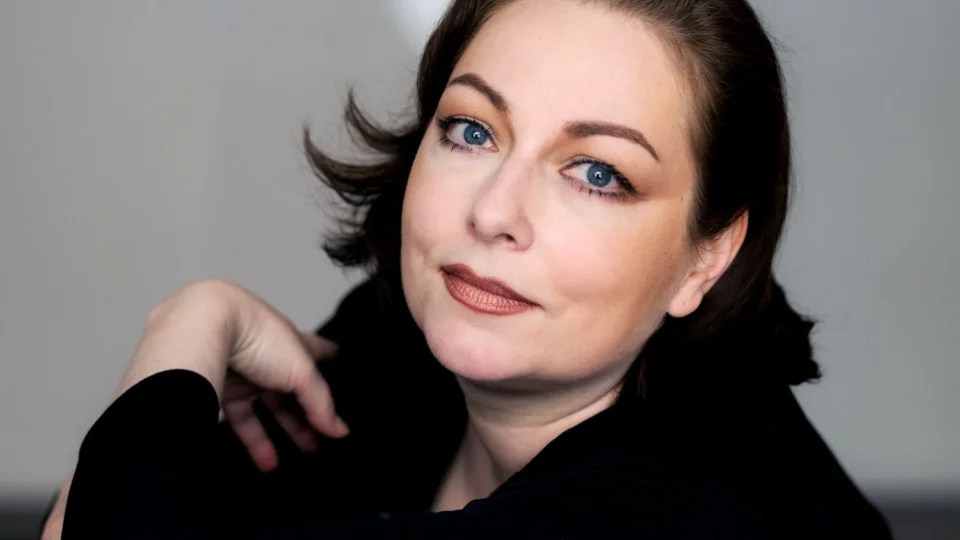
Dorothea Röschmann, soprano & Joseph Middleton, piano Saturday 1 November 2025, 7.30pm Bliss Song Series, Pembroke Auditorium, Cambridge
Don’t miss this exceptional recital by Grammy Award-winning soprano Dorothea Röschmann and world-renowned pianist Joseph Middleton, featuring an evocative programme of Schubert, Brahms, Schoenberg and Weill.
Celebrated for her “superbly expressive and richly coloured” voice (The Guardian), Röschmann is one of the most compelling recitalists of her generation. Her artistry brings rare emotional depth to repertoire ranging from the Romantic to the cabaret-influenced songs of 20th-century Berlin. She is joined by Joseph Middleton, praised by The New York Times as “the perfect accompanist” and Artistic Director of the Bliss Song Series—the East of England’s leading platform for song.
Experience two of the world’s finest recital artists in an evening of profound storytelling, wit, and beauty.
Here they are in concert at the Leeds Lieder Festival in 2022:
Their program on Saturday is as follows:
SCHUBERT
Romanze aus Rosamunde
Des Mädchens Klage
Auf dem Wasser zu singen
Der Tod und das Mädchen
Die junge Nonne
Nachtstück
Nacht und Träume
Der Zwerg
BRAHMS
Vier ernste Gesänge
– Interval –
SCHOENBERG
Galathea
Gigerlette
Der genugsame Liebhaber
Mahnung
Arie aus dem Spiegel von Arkaien
KURT WEILL
Berlin im Licht
Je ne t’aime pas
Klops Lied
Nana’s Lied
Youkali
🎟 Student tickets: £5 + £2.50 booking fee
Pre-concert talk: 6.45pm Dr Jane Hines, specialist in German Romantic poetry, Gonville & Caius College Dr Jane Hines | Gonville & Caius
Published post no.2,703 – Thursday 30 October 2025
Carolyn Sampson (soprano, above), Joseph Middleton (piano, below)
Songs and piano music by Robert and Clara Schumann – full list at bottom of review
Wigmore Hall, London Wednesday 14 February 2024
by Ben Hogwood Photos by Marco Borggreve (Carolyn Sampson) and Sussie Ahlberg (Joseph Middleton)
This was a Valentine’s Day concert with a difference. No orchestra, no Romeo & Juliet – but rather an intimate presentation of a musical marriage, that of composer / pianists Robert and Clara Schumann, whose relationship has been increasingly under the microscope in the past few years.
This is a good thing, for when Robert and Clara married on 12 September 1840 the concept of equality within marriage, let alone classical music, was very different indeed. Robert, in the outpouring of song that he experienced in that year, completed the song cycle Frauenliebe und -leben, to poetry by Adelbert von Chamisso attempting a depiction of marriage from a woman’s perspective. It is certainly not how we recognise the institution of marriage today, which soprano Carolyn Sampson acknowledged in a Guardian article around the release of herAlbum für die Frau, the title of this concert, in 2021. In that article she put forward a strong case for continuing to sing the cycle, identifying with a good deal of the verse and even more of the music – but with her musical partner, pianist Joseph Middleton, she has recast the cycle.
Now the Schumanns’ marriage is given in four parts – love, marriage, parenthood and death – viewed through the prism of Frauenliebe but balanced through songs by Clara and Robert, or one of the latter’s piano pieces. Each song from the cycle had two accomplices, the context achieved through what must have been a painstaking selection process that, in this concert, bore much fruit. The coherent end piece was bisected by well-chosen text from the couple’s diaries and more.
With sadness inevitably looming towards the end it was a difficult structure for the duo to pitch, but they made it work through selections that made emotional sense and which, crucially, were harmonically linked. Sampson’s clarity of line was the clincher, her ability to carry not just a melody but the words with great diction, while the same could be said of Middleton’s phrasing, which as Sampson said in the introduction ‘could express what words cannot’. The postlude from Frauenliebe was the keenest example, exquisitely played.
The song cycle itself contained a great deal of emotion, especially in Du Ring an meinem Finger (You ring on my finger), where Sampson’s powerful crescendo was all-consuming. Clara’s songs proved the ideal complement, a little more Schubertian in style perhaps but harmonically more daring, often ending in suspension.
The first half included five settings of Rückert and felt slightly giddy in the intoxication of falling in love and wedded bliss, almost too good to be true – and so it proved, with the settings of Heinrich Heine bringing with them furrowed brows and family responsibilities, the music increasingly worrisome. Robert and Clara had eight children in all, and this section gave a glimpse of the weight of responsibility that would surely have left.
The masterstroke of this program, however, was not to finish with the end of the song cycle but to offer Robert’s Requiem, from his 6 Gedichte von N Laneu und Requiem Op.90, as a much-needed consolation, then the piano piece Winterzeit I, from the Album für die Jugend. Finally, as an encore, Clara’s Abendstern, a beautiful postscript with her love taken up to the stars, turned our gaze upwards once more.
It capped an unexpectedly moving account of two lives intertwined, offering a timely reminder of Clara’s torment at her husband’s untimely demise. One of the power couples of 19th century music they must have been, but this was a tender account of two lives entwined and enriched by beautiful song.
You can hear Album für die Frau, as released on BIS, below:
Carolyn Sampson and Joseph Middleton performed the following music:
Robert Schumann Langsam und mit Ausdruck zu spielen from Album für die Jugend Op. 68 (piano, 1848) Clara Schumann Liebst du um Schönheit Op. 12 No. 2 (1841) Robert Schumann Seit ich ihn gesehen from Frauenliebe und -leben Op. 42 (1840) Volksliedchen Op. 51 No. 2 (1840) Clara Schumann Liebeszauber Op. 13 No. 3 (1840-3) Robert Schumann Er, der Herrlichste von allen from Frauenliebe und -leben Op. 42 Clara Schumann An einem lichten Morgen from 6 Lieder aus Jucunde Op. 23 (1853) Warum willst du and’re fragen Op. 12 No. 3 (1841) Robert Schumann Ich kann’s nicht fassen, nicht glauben from Frauenliebe und -leben Op. 42 Clara Schumann Die stille Lotosblume Op. 13 No. 6 (1840-3) Robert Schumann Du Ring an meinem Finger from Frauenliebe und -leben Op. 42 From Myrthen Op. 25 (1840): Lied der Braut I • Lied der Braut II Glückes genug from Kinderszenen Op. 15 (piano, 1838) Interval Robert Schumann Helft mir, ihr Schwestern from Frauenliebe und -leben Op. 42 Die Lotosblume from Myrthen Op. 25 Lust der Sturmnacht from Kerner Lieder Op. 35 (1840) Süsser Freund, du blickest from Frauenliebe und -leben Op. 42 Hochländisches Wiegenlied from Myrthen Op. 25 Der Sandmann from Lieder-Album für die Jugend Op. 79 (1849) Kind im Einschlummern from Kinderszenen Op. 15 (piano) An meinem Herzen, an meiner Brust from Frauenliebe und -leben Op. 42 Ritter vom Steckenpferd from Kinderszenen Op. 15 (piano) Dein Angesicht Op. 127 No. 2 (1840) Nun hast du mir den ersten Schmerz getan from Frauenliebe und -leben Op. 42 Requiem from 6 Gedichte von N Lenau und Requiem Op. 90 (1850) Winterzeit I from Album für die Jugend Op. 68 (piano) Clara Schumann Abendstern
Published post no.2,088 – Thursday 15 February 2024
There is a famous, unattributed quote that ‘writing about music is like dancing about architecture’. How, then, to interpret a concert in celebration of a magazine? The conclusion, when that magazine is 100 years old, is that surely its writers are doing something right!
The magazine is the esteemed Gramophone, formed in 1923 and reaching its centenary without a break, not even an issue missed during the Second World War. Gramophone has reflected the growth of the classical record industry, proving something of a bible for classical music listeners and buyers, with its recommendations of recordings and interviews / thought pieces to put them in context. Music old and new is covered, and not all of it classical – indeed, as we found out during James Jolly’s revealing and entertaining narration, the magazine reviewed pop music in the 1960s.
Jolly is the magazine’s Editor in Chief, and has been with the magazine since starting as editorial assistant in 1985. He gave a debt of gratitude to the Gramophone founder Sir Compton Mackenzie and the Pollard family, where the large part of the night’s story lay. Modestly, the magazine did not dwell on their current state, which would have been easy – for Gramophone is one of those rare things, a publication where subscription is done without the bat of an eyelid, and each issue read cover to cover – either physically or online, where you can enjoy the entirety of its archive in digital form.
How to celebrate such a publication in a concert? Choosing the Wigmore Hall was a smart move, honing resources and ensuring the celebrations were done with quality as well as quantity. The move did of course eliminate larger scale forms – opera and orchestral – but it retained the magazine’s sense of musical exploration through five centuries of music.
Violinist Alina Ibragimova and pianist Cédric Tiberghien began with a concentrated performance of Debussy’s Violin Sonata, completed just six years before the magazine’s first edition. This was a thoughtful and virtuosic performance, Ibragimova fully inhabiting each phrase while Tiberghien successfully harnessed Debussy’s coloristic effects and sleights of harmony. The spectre of war was close at hand – as it was in Gramophone’s early years.
Next up was countertenor Iestyn Davies, a late replacement for soprano Fatma Said. It was a privilege to hear his Purcell, refracted through the eyes of modern composers, showing how access to the composer’s music has boomed since Gramophone started. Davies had a particularly arresting delivery for Britten’s Lord, what is man, before a deeply passionate vocal in the Thomas Adès setting By beauteous softness, Malcolm Martineau phrasing its postlude with exquisite shaping. Britten reappeared for a jubilant I’ll sail upon the Dog Star.
In Gramophone’s tenure the guitar has established itself as a central part of the classical repertoire. We heard two very different soloists – Milos in Mathias Duplessy’s bluesy Amor Fati, which though originating in France seemed to be looking over the Spanish border on occasion. Its full bodied chords were brilliantly declaimed. Sean Shibe, meanwhile, cast his eyes further east as partner for tenor Karim Sulayman in three songs of Arabic origins. Here was a striking alliance, Shibe’s exquisitely quiet playing a match for the tenor’s husky delivery. The two finished each other’s sentences, reflecting a musical chemistry of unusual quality found on their recent album Broken Branches.
We also heard three very different pianists, dazzling with virtuosity but also showing impeccable control. Nearest to the edge was Jean-Efflam Bavouzet, whose compelling excerpts from Ravel‘s suite Miroirs revealed rougher contours. These suited the storm of Une barque sur l’océan, while Alborada del gracioso was rustic and danced at quite a pace, the pianist relishing its whirling figurations.
Martin James Bartlett showed a painter’s touch to a pair of Liszt arrangements – the composer’s keyboard paraphrase of his son-in-law Wagner’s Liebestod especially fine. Bartlett’s phrasing was immaculate, each tune clear as a bell in spite of the myriad accompanying colours. The Schumann transcription Widmung also retained a songful air, powerful at its climactic passages.
Bisecting the keyboard soloists was soprano Carolyn Sampson and regular partner Joseph Middleton. Sampson will shortly reach her 100th album release, a remarkable achievement in a discography adorned with Gramophone accolades. We heard a well-chosen and varied selection taking us from Purcell and Britten to Saariaho via Poulenc and Régine Poldowski, the latter composer indicative of record companies’ efforts to include more female composers at last. Daughter of Polish composer Henryk Wieniawski, Poldowski made a very strong impression with L’heure exquise, while Sampson gave a ringing endorsement for Saariaho’s Parfum de l’instant, due in a future recording. Here she was aided by a fountain of cascading treble notes from Middleton.
Finally we heard Bernard Chamayou in a tour de force account of Liszt’s Venezia e Napoli, an apt choice in its inclusion of the city of Naples, looking out to a former home of Sir Compton Mackenzie on the island of Capri. Liszt added the Venezia e Napoli triptych as a footnote to the second book of his cycle Années de Pèlerinage, reflecting the impact of his travels around Europe as a virtuoso pianist. Its music is far from trivial and Chamayou, who recorded the complete cycle in 2010 brought unusually clear definition to the undulating figures of Gondoleria. The Rossini-themed Canzone was deeply intoned, majestically voiced with a sense of wonder projecting right to the back of the hall. Finally the Tarantella was a virtuoso affair, but Chamayou never lost sight of the thematic material in the tempestuous surroundings.
It was the ideal way to conclude a high-quality concert, though an encore saw the assembled artists sing ‘Happy birthday’ to the publication that has served them so well. Here’s to another 100 years, Gramophone!
Purcell, realised Britten Lord, what is man (1945); Purcell, realised Adès By beauteous softness (2017); Purcell, realised Britten I’ll sail upon the Dog Star (1943)
Ravel Miroirs: Une barque sur l’océan; Alborada del gracioso (1904-5)
Jean-Efflam Bavouzet (piano)
Trad arr. Sulayman & Shibe La prima vez; Arab-Andalusian Muwashsha arr. Shibe Lamma Bada Yatathanna; Sayed Darwish arr. Shibe & Sulayman after Ronnie Malley El helwa di
Karim Sulayman (tenor), Sean Shibe (guitar)
Wagner arr. Liszt Isoldens Liebestod (1867); Schumann arr. Liszt Widmung (1848)
Martin James Bartlett (piano)
Purcell realised Britten Sweeter than roses (c1945); Britten Fancie (1965); Poulenc Fancy (1959); Régine Poldowski L’heure exquise (1917); Saariaho Parfum de l’instant (from Quatre Instants) (2002)
Carolyn Sampson (soprano), Joseph Middleton (piano)
Louise Alder (soprano, above), Joseph Middleton (piano, below)
Beach 3 Browning Songs Op. 44 (1889-1900) Clara Schumann Er ist gekommen Op. 12 No. 1; Warum willst du and’re fragen Op. 12 No. 3; Liebst du um Schönheit Op. 12 No. 2 (1841) Lili Boulanger Clairières dans le ciel (excerpts): Elle était descendue au bas de la prairie; Vous m’avez regardé avec toute votre âme; Au pied de mon lit; Nous nous aimerons; Si tout ceci n’est qu’un pauvre rêve (1913-14) Alma Mahler Laue Sommernacht (1910); Ich wandle unter Blumen (1910); Licht in der Nacht (1915) Libby Larsen Try Me, Good King: Last Words of the Wives of Henry VIII (2000)
review of online broadcast by Ben Hogwood Picture of Louise Alder (c) Gerard Collett
Soprano Louise Alder and pianist Joseph Middleton are renowned for consistently original programming, and this recital for a BBC Radio 3 Lunchtime Concert at the Wigmore Hall recital was no exception. Assembling songs by five women composers, they offered a fascinating juxtaposition of style and text setting, offering further proof that the music of Clara Schumann and Alma Mahler need no longer operate in the shadows of their husbands.
Given the freshness of the air in Southern England it was entirely appropriate that the pair should begin with a vibrant song from Amy Beach, The year’s at the spring. The first in a trio of Robert Browning settings, it had a sprightly tread, in contrast to the Ah, Love, but a day! of Beach’s short cycle, where ‘summer has stopped’, which found the singer in a worrisome state but easily negotiating her higher range. The third song, I send my heart up to thee, was subtly prompted by Middleton’s arpeggiated piano
The Schumanns’ year of song was not just exclusive to Robert, with Clara publishing three settings of Friedrich Rückert that year. They made a powerful impact in this concert, with a tempestuous account of Er ist gekommen (He came in storm and rain). There was an intimate air to Warum willst du and’re fragen (Why enquire of others), tinged with longing and sung by Alder with a beautiful, natural tone. Liebst du um Schönheit (If you love for beauty) was lost in love, prompted by Middleton’s easily flowing piano.
In her all too brief life, Lili Boulanger gained for herself a reputation as a vocal composer of impressive standing, a view boosted by this quintet taken from Clairières dans le ciel, settings of 13 poems by Francis Jammes. When singing of the ‘girls who are too tall’ in Elle était descendue au bas de la prairie (She had reached the low-lying meadow), Alder soared to the heights, while the pair enjoyed Boulanger’s harmonically elusive writing, Middleton upholding the tension beautifully in Vous m’avez regardé avec toute votre âme (You gazed at me with all your soul).
Au pied de mon lit (At the foot of my bed) stood out as one of the most memorable songs of the recital. A character picture, it was vividly painted by the pair before a turbulent and passionate episode, notable for Alder’s sublime vibrato control at the end. The anticipation of Nous nous aimerons (We shall love each other) hung heavy on the air, with appropriately rich harmonies, before the singer’s lower range brought rich colour and notable control to the slow Si tout ceci n’est qu’un pauvre rêve (If all this is but a poor dream).
We then heard a trio of Alma Mahler settings, strongly chromatic and – in the case of Laue sommernacht (Mild summer night) – particularly sultry. The Heine setting Ich wandle unter Blumen ( I wander among flowers) was short but urgent, before a second setting of Bierbaum, Licht in der Nacht (A nocturnal light) brought us back to earth for deep contemplation. The song rose briefly to acknowledge the rapturous brightness of the star ‘above the house of our Lord Jesus Christ’ before sinking into the dark lower end of the piano once again.
Libby Larsen’s song cycle Try Me, Good King took as its inspiration the last words of the five executed wives of Henry VIII, giving Alder the opportunity to characterise each of the fated women. She did so with impressive power and guile, Katherine of Aragon hanging on high above a worrisome chord, with Anne Boleyn then fraught with trouble. As with the earlier songs Alder’s body language was a powerful visual aid, taking Boleyn’s words ‘Try me’ up to the very skies above. Larsen’s setting for Jane Seymour exhibited a special radiance, while Anne of Cleves was given a resolute if ultimately skewed march. The final Katherine Howard proclaiming her innocence to ultimately deaf ears, insisting her innocence before really scaling the heights of anguish.
As an encore, Alder and Middleton gave us Florence Price’s Night, a chance for the soprano to spread her wings with longer phrases. Perhaps surprisingly there was a hint of Richard Strauss here, enjoyed in the piano part by Middleton – the song capping an hour of discovery and vivid storytelling.
For information on Louise and Joseph’s album of French song on Chandos Records, Chère Nuit, click here
Carolyn Sampson (soprano, above), Joseph Middleton (piano, below)
Wigmore Hall, Friday 14 February 2020 (lunchtime)
Review and guide by Ben Hogwood
Photo credit Marco Borggreve
Once best known for her interpretations of Baroque music, Carolyn Sampson is revelling in the world of song. With musical partner Joseph Middleton painting pictures from the piano, she has made a number of attractive releases for the BIS label – of which The Contrast is the latest.
This Wigmore Hall concert doubled as the album launch event, and was programmed with a wide range of responses to settings of English text. The pair began with Sir William Walton’s multi-poet cycle A Song for the Lord Mayor’s Table, reminding us just how different London was when this was written in 1962. The balance was tricky in The Lord Mayor’s Table itself, where there is a lot going on in the piano part, but Sampson carried her line with verve. Her accent on Wapping Old Stairs was well judged for subtly comedic effect, while Holy Thursday cast a spell and Rhyme ended the cycle with a flourish.
The songs of Roger Quilter can really blossom in the right hands, and Sampson sang this selection of five beautifully. The flowing My Life’s Delight and softer By a Fountainside showed off her natural delivery, Middleton responding with lovingly caressed accompaniment. Dream Valley was a beautiful reverie as dappled sunlight shone across the Wigmore Hall, while the Arab Love Song was urgent and fleet-footed, while Fair House of Joy ended the selection with a winning smile.
Huw Watkins wrote his Five Larkin Songs for Sampson, and was present for this powerfully affecting performance. The challenge of setting Larkin’s occasionally bleak verse is realised with music of passion and dramatic impact, and as she said from the stage, Sampson clearly loves to sing the songs. The wandering piano line of Who called love conquering? contrasted with the awkward shifts in the soprano line, both of which were handled extremely well. Sampson’s ringing delivery brought expressive power to Love Songs in Age, as did her instinctive use of vibrato. The end of Larkin’s wry poem Money, ‘it is intensely sad’, left a strong aftertaste, while Dawn showed a hint of Britten in its setting. The delivery of the last line, ‘How strange it is for the heart to be loveless, and as cold as these’, made an impression with its completely (and deliberately) flat tone.
Finally we heard five songs from Frank Bridge, whose contribution in this area is still underrated. That is in spite of heartwarming songs such as Go not, happy day, which was full of smiles in this performance, bubbling over with good feeling. Adoration showed of a sumptuous vocal tone, while Come to me in my dreams could have been written for such a voice. Once again Middleton’s accompaniment was ideally weighted and phrased, the two combining for a magical and poignant encore of Bridge’s Yeats setting When You Are Old, powered by an achingly tender melody from the piano.
Repertoire
This concert contained the following music:
Walton A Song for the Lord Mayor’s Table (1962)
Quilter My Life’s Delight Op.12/2 (1908), By a Fountainside Op.12/6 (1908), Dream Valley Op.20/1 (1916), Arab Love Song Op.25/4 (1927), Fair House of Joy Op.12/7 (1908)
Watkins Five Larkin Songs (2009-10)
Bridge When most I wink (1901), Go not, happy day (1903), Adoration (1905), Come to me in my dreams (1906), Love went a-riding (1914)
Further listening & viewing
You can listen to the whole of the In Contrast release on Spotify here:
To hear clips and to purchase, In Contrast can be found on the Presto website