In concert – Daniel Rowland, English Symphony Orchestra / Kenneth Woods: Poulenc, Philip Sawyers & Mozart

daniel-rowland

Poulenc Sinfonietta FP141 (1947)
Sawyers Viola Concerto (2020) [World Premiere]
Mozart Symphony No. 40 in G minor K550 (1788)

Daniel Rowland (violin), English Symphony Orchestra / Kenneth Woods

The Priory, Great Malvern
Saturday 5 March 2022

Written by Richard Whitehouse

Having relocated from Hereford to Great Malvern, the English Symphony Orchestra’s second concert this weekend followed a broadly similar format with, once again, a first public hearing for a recent concerto by its former Composer-in-Association and now its Composer Laureate.

First, though, a welcome revival for the Sinfonietta that Poulenc wrote for the founding of the BBC’s Third Programme (later Radio Three). The composer wrote little music for orchestra outside a concertante or theatrical context, making this piece from his maturity more valuable. Poulenc’s aesthetic may have been avowedly non-symphonic, but there is no lack of formal focus in an opening Allegro as was suitably impetuous here; nor of capering wit in a scherzo that only marginally outstays its welcome. Not so the Andante, whose fusion of ingratiating charm and restive pathos is almost a character portrait. A showcase, too, for woodwind such as the players seized upon gratefully – the orchestra entering into the spirit of the final Rondo with an abandon neatly offset by the introspective closing pages with their equivocal pay-off.

Not wishing to invoke the joke about buses, but Philip Sawyers had directly followed up the Double Concerto heard yesterday with a Viola Concerto for Daniel Rowland. The outward three-movement trajectory is retained, but the musical content is appreciably different – not least in the moderately paced Allegro whose substantial initial tutti outlines numerous ideas explored extensively if understatedly over what follows. Nor does the absence of a cadenza sell short a viola part whose plangent tones are enhanced with the translucent orchestration.

Almost inevitably less immediate than the corresponding movement of its predecessor, the central Andante is absorbing in its meditative soliloquy for the soloist – often in the company of solo wind and whose haunting demeanour is countered though never quite dispelled by the final Allegro. Here the lively refrain provides an outlet such as Rowlands, clearly as adept a violist as he is a violinist, despatched with no mean virtuosity. Once again, it was a sense of the whole work brought formally and expressively full circle as gave the coda its conviction.

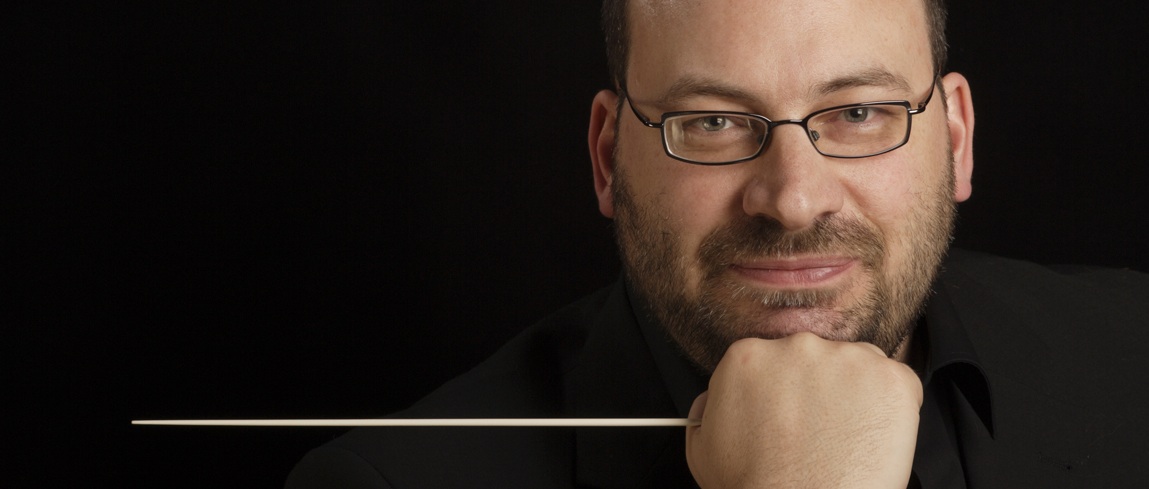
Continuing their reverse traversal of Mozart’s final three symphonies, the ESO and Kenneth Woods (above) tonight gave the 40th – most dramatic of the trilogy and whose innovations are easy to take for granted, but whose opening Allegro is never less than compulsive when the trade-off between its indelible main theme and tensile accompaniment was so intently maintained through to the fatalistic coda. The Andante can often feel flaccid but not when directed with such attention to its lilting gait and expressive intensity, while the Menuetto had a rhythmic trenchancy and harmonic acerbity offset by its trio’s repose. The final Allegro unfolded at an ideal tempo – its second-half repeat vindicated by an altered emphasis on the development’s visceral opening sequence, with a heady ratcheting-up of emotion in those very closing bars.

Impressive music-making, and just what was needed in what are suddenly dangerous times. Reason enough, therefore, for having begun this concert (as on the previous night) with the Ukrainian national anthem: an opportunity, however brief, for some much-needed reflection.

For further information on the ESO’s 2021/22 season click here, and for more on composer Philip Sawyers click here Meanwhile for more information on the artists, click on the names to access the websites of Daniel Rowland and Kenneth Woods. Meanwhile for more on musical events at Great Malvern Priory, click here

In concert – Daniel Rowland, Maja Bogdanović, English Symphony Orchestra / Kenneth Woods: Philip Sawyers Double Concerto, Haydn & Mozart

rowland-bogdanovic

Haydn Symphony No. 96 in D major Hob.1/96 ‘The Miracle’ (1791)
Sawyers Concerto for Violin and Cello (2020) [World Premiere]
Mozart Symphony No. 41 in C major K551 ‘Jupiter’ (1788)

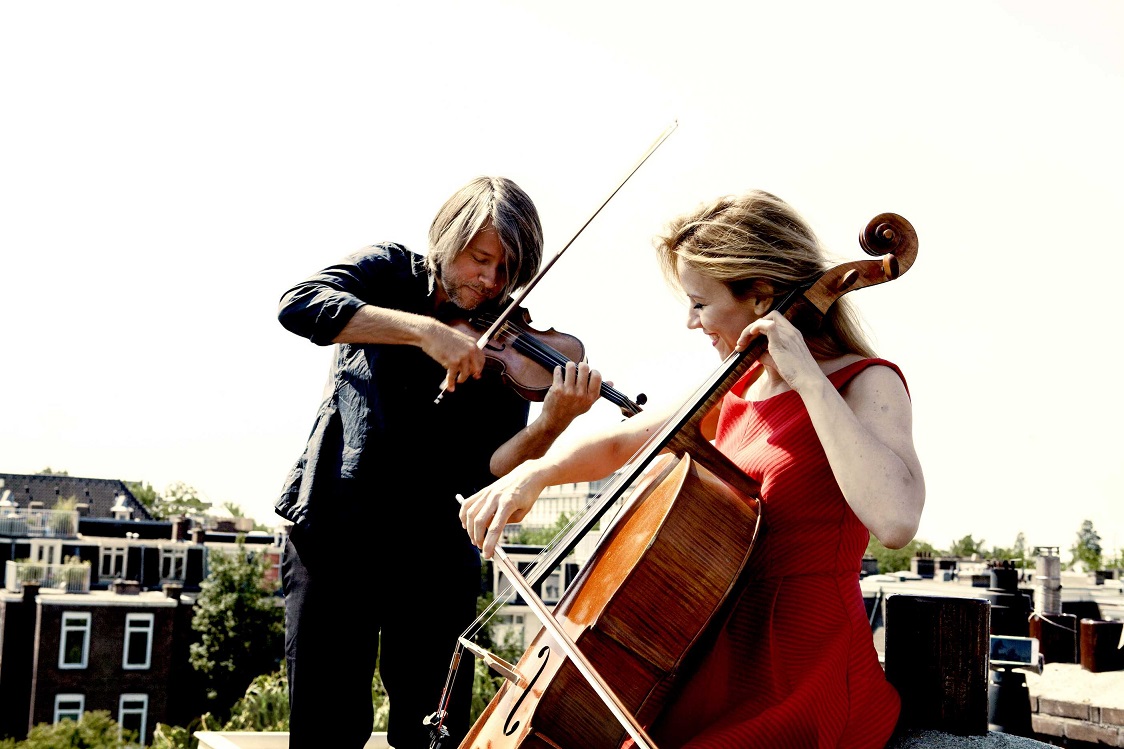
Daniel Rowland (violin), Maja Bogdanović (cello), English Symphony Orchestra / Kenneth Woods

St Peter’s Church, Hereford
Friday 4 March 2022

Written by Richard Whitehouse

The English Symphony Orchestra continued its season with this first in a pair of concerts that featured two recent concertos from its current Composer Laureate, heard alongside symphonic works which have long been – or, in one instance, should be – a part of the standard repertoire.

If not the most often heard of his ‘London Symphonies’, Haydn’s 96th is typical in its formal precision and expressive richness. Not least the opening movement, its ominous introduction the perfect foil to an energetic and often impetuous Allegro, then an Andante whose variations deftly alternate wit with pathos. The ESO’s playing was at its most felicitous both here and in a robust Menuetto, the piquant oboe melody of whose trio was elegantly rendered by Rebecca Wood. Nor was there any lack of incisiveness in the finale’s good-humoured dash to its finish.

Concertos for violin and cello have hardly been numerous, composers doubtless inhibited by Brahms’s example, so credit to Philip Sawyers for rising to the challenge in this piece for the compelling partnership of Daniel Rowland and Maja Bogdanović. As in Sawyers’s previous concertos (for cello, trumpet, and violin), there are three compact movements – the opening Allegro moderato conveying something of a preludial feel through its speculative progress and blurring of formal boundaries such that the music tails away uncertainly toward its close.

It is in the central Andante that this work came into its own, Sawyers’s own experience as a string player evident in the emotional raptness of the soloists’ dialogue and underpinned by eddying orchestral textures which did much to sustain the ongoing eloquence. If the Allegro Vivo, its main idea redolent of Poulenc (or, perhaps, Malcolm Arnold at his wittiest) risked seeming lightweight, the tensile interplay of the soloists along with a sense of the thematic elements coming audibly full circle made for an effervescent and ultimately decisive finale.

An impressive debut, then, for a piece which ought to find favour in this still limited medium. The soloists duly returned for Castillo Interior (2013) by Pēteris Vasks, inspired by the mystic St Teresa of Avila and creating a suitably fervent impression even when abbreviated as here.

Mozart’s final three symphonies will all be heard, in reverse order, over the remainder of the ESO’s current season. This evening brought the 41st whose Jupiter subtitle may have been a posthumous addition, but aptly evokes the work’s essence – not least with an initial Allegro both forthright and impulse as Kenneth Woods heard it. The ensuing Andante felt a little too swift for its ‘cantabile’ fully to register, but its confiding intimacy was fully in evidence – as was the lilting swing then pert elegance of the Menuetto. Woods favoured a rapid tempo for the final Allegro, and it was a tribute to these players that this music’s textural intricacy and underlying momentum were maintained across a lengthy traversal (with all repeats observed) through to a coda whose contrapuntal ingenuity and rhythmic elan were tangibly in evidence. Overall, a persuasive reading of a masterpiece which, as with its predecessor, is all too easily taken for granted. So, too, the assumption that peace will prevail in Europe – reason enough for this evening’s concert to have started with a rendition of the Ukrainian national anthem.

For further information on the ESO’s 2021/22 season click here, and for more on composer Philip Sawyers click here Meanwhile for more information on the artists, click on the names to access the websites of Maja Bogdanović, Daniel Rowland and Kenneth Woods. Meanwhile for more on musical events at St. Peter’s, Hereford, click here

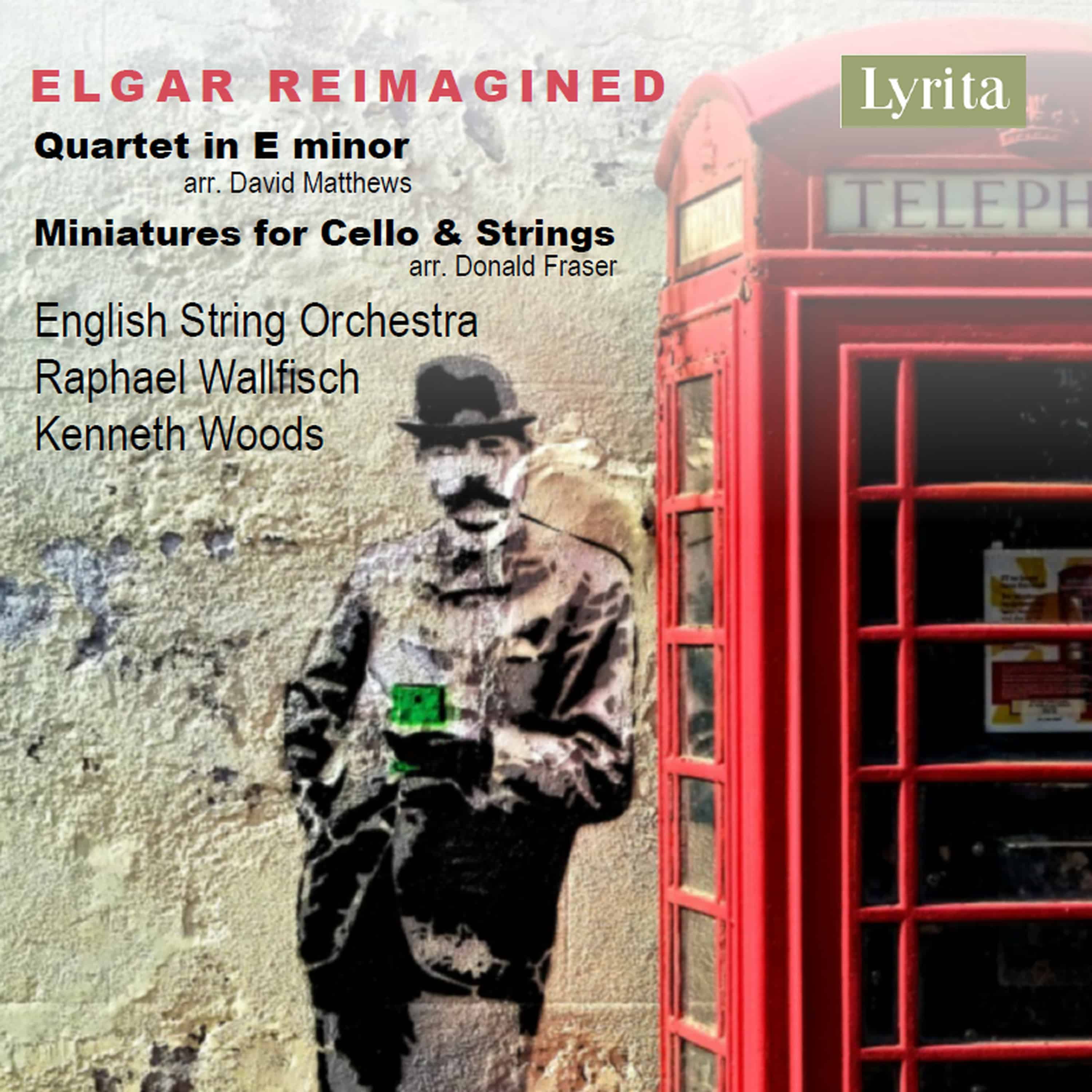
On record – Elgar Reimagined (Raphael Wallfisch, English String Orchestra / Kenneth Woods (Lyrita)

elgar-reimagined-disc

Elgar arr. Matthews String Quartet in E minor Op. 83 (1918)
Elgar arr. Fraser Miniatures for Cello and Strings: Chanson de Matin, Op.15 No. 2 (1899). Chanson de Nuit, Op.15 No. 1 (1899). The Wild Bears, Op. 1b No. 6 (1908). Nimrod, Op.36 No. 9 (1899). Romance in D minor, Op.62 (1910). Sospiri, Op.70 (1914). Mazurka, Op.10 No.1 (1899). Pleading, Op.48 (1908). In Moonlight (1904). Salut d’Amour, Op.12 (1888). Adieu (1933)

Raphael Wallfisch (cello), English Symphony Orchestra / Kenneth Woods

Producer Phil Rowlands Engineer Tim Burton

Lyrita SRCD 394 [69’27”]

Recorded 22 September and 9 October 2020 at Wyastone Concert Hall, Monmouth

Written by Richard Whitehouse

What’s the story?

This new release by the English String Orchestra focuses on Elgar, a composer championed by this ensemble throughout its 44 years of existence, whose music is given an appealing and (for the most part) instructive appraisal across the programme of arrangements featured here.

What’s the music like?

The principal work is the String Quartet in E minor, arranged by David Matthews. Second in a wartime triptych of chamber pieces, it is less introspective than the Violin Sonata preceding it but less emotionally charged than the Piano Quintet which came after, while arguably the most finely proportioned – not least in terms of the subtle transformation of thematic elements across and between its movements. In this guise, it follows on from the Serenade then Introduction and Allegro as the hitherto missing large-scale work for string orchestra of Elgar’s high maturity.

Matthews has been mindful to equate the soloistic with the ensemble potential of this music, so the result is neither straightforward transcription nor radical re-conception. The opening Allegro discreetly evokes an autumnal rumination as sets the tone for much of what follows; even finer is the central Piacevole, its main theme suffused with an intensity whose extent is only revealed at the close. If the emotional acuity of the final Allegro is marginally diffused, there is no absence of purposeful intent as the music proceeds to a coda of terse decisiveness.

The remainder of this programme comprises a sequence of Miniatures, arranged for cello and strings by Donald Fraser and played by Raphael Wallfisch. Ostensibly an 11-movement suite, its efficacy in terms of smaller groupings and even individual encores should be self-evident.

Chanson de Matin launches proceedings in mellifluous fashion, and if the cello’s assumption of the melodic line is slightly to the detriment of the original scoring, that could hardly be said of Chanson de Nuit whose sombre contours and inward character are unerringly realized. Nor does The Wild Bears lose out on vivacity, and if the arrangement conjures up Saint-Saëns, this only serves to underline the importance of ‘Second Empire’ French music on Elgar’s thinking. The cello’s dominance in Nimrod rather detracts from the subtlety of this Enigma Variation’s instrumentation – conversely, the Romance brings soloist and strings into even closer accord than the composer’s version with orchestra. The highlight here is Sospiri, which presents one of Elgar’s finest inspirations in a striking new light. Lighter fare comes in the robust tread of the Mazurka, followed by an eloquent take on the song Pleading. In Moonlight (adapted from In the South) responds well to such limpid treatment, as does Salut d’Amour in conveying its essence without cloying. A wistful take on the piano piece Adieu provides an affecting close.

Does it all work?

Very largely. The idiomatic nature of the String Quartet is enhanced by the ESO’s committed playing under Kenneth Woods, a follow-up to their recording of the Piano Quintet in Fraser’s orchestration (Avie), while Raphael Wallfisch’s conviction in the Miniatures is undoubted.

Is it recommended?

Indeed, not least as the quality of the playing is abetted by the naturalness of the sound and informativeness of annotations by Matthews and Woods. Heard together, these two parts of Elgar Reimagined make for desirable listening in this 165th year since the composer’s birth.

Listen

Buy

You can discover more about this release and make a purchase at the Lyrita website.  For more information on the artists, click on the names for Raphael Wallfisch, Kenneth Woods and the English String Orchestra – and for the arrangers, David Matthews and Donald Fraser 

Online concert – English Symphony Orchestra / Kenneth Woods: The music of Saxton & Sawyers

eso-saxton-sawyers

English Symphony Orchestra / Kenneth Woods

Sawyers Remembrance (2020); Octet (2007)
Saxton
The Resurrection of the Soldiers (2016)

Wyastone Concert Hall, Monmouth
7-8 April 2021

Written by Ben Hogwood

For the latest in their online series, the English Symphony Orchestra and their conductor Kenneth Woods presented a trio of works written in the last 20 years. The music of Philip Sawyers, their Composer Laureate, featured in two contrasting pieces.

A recent work, Remembrance for Strings, made an instant impact. This deeply emotive, thought provoking piece has a hint of Elgar in its profoundly elegiac tone and scoring, but unmistakably bears Sawyers’ fingerprints as the theme evolves, gradually creeping upwards. The strings of the ESO were perfectly paced by Woods, giving the theme plenty of room and bringing the important viola and cello lines through the texture. Sawyers finds effective contrasts between notable pain points of discord and an almost complete stillness as the strings collect their thoughts, holding their collective breath in ideally weighted phrasing. This deeply affecting piece deserves to be heard much further afield, its impact comparable (if notably different) to that of Barber’s Adagio for Strings. A note for Emily Davis, the ESO guest leader, who gave a touching final solo.

Sawyers’ Octet was next, a single movement work from 2007 written for the youthful ensemble Liquid Architecture. With a scoring for clarinet, horn, bassoon, string quartet and double bass, its colours provided the ideal contrast to Remembrance, as did its series of compact melodies and increasingly busy exchanges, carefully interwoven throughout the ensemble. Written in a single movement, the Octet is an involving work, treating the eight players as soloists but exploring and enjoying their properties in smaller group discussions. Perhaps inevitably the mind is briefly cast back to Stravinsky’s work for the same number of players, but also the harmonic language of Berg and Hindemith. When all the instruments play together the dense contrapuntal writing is at its most effective, while Sawyers ensures the component melodies can be appreciated in a solo capacity too. Kenneth Woods conducted a fine account here, the ESO soloists playing with flair and sensitivity, all the while gathering momentum towards an emphatic arrival in C major. The instrumentalists’ placing, and some sensitive camera work under the direction of videographer Tim Burton, allowed heightened insight into the speed of Sawyers’ rapidly evolving ideas.

As he approaches his 70th birthday, Robert Saxton is a British composer arguably yet to receive the full recognition of which his music is surely due. The Resurrection of The Soldiers is an illustration of his ability to respond to art from another form with remarkable perception. A 12-minute tone poem for string orchestra, written in 2016 and dedicated to George Vass, The Resurrection of The Soldiers is a powerfully concentrated work, responding as it does to the final panel of Stanley Spencer’s commission for Sandham Memorial Chapel. The set of paintings result from the artist’s experiences in the British army in World War One, depicting soldiers emerging from their graves on the last day.

Clearly this depiction struck a lasting emotional chord with the composer, his response speaking initially of searing pain but progressing to a much more hopeful outcome. The upper strings of the ESO spoke powerfully here, maintaining their intensity in the long notes before digging in to an eventful exchange in the energetic central section. This culminated in a powerful chord, richly scored – and with a reverent pause from which the resurrection itself evolved with increasing surety, reaching an exultant if not un-scarred E major.

You may wish to complement the ESO’s performance with detail from the artwork itself, from the National Trust website, or you may wish to form your own images which the music powerfully imprints. Either way, do catch the whole of this compelling program, for these are three very meaningful pieces of music given in the best possible performances.

You can view this concert from 18-22 February at the ESO website, and thereafter for ESO digital supporters here

Online concert – English String Orchestra / Kenneth Woods: Tchaikovsky: String Quartet no.3

eso-tchaikovsky

English String Orchestra / Kenneth Woods

Tchaikovsky arr. Woods String Quartet No. 3 in E flat minor, Op. 30 (1876)

Wyastone Concert Hall, Monmouth
12-13 July 2021

Written by Richard Whitehouse

The English String Orchestra launched its schedule for 2022 with another premiere – that of Tchaikovsky’s Third Quartet in an arrangement by Kenneth Woods, continuing a line of such rethinking which has previously included Brahms’s Second Piano Quartet (Nimbus NI6364).

Completed early in 1876, this work came about through the premature demise of Ferdinand Laub who led those premieres of Tchaikovsky’s previous quartets and whom the composer held in highest regard. Its tonic-key is unexpected yet influential (notably on Shostakovich), not least in an opening movement where the Andante introduction leads to an Allegro whose fervent striving never quite breaks free of the fatalism from which it emerges and to which it returns. Woods might have made more of that Allegro’s undulating emotions, but his take on its introduction and coda duly enhanced their sombre intensity. Nor was there any lack of wit or urbanity in the next movement, poised unerringly between scherzo and intermezzo, which could become almost as popular as the waltz of the Serenade for Strings in this incarnation.

Interesting that Tchaikovsky belatedly reversed the order of the middle movements, given the Andante funebre is the undoubted highpoint of this work and its impact would be diminished if heard earlier in the overall design. Moreover, Woods’ arrangement was at its finest here in terms of the interplay between solo and ensemble strings – those soliloquys for violin, viola and cello given added pathos by the greater textural depth; not least as the movement reaches its anguished climax then subsides into the chant-inflected elegy of its closing stages. Maybe the finale would have conveyed even more a sense of release at a swifter tempo, but Woods was scrupulous as regards its ‘non troppo’ marking; nor was there any lack of resolve as this movement headed on its impetuous course towards a decisive and life-affirming conclusion.

A convincing new guise, then, for arguably the finest of Tchaikovsky’s chamber works (not least compared to the over-inflated arrangements of Souvenir de Florence), and a welcome reminder of the ESO’s collective prowess whether heard in original pieces or transcriptions.

You can view this concert from 21-25 January at the ESO website, and thereafter for ESO digital supporters here. Meanwhile for information on the ESO’s latest release of the music of Steven R. Gerber, click here