BBC Proms 2023 – Geneva Lewis, BBC National Orchestra of Wales / Jaime Martín – Pejačević, Grace Williams & Holst

Prom 32 – Geneva Lewis (violin), BBC National Orchestra of Wales / Jaime Martín

Pejačević Overture in D minor Op.49 (1919) [Proms premiere]
Williams Violin Concerto (1950) [Proms premiere]
Holst The Planets Op.32 (1914-17)

Royal Albert Hall, London
Tuesday 8 August 2023

by Richard Whitehouse photos by Chris Christodoulou / BBC

Although this evening’s Prom did not quite conform to that ‘overture – concerto – symphony’ format it came quite close, with its first half bringing to the attention of a near-capacity house two representative pieces by women composers who most definitely warrant greater exposure.

The centenary of Dora Pejačević’s death has duly consolidated what was already a burgeoning reputation curtailed by her untimely demise at only 37. Written two years after her impressive Symphony, which Sakari Oramo has performed and recorded (and will revive at these concerts on August 14th) to great acclaim, the Overture is a curtain-raiser as succinct as it is eventful – ably contrasting its respectively impetuous and equable main ideas in a tensile development, then on to a coda which rounds off this immensely appealing piece with decisive affirmation.

With Jaime Martín an animated podium presence, the BBC National Orchestra of Wales gave it a rousing rendition then was no less finely attuned to the very different ethos of the Violin Concerto by Grace Williams, which it premiered (as the BBC Welsh Orchestra) 73 years ago. There have been few performances since but, on the basis of that tonight, New Zealand-born Geneva Lewis is an eloquent advocate – even if the initial Liricamente arguably needed more purposeful sense of direction for its pensive and often searching inwardness not to risk inertia.

Not that Lewis’ unforced manner or tonal elegance were other than appropriate in this music, as was demonstrated even more directly in the central Andante with its impressionist eddying of melodic phrases and fastidious timbral shading. Following without pause, the final Allegro brought the work’s only fast music in which Lewis’s deftness and articulation gained through her assured coordination with BBCNOW. The cadenza was incisively despatched, while the ensuing coda brought the work to a close the more satisfying for its teasing unexpectedness.
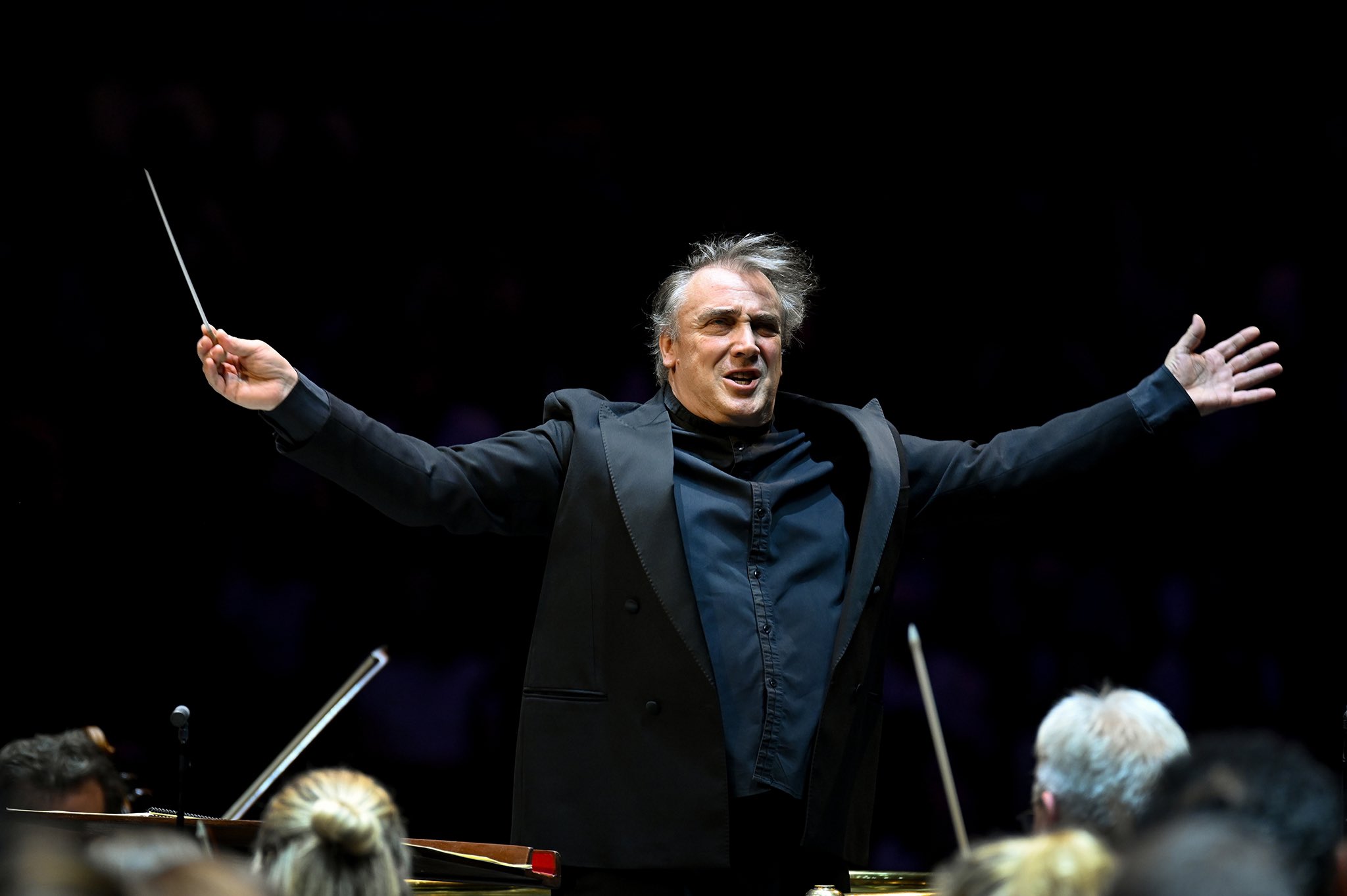
There cannot have been many Proms season this past half-century when Holst’s The Planets has not been played, and it would be good to have welcomed this account more consistently. As it was, the performance took time to recover from a Mars whose stolid tread and lack of textural clarity made for a less than gripping traversal. Venus was better, for all that Martín’s fluctuations of pulse undercut its essential raptness, and though Mercury started off with the requisite humour, some effortful playing in its latter stages left the music feeling earthbound.

This was less of an issue in Jupiter, whose outer sections had all the right verve and energy, even if the trio’s indelible tune verged on the blousy. Pacing its stark opening bars effectively, Martín rather rushed the baleful climax of Saturn, though the radiance of what followed was nothing if not eloquent and bought the best out of BBCNOW. Uranus was almost as fine in this respect, and if the central processional sounded affable rather than sardonic, the sudden emptiness of its closing stages prepared well enough for the otherworldliness of Neptune.

If Martín might have obtained even more hushed and inward playing in this final movement, a sensuous contribution from the London Symphony Chorus enhanced the music-making. An enjoyable reading, albeit one where the whole was less than the sum of its individual planets.

For more on the 2023 BBC Proms, visit the festival’s website at the BBC. You can also click on the link to listen to Dora Pejačević’s Cello Sonata, performed by Laura van der Heijden and Jâms Coleman as part of their Proms at Dewsbury concert on 6 August.

Meanwhile click on the names for more information on artists Geneva Lewis, Jaime Martín and the BBC National Orchestra of Wales – and for information on the composers Dora Pejačević, Grace Williams and Holst

BBC Proms #49 – Louise Alder, Dame Sarah Connolly, CBSO Chorus, London Symphony Chorus, London Symphony Orchestra / Sir Simon Rattle – Mahler ‘Resurrection’ Symphony

Prom 49 – Louise Alder, Dame Sarah Connolly, CBSO Chorus, London Symphony Chorus, London Symphony Orchestra / Sir Simon Rattle

Birtwistle Donum Simoni MMXVIII (2018)
Mahler Symphony no.2 in C minor ‘Resurrection’ (1888-1894)

Royal Albert Hall, London
Wednesday 24 August 2022

Reviewed by Ben Hogwood Photos (c) Chris Christodoulou

“A symphony must be like the world. It must contain everything.”

The words of Gustav Mahler were never more appropriate than in the context of this exceptional BBC Proms concert, as Sir Simon Rattle and assembled forces from London and Birmingham threw body and soul into a spectacular performance of the composer’s Symphony no.2.

This, Mahler’s ‘Resurrection’ symphony, puts its listener through the emotional wringer on a journey inhabiting life and death itself. The work has become a calling card for Rattle, too – he marked the opening of Birmingham’s Symphony Hall with a memorable performance in 1991, and took his leave of the CBSO with the same piece. Here, as he prepares to step down as Music Director of the London Symphony Orchestra, he was marking the turning of a page through a move to pastures new in Bavaria, where he will become Chief Conductor of the Symphonieorchester des Bayerischen Rundfunks and the Bavarian Radio Chorus.

The pastures were a standout feature of this performance – but we began in turmoil, the huge first movement funeral march rumbling into gear with lines hewn from granite in the lower strings. Rattle pushes this movement forward much more than he once did, keeping a firm hand on the tiller, but with immediate and full immersion in Mahler’s thoughts. As the first movement took shape the horrors of death revealed themselves – along with hopes of sunnier climes through some beautifully shaded rustic scenes. Yet the chill winds kept returning, ultimately sweeping these away as the movement closed in their bleak acceptance.

Many accounts of the ‘Resurrection’ lose their focus at this point, but not this one. Instead we had a balletic triple time Ländler, danced with grace as the feather-light strings had their charming way. The main theme swelled like a newly budding flower, and although ghoulish reminders of the first movement persisted, this was the abiding impression. As Rattle pressed on without a break, however, the reveries were abruptly quashed by the hammer and tongs of the third movement Scherzo. Here the music twisted and turned sharply, the LSO responding to its conductor with peerless virtuosity in music of fire and brimstone. Percussion, wind and brass were superb.

Then, as the music teetered on the point of collapse, it was time to be borne away with the consoling tones of Dame Sarah Connolly (above, right). A consummate Mahlerian, she sang with compelling strength and grace, a powerful stage presence in league with Rattle, who presided over accompaniment of the greatest clarity. Connolly’s Urlicht was beautifully judged, taking us ever nearer to the wondrous entry of the choir.

Now time stood still. The audience, especially in the arena, were rooted to the spot at the massed choirs of the CBSO Chorus and London Symphony Chorus, singing as one in magically hushed tones. As the finale took shape it was by turns earth-moving and tender. Scenes flashed before the eyes, and an especially vivid episode from brass and percussion in the gallery observed a village-band intimacy. Here the Royal Albert Hall was utilised to its full potential, managing the wide scope of Mahler’s vision to perfection.

At the centre of this apocalyptic finale, percussion depicted the rising of the dead and the release of their chains, Rattle intentionally dragging his feet here to heighten the seismic impact. And then we were free, the resurrection itself met with blazing colours all around as the choirs sang Friedrich Klopstock’s text ‘Aufersteh’n, ja aufersteh’n wirst di’ (‘Rise again, yea rise again, shalt thou’) as though their lives depended on it. Was it fanciful to suggest three years’ worth of pent-up emotion being released at this point? Probably not, when you consider the day-to-day roles of the choral singers themselves – carers, key workers, parents and children alike – with all finding the time and the need to bring us this music of the utmost quality.

Great credit should go to chorus director Simon Halsey for securing such discipline and humanity in the texts, and to soprano Louise Alder (both above with Dame Sarah Connolly and Sir Simon Rattle). Alder sang above the masses with perfectly judged dynamics and phrasing, like Connolly fully aware of the scope of her role. Organist Richard Gowers added the icing on the cake, underpinning the throng with ideally judged balance.

This was a performance to talk about for years to come, a throwing-open of the doors to proclaim that music can – really – triumph over pretty much anything, the ‘Resurrection’ symphony, clearing everything in its path.

As an upbeat to the symphony we heard a short gift to Rattle from Sir Harrison Birtwistle, to whose memory the Prom was dedicated.  Donum Simoni MMXVIII was typical of its composer, a spiky and even snarky postcard firing out missives from the (superb) percussion section against barbed comments from wind and brass. Lasting barely four minutes, it served its function well – but for tonight, as Mahler would have wished, the symphony was everything.

You can listen to Sir Simon Rattle’s recording of Mahler’s ‘Resurrection’ symphony on Spotify below, where the CBSO Chorus and Symphony Orchestra are joined by soloists Arleen Auger and Dame Janet Baker:

In concert – London Symphony Orchestra & Sir Antonio Pappano – Respighi & Dallapiccola

Respighi Vetrate di Chiesa (1925-6)
Dallapiccola Il prigioniero (1944-8) {Sung in Italian with English surtitles]

Ángeles Blancas Gulín (soprano – Mother), Eric Greene (baritone – Prisoner), Stefano Secco (tenor – Gaoler / Grand Inquisitor), Egor Zhuravskii (tenor – First Priest), Chuma Sijeqa (bass-baritone – Second Priest), London Symphony Chorus, Guildhall School Singers, London Symphony Orchestra / Sir Antonio Pappano

Barbican Hall, London

Sunday 5 June 2022

Written by Richard Whitehouse Pictures (c) Mark Allan Photography

This second of the London Symphony Orchestra’s two concerts of Italian music with chief conductor designate Sir Antonio Pappano consisted of two pieces that brought the aesthetic and political divisions of Italy between the world wars into acute while always productive focus.

It might have originated in piano pieces written for his wife, but Respighi’s Church Windows duly emerged among the most opulent and evocative of his orchestral works. That both title and subtitles were postpriori additions does not lessen their relevance – not least as concerns The Flight into Egypt, its tense understatement a telling foil to the ensuing Saint Michael the Archangel with its warlike images rendered graphically by brass and percussion, before climaxing in one of the most theatrical of tam-tam crashes as Satan is banished from Heaven.

Not that Respighi was averse to gentler expression as appropriate, The Matins of Saint Clare featuring orchestration of unfailing finesse on its raptly expressive course. Inevitably, it is the magisterial finale of Saint Gregory the Great when this composer comes most fully into his own – its cumulative fervour drawing on all aspects of the sizable forces for what becomes a heady apotheosis. Music, indeed, that needs to be realized with discipline and focus to avoid overkill, which was certainly the case in a performance where the LSO left nothing to chance.

The London Symphony Orchestra and London Symphony Chorus conducted by Sir Antonio Pappano perform Ottorino Respighi Church Windows Luigi Dallapiccola Il prigioniero In the Barbican Hall (Ángeles Blancas Gulin Mother, Eric Greene Prisoner, Stefano Secco Gaoler / Grand Inquisitor, Egor Zhuravskii First priest, Chuma Sijeqa Second priest ) on Friday, 3 June 2022. Photo by Mark Allan

Whereas Respighi pays (indirect) tribute to Italy’s cultural greatness, Dallapiccola exposes its darker recesses in his one-act opera The Prisoner. Composed over several years that span the decline and fall of Mussolini’s Italian empire, its libretto is drawn from the novel by the late 19th century author Villiers de l’Isle-Adam whose title Torture by Hope became subtitle for this opera by intimating the culmination of a scenario set during one of the grimmest periods in the Spanish Inquisition. By this time, Dallapiccola had evolved that distinctively personal brand of serialism which served him thereafter, but his knowledge of and devotion to Italian opera meant that those more methodical or systematic aspects are harnessed to an emotional fervour as makes for a consistently powerful and often moving while harrowing experience.

The performance was a compulsive one – centred upon Eric Greene’s assumption of the title-role that built gradually to an apex of elation suddenly and cruelly denied. The opening stage is dominated by the Mother – rendered with unfailing charisma yet never wanton melodrama by Ángeles Blancas Gulín, and Stefano Secco brought hardly less conviction to the twin-role of the Gaoler whose urgings to remain steadfast assume a chilling tone when he is revealed as the Grand Inquisitor. There were telling cameos from Egor Zhuruvskii and Chuma Sijeqa as the Priests, with the London Symphony Chorus and Guildhall School Singers combining to potent effect in offstage Psalm settings – the final one a climax of sombre grandeur. Pappano directed with absolute assurance an opera he doubtless, and rightly so, ranks with the finest.

It brought this enterprising and superbly executed concert to an impressive close. One only hopes Pappano will have the opportunity to programme further such music over the coming seasons: the enthusiastic response suggested an almost full house would be there it hear it.

To read more on the London Symphony Orchestra’s current season, visit their website. For more information on the artists involved, click on the names for Antonio Pappano, Ángeles Blancas Gulín, Eric Greene, Stefano Secco, Egor Zhuravskii and Chuma Sijega

LSO: Always Playing – Mahler’s Resurrection Symphony tonight @ 7.30pm

A real treat lies in store tonight in the form of Mahler‘s Symphony no.2, the Resurrection – and you can sing along.

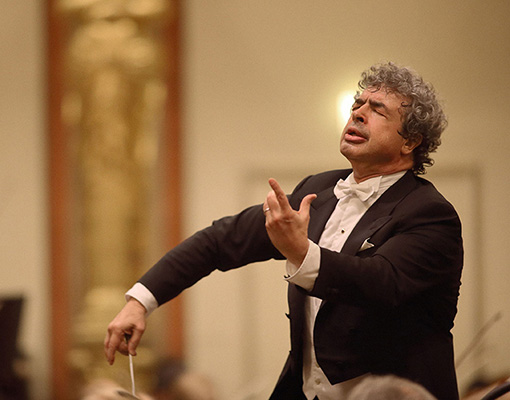
This stream from the London Symphony Orchestra is conducted by Semyon Bychkov (above), with vocal soloists Christiane Karg (soprano) and Ana Larsson (contralto).

The London Symphony Chorus and their director Simon Halsey provide the incredibly uplifting choral passages in the fifth and final movement – and you too can take part! For one night only the vocal score for the Resurrection is free to download, by following the link from the LSO website here

You could even pause the action at the end of the first movement, clap for the UK’s NHS staff, carers and delivery drivers, and resume after the ‘interval’. The performance, from Sunday 4 February 2018, can be seen on the orchestra’s YouTube channel from 7.15pm tonight here:

Semyon Bychkov photo credit: Umberto Nicoletti

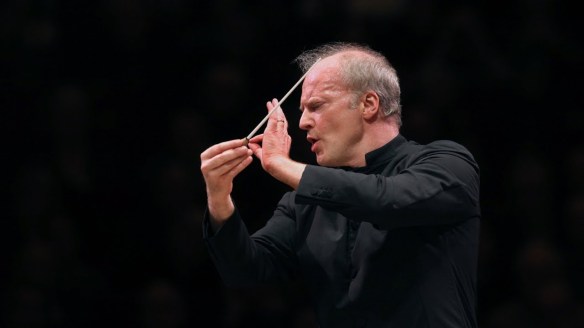
Gianandrea Noseda conducts the London Symphony Chorus and Orchestra in Verdi’s Requiem

Tonight’s recommendation for online musical fulfillment comes in the form of Verdi’s Requiem. This can be viewed on the London Symphony Orchestra’s YouTube channel, with principal guest conductor Gianandrea Noseda leading a performance with soloists Erika Grimaldi (soprano), Daniela Barcellona (mezzo-soprano), Francesco Meli (tenor) and Michele Pertusi (baritone). The London Symphony Chorus, prepared by their director Simon Halsey, provide the choral fireworks.

The performance began at 7pm BST but you can still watch the whole work from the start below:

https://www.youtube.com/watch?v=9o3l6BURAaY