In concert – Steven Osborne, CBSO / Kerem Hasan: Coleman, Grieg & Beethoven

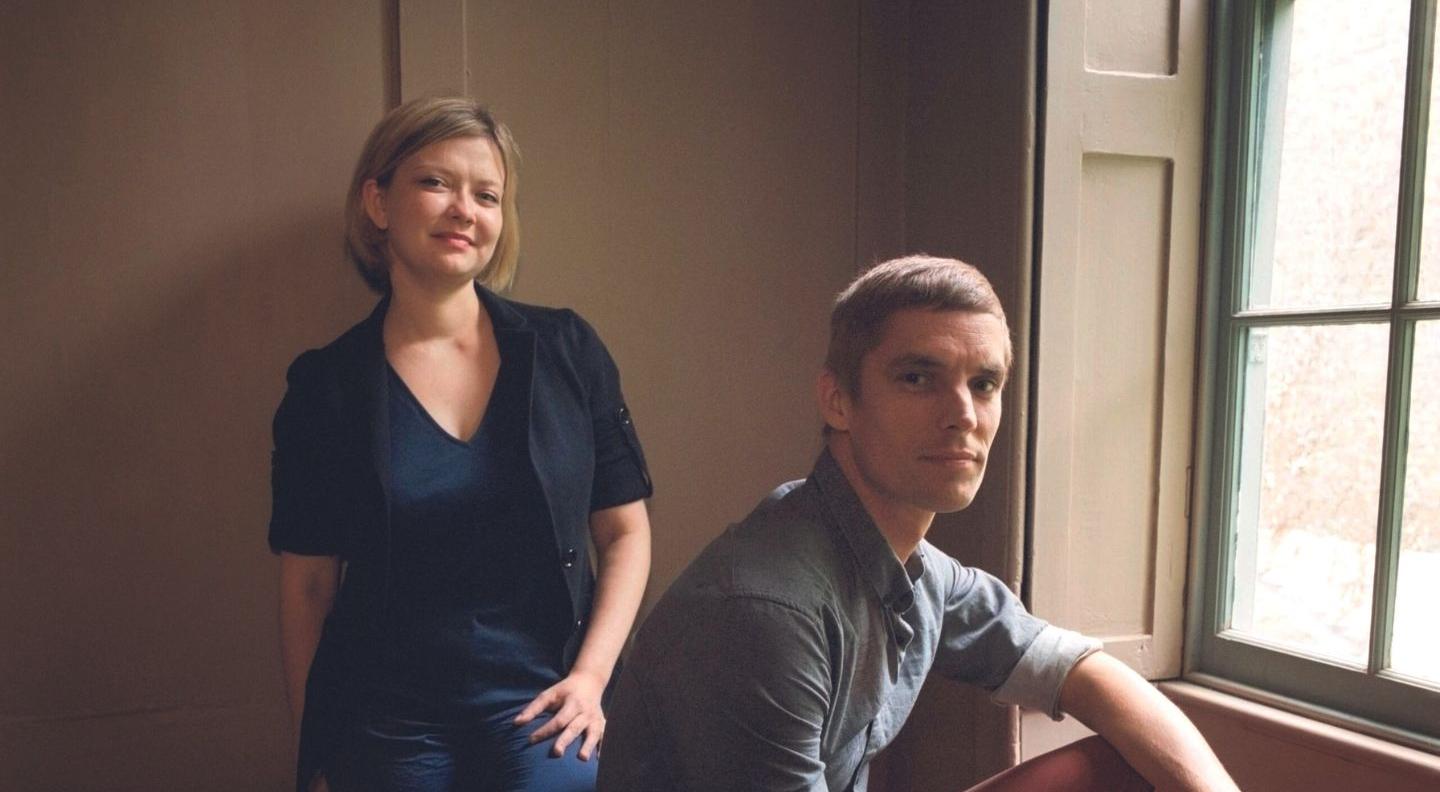
Steven Osborne (piano), City of Birmingham Symphony Orchestra / Kerem Hasan (above)

Coleman Umoja: Anthem for Unity (2001, orch. 2019)
Grieg Piano Concerto in A minor Op.16 (1868)
Beethoven Symphony no.4 in B flat major Op.60 (1806)

Symphony Hall, Birmingham
Thursday 7 November 2024, 2.15pm

Reviewed by Richard Whitehouse Picture (c) Tristan Fewings

Highly regarded for his work with Welsh National Opera and his five years at the helm of the Tyrolean Symphony, British-Cypriot conductor Kerem Hasan’s is a relaxed though attentive presence that resulted in no mean rapport with the City of Birmingham Symphony Orchestra.

Such was evident from the outset of Valerie Coleman’s Umoja. Written for wind quintet, this ‘Anthem for Unity’ (the latter word in Swahili being the title) went through incarnations for wind sextet and concert band before being expanded to a commission from the Philadelphia Orchestra. Essentially a sequence of free-flowing variations on a theme stated by solo violin after an atmospheric introduction, it emerges in sharply contrasted guises before arriving at   a culminative statement – its evocation of ‘unity’ the more powerful for such overt restraint.

If the remainder of this programme consisted of repertoire staples, there was nothing routine or predictable about the performances. Steven Osborne has doubtless given more consistently accurate accounts of Grieg’s Piano Concerto, but his determination here to throw caution to the wind almost always paid off. Not least in an opening movement at its most perceptive in an unusually cohesive development, then a cadenza which ably sustained emotional tension through to a thunderous close. Building to a fervent rendering of its main theme, the Adagio evinced no lack of pathos, and Hasan secured a seamless transition into the finale – its virile main theme tellingly contrasted with that rapturous flute melody (Marie-Christine Zupancic on fine form), which emerged duly transformed as a majestic apotheosis towards the close.

That Hasan was out to make the case for Beethoven’s Fourth Symphony was evident from an introduction whose speculative mystery was tangibly conveyed, thus making contrast with the first movement’s main Allegro the more potent. Nor was the repeat of the exposition a carbon copy of what preceded it, Hasan channelling its impetus into an eventful development whose hushed transition into the reprise brought a surge of adrenalin no less palpable than that of the brief if thrilling coda. The ensuing Adagio might be felt to lack the drama or heroism of those in the symphonies either side, though its wistful main theme accrued considerable profundity on its successive and varied reappearances – not least through the unforced eloquence of the CBSO woodwind in what becomes something of an all-round showcase for that department.

Hasan drove the scherzo sections of the third movement hard, yet there was never any lack of articulation, while the trio sections had all the ingratiating charm needed. Taking the finale at anything that approaches the composer’s metronome marking can easily become a hostage to fortune, but the CBSO held its collective nerve throughout what was an eventful as well as an exhilarating ride – one fully underpinned by Beethoven’s irreverent humour such as comes to the fore in the tonal and emotional punning of those captivating bars that round off this work.

A persuasive case, then, for Beethoven Four as for Hasan’s conducting. Meanwhile, Sunday afternoon brings an intriguing event in the guise of Bach’s Goldberg Variations arranged by Dmitry Sitkovetsky for string ensemble and directed by CBSO leader Eugene Tzikindelean.

For details on the 2024-25 season A Season of Joy, head to the City of Birmingham Symphony Orchestra website. Click on the names to read more about pianist Steven Osborne, conductor Kerem Hasan, and composer Valerie Coleman

Published post no.2,357 – Saturday 9 November 2024

In concert – Piotr Anderszewski @ The Barbican: Beethoven, Brahms, Bartók & J.S. Bach

Piotr Anderszewski (piano, above)

Beethoven 6 Bagatelles, Op.126 (1823)
Brahms Intermezzos (1892-93) – Opp.119/1 & 3; Op.118/1 & 2; Op.117/2; 118/6
Bartók 14 Bagatelles BB50 (1908)
J.S. Bach Partita no.1 in B flat major BWV825 (1726)

Barbican Hall, London
Thursday 3 October 2024

Reviewed by Richard Whitehouse. Photo © MG de Saint Venant licenced to Virgin Classics

Expecting the unexpected is the most predictable aspect of a recital from Piotr Anderszewski, tonight’s programme no exception in its juxtaposing collection by Beethoven and Bartók with a selection from Brahms and music by Bach that has long been a cornerstone of his repertoire.

Alive to their iconoclastic flourishes and improvisatory asides, Beethoven’s last bagatelles yet emerged as a cohesive and integrated unity as it ventured through limpid musing and angular playfulness then disarming elegance before arriving at a propulsive take on the B minor Presto muscular or energetic by turns. The final two numbers were of a piece with what went before – the one understated and the other’s ingratiation bookended by outbursts of grating humour. Nothing to be taken for granted in this music, then, as Anderszewski intimated only too well.

Although published as four separate collections, there is no reason why Brahms’s late piano pieces cannot be given separately or in autonomous groupings as here. Starting with Op. 119, Anderszewski brought a confiding touch to the plaintive B minor Intermezzo and rendered the lilting syncopation of that in C with real playfulness. Turning next to Op. 118 and the forlorn quality of its A minor Intermezzo complemented ably that in A, whose new-found popularity need not detract from its harmonic subtlety or soulful poise. From Op. 117, the B flat minor Intermezzo struck note of ingrained fatalism intensified by that in E flat minor from Op. 118 – its ‘mesto’ marking here underlined as the music unfolded toward an endpoint of unforced resignation. Anderszewski looked regretful it should end so before duly leaving the platform.

As his recent recording confirms, Anderszewski has forged unerring identity with the Op. 6 Bagatelles where Bartók gave notice of his fast-emerging individuality. Played with minimal pauses (albeit with a 3-3-2-2-2-2 grouping such as brought these into line with the six pieces in each of those other sets), they offer a conspectus of possibilities over his ensuing creative decade that was to the fore here, alongside a cumulative focus evident less in any increasing technical demands as in a gradual opening-out of their emotional world made explicit in the final two numbers as doubtless stems from Bartók’s unrequited love for violinist Stefi Geyer. Thus, the sombre restlessness of Elle est morte merged directly into the valse Ma mie qui danse – this latter’s vicious irony maintained right through to its almost dismissive pay-off.

Had Bach ever entertained any such feelings, they were certainly far removed from the keen objectivity of his First Partita. A little restive in its Praeludium, Anderszewski hit his stride in its gently eddying Allemande then animated Courante. There was no lack of gravitas in its Sarabande, but this was as deftly inflected as was the elegance of its contrasted Menuet dances, then the Gigue made a dextrous yet assertive conclusion to a sequence where (as in everything heard tonight) what was made possible outweighs what had already been achieved.

It would have been possible to combine these works with other pieces – maybe some or even all of Ligeti’s Musica ricercata that Anderszewski will hopefully play at a future recital. For now, a limpid reading of Chopin’s Mazurka in A flat major (Op.58/2) made for an ideal envoi.

To read more on Piotr Anderszewski, visit his website

Published post no.2,321 – Friday 4 October 2024

In Concert – Alina Ibragimova & Cédric Tiberghien @ Wigmore Hall: Janáček, Enescu, Barry & Beethoven

Alina Ibragimova (violin), Cédric Tiberghien (piano)

Janáček Violin Sonata in G sharp minor JW VII/7 (1913-15, rev. 1916-22)
Enescu Violin Sonata no.3 in A minor Op.25 ‘Dans le caractère populaire roumain’ (1926)
Barry Triorchic Blues (1990, rev. 1992)
Beethoven Violin Sonata no.9 in A major Op.47 ‘Kreutzer’ (1802-03)

Wigmore Hall, London
Saturday 28 September 2024

Reviewed by Richard Whitehouse

The duo of Alina Ibragimova and Cédric Tiberghien has offered some memorable recitals at Wigmore Hall during the past few seasons, with this evening’s typically diverse programme ranging over almost two centuries of compositions for the combination of violin and piano.

A first half of complementary opposites began with the Violin Sonata by Janáček. Ensuring cohesion across its four highly contrasted movements is no easy task, but the present artists succeeded admirably in this respect. Thus, the opening Con moto had an edgy ambivalence which was allayed in the Ballada – its relative repose and expressive warmth infused with a nostalgia as likely reflects the composer’s youth (and may indeed derive from one of those long-lost sonatas written while studying in Leipzig and Vienna 35 years earlier). Despite its marking, the Allegretto is a tensile scherzo whose frequently combative interplay was much in evidence here; the final Adagio then pivoting between stark plangency and a heightened eloquence which subsided into an ending whose muted regret was unmistakably to the fore.

Whatever the conceptual or aesthetic gulf between them, Enescu’s Third Sonata followed on with some inevitability. This was inspired by and recreates without quoting traditional music, as its subtitle duly indicates, and Ibragimova was alive to the musing inwardness of an initial Moderato whose ‘malinconico’ consistently undercuts any formal or expressive resolution up to a close where the songful and dance-like themes disperse into silence. The highlight was a central Andante of sustained though unforced intensity, its improvisatory aspect a stern test of coordination violinist and pianist met head-on. Almost as compelling, the final Allegro lacked a degree of inevitability in its unfolding – Tiberghien’s superbly articulated pianism less than implacable at the close, for all that Ibragimova conveyed its ominous ecstasy in full measure.

Beginning life as a test-piece for solo piano and adapted for numerous media, Triorchic Blues is Gerald Barry at his most uninhibited and would have made an ideal encore in this context – but its ever more scintillating opposition of instruments was not out of place after the interval.

This second half ended with the grandest of Beethoven’s violin sonatas, its ‘Kreutzer’ subtitle misleading yet indicative of this music’s inherent virtuosity. Ibragimova and Tiberghien made an impressive cycle of these works for the Wigmore’s own label, so it was surprising to find them at slightly below their best here. Not in the central Andante con variazioni, its judicious fusion of slow movement and scherzo rendered with unfailing poise and an acute sense of the profundity drawn out of so unassuming a theme. Yet, after its suitably arresting introduction, the first movement lacked drama – the duo playing down its rhetoric not least in a less than impulsive coda. The relentless tarantella-rhythm that underpins the finale felt similarly reined in with, again, too little of an emotional frisson as this music vividly reinforces the home-key.

What was never in doubt was their quality of playing individually and collectively, making one anticipate future recitals by these artists which will hopefully find them exploring more of that extraordinary corpus of music for violin and piano of the early and mid-20th century.

For more on the Autumn season visit the Wigmore Hall website. For more on the artists, click on the names Alina Ibragimova (violin), Cédric Tiberghien (piano), and click here for more on composer Gerald Barry

Published post no.2,316 – Sunday 22 September 2024

Summer serenades: Beethoven

This Sunday Arcana’s look at the serenade alights, perhaps unexpectedly, on Beethoven. While he didn’t write in the form anywhere near as comprehensively as Mozart, Beethoven did nonetheless complete a multi-movement serenade for an unusual trio of instruments.

When Arcana visited the Serenade as part of our ongoing Beethoven series, we found that “the air of Spring, so prevalent in the sonata for piano and violin of the same name, is here in abundance too. The bright sound of the flute is one of the reasons for this, but so are the busy parts Beethoven assigns to violin and viola. There are few if any breaks for the instruments, and because of the almost complete lack of a bass instrument the piece has the lightest of textures.”

Published post no.2,239 – Sunday 16 July 2024

In concert – Martin Fröst, Janine Jansen, LSO / Gianandrea Noseda: Lost and Found @ Barbican Hall

Martin Fröst (clarinet), Janine Jansen (violin), London Symphony Orchestra / Gianandrea Noseda

Beethoven Leonore Overture no.3 Op.72b (1806)
Beamish Distans: Concerto for violin and clarinet (UK premiere) (2023)
Prokofiev Symphony no.7 in C# minor Op.131 (1952)

Barbican Hall, London
Thursday 20 June 2024

Reviewed by Ben Hogwood Pictures (c) Mark Allan

The London Symphony Orchestra and their principal guest conductor Gianandrea Noseda continued their Prokofiev symphony cycle with the elusive Seventh, prefaced by one of Beethoven’s four operatic overtures and a finally realised UK premiere.

This was Distans, a co-commission between four orchestras for Sally Beamish to write a concerto for the unusual combination of clarinet and violin. Its first performance was delayed due to the pandemic, which became the inspiration for the content of the work. Themes of separation run through the three movements, drawing on the composer’s Swedish and Scottish connections. Separated from her children during lockdown, Beamish also used the forceful musical personalities of soloists Martin Fröst and Janine Jansen (both above) for inspiration.

The two began offstage, however, beckoning to each other across the Barbican Hall as Calling, the first movement, took shape. This was named in the concert notes as ‘kulning’, “the high-pitched singing of women calling the calls on remote pastures”. Beamish’s wide-angle musical lens produced an effective and touching first paragraph, the soloists eventually united on stage in music of the dance, evoking a Swedish fiddle with the full weight and energy of the orchestra in support.

Echoing, the slow second movement, explored more intense feelings of isolation through beautiful scoring, earthy cellos and metallic percussion casting a rarefied light suggesting a Swedish winter. The third movement, Journeying, was powered by an ancient march, the soloists together in spirit and melody, out in the elements with the orchestra. Although the music of beckoning reappeared, the mood was one of reunification, the soloists now at peace and content to remain on stage.

Distans made a strong impact in the hall, and Beamish’s writing for clarinet in her first major piece for the instrument made the most of Martin Fröst’s extraordinary breath control and agility. Jansen also fully inhabited the spirit of the piece, though her part often felt within that of the clarinet, and rarely used the high register. This was definitely a work to hear again, for Beamish’s sound world is a very attractive one in concert.

After the interval, Prokofiev’s Seventh Symphony was given an affectionate performance, yet one that also found the darkness lurking within. One of Prokofiev’s final works, the Seventh was written for the Soviet Children’s Radio Division, and as a result adopts a youthful stance, with commendably little room for nostalgia. Instead the composer gets up to his characteristically witty tricks, with inventive scoring enjoyed by the orchestra as woodwind doubled in octaves, and the piano and harp supplemented lower strings.

The music danced, a reminder of Prokofiev’s balletic qualities. The second movement Allegretto had poise in its first tune but a heavier swagger in the second, suggesting the unpredictable movements of older age – though an impressively powerful and assured close was reached. The following Andante enjoyed rich string colours, together with brilliant individual characterisations from oboe (Juliana Koch) and cor anglais (Clément Noël).

Yet the abiding memories came from two themes used in the outer movements. The first, a sweeping unison for orchestra, lovingly recreates the key and spirit of the composer’s first piano concerto, one of his greatest early successes – and was delivered with great charm here. The second, a cautionary motif from flute and glockenspiel resembling a ticking clock, returned like a regretful memory at the end – reminding this listener of an equivalent moment in Shostakovich’s last symphony, completed nearly 20 years later. It ended this performance on a thoughtful note, in spite of the exuberance that had gone before. The LSO were excellent throughout, presenting a convincing case for the Seventh as a bittersweet triumph, and reminding us in the process of Prokofiev’s abundance as a melodic composer.

Meanwhile Beethoven’s Leonore Overture no.3 began in a more desperate mood of resignation, the opera’s main character Florestan losing all hope in prison. Noseda – fresh from recording a symphony cycle with the National Symphony Orchestra in Washington – has very strong Beethovenian instincts, and paced this just right, with an appropriate hush falling over the hall. As the drama heightened, and an evocative offstage trumpet beckoned, the release from prison led to an outpouring of joy, sweeping us up in its forward momentum. The players were off the leash, enjoying every second.

You can find more information on further 2023/24 concerts at the London Symphony Orchestra website

Published post no.2,216 – Friday 21 June 2024