Ask the Audience at the BBC Proms – Tim Squier on Beethoven, Dutilleux and HK Gruber

Ask The Audience Arcana at the Proms
gruber-buskingThis is the continuation of a series where Arcana invites a friend to a Prom who does not normally listen to classical music. In an interview after the concert each will share their musical upbringing and their thoughts on the concert – whether good or bad! Here, Tim Squier gives his thoughts on Prom 34.

Håkan Hardenberger (trumpet), Claudia Buder (accordion), Mats Bergström, BBC Symphony Orchestra / Sakari Oramo

Dutilleux Timbres, espaces, movement (1990)
Gruber Busking (2007)
Beethoven Symphony no.5 in C minor (1804-1808)

You can listen on the BBC iPlayer here

Arcana: Tim, what was your musical upbringing?

It was my mum that brought me up, and in terms of music it’s not worth going there really! It was very middle of the road – Cliff Richard, some of The Beatles. I discovered most things myself pretty much, she would have the radio on sometimes – but when I first discovered my own music it was via an alarm clock, an FM radio that she gave me. It was all the pop of the time in 1984-1986 – Madonna, Prince, A-ha, your Now 1984. Certainly in my early years there was Band Aid – and I wasn’t particularly cool. There wasn’t anything of a classical background in there!

Could you name three musical acts you love, and why you love them?

Harold Budd is a big one for me. I do love my ambient and he doesn’t seem to put a foot wrong really. He just seems to have a certain emotion and style where you can just get lost in it. It can be background but it can be foreground as well. I can work to it, and not be fully tuned in, or I can be sitting down and listening to it and it works just as well.

I’m going for artists who have been with me for a long time, and Fleetwood Mac are an act that I could never really get enough of. They’ve gone through different phases like the 1980s pop side but I can also do the Peter Green stuff, and the Stevie Nicks especially. I just keep discovering new things off the albums too, like Oh Daddy from Rumours recently. Stevie Nicks solo – just brilliant, too. Not every single track but she’s the sort of person you can see her rehearsal footage on YouTube and it’s amazing. I’m watching it thinking it’s better than the album version!

For the third one I’ll go for someone electronic – Carl Craig. Certainly between 1990 and 1996 where he couldn’t put a foot wrong. He could do an ambient track, a banging techno track, stuff that doesn’t all into a genre – something for the dancefloor, something for the home. Carl recorded a lot of that on cassette tape, it didn’t sound very good but still did the business!

What has been your experience of classical music so far?

I think almost unintentionally my first experience of anything like classical music would have been through film scores. One of my best friends in London has been responsible for playing me some classical music but not so much for a long time now. I have been to one Prom before but it was a long time ago and I can’t remember the actual pieces – but I know I enjoyed it. I quite enjoy listening to it but I don’t know much about it. I’ve heard some Ravel before, and quite enjoyed that.

How did you rate your first Proms experience?

The Royal Albert Hall is always a joy, it’s a great venue – and the acoustics are really good for classical rather than pop I think. I really rated the first piece (the Dutilleux) and enjoyed that the most I think.

What did you think of the Dutilleux?

It was thoroughly enjoyable, I’m a real sucker for that deep sound from the lower strings – there is a certain orchestral sound I really love, the lower frequency, and you get a lot of that in film scores. There was a lot of that coming through and it flowed really well. I wasn’t bored at all, I really loved it.

What did you think of the HK Gruber?

It started out interesting, and the introduction was good, but the trumpet was too much of a focal point and I found myself drifting out. I was trying to listen to the background more but because of the positioning I was trying to hear what was going on my right hand side, but every time I tried I could hear the trumpet. There was a variety of devices going on (the mutes and three different trumpets – Ed) I’ll always give things a chance, and I tried but it didn’t work out!

And the Beethoven?

That was really enjoyable, a nice take on it – it’s been a while since I heard the entire piece and I think it really worked. There were some quirky moments, it was great watching the whole orchestra. There was one really young player who really stood out (oboist Henry Clay), he was really good. Another thing going back to the first piece, the Dutilleux – the percussion was great. With the Beethoven I loved the whole thing and there was a really nice stereo effect coming through, the clarity was there more and I could pick up on certain things, especially being a bit of an audiophile.

There are bits you forget as well – you don’t get them played on Capital Radio four times a day after all! It was good to hear those. So I think the Dutilleux first, then the Beethoven, then the Gruber.

Would you go again?

Absolutely, for sure. I’m quite open to new musical experiences and will try most things but would do this again!

Verdict: SUCCESS

You can read Arcana’s review of the whole Prom here – and you can listen to it on the BBC iPlayer
BBC Proms 2016 – BBC Symphony Orchestra / Sakari Oramo: Beethoven’s Fifth, Dutilleux & HK Gruber

gruber-busking

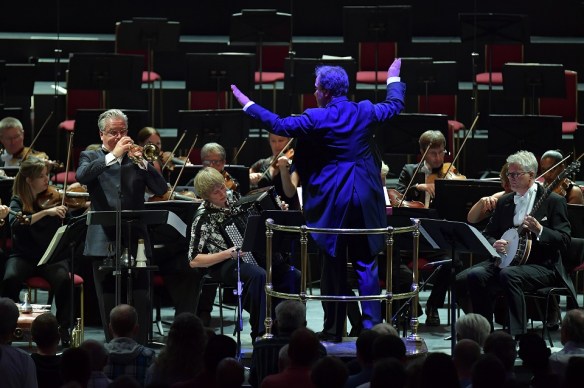
Soloists Håkan Hardenberger (trumpet), Claudia Buder (accordion) and Mats Bergström (banjo) pictured during the performance of HK Gruber‘s Busking, with the BBC Symphony Orchestra conducted by Sakari Oramo (c) Chris Christodoulou

Prom 34; Royal Albert Hall, 10 August 2016

You can listen to the Prom on the BBC iPlayer

Sakari Oramo continues to inspire. His tenure with the BBC Symphony Orchestra to date has been characterised by imaginative programming and excellent performances, and putting an obvious spring in the orchestra’s musical steps.

Last year they delivered a Prom capped by Beethoven’s Seventh Symphony, an account that fizzed with enthusiasm and vigour, and these same qualities were on show for the Fifth Symphony here. Oramo’s speeds were on the aggressive side, the slow movement arguably losing a bit of expressive heart because of it, but the faster movements unquestionably thrilling in their verve and forward drive.

Because of this approach, music that could have been over familiar received a new, sparkling coat of paint, and excellent woodwind contributions, particularly from new oboist Henry Clay, elevated the standard of playing. Guest leader Malin Broman set the tone with great vigour.

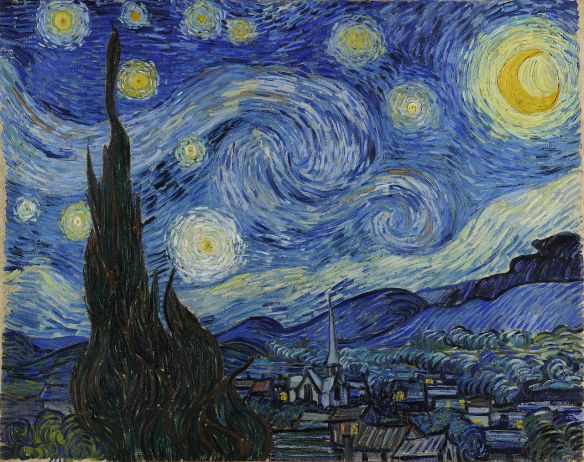
The first half gave us two contemporary pieces of very different impact. Timbres, espaces, movement became a three-movement orchestral piece when Henri Dutilleux revised it in 1990, and in this performance we could revel in its beautifully shaded colours, its sudden, strident unisons, and its captivating rhythms – all reflecting the painting on which it is based, Van Gogh’s Starry Night.

1280px-Van_Gogh_-_Starry_Night_-_Google_Art_Project

These were expertly delivered by the BBC Symphony percussion, while in the second movement the glorious spectacle of twelve cellos highlighted the genius in the composer’s part writing as well as the deep lyricism of his melodies. This was the third Dutilleux performance of the week, capping a very strong trio begun with The Shadows of Time and the Cello Concerto Tout un monde lointain…

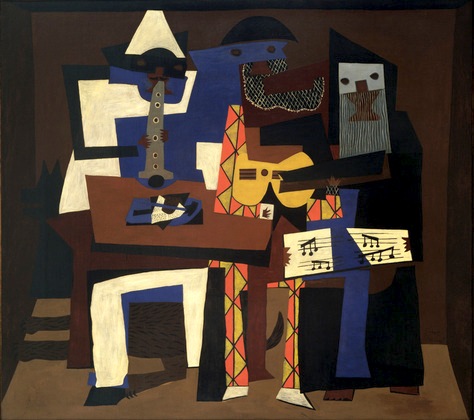
Less obviously successful was the substantial piece by HK Gruber, Busking – a work from 2007 receiving its UK premiere. Again the composer’s inspiration was a painting, in this case Picasso’s Three Musicians:

Picasso_three_musicians_moma_2006

Despite an excellent performance, in which trumpeter Håkan Hardenberger turned various shades of red and purple, all the while staying fully in command of his instruments, this was a piece that unfortunately ran out of steam quite early on.

A very promising beginning, with swaying syncopation brought on by the trumpeter with just his mouthpiece, ultimately lost its rhythmic impetus. Unfortunately the balance between the three soloists also became skewed heavily in favour of the trumpet, at the expense of brilliantly played detail from accordion (Claudia Buder) and banjo (Mats Bergström).

A doleful slow movement briefly evoked a melancholy cabaret, and did so very effectively, but here again the tones of the trumpet dominated, despite Hardenberger’s use of the mellow flugelhorn. This was not the fault of the players – and could also reflect Arcana’s position in the arena – but it was a shame to miss out on the touches of humour elsewhere. By the third movement, where some energy returned, the piece had by that time run out of substance.

That should not count against the overall success of this Prom, however, as the excellent performances of the BBC Symphony Orchestra reaped their just rewards.

Ben Hogwood

You can hear other Dutilleux performances at the BBC Proms by following the links below:

The Shadows of Time with the Philharmonia Orchestra conducted by Esa-Pekka Salonen

Tout un monde lointain… with Johannes Moser (cello) and the BBC Philharmonic Orchestra conducted by Juanjo Mena

Wigmore Mondays – Ensemble Marsyas and Kristian Bezuidenhout

Ensemble Marsyas, Kristian Bezuidenhout (left)

Ensemble Marsyas (Josep Domènech Lafont (oboe), Nicola Boud (clarinet), Alec Frank-Gemmill (horn), Peter Whelan (bassoon), Kristian Bezuidenhout (fortepiano)

Wigmore Hall, London, 11 July 2016

written by Ben Hogwood

Audio (open in a new window)

http://www.bbc.co.uk/programmes/b07jhwk7

Available until 10 August

What’s the music?

Mozart Quintet for piano and wind in E flat major, K451 (1784) (23 minutes)

Beethoven Quintet for piano and wind in E flat major, Op.16 (1796) (24 minutes)

Spotify

Kristian Bezuidenhout and the Ensemble Marsyas have not recorded this music, but in case the broadcast link does not work the Spotify playlist below gives alternative versions from pianist Stephen Hough and the Berlin Philharmonic Wind Quintet, available on BIS:

About the music

Mozart held his quintet in extremely high regard in comparison with the rest of his output. Its first performance was part of a marathon concert that also featured the Linz and Haffner symphonies, but all the composer could talk about was his satisfaction with the new quintet. It does mark something of a departure, being the first work for the combination of piano and wind quartet, and the writing for both is superb.

In some of his early works Beethoven was consciously using instrumental combinations already mastered by Mozart, and applying his own stamp to them. The early string trios, piano trios and this quintet for piano and wind are all examples. Typically he does things his way in all of them, and in the quintet the piano really does take the lead, perhaps betraying the fact that Beethoven was about to publish his first two piano concertos.

It is an ambitious work, with a particularly sizeable first movement, and in the second Beethoven allows each of the wind instruments a chance to shine in a solo capacity.

Performance verdict

There is something about the sonic combination of piano and wind that is enormously comforting, either as late night / early morning listening or in a concert experience. To say it was invented by Mozart may be stretching things a little far, but it is seemingly the earliest work to put the combined forces together, followed by Beethoven in his early ‘if you can’t beat them, join them’ mode.

The two make a good concert coupling, especially when the performances are as good as these. Kristian Bezuidenhout is a musician who easily dispels the fears among some concert goers that the fortepiano is a tinny instrument of little sound quality. He gets his phrases to really sing, especially in quiet moments, and throughout the more graceful parts of both pieces he played several melting passages of music.

The wind players were every bit as good, led more obviously in the Mozart by oboist dfgd or in the Beethoven by the bright timbre of clarinettist Nicola Loud. Alec Frank-Gemmill wrestled manfully with the difficulties of natural horn to produce a lovely sound, while on occasion the bassoon of Peter Whelan had a timbre resembling a baritone saxophone. When all four played together it was a beautiful sound, sometimes rough around the edges in a most appealing way, reminding us that there is such a thing as over-polished performance!

One of the most enjoyable Wigmore concerts of the 2015-16 season, closing the series with a flourish and well worth hearing. As a postscript, it is worth noting Ensemble Marsyas were formed as a result of relationships formed in the European Union Baroque Orchestra. Would such a thing be possible after the UK leaves the union? Very unlikely!

What should I listen out for?

Mozart

2:02 – a slow introduction, where the tonality of E flat is established – but where the sonorities of the wind instruments are also made clear, as though Mozart were introducing the new idea to his audience. Then at 4:08 we hear the start of the allegro, introduced by the piano then passed over to the winds. This is a genial piece of music, like listening to a conversation between musical friends, and Mozart develops his ideas comprehensively, a good example occurring at 8:44.

12:05 the slow movement, a beautifully restrained introduction followed by solos for clarinet, oboe and then horn, Mozart giving each of the treble instruments their chance to shine. The fortepiano – reclaiming melody at 13:28 – is very much part of the ensemble. The horn gets a bigger solo at 16:08, part of a central section deeper on feeling.

19:37 – the fortepiano begins the finale with a detached and relatively simple theme that gains more colour when the woodwind repeat it. This tune becomes more of an earworm as the piece progresses.

Beethoven

28:15 – a subdued fanfare signals the beginning of the quintet from the wind, answered by a profound statement on the piano. This is a slow introduction, and a grand one at that, before the fast movement proper gets underway at 30:51, with some lively exchanges between the instruments and a number of tricky runs on the piano.

41:02 – a gentle start to the first movement, the fortepiano playing a figure that sounds like a lullaby. The sonorous tones of the wind instruments are soon in play with the same material, before solos from all four. The piano returns to the lullaby material at 45:12.

47:17 – the finale starts with a tune on the piano that you know is going to be whistled by the end of the concert! It is a perky and optimistic melody, often assigned to the bright clarinet timbre. When piecked up by the wind its dance character comes through, and for the rest of the movement it is developed and repeated.

Further listening

Not too long after the pieces in this concert were composed and performed, Rossini wrote six sonatas for string ensemble, published in 1804. Around twenty years later, Frédéric Berr thought these would be suitable when arranged for wind quartet – and so it proved. They make a very enjoyable hour’s music, making absolutely no demands on the listener!

On record: Oberon Symphony Orchestra – Beethoven, Dvořák, Grieg & Langgaard

oberon

Beethoven: Symphony No.6 ‘Pastoral’; Dvořák: Cello Concerto in B minor (Rohan de Saram (cello), Oberon Symphony Orchestra / Samuel Draper)
Recorded live at St James’s Church, Sussex Gardens, London on 19th October, 2013

Grieg: Peer Gynt – Suites Nos. 1 & 2; Langgaard: Symphony No. 4 ‘Løvfald’ (UK premiere); Sibelius: Symphony No.5 (Oberon Symphony Orchestra/Samuel Draper)
Recorded live at St James’s Church, Sussex Gardens, London on 27th September, 2014

Now nearing the end of its fourth season, the Oberon Symphony has already established itself as an orchestra equally at home in the standard repertoire and relatively unfamiliar music; its conductor, Samuel Draper, as attentive to the letter of the score in question as to the spirit that informs it. These discs, comprising two out of its 13 concerts to date, typify the questing spirit of its performances: these are presented unedited, with no attempt to disguise passing flaws in ensemble or intonation – not that this lessens appreciation of some committed music-making.

What’s the music like?

The first disc juxtaposes two seminal pieces from either end of the 19th century. Beethoven’s ‘Pastoral’ Symphony has been described as the last of his works where beauty of sound and richness of texture predominate, and Draper acknowledges this in his unforced approach to the opening Allegro then his leisurely though never sluggish handling of its Andante. Some felicitous woodwind playing here (not least with the interplay of bird-calls towards its close) is further evident in the scherzo, even if the earnest characterization arguably pre-empts the ‘Storm’ movement which emerges as sombre rather than elemental. The highlight is a finale that rightly carries the expressive weight of the whole, its progress underpinned by an elusive if tangible onward motion which holds good through to a radiant climax and searching close.

The performance of Dvořák’s Cello Concerto features Rohan de Saram, for many years the cellist of the Arditti Quartet and a soloist whose perspective on arguably the finest work in its genre is distinctive and refreshing. Thus the initial Allegro is rendered with the necessary emotional breadth, its expansive though never unduly protracted formal design confidently unfolded despite passing technical fallibilities, while the central Adagio is even finer in its mingling of wistfulness with those passionate outbursts as open-out the music’s expression accordingly. De Saram’s inward eloquence comes into its own both here and in the extended coda to the finale, an inspired afterthought (prompted by the death of the composer’s sister-in-law) whose intense retrospection makes the concluding bars more affirmative in context.

The second disc has the Oberon SO venturing into more esoteric realms with the UK premiere of the Fourth Symphony by the Danish composer Rued Langgaard. Langgaard (1893-1952) is among the more prominent instances of a creative figure who snatched defeat from the jaws of victory, yet between his heady early success and the neglect prevalent from the mid-1920s onwards is a series of works that ought to have established him among the leading European composers of his generation. Not least the Fourth Symphony (1916): its subtitle, ‘Fall of the Leaf’, is often rendered as ‘Autumn’ though the seasonal process of change and decay surely has a metaphysical and even apocalyptic resonance. Its single movement, in eight continuous sections, is best heard as an expanded sonata-form design overlaid by continuous variation.

Certainly the plunging gesture with which it opens sets the tone for what follows and Draper amply brings out this fatalistic defiance, then ensures a seamless transition into the plaintive second main theme whose opulent expansion on strings at the end of the exposition is among the work’s highpoints. Nor does the central span risk diffusiveness, Draper as attentive to the geyser-like eruptions on strings and woodwind at its apex as to the mesmeric transition when oboe unfolds a plangent melodic line over a string cluster of inward intensity. Exposed string writing is for the most part securely managed, and while Draper cannot quite prevent the final stages from hanging fire, he secures the necessary momentum heading into the coda with its startling bell-like ostinatos, then a final build-up in which dread and decisiveness are as one.

This concert commences with three pieces from Grieg’s music for Peer Gynt. ‘Morning’ is rapturously expressive, while ‘The Death of Åse’ avoids undue vehemence, its inward final bars preparing for a ‘Solveig’s Song’ whose indelible main melody never becomes cloying.
Sibelius’ Fifth Symphony is given a sympathetic if not always ideally focussed reading. The first movement is finely launched, Draper ensuring the altered exposition repeat has the right cumulative intensity, with the majestic central climax moving convincingly into its ‘scherzo’ continuation where progress can be fitful, yet the coda lacks little in velocity. More debatable is a second movement which emerges as a slow intermezzo, its progress having insufficient lightness of touch as the music takes on a greater ambivalence prior to its winsome close. In the finale, Draper elides ideally between the surging impetus and airborne rapture of its main themes; if Sibelius’ ingenious design feels at times uncertain, neither the glowing affirmation of its coda nor the decisiveness of those six closing chords (taken ‘in tempo’) can be gainsaid.

Does it all work?

On both discs, the warm while occasionally diffuse sound is in keeping with the acoustic of St. James’s Sussex Gardens, with the booklets including full personnel for each concert and some excellent booklet notes (notably from Hannah Nepil on Dvořák and Andrew Mellor on Langgaard) – though Draper’s name might reasonably have featured on both the front covers.

Is it recommended?

Yes. The discs are obtainable either at the Oberon SO’s concerts (the next of these is on September 17th), or directly via the orchestra’s website

Julia Fischer & Igor Levit – Beethoven at Wigmore Hall

fischer-levit

Richard Whitehouse on a complete cycle of Beethoven’s Sonatas for piano and violin given at the Wigmore Hall over three nights, from Monday 4 – Wednesday 6 July

Monday 4th – Sonatas Op.12 nos.1-3 (1797-8); A minor, Op.24 (1800)

Tuesday 5th – Sonatas in F, Op. 25, ‘Spring’ (1800-1); Op.30 nos.1-3 (1801-2)

Wednesday 6th – Sonatas in A, Op. 47, ‘Kreutzer’ (1802-3); in G, Op. 96 (1812)

Julia Fischer (violin), Igor Levit (piano)

Unlike his symphonies, string quartets or piano sonatas, Beethoven’s violin sonatas cannot be taken as representative of his output as a whole. The first nine were written in barely six years up to the threshold of the composer’s second period, whose ending is duly marked by his final such work. The cycle nevertheless makes for an ideal mini-series as is frequently encountered, with the present one – spread plausibly yet unequally over three recitals – from Julian Fischer and Igor Levit having already been heard in Munich, Berlin, Zurich and Paris.

A violinist who has few equals for consistency of line, with a pianist of abundant insight over a broad repertoire, promised much for this traversal and so it proved – whether in the robust expressive contrasts of the Op. 12 trilogy, the more pronounced differences between those of Opp. 24 and 25, the almost perfect balance that prevails between the widely varied threesome of Op. 30, then the virtuosity and high-flown rhetoric of Op. 47; with the formal subtlety and emotional restraint of Op. 96 at far more of a remove than its temporal distance might suggest.

One of the chief attractions of such a cycle is hearing pieces that rarely surface independently in recital. Hence the Sonata in A which forms an unobtrusive centrepiece to the Op. 12 set, its elegant intermezzo-like Andante preceded by an Allegro whose waltz-like insouciance amply complemented the drily humorous finale. Arguably a little too knowing here, Fischer sounded more at ease with the Sonata in D – not least its questing initial Allegro and tonally deceptive finale, though the central variations felt a little over-calculated for their poise fully to register.

The Sonata in E flat brought out the best in this partnership, Levit pointing up the emotional breadth of the opening Allegro as surely as Fischer maintained the unbroken melodic span of its Adagio, before the duo laid on the rhetoric of the combative finale. Hardly less impressive was the Sonata in A minor – its coursing initial Presto unfolded with propulsive energy, then its successor duly emerging as a quixotic amalgam of slow movement and scherzo such as is offset by a finale whose restless modulations anticipate Schumann, Brahms and even Reger.

Opening the second recital, the ‘Spring’ Sonata presented less of an expressive contrast than expected – not least as Fischer downplayed the Schubertian elegance of its initial Allegro as surely as the Mendelssohnian sentiment of its Adagio. The brief Scherzo was wittiness itself, even if the finale’s easefulness felt a little matter of fact. Not so the Sonata in A that launches the Op. 30 set, the airy lyricism of its Allegro a deft foil to the searching Adagio that may be Beethoven’s most elusive such movement, with the final variations having minx-like charm.

The Sonata in C minor inevitably dominated this sequence, its initial Allegro of an expressive vehemence comparable to its formal ingenuity then the Adagio with a simmering tension that burst forth in the stark coda. Levit made play with the Scherzo’s fractious piano part, while it was Fischer who took the lead in a final Allegro of an energy purposefully held in check until its coruscating coda. Not that the Sonata in G was unduly anti-climactic: the knowingness of its minuet manqué a telling foil to those respectively tensile and deadpan Allegro’s either side.

The final recital comprised the last two sonatas in a short measure yet ideally complementary programme. Too often an exercise in rhetorical overkill, the ‘Kreutzer’ Sonata was notable for an unusually close-knit integration of the first movement’s Presto with its Adagio introduction – opening-out without dissipating its driving impetus, then the Andante’s eloquent variations building to a searching coda. The final Presto capped the whole with fine style, its underlying tarantella replete with a teasing archness and sufficient pathos to make it a fitting conclusion.

Nine years on and the Sonata in G closes Beethoven’s ‘heroic’ second period with a poise at times verging on the ethereal. Fischer and Levit amply evoked such a quality in the unhurried opening Allegro, its trills and arpeggios as whimsical as they were profound, then the Adagio plumbed depths as were deftly offset on seguing into the Scherzo with its terse rhythmic gait and winsome trio. If the final Allegro felt at all uneventful, the inwardness and decisiveness of its closing two variations were tellingly conveyed as the work (and the cycle) neared its end.

And that was it – with, as in the previous two recitals, no room for encores or for Beethoven’s relatively minor sundry pieces for violin and piano. No matter, this was an impressive as well as an absorbing traversal – not least for its underlining those collaborative strengths as makes the Fischer/Levit duo a potent one. Hopefully it will be taking this music into the studio at the earliest opportunity, so leaving a permanent record of three evenings as amply reinforced the strengths of what remains the most significant contribution to its genre over two centuries on.

You can read Arcana’s interview with Tasmin Little about the Beethoven sonatas here