BBC Proms #41 – Behzod Abduraimov, Elizabeth Watts, Benjamin Appl, BBC Scottish Symphony Orchestra / Thomas Dausgaard: Nielsen ‘Sinfonia espansiva’, Beethoven & Ravel

Prom 41 – Behzod Abduraimov (piano), Elizabeth Watts (soprano), Benjamin Appl (baritone), BBC Scottish Symphony Orchestra / Thomas Dausgaard

Ravel La Valse (1919-20)
Beethoven Piano Concerto no.1 in C major Op.15 (1795, rev. 1800)
Nielsen Symphony no.3 ‘Sinfonia espansiva’ (1910-11)

Royal Albert Hall, London
Wednesday 17 August 2022

Reviewed by Ben Hogwood Photos (c) Mark Allan

There is a changing of the guard in Glasgow. On his way in as chief conductor of the BBC Scottish Symphony Orchestra is the conductor, composer and pianist Ryan Wigglesworth, an exciting and evolving artist. He will replace Thomas Dausgaard, who leaves City Halls after six years and is signing off with two consecutive Proms of symphonies by his Danish compatriot, Carl Nielsen.

We began this concert in Paris, however, with a distinctly chilly account of Ravel’s La Valse. The horrors of the First World War encroach into Ravel’s writing, and were all too audible around the edges in this performance, which was brilliantly played and lucidly controlled. The feather-light strings of the opening bars ensured the dynamic contrasts were extreme, and when the full orchestra cut loose towards the end the effect was both exhilarating and terrifying, the ‘fatal whirring motion’ of Ravel’s inspiration collapsing in the final bars.

Dynamic contrasts were a feature, too, in a fine performance of Beethoven’s Piano Concerto no.1, with soloist Behzod Abduraimov. The Uzbek pianist was the ideal foil for the clarity of the reduced forces of the BBC SSO, giving an affectionate performance notable for its dance-like qualities. There were occasional rhythmic indulgences in the solo party, but these were both tasteful and well-managed, with Dausgaard alive to his flights of fancy. The dialogue with the orchestra was often exquisite, especially when piano and clarinet (Yann Ghiro) linked in the slow movement. Time stood still for an early example of one of Beethoven’s heavenly silences, before the Rondo danced its way into the minds of the audience for the interval. Stylishly played and with some attractive, witty touches, this was an endearing account of high technical quality. Abduraimov’s encore was slightly at odds with the feather-light touches displayed in the Beethoven, being a heavyweight performance of Mercutio from Prokofiev’s Romeo & Juliet transcriptions for piano. There were fireworks and great virtuosity, though the significance of choosing a Ukrainian-born composer should not be overlooked.

Dausgaard returned after the interval to conduct his compatriot’s ‘most Danish’ symphony. David Gutman’s ever-helpful Proms notes revealed that Nielsen’s Sinfonia espansiva was somehow not performed at the Proms until 1990, and even this was its first Royal Albert Hall performance in 23 years. It was a memorable encounter, the high voltage first movement immediately into gear with its repeated notes surging forward, bursting through the dam. The exultant first movement was complemented by the radiance of the second, with wordless vocals from on high in the gallery supplied by soprano Elizabeth Watts and baritone Benjamin Appl. The combination, over hushed strings, enchanted the hall and made the best possible use of its spatial options. Surrounding their contributions were winsome cadenzas from the BBC Scottish woodwind, portraying the great Danish outdoors with crisp outlines.

The third movement built its energy cumulatively, all the while pointing towards the finale, where we heard the Danish ‘ode to joy’ in luxurious tones from assembled strings and horns. This was music of wide-eyed optimism, galvanizing orchestra, audience and conductor alike to an emphatic signing off. With contributions from golden brass and thundering timpani, this performance was truly expansive – and served to emphasise what the Proms audiences have been missing with this symphony all these years!

For more information, click on the names to discover more on the BBC Scottish Symphony Orchestra and their new chief conductor Ryan Wigglesworth

In concert – Mahan Esfahani, CBSO / Ludovic Morlot: A Journey Through Time

Mahan Esfahani (harpsichord), City of Birmingham Symphony Orchestra / Ludovic Morlot

Ravel Le Tombeau de Couperin (1914-17, orch. 1919)
Sørensen Sei Anime (2020) [CBSO Centenary Commission: UK premiere]
C.P.E. Bach Harpsichord Concerto in D major, H421 (c1745)
Stravinsky Pulcinella – Suite (1922)

Symphony Hall, Birmingham
Thursday 28 April 2022

Written by Richard Whitehouse

A concert with a difference this evening from the City of Birmingham Symphony Orchestra, featuring harpsichord concertos ‘ancient and modern’ alongside two staples of the chamber-orchestra repertoire from the early 20th century in a programme as balanced as it was equable.

His final major work for solo piano, Ravel’s Le Tombeau de Couperin (or at least four of its six movements) is more often heard in the orchestral transcription that accentuates its mood of searching pathos. Not least the Prélude, its liquid motion unerringly conveyed, or in the astringent humour of the Forlane. The Menuet featured a melting oboe contribution from Oliver Nordahl, then in the final Rigaudon Ludovic Morlot avoided an unduly rapid tempo – vividly characterizing the outer sections while drawing confessional intimacy from its trio.

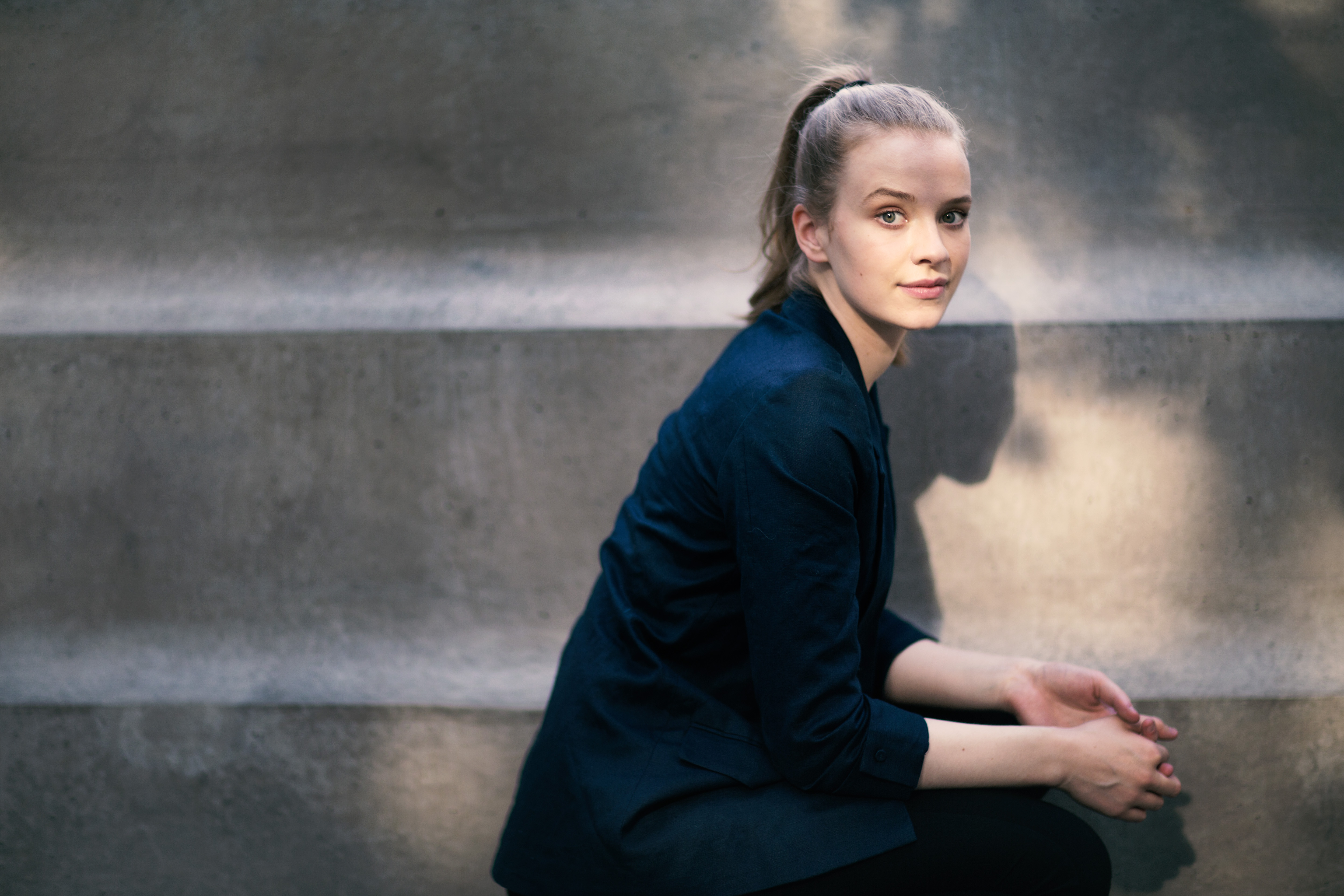
Harpsichordists are infrequent visitors to orchestral concerts, so credit to Mahan Esfahani (above) for tackling two very different yet strikingly complementary works – including the first hearing in this country of another CBSO Centenary Commission. Inspired by matters mundane and metaphysical, the six short movements of Sei Anime have been likened by Bent Sørensen to a French Suite in its expressive contrasts. Unforced alternation of (relatively) slow and fast dances drew an always inquisitive response from the soloist, heard in the context of reduced yet diverse forces that included a range of percussion adeptly handled by Adrian Spillett and the ethereal tones of an accordion played by violinist Kirsty Lovie. By turns enchanting and disquieting, the piece raised many more questions than could be answered at a first hearing.

Esfahani was on familiar ground after the interval with a Harpsichord Concerto in D major by C.P.E. Bach (which this reviewer recalls last hearing at a 70th birthday concert by George Malcolm). If not among his more exploratory works in the medium, this certainly ranks among his most appealing – its three movements perfectly balanced as to form and content such that the lively interplay between soloist and strings in the initial Allegro is complemented with the urbanity and poise of its central Andante, the final Allegro maintaining a scintillating onward motion though to its close. Music such as this most engaging of present-day harpsichordists rendered with unceasing clarity and verve, not least in those cadenzas where the figured-bass writing brought an extemporization whose immediacy never drew attention from the music at hand.

Having proved the deftest of accompanists, Morlot presided over a sparkling account of the suite Stravinsky took from his ballet Pulcinella. Again, it was the lucidity of the woodwind that really came through – not least in the plaintive Serenata or the elegant Gavotta with its two graceful variations. Nor was there any lack of robustness in the opening Sinfonia or, thanks to trombonist Richard Watkin, deadpan humour in the Duetto. An eloquent take on the ensuing Menuetto prepared ideally for the Finale to bring about the uproarious close.
A rewarding concert which deserved a bigger attendance than it received. Those deterred by this ‘journey through time’ will no doubt feel on safer ground next Wednesday, when future chief conductor Kazuki Yamada directs a programme of Prokofiev, Bruch and Mendelssohn.

For more information on the CBSO’s 2021-22 season, click here

Meanwhile for more information on composer Bent Sørensen, click here – and for the artists, click on the names to access the websites of Mahan Esfahani and Ludovic Morlot

In concert – Boris Giltburg plays Granados, Albéniz, Ravel, Rachmaninoff & Prokofiev @ Wigmore Hall

BorisGiltburg2-1440

Granados Goyescas: Quejas, o La maja y el ruiseñor (1909-12)
Albéniz Iberia (Book 3): El Albaicín (1907)
Ravel Miroirs (1904-5)
Rachmaninov Moments musicaux Op.16: no.2 in E flat minor, no.3 in B minor, no.4 in E minor (1896)
Prokofiev Piano Sonata No. 8 in B flat major Op. 84 (1939-44)

Boris Giltburg (piano, above)

Wigmore Hall, London
Monday 14 March 2022

Written by Ben Hogwood

Boris Giltburg

14 March 2022
22:19

This was the second concert in Boris Giltburg‘s Ravel series at the Wigmore Hall – but as he eloquently explained in the programme and from the stage, it was impossible to proceed without responding to the situation in Ukraine.

Born in Russia but of Israeli nationality, Giltburg’s judgement in this was carefully considered. Reminding us that music has the overwhelming ability to reflect conflict as well as providing an appropriate response to it, in Prokofiev‘s Piano Sonata no.8 he had found the most accurate reflection imaginable. Ukrainian-born Prokofiev wrote the piece during the Second World War, and it was premiered by Sviatoslav Richter in Moscow in 1944. Here its resonance was unmistakable, the work unfolding with a mixture of uncertainty and resolve, with searing outbursts and anguished thoughts that spoke of oppression and tragedy. Prokofiev’s trademark dissonances were descriptive, the percussive rhythms laden with military power. The second movement relented a little in search of lyricism, Giltburg finding parallels with the composer’s ballet scores of the period, with hints of Romeo & Juliet carried on the air. Meanwhile the third movement, a powerful presto, tore up the tarmac in its relentless drive forward while finding time to consider the repercussions. Giltburg’s precision and power were beyond reproach here, his performance incisive but deeply reflective of current events. The Wigmore Hall listened closely, moved to silence throughout but responding with sympathetic applause.

Because of this performance the rest of the concert could have paled into insignificance, but that would reckon without some powerhouse performances of music from earlier in the century. It was refreshing to hear two Spanish works for starters. The music of Granados and Albéniz does not get enough exposure, and it should do – both wrote under the influence of Debussy but had something of the French master’s gift for picture painting. Giltburg caught the baleful tones of Quejas, o La maja y el ruiseñor (Lament, or the maiden and the nightingale), while the sultry El Albaicín was vividly descriptive and alluring.

Ravel may have written Miroirs in 1905 but in these hands it still sounded so modern. Noctuelles (Moths), a remarkable piece of picture painting from the French composer, found its match here, Giltburg delighting in its irregular contours, while the cleaner lines of Oiseaux tristes were no less effective. The much-loved duo of Une barque sur l’océan and Alborada del gracioso were brillianly performed – the former capturing the rocking of the boat with uncanny accuracy, surging forward before checking against the spray – and the latter exploring syncopations and dynamic variations to thrilling effect. Finally La vallée des cloches was both reverent and mysterious, notable for meticulous pedal work from Giltburg to maintain the atmosphere.

Immediately before the Prokofiev we heard three of the young Rachmaninov‘s six Moments Musicaux, a breakthrough collection that helped establish him as a serious composer for the piano in 1896. They are of similar design to the pieces of the same name by Schubert, in a group of six but giving the pianist freedom through varying dimensions and moods. These are pieces Giltburg holds close to his heart, and a whirlwind account of the second piece was checked by the darker hues of the third, a funeral march. This provided much food for thought with its nagging motifs, the music returning to the same itch with ominous regularity, before the fourth piece took off at a rate of knots, fearsome virtuosity tempered by immaculate melodic phrasing.

After the Prokofiev had made its mark we heard the ideal foil as an encore, Giltburg playing the Bagatelle no.1 by Valentin Silvestrov. A Ukrainian composer, Silvestrov was born in 1937 and – according to a conversation between Giltburg and a member of the audience – appears to have safely relocated to Poland. The simplicity of this piece, after the crunch of the Prokofiev, was doubly moving.

For more information on Boris Giltburg you can visit his website

In concert – Elisabeth Brauß @ Wigmore Hall – Domenico Scarlatti, Mozart, Ravel & Prokofiev

Elisabeth Brauß (piano)

Domenico Scarlatti Sonata in C minor Kk56; Sonata in C Kk159 ‘La caccia’; Sonata in B minor Kk27; Sonata in B minor Kk87; Sonata in G Kk427 (exact dates unknown)
Mozart Piano Sonata in A minor K310 (1778)
Ravel Sonatine (1903-05)
Prokofiev Piano Sonata no.3 in A minor Op.28 (1917)

Wigmore Hall, London, 24 January 2022

reviewed by Ben Hogwood from the online broadcast

Seven sonatas and a sonatine in the space of an hour represents good value for a lunchtime concert – and even more so when the works in question span nearly two centuries. This was down to the clever programming of German pianist Elisabeth Brauß, a member of the BBC New Generations Scheme. She presented a potted history of the development of the sonata, moving as it did to the very centre of the concert platform by the twentieth century.

Brauß began her imaginatively thought-out hour with five sonatas by Domenico Scarlatti, just under 1% of the composer’s remarkable output in the form. Within his 550 or so published works there is an inexhaustible variety, and Brauß gave us some fine examples. Her crisp delivery of the C minor work was complemented by the playful ‘Caccia’ sonata, Scarlatti’s writing of parallel thirds tastefully ornamented in the right hand. Slipping into B minor, there was a more obvious Bach influence in an elegant performance of the Kk27 sonata, before a more reflective example in the same key, given plenty of room with ideally weighted inside parts. This thoughtful and emotive account was swept to one side by the showy G major sonata, chasing the clouds away.

Mozart‘s A minor sonata followed, a profound work written in the wake of the sudden illness and death of the composer’s mother Anna Maria in Paris, 1778. The principal phrase of the first movement is conspicuous for a ‘wrong’ note, an E flat played at the same time as an A minor chord, which can throw the listener. Brauß did well to give it the surprise factor, resulting in quite an unnerving and uncertain mood.

The second movement was initially calm, bringing out the singing style of Mozart’s marking of Andante cantabile con espressione rather beautifully. There was a refreshing lack of weight to this performance, the melodies floating on air, in contrast to a heavy-set middle section. The Presto finale, initially serious, brightened as the tonality moved into the major key, Brauß sensing hope in Mozart’s writing.

There was clarity in her Ravel, too, which found the right combination of technical flair and intimacy. Brauß portrayed the questioning nature of the first movement, just before its main theme returns and resolves. A limpid second movement was followed by a finale notable for its virtuosity – following the Animé marking – but which kept its conversational qualities.

Prokofiev’s Piano Sonata no.3 is a compressed firecracker, a work with plenty to say in its eight minutes. This performance was very impressive if holding back a little in the more raucous moments. Brauß was a more than capable guide to this impetuous piece, however, finding the heart of the adventurous coda, which sounds a lot newer than its 1917 composition date would suggest.

She clearly loves Prokofiev, as the Prelude in C major Op.12/7 made an ideal encore, bringing out the composer’s balletic side. There was less percussiveness in this lyrical account, notable for some lovely melodic phrasing.

Watch and listen

You can listen to the repertoire from this concert in choice recordings on the Spotify playlist below (Elisabeth has not yet recorded any of the pieces):

In concert – Johan Dalene & Nicola Eimer play Ravel, Rautavaara & Prokofiev @ Wigmore Hall

johan-dalene-fredrik-schlyter

Ravel Violin Sonata in G major (1923-27)
Rautavaara Notturno e danza (1993)
Prokofiev Violin Sonata no.2 in D major Op.94b (1944)

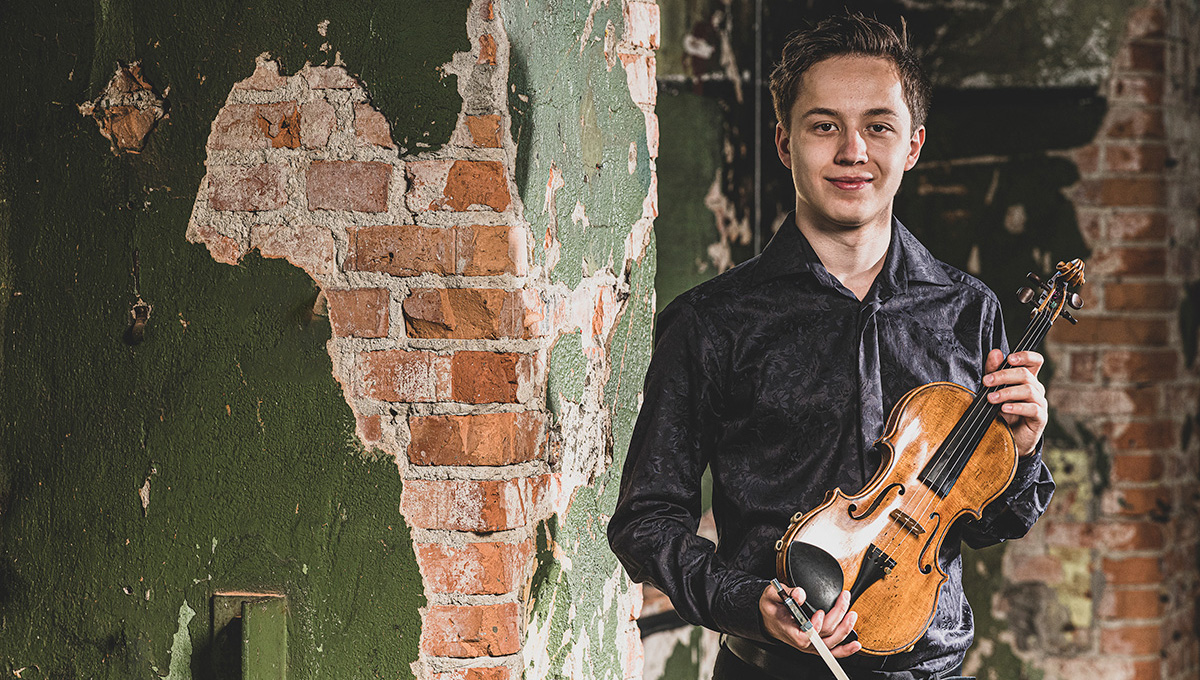
Johan Dalene (violin, above), Nicola Eimer (piano, below)

Wigmore Hall, London
Monday 22 November 2021

Written by Ben Hogwood. Photos by Fredrik Schlyter (Johan Dalene) and Hedley Dindoyal (Nicola Eimer)

This was the first Wigmore Hall recital for talented Swedish violinist Johan Dalene, the BBC New Generation Artist performing a lunchtime concert with British pianist Nicola Eimer. It was a programme matching the music to the bright November sunlight visible through the roof of the hall.

Unfortunately the concert programme did not contain any biographical artist information, which was a shame as Dalene has already achieved a great deal by the age of 21. By no means the least of his achievements is a fine album for BIS Records with Christian Ihle Hadland, Nordic Rhapsody – where he juxtaposes fine works for violin and piano by Grieg, Stenhammar, Sinding, Sibelius and Rautavaara.

The latter composer provided the Notturno e Danza at the centre of today’s programme, an appealing piece for students that is deceptively difficult to get right. Dalene’s tone carried an atmospheric Notturno capturing the composer’s depiction of changing light patterns, and shaded the quick Danza beautifully and with impressive volume.

Before the Rautavaara we heard an excellent performance of Ravel’s second Violin Sonata, as it is now recognised. This work was completed in spite of the composer’s frank admission that he didn’t think violin and piano were a good match – but here they united in a compelling account. This was in spite of the first movement, where both instruments essentially go their own way. The musical material is elusive, worrisome even, but with the clarity of Dalene’s bow strokes, Ravel’s thoughts were never anything less than convincing. Eimer’s attentive piano part pulled the music towards different tonalities, as Ravel would have wished.

The second movement relocated us to New York with bluesy incantations and jazzy rhythms. It fell naturally under Dalene’s spell, with a wide range of colours and shades on display, while Eimer provided beautifully judged punctuation to bring the syncopations to the fore. Only the last movement was able to break free of these sleights of hand, its moto perpetuo brilliantly judged and fearlessly executed, both players brilliant in their virtuosity.

Another sonata formed the third work in the programme. Prokofiev’s Violin Sonata no.2 in D major may be an arrangement, being a re-edit of his Flute Sonata at the request of David Oistrakh in 1944, but it is a most genuine work for the two instruments. Dalene and Eimer gave a sunlit performance, enjoying the melodic abundance Prokofiev lends the violin, but were wary too of the shadowy presence beneath the surface of the scherzo and the slow movement in particular. Dalene’s tone was ideally suited to the occasionally barbed lyricism of the former, while the lyrical slow movement had a sunlit warmth to go with the weather. So, too, did the finale, capping a wonderful performance where the rustic theme stayed in the mind for long after the concert had finished.

As a thoughtful encore Dalene and Eimer included Lili Boulanger’s Nocturne, a starry-eyed diversion of subtle beauty, the harmonic shifts tastefully secured. Both players made a very strong impression throughout the concert, their natural partnership blossoming on the stage. Watch it online if you can!

You can watch this concert on the Wigmore Hall website for the next 28 days – and you can hear the music played by Mischa and Lily on the Spotify playlist below, including Johan’s recording of the Rautavaara: