News – the CBSO are Bringing The Light

published by Ben Hogwood from the original press release

This winter, the City of Birmingham Symphony Orchestra will illuminate Birmingham’s Symphony Hall with Bringing the Light – a remarkable celebration of music, culture and community, featuring three brand-new pieces by Roxanna Panufnik, Joan Armatrading and Cassie Kinoshi alongside A.R. Rahman’s Slumdog Millionaire Suite arranged by Matt Dunkley.

Taking place on Sunday 7 December at 5pm, this uplifting afternoon of music and storytelling harnesses the full strength of the CBSO, the CBSO Chorus, CBSO Youth and Children’s Choruses, alongside presenter Satnam Rana, conductor Michael Seal and sitar soloist Akash Parekar. The programme blends orchestral and choral brilliance, contemporary composition and global influences, promising an unforgettable celebration of togetherness and creativity.

Emma Stenning, Chief Executive of the CBSO said: “This concert shines a light on Birmingham’s extraordinary diversity and creativity. ‘Bringing the Light’ will fill Symphony Hall with music that uplifts, connects and inspires – a true celebration of what makes this city so special. After a year that has been characterised by so much division and polarisation, this concert will do a great deal to remind us of what we as people all have in common – and the power of music as a force to unite us all.

“At the CBSO, we’re passionate about creating experiences that feel both rooted in our home city and open to the world. This concert brings together voices from different traditions, faiths and generations to reflect the vibrancy of Birmingham today.”

At the heart of the concert is Aurora a new work by composer Roxanna Panufnik and writer and librettist Jessica Duchen, co-commissioned by the CBSO, Royal Choral Society and the Arktisk Filharmoni. It is a powerful piece that explores the power of light as a universal symbol of hope, connection and unity – drawing inspiration from festivals of light from around the world. Developed in close collaboration with 14 UK faith leaders and devotional musicians, the text of each movement represents a different faith: Christian Christmas; Muslim Milad un Nabi; Sikh, Jain and Hindu Diwali; Jewish Hanukkah; Tibetan Buddhist Gaden Ngamchoe and ending with a beautiful, musical depiction of the Aurora Borealis for those of all faiths and none.

Roxanna Panufnik said: “When we hear about different faiths in the media it’s too often about conflict between them and very rarely about their respective beauty and the common themes we all share. We have planned this work over the past 10 years, and it has been hugely inspirational collaborating with our phenomenal consultants: 14 UK Faith leaders and their respective devotional musicians. The CBSO is perfectly placed, in a city with a fabulous and dynamic diversity of cultures and faiths, to premiere this work. Our 270 singers will be of multiple ages and faiths – so will, we hope, our audience. This is a piece for EVERYONE.”

Jessica Duchen adds: “The overarching image of Aurora: Faith in Harmony is the Northern Lights, a miracle of nature that can inspire the kind of awe in us all that some people find in faith. Embracing the secular community alongside a range of world faiths that have festivals of light in the depths of winter, the piece celebrates the virtually universal human longing for light in darkness, which we hope can help to bring people of all cultures together. It has been an incredible journey for us both – and Roxanna has excelled herself in writing music of extraordinary beauty.”

The performance opens with a world premiere of Homeland by singer-songwriter Joan Armatrading CBE– which she describes as her “love letter” to Birmingham.

Joan Armatrading comments: “Homeland is a piece that highlights the city of Birmingham and its people, reflecting their strong sense of community, resilience and warmth. It is a tribute to a place to which I am bonded, and one I will always hold with affection and pride. Through both words and music, the piece weaves together the sounds, energy, and rhythms of the city while reaching out into its vast surrounding countryside. This is Birmingham not simply as a backdrop, but as a living, breathing presence – an often-underrated landscape where industry and nature exist side by side in quiet beauty.”

The concert also includes a new commission by Mercury Prize-nominated and Ivors Academy Award-winning composer and saxophonist Cassie Kinoshi with lyrics by poet Lydia Luke.

Cassie Kinoshi said: “I was in the state of mind to stay centres on how nature grounds and steadies us within the constant movement of city life. It captures the ways young people find calm and connection in fleeting everyday moments; rain against a bus window; flowers at a market stall; or the scent of trees through an open window; and celebrates the beauty of finding stillness amid the noise. Created with input from the Southwark Playhouse Youth Company, the piece offers a portrait of the city through young people’s eyes: a place where nature and metropolitan life coexist. It is about recognising how these small, tender moments can bring comfort, belonging, and a sense of balance in an increasingly hectic world. Rather than portraying nature as something distant or idealised, the piece treats it as part of daily life: a source of connection to oneself, and a reminder that even in the most built-up places, the natural world remains ever-present.”

The CBSO acknowledges the generous gift from Frances and Barry Kirkham, whose support helped ​make Aurora and i was in the state of mind to stay possible.

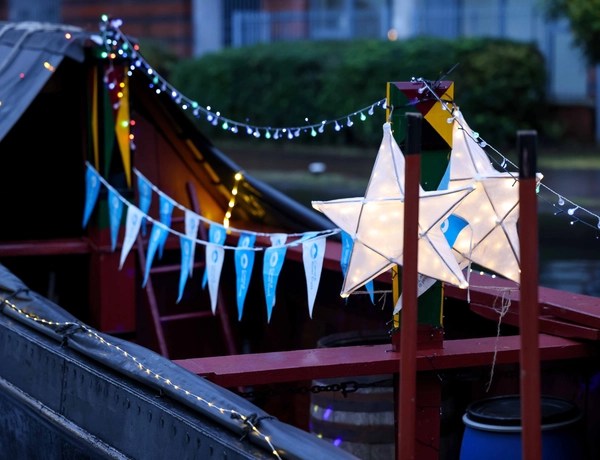
Leading up to the performance, there will be lantern-making workshops in partnership with the Canal and River Trust and Crafting Community. As well as a beautiful lantern walk along Birmingham’s canals, accompanied by narrowboats decorated by light artist Sophie Handy and featuring local musicians, which begins at Roundhouse Birmingham and ends at the ICC with a performance by the CBSO’s community choir SO Vocal.

Audiences are warmly invited to this vibrant celebration of culture and light which unites communities from across the city and beyond to share a moment of joy, hope and reflection.

Full details can be found on the CBSO’s website

Published post no.2,721 – Monday 17 November 2025

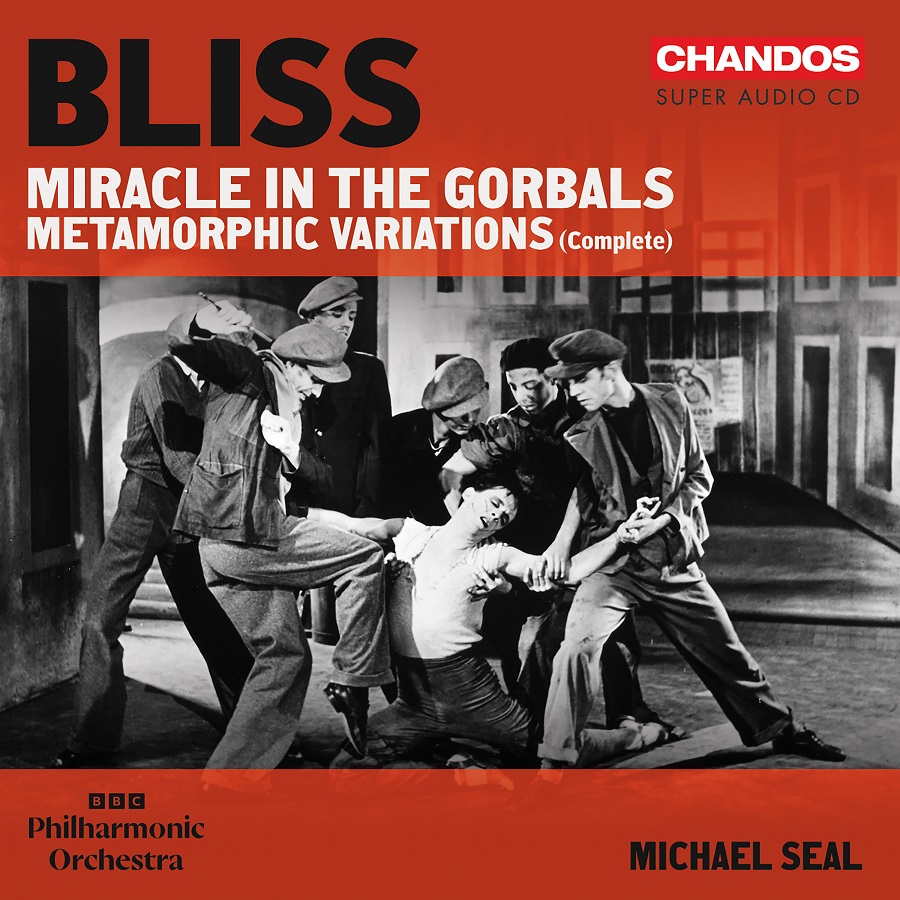
New music – BBC Philharmonic Orchestra / Michael Seal – Bliss: Miracle in the Gorbals; Metamorphic Variations (Chandos)

adapted from the press release by Ben Hogwood

An important new release in the Sir Arthur Bliss anniversary year, from a record company who have done so much to advance the cause of the composer. This is the recording made around a concert in Nottingham in February, where the Metamorphic Variations were appraised by Arcana’s Richard Whitehouse.

Chandos write in their press release: “Perhaps now overshadowed by his earlier ballet Checkmate, Miracle in the Gorbals was a tremendous hit for Bliss and the Sadler’s Wells Ballet company. First performed in 1944, it was repeated in every season through to 1950. Based on a scenario by Michael Benthall (inspired by Jerome K. Jerome and Dostoyevsky), the ballet features the appearance of a Christ-like figure amid Glasgow’s most infamous slum. This mysterious Stranger performs a miracle, reviving the Girl Suicide, who in despair had earlier thrown herself into the Clyde. The locals rejoice, but an Official (Benthall had in mind a priest) is jealous and, after a failed attempt to cast doubt on the virtue of the Stranger via the local Prostitute, has him slashed to death by a razor gang.

Bliss’s score employs a wide range of styles and harmonic language, and also exploits Leitmotifs for the principal characters. Originally titled Variations for Orchestra, Bliss composed the Metamorphic Variations towards the end of his life, during a late surge of creativity. Two of the sixteen movements were dropped before the first performance (given by the LSO and Vernon Handley in 1973) and for some reason were not re-instated at any of the later performances of the work until that given by Michael Seal and the BBC Philharmonic Orchestra in February 2025, the day before they made this recording.

Published post no.2,690 – Friday 17 October 2025

In concert – BBC Philharmonic Orchestra / Michael Seal: Discovering Bliss

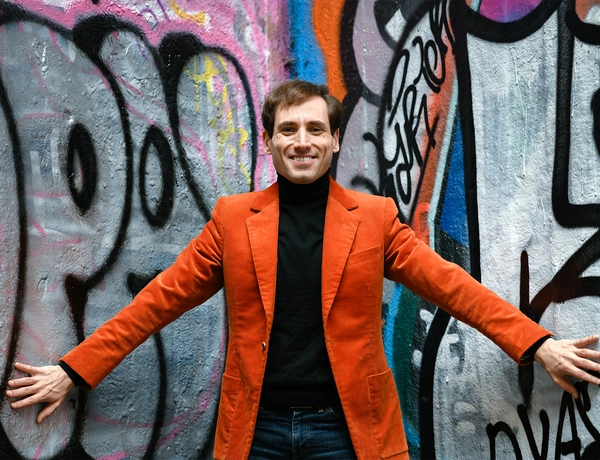
BBC Philharmonic Orchestra / Michael Seal (above)

Sir Arthur Bliss
Miracle in the Gorbals (1944) – Overture
Things to Come (1934) – March
Metamorphic Variations (1972)

Royal Concert Hall, Nottingham
Wednesday 26 February 2025

Reviewed by Richard Whitehouse

2025 promises no mean retrospective of Arthur Bliss’s music in this 50th anniversary year of his death but no more significant revival than that of Metamorphic Variations, the composer’s late masterpiece that was heard live this evening for the first time in more than three decades.

Completed in December 1972 and premiered at Croydon’s Fairfield Halls the following April, Metamorphic Variations was the last while also the longest of Bliss’s purely orchestral works. Shorter than might have been, even so, as two of its sections were omitted at that first hearing (Leopold Stokowski having requested more rehearsal time for Tchaikovsky’s Pathétique after the interval) and given as an appendix in the published score; being excluded at later hearings as on the two commercial recordings. Tonight brought their reinstatement almost 52 years on.

First performed as ‘Variations for Orchestra’, this work only acquired its definitive title after considerable soul-searching on the composer’s part, though Metamorphic Variations is more accurate in terms of those ideas outlined in the initial Elements: an oboe cantilena, a phrase for horns then strings, and a cluster on woodwind – thereby setting up melodic, rhythmic and harmonic possibilities to be explored intensively over the ensuing 15 sections. The first five comprise a lively Ballet, a brusque Assertion and atmospheric Contrasts whose absence hitherto has been to the detriment of overall balance. Less crucial formally, Children’s March is of considerable fascination for its deft pivoting between innocence and experience, while Speculation marks a crucial expressive juncture through its renewed sense of anticipation.

Such anticipation is fulfilled by the starkness of Interjections then incisiveness of Scherzo I, before Contemplation yields further repose. Next come the two most elaborate sections – an increasingly energetic Polonaise being followed by Funeral Processions which builds to a wrenching, even anguished culmination. A lighter sequence moves from the dextrous Cool Interlude, via the angular Scherzo II, to the ingratiating Duet – an intermezzo prior to the final two sections. A brief yet potent Dedication makes explicit the work’s inscription to the artist George Dannatt and his wide Ann, then Affirmation draws each of the main elements into a sustained peroration thrown into relief through its ultimate subsiding into a return of the oboe cantilena from the opening and which, in its turn, brings a withdrawal into silence.

Scored with real virtuosity for sizable forces, Metamorphic Variations proves no less testing for the players as it is conceptually for the listener, though the BBC Philharmonic responded with assurance to Michael Seal who (given the unavailability of John Wilson) had not merely learnt the score in around 10 days but ensured an interpretation that was distinctively his own. Hopefully a recording from this source (how about it, Chandos?) will follow before too long: meanwhile, however, this performance is being broadcast by BBC Radio 3 in the near future.

Having provided the musical illustrations in Stephen Johnson’s introductory talk, Seal and the BBCPO had framed the first half with the fateful ‘Overture’ to Bliss’s wartime ballet Miracle in the Gorbals then the rousing ‘March’ from his inter-war score to the film Things to Come.

For more information on the orchestra’s 2024-25 season, head to the BBC Philharmonic Orchestra website Click on the names to read more about conductor Michael Seal, and about Sir Arthur Bliss himself. You can also find out more about The Bliss Trust

Published post no.2,463 – Tuesday 4 March 2025

In concert – Boris Giltburg, CBSO / Michael Seal: Rachmaninoff Paganini Rhapsody & Shostakovich 8th Symphony

Boris Giltburg (piano, above), City of Birmingham Symphony Orchestra / Michael Seal (below)

Rachmaninoff Rhapsody on a Theme of Paganini Op.43 (1934)
Shostakovich Symphony no.8 in C minor Op.65 (1943)

Symphony Hall, Birmingham
Thursday 28 September 2023

Reviewed by Richard Whitehouse. Pictures (c) Sasha-Gusov (Boris Giltburg), Eric Richmond (Michael Seal)

Now into his 12th season as its associate conductor, Michael Seal appeared this evening with the City of Birmingham Symphony Orchestra in works written before the Second World War and during the middle of a conflict whose consequences seem very far from being played out.

Although present-day ubiquity had rather dulled its more innovative aspects, Rachmaninoff’s Rhapsody on a Theme of Paganini remains a game-changer through the integration of piano with orchestra and conception of just what a piano concerto might be. Taking Paganini’s 24th Caprice for violin as the basis for a continuous sequence of 24 variations barely disguises the three-movement format of an archetypal concerto. Boris Giltburg responded with no lack of flair or panache, while recognizing the formal divisions of 15, three and six variations across which the theme is reconstituted in ever more ingenious and unexpected ways. The evergreen 18th variation saw a heartfelt response from CBSO strings, with the closing sequence finding this theme in pointed conflict with the ‘Dies irae’ chant right up to a perfectly judged pay-off.

An impressive performance and Giltburg (who in appearance and approach bears more than passing resemblance to a young Vladimir Ashkenazy) gave the second from Rachmaninoff’s second set of Études-Tableaux (aka The Sea and the Seagulls) as a limpidly affecting encore.

It may have had several fine performances from the CBSO over the decades (Rudolf Barshai, Maxim Shostakovich and Cristian Măcelaru immediately come to mind), but Shostakovich’s Eighth Symphony remains a testing assignment both for players and listeners – not least in an opening movement whose underlying Adagio tempo and almost unrelieved sombreness seem to override its constant evolving toward a violent then wrathful culmination. Seal (above) paced it all superbly and the CBSO responded with like dedication, but it was Rachel Pankhurst’s take on the plangent cor anglais soliloquy during the reprise that set the seal on a memorable account. Nor did Seal skimp on the satire of the Allegretto, a response to the inanity and idiocy of war where those climactic overlapping woodwind and brass entries emerged with fearsome acuity.

The inevitability with which the final three movements segued one into the other did not belie their disjunctive contrasts. With its overtones of mechanized warfare and martial rallying, the second scherzo powered to a climax as fairly exploded into the ensuing Largo – a passacaglia whose numbed unfolding on strings is offset by solos from horn and clarinet, deftly rendered by Elspeth Dutch and Oliver Janes. Out of such desolation the finale’s seeming promise of a return to innocence cannot be sustained beyond a return of the first movement’s culmination, and if the present account faltered momentarily on its way there, the closing pages – as earlier themes gradually subside into the most resigned of resolutions – were ideally judged. That one could have heard a pin drop in the final minutes says much for their effect on those listening.

An enthusiastic reception could not disguise the less than full house for a piece that is never easy or enjoyable listening, and it would be a tragedy were encroachment of ‘lifestyle’ issues to offset future hearings. This eloquent and insightful reading provided its own justification.

You can read all about the 2023/24 season and book tickets at the CBSO website. Click on the artist names for more information on pianist Boris Giltburg and conductor Michael Seal

In concert – Roderick Williams, CBSO Chorus, CBSO / Michael Seal: Vaughan Williams at 150: 5 Mystical Songs, Symphony no.5

Vaughan Williams
The Wasps – Overture (1909); Towards the Unknown Region (1906-07); Five Mystical Songs (1906-11); Symphony no.5 in D major (1938-43)

Roderick Williams (baritone, above), CBSO Chorus, City of Birmingham Symphony Orchestra / Michael Seal

Symphony Hall, Birmingham
Thursday 10 November 2022

Reviewed by Richard Whitehouse

The City of Birmingham Symphony Orchestra’s mini-series devoted to Vaughan Williams continued this evening with the overture from his music to Aristophenes’ satire The Wasps, paced by Michael Seal (below) so its animated and soulful themes complemented each other perfectly.

Judicious was no less true of this first half with its overview of the composer’s music across the first decade of the last century. Its premiere at the Leeds Festival bringing a first taste of national acclaim, his ‘song for chorus and orchestra’ Toward the Unknown Region sets Walt Whitman with assurance and imagination in its evocative opening section, and if the ensuing peroration feels a little contrived – the journey proving more memorable than the destination – that was no fault of the CBSO Chorus whose contribution was sensitively attuned throughout.

As it was with those Five Mystical Songs in which the composer gave full vent to his love for the Metaphysical poets and George Herbert in particular. A curiously hybrid conception, the chorus is very much secondary to the baritone soloist throughout much of the first three songs – a congregational presence in the processional Easter and then underpinning the emotional intimacy of I Got Me Flowers or confiding profundity of Love Bade Me Welcome, before falling silent in The Call. Roderick Williams was eloquence itself in this latter setting and a forthright presence in the preceding, before sitting out the Antiphon with its pealing bells and mounting exultation. Williams has recently given the rarely heard version of these songs with piano but hearing them with such burnished splendour as here was its own justification.

Is the Fifth Symphony unduly exposed nowadays? The composer’s most characteristic and culturally significant such piece might risk palling with too much repetition, but there was no chance of that here. Seal (above) set a flowing if not too swift tempo for the Preludio, pointing up the radiant tonal contrast between its themes – the second of them capping the movement to thrilling effect towards its close. Its rhythmic pitfalls ably negotiated, the Scherzo had the requisite deftness and mystery while taking on a degree of malevolence over its later stages. The Romanza then emerged surely yet unforcedly through glowing chorales and plaintive soliloquy (CBSO woodwind at its most felicitous) to a heartfelt culmination before subsiding into a hardly less enveloping serenity – its inspiration in John Bunyan tacitly acknowledged.

Enough had wisely been kept in reserve for the final Passacaglia – its initial stages evincing an almost nonchalant gaiety as only clouded towards its centre with the recollection of earlier ideas. By making it the work’s emotional highpoint, moreover, Seal ensured that the epilogue capped not just this movement but the work overall – its transcendence (hopefully) speaking as directly to listeners today as those at the premiere almost 80 years ago. Certainly, it would be a real misfortune were this music ever to be viewed solely from the perspective of the past.

An absorbing performance, then, that reaffirmed the greatness of this music to an enthusiastic audience. Vaughan Williams at 50 concludes tomorrow evening with the CBSO providing a live soundtrack to the composer’s most ambitious cinematic project – Scott of the Antarctic.

You can read all about the 2022/23 season and book tickets at the CBSO website. For more information on Scott of the Antarctic, click here – and click on the artist names for more on Roderick Williams, the CBSO Chorus and Michael Seal