InFiné have been extending their reach with a clutch of interesting digital compilations of late, including Club InFiné and InFiné Rewind 2024.
The French label is largely known for its experimental strands, but they have a far musical reach – as this cosmopolitan ambient collection shows.
What’s the music like?
The mix immediately reaches its goals through the soft beats of Murcof and the beautiful sounds of Brian Eno refracted through the piano of Bruce Brubaker, whose take on Music For Airports 2/1 will soothe any fevered brow. The same can be said for Vanessa Wagner’s piano, Struggle For Pleasure viewed through the hazy viewfinder of GAS.
There are some long form ambient epics here too, in the form of Gaspar Claus with the slightly disquieting Inside, and an epic take on Carl Craig’s At Les from Abul Mogard. Elsewhere Loscil takes the slowly oscillating piano of Murcof x Wagner’s Avril 14th (Aphex Twin), opening it out in timeless widescreen. The track leads seamlessly into Cubenx’s Human Dilemma.
Does it all work?
It does indeed, especially when experienced as a 13-track whole. As a bonus, if you visit the compilation’s Bandcamp page you get helpful biographies of all the ambiently inclined InFiné composers and musicians.
Is it recommended?
Very much so. InFiné know exactly what they’re doing with this compilation, providing aural balm whenever the listener needs it.
Ambient music lies at the very core of InFiné. We’re devotees of the great Brian Eno, raised on the 4AD label, and nurtured on KLF’s pioneering Chill Out and Aphex Twin’s Selected Ambient Works on Warp. Ever-curious listeners, we soaked up the German vibrations of early Ash Ra Tempel before diving into the abyssal basslines of Moritz Von Oswald or the stark minimalism of Pole.
Later, we encountered other wizards around the globe: Murcof in Mexico, Loscil in Canada, Kaito in Japan, Biosphere in Scandinavia, and more recently Kmru in Kenya. This music forms a central thread in our catalog, sitting alongside more rhythm-driven electronic styles, innovative classical hybrids, and increasingly even pop. In Ambient, the role of sound is more vital than in any other genre! Each note needs ample space to resonate, and every piece immerses you in the pure essence of its sound. These tracks stretch time by using minimal resources to create a profound experience. Here, silence is part of the composition, offering a depth and richness unlike anything else.
What seems simple often takes hours in the studio to refine and place each note, adjusting the movement of a resonance like an architect shaping a structure. Everything must be perfectly calibrated, without artifice, like a zen garden where the tiniest imperfection disrupts the harmony. Ambient goes straight to the heart of music: emotion! Sound becomes a safe haven, a powerful instrument for resilience and introspection, bringing us together to face personal or collective challenges. Fueled by this conviction and countless hours of practice, InFiné developed its own “medicinal music” series. We’ve carefully selected audio potions from our catalog—often electronic, sometimes more organic or experimental—to guide you through beneficial emotional landscapes. InFiné Ambient is an invitation to travel without moving, a moment to reset our humanity in a world assaulted by outside turbulence.”
We’ve already spoken to Murcof about his collaboration with pianist Vanessa Wagner – and now it’s time for her side of the story. She describes how she found classical music and how her meeting with Murcof opened up all sorts of electronic possibilities. Here they are on their work together:
Vanessa, can you remember your first encounter with classical music?
My parents were not listening to a lot of classical music. They were rather into jazz and the French chanson. Then one day, the piano of my great-grandmother came home, and I started to play. My childhood idol was a wonderful Romanian pianist named Clara Haskil, far away from the glamour girls are usually dreaming of! She is still an artist that I love.
Who are the composers you have grown to particularly admire?
I grew up with the music of Bach, Schubert, Schumann, Mozart, Rachmaninov, Brahms and Janáček, who are still my favourites, Schubert especially. His melancholy, and the time stretched in his music touches me enormously. Die Schöne Müllerin and Winterreise are pieces that never leave me.
What was it that appealed to you about working with Murcof?
I was the one to initiate this encounter. I have listened to his music for a long time. I met him at the workshop of the Infiné label, and we made an improvised test. Then I had the chance to have a residency in a room of the Arsenal of Metz. They gave me carte blanche to develop new projects, I invited Murcof to play with me, and Statea was born.
How did you make sure you got a good balance between the piano and the electronics?
I always asked Murcof to pay attention to the acoustic piano sound. The piano is the starting point of this project, and it was important that the electronic effects do not swallow its sound even if it is sometimes distorted. Similarly, it also seemed very important to stay true to the scores of composers that I interpret. That’s why the album is called Statea, which means balance in ancient Italian.
Had you listened to much electronic music prior to working with him?
I have listened to electronic music for 20 years. At that time, in my classical circles, it was frowned upon. I had never heard of the big techno anthems, and I went right back to ambient/IDM artists – the likes of Autechre, Aphex Twin, Model 500, Maurizio, UR etc.
Do you think there are other albums or pieces of music that bring classical and electronic together well?
Max Richter´s Four Seasons of Vivaldi works pretty well. Brian Eno also has a beautiful piece called Fullness of Wind, taking its lead from Pachelbel.
Do you think classical and electronic music have a lot more in common than one would expect?
I think meetings of the two styles are quite possible, if one avoids falling into the mainstream that we call crossover classical. The approach focuses on the sound result. We must respect the original script. Adding a beat onto a piece of Mozart or Beethoven cannot be a creative artistic process in itself.
Moreover, music known as ‘contemporary classical’ and art music has a lot in common with experimental electronic. Bridges are possible and desirable between these universes.
Has working with electronic music helped your appreciation of classical?
This does not specifically help me in my classical interpretation. What I greatly appreciate is to exercise out of my classical world, to transform the sound of my instrument, and to experience concerts differently, giving a new fresh perspective to my daily occupation of being a pianist.
For me, it is an interior window that opened itself, and I strongly hope that this is new cornerstone in the musical world which will contribute to the opening of minds and ears!
If you could recommend one piece of classical music to Arcana readers that you’ve been listening to recently, what would it be and why?
I would recommend listening to the Goldberg Variations of Bach (Glenn Gould, for example), the Death and the Maiden String Quartet by Schubert, or Tabula Rasa by Arvo Pärt, especially the second movement Silentium.
Statea, by Murcof and Vanessa Wagner, is out now on Infiné. The pair will appear at the Barbican on Monday 31 October as part of a bill including pianist Lubomyr Melnyk. Tickets can be purchased from the Barbican website. Vanessa will also be giving her thoughts on classical music to Arcana shortly!
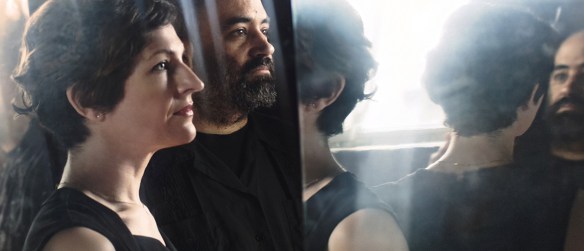
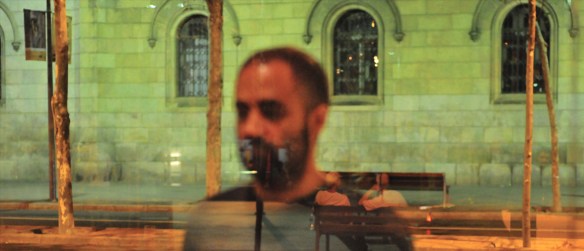
Murcof is Mexican musician Fernando Corona, an artist who integrates classical and electronic music. Working with pianist Vanessa Wagner he has recently released the Statea album, an ambient piece of work that takes its source material from John Cage and Erik Satie amongst others. Here he talks to Arcana about his love of classical music, and how the two forms harmonise together. But first, here’s an introduction to their album together:
Can you remember your first encounter with classical music?
It was a long time ago when I was a kid, and it comes from the side of my father in the family. It was an album of Wendy Carlos playing Bach in the late 1970s, I think. He also did some electronic / analogue synthesizer interpretations of Bach’s music, and so that was the first proper marriage of electronic and classical that I heard. I developed an interest in both, and I became much more familiar with 20th century music from composers like Stravinsky, the Schoenberg school, Xenakis, Ligeti and all the people up to Arvo Pärt, Silvestrov and the minimalists. Classical music has been with me all this time from my childhood and this album is a logical place to go because of that.
How did you get to work with Vanessa?
I met her before we started making music, through her husband Alexandre Cazac. He is director of the Infiné label, and I have been friends with him for many years. We’ve worked together, and in that time he has been very supportive. It wasn’t until a week-long workshop that we did a small arrangement together however. We were playing the same night, and Vanessa was the first one on, then me, so we interlinked the two. Statea has been a work in progress since 2010.
In that time we only did 20 or 30 concerts together, so it is still a fresh collaboration, and now with the album done we are adapting it for the stage. Many things have changed, and we have started from scratch again with some of the pieces, but we have always respected what we are doing.
For our Satie work (Gnossienne no.3) the piano sounds have a lot of analogue processes, where we have brought the piano audio signal into the modular system, before messing around with ring modulation, filtering, and experimenting with the possibilities. The piece is not too long, but I recorded around 45 minutes of messing around and cut the most important and interesting bits to fit the final track.
The album is called ‘Statea’. Is that because you achieve the ideal balance between classical and electronic music?
It’s because to make an album is sometimes the hardest part. It was open enough, it wasn’t going to encapsulate us in a direct way, a literal way, but we talked about a good balance between acoustic and digital. You can listen to the piece as one whole, not just the acoustic and not just the digital but something that works together. That is one of the things I am looking for, not getting lost in the sounds and what I have to say. That’s the reason for the name. We were initially going to use the Latin but Alexandre suggested the old Italian way.
Sometimes when classical and electronic music meet the results are a bit cheesy, but there is a very deep emotion to what you do.
That’s good to know, it’s a process and a matter of deciding what works and what doesn’t. It’s telling a story, and each sound needs a reason for existing. Vanessa and I were working together for a common goal. Most of these compositions are well known, and people have an idea about them, but even if it’s an abstract message it’s still there. You can enhance it or steer it off somewhere else.
With Satie, yeah, we wanted to see him a new light, especially as it’s one of the pieces that is most famous. It was tricky to work with it because of what you just said. We wanted to try and prepare a fresh view of the piece, to justify Vanessa and I working on it to contribute something new.
Is your approach in some way similar to that of Satie, a kind of ‘less is more’ viewpoint?
In a way, though I do find it quite a challenge to say when a track is done. I take that step very seriously, and I don’t like to overdo or underdo things. When a piece is finished it is when I have explored so many possibilities! Then I choose the best one, polish it and finish it.
Do you intend to continue working with classical music in this way?
Yeah. There are many things that can be done with classical music, and there are many approaches I would like to try. I would say ‘watch this space’, with compositions old and new. The acoustic instruments are so rich, and it is wonderful to work with them electronically and to open a can of worms with some of the weird harmonics that are peculiar to those instruments.
It has been a really strong emotional passage for me since our early ages, it is a big part of me on a personal level, and it is a natural situation for me to work with it.
You have a very fine ear for orchestration. Have you ever written for a full orchestra?
Yes. I did a small interaction with Jean-Paul Dessy, from Belgium, who is a composer and a director. Musiques Nouvelles is the name of his ensemble, and they adapted a piece of mine for orchestra. I have been sitting with this idea for a long time, and I would love to sit down with a composer / director who is open to the idea. It would be a bit stressful for sure but would be a lot of fun as well.
What does classical music mean to you?
For me personally each kind of music is a whole avenue of expression – classical, jazz and electronic with its many subgenres. Classical is long standing for so many centuries, and for me it is about always keeping with acoustic instruments – the more conservative music.
Classical music is a combination of centuries of studying, developing, trial and error of previous work. It is an emotional world but also a very strict one. The core essence is the compositions, but you need trained interpreters to play it. Because of that it can be stressful and competitive, but I think it is worthwhile to have highly trained interpreters so that we can enjoy the music of the past, from the Baroque to the 20th century twelve-tone music of Schoenberg and his school.
It is always this though – highly emotional and direct. In my case I formed an instant connection with it and because of that I have always found it very emotional.
If you could recommend one piece of classical music to Arcana readers that you’ve been listening to recently, what would it be and why?
I always go to one of my favourite composers of late, Valentin Silvestrov, a composer from the Ukraine. His latest work is amazing and I often go back to his Requiem, written for his wife. One small section of it is also part of a series of songs for piano and voice, but he also did a version for choir and orchestra. It is not a new piece but it is the one that comes to mind right now.
Statea, by Murcof and Vanessa Wagner, is out now on Infiné. The pair will appear at the Barbican on Monday 31 October as part of a bill including pianist Lubomyr Melnyk. Tickets can be purchased from the Barbican website. Vanessa will also be giving her thoughts on classical music to Arcana shortly!

 Arcana.fm