Arcana at the opera: Un giorno di regno @ Garsington Opera

Un giorno di regno (1840)

Melodramma giocoso in Two Acts – music by Giuseppe Verdi; Libretto by Felice Romani (revised by the composer)

Sung in Italian with English surtitles

Il Cavaliere di Belfiore – Joshua Hopkins (baritone), Il Barone di Kelbar – Henry Waddington (bass-baritone), La Marchesa del Poggio – Christine Rice (mezzo-soprano), Giulietta di Kelbar – Maddison Leonard (soprano), Edoardo di Sanval – Oliver Sewell (tenor), La Rocca – Grant Doyle (baritone), Il Conte Ivrea – Robert Murray (tenor), Delmonte – James Micklethwaite (tenor), Servant – Daniel Vening (bass)

Christopher Alden (director), Charles Edwards (sets), Sue Willmington (costumes), Ben Pickersgill (lighting), Illuminos (Matt and Rob Vale) (video), Tim Claydon (choreographer)

Garsington Opera Chorus, Philharmonia Orchestra / Chris Hopkins

Garsington Opera, Wormsley
Monday 1 July 2024

review by Richard Whitehouse Photos by (c) Julian Guidera and Richard Hubert Smith (as marked)

Garsington Opera has a laudable track-record in presenting rarities or supposed ‘also-rans’ to best advantage, with this new production of Un giorno di regno no exception. Verdi’s second opera fell flat on its premiere at La Scala in September 1840, though the death of his wife and both of his children over the previous two years meant his heart was simply not in the writing of a comic opera: one of several extenuating circumstances that included a dearth of suitable singers for the main roles plus the demonstrably backward-looking nature of the work itself.

All credit to Christopher Alden for creating a production which, whatever its modishness of appearance, is rarely less then relevant and always entertaining. Verdi’s hurried refashioning of a 22-year-old libretto – concerning real-life impersonation of King Stanislaus prior to his briefly regaining the Polish crown in 1733 – was never likely to thrill the Milanese audience, but it does provide a lively context for this sequence of increasingly inane goings-on such as respond well to being situated in an authoritarian state swamped by ‘fake news’ and political one-upmanship. Just occasionally the deluge of video imagery threatens to overwhelm what is being enacted on stage but, overall, what can seem a needlessly involved and diffuse plot is, if not simplified, thrown into sharper focus so as to maintain the interest of those present.

In so doing, Alden is abetted by the faux-stylishness of Charles Edwards’s sets and the no less eye-catching costumes of Sue Willmington – their combined effect enhanced by the dextrous lighting of Ben Pickersgill and a video component from the Illuminos duo that adds greatly to the effect of immersive decadence. Nor is the choreography of Tim Claydon found wanting in its physicality and convincing use of all available stage-space, not least those gangways in the auditorium that function briefly if vividly as its extension for certain highpoints of the action.

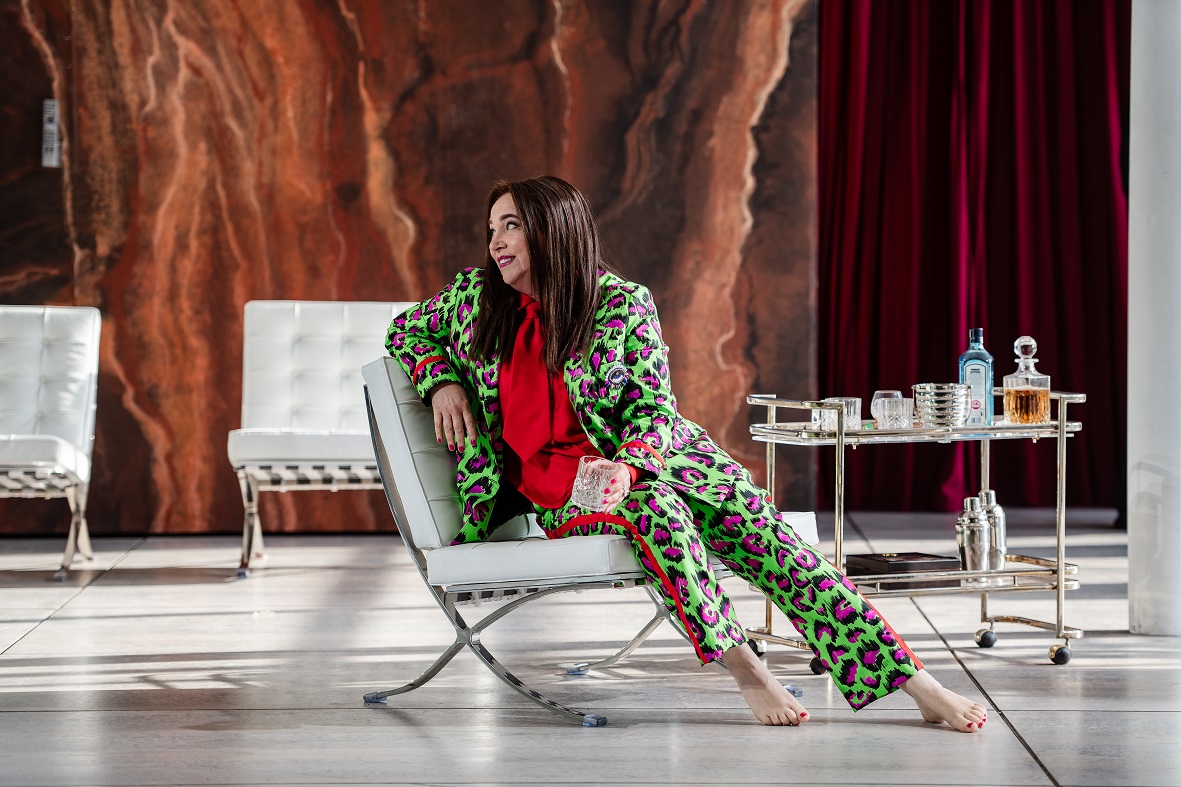
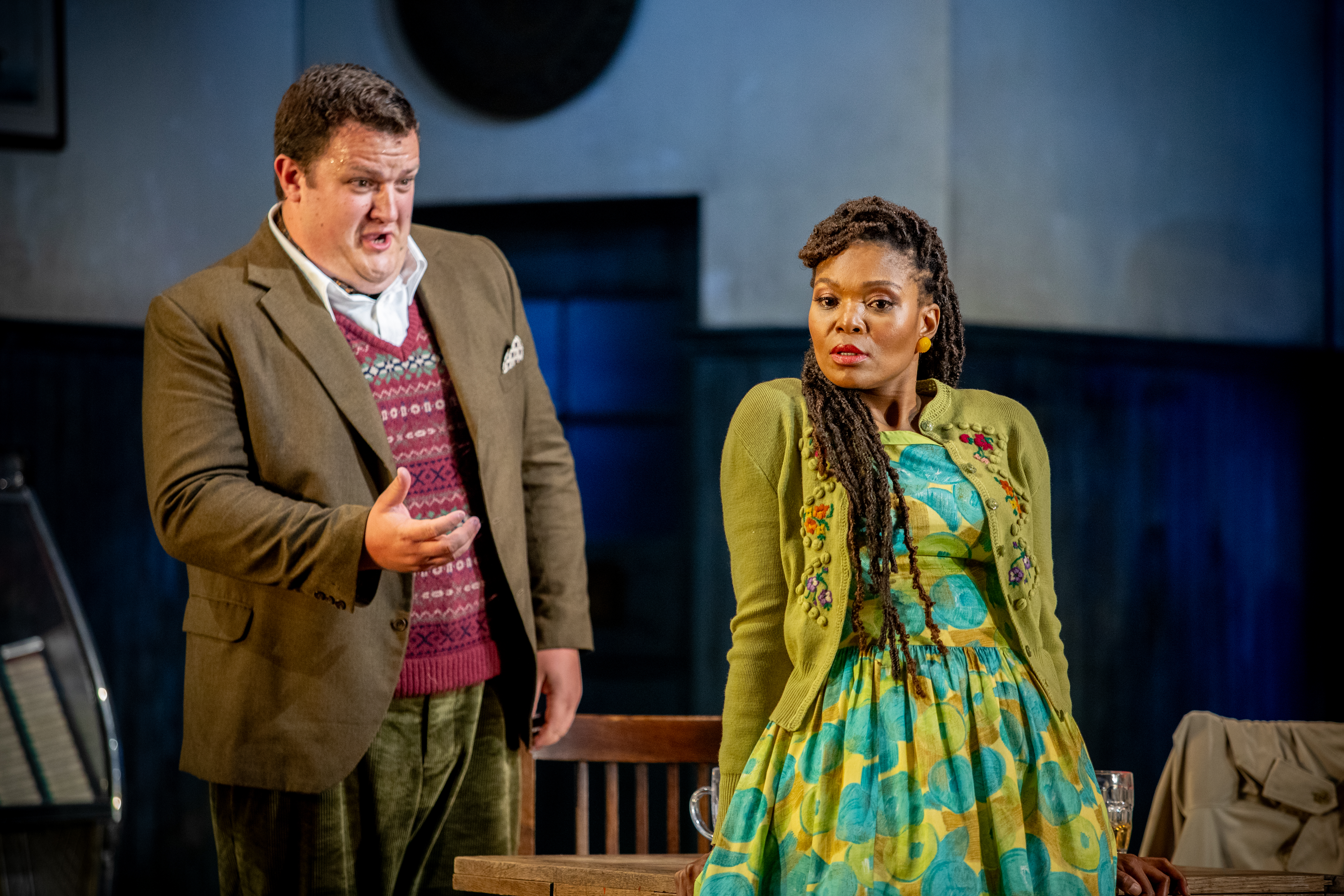
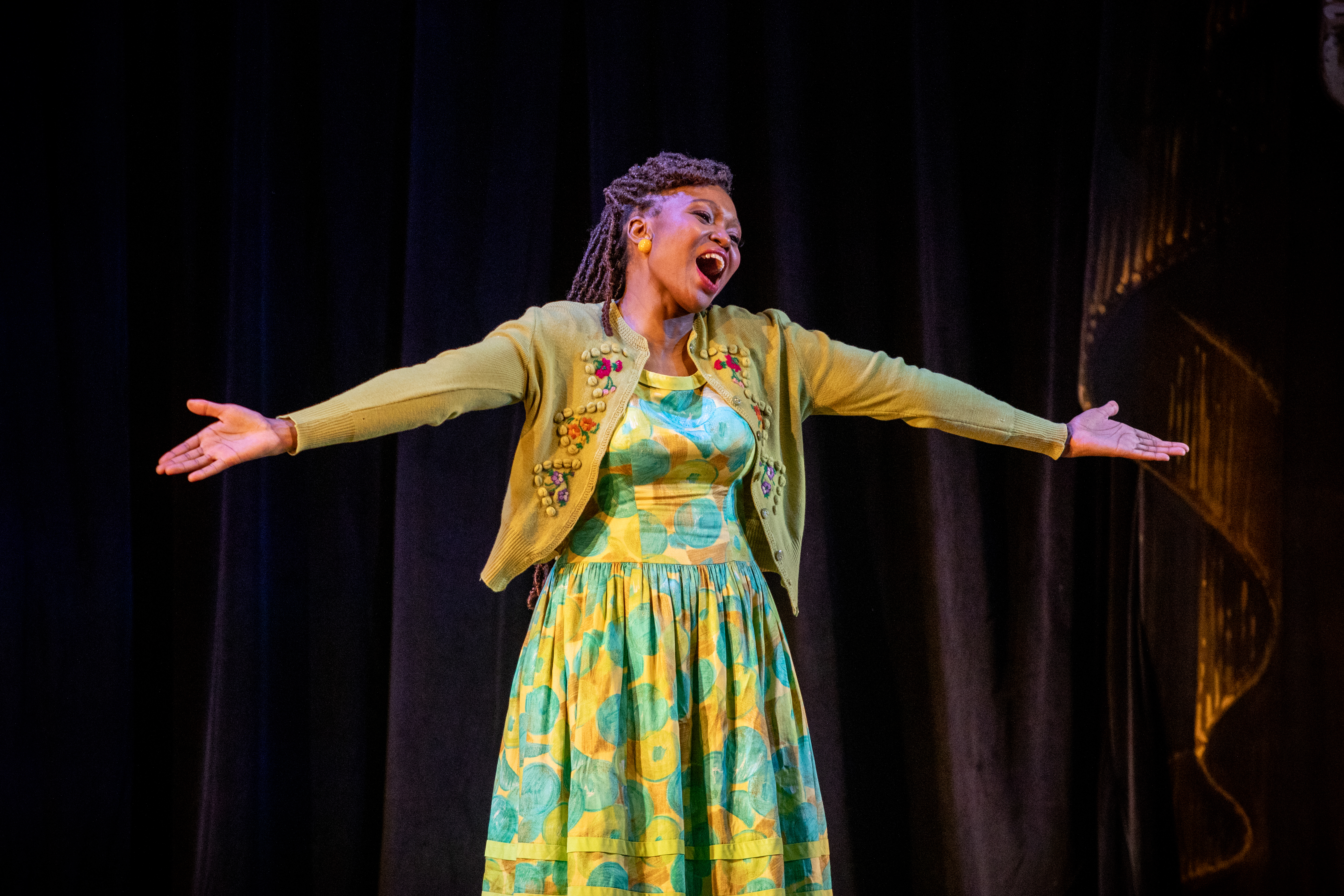
Madison Leonard in Un giorno di regno Garsington Opera opens Garsington 29.06.24 photo credit: Richard Hubert Smith

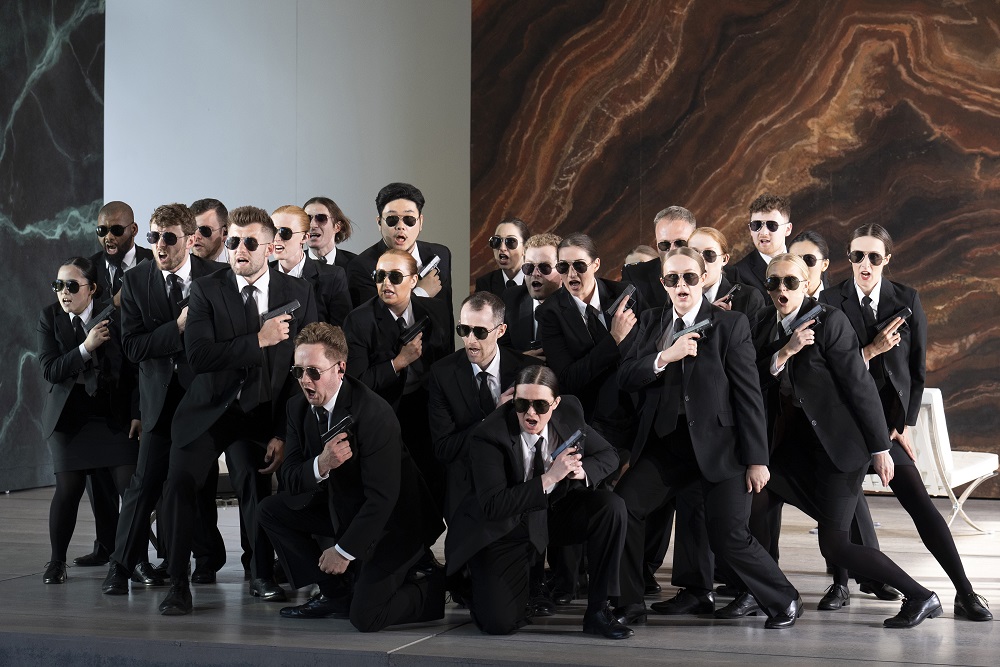
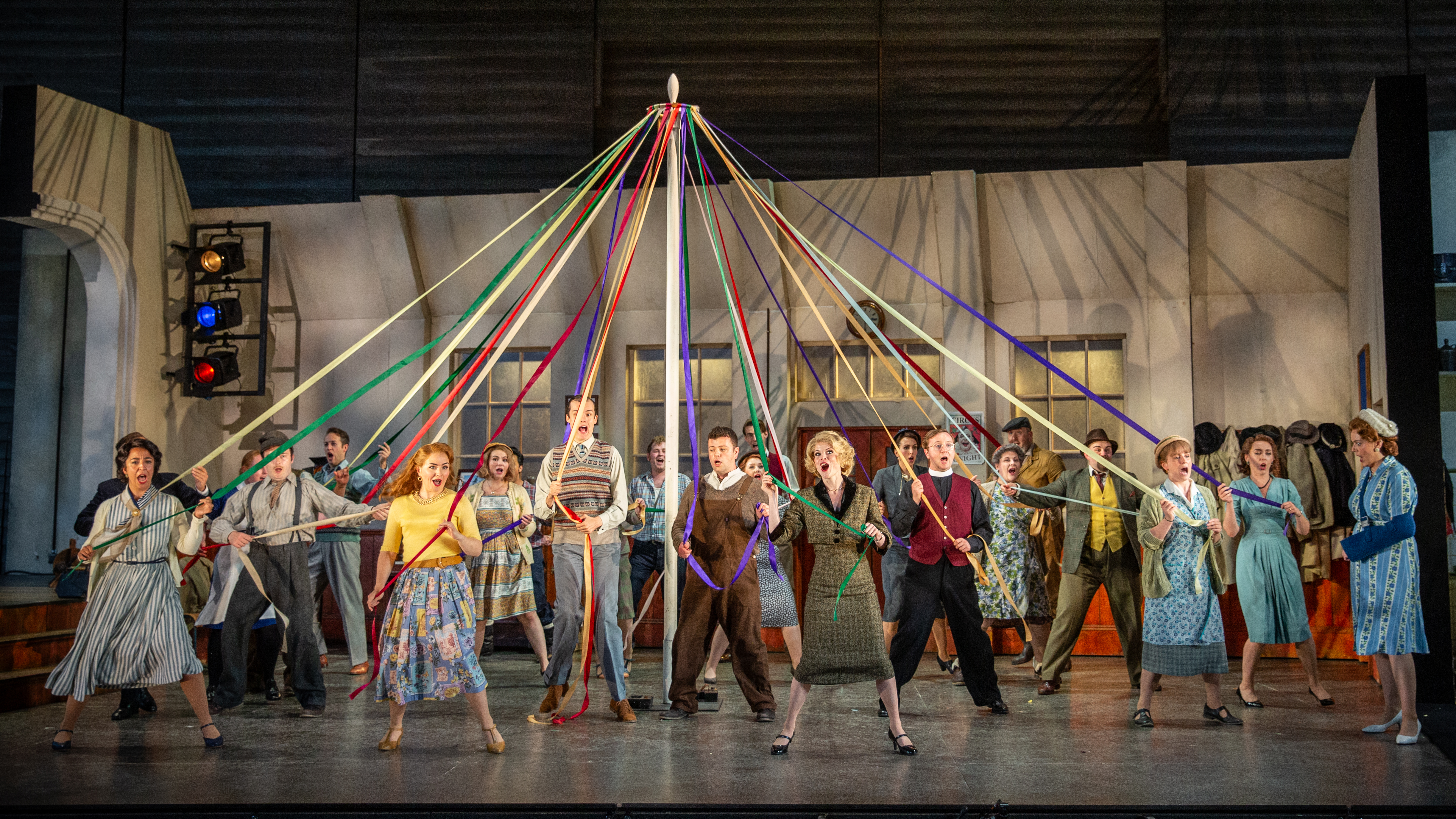
An opera production is arguably only as good as its singers, and the present cast could hardly be bettered. As the false king Belfiore, Joshua Hopkins brings style and suavity to a role that could easily become insipid – and with his ‘Freddie Mercury’ cameo carried off to perfection. Teasing out the cowardliness behind his thuggery, Henry Waddington is ideally cast as Kelbar and Grant Doyle hardly less so as the scheming La Rocca – his ‘sparring partner’ made literal during their uproarious breakfast confrontation. Oliver Sewell overcame initial unsteadiness to deliver an Edoardo of resolve and eloquence, with Robert Murray the stealthily insinuating Ivrea. Neither female role leaves anything to be desired – Madison Leonard vulnerable for all her minx-like persona; Christine Rice stealing the show as the Marchesa whose solo spots are the opera’s likely highlights. James Micklethwaite and Daniel Vening both acquit themselves ably, while Garsington Opera Chorus evidently enjoys its collective function as those ‘people in black’ who variously comment on the action then intervene often forcibly when necessary.

Stepping in at the eleventh hour (for an indisposed Tobias Ringborg), Chris Hopkins directed with verve and real sense of musical continuity – not least when Verdi (seemingly for the only time in his career) made recourse to ‘recitativo secco’ which here furthers the action without impeding its progress. Otherwise, the Philharmonia Orchestra despatches with relish a score which, for all that this lacks the sophistication and urbanity of Rossini’s or Donizetti’s mature comedies, crackles with energy along with an engaging personality for which it has not yet had its due.

Members of the Garsington Opera chorus in Un giorno di regno – opens Garsington 29.06.24 photo credit: Richard Hubert Smith

Although a lesser opera in the Verdi canon, Un giorno di regno met with modest success even in his lifetime and its later revivals were well received. Thanks to this Garsington production, his ‘King for a Day’ finds itself more than able to enjoy a timely 15 minutes in the spotlight.

For further information and performances, visit the Garsington Opera website. For more on the performers, click on the names to read about director Christopher Alden, conductor Chris Hopkins and the Philharmonia Orchestra

In concert – Frank Dupree, Philharmonia Orchestra / Santtu-Matias Rouvali: Kapustin, Glinka, Borodin & Rimsky-Korsakov

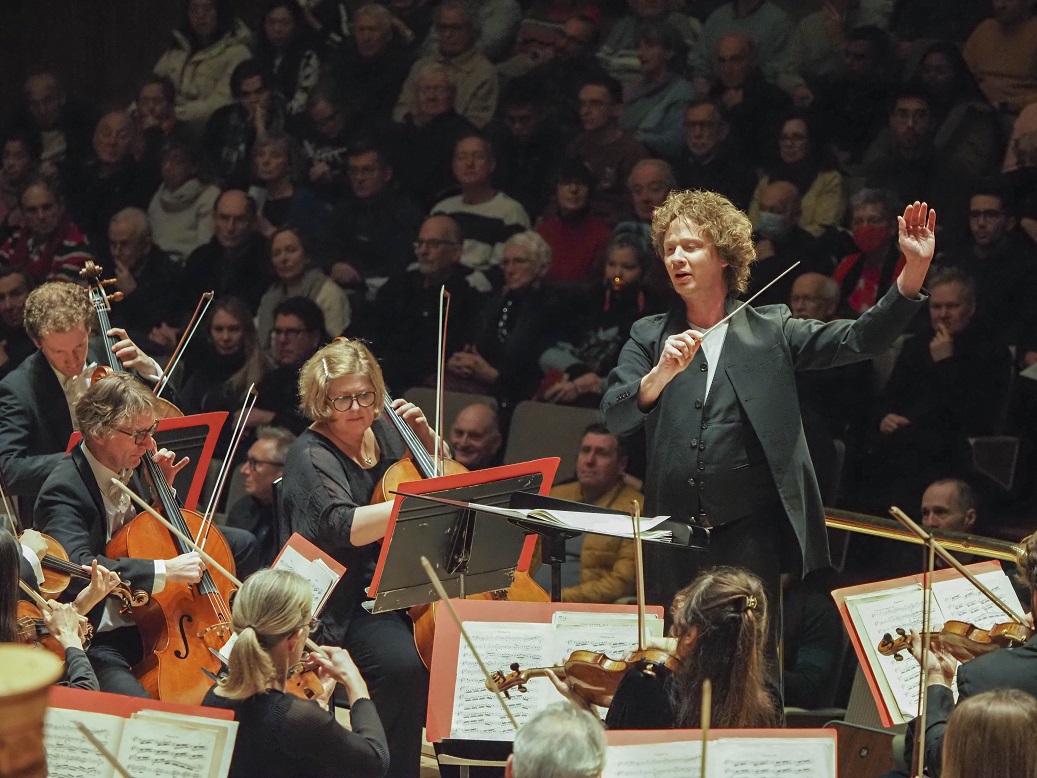
Frank Dupree (piano, above), Philharmonia Orchestra / Santtu-Matias Rouvali (below)

Glinka Capriccio brillante (Spanish Overture no.1 ‘Jota Aragonese’) (1845)
Kapustin Piano Concerto no.5 Op.72 (1993)
Borodin Symphony no.2 in B minor (1869 – 1876)
Rimsky-Korsakov Capriccio Espagnol Op.34 (1887)

Royal Festival Hall, London
Thursday 7 March 2024 (7.30pm)

Reviewed by Ben Hogwood Pictures (c) Raphael Steckelbach (Frank Dupree), Sisi Burn (Santtu-Matias Rouvali)

After this orchestral spectacular, I can confidently say that the Royal Festival Hall is free of cobwebs!

This most appealing program from the Philharmonia Orchestra was a cosmopolitan collection of works with roots in Russia, in the symphonic tradition (Borodin), delivering postcards from Spain (Glinka and Rimsky-Korsakov) or bringing in music from even further across the Atlantic (Kapustin).

The work with the farthest reach took top billing, thanks to the advocacy and breathtaking pianism of Frank Dupree. Making his debut with the Philharmonia, the soloist seized the opportunity to share his love of the music of Nikolai Kapustin, a composer he has championed on record in the past three years.

To call Kapustin ‘eclectic’ would be an understatement, but the label fits his unusual gift for looking outwards from classical music to jazz, boogie-woogie, Latin and even rock. To his credit none of those stylistic references sound hackneyed, and although the single-movement Piano Concerto no.5 is written out on paper it has a fresh, improvisatory quality that Dupree and the Philharmonia fair lifted off the page.

There were fun and games in this performance, harnessing elements of Gershwin, Milhaud and Shostakovich’s jazz writing, but ultimately channelling a style all of Kapustin’s own. Dupree shared the many musical jokes with the audience, while the Philharmonia percussion section – drum kit, bongos, castanets, everything but the kitchen sink! – was on hot form, Santtu-Matias Rouvali conducting with relish. The slow music explored more tender asides, evoking Harlem nights or even poolside in a hotter climate, while the fast music found Dupree exhibiting deceptive virtuosity as he navigated riffs and syncopations aplenty.

Even this wasn’t quite the highpoint, for there followed a high-spirited encore, Dupree leaning into the piano to thrum the strings in an atmospheric introduction to rhythmic high jinks, the percussion section – including Rouvali – out front to joust playfully with the soloist. It brought the house down.

With such a crowd-pleasing concerto, it was to the Philharmonia and Rouvali’s enormous credit that the rest of the program did not suffer, thanks to sparkling performances of music by three of the ‘mighty handful’ from late 19th century Russia.

Glinka’s clever interpolation of Spanish themes into his own Romantic language was brilliantly conveyed, a colourful account where Rouvali’s tempo had just the right ebb and flow. It is easy to forget this music is as old as 1845, and while the influences of Berlioz and Mendelssohn were still relatively fresh there was plenty of swagger in the dancing rhythms, the percussion again enhancing the brassy swagger of the closing pages.

Rimsky-Korsakov’s Capriccio Espagnol was even more successful, a treasure chest of melodies opened with evident enthusiasm by Rouvali, whose rapid tempo changes did occasionally leave the string section needing to make up ground. Cadenzas for violin (orchestra leader Zsolt-Tihamér Visontay), flute (Samuel Coles), clarinet (Mark van de Wiel) and harp (Heidi Krutzen) were superbly executed, Rimsky’s mini ‘concerto for orchestra’ revealed in glorious technicolour.

Rimsky wrote the Capriccio while orchestrating his friend Borodin’s opera Prince Igor – and it was his own Symphony no.2 that was in theory the most ‘sober’ of the night’s four works. We reckoned without a powerful performance from Rouvali and his charges, however, making the most of a work bursting with melodic ideas that should be heard much more often in the concert hall. The first of these ideas sets the tone for the symphony, a stern utterance with strings digging in and brass solemnly intoning their thoughts. Once heard the melody sticks in the listener’s mind, dominating the first movement where symphonic arguments were tautly exchanged.

There was room for lightness, however, in the quickfire scherzo and jubilant finale. These movements were bisected by an emotive third movement of deeper Russian origin, its theme lovingly delivered by cellos but finding plangent brass (the wonderful horn section led by Ben Hulme) and superb woodwind solos to complement. Rouvali relished the chance to dust off this relative symphonic outcast as part of a thrilling, memorable concert. The smiles on the faces of the Royal Festival Hall concertgoers as they filed into the open air said it all.

You can find more information on further concerts at the Philharmonia website

Published post no.2,112 – Saturday 8 March 2024

In concert – Philharmonia Orchestra Music of Today: Messiaen’s Quartet for the End of Time

Mark van de Wiel (clarinet, above), Zsolt-Tihamér Visontay (violin), Karen Stephenson (cello), Tom Poster (piano)

Messiaen Quatuor pour le fin du temps (Quartet for the End of Time) (1941)

Royal Festival Hall, London
Thursday 7 March 2024 (6pm)

Reviewed by Ben Hogwood Pictures (c) Guy Wigmore (Mark van de Wiel, Zsolt-Tihamér Visontay), Marina Vidor (Karen Stephenson), Elena Urioste (Tom Poster)

The Philharmonia Orchestra’s long-running Music of Today series continued with an opportunity to experience Olivier Messiaen’s 1941 masterpiece. Given its first performance in a German prisoner-of-war camp (in what is now Zgorzelec, Poland), the Quatuor pour la fin du tempsQuartet for the End of Time – was very much a product of circumstances.

The composer, in one of his rare forays into chamber music, had just three instruments available to him, plus himself at the piano. He thrived on the restrictions, using the New Testament book of Revelation as his stimulus to create an eight-movement piece that if anything has grown in stature and relevance with every passing year.

Tonight’s venue may have been a great deal more spacious than the cramped conditions of the premiere, but the quartet here lacked nothing in close-up intimacy, the sizeable audience leaning forward in their seats to engage with the music. Initially it was the piano of Tom Poster (below) that provided a strong foundation, his spacious chords catching the chill of the dawn air in Liturgie de cristal as the other three instruments circled with attractive birdsong, the music awakening softly.

The Vocalise, pour l’Ange qui annonce la fin du temps (Vocalise, for the Angel who announces the end of time) provided a firm reality check, though here too its dramatic lines were clear and spacious rather than combative, the players continuing to find an inner serenity through Messiaen’s writing. Violinist Zsolt-Tihamér Visontay and cellist Karen Stephenson thrived on these long melodic phrases, derived from plainchant.

The emotive centre of this performance was undoubtedly the solo for clarinet, Abîme des oiseaux (Abyss of birds), an incredibly moving soliloquy played with exceptional technique by Mark van de Wiel. Some of the notes started with barely audible attack while others were at the outer limits of his volume in a performance of incredible poise and control. Standing while the other musicians sat, he also let the silences between notes speak as loudly as the phrases themselves, so that even the persistent coughing of the audience was rendered into silence.

The delicate Intermède broughout out the dance elements of Messiaen’s writing, before Stephenson (above) and Poster gave a thoughtful, meditative Louange à l’Éternité de Jésus (Praise to the eternity of Jesus), beautifully played and appropriately reverent. This ensured a vivid contrast with the following Danse de la fureur, pour les sept trompettes (Dance of fury, for the seven trumpets), where the four instruments played their angular melodies with commendable precision.

Fouillis d’arcs-en-ciel, pour l’Ange qui annonce la fin du temps (Tangle of rainbows, for the Angel who announces the end of time) found Visontay (below) to the fore in the audio balance, van de Wiel slightly backward in the mix, before Visontay and Poster led us to the end itself with a radiant Louange à l’Immortalité de Jésus (Praise to the immortality of Jesus). This remarkable piece of music continues to carry a strong impact, and as the two instruments strained at the edge of audibility, Visontay reaching the highest pitch, the sense of arrival was all-consuming.

They put the seal on a memorable performance, one of the more emotive ‘rush hour’ concerts you could wish to hear, and one whose impact was felt far beyond that evening’s orchestral concert.

You can listen to a recording of Quatuor pour le fin du temps below, with Mark van de Wiel and Zsolt-Tihamér Visontay joined by cellist Mats Lidström and pianist Min-Jung Kym on the Psalmus label:

Meanwhile you can find more information on further concerts at the Philharmonia website

Published post no.2,111 – Friday 8 March 2024

Arcana at the opera: The Bartered Bride @ Garsington Opera

The Bartered Bride (Prodaná nevěsta) (1866)
Comic opera in Three Acts – music by Bedřich Smetana; Libretto by Karel Sabina
Sung in Czech with English surtitles.

Mařenka – Pumeza Matshikiza (soprano), Jeník – Oliver Johnston (tenor), Kecal – David Ireland (bass), Vašek – John Findon (tenor), Ludmila – Yvonne Howard (soprano), Krušina – William Dazeley (baritone), Mícha – John Savournin (bass), Háta – Louise Winter (mezzo-soprano), Ringmaster – Jeffrey Lloyd-Roberts (tenor), Esmeralda – Isabelle Peters (soprano)

Rosie Purdie (director), Kevin Knight (designer), Howard Hudson (lighting), Darren Royston (choreographer)

Circus Troupe, Garsington Opera Chorus, Philharmonia Orchestra / Jac van Steen

Garsington Opera, Wormsley
Friday 30 June 2023

review by Richard Whitehouse Photos by (c) Alice Pennefather

Smetana may have played down its status in the context of his output, but The Bartered Bride remains the foundation of Czech opera and is much the most performed work stemming from that tradition, making this revival of Garsington Opera’s 2019 production the more welcome.

Rosie Purdie’s direction accorded wholly with Paul Curran’s original conception, transferring the scenario to a 1950s Britain where class restrictions and petty-mindedness were as much a given as in Bohemia a century before, yet the socio-political facet seemed as astutely handled as the cultural trappings of that first teenage generation were underlined without detriment to what was played out on stage. Kevin Knight’s designs clarified this setting most effectively, and Howard Hudson’s lighting was vivid without ever being garish. Most especially, Darren Royston’s choreography afforded communal togetherness during the crowd scenes while also ensuring that the circus troupe’s routines at the beginning of the third act came alive without any sense of their being a mere ‘add on’ to this production, and hence of the opera as a whole.

The casting could hardly have been bettered. Among the most wide-ranging role of any 19th-century opera, Mařenka was superbly taken by Pumeza Matshikiza (above) who conveyed pathos and real integrity of character to substantialize those comic capers unfolding on stage in what was an assumption to savour. Not comparable musically, that of Jeník is a notable role that Oliver Johnston rendered with verve and audible eloquence – such that his ostensibly hard-headed decisions could only be the outcome of an essentially sincere as well as selfless motivation.

Notwithstanding that the secondary roles provide relatively little in terms of characterization, John Findon drew a degree of sympathy for the hapless Vašek, William Dazeley and Yvonne Howard were well matched as the warmly uncomprehending Kružina and Lumilla, while the scheming couple of Mícha and Háta saw a suitable response from John Savournin and Louise Winter, abetted in this respect by David Ireland’s roguish Kecal. Jeffrey Lloyd-Roberts was magnetic as the Ringmaster, and Isabelle Peters provided an entrancing cameo as Esmerelda.

The latter characters are part of a Circus Troupe that, fronted by Jennifer Robinson, brought the stage to life just after the dinner interval. Elsewhere, the hard-working Garsington Opera Chorus offered a reminder this is an opera second to none in terms of its choral contribution, while the Philharmonia sounded in its collective element under the assured direction of Jac van Steen, familiar in the UK through his extensive work with the BBC National Orchestra of Wales and Ulster Orchestra. In particular, the overture and set-pieces in each act had the requisite vigour and effervescence as has made them at least as familiar in the concert hall, and it remains a testament both to Smetana’s immersion in and understanding of his native music that only the ‘Furiant’ at the start of the second act derives from a traditional source.

The Bartered Bride has enjoyed numerous UK productions during recent decades – among which, this Garsington revival can rank with the finest in terms of musical immediacy and visual allure. Those not able to see it four years ago should certainly do so this time around.

For information on further performances, visit the Garsington Opera website. Click on the artist names for more information on Pumeza Matshikiza, Oliver Johnston, Jac van Steen, Philharmonia Orchestra and stage director Rosie Purdie

In concert – Alice Coote, Philharmonia Orchestra / John Eliot Gardiner: The Sea and the Land: Mendelssohn, Elgar & Dvořák

Mendelssohn Hebrides Overture Op.26 ‘Fingal’s Cave’ (1830, rev. 1832)
Elgar Sea Pictures Op.37 (1899)
Dvořák Symphony no.5 in F major Op.75 (1875, rev. 1887)

Alice Coote (mezzo-soprano), Philharmonia Orchestra / John Eliot Gardiner

Royal Festival Hall, London
Thursday 16 February 2023

Reviewed by Ben Hogwood Picture credits – John Eliot Gardiner (c) Sim Canetty-Clarke; Alice Coote (c) Jiyang Chen

This was an ultimately invigorating concert, using a cleverly constructed programme to look at how composers respond to the earth itself.

We began off the west coast of Scotland, the Inner Hebrides to be exact – and the uninhabited island of Staffa. Here it was that Mendelssohn saw Fingal’s Cave (above) in the summer of 1829. His musical response has become one of the composer’s best-loved pieces, an early and remarkably vivid example of the symphonic poem. Under John Eliot Gardiner, the Philharmonia Orchestra recounted the scene with remarkable accuracy, capturing the unusual, organ-like appearance of the landmark as well as the sea spray crashing around it. Gardiner steered a sure-footed and clear course through the water, aided by a wonderful clarinet duet from Mark van de Wiel and Laurent Ben Slimane in the second theme.

Alice Coote (above) then joined the orchestra, transporting us to the rarefied waters of Elgar’s Sea Pictures, the mezzo-soprano bringing to life five carefully chosen gems that took the composer far from his desk in Malvern in 1899. It took a while for singer and orchestra to achieve the optimum balance, so the words on the screen above were helpful as Coote found her feet. She did so quickly, and the somnambulant atmosphere of Sea Slumber-Song was cast, the strings lapping at the edges of Coote’s beautifully placed words. As she grew into the role so the gently rocking In Capri was attractively weighted and subtly intense.

Sabbath Morning At Sea was solemn yet soon reached for the heights, Coote’s innate grasp of the text matched by Gardiner’s control and shaping of the melodic line from the orchestra. The celebrated Where Corals Lie was perhaps inevitably the highlight, but The Swimmer ran it close, running all the way to a richly coloured high register from the singer at the end. Support came from the depths, too, with Alistair Young’s sensitive contribution on the Royal Festival Hall organ one to savour.

We returned to land for Dvořák’s Symphony no.5, the work with which he ‘rebooted’ his career as an orchestral composer in 1887, his publisher having spotted an opportunity to re-promote a piece finished in 1875. In this concert the parallel with the seasons was irresistible, the symphony’s first movement in particular resembling the flourishing of flowers in spring. Fleet footed strings were complemented by fresh faced woodwind, headed by the burbling clarinets who shone once again in the opening theme.

The Fifth is a sunny work, sitting in the shadow of the last three symphonies (nos.7-9) where live performances are concerned. As this concert revealed, however, it is a descendant of Beethoven’s Pastoral symphony, a work with considerable depth of its own and many different orchestral colours in which to revel. After a vivacious first movement, where Dvořák’s themes were given the best possible chance to shine, the cellos took the lead in their burnished opening to the romantic slow movement. This serious, minor key theme – surprisingly similar to the main tune of the Mendelssohn – was supplemented by an attractive, triple-time dance in the major key.

The slow movement segued effortlessly into the Scherzo, where the flurry of violins conjured up a vision of dancers trying to find their feet on the floor. The give and take between orchestral sections was a delight both to hear and to watch, as it was in the finale. The material here turns a little sour initially, Dvořák struggling manfully to regain the positive demeanour of the first movement. In Gardiner’s hands this was a compelling argument, ultimately won with the help of the superb Philharmonia brass, trombones punching out their melodies to thrilling effect. Once the ‘home’ key was reached the winter storms retreated and we basked in glorious musical sunshine, capping a fine evening where spring really did seem within touching distance.

You can read all about the 2022/23 season and book tickets at the Philharmonia Orchestra website.