Oxford Lieder Festival – Alessandro Fisher & Gary Matthewman: An Italian Songbook

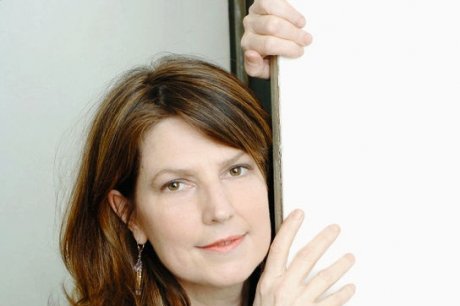
Alessandro Fisher (tenor, above), Gary Matthewman (piano, below)

Bellini Malinconia, ninfa gentile, Per pietà bell’idol mio, Ma rendi pur contento (all 1829)
Donizetti Me voglio fa’ ‘na casa (1837), Lu trademiento (1842)
Verdi Il poveretto (1847), Il tramonto (1845), Brindisi (1845)
Tosti ‘A vucchella (1907), Sogno (1886)
Hahn Venezia (1901)

Sheldonian Theatre, Oxford
Wednesday 17 October 2018

Written by Ben Hogwood

The spectacular round of the Sheldonian Theatre proved the ideal setting for tenor Alessandro Fisher and pianist Gary Matthewman, with an attractive Italian recital continuing the Grand Tour theme of the Oxford Lieder Festival.

Fisher proved a consummate storyteller, and his asides to the audience between songs were ideally judged and set the music of the concert in context. There was deep, romantic love, humour and much merrymaking to be had over the course of the hour!

Photo (c) Johan Persson

Fisher and the ever-attentive pianist Matthewman filled the first half of their recital with songs from Italian composers known primarily for their opera – and indeed it did feel as though the tenor was singing excerpts from bigger, stage-bound works. The Bellini songs were straight and to the point – melodic and responsive to their text. Donizetti showed off the voice in Me voglio fa’ ‘na casa (I want to build a house) but cut straight to the heart in Lu trademiento (The treachery).

Three songs by Verdi were of rich variety – the downtrodden Il poveretto (The poor man) led to the rather moving Il tramonto (Twilight) before Fisher and Matthewman cast all cares aside for Brindisi (A toast). Sporting a different musical response to the famous aria of the same name from La Traviata, this was a riotous celebration of wine.

The songs of Tosti are highly respected but still quite rare in concert hall recitals, so it was good to hear a consummate master of the form at work in ‘A vucchella (A sweet mouth) and Sogno (Dream), passionately sung.

The concert’s second part told the story of Hahn’s Venezia, where Matthewman painted the watery settings of the opening song Sopra l’acqua indormenzada (Upon the sleeping waters), the undulations of La barcheta (The little boat) and the heady atmosphere of La biondina in gondoleta (The fair maiden in a gondoleta). Fisher was a very entertaining guide to the ups and downs of love in Venice for the subject, no more so than in Che peca! (What a shame!) where he had all the requisite mannerisms to cast off his ‘only thought’ Nina, to the amusement of the audience – but perhaps the best was left for last, a celebration of La primavera (The springtime) to round off the cycle in some style.

Fisher’s bright tenor sound was also ideally suited to the encore, Leoncavallo’s Mattinata, which provided further evidence of the strength of his partnership with Matthewman. With such colourful song set under the equally bright roof of the Sheldonian, it was a match to remember.

Further listening

You can hear the repertoire from this concert on the Spotify playlist below. Alessandro Fisher has yet to record any of the Italian songs, so leading alternative versions have been used:

Meanwhile Fisher himself appears in a new recording from Classical Opera and Ian Page of Mozart’s Grabmusik and Bastien Und Bastienne:

Wigmore Mondays – Clara Mouriz & Joseph Middleton: Songs of the Antique

Clara Mouriz (mezzo-soprano), Joseph Middleton (piano)

Purcell/Britten Alleluia (pre-1702, realised by Britten 1960)

Alessandro Scarlatti Son tutta duolo (c1699)

Anchieta arr. Dorumsgaard Con amores, la mia madre (unknown)

Liszt 3 Petrarch Sonnets (1842-6)

Duparc La vie antérieure (1884)

Hahn Tyndaris (1900)

Ravel Kaddisch (1914)

Falla 7 Spanish Popular Songs (1914)

Wigmore Hall, London; Monday 26 June, 2017

Listen to the BBC broadcast here

Written by Ben Hogwood

A fascinating concert that confirmed the versatility of Clara Mouriz and Joseph Middleton. Their performance, titled ‘Songs of the Antique’, concentrated on songs whose music or text looks a long way to the past for inspiration.

The mezzo-soprano has a rich and powerful voice in the middle register especially, which came to the fore in passionate accounts of the Liszt 3 Petrarch Sonnets, but also in the solo writing of Ravel and the quasi-orchestral scope of Duparc.

First we went right back to the Eighteenth century for an Alleluia – a song originally attributed to Purcell but found to be by John Weldon. Britten, as part of his Purcell revival, provided a complementary piano part, one that shadows the spun out vocal. This vocal won’t be to everyone’s taste, but Mouriz mastered it brilliantly here (from 1:49 on the broadcast link provided).

The Scarlatti, an excerpt from the opera La donna ancora è fedele, made a nice contrast (3:52). Unlike his brother, who wrote copious amounts of keyboard music, Alessandro wrote many operas – and the excerpt here shows how fluid his vocal writing could be. Meanwhile the arrangement of Anchieta’s folksong, thought to be from the fifteenth century, had a primal quality in this interpretation – with elegantly shaped piano from Middleton (7:01).

The Liszt was a highpoint of the recital, not just for Mouriz’s fire and passion but for Middleton’s word painting with the piano part. Liszt was borderline-obsessed with the sonnets, complementing his two vocal settings of the trio with powerfully descriptive pieces for the piano. The vocal line is highly charged in all three songs, and strongly Italian in musical flavour as well as language. Sonetto 104, Pace non trovo (I find no peace) surged forward turbulently in the piano part, a restlessness matched by Mouriz’s outpouring (from 10:31).

The Sonetto 47, Benedetto sia ‘I giorno (Blessed be the day) was notable for ‘the sighs and tears, the longing’ found by Mouriz at 20:07, while the final Sonetto 123 I’ vidi in terra angelici costumi (I beheld on earth angelic grace) was beautifully sung (from 23:10), Mouriz mastering the wide ranges and dynamics Liszt asks for. Middleton’s decorative piano part was brilliantly done too.

After this we had the relatively rare chance to appreciate the songwriting guile of Henri Duparc, a French composer whose life was tragically cut short due to neurasthenia. He left just thirteen published songs, of which La vie antérieure is an expansive example. It began optimistically (30:13) but turned rather sour towards the end, this performance carefully paced and given impressive detail by Middleton.

Hahn’s Tyndaris offered more optimism after the Duparc (from 34:35) while Ravel’s Kaddisch, from his Deux melodies hebraïques, had a powerful declamation that Mouriz used to take over the hall (36:15).

Finally the Spanish mezzo-soprano was completely on home turf for Falla’s brilliantly written songs, a whole wealth of different characters and emotions coming out in this performance (from 42:22).

We had the famous Seguidilla murciana (43:00) where ‘people who live in glass houses shouldn’t throw stones’, the mournful Asturiana (45:10), a brisk Jota (47:58), a soft Nana (Lullaby) (51:03), a brighter Cancion (52:48) with darker lining and finally the dramatic Polo (53:42), where the piano’s repeated notes appear to describe the stabbing pain in the singer’s heart.

As a richly deserved encore the pair gave a soulful performance of a Spanish funeral song, Let my soul mourn (57:08).

Further listening

The works in today’s concert are on Spotify and can be heard below:

As a contrast, why not try an album of orchestral music by the Spanish composer Turina, featuring at its centre the collection of Poema en forma de canciones:

Meanwhile, you can watch Clara and guitarist Sean Shibe perform Asturiana, from the Falla songs, below:

Wigmore Mondays – Véronique Gens & Susan Manoff in French song

Véronique Gens (soprano, above, © Franck Juery) & Susan Manoff (piano, below)

Hahn Néère; Trois jours de vendange

Duparc Chanson triste; Romance de Mignon

Chausson Le Charme; Les Papillons; Hébé

Hahn Quand je fus pris au pavillon; Le Rossignol des lilas; A Chloris

Chausson Le Chanson bien douce; Le Temps des lilas

Hahn Études latines – Lydé; Tyndaris; Pholoé; Phyllis; Le Printemps

Wigmore Hall, London; Monday 8 May, 2017

Listen to the BBC broadcast here

Written by Ben Hogwood

This Wigmore Hall concert proved an ideal opportunity for listeners to venture off the beaten track in the richly rewarding world of French art song. It also seemed doubly appropriate in the wake of the presidential election the previous day that Véronique Gens should be on hand, for she is one of the best French singers around. In Susan Manoff she had a more than able partner to match her every move, and the two based their program on a recent Gramophone award-winning recital disc.

The concert was bookended by songs from Reynaldo Hahn, including excerpts from his Études latines. The serious Néère (from 4:02 on the broadcast) searched for a lost love, Gens a yearning presence, but Trois jours de vendange (Three days of vintaging) was a bigger celebration.

Attention turned to Henri Duparc, whose incredibly small musical output is led by his fine songs. Few are better than Chanson triste (11:01), which was powerfully delivered by Gens, set in the moonlight portrayed so vividly by Manoff’s piano. Romance de Mignon (14:00) offered a little more daylight, another passionate utterance in thrall to his hero Wagner.

It was a short stylistic shift to the songs of Ernest Chausson, Gens choosing a really wonderful selection that should be far better known. The partnership with Manoff was at its best here, the piano fluttering relentlessly in Les papillons (21:35) without settling, while Gens’ playful lines danced above. Le charme (20:00) and Hébé (23:05), two other songs from the same early set, were equally winsome. These were balanced by three more Hahn songs, and while the perky Quand je fus pris au pavillon (25:52) and melodious nightingale (Le rossignol des lilas, 27:15) were nicely done they were always going to be in the shadow of Á Chloris (29:17), its imitation of a Bach aria absolutely on the money in this performance.

Two more Chausson songs followed – the urgent Le Chanson bien douce (32:30) and softly majestic Le Temps des lilas (35:14) – and then we moved on to a quintet of Hahn works to finish. Four of these were from the Études latines (from 41:02), while Le Printemps (The Spring) literally flung wide the doors of the hall at (49:41). The quartet of studies were lyrically quite amusing while musically thoughtful, often finding the singer in a rather dishevelled state – especially the thoughtful Pholoé (45:19) and Phyllis (46:46). The closing Le Printemps celebrated the season which until now seems rather reluctant to arrive in the UK!

A generous selection of encores completed a memorable recital. We were treated to Les roses d’Ispahan, a lovely song by Gabriel Fauré (52:20), then an Offenbach song Le Corbeau et le Renard (56:20), and finally PoulencLes Chemins de l’amour (The pathways of love) (59:28)

Further listening

You can hear the album Gens and Manoff made with much of this material on Spotify:

For further French song listening, bringing in the worlds of Debussy and Fauré, try this wonderful selection with pianist Roger Vignoles:

Wigmore Mondays – Ailish Tynan & Malcolm Martineau in French song

ailish-tynan

Ailish Tynan (soprano, above), Malcolm Martineau (piano)

Wigmore Hall, London, 9 May 2016

written by Ben Hogwood

Audio (open in a new window)

http://www.bbc.co.uk/programmes/b079m13q

Available until 8 June

What’s the music?

Fauré Cinq mélodies de Venise (1891) (12 minutes)

Debussy Fêtes galantes Set 1 (1892) (7 minutes)

Hahn Fêtes galantes (1892) (2 minutes)

Ravel Sur l’herbe (1907) (2 minutes)

Fauré Clair de lune (1887) (3 minutes)

Hahn À Chloris (1916) (3 minutes)

Poulenc Fiançailles pour rire (1939) (13 minutes)

Spotify

Ailish Tynan has recorded some of the Fauré songs in this recital, and in case the broadcast cannot be heard they are on the playlist below – together with other versions of the songs by Debussy, Poulenc and Hahn:

About the music

The contrast between these Verlaine settings is fascinating. Fauré’s Venetian set is heady music that flows, melodically rich but harmonically even more so, its flowing nature reflecting his ‘barcarolle’ piano writing and the watery setting.

Debussy’s, written just a year later, could almost be from another planet, with deep blue colours invoked by the singer and piano as they explored the mysterious worlds of the poet.

The central selection of songs shows off the abundance of French song writing talent at the turn of the century, while Poulenc’s Fiançailles pour rire, a brief but intensely concentrated cycle and the composer’s most popular for the female voice, explores extremes of emotion. It is a classic example of Poulenc’s bittersweet but utterly compelling ways of word setting.

Performance verdict
malcolm-martineau

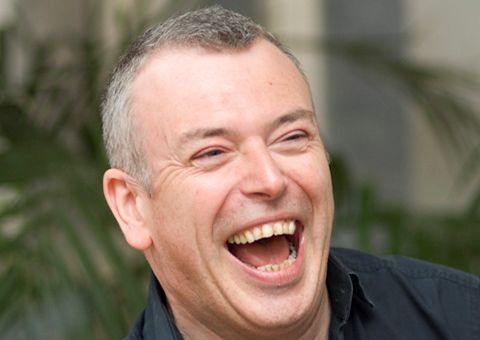
Malcolm Martineau (piano)

French song lends itself well to an hour-long recital program, and in Ailish Tynan and Malcolm Martineau’s Wigmore Hall lunchtime concert we explored the extraordinary poetry of Paul Verlaine through the musical eyes of Fauré, Debussy and Hahn.

You would not have known Tynan was standing on for the indisposed Angelika Kirschlagers, so surefooted was her partnership with Martineau, and with her compelling performances, aided by expressive gestures, she took us on an instinctive and fascinating tour.

Fauré’s Venetian songs were glorious, and Tynan’s ability to vary her vibrato was invaluable, while Martineau had the essential Fauré ‘flow’ at the piano.

Debussy’s Fêtes galantes had the requisite mystery, while Hahn’s celebrated A Chloris sparkled in this partnership, but it was in the Poulenc cycle Fiançailles pour rire where Tynan really shone. From the breathless Il vole to the sorrowful Dans l’herbe, where the darkness at the very edge of Poulenc’s music was drawn in, this was a compelling performance. A beautiful encore, Fauré’s Nell, was followed by a characteristically funny introduction to Dave Frishberg’s Another Song About Paris, where both performers’ humour sent the Wigmore Hall audience away smiling.

What should I listen out for?

Fauré

1:38 Mandoline A jaunty song describing the ‘gallant serenaders…beneath singing boughs’. The grey moon at the end is suitably evoked by the flowing piano.

3:32 En sourdine The hazy twilight is immediately obvious in this rather sensual song, with a full timbre from the soprano and an accompaniment typical of Fauré’s broad, flowing style.

6:35 Green A greater urgency to this song, a heady statement of devotion with a spring-like air.

8:25 A Clymène The piano introduction evokes the ‘mystical barcarolles’ of the opening line of this song, an exotic and heavily perfumed statement with some awkward gaps between notes for the singer!

11:05 C’est l’extase This song (translating as ‘It is rapture’) certainly has a rarefied air, the soprano in a higher register as she swoons of the ‘delicate, fresh murmuring’ and the ‘subdued lament’ of two lovers.

Debussy

15:10 En sourdine A very different setting of this poem from Debussy, with a distant, mysterious picture immediately evoked by the piano. The singer is subdued and the tempo is much more deliberate than the Fauré setting.

17:58 Fantoches The swirl of the piano transports us to a completely different world, with quick glances and urgent musical statements, the soprano sweeping up to a top ‘A’ and back towards the end.

19:20 Clair de lune Debussy was to write a more famous Clair de lune for piano alone, but this one is just as evocative of the moonlight, somehow evoking the dark blue colours in its lustrous beauty.

23:29 Hahn Fêtes galantes The clanging octaves of the piano introduce a song that has a similar stop-start feel to the first Fauré song in this concert. The end is brilliantly done.

25:30 Ravel Sur l’herbe This song (which translates as On the lawn) is a rather bizarre Verlaine poem, a conversation between an abbot and some shepherdesses. Ravel captures all the back and forth between the speakers over an elusive piano line.

27:43 Fauré Clair de lune Fauré’s setting of moonlight has more defined lines than Debussy’s, and a longer piano introduction to set the scene, but has an understated beauty, supported again by a flowing accompaniment.

30:47 Hahn À Chloris Hahn’s celebrated love song is clearly influenced by Bach in its stately introduction, after which the soprano sings of pure, unconditional happiness in love. Very much a case of ‘less is more’!

Poulenc

35:09 La Dame d’André A song of uncertainty, describing a man about to marry who worries about his wife and if he’ll love her in the future. Poulenc’s response is appropriately worrisome – but the softer chord at the end suggests he’ll be alright!

36:35 Dans l’herbe A sorrowful and tortured song, particularly in the second verse – though there is a lightness of texture also. This brings in the darkness Poulenc often has at the very edge of his music.

38:38 Il vole Some breathless observations from the soprano in this song, with happiness elusive but not too far away. ‘I want my stealer to steal me’, she concludes.

40:38 Mon cadavre est doux comme un gant Once again a shadow falls over the music, and this strange song of a corpse casts its spell. With long, high notes it is a particularly tricky one for the soprano. Her last note (43:02) is telling, as it resolves the whole song.

43:26 Violon A strange air is around this song, because both soprano and piano operate at the highs and lows of their ranges. There is dark humour, too, as the singer tells of how ‘I love those long wailings’ of the violin. The harmonic language is exotic but restless too, until a clipped chord at the end.

45:27 Fleurs A simple air is around this song, which shows how Poulenc can make beautiful sounds from apparently very little. The text is repeated very quietly to a soft but rather sad close.

Encores

49:02 Fauré Nell (1878) The flowing piano and floated soprano line indicate this is a song of adoration. It is the sort of song that flings the doors wide open, though Fauré’s rapture is always just a little reserved.

51:32 Dave Frishberg Another song about Paris (4 minutes) A classic cabaret song, brilliantly written with just the right amount of humour in text and performance!

Further listening

Ailish Tynan’s disc of Fauré comes highly recommended, and can be heard on Spotify here:

If however you’d like to hear her in the music of her homeland, Ireland, An Irish Album is self-recommending:

Wigmore Mondays – Elizabeth Watts and Julius Drake

Elizabeth Watts, Photo : Marco Borggreve

Elizabeth Watts, Photo : Marco Borggreve

Elizabeth Watts (soprano), Julius Drake (piano) – Wigmore Hall, London, live on BBC Radio 3, 26 October 2015

Listening link (open in a new window):

http://www.bbc.co.uk/programmes/b06kb0f0

on the iPlayer until 25 November

Spotify

In case you cannot hear the broadcast, here is a Spotify playlist of the music in this concert, from available versions on Spotify (which do not include the Liszt song Quand tu chantes bercée).

What’s the music?

Liszt: 6 settings of poetry by Victor Hugo (dates are for first versions only): Enfant, si j’étais roi (1849); S’il est un charmant gazon (1844); Comment, disaient-ils (1842); La tombe et la rose (1844); Quand tu chantes bercée (c1844-45); Oh! quand je dors (1842) (21 minutes)

Debussy: Ariettes oubliées (1885-1887) (17 minutes)

Hahn: 4 Hugo settings: Rêverie (1888); Si mes vers avaient des ailes (1888); L’Incrédule (1893); Fêtes galantes (1892) (9 minutes)

What about the music?

A recital bringing together some richly varied settings of two French poets, Victor Hugo and Paul Verlaine.

It also gives us the opportunity to listen to some of the large output of Franz Liszt, who is best known for his piano music but whose songs have enjoyed greater prominence in recent years. He and the poet Victor Hugo were friends, meeting in Paris in the 1830s, and Liszt went on to set a number of his poems to music.

Debussy’s Ariettes oubliées (Forgotten Songs) is a cycle of six songs for voice and piano, based on a poem written by Paul Verlaine, who the composer knew and whose verse was a profound influence throughout the composer’s career.

We return to Victor Hugo for several settings by the Venezuelan-born French composer Reynaldo Hahn, who is best known for his song settings. This group of four includes Si mes vers avaient des ailes, the song that really brought Hahn to public attention and which, in the words of Graham Johnson, ‘has become his motto song’.

Performance verdict

A note first of all to say Arcana did not attend this concert, so the review is directly from the radio performance.

What is abundantly clear is that Elizabeth Watts is becoming a soloist of real repute, and one who has a very impressive and diverse repertoire. It was especially gratifying to hear her accounts of the Hugo settings by Liszt, not heard much in the concert hall but invested with real passion here, Watts floating effortlessly through the high notes as Julius Drake set the scene. Drake is an experienced pianist in Liszt songs, and is in the process of recording his output for Hyperion – and his ability to find the detail to point up alongside the vocal line was a real asset.

The Debussy had an essential mystique that Drake was quick to create in his piano part, Watts controlling her voice wonderfully well in the tricky melodic intervals. Meanwhile the Hahn selection sparkled, showing off this composer’s flair for word setting as well as the natural chemistry between Watts and Drake.

What should I listen out for?

Liszt

1:57 Enfant, si j’étais roi (Child, if I were king) translation here – a typically grand setting from Liszt, with a big piano part, while the soprano sings boldly above. A brave piece with which to start a recital! In the second verse the piano adopts a more threatening bass line as the soprano extols the virtue of a kiss from her lover.

5:13 S’il est un charmant gazon (If there’s a lovely grassy plot) translation here – a more gentle and loving song, this, with a similar mood to the opening of Brahms’ Violin Sonata no.2. The music flows with a mood of relative contentment.

7:41 Comment, disaient-ils (How then, asked he) translation here a nervy piano accompaniment immediately puts this song on each, though the floated higher vocal counters that somewhat. This is a short song but the high note at the end from the soprano carries a lasting impact.

9:49 La tombe et la rose (The tomb says to the rose) translation here This time we hear the soprano in a much lower range and with a fuller voice as Liszt takes on the much heavier text. There is weight in the piano part, too, though here as with a couple of the other songs it feels like Liszt has a short attention span.

13:44 Quand tu chantes bercée (When you sing in the evening) translation here This song has much softer contours, with a restful piano part and a relatively smooth vocal line for the soprano. That is not to say passion is lacking though, especially when the soprano sings ‘Chantez, ma belle’ (‘Sing, my pretty one’)

16:17 Oh! quand je dors (Oh! When I sleep) translation here As the title suggests here is a lullaby, though this one doubles as a love song. Again the soprano has to sing high, especially given the passion of Hugo’s text. The piano immediately sets the scene of rapture.

Debussy

The words for Ariettes oubliées are here

24:12 – C’est l’extase langoureuse (It is ecstasy) A heady song as you might expect from the title, which hangs on the air heavily. This whole impression is helped by Debussy’s chromatic writing, with soprano and piano right hand often in unison. The rich harmonies and melodies might sound awkward in isolation but, in a performance such as this, they are totally natural.

27:28 – Il pleure dans mon cœur…(It weeps in my heart) One of Debussy’s most celebrated early songs, delighting – or finding sorrow, rather – in the sound of the rain ‘on the ground and on the roofs’. A wide range is called for on the part of the soprano, not to mention the restless yet easily flowing piano part.

30:28 – L’ombre de arbres (The shadow of the trees) ‘The shadow of the trees, in the mist-covered river’ find the soprano beginning in a lower range, the air thick with humidity. This is a more sorrowful lament, the piano essentially standing by while the singer emotes – nowhere more so than the high note of 32:06.

33:14 – Chevaux de bois (Merry-go-round) A brilliant evocation of the fairground, the merry-go-round burling around dizzily on the piano, over which the soprano sings of the hurrying horses. Debussy’s quick moving harmonies are ideally suited to this sort of setting. The song ends quietly.

36:31 – Green A love song. The soprano has to travel quite a way in the course of this song, from low asides to higher outpourings of intense feeling. The twinkling of the piano’s right hand provides an effective counterpoint.

38:36 – Spleen A downcast song, reflecting on how ‘all my despair is reborn’. This does still take place over some exotic harmony on the part of the composer, the song moving far and wide in its melodic and harmonic reach.

Hahn

43:09 – Rêverie – translation here A halting figure on the piano feels like an offbeat waltz, accompanying the soprano as she sings, lingering on the word ‘kiss’. The song is relatively conventional in its structure.

45:11 – Si mes vers avaient des ailes (If my verses had wings) – translation here – a bright and positive love song, the singer clearly lost in thoughts of her beloved – and reaching some beautifully spun high notes along the way, with twinkling piano account. The last notes need particularly impressive control as the music slows.

47:52 L’Incrédule (The Sceptic) – translation here – a softly coloured but rather moving song, which has its conviction in the last lines, where the singer declares ‘And my faith is so deep in all that I believe in that I live for you alone’

50:11 Fêtes galantes – translation here – one of Hahn’s most endearing songs to close, the sparkling piano introduction keeping a detached feel as the singer spins higher notes above. The ‘shivering breeze’ is brilliantly evoked in the piano.

Encores

53:32 An encore of a Victor Hugo setting, L’Attente, (1840) from Richard Wagner. As Elizabeth Watts says to the audience, it’s not exactly easy – whether it’s the full bodied, high register vocal or the heavily congested piano part!


Further listening

Something completely different to complement Elizabeth Watts’ artistry, and also to show just how versatile she is. This is a recently released album of vocal works by the Baroque composer Alessandro Scarlatti, given with The English Concert and Laurence Cummings:

https://open.spotify.com/album/1Crx7DHWHCAqV7za0K80oX