In concert – Sol Gabetta, NHK Symphony Orchestra Tokyo / Paavo Järvi: Takemitsu, Schumann & Rachmaninov

Sol Gabetta (cello), NHK Symphony Orchestra Tokyo / Paavo Järvi (above)

Royal Festival Hall, Southbank Centre, London
Monday 24 February 2020

Takemitsu How slow the wind (1991)
Schumann Cello Concerto in A minor Op.129 (1850)
Rachmaninov Symphony no.2 in E minor Op.27 (1906-07)

Reviewed by Ben Hogwood

This Royal Festival Hall concert offered the relatively rare chance to catch the NHK Symphony Orchestra, on a mini-tour from Tokyo in the company of their chief conductor, Paavo Järvi.

As he told Arcana in an interview the previous week, Järvi has been acquainting himself with the music of Toru Takemitsu in recent years, culminating in a recording of his orchestral works with the NHK. One of them, How slow the wind, was a descriptive and colourful way in which to open the concert, presenting a picture of relative calm.

One of Takemitsu’s best qualities is the descriptive power of his music, which is able to capture the elements in a subtle but meaningful way. Rain, earth and air are three you can expect to encounter with particularly vivid results, and the latter was to the fore in this intriguing symphonic poem. As the title suggests, it really was the slowed down movement of air, and was played with attention to detail and affection, painting a picture far away from the Southbank. The influence of Debussy, as outlined by Järvi, was clear, but so too were elements of Ravel and Messiaen, though the percussive colours in which Takemitsu dressed the piece were wholly his own.

Sol Gabetta then took charge of the Schumann Cello Concerto. Clearly this is a piece she loves, and it is gratifying in recent years to see the concerto come into the centre of the instrument’s repertoire. The first movement, dominated by a nagging theme that stays in your head for long after, was a dramatic affair, the cellist seizing the initiative but ensuring Järvi and the relatively small orchestral forces were with her every step of the way. Gabetta’s high register tone was probing, with unerring accuracy in her tuning.

When Schumann moves seamlessly into the slow movement it is like walking into a different, calmer room of the same house, but Gabetta ensured the links throughout were clearly signposted, and her duet with leader of the NHK cellos Ryoichi Fujimori was both sensitive and ideally balanced.

The finale found a bold approach from Gabetta capitalizing on Schumann’s innovative writing, with the written-out cadenza particularly strongly executed before a thoroughly affirmative end. Gabetta capped this with the inclusion of the first movement of Vasks’ Gramata cellam as an encore. Gabetta gave this at the first night of the BBC Proms in 2016 and it is no less startling heard once again with its vocalisation.

For the second half it was slow burning Rachmaninov, the NHK smoothly into their stride for the first movement of the Symphony no.2 in E minor. If the moody bass strings at the opening were slightly withdrawn, that gave Järvi plenty to work with as the music unfolded. With the faster tempo came an airy texture as though the sun was shining through outdoors. Once we had glimpsed the brightness it was hard not to let go of it, and the Scherzo, taken at a fastish tempo, glinted at the edges.

Järvi judged the famous Andante just right, indulging in the gorgeous textures but never overdoing it, so that Kei Ito’s clarinet was given the best possible platform to deliver a heartstopping solo. Yet it was in the excited whoops of the finale where this interpretation really delivered, the orchestra stepping up another gear as the music excitedly passed between the instrument groups, percussion adding a sheen to the wonderful wall of sound.

It being Estonian Independence Day, Järvi – while noting the amusement of celebrating the day in London with a Japanese orchestra – gave us a glimpse of summer through Heino Eller’s sunkissed Homeland Tune, from the 5 Pieces for Strings. It was a fitting end to a concert that helpfully reminded us of the approach of spring – and in the process told of classical music’s potential reach. A Japanese orchestra conducted by an Estonian with an Argentinian cellist. What’s not to like about that?!

Further listening

You can listen to a playlist of the programme performed by the NHK Symphony Orchestra and Paavo Järvi. It includes Gabetta’s recording of the Schumann, and leading recordings of the other repertoire (including encores):

For a very fine disc of Heino Eller’s music for string orchestra, this collection from the Tallinn Chamber Orchestra and Tonu Kaljuste on ECM is just the ticket:

Talking Heads: Paavo Järvi

Interviewed by Ben Hogwood

If anyone typifies the flexibility of the modern conductor today, that person is Paavo Järvi. Like his father Neeme and younger brother Kristjan, he has an eye-watering workload and schedule, but such is his deep love for his art that it is not a factor in his musical life.

When our conversation starts, Järvi has just finished rehearsing in Estonia – in his home city of Tallinn. This time his role is that of a visiting conductor, in charge of the NHK Symphony Orchestra. The Japanese group, now 95 years old, appointed him as their chief conductor in 2016 and recently extended the arrangement until 2022. Their recent recording releases present a partnership that can only be described as going from strength to strength.

On the night of our conversation they have a concert in Tallinn itself, followed by a visit to the Royal Festival Hall in London three days later. Their program is an enticing one, beginning with Takemitsu’s orchestral piece How slow the wind. Järvi confesses to being a slow starter with his music. “I have been an admirer of his music for a long time, but recently in the last couple of years we have recorded his works with the orchestra. It has just been released in Japan, and it includes all of his orchestral music. In the last couple of years it was a big project that we took on, especially with him being so big in Japan. He died before I ever had a chance to meet him unfortunately, but as you know he is a major figure in Japanese musical life. His is the only real name from the Western world that we would know as being from Japanese music. I grew up knowing the name but not the music. It’s been a new experience for me but something I am very proud of, a new musical experience.”

One of the NHK Symphony Orchestra’s recent releases with Järvi is a searing account of Mahler’s Symphony no.6, which they gave to great acclaim in London in 2017. Wishful thinking it may be, but I suggest that some of Takemitsu’s writing draws from Mahler’s ability to write chamber-like music in the depths of the Sixth. “I think it is more likely that the influences are Messiaen”, says Järvi, his sonorous voice deeper than ever. “It was Messiaen who taught him, and the line goes back to Debussy before that, but there are echoes of certain other worlds in Takemitsu’s music for sure. Mahler could have been one of them.”

Sol Gabetta joins the orchestra for Schumann’s Cello Concerto, a work which has seen its fortunes on the stage revitalised in more recent years, before Järvi leads the orchestra in Rachmaninov’s Symphony no.2 in E minor. This is a work he recorded with the Cincinnati Symphony Orchestra back in 2006, but as he admits his view of the piece has changed since then. “It has changed, and I have changed in that time too”, he admits. “I have fewer inhibitions since I made that recording, and I am not as cautious about the piece as I used to be. It is one of the most Russian works of Rachmaninov’s output, but it cannot be taken too literally. The orchestra have played the Second quite a lot, and it is extremely familiar music within Japan. There is certain music that they play really well, and the Second Symphony is certainly one of those pieces.”

Nor have they required much persuasion or coaching to make the move to Mahler in their recorded output. “The orchestra is extremely well versed in German Romantic music, and they have had a lot of conductors who have encouraged them to play it. Herbert von Karajan and Karl Böhm used to conduct regularly in Japan, and so did Eugen Jochum. Most of the Western conductors came with their own orchestras. A lot of Western conductors were connected with the NHK Symphony Orchestra – Wolfgang Sawallisch, Herbert Blomstedt and Horst Stein just to name a few – so they know the repertoire extremely well.

Alongside the Mahler release is a programme of Bartók orchestral works, comprising the Divertimento for string orchestra, the Dance Suite and the Music for Strings, Percussion and Celesta. Jarvi prides himself on the output, and the overall orchestral sound, which has an extraordinary clarity. “That’s something we have been trying to get”, he admits, “the directness of sound, so that it is transparent and clear. We had to work on that a bit for the Bartók, but as you can hear the orchestra is very versatile.”

The London leg of the NHK’s mini tour will take place on Estonia’s Independence Day, which Järvi describes as ‘a very nice coincidence’. This helpfully leads me on to a new recording he has made with the Estonian Festival Orchestra of the music of fellow countryman Erkki-Sven Tüür. The main work here is his Symphony no.9, dedicated to Järvi himself, with orchestral pieces Sow the Wind… and Incantation of Tempest.

He describes the new Ninth. “It’s a big piece, and very interesting. It describes the Estonian history from its beginnings right up to today, so it is a very long narrative – but it is very atmospheric too. He (Tüür) is a master of creating great layers of sound. I think it’s an epic piece, and because I have a lot of years performing his music it is very special for me as a culmination with the Estonian Festival Orchestra. It makes it even more special because it is very close to home.”

Järvi’s familiarity with the music of Tüür goes right back to the 1990s, and a disc of new music by him and fellow Estonian contemporaries. “It’s a great place for new music”, says Järvi of his home country. We have a lot of good new music, and established composers like Arvo Pärt and others.” In spite of his worldwide travelling, he keeps up with developments. “ It’s not difficult to keep in touch with the possibilities for Estonia”, he says, “as they are all there with the internet. I am always looking at what’s happening in musical life in Estonia, and even when I am far away my heart is here all the time.”

This year will see the tenth season of the Pärnu festival, founded by Paavo Järvi in 2011 together with his father, Neeme. How does he look to bring new audiences to classical music? “This is what we are always thinking about”, he says with feeling. “I don’t have a magic formula, other than one has to do it really well and be engaged. If the programme is interesting then that is the first important thing. The other thing is to enjoy the music. Very often with orchestras it can look like business as usual, and they play as if they are working.”

That was emphatically not the case with the Estonian Festival Orchestra when they made their BBC Proms debut last August, and who were noticeably all smiles. “I think that’s the way it should be”, says Järvi. “It is very hard for me to imagine playing music and looking like you’re not enjoying it, it’s not logical to me. Orchestras that come together occasionally, like the festival orchestra does, have an advantage, but it has to happen with every orchestra. It’s such a very logical thing, and if you enjoy it makes sense to do something which is very contagious. Energy comes through being contagious!”

The NHK Symphony Orchestra and Paavo Järvi perform Takemitsu, Schumann and Rachmaninov at the Royal Festival Hall on Monday 24 February.

You can listen to the orchestra’s new recordings of Mahler and Bartók on Sony Music on Spotify above, and follow the link to find samples and buying options on the Presto website – the Mahler here and the
Bartók here.

Järvi’s disc of Tüür’s Symphony no.9 will be available on the Alpha label in March – for more details click here

Wigmore Mondays – Daniel Müller-Schott & Annika Treutler: Dvořák, Webern & Franck

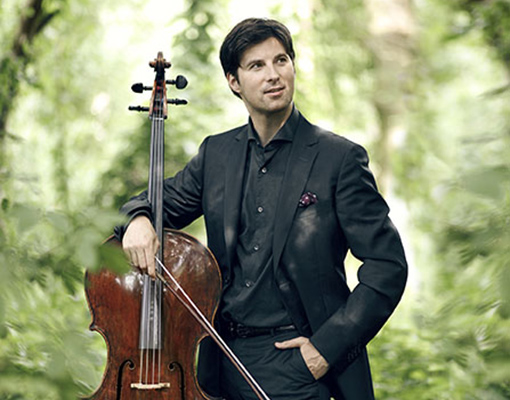
Daniel Müller-Schott (cello, above), Annika Treutler (piano, below)

Wigmore Hall, Monday 17 February 2020 (lunchtime)

You can listen to this concert on the BBC Sounds app here (opens in a new window)

Review and guide by Ben Hogwood

There is so much original music for cello and piano dating from the 19th century that there is a danger of feeling short changed in a concert when presented with music arranged from a different instrument. Yet such was the conviction with which Daniel Müller-Schott and Annike Treutler played these pieces that it was possible to forget those thoughts and enjoy the music, pure and simple.

It also showed just how flexible some of the original music is. Dvořák’s 4 Romantic Pieces began as works for string quartet but their songful nature gives them just as much expression in their better known arrangement for violin and piano, and then in Müller-Schott’s own arrangement here. The first piece, a Cavatina, is a lyrical treat (2:36), while the second has a comparatively stern expression (5:44), ending with imaginative use of harmonics from the cellist. The third and most lyrical of the four pieces (8:28) returns to the same key as the first, and is ideally suited to the cello’s range, while the fourth and longest piece (10:51) is more thoughtful and affecting.

It usually takes longer to write about Webern’s music than it does to perform – which is again the case here. Yet such is the compressed intensity of his writing that the Drei Kleine Stücke will have stuck in people’s memories, despite lasting less than 5 minutes. Webern wrote the three pieces at a particularly fraught time in 1914, and Daniel Müller-Schott’s probing tone communicates their strength of feeling. As did Annika Treutler’s timely interventions, lingering on the mysterious chords of the first (from 19:06) signing off the second piece abruptly (20:15) and then the two savouring the ghostly sonorities of the slow, stretched out notes of the third piece (20:42).

The Violin Sonata in A major is one of César Franck’s most enduring works. Brimming with good tunes, it has an air of spring about it, and its abundance of good feeling makes it a very popular concert piece – as it surely was in its first performance, at the wedding of legendary Belgian violinist and composer Ysaÿe. Although originally written for violin and piano Franck was fully aware of the potential of a version for cello, and specified it could be played as such. This was eventually realised with the help of French cellist Jules Delsart.

Because most of the melodies are an octave lower in pitch it means the sonata does not have quite such a sunny outlook in its cello arrangement – but it does bring out the red blooded Romanticism of the stormy second movement.

Before that, Müller-Schott and Treutler delight in the dreamy first movement, threading Franck’s thematic ideas together beautifully (from 24:11). The second movement, the most effective in the arrangement, powers forward with impressive momentum (30:15), the music flowing freely as Müller-Schott’s probing tone and intonation shine through. At the same time Treutler proves the ideal anchor, the two judging the tempo just right.

The third movement is a freeform recitative for cello with subtly voiced thoughts for the piano (38:22), and the pair’s instinctive feel for the music gives it just the right amount of room to breathe. The finale (46:17) is a masterful bit of writing, a canon where the cello part shadows the piano at a close distance almost constantly. There is little more to say here than simply to enjoy the music and Franck’s powers of invention in an ideal performance!

Repertoire

This concert contained the following music (with timings on the BBC Sounds broadcast in brackets):

Dvořák, arr Müller-Schott 4 Romantic Pieces Op.75 (1887) (2:36)
Webern Drei Kleine Stücke Op.11 (1914) (19:06)
Franck, arr. Desart Sonata in A major (1886) (24:11)

As an encore we had a nicely chosen Schumann treat, the first of 3 Fantasiestücke Op.73 (54:04). Like the Dvořák and Franck before it, this is a piece whose songful nature means it can be arranged for any number of instruments. The cello does just fine here though!

Further listening & viewing

The music from this concert can be heard in the playlist below, most of it recorded by Müller-Schott himself:

Beyond the Violin Sonata and Piano Quintet, very little of César Franck’s chamber music gets a regular airing. This playlist adds the String Quartet and Trio Concertant no.1, two substantial and major works that show off once again Franck’s talent for recycling and developing melodies:

On a very different tip are Webern’s works for chamber forces. Never one to overstay his welcome, he did nonetheless contribute some remarkable works in the smaller form, among them the Concerto for 9 instruments and four distilled pieces for violin and piano. They are included here as part of a disc that begins with the famous Symphony:

As well as writing large scale chamber works, Dvořák was able to put together much shorter pieces for the salon and light entertainment. The Cypresses for string quartet fall into this category, essentially working as songs without words:

Wigmore Mondays – Boris Giltburg plays Rachmaninov Preludes

Boris Giltburg (piano, below)

Wigmore Hall, Monday 30 September 2019 (lunchtime)

You can listen to this concert on the BBC Sounds app here

Review and guide by Ben Hogwood

When Bach finished the first set of his celebrated Well-Tempered Clavier in 1722, he set in motion an approach to writing for the keyboard that has captured the imagination of several other composers through the centuries, writing a prelude and / or a fugue in each of the 24 keys and having them performed as a collection.

Sergei Rachmaninov was one of those composers so influenced, though he didn’t approach it as a collection initially. In fact he began with just one piece, the Prelude in C sharp minor, which sat in the middle of the 5 Morçeaux de Fantaisie for piano when published in 1892. With the composer still in his late teens, this Prelude shot him to stardom – and so he was only too happy to revisit the form with another 23 pieces, delivered in two installments in the years 1903 and 1910.

The prelude became one of Rachmaninov’s primary methods of expression in his solo piano music, and the pieces are much loved. Boris Giltburg’s selection here did not however include the two most famous examples – the C sharp minor piece, nor the famous G minor prelude from the Op.23 set, Boris Giltburg preferring instead to show that the other 22 are absolutely not to be overlooked! From these he picked a selection of 14, arranged chronologically but also logically in their key groups.

Rachmaninov’s writing for piano is almost instantly recognisable, and only a few seconds of the Prelude in B flat major Op.23/2 (1:27) are needed to confirm his authorship. The ready and natural flow of notes, the power of the right hand, working in octaves on this occasion, and an outpouring of passion. Giltburg kept a fine measure of expression and control.

He complemented this heady start with the soft yet ardent Prelude in D major Op.23/4, and then another stream of consciousness from the Prelude in C minor Op.23/7, carrying all before it to an emphatic end. Giltburg’s phrasing was ideal here, knowing when to ‘breathe’ in the longer phrases.

The Prelude in A flat major Op.23/8 shows something of the influence of Chopin, and this one too flowed nicely under Giltburg’s direction. Shifting the base to the Prelude in E flat minor Op.23/9 brought a more worrisome outlook, the right hand more agitated and becoming relatively sombre in its closing statement. The last of this set, the Prelude in G flat major Op.23/10, negotiated calmer waters, Giltburg lost in thought and the music.

The Op.32 selection begins in the ‘purest’ key, C major, so named as all its notes are the white keys on the piano – yet from Rachmaninov this is his shortest prelude, powered here by Giltburg’s weighty left hand opening. It formed a nice gateway to the Prelude in B flat minor Op.32/2, from which we were led to the heroic Prelude in E minor, the fourth in the set. This was brilliantly characterised and paced by Giltburg, a darkly dramatic performance.

The serenity of the Prelude in G major Op.23/5 was beautifully observed, as was the stark contrast to the following Prelude in F minor Op.32/6, which erupted out of the blocks. Most impressive of all, perhaps, was the substantial Prelude in B minor Op.32/10, a response to Arnold Böcklin’s painting Die Heimkehr (The Homecoming, above), a piece of genuine, bittersweet emotion, especially at the end where Rachmaninov struggles to choose between the minor and the major key.

After this the penultimate Prelude in G sharp minor Op.32/12 had a touch of the Mediterranean in its tremolo passages, and here Giltburg again gave the music plenty of room to breathe, his virtuosity extremely impressive. The final, substantial Prelude in D flat major Op.32/13 had a keen sense of homecoming, given a regal air in this performance.

Repertoire

Boris Giltburg played the following Rachmaninov Preludes (with timings on the BBC Sounds broadcast in brackets):

Rachmaninov
10 Preludes Op.23 (1902-03) – excerpts: in B flat Op.23/2 (1:27); in D Op 23/4 (5:09); in C minor Op 23/7 (9:27); in A flat Op 23/8 (12:04); in E flat minor Op 23/9 (15:56); in G flat Op 23/10 (18:15)
13 Preludes Op.32 (1910) – excerpts: in C Op 32/1 (23:05); in B flat minor Op 32/2 (24:34); in E minor Op 32/4 (27:31); in G Op 32/5 (33:03); in F minor Op 32/6 (36:18); in B minor Op 32/10 (37:50); in G sharp minor Op 32/12 (43:17); in D flat Op 32/13 (45:48)

He also played Schumann’s Arabeske in C major Op.18 (52:00) as an encore:

Further listening

All the preludes in this concert can be heard on this playlist in the order they were performed, using Giltburg’s own recently issued recording:

Giltburg proclaims Rachmaninov to be a favourite composer, and his recent recording of the composer’s Piano Concerto no.3 gives the listener little doubt in that respect! It’s coupled with the solo Variations on a Theme of Corelli:

Meanwhile this earlier release for Naxos gives a welcome coupling for the second set of Rachmaninov’s Études-Tableaux Op.39 – one of his best achievements for solo piano – and the impressive 6 Moments musicaux Op.16, which between them last around half an hour and contain some deeply expressive music:

Wigmore Mondays – Benjamin Appl & Kristian Bezuidenhout: Schumann, Loewe, Mendelssohn & Zelter

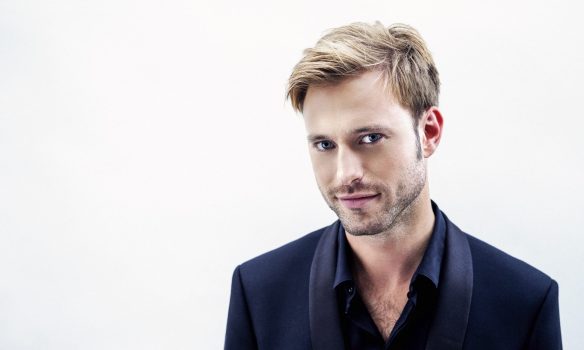
Benjamin Appl (baritone, above), Kristian Bezuidenhout (fortepiano, below)

Wigmore Hall, Monday 16 September 2019 (lunchtime)

You can listen to this concert on the BBC Sounds app here

Review and guide by Ben Hogwood

Lieder can be downright miserable sometimes, as Benjamin Appl acknowledged when thanking us for attending this recital of ‘jolly German music’, with which the Wigmore Hall opened their 2019-20 season of BBC Radio 3 Lunchtime Concerts.

Appl, a baritone of ever-growing reputation, was performing with Kristian Bezuidenhout, who played a Blüthner fortepiano dating back to Leipzig in 1856 – the year of Schumann’s death. The instrument, an attractive rosewood colour, proved the ideal foil for an interesting programme looking at the Lied in Germany around the first half of the 19th century. In an hour we covered some little known ground from the output of Schumann himself, complemented by settings by Mendelssohn, Zelter and Loewe.

The pairing began with three later Robert Schumann songs, all based around the character Harper, from Goethe’s novel Wilhelm Meister’s Apprenticeship. Schumann set the songs in 1849, the centenary of the poet’s birth. Appl stood tall and upright in front of the piano, communicating directly with the audience through his eyes as well as his voice. Wer nie sein Brot mit Tränen ass (Who never ate his bread in tears) was a sombre note on which to start, though the pain eased a little before the end, Bezuidenhout’s spread chords giving an indication of the fortepiano’s rounded sound. Wer sich der Einsamkeit ergibt (Who gives himself to loneliness) had a penetrating delivery from the singer, with a dark and unsettled postlude from the piano, while An die Türen will ich schleichen (From door to door will I steal) had a slightly lighter touch.

There followed three songs by Mendelssohn setting the poetry of Nikolaus Lenau. The short song An die Entfernte (To the distant beloved) danced lightly and was nicely phrased, before the nocturnal Schilflied (Reed song) was distracted and occasionally lost in thought. Frühlingslied (Spring song) emphatically blew away the cobwebs, the positive energy of the new season blowing the dark thoughts away.

The music of Carl Friedrich Zelter, a good friend of Goethe, is not often heard in the concert hall these days. He had his friend’s blessing however, the author approving of his direct methods of word setting, without too much in the way of musical dressing. His three Harfenspieler are bold settings and Appl sung them with clarity here, hitting the high notes of the second song with impressive intensity. Bezuidenhout was subtle in his complementary melodic lines on the fortepiano.

Contrasting with these were the dramatic songs of Carl Loewe. Herr Oluf is a self-contained Danish legend against the dangers of meeting Elves, and was performed with no quarter given, a terrific introduction from Bezuidenhout setting the energy level high. On occasion the singer has quite an unusual melodic profile, but this was straightforward for Appl’s vivid interpretation. The mischievous Hinkende Jamben was gone in an instant, with its mannerisms and lisps, before an expansive introduction to Tom der Reimer brought a grand tone from the singer. In a legend comparable in profile to Herr Oluf, it finished with brightly ringing bells, courtesy of Bezuidenhout’s picture painting.

When Schumann made his six settings of Lenau’s verse, he added a short Requiem in the mistaken knowledge that the poet had died. However when the day of the first performance arrived in 1850, news reached the gathering that Lenau had only just passed away, making the composer’s tribute strangely prophetic.

It is a dark cycle, reflecting perhaps the struggles of both men with mental illness – but illustrating at the same time the inner strength that music and poetry gave them. The steely Lied eines Schmiedes (Blacksmith’s Song) found Appl gathering himself with impressive projection, before the mood and heart softened a little for a languid account of Meine Rose (My Rose). Meanwhile Kommen und Scheiden (Meeting and Parting) had a devastating pay-off in the form of the emphasised last word, where the ‘last dream of my youth was taking leave of me’

Die Sennin (The Cowgirl) began with flowing piano, which led to Appl’s ringing delivery of ‘spring’s first song in the trees’, one of the recital’s most memorable moments. From there the cycle took a darker tone, Bezuidenhout breeding anxiety with the restless fortepiano line of Einsamkeit (Solitude), where Appl’s vocal was bold, and then to Der schwere Abend (The Sultry Evening) which was darker still, with a cold final line ‘to wish us both dead’. Thankfully the Requiem itself – a short Latin text – offered consolation and rest, as well as a rousing central section looking to the heavens.

This was a magnificent recital, with grace and power in equal measure from both performers, and the sound of the fortepiano a real treat in complement to Appl’s caramel tone. As a bonus we heard Mendelssohn’s Auf Flügeln des Gesanges (On Wings of Song), finishing in celebratory mood.

Repertoire

Benjamin Appl and Kristian Bezuidenhout performed the following songs (with timings on the BBC Sounds broadcast in brackets):

Schumann Wer sich der Einsamkeit ergibt Op.98a/6 (1:54); Wer nie sein Brot mit Tränen ass Op.98a/4 (4:55); An die Türen will ich schleichen Op.98a/8 (all 1849)
Mendelssohn An die Entfernte Op.71/3 (1842) (9:56); Schilflied Op.71/4 (1832 (11:17); Frühlingslied Op.47/3 (14:08) 1839)
Zelter Harfenspieler I-III (18:03)
Loewe Herr Oluf Op.2/2 (24:18) Hinkende Jamben (29:51); Tom der Reimer (30:35)
Schumann 6 Gedichte von Nikolaus Lenau & Requiem, Op.90 (37:53). Individual songs: Lied eines Schmiedes (37:53), Meine Rose (39:05), Kommen und Scheiden (42:52), Die Sennin Schöne (44:00), Einsamkeit (46:08), Der schwere Abend (49:11), Requiem (50:49)

Encore – Mendelssohn Auf Flügeln des Gesanges Op.34/2 (56:07)

Further listening

Benjamin Appl has not yet recorded any of the repertoire in this concert, save the encore, but suitable recorded versions can be heard on this Spotify playlist: