In concert – Jennifer France, London Philharmonic Orchestra / Edward Gardner @ Royal Festival Hall – Abrahamsen & Mahler

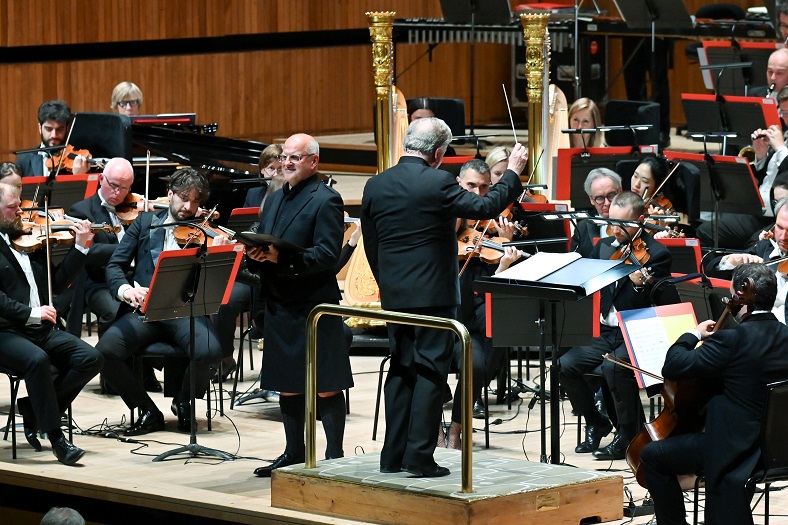
Jennifer France (soprano), London Philharmonic Orchestra / Edward Gardner

Abrahamsen let me tell you (2012-3)
Mahler Symphony no.4 in G major (1892, 1899-1900)

Royal Festival Hall, London
Friday 3 October 2025

Reviewed by Richard Whitehouse

Tonight’s London Philharmonic Orchestra concert featured the welcome revival of a 21st-century classic. Hans Abrahamsen’s recent output may be relatively sparing, but the works that have emerged represent a triumph of quality over quantity and not least let me tell you.

Set to fragmentary lines drawn by Paul Griffiths from his eponymous novel, this centres on the character of Ophelia – its seven songs falling into three larger parts whose outlining of a ‘before, now and after’ trajectory gives focus to the arching intensity of its 30-minute span. The first, fourth and sixth of these anticipate what comes to fruition during the second, fifth and seventh – the exception being the third whose speculative vocal line is underpinned by a stealthy progress in the lower registers evoking the motion, if not the form, of a passacaglia. Elsewhere the voice evinces an intricacy and translucency that effortlessly carries the word-setting as it pivots between thought of oblivion and transcendence, before eventually being subsumed into the orchestra for a conclusion among the most affecting in recent memory.

The LPO acquitted itself ably in music which is texturally complex for all its harmonic clarity, though it was Jennifer France (above) who (not unreasonably) most impressed with a rendering of the solo part as did ample justice to its high-lying melisma and airborne flights of fancy. Edward Gardner directed with an innate sense of where this music was headed, not least in those final bars with their tapering off into silence. Relatively few pieces are recognized as seminal from the outset, but let me tell you is one such and seems destined to remain so well into the future.

France then returned (or rather stole in) for the finale of Mahler’s Fourth Symphony after the interval. His setting of ‘Das himmlische Leben’ from the folk-inspired anthology Das Knaben Wunderhorn had actually been written almost a decade earlier and was once envisaged as the finale to the Third Symphony, but it makes a natural conclusion to a successor whose relative understatement is sustained right through to this movement’s intangible end: a ‘child’s vision of heaven’ whose intended innocence becomes informed with no little experience by the close.

Gardner had steered a convincing trajectory through the preceding movements – not least the opening one whose mingled whimsy and wistfulness took on a more ominous demeanour in its eventful development, before conveying unalloyed resolve in a warm-hearted reprise and beatific coda. What is among the most striking of Mahler’s scherzo’s proceeded with audible appreciation of its pivoting between the sardonic and sublime, Pieter Schoeman’s ‘mistuned’ violin being first among equals in music whose soloistic textures were thrown into relief by the homogenous stability of the Adagio. Its double variations unfolded with a fluid intensity capped by a coda whose ‘portal to heaven’ yielded thrilling resplendence as subsided into a transcendent raptness that, in other circumstances, could have made a satisfying conclusion.

That this lead so seamlessly into the vocal finale says a great deal for Mahler’s foresight, but also Gardner’s ability to fashion so cohesive a symphonic entity. As the music subsided into subterranean chords on harp, the audience was (necessarily) held spellbound a while longer.

Click on the links for more information on the London Philharmonic Orchestra, conductor Edward Gardner, soprano Jennifer France and composer Hans Abrahamsen

Published post no.2,679 – Monday 6 October 2025
In concert – The Bach Choir, Philharmonia Orchestra / David Hill: Delius, Blackford & Walton

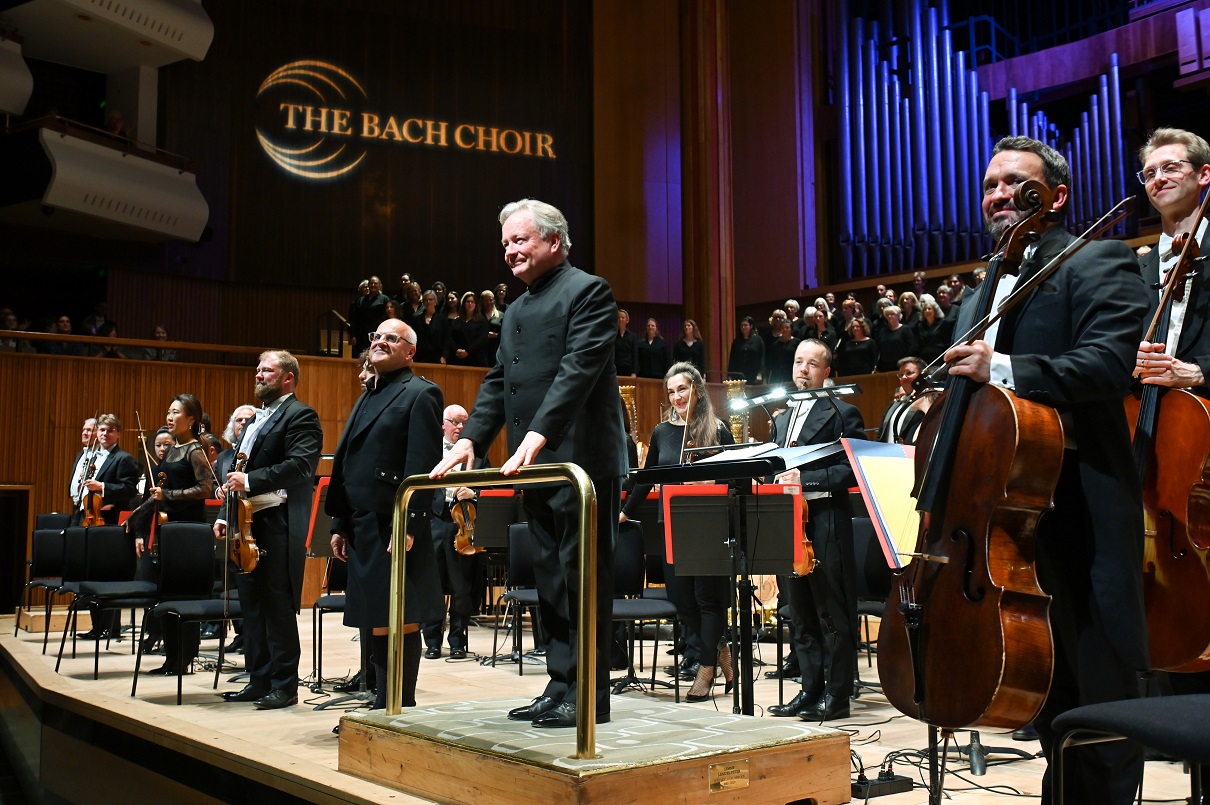
Amy Carson (soprano), Harry Jacques (tenor), Christopher Purves (baritone), The Bach Choir, Philharmonia Orchestra / David Hill

Delius The Song Of The High Hills (1911)
Blackford La Sagrada Familia Symphony (2022, world premiere)
Walton Belshazzar’s Feast (1931)

Royal Festival Hall, London
Thursday 8 May 2025

Reviewed by Ben Hogwood Pictures (c) Chris Christodoulou

This imaginative concert presented three British works telling stories from overseas, their reach extending to Norway, Spain and Babylon respectively.

Although born in Bradford, Frederick Delius spent much of his life abroad, living in America and then France – from where he would visit Norway for many a summer holiday with his wife. One such vacation in 1911 inspired him to write The Song Of The High Hills, a continuous sequence in three sections for wordless choir and orchestra capturing the mountain plateau, or ‘vidda’, that they found on their walks. Images from the plateau were shown on a screen behind the chorus as they performed.

Musically the work draws from Grieg and Debussy (his Nocturnes in especially) but inhabits a world all of its own, Delius achieving an unusual, rapt stillness when describing the high plains. David Hill, a long time exponent of his music, marshalled a strong performance, albeit one that didn’t quite sustain the rarefied atmosphere of the central section. It did cast quite a spell, mind, thanks to a beautiful oboe solo from Timothy Rundle on the approach, and some superbly controlled singing from The Bach Choir, headed by soloists Amy Carson (soprano) and Harry Jacques (tenor). The climax of the middle section was bolstered by three timpani, before the orchestra returned us to base camp. Speeds were on the fast side, but the Philharmonia Orchestra gave consistently luminous textures.

London-born composer Richard Blackford has shown considerable flair when writing for orchestra, and this was immediately evident in the world premiere of his La Sagrada Famila Symphony. Completed in 2022 and already recorded on the Lyrita label, it is a musical response to a 2019 encounter with Gaudí’s vision, concentrating on three great facades of the building – Nativity, Passion and Glory.

Blackford’s symphony was rich in colour but also vividly descriptive, his responses matched by an accompanying film, directed by the composer. Nativity began with awe-inspiring salvos from the brass but grew into a more intimate study, with elements of Hindemith and Berg in the orchestral writing, before a propulsive passage threw off the shackles. Passion was the emotional centrepiece, a vivid study in the brutality of the Good Friday story. Grotesque elements were emphasised by sudden closeups of Josep Maria Subirachs’s sculptures, their drawn expressions reflected in the music. The death of Christ was especially notable, marked by a solo of moving eloquence from cellist Martin Smith, then a sharp cry of dismay from Mark van de Wiel’s clarinet.

Glory was less obviously jubilant than might have been expected, mystical and reverent, but again it was an accurate response to the imagery as the film briefly went inside the massive structure. Blackford’s imagery danced in the listener’s mind on its own merits, with the thrilling surge at the end, bolstered by the organ, reminiscent of Messiaen or Scriabin. David Hill secured a fine performance from the Philharmonia, bringing the splendour of Gaudí’s cathedral to the concert hall. The emphatic finish brought with it a reminder of the building’s likely completion in 2026, a mere 144 years after construction began!

A British choral classic followed in the second half. Belshazzar’s Feast was initially denounced by Sir Thomas Beecham (a Delius fan, coincidentally) but Walton’s cantata has become a popular occasion piece. It is a vivid account of Babylonian decadence, before a human hand appears, writing on the wall of the banqueting hall to prophesy Belshazzar’s downfall. David Hill applied expert pacing to the storytelling, the Bach Choir on top form as the tension grew, spilling over into the exultant Praise Ye section. The paeans to the Babylonian Gods were starkly thrilling, contrasted by the terrifying unison shout of “Slain!” at Belshazzar’s death. The Philharmonia were superb, too, offstage brass bringing widescreen sound from either side of the stage and the percussion giving brilliant descriptions of the elements – iron and wood especially.

When the writing on the wall began, an ominous hush descended on the choir, the orchestra spreading a macabre chill through the hall – before the triumph of the closing pages, the Israelites free at last. Baritone Christopher Purves was a fine soloist, narrating the events and capturing the mood throughout. With 220+ in the choir, our ears were ringing long after the concert had finished, a timely reminder of a ruler whose inflated ego had brought about his downfall. Could there be any parallels in today’s world, I wonder?

For details on the their 2024-25 season, head to the Philharmonia Orchestra website

Published post no.2,529 – Saturday 10 May 2025

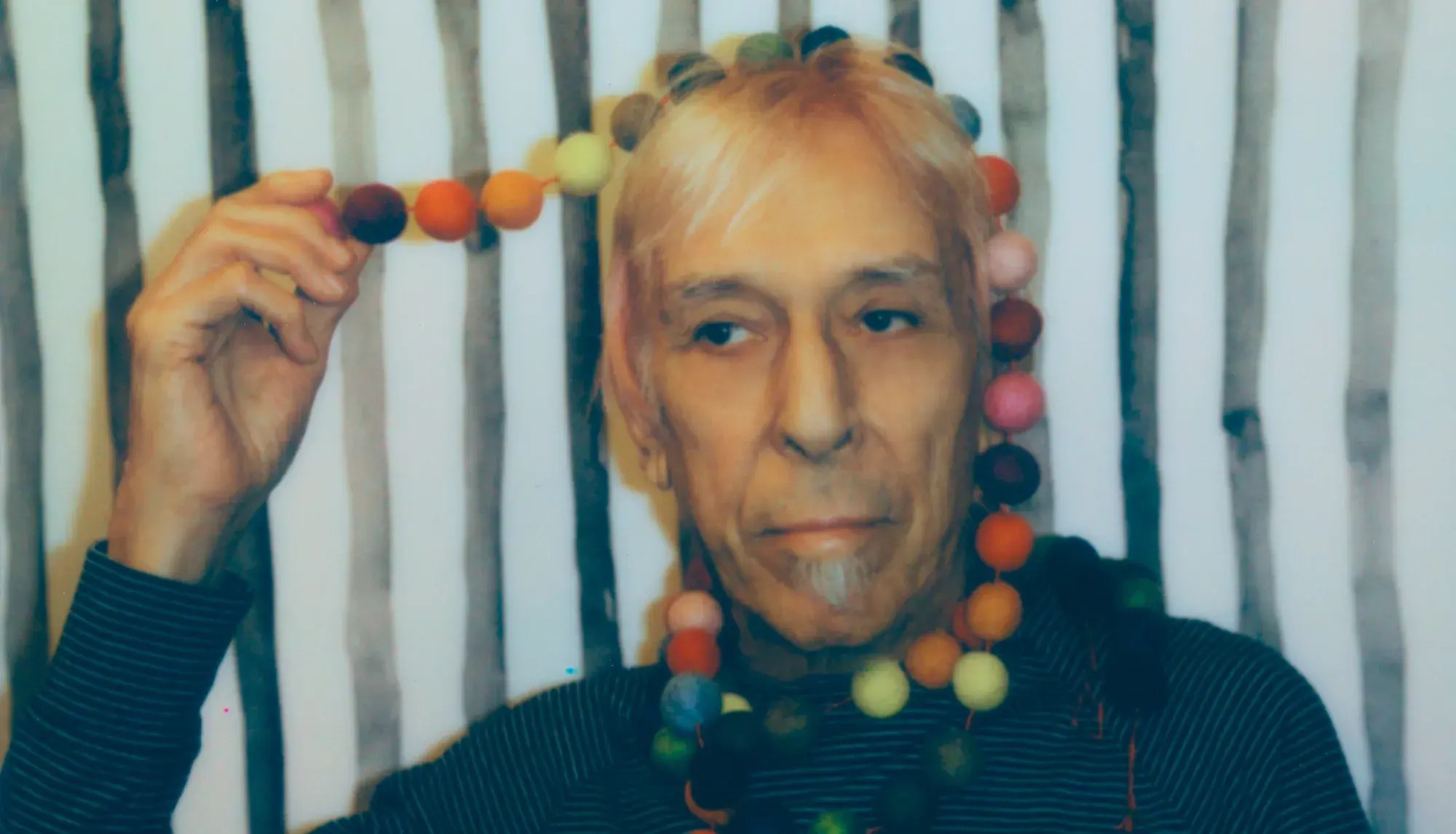
In concert – John Cale @ Royal Festival Hall

John Cale (vocals, keyboards, guitar), Dustin Boyer (lead guitar/samples), Joey Maramba (bass guitar), Alex Thomas (drums, synths)

Royal Festival Hall, London
Friday 21 March 2025

Reviewed by Richard Whitehouse Picture (c) Madeline McManus

It feels reassuring to know, whatever else may be happening, that John Cale is still making music as only he can. Tonight saw him return to the Royal Festival Hall, the scene of some memorable gigs over the past four decades, during the course of his POPtical Illusion Tour.

A tour where his trusty viola has been absent found Cale playing guitar on just the opening track, the sardonically catchy Shark-Shark, before he took his place behind keyboards for the remainder. An album which does not so much defy time as channel it his way, last year’s POPtical Illusion was understandably much in evidence with the deadpan levity of Setting Fires, the unalloyed sassiness of Davies and Wales or the ominous edginess of Company Commander all featured. A further number, unheard until making it onto the setlist just last month, the imperious and intense Long Way Out Of Pain is evidently one of those 50 or so songs which, created during lockdown, has still to find an official release and leads one to hope Cale’s recent productivity in terms of studio albums will continue for some while yet.

Tonight’s set ranged thoughtfully across the greater part of Cale’s output. From 2023’s Mercy, (happily a valediction no more) came the stark Out Your Window with Cale’s voice thrown into stark relief against the fugitive backing vocals. Otherwise, it was back to 1996’s Walking on Locusts for the eloquent Set Me Free, surely among the most affecting songs from that or any other decade, then 1989’s Words for the Dying for the deceptively carefree treatment of Dylan Thomas’ Do Not Go Gentle Into That Good Night which emerged unscathed shorn of its classical stylings. What seemed an overly diffuse number heard on 1979’s Sabotage/Live, Captain Hook became a gripping band workout centred on Cale’s bitingly accusatory lyric, while 1980’s baleful Rosegarden Funeral Of Sores remains the ultimate B-side from hell.

Nor was Cale’s classic singer-songwriter era overlooked – 1975’s Helen of Troy represented by the glancing pathos of My Maria, that same year’s Slow Dazzle by his world-weary take on the Elvis standard Heartbreak Hotel that ever since has accompanied him through thick and thin, and from 1974’s Fear the hard-driving Barracuda which has never sounded more power-pop than now. From 1973’s Paris 1919, The Endless Plain Of Fortune here swapped pathos for pertness in what is among the most interventionist and intriguing of Cale rethinks.

Cale was heard within a band that has largely stayed intact since his return to active gigging – with the inventive lead of Dustin Boyer, resonant underpinning of bassist Joey Maramba and forceful impetus of drummer Alex Thomas. These proved the collective soul of discretion in Frozen Warnings, most confiding number from Nico’s 1968 The Marble Index where Cale honed his formidable skills as a producer and an oasis of intimacy prior to Villa Albani from 1984’s Caribbean Sunset whose new-wave knowingness afforded the expected rounding-off.

More surprising was their no-show for the Velvet Underground 1967 classic Waiting For The Man, a regular encore during this tour. That said, Cale’s departure with ‘‘We’ll see you again soon I hope’’ suggested we may have not seen the last of him on stage. Don’t stop now John! Support was provided by Tom McRae, whose songs had caught the attention of both Cale and Bowie three decades ago. Voice and guitar enhanced by subtle atmospherics, his set suggested his dozen studio albums and almost as many live releases should be worth exploring at leisure.

John Cale and his band played: Shark-Shark, Captain Hook, The Endless Plain of Fortune, Heartbreak Hotel, Setting Fires, Davies and Wales, Rosegarden Funeral of Sores, Set Me Free, My Maria, Do Not Go Gentle Into That Good Night, Company Commander, Out Your Window, Long Way Out Of Pain, Frozen Warnings, Barracuda, Villa Albani

Published post no.2,484 – Tuesday 24 March 2025

In concert – Mao Fujita, Philharmonia Orchestra / Osmo Vänskä: Missy Mazoli, Mozart & Mendelssohn

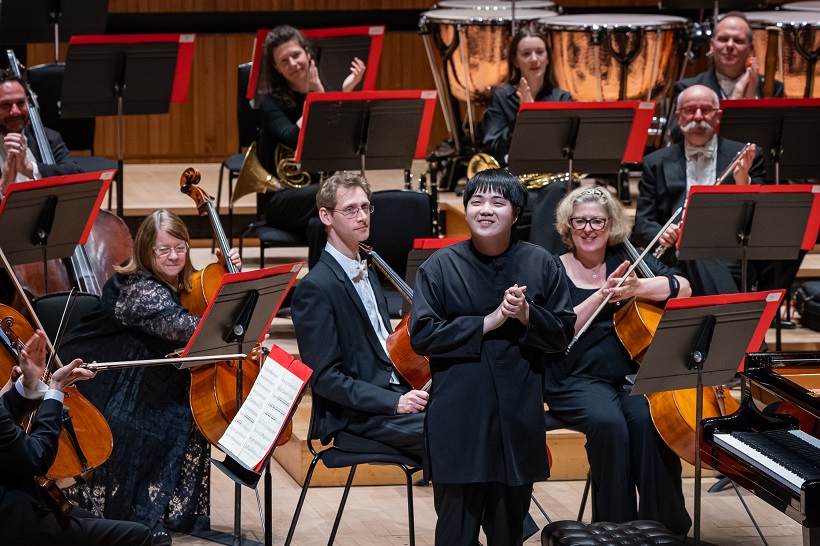
Mao Fujita (piano), Philharmonia Orchestra / Osmo Vänskä

Missy Mazzoli These Worlds In Us (2006)
Mozart Piano Concerto no.25 in C major K503 (1786)
Mendelssohn Symphony no.5 in D minor Op.107, ‘Reformation’ (1830)

Royal Festival Hall, London
Thursday 20 March 2025

Reviewed by Ben Hogwood Picture (c) Marc Gascoigne

Japanese pianist Mao Fujita has shown his impressive Mozart credentials in highly praised recordings of the composer’s complete piano sonatas. More recently his focus has shifted to the piano concertos.

Here he was partnered by the Philharmonia Orchestra and the visiting Osmo Vänskä in the substantial Piano Concerto no.25 in C major K503, a ceremonial work with fulsome orchestral accompaniment. Yet less is often more in Mozart performance, and that was certainly the case with Fujita as his fingers spun a magical web of notes. The piano’s magical first entry, after the pomp and circumstance of the introduction, was notable for its lightness of touch, Fujita listening closely to the Philharmonia wind players.

With so much to enjoy in this performance, Fujita exuded technical brilliance but also commendable restraint, always with affectionate shaping of the melodic line. That is, until the unattributed first movement cadenza. Here the rulebook was torn asunder, and a flow of unpredictable counterpoint broke loose, revealing links back to Bach but notably forward towards Beethoven.

Back under control, Fujita made the piano sing in the operatic slow movement, aided again by the quality of the wind section under Vänskä, who secured typically detailed, transparent clarity. The first violins began the finale with their touch as light as a feather, after which Fujita put the pedal to the metal once again, taking great pleasure in Mozart’s sparky dialogue with the orchestra. His encore, the first movement of Mozart’s Piano Sonata in C major K545, featured a delightful ‘wrong’ chord near the end, affectionately given and rounding off a truly memorable performance.

Prior to this we heard Missy Mazzoli’s These Worlds In Us, dedicated to her father, who was a soldier in the Vietnam War. Her imaginative orchestration extended to the use of wheezy melodicas in the outer section, adding a dreaminess and heightening the link with the music of Bali. The sighing violin theme was profound, but most telling of all was the soft rat-a-tat of the snare drum, a quiet but ominous reminder of war amidst the otherwise bright scoring. Mazzoli’s music has deeply human qualities that came alive in this performance.

For the second half, Vänskä led a dramatic account of Mendelssohn’s Symphony no.5, the Reformation. Second in order of composition, it was the last of his symphonies to be properly published, on account of its troublesome reception in 1832. In more recent years however the work has enjoyed greater exposure, rewarding its portrayal of triumph in turbulent times.

The magical hush from the strings of the Dresden Amen, quoted by the composer in the first movement, drew the audience in before Vänskä powered through a turbulent Allegro. The second movement danced like a late Haydn minuet, brisk and with a charming trio, while the Andante looked inwards, initially beyond comfort but ultimately softening to the touch. Mendelssohn’s quotation of the Lutheran chorale Ein feste Burg came to the rescue, sweetly intoned by flautist Samuel Coles, before the orchestra enjoyed Mendelssohn’s exuberant finale, and its parallels to Handel’s Messiah. As is his wont, Vänskä revealed previously hidden orchestral detail, giving a fully convincing account of a symphony whose cumulative power is all the more remarkable given Mendelssohn was 21 at the time of composition. Youth and experience were ideal foils here.

For details on the their 2024-25 season, head to the Philharmonia Orchestra website

Published post no.2,481 – Saturday 22 March 2025

In concert – Philharmonia Chamber Players – Beethoven: Septet

Philharmonia Chamber Players [Maura Marinucci (clarinet), Zsolt-Tihamér Visontay (violin), Scott Dickinson (viola), Alexander Rolton (cello), Owen Nicolaou (double bass), Sarah Pennington (horn), Marceau Lefèvre (bassoon)

Beethoven Septet in E flat major Op.20 (1802)

Royal Festival Hall, London
Thursday 20 March 2025 6pm

Reviewed by Ben Hogwood Picture (c) Marc Gascoigne

Beethoven’s six-movement Septet is, to all intents and purposes, a Serenade for seven instruments. As such it was perfectly timed in this early evening slot, the ideal piece with which to entertain a relaxed and healthily-sized crowd.

Clarinettist Maura Marinucci introduced the work, and her love of the piece was clearly shared by her Philharmonia Orchestra friends as they went about a performance that was by turns vigorous and lyrical.

Beethoven’s scoring was highly original in 1802, and it is easy to see why the piece proved so popular, with its abundance of good tunes and colourful textures. These were evident right from the opening, the bassoon and double bass giving a lovely heft to the lower end of the sound. They supported the winsome tunes, divided largely between Marinucci’s clarinet and the violin of Zsolt-Tihamér Visontay. Marinucci especially enjoyed the soft-hearted second movement, while Visontay had an increasingly virtuosic role to play, sometimes pushing ahead of the tempo in his eagerness but relishing Beethoven’s technical challenges.

The Minuet, with its impudent theme thumbing a nose at the audience, was nicely done, while the theme and variations forming the fourth movement were especially enjoyable, notably the first variation, assigned to the upper string trio, and the mischievous final variation and coda.

Above all this performance was a great deal of fun, the players enjoying sharing the tuneful material with their audience, an approach capped by a quickfire finale and dazzling cadenza from Visontay. Just as affecting, mind, was the hushed chorale from the winds preceding this moment.

Ultimately the music matched the weather, bringing the vitality of early spring to the Royal Festival Hall stage.

For details on the their 2024-25 season, head to the Philharmonia Orchestra website

Published post no.2,480 – Friday 21 March 2025