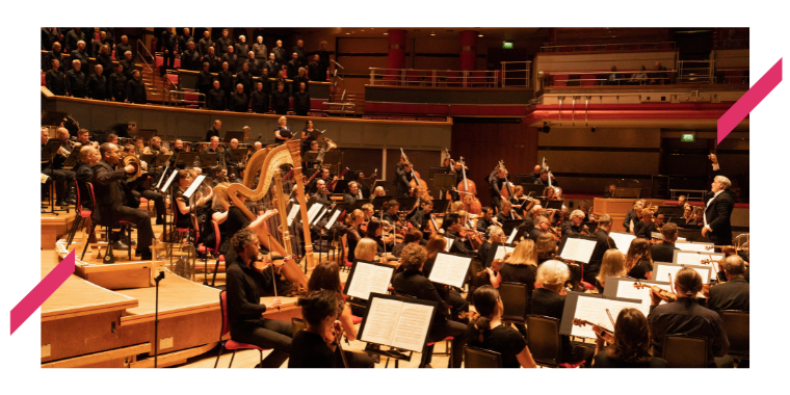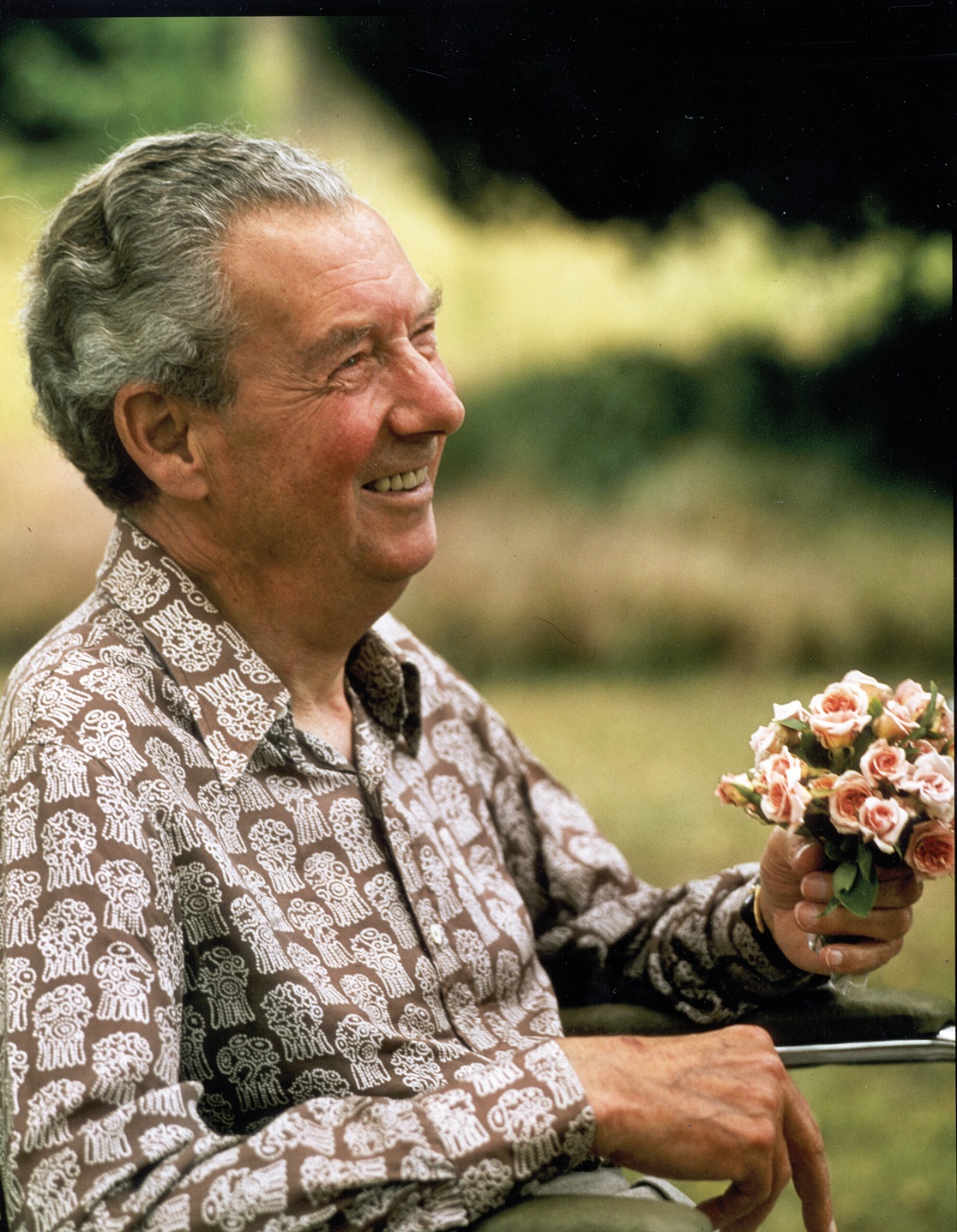
News – 77th Aldeburgh Festival 2026 – Programme announced

published by Ben Hogwood from the original press release. Photo above (c) unknown

The programme for the 77th Aldeburgh Festival takes place from Friday 12 to Sunday 28 June. Aldeburgh Festival has always been a place where music is made in full view of its past and its future; where composers, performers and audiences meet in the “holy triangle” Britten believed was essential to artistic life. In 2026, fifty years since Britten’s death, Britten Pears Arts reaffirms that principle as a living manifesto. 1976 marked an ending, but also a beginning: the moment the care, curiosity and exacting standards Britten and Pears brought to nurturing young artists became the enduring thread of the Festival and this organisation’s identity.

The 2026 Festival convenes artists who know one another’s work deeply—musicians who share a language of trust, risk and detail. Featured Artist Ryan Wigglesworth leads a circle of collaborators including Vilde Frang, Sophie Bevan, Steven Osborne, Lawrence Power and Nicolas Altstaedt. They come not simply to perform, but to pass on what they have learned: forming chamber groups, standing side by side with young players, and allowing music to reveal its meaning through shared attention.

In 2026 James Baillieu and Ryan Wigglesworth begin a 3-year tenure as Associate Directors of the Britten Pears Young Artist Programme. The aim is to build academies in which young, aspiring artists can flourish alongside their mentors and be celebrated in Aldeburgh Festival programmes, and to consider how important this venture is at a difficult time for the arts.

At the heart of this commitment is the new Festival Academy, directed by James Baillieu with Lise Davidsen, Caroline Dowdle, Julia Faulkner and Nicky Spence as faculty. Their work, and the Summer Academy that will follow it for instrumentalists and led by Ryan Wigglesworth, continues the legacy Britten and Pears established and marks a new way for the Young Artist Programme to work, enabling young artists to flourish when surrounded by the very best musicians, challenged, nurtured and invited to experience the generosity of audiences at Snape Maltings.

Pelléas et Mélisande, directed by Rory Kinnear with designs by Vicki Mortimer and lighting by Paule Constable, and performed by Sophie Bevan, Sarah Connolly, Jacques Imbrailo, Gordon Bintner, John Tomlinson and alumni of the Britten Pears Young Artist Programme, opens the festival with a work of delicacy and depth. Alongside Britten’s own late works, music by Feldman, Crumb, Kurtág and Henze sits beside 11 new works by Lera Auerbach, Tom Coult, Tansy Davies, Brett Dean, Lisa Illean, Natalie Joachim, Freya Waley-Cohen, Ryan Wigglesworth and others, maintaining Britten Pears Arts’ commitment to the composers of today and the artists who bring their work to life.

Andrew Comben, Chief Executive, Britten Pears Arts commented, ‘Aldeburgh Festival 2026 draws its joy from the energy of the musicians who gather here and the future they help reveal. At the heart of this is Ryan Wigglesworth, who I’m delighted to welcome as this year’s Featured Artist. His long association with the Festival will be reflected in performances as conductor, pianist and composer, joined by many of his closest artistic collaborators. 2026 marks fifty years since the death of our Founder, Benjamin Britten. His and Peter Pears’ commitment to supporting young artists remains central to our purpose, and the Festival and Summer Academies – led by James Baillieu and Ryan Wigglesworth – strengthen that legacy by placing outstanding young performers alongside world-class musicians as a core part of our programming. The Festival opens with a semi-staging of Debussy’s Pelléas et Mélisande, with an all-star cast and creative team, followed by a wide-ranging programme of opera, orchestras, choirs, chamber music, song, film, talks, walks and a fascinating visual arts programme featuring Ryan Gander, Ffiona Lewis and Kate Giles. Set across Snape Maltings, Aldeburgh and other Suffolk locations it continues to offer a beguiling combination of music, landscape and creative possibility. We really look forward to welcoming everyone in June.’

Ryan Wigglesworth this year’s Featured Artist commented, ‘Making music at Snape Maltings over the past 25 years has been one of the great pleasures of my life. From the start, it felt like home – a place where the most important friendships were forged, a place to grow and develop artistically. So, the invitation to be “Featured Artist” for the 2026 Aldeburgh Festival was a very special and joyous privilege. A strong sense of “family” has always been central to the spirit of the Aldeburgh Festival and accounts for why so many musicians feel drawn to put down artistic roots here. And what bliss it has been programming concerts involving so many of my dearest friends and colleagues:

Nicolas Altstaedt, Sophie Bevan (literally family!), Sarah Connolly, Jacques Imbrailo, Rory Kinnear, Vicki Mortimer, Steven Osborne, Lawrence Power, John Tomlinson, as well as all the members of the two orchestras I’m lucky to be associated with: the BBC Scottish Symphony Orchestra and the Knussen Chamber Orchestra. (the latter itself a legacy of my “thanks-to-Snape” friendship with the late, deeply missed Oliver Knussen). It allows me the rare opportunity to wear all my hats under one roof, as it were: playing chamber music and song, premiering my new piece for Lawrence Power and the KCO, and conducting works that mean a great deal to me personally – none more so than Debussy’s Pelléas et Mélisande. It really is a great honour.’

James Baillieu, Associate Director, Britten Pears Young Artist Programme commented, ‘I am deeply honoured and delighted to be appointed, alongside Ryan Wigglesworth, as Associate Directors of the Britten Pears Young Artist Programme for 2026–2028. The Britten Pears Programme played a formative role in my own development as a young artist, and it is a profound privilege to return in this new capacity to contribute to its future. This appointment represents a deeply meaningful opportunity to help nurture the next generation of musicians within the creative and inspiring context that Britten and Pears established. I am excited to bring my experience, connections, and ideas to the role, and to be part of an ambitious new chapter in the life of this distinguished programme.’

To read the complete listings, head to the Aldeburgh Festival website

Published post no.2,731 – Thursday 27 November 2025
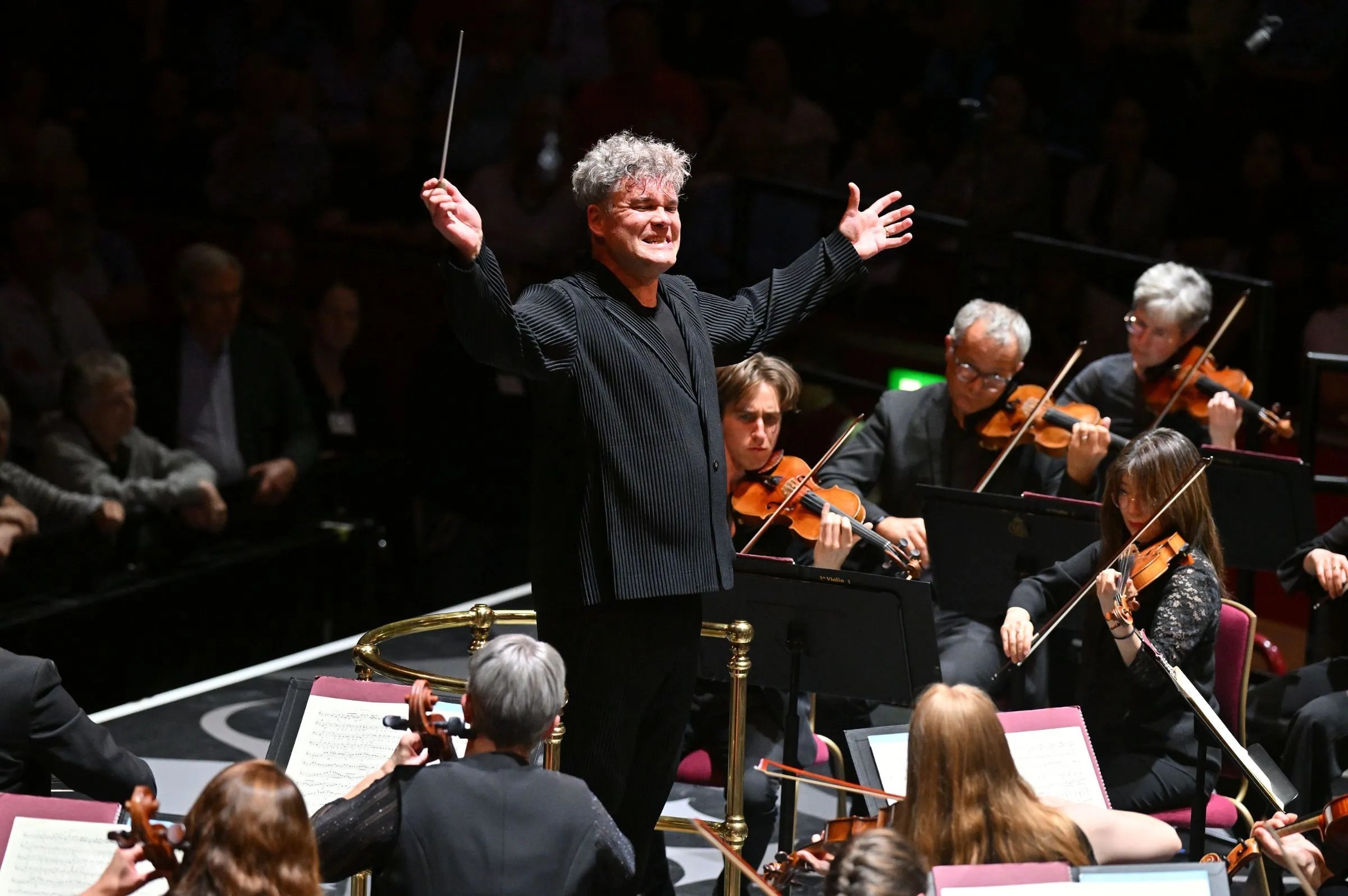
In concert – BBC Scottish SO / Ryan Wigglesworth @ BBC Proms: Birtwistle Earth Dances & Beethoven ‘Eroica’ Symphony

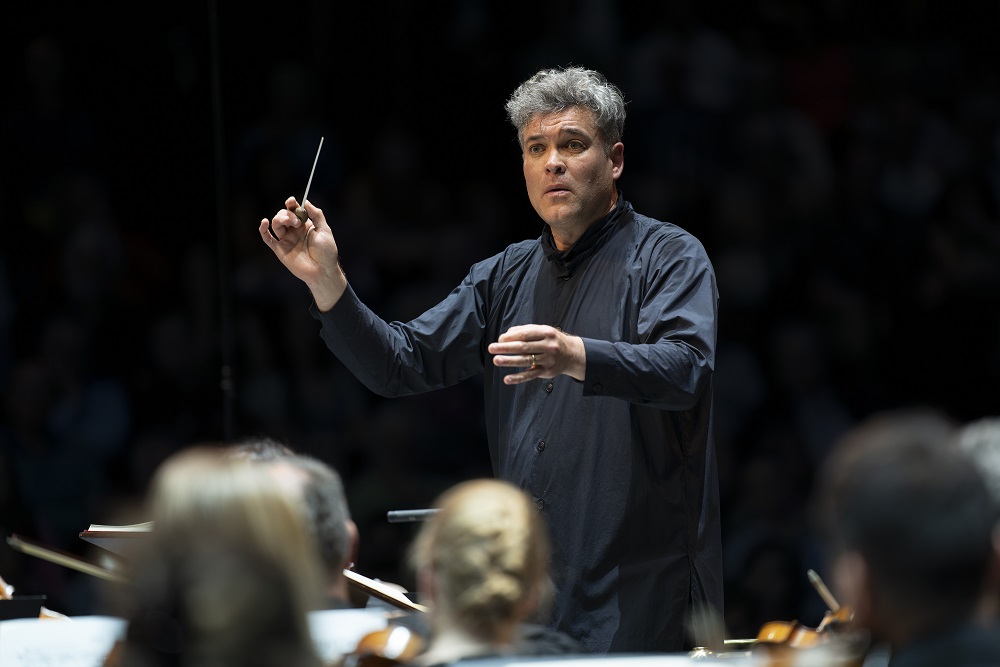
BBC Scottish Symphony Orchestra / Ryan Wigglesworth (above)

Birtwistle Earth Dances (1985-6)
Beethoven Symphony no.3 in E flat major Op.55 ‘Eroica’ (1802-4)

Royal Albert Hall, London
Monday 28 July 2025

Reviewed by Richard Whitehouse Photos (c) BBC / Mark Allan

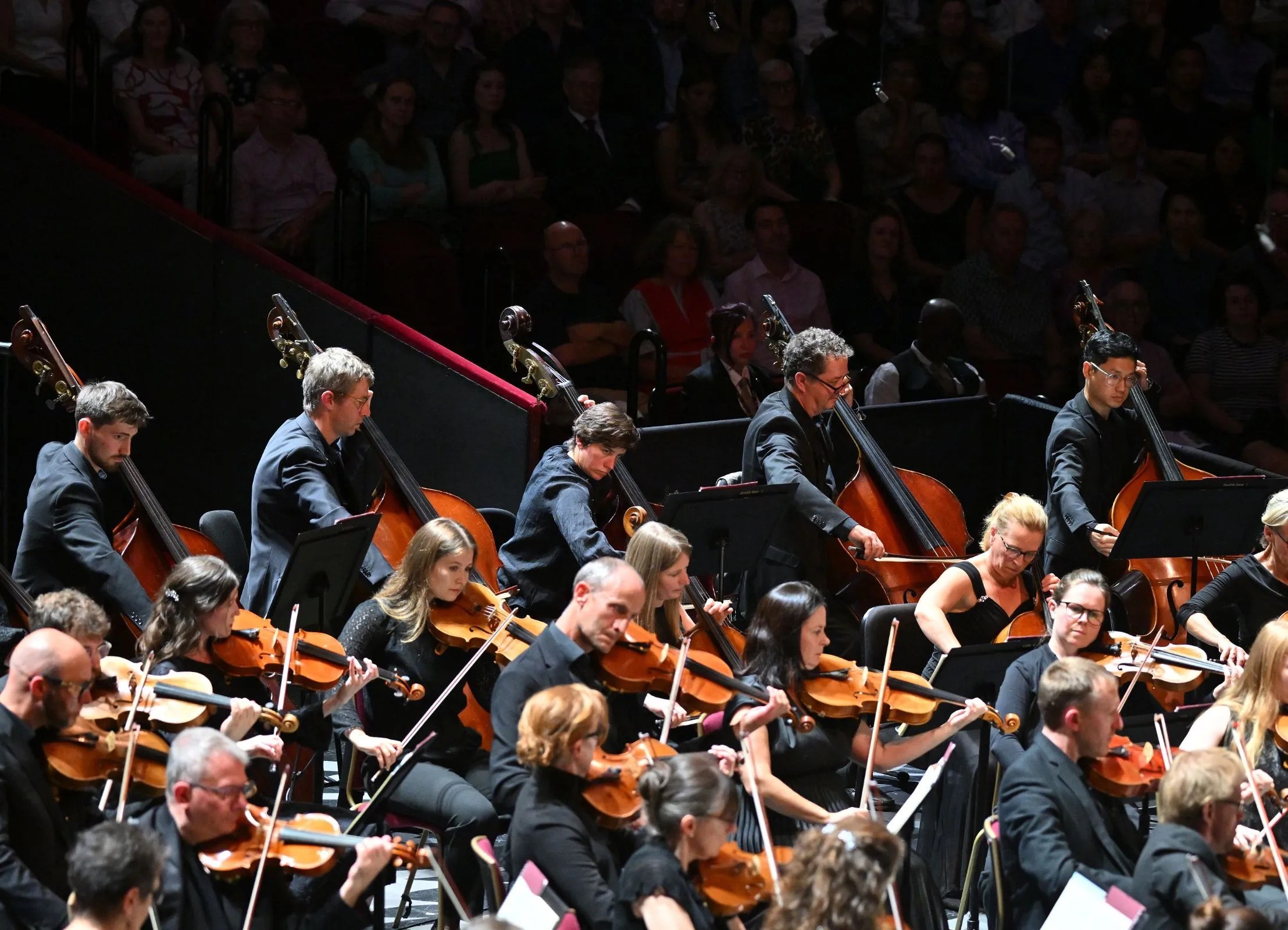
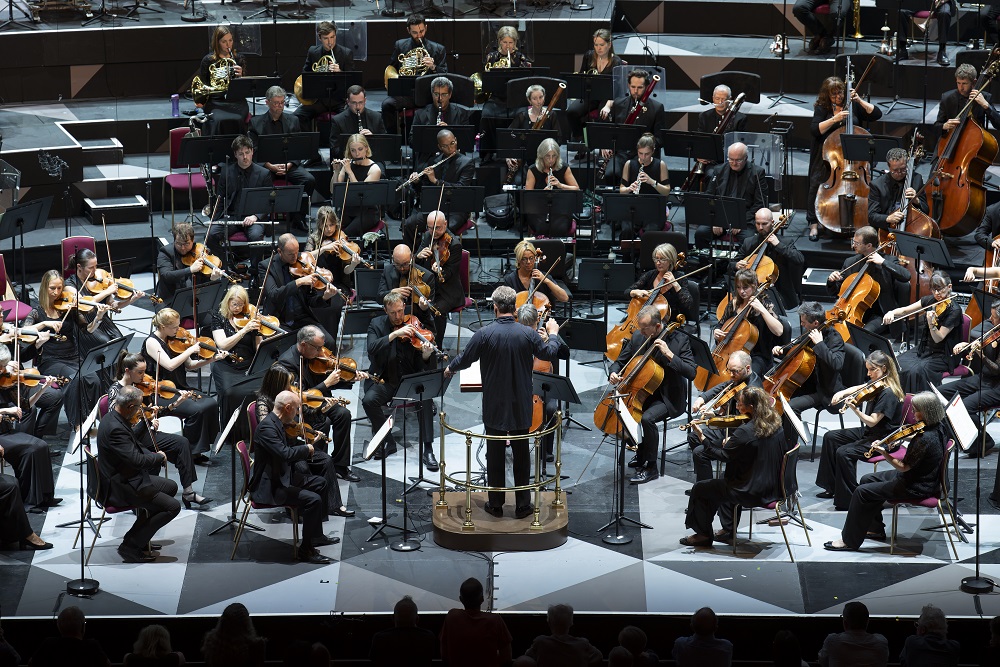
The emphasis on Ryan Wigglesworth’s activities may have changed during recent years, but this is certainly no hardship when his conducting of so broad a repertoire is as convincing as in his brace of concerts from this year’s Proms with the BBC Scottish Symphony Orchestra.

Performed three times at the Proms during its first decade of existence, Sir Harrison Birtwistle’s Earth Dances tonight reappeared after 31 years. Much may have changed over that time (not least the passing of the composer), though this piece remains a sure highpoint of his output as of British music from the period. Premiered by the late Peter Eötvös before being taken up by Christoph von Dohnányi, Peter Boulez and Simon Rattle, it has now found an ideal advocate in Wigglesworth who surely gets to the heart of this particular matter like no-one before him.

Essentially this is about finding a balance between the facets of its title – those often densely arrayed yet always sharply differentiated strata of the orchestral texture, allied to a rhythmic fluidity which keeps the music moving forward even during its most intricate passages. Not an easy task such as previous exponents have conveyed with varying degrees of success, but Wigglesworth had the work’s measure from the beginning. Rather than a set of more or less complex episodes that follow on sequentially, what came across was a series of interrelated layers fused in an audible process of continual variation – one, moreover, in constant motion to a point at which it did not so much end as disperse into silence. Almost four decades after its premiere, Earth Dances has now emerged as that multi-faceted masterpiece it always was.

It likely took at least as long for the Eroica to be rendered, rather than merely recognized, as such – which could be a factor with their being juxtaposed in the same concert. Whatever the case, it made for judicious programming with Wigglesworth and the BBCSSO rising to their comparable challenges. First performed at these concerts 129 years ago then subsequently in almost every season, Beethoven’s Third Symphony is a testing assignment conceptually and interpretatively – as was not shirked by this involving though often understated performance.

An understatement evident in the opening Allegro, with its subtly modified exposition repeat, the more involving for rendering this movement as an unbroken while cumulative continuity through to an affirmative if not wantonly triumphal coda. Even finer was the Marcia funèbre, its steady undertow flexible enough to accommodate the lilting counter-theme as well as the intensifying fugato at its centre on route to a conclusion the more affecting for its emotional deftness. Nor was this latter quality absent from a Scherzo whose shimmering outer sections found ideal contrast in the trio, its incisive part-writing for three horns buoyantly articulated. The Finale was all of a piece with what went before, its variations on the ‘Prometheus’ theme enticingly characterized but with a keen underlying momentum toward the joyous apotheosis. While no single account of so trail-blazing a work could possibly convey all the answers, this was impressive in its formal focus and expressive balance as saw the symphony whole. Make no mistake, Ryan Wigglesworth now numbers among the finest conductors of his generation.

You can listen back to this Prom concert on BBC Sounds until Sunday 12 October – or listen to recommended recordings of the two works from the Cleveland Orchestra on Tidal here

Click on the artist names to read more about the BBC Scottish Symphony Orchestra and their chief conductor Ryan Wigglesworth. Click also for more on the BBC Proms

Published post no.2,613 – Friday 1 August 2025

Arcana at the Proms – Prom 10: Laura van der Heijden, BBC Scottish Symphony Orchestra & Ryan Wigglesworth – Britten, Frances-Hoad & Elgar

Britten Gloriana – Symphonic Suite Op.53a (1953)
Frances-Hoad Cello Concerto ‘Earth, Sea, Air’ (2022) [Proms Premiere]
Elgar Symphony no.2 in E flat major Op.63 (1909-11)

Laura van der Heijden (cello), BBC Scottish Symphony Orchestra / Ryan Wigglesworth

Royal Albert Hall, London
Friday 26 July 2024

reviewed by Richard Whitehouse

He might not be the only composer-conductor of his generation, but Ryan Wigglesworth has rapidly established himself among the best – as this concert with the BBC Scottish Symphony Orchestra, whose chief conductor he has been over these past two seasons, amply confirmed.

Other than Peter Grimes, the coolly received Gloriana was his only opera from which Britten extracted a concert suite. The vaunting syncopation of Tournament then wrenching fatalism of Gloriana moritura make for a telling framework, with this account at its most perceptive in the wistful poise of the Lute Song – the oboe being an eloquent replacement for the tenor thanks to Stella McCracken – then the evocative sequence of Courtly Dances where Britten effortlessly bridges the historical and the aesthetic divide between the eras of two Elizabeths.

Next a first Proms hearing (just over a year after its Glasgow premiere) for the Cello Concerto by Cheryl Frances-Hoad. Drawing inspiration from recent research into diverse aspects of the natural world, the three continuous movements provide an arresting vantage on an outwardly traditional form. Hence the trajectory of swifts in flight, carbon-absorbing algae over oceanic expanses and gravitational force of volcanic activity each influencing the musical content of a rhythmically impulsive Allegro, harmonically diaphanous Larghetto and melodically soaring Presto giocoso; the whole afforded unity through its composer’s motivic resourcefulness and the engaging commitment of Laura van der Heijden (above) in her realizing of its solo part. She then responded to deserved applause with a limpid reading of Pablo Casals’ The Song of the Birds.

Elgar is a composer evidently close to Wigglesworth’s heart and this evening’s account of his Second Symphony did not disappoint. Launched a little too circumspectly, the initial Allegro duly found a persuasive balance between bounding energy and that musing uncertainty to the fore in the otherworldly processional near its centre. Its overall extroversion was countered by the Larghetto – circumstantial association with the death of Edward VII having tempted many into a funereal pacing but not Wigglesworth, whose handling of its cumulative halves brought sustained emotional intensity framed by the stark lamentation with which it begins and ends.

One of Elgar’s most formally subtle and expressively audacious movements, the scherzo had the requisite impetuousness and nonchalance, thrown into relief by the mechanistic violence towards its core and unnerving energy at its close. Moderate in tempo and not overly majestic in outlook the finale might have been thought anti-climactic, but Wigglesworth’s keen sense of its long-term unfolding emerged in the searching ambivalence of its development and the understated grandeur of a peroration which did not require reinforcing with an organ pedal. Those closing pages could have yielded even greater pathos, but their suffused fatalism was wholly in accord with the conductor’s conception of this movement, as of the work overall.

Just over a year before, Wigglesworth presided over an inspirational account in Birmingham of The Dream of Gerontius. Tonight’s performance of the Second Symphony might not have been quite its equal, but it more than confirmed him as an Elgar interpreter of genuine stature.

For more on this year’s festival, visit the BBC Proms website – and for more on the artists involved, click on the names to read more about Laura van der Heijden, the BBC Scottish Symphony Orchestra and conductor Ryan Wigglesworth, and composer Cheryl Frances-Hoad

Published post no.2,253 – Sunday 28 July 2024

BBC Proms 2023 – Soloists, BBC Scottish Symphony Orchestra / Ryan Wigglesworth – György Kurtág’s ‘Endgame’

Prom 43

Endgame (2011-18) [UK Premiere]

Scenes and monologues; opera in one act by György Kurtág; Libretto by the composer after Samuel Beckett’s Fin de partie

Semi-staged performance; sung in French with English surtitles

Hamm – Fred Olsen (bass), Clov – Morgan Moody (bass-baritone), Nell – Hilary Summers (contralto), Nagg – Leonardo Cortellazzi (tenor), Victoria Newlyn (stage director)

BBC Scottish Symphony Orchestra / Ryan Wigglesworth

Royal Albert Hall, London

Thursday 17th August 2023

Royal Albert Hall, London
Friday 11 August 2023

by Richard Whitehouse photos by Sisi Burn / BBC

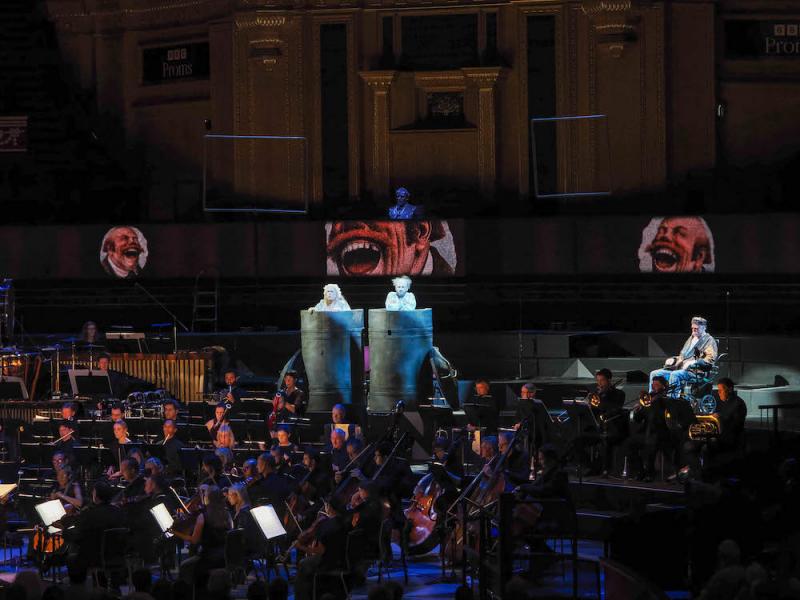
It may have had to wait three years since being postponed from the 2020 season, but tonight’s Prom brought a first hearing in this country for György Kurtág’s opera Endgame after Samuel Beckett and a performance such as, in the event, delivered at least as much as it had promised.

Although seeing Fin de partie on his first visit to Paris in 1957, it took several decades before Kurtág felt able to tackle a full-length opera and only in 2010 was a formal commission made by La Scala – presaging seven years of sustained (and evidently torturous) activity prior to its Milan premiere in November 2018. The subtitle is ‘Scenes and monologues; opera in one act’ and, having set 60% of the original French text, Kurtág still intends to add further scenes but, now in his 98th year, it would not be surprising were this opera to remain in its present form.

Unfolding continuously (and with no interval) across almost two hours, Endgame consists of 14 scenes which hone Beckett’s already sparse drama down to an unremitting focus on its four characters in their undoubted hopelessness and seeming helplessness. Vocally the predominant idiom is a speech-inflected arioso conveying its text with acute clarity against the backdrop of an orchestra which, despite – perhaps because of – its size and diversity, is almost always used sparingly. Stylistically the music invokes those traits familiar from its composer’s work across six decades which are not diluted as rendered in new and unlikely contexts; one notable aspect is the oblique while always audible allusion to those earlier composers who have accompanied Kurtág over his life’s work, and that here emerge as ‘figures’ all but tangible in their presence.

Utilizing three of the four singers from the Milan production, the cast could hardly have been stronger in commitment or insight. His being even more the defining role than with Beckett’s play, Frode Olsen here conveyed the predicament of Hamm with an authority the greater for its restrained vulnerability. He was abetted in this by Morgan Moody, whose Clov was poised between servant and protégé for a portrayal always empathetic however great its exasperation. Leonardo Cortellazzi summoned deftly whimsical humour as Nagg, reconciled to his dustbin-clad fate in contrast to the bittersweet recollections of Nell as taken by Hilary Summers – her eloquence extended by a later Beckett poem in a touching prologue. Victoria Newlyn brought the stark stasis of the drama and expanse of the Albert Hall’s acoustic into persuasive accord.

A versatile and perceptive conductor (and no mean opera composer, witness his ENO drama The Winter’s Tale six years previously), Ryan Wigglesworth duly had the measure of Kurtág’s elusive if inimitable idiom and drew a fastidious response from the BBC Scottish Symphony Orchestra; its playing as attentive to the score’s many subtleties as to its emotional highpoints – not least the closing bars, whose wrenching dissonance speaks of catharsis at least as much as of tragedy. The composer will hopefully have had an opportunity to hear this performance.

One looks forward to an eventual staging of this opera in the UK (following those subsequent productions in Amsterdam and Paris). Whatever else, Endgame is the summative work which Kurtág had to write and as confirmed tonight, the effort in its realization has not been in vain.

For more on the 2023 BBC Proms, visit the festival’s website at the BBC. Meanwhile click on the names for resources relating to György Kurtág and Samuel Beckett – and on the artist names Ryan Wigglesworth, Frode Olsen, Morgan Moody, Hilary Summers, Leonardo Cortellazzi, Victoria Newlyn and the BBC Scottish Symphony Orchestra

In concert – Alice Coote, Brenden Gunnell, Ashley Riches, CBSO Chorus and Orchestra / Ryan Wigglesworth – Elgar: The Dream of Gerontius

Alice Coote (mezzo-soprano), Brenden Gunnell (tenor), Ashley Riches (bass-baritone), CBSO Chorus, City of Birmingham Symphony Orchestra / Ryan Wigglesworth

Elgar The Dream of Gerontius Op.38 (1899-1900)

Symphony Hall, Birmingham
Thursday 2 March 2023

Reviewed by Richard Whitehouse

It may have had a disastrous premiere here in October 1900, but Birmingham has more than made amends to The Dream of Gerontius through many subsequent performances by the City of Birmingham Symphony Orchestra with conductors ranging from Vernon Handley to John Eliot Gardiner, two recordings from its previous chief conductors (Simon Rattle and Sakari Oramo), and tonight a reading which more than confirmed that this ground-breaking piece remains a touchstone of the choral repertoire almost 125 years on from that initial failure.

Although the innate Catholicism of John Henry Newman’s text no longer presents obstacles, the work’s technical demands remain considerable. Not least the characterizing of Gerontius himself, in which Brenden Gunnell acquitted himself with conviction – whether his wearied pallor then combative reckoning with Sancta fortis in Part One, or his wonderous musings then anguished acceptance of his purgatorial fate with Take me away in the longer second part. This role was consequently more believable and more empathetic because more human.

Not a little of that impression was abetted by Alice Coote’s contribution as the Angel. Less imperious than many predecessors (or contemporaries), the extent of her involvement only deepened as Part Two unfolded – the restraint, even reticence, of My work is done taking on heightened eloquence during There was a Mortal, before the Softly and gently of her farewell brought with it a transfiguring radiance as carried through to the close. This was a thoughtful and, increasingly, affecting approach to some of this work’s musical highpoints.

Nor should the contribution of Ashley Riches be underestimated, even though this is limited   to two, albeit crucial, appearances in either part. Arresting and suitably proclamatory at the Priest in Proficisere, anima Christiana, he brought unfailing gravity and powerfully wrought rhetoric to Angel of the Agony – the substance of whose musical presentation can be heard in Elgar’s music across the decades to come, whatever the extent to which the composer moved away from accepting those tenets of Catholic orthodoxy that are set out in Newman’s poem.

One of several works to which it has returned regularly over its half-century of existence, the CBSO Chorus brought its wealth of experience to a piece whose difficulties of ensemble and intonation cannot be gainsaid. From the halting appearances of the Assistants, through to the intricate polyphony of the Demons then cumulative grandeur of the Choir of Angelicals and distanced poise of the Souls in Purgatory, the authority of its contribution – prepared on this occasion by Julian Wilkins – added in no small measure to the impact of the performance.

As, of course, did that of the CBSO. Any regret over Andrew Davis’s indisposition was duly tempered by Ryan Wigglesworth’s tangible immersion and belief in this score – to which he brought a composer’s concern for clarity and cohesion, with a sense of pacing and a placing of its emotional climaxes which made appreciate anew the ambition and audacity of Elgar’s overall conception. Birmingham will doubtless hear many more performances of Gerontius over ensuing decades, with this one a marker as to what the work can and should represent.

You can read all about the 2022/23 season and book tickets at the CBSO website. Click on the artist names for more on Alice Coote, Brenden Gunnell, Ashley Riches and the CBSO Chorus. Meanwhile you can read more about Ryan Wigglesworth at two different locations – his composer profile from publisher Schott, and his conductor profile