In concert – Jong-Gyung Park, Tonbridge Philharmonic Orchestra / Naomi Butcher – Tailleferre, Prokofiev & Rachmaninoff

tonbridge-philharmonic

Tailleferre Ouverture (1931)
Prokofiev
Romeo & Juliet Suite no.2 Op.64b (1936)
Rachmaninov
Piano Concerto no.2 in C minor Op.18 (1900-01)

Jong-Gyung Park (piano), Tonbridge Philharmonic Orchestra / Naomi Butcher

Chapel of St Augustine, Tonbridge School, Tonbridge
Saturday 19 February 2022

Written by Ben Hogwood

For the first concert of their 2022 season, the Tonbridge Philharmonic Orchestra and conductor Naomi Butcher focused on Russian Romantics, with red-blooded works from Prokofiev and Rachmaninov drawing a capacity audience to the Chapel of St Augustine.

They began with a rarity, the Ouverture of 1931 from Germaine Tailleferre, the only female member of the celebrated group of French composers known as Les Six. This attractive piece proved the ideal concert opener, a bustling five minutes of music with compact melodies and busy exchanges between the orchestral groups. Tailleferre’s skilful writing has echoes of contemporaries Ravel and Satie, even drawing a line back to Chabrier. There was plenty to admire and enjoy in the piece and in this bracing performance.

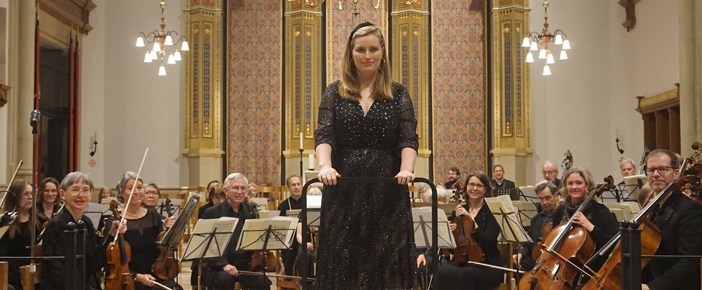
Prokofiev made three concert suites of his successful ballet Romeo & Juliet, the second of which is the most often performed. Containing six movements, it opens with the famous Dance of the Knights (known as The Montagues & Capulets in the suite) – and how refreshing to hear this in its proper context, rather than cueing up another episode of the BBC TV programme The Apprentice! The lower end of the orchestra was on fine form here, driving the music forward but never over-reaching, and Naomi Butcher (above) found just the right tempo. It was also heartening to hear the rich tones of Nicholas Hann’s tenor saxophone when the theme returned. Juliet as a Young Girl was next, taxing the strings with Prokofiev’s fiendishly difficult writing but drawing affectionate phrasing and a light touch nonetheless.

The heart of this performance lay in the two slow movements. Romeo and Juliet before parting featured a poignant flute solo from Lucy Freeman, before revealing Prokofiev’s rich orchestral palette. Ideally paced again by Butcher, the emotive phrasing brought out the best from the woodwind and brass, as well as the composer’s unique string colours. Romeo at Juliet’s grave, which closed out the suite, had an appropriately tragic undercurrent, deeply felt and lovingly phrased by the strings.

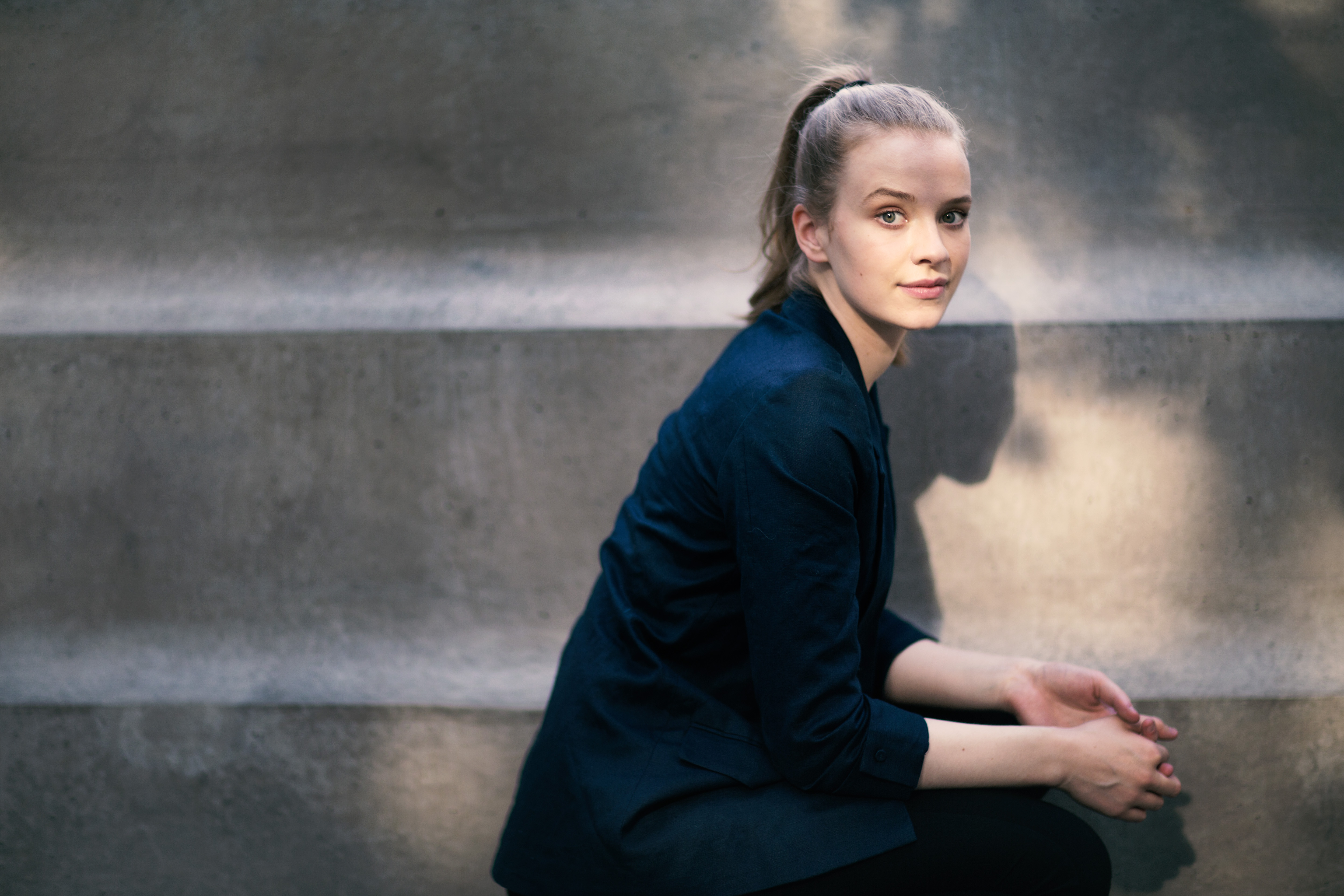
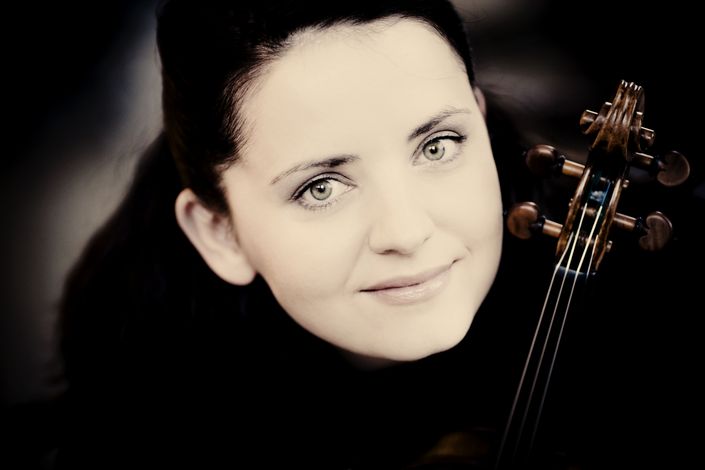
After the interval the Tonbridge Philharmonic Choir’s rehearsal pianist, Jong-Gyung Park (above), took a solo role for Rachmaninoff’s Piano Concerto no.2. As the detailed programme notes revealed, she has an illustrious background of worldwide musical experience, belying the modesty with which she took to the stage. This however was a commanding performance, Park taking the piece in her grip from those famous nine solo chords at the beginning. These were deliberately paced for dramatic effect, building the tension inexorably until the arrival of the strings who were ardent in their phrasing, the music surging forwards.

Technically Park was superb, but she was careful not to apply too much weight to her part or use the concerto as a vehicle for display, which so many pianists fall into the trap of doing. This ensured the passion essential to Rachmaninoff’s writing was always near the surface. Pianist and orchestra had a strong rapport, thanks to Naomi Butcher’s keen ear, and in the slow movement this yielded a soft-hearted performance that was not afraid to linger, making the most of the rich colours and some exquisitely phrased melodies from the pianist.

The transition to the finale was nicely done, rhythms stretched for a little while but settling into a punchy account that Park once again led from the front. This time a little acceleration went a long way, with pianist and orchestra quickly aligned. This was a tour de force performance from Jong-Gyung Park, whose love for this music shone through in an account of high class and fresh dexterity.

The Tonbridge Philharmonic will return to Tonbridge Parish Church for another imaginative program on Saturday 21 May, where music from Nielsen and Sibelius will be complemented by a rare performance of Nino Rota’s Double Bass Concerto. It promises to be an equally memorable night if the orchestra’s current form continues!

For further information on the Tonbridge Philharmonic Society click here

In concert – Elisabeth Brauß @ Wigmore Hall – Domenico Scarlatti, Mozart, Ravel & Prokofiev

Elisabeth Brauß (piano)

Domenico Scarlatti Sonata in C minor Kk56; Sonata in C Kk159 ‘La caccia’; Sonata in B minor Kk27; Sonata in B minor Kk87; Sonata in G Kk427 (exact dates unknown)
Mozart Piano Sonata in A minor K310 (1778)
Ravel Sonatine (1903-05)
Prokofiev Piano Sonata no.3 in A minor Op.28 (1917)

Wigmore Hall, London, 24 January 2022

reviewed by Ben Hogwood from the online broadcast

Seven sonatas and a sonatine in the space of an hour represents good value for a lunchtime concert – and even more so when the works in question span nearly two centuries. This was down to the clever programming of German pianist Elisabeth Brauß, a member of the BBC New Generations Scheme. She presented a potted history of the development of the sonata, moving as it did to the very centre of the concert platform by the twentieth century.

Brauß began her imaginatively thought-out hour with five sonatas by Domenico Scarlatti, just under 1% of the composer’s remarkable output in the form. Within his 550 or so published works there is an inexhaustible variety, and Brauß gave us some fine examples. Her crisp delivery of the C minor work was complemented by the playful ‘Caccia’ sonata, Scarlatti’s writing of parallel thirds tastefully ornamented in the right hand. Slipping into B minor, there was a more obvious Bach influence in an elegant performance of the Kk27 sonata, before a more reflective example in the same key, given plenty of room with ideally weighted inside parts. This thoughtful and emotive account was swept to one side by the showy G major sonata, chasing the clouds away.

Mozart‘s A minor sonata followed, a profound work written in the wake of the sudden illness and death of the composer’s mother Anna Maria in Paris, 1778. The principal phrase of the first movement is conspicuous for a ‘wrong’ note, an E flat played at the same time as an A minor chord, which can throw the listener. Brauß did well to give it the surprise factor, resulting in quite an unnerving and uncertain mood.

The second movement was initially calm, bringing out the singing style of Mozart’s marking of Andante cantabile con espressione rather beautifully. There was a refreshing lack of weight to this performance, the melodies floating on air, in contrast to a heavy-set middle section. The Presto finale, initially serious, brightened as the tonality moved into the major key, Brauß sensing hope in Mozart’s writing.

There was clarity in her Ravel, too, which found the right combination of technical flair and intimacy. Brauß portrayed the questioning nature of the first movement, just before its main theme returns and resolves. A limpid second movement was followed by a finale notable for its virtuosity – following the Animé marking – but which kept its conversational qualities.

Prokofiev’s Piano Sonata no.3 is a compressed firecracker, a work with plenty to say in its eight minutes. This performance was very impressive if holding back a little in the more raucous moments. Brauß was a more than capable guide to this impetuous piece, however, finding the heart of the adventurous coda, which sounds a lot newer than its 1917 composition date would suggest.

She clearly loves Prokofiev, as the Prelude in C major Op.12/7 made an ideal encore, bringing out the composer’s balletic side. There was less percussiveness in this lyrical account, notable for some lovely melodic phrasing.

Watch and listen

You can listen to the repertoire from this concert in choice recordings on the Spotify playlist below (Elisabeth has not yet recorded any of the pieces):

In concert – Johan Dalene & Nicola Eimer play Ravel, Rautavaara & Prokofiev @ Wigmore Hall

johan-dalene-fredrik-schlyter

Ravel Violin Sonata in G major (1923-27)
Rautavaara Notturno e danza (1993)
Prokofiev Violin Sonata no.2 in D major Op.94b (1944)

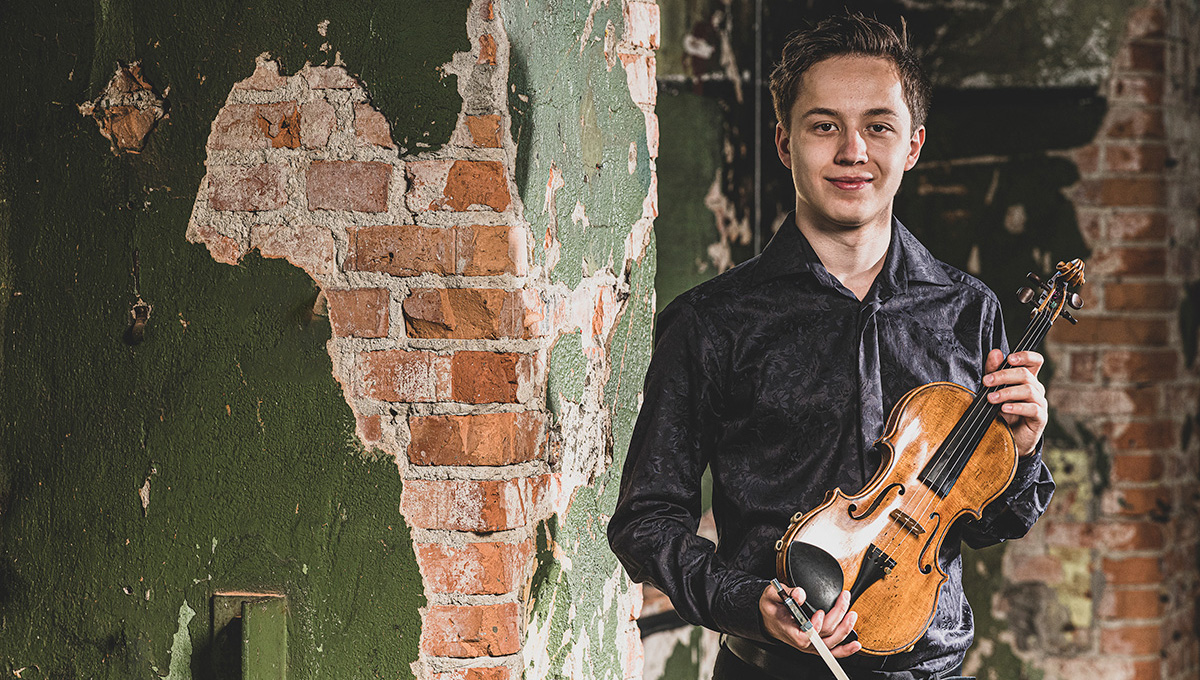
Johan Dalene (violin, above), Nicola Eimer (piano, below)

Wigmore Hall, London
Monday 22 November 2021

Written by Ben Hogwood. Photos by Fredrik Schlyter (Johan Dalene) and Hedley Dindoyal (Nicola Eimer)

This was the first Wigmore Hall recital for talented Swedish violinist Johan Dalene, the BBC New Generation Artist performing a lunchtime concert with British pianist Nicola Eimer. It was a programme matching the music to the bright November sunlight visible through the roof of the hall.

Unfortunately the concert programme did not contain any biographical artist information, which was a shame as Dalene has already achieved a great deal by the age of 21. By no means the least of his achievements is a fine album for BIS Records with Christian Ihle Hadland, Nordic Rhapsody – where he juxtaposes fine works for violin and piano by Grieg, Stenhammar, Sinding, Sibelius and Rautavaara.

The latter composer provided the Notturno e Danza at the centre of today’s programme, an appealing piece for students that is deceptively difficult to get right. Dalene’s tone carried an atmospheric Notturno capturing the composer’s depiction of changing light patterns, and shaded the quick Danza beautifully and with impressive volume.

Before the Rautavaara we heard an excellent performance of Ravel’s second Violin Sonata, as it is now recognised. This work was completed in spite of the composer’s frank admission that he didn’t think violin and piano were a good match – but here they united in a compelling account. This was in spite of the first movement, where both instruments essentially go their own way. The musical material is elusive, worrisome even, but with the clarity of Dalene’s bow strokes, Ravel’s thoughts were never anything less than convincing. Eimer’s attentive piano part pulled the music towards different tonalities, as Ravel would have wished.

The second movement relocated us to New York with bluesy incantations and jazzy rhythms. It fell naturally under Dalene’s spell, with a wide range of colours and shades on display, while Eimer provided beautifully judged punctuation to bring the syncopations to the fore. Only the last movement was able to break free of these sleights of hand, its moto perpetuo brilliantly judged and fearlessly executed, both players brilliant in their virtuosity.

Another sonata formed the third work in the programme. Prokofiev’s Violin Sonata no.2 in D major may be an arrangement, being a re-edit of his Flute Sonata at the request of David Oistrakh in 1944, but it is a most genuine work for the two instruments. Dalene and Eimer gave a sunlit performance, enjoying the melodic abundance Prokofiev lends the violin, but were wary too of the shadowy presence beneath the surface of the scherzo and the slow movement in particular. Dalene’s tone was ideally suited to the occasionally barbed lyricism of the former, while the lyrical slow movement had a sunlit warmth to go with the weather. So, too, did the finale, capping a wonderful performance where the rustic theme stayed in the mind for long after the concert had finished.

As a thoughtful encore Dalene and Eimer included Lili Boulanger’s Nocturne, a starry-eyed diversion of subtle beauty, the harmonic shifts tastefully secured. Both players made a very strong impression throughout the concert, their natural partnership blossoming on the stage. Watch it online if you can!

You can watch this concert on the Wigmore Hall website for the next 28 days – and you can hear the music played by Mischa and Lily on the Spotify playlist below, including Johan’s recording of the Rautavaara:

In concert – Baiba Skride, CBSO / Andrew Gourlay: Rossini, Mozart, Berlioz & Prokofiev

Rossini Guillaume Tell – Overture (1829)
Mozart
Violin Concerto no.5 in A major K219 (1775)
Berlioz
Le carnaval romain, Op.9 (1844)
Prokofiev
Romeo and Juliet – Suite no.2 Op.64ter (1936)

Baiba Skride (violin, below), City of Birmingham Symphony Orchestra / Andrew Gourlay (above)

Symphony Hall, Birmingham
Wednesday 13 October 2021, 2pm

Written by Richard Whitehouse; Picture of Andrew Gourlay (c) Kaupo Kikkas, Baiba Skride (c) Marco Borggreve

This afternoon’s concert by the City of Birmingham Symphony Orchestra saw an unexpected but welcome return from Andrew Gourlay (replacing an indisposed François Leleux) for this diverse programme as worked much better as a concert than it might have appeared on paper.

Its fame as a novelty item in cartoons et al can easily obscure the innovative qualities of the Overture to William Tell, last and most ambitious of Rossini’s operas, in terms of its eliding between curtain-raiser and symphonic poem; which latter aspect Gourlay emphasized in this evocative but cohesive account – whether in the ruminative calm of its opening section with the CBSO cellos eloquently fronted by Eduardo Vassallo, a scrupulously controlled ‘storm’ episode, a not unduly mawkish ‘lullaby’ then a closing galop free from Hollywood overkill.

Mozart was barely out of his teens on writing his Fifth Violin Concerto, if not the finest then certainly the most eventful of his cycle through such as the soloist’s alluring first entry in the opening Allegro with music not directly related to either of the main themes and rendered by Baiba Skride with real finesse. Equally successful was her succinct yet ideally proportioned cadenza prior to its close; after which, the Adagio had elegance without excessive sweetness. In the final Rondeau, others may have made more of that contrast between graceful lyricism and the robust humour of its central section’s stylized Turkishness, but Skride brought these into complete accord and, with Gourlay securing limpid playing from a scaled-down CBSO, this was a persuasive performance of music whose felicities can easily be taken for granted.

Formerly ubiquitous as a concert-opener, Berlioz’s Roman Carnival – the inspired recycling of music from his opera Benvenuto Cellini – launched the second half to striking effect. If the soulful introduction took a little time to settle (doubtless occasioned by a soon extinguished onstage rebellion before Gourlay’s return), what ensued was not lacking rhythmic elan or that scintillating interplay of orchestral timbres as was Berlioz’s gift to the orchestra. Effecting a tangible crescendo into the blazing peroration, Gourlay undoubtedly saved the best until last.

Ad hoc selections from Prokofiev’s Romeo and Juliet rarely provide a satisfying second half, making one of three suites the composer extracted from his ballet the more viable option. Of these the Second Suite is the best overview, and this account quickly found its stride with a visceral take on the music which opens Act Three, the grinding progress of Montagues and Capulets proving no less forceful. Juliet as a young girl exuded the right insouciance and pathos, as did Friar Laurence that of earnest authority. The lithe Dance made a telling foil to Romeo and Juliet before parting, its fraught rapture potently conveyed here, then Dance of the girls with lilies made for an appealingly wistful entrée into Romeo at Juliet’s grave with its searing anguish that only gradually subsides into expectant calm towards the close.

Gourlay had previously directed a fine account of Rachmaninov’s Third Symphony with this orchestra and the Prokofiev confirmed his prowess in Russian music. The CBSO, meanwhile, returns next Wednesday for a varied American programme with the saxophonist Jess Gillam.

Further information on the CBSO’s current season can be found at the orchestra’s website. For more on Baiba Skride, click here – and for more information on Andrew Gourlay, head to the conductor’s website

In concert – Aris Quartet play Schulhoff, Kurtág & Mendelssohn @ Wigmore Hall

Aris 5

Schulhoff 5 Pieces for String Quartet (1924)
Kurtág Officium breve in memoriam Andreae Szervánszky Op.28 (1988-9)
Mendelssohn String Quartet No. 3 in D major Op.44/1 (1838)

Aris Quartet (above, photograph (c) Sophie Walter) [Anna Katharina Wildermuth, Noémi Zipperling (violins), Caspar Vinzens (viola), Lukas Sieber (cello)]

Wigmore Hall, London
Monday 11 October 2021, 1pm

Written by Ben Hogwood (reviewed live from online stream below)

The Aris Quartet are part of the BBC Radio 3 New Generation Artists scheme, and this was their first appearance at the Wigmore Hall. They presented themselves as a lively ensemble who clearly enjoy their music, and they played with sensitivity and panache

Also revealed was a strong instinct for programming. Schulhoff’s 5 Pieces for String Quartet are beginning to make themselves known more in the concert hall, presenting as they do a number of sides of this unique musical personality. The Czech composer was arrested in Prague before he could be issued with a visa to emigrate to Moscow in the Second World War, and died at the Wülzburg concentration camp at the age of 48. His music is still relatively young in its exposure because of this, only really coming through in the 1990s. Initial criticism from those sceptical at his integration of jazz and dance forms is giving way to more outright respect, and – as could be seen here – the 5 Pieces make a great start to a concert.

The Aris Quartet gave a vibrant account of the first movement, marked Alla Valse viennese, but soon a chill was forming as the Alla Serenata progressed, its ghostly presence reminiscent of early Shostakovich. The muted instruments danced over a distracted drone from the cello before biting hard in a sequence that was almost anti-lyrical. There was an impressive cut and thrust to the Alla Czeca, bringing out the composer’s heritage, then an attractive sway to the Alla Tango milonga, beautifully played but with an unexpectedly ominous finish. Finally the buzz of the lively Alla Tarantella set a strong unison violin melody against brisk viola and cello.

Officium breve by György Kurtág was next, a requiem to fellow Hungarian composer Andreae Szervánszky. By his standards it is a lengthy piece indeed, but with 15 sections in barely 12 minutes it was packed with compressed melodies of great intensity. Kurtág is a master in obtaining deep expression from the shortest of phrases, achieving this through carefully pointed melodies and highly imaginative quartet textures. Such a thorough knowledge of string quartet capabilities informs the many sides of grief felt here, and the Aris Quartet reveled in the nuances of the piece. The gripping account took hold from the distracted opening, where cellist Lukas Sieber effectively set out the pitches of the open strings of hit instrument, to savage chords wrought with pure anger later on. The composer’s use of microtones was deeply expressive, as were the ‘double stopping’ passages, the quartet playing as one instrument with eight or more voices. It was a moving and mind-expanding performance.

A wholesale change of mood took us to Mendelssohn, and the joyous outpouring of the first in his trio of quartets published as Op.44. Anna Katharina Wildermuth’s songful first violin was key here, but so were the quartet textures, with lots going on but impressive clarity to reveal the dialogue between the instruments. This was a lovely, fluid performance, with a sunny first movement giving way to a less excitable but equally persuasive Menuetto, showing off its rhythms and soft-hearted theme. Feelings ran deep in the slow movement, especially in the minor key episode, where Wildermuth probed deeper with her phrasing. The finale recaptured the mood of the first movement, good spirits bubbling over to cap an affectionate and energetic performance.

It was great to see an ensemble playing as one with such obvious enthusiasm and commitment for the music, and based on this evidence the Aris Quartet have a bright future indeed. Watch the concert stream and see for yourself!

You can also listen to the repertoire from the Aris Quartet’s concert on this Spotify playlist:

For more information on the Aris Quartet visit their website