In Concert: Louis Lortie @ Wigmore Hall – Schubert & Rachmaninoff Moments Musicaux

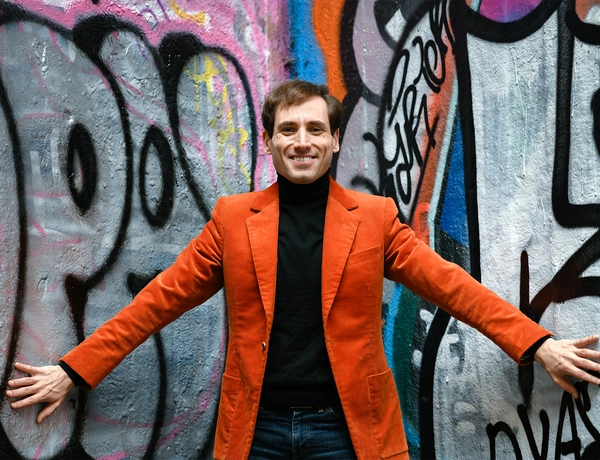
Louis Lortie (piano)

Schubert 6 Moments musicaux D780 (1823-28)
Rachmaninoff Moments musicaux Op.16 (1896)

Wigmore Hall, Monday 25 September 2023

by Ben Hogwood

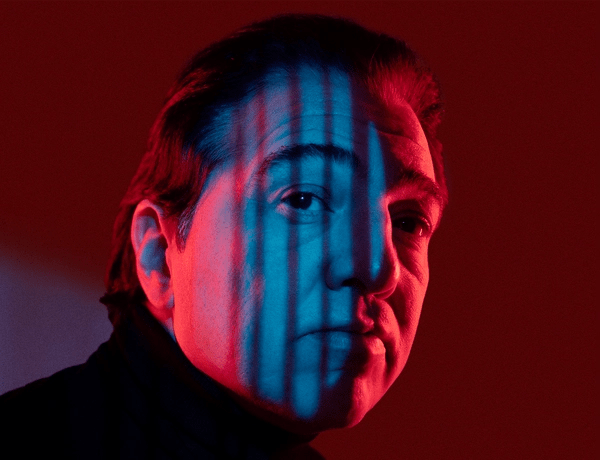
The term ‘moment musical’ has been seldom used in classical music, with only two significant sets of these ambiguously named piano pieces coming to mind. Yet as Canadian pianist Louis Lortie showed us, in this stimulating BBC Radio 3 Lunchtime Concert at the Wigmore Hall, they are far from insignificant works.

Schubert’s publisher was the first to coin the term, describing his set of six ‘easier’ pieces thus when they were published in 1828. In spite of their sporadic composition period – no.3 was the first written five years earlier – they make a satisfying collection when performed in order. As a common factor they find Schubert alternating between major and minor keys, a tension Lortie was keen to bring forward.

He began with a quizzical account of the first piece in C major, played with more pedal than might normally be the case but with persuasive phrasing. The second piece in A flat major was notable for its touching intimacy, in spite of a troubled middle section where a shadow fell over the music. Schubert’s third piece, a Danse Russe, anticipates Tchaikovsky’s Danse des Cygnes from Swan Lake.  Lortie played it beautifully, with a touch of humour, before the Chopin-esque fourth piece contrasted the darker hues of C# minor with an elegant section in the major key. The fifth piece strode forward with a determined gait, ending in a major key but not shaking off its feeling of inner strife, before a lovingly delivered sixth piece (subtitled A troubadou’s lament) returned to A flat major seemingly lost in thought.

Rachmaninoff’s cycle of six Moments Musicaux, published in 1896, prove rather more challenging for the performer, his aim for professional pianists with a similarly wide span across the hands. He would appear to have known about the Schubert set – that much is implied by the title – but the volume is noticeably louder for these passionate pieces. The opening nocturne in B flat minor started simply enough but soon a cold wind swirled about, Lortie mastering the technical demands with impressive control. This was a feature of his Rachmaninov playing, especially in the third piece, the emotional centrepiece of the cycle with strong, yearning characteristics. Around this we rocked to the turbulence of the second piece in E flat minor and the fourth in E minor, both with a steely glint at the edges and the latter with more bluster. Lortie drew back for a soulful fifth piece, saving the most impressive pianism for the final flourish, a brilliantly played peal of bells bringing us full circle to C major.

This was a fascinating and superbly played programme, the inner thoughts of Schubert complemented by Rachmaninoff’s overt passion, both brought into the open by Louis Lortie for us to fully appreciate. As a parting gesture he acknowledged the piano itself, a Bösendorfer instrument whose tone was ideal for this music.

For livestreamed concerts from the Wigmore Hall, click here

BBC Proms 2023 – Kirill Gerstein, Rundfunk-Sinfonieorchester Berlin / Vladimir Jurowski: Weill, Adès & Rachmaninoff

Prom 60 – Kirill Gerstein (piano), Berlin Radio Symphony Orchestra / Vladimir Jurowski

Weill Kleine Dreigroschenmusik (1928, arr. 1929)
Adès Piano Concerto (2018) [Proms premiere]
Rachmaninoff Symphony no.3 in A minor Op.44 (1935-6, rev. 1938)

Royal Albert Hall, London
Thursday 31 August 2023

by Richard Whitehouse photos by Andy Paradise / BBC

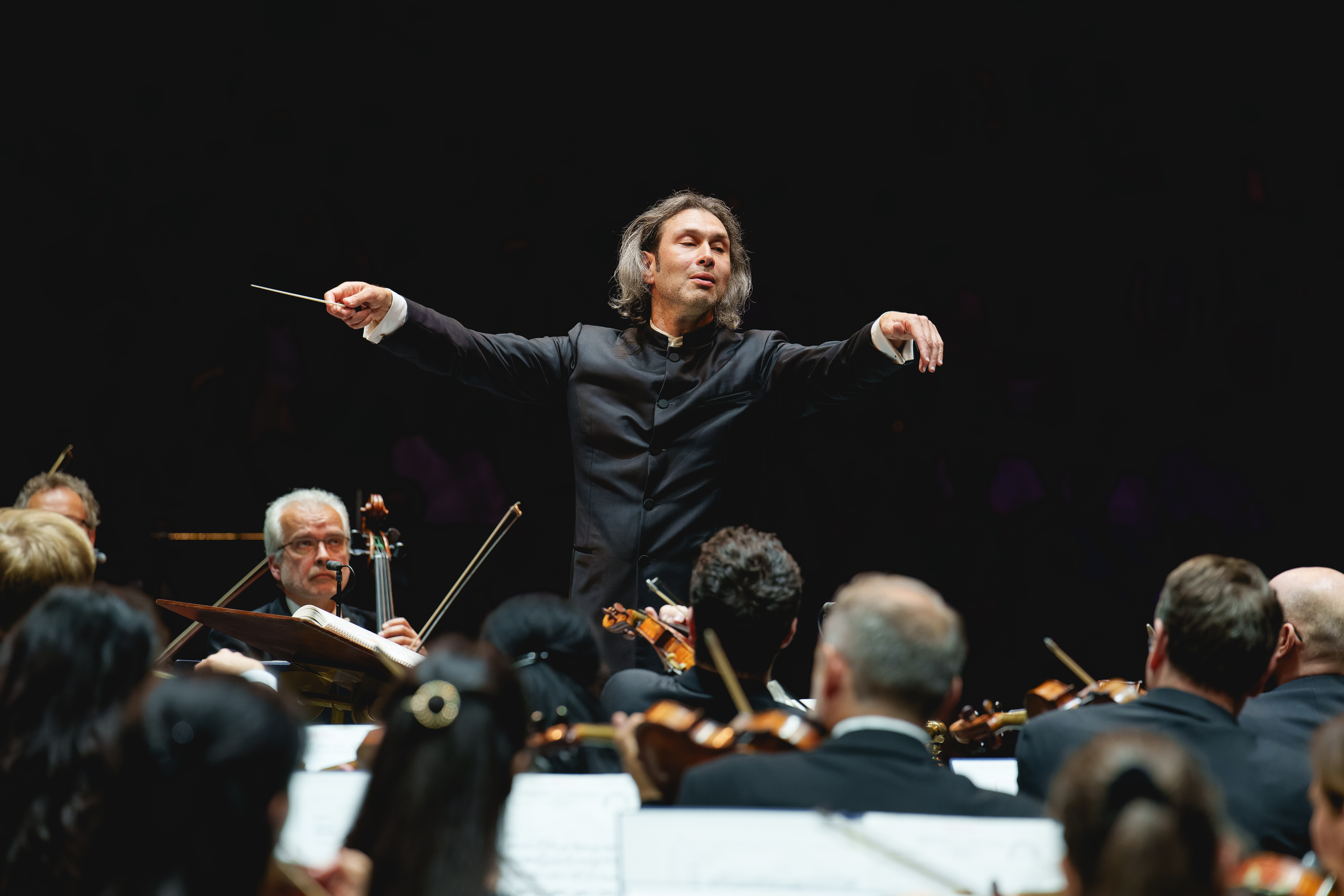
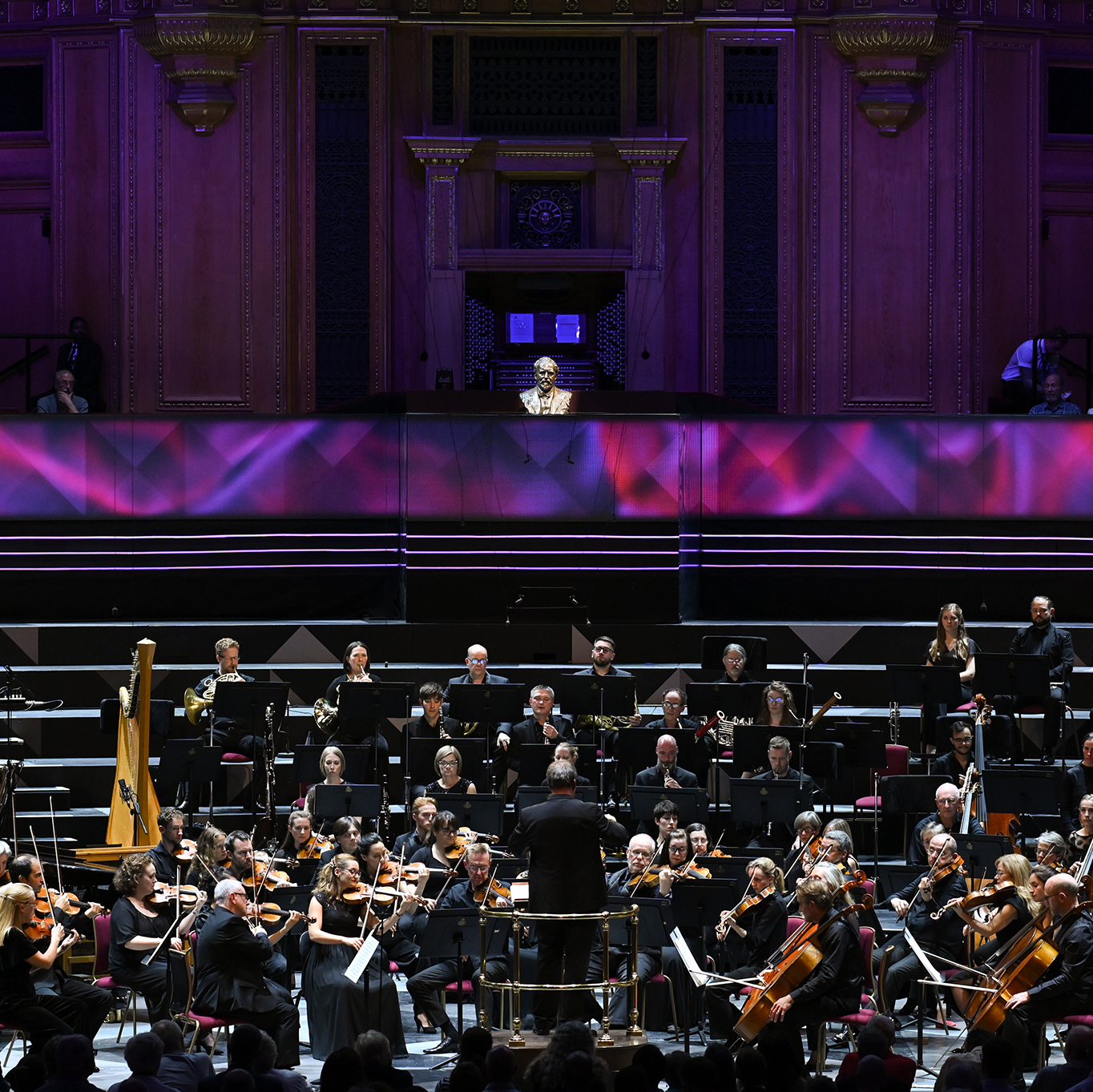
Marking its centenary this October, the Berlin Radio Symphony Orchestra may be less known abroad than other Berlin orchestras but this Proms debut under chief conductor Vladimir Jurowski confirmed an ensemble at home across the broad range of modern and contemporary music.

Not least in Little Threepenny Music, a ‘selection’ Kurt Weill arranged from his and Bertold Brecht’s reworking of The Beggar’s Opera which takes in several of that show’s best-known numbers while also affording a demonstrable overview of its satirical concerns. The BRSO responded with vigour and not a little pathos – above all, in the Threepenny Finale and its juxtaposing pensive ambivalence with a glowering decisiveness: that final chorale making plain its damning inditement of German cultural failings in the era of the Weimar Republic.

A spirited participant, Kirill Gerstein took centre-stage for the first hearing at these concerts of the Piano Concerto written for him by Thomas Adès. Now as before, Gerstein’s dexterity in negotiating this score’s pert amalgam of intricacy and bravura warranted respect: whether in what might be called the ‘Self-Portrait with Gershwin and Ligeti (though Prokofiev is also there)’ of the first movement, Stravinskian cortège of the central Andante, or the interplay of vivacity and uncertainty in the final Allegro. An attentive accompanist, Jurowski summoned playing as tensile and supple as the orchestral writing demands – though abetting the overall impression (his recent works in particular) that even as consummate a conceptualist as Adès needs to instil those ideas, often arresting in themselves, with comparable musical substance.

Gerstein’s transcription of Rachmaninoff’s In the Silence of the Secret Night (Op.4/3) duly prepared for the latter’s Third Symphony. First given at the Proms 85 years ago, it still attracts dislike from those who find it a self-conscious update of the composer’s inherently Romantic idiom as well as those who dislike such an idiom in any case. Not that Jurowski’s account brooked any compromise in marrying consistent technical precision to a powerfully shaped conception of music often appealing, frequently intriguing and not a little unsettling.

The stark rendering of its introduction – spectral ‘motto’ then surging tutti – set the course for an initial movement where contrast between expectancy and eloquence came to a head in the development with its anguished fusion between heart and brain. The Adagio unfolded with an almost Sibelian inevitability, not least in the seamlessness by which its outer sections flowed into then out of a central scherzo abounding in that sardonic humour as became a mainstay of Rachmaninoff’s later years. Nor was there anything blandly predictable about a finale whose opening exuberance was ably maintained through a consoling but never wantonly languorous secondary theme, eventually resolving into a coda whose unfolding as a crescendo of activity brought the whole work – and the present reading – animatedly and satisfyingly full circle.

Impressive music-making on all levels and Jurowski further cemented the Proms connection, specifically that between Rachmaninoff and Henry Wood, with the latter’s transcription of the former’s Prelude in C sharp minor Op.3/2) – as tempestuous as it proved exhilarating.

For more on the 2023 BBC Proms, visit the festival’s website at the BBC. Meanwhile click on the names for more information on artists Kirill Gerstein, the Berlin Radio SO and conductor Vladimir Jurowski – and finally composer Thomas Adès

BBC Proms 2023 – Dame Sarah Connolly, BBC Philharmonic Orchestra / John Storgårds – Weber, Pejačević, Alma Mahler-Werfel & Rachmaninoff

Prom 33 – Dame Sarah Connolly (mezzo-soprano), BBC Philharmonic Orchestra / John Storgårds

Weber Oberon – Overture (1825-6)
Pejačević Zwei Schmetterlingslieder Op.52 (1920); Verwandlung Op.37b (1915); Liebeslied Op.39 (1915). [Proms premieres]
Mahler-Werfel orch. Colin & David Matthews Die stille Stadt (pub. 1915); Licht in der Nacht (pub. 1915); Bei dir ist es traut (pub. 1910)
Rachmaninoff Symphony no.1 in D minor Op.13 (1895)

Royal Albert Hall, London
Wednesday 9 August 2023

by Richard Whitehouse photos by Chris Christodoulou / BBC

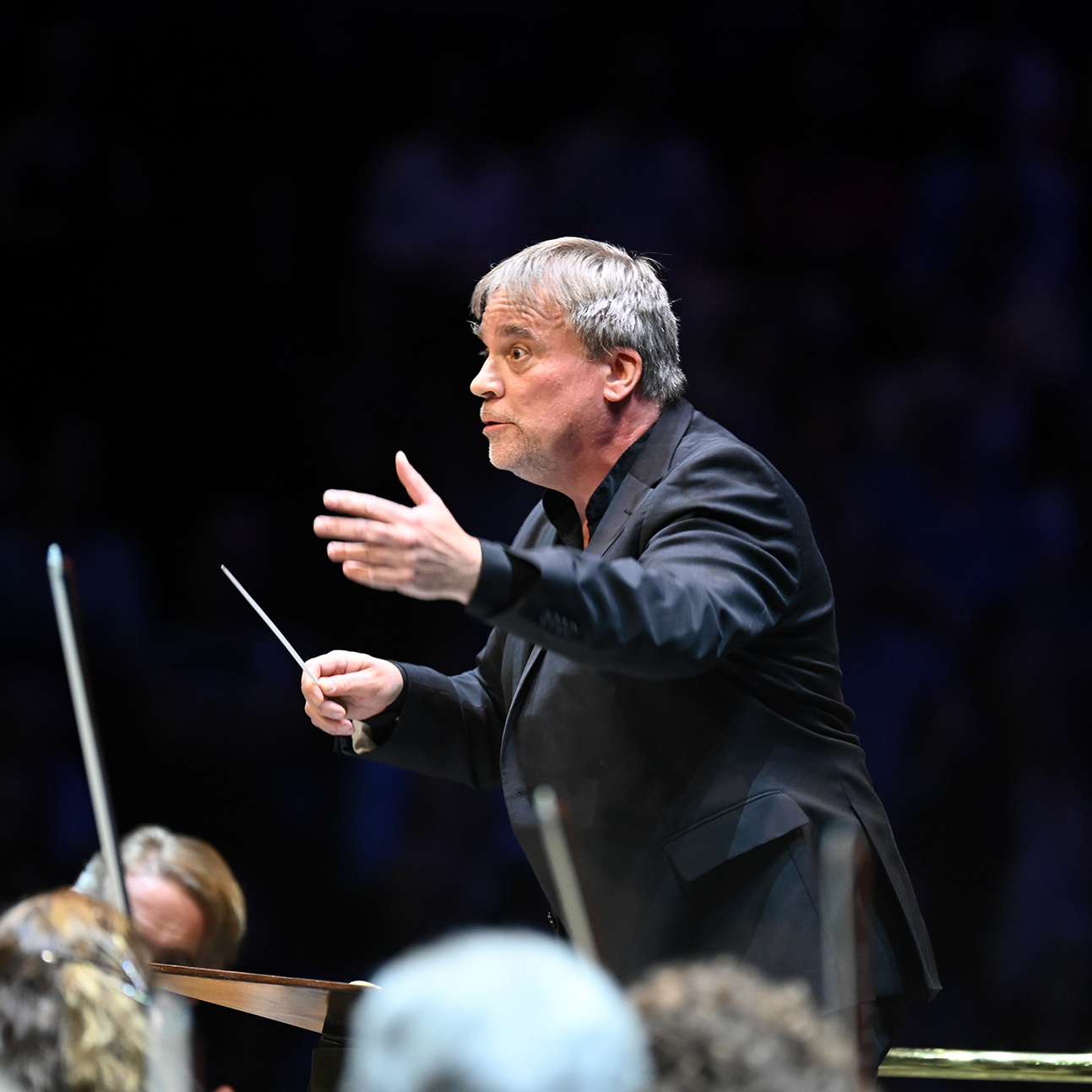
This evening’s Prom brought a welcome appearance by the BBC Philharmonic with its chief conductor John Storgårds, in what was a typically enterprising programme that continued this season’s emphasis on the music of Dora Pejačević in the centenary (last March) of her death.

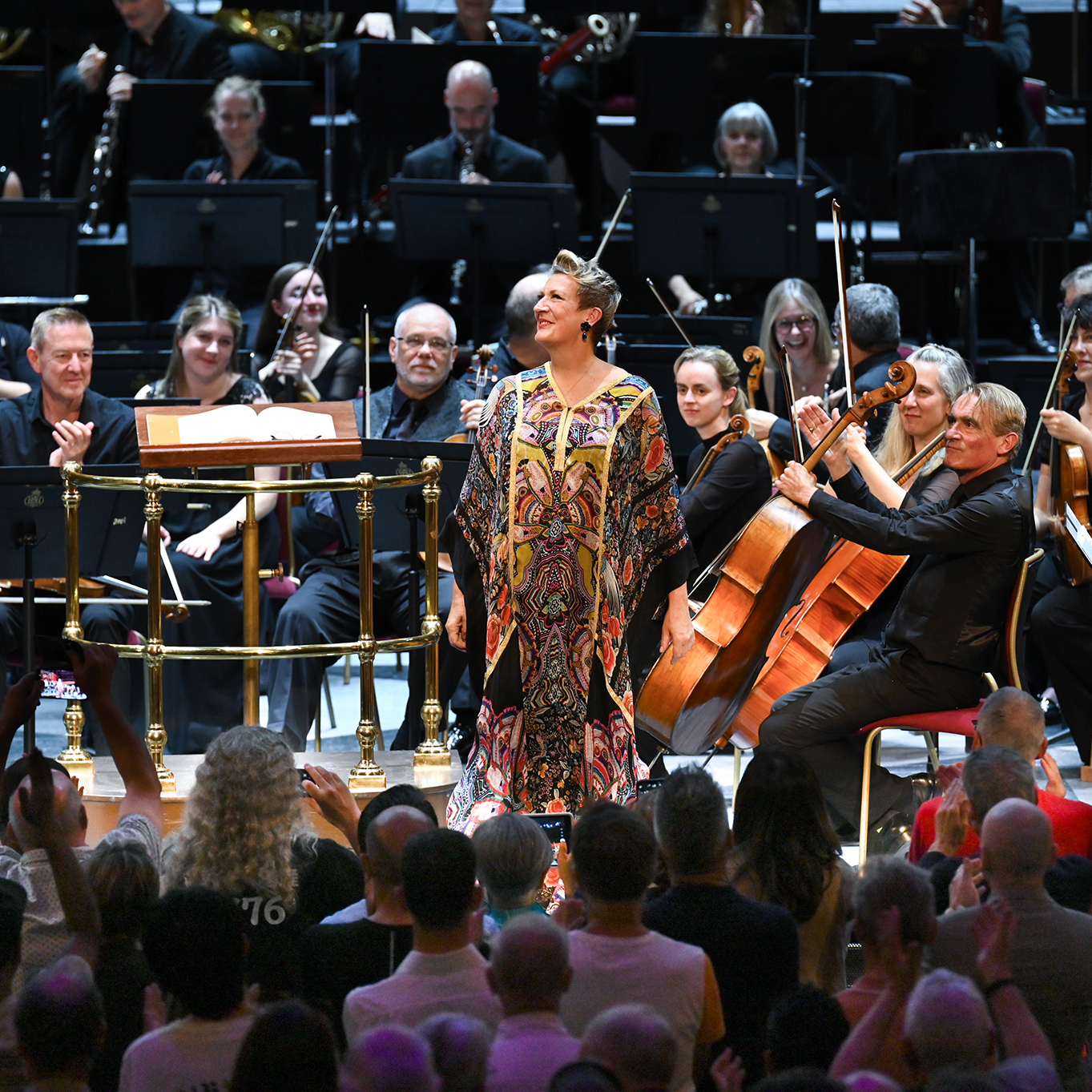
Among Pejačević’s sizable output of songs are four with orchestra, making a viable sequence in its own right. Dame Sarah Connolly (above) brought out the searching whimsicality from Karl Henckell’s Butterfly Songs, whether the fanciful imaginings of ‘Golden stars, little bluebells’ or the more concrete thoughts of ‘Flutter, o butterfly’ with delicate contributions by flute and glockenspiel. The setting of Kael Kraus’s Transformation taps deeper emotion, not least with those ecstatic violin solos between stanzas (eloquently rendered by Yuri Torchinsky), whereas that of Rainer Maria Rilke’s Love Song is notable less for the gently undulating phrases of its vocal writing than for the soaring ecstasy of its central interlude which only double one’s regret that neither composer nor poet lived long enough to collaborate on an opera project as had been mooted.

Making up this sequence were three songs by Alma Mahler-Werfel, taken from sets published in 1910 and 1915. Neither those contrived sentiments of Richard Dehemel’s The Silent Town or self-conscious emoting of Otto Julius Birbaum’s Light in the Night summons an especially personal response; only the winsome poise of Rilke’s I feel warm and close with you implies any individuality. The orchestrations by Colin and David Matthews are sensitive and apposite, but the latter might reasonably have expected more from the Proms in his 80th birthday-year.

Opening this concert was a beautifully judged reading of the overture to Weber’s final opera Oberon – less often heard now that overtures are no longer the automatic curtain-raisers they once were but which, in its deft interplay of evocative and energetic, still casts a potent spell.

By contrast, Rachmaninoff’s First Symphony has come much more into its own now that the composer’s orchestral output has moved to the centre of the repertoire. Unheard for 48 years after its disastrous premiere in 1897, it remains a testament to the young composer’s ambition – not least in an opening Allegro whose implacable ‘motto’ sets the course for this movement overall. Storgårds had its measure, not least in the mounting fervency of its development, then delivered a probing account of a scherzo the more ingenious for its pervasive understatement.

Although it will never supplant that of its successor in audience affection, the slow movement is a minor miracle of thematic subtlety and emotional restraint as came through via felicitous playing by the BBC Philharmonic woodwind. Launching the finale in suitably visceral fashion, Storgårds (rightly) made the most of its contrasts between the celebratory and the speculative – any remaining ambivalence not so much resolved as forced into submission through a coda which renders the fatalism of Tchaikovsky’s Pathétique from a distinctly personal vantage.

So, an unlikely programme which worked well as a concert – the more so given it proceeded without an interval. Those in the audience surreptitiously eating or drinking between pieces might have preferred otherwise, but for both music and performances it was nothing but gain.

For more on the 2023 BBC Proms, visit the festival’s website at the BBC. Meanwhile click on the names for more information on artists Dame Sarah Connolly, John Storgårds and the BBC Philharmonic Orchestra – and for information on the composers Dora Pejačević and Alma Mahler-Werfel

BBC Proms 2023 – Felix Klieser, Bournemouth Symphony Orchestra / Kirill Karabits – Karabits, Mozart & Rachmaninoff

Prom 24 – Felix Klieser (horn), Bournemouth Symphony Orchestra / Kirill Karabits

Karabits Concerto for Orchestra no.1 ‘A Musical Gift to Kyiv’ (1980-81) [UK premiere]
Mozart Horn Concerto no.4 in E flat major K495 (1786)
Rachmaninoff Symphony no.2 in E minor Op.27 (1906-08)

Royal Albert Hall, London
Wednesday 2 August 2023

by Richard Whitehouse photos by Mark Allan / BBC

While not exactly a ‘best kept secret’, Kirill Karabits’ tenure at the helm of the Bournemouth Symphony Orchestra (soon to enter its 16th season) might have attracted even greater national attention than has been the case, with this evening’s Prom offering various pointers as to why.

One of Karabits’ concerns has been promotion of music from Eastern Europe in general and in particular Ukraine, where the role played by his father Ivan (1945-2002) was considerable. Written across the 1980s, the latter’s three Concertos for Orchestra follow on from those by his Russian forebear Rodion Shchedrin by homing in on facets of post-war music in a direct and accessible fashion. As its title indicates, his first such piece commemorates the Ukrainian capital – here the 1500th anniversary of its founding – over the course of a single movement whose monumental if never impersonal introduction leads into a series of evocatively scored episodes that culminate in a shimmering climax replete with the pealing of bells. The ending, as atmospheric as it proves unexpected, is just the most striking aspect of this engaging work.

Equally unexpected, for those previously unaware, was the emergence of Felix Klieser on the Albert Hall platform to play Mozart’s Fourth Horn Concerto with his left foot. Not that those listening on the radio would have sensed anything unusual about this performance, Klieser’s warm and rounded tone a throwback to an earlier generation though melding seamlessly into the reduced orchestral forces. Most popular of its composer’s four such pieces (but not heard complete at the Proms for 34 years), its opening Allegro unfolded with an admirable balance between energy and grace; the Romanza exuding a charm that was never cloying and the final Rondo a pert humour. Clearly having enjoyed his appearance on this stage, Klieser returned for the finale of Mozart’s Third Horn Concerto with its even more overt hunting associations.

Prom 24 – The Bournemouth Symphony Orchestra conducted by Kiril Karabits (Felix Klieser horn) perform Ivan Karabits: Concerto for Orchestra No. 1, ‘A Musical Gift to Kyiv’ UK premiere, Wolfgang Amadeus Mozart: Horn Concerto No. 4 in E flat major and Sergey Rachmaninov: Symphony No. 2 in E minor at the Royal Albert Hall on Wednesday 2 August 2023 Photo by Mark Allan

Karabits (above) has not yet added Rachmaninoff to his Bournemouth discography, but his account of the Second Symphony suggests he should do so. A sombre yet alert introductory Largo set the course for an opening movement whose eschewal of histrionics did not preclude a powerfully cumulative response to its lengthy development or decisive take on its brief coda. The scherzo then had the requisite incisiveness, and if Karabits slightly over-indulged the ‘big tune’, there was no lack of impetus across its headily contrapuntal trio or glinting irony in its closing bars.

Almost over-familiar now, the slow movement demonstrably gained from a flowing and even lilting tempo such as encompassed its rapturous central section as securely as its serene main melody – with Barry Deacon the eloquent clarinettist on its first appearance. Uncut or not the finale can outstay its welcome, but Karabits duly had the measure of its festive progress – his headlong tempo making for a slightly jarring transition into the secondary theme, but with the gradual subsiding of activity at the centre then its stealthy re-accumulation assuredly handled.

Nor was the focus of his approach to this movement’s culmination in doubt, the return of the work’s ‘motto’ setting the seal on an engrossing and unusually cohesive reading which augurs well for this partnership even after Karabits relinquishes his post at the close of next season.

For more on the 2023 BBC Proms, visit the festival’s website at the BBC. Click on the names for more information on Felix Klieser, Kirill Karabits and the Bournemouth Symphony Orchestra – and composer Ivan Karabits

BBC Proms 2023 – Elena Urioste, BBC NoW / Tadaaki Otaka – Rachmaninoff / Respighi, Coleridge-Taylor & Beethoven

Prom 7 – Elena Urioste (violin), BBC National Orchestra of Wales / Tadaaki Otaka

Rachmaninoff (orch. Respighi) Five Études-tableaux (1911-17, orch 1930) [Proms premiere]
Coleridge-Taylor Violin Concerto in G minor Op.80 (1911-12)
Beethoven Symphony no.5 in C minor Op.67 (1807-08)

Royal Albert Hall, London
Wednesday 19th July 2023 [7pm]

by Richard Whitehouse photos by Andy Paradise / BBC

Tadaaki Otaka’s years at the helm of the BBC National Orchestra of Wales (1987-95) were a highpoint of the latter’s history, and it was good to see and hear the rapport between them now that he is Conductor Laureate being maintained throughout this evening’s programme.

Surprising that Respighi’s orchestration of five from Rachmaninoff’s sets of Études-tableaux had not been given at the Proms, but the respective 150th and 80th anniversaries of his birth and death provided an ideal opportunity. Otaka brought out the listless calm of The Sea and the Seagulls with its death-haunted aura, then conveyed the scintillating energy of The Fair. With its evocations of Orthodox chant and heady pealing of bells towards the close, Funeral March is the most imposing and Otaka gave it its due – not least by pointing up the deadpan humour of Little Red Riding Hood and the Wolf which provides greatest possible contrast. The sheer effervescence of March made a fitting conclusion to a sequence that, while other orderings are possible (not least 2-1-4-3-5), is a viable and a cohesive entity in its own right.

The resurgence of interest in Samuel Coleridge-Taylor continued apace with a revival of his Violin Concerto, 111 years after its UK public premiere at these concerts. Its composer’s last major work, this is a work audibly in the Romantic tradition and while the initial Allegro gets off to a less than promising start with its blousy and over-emphatic first theme, the resource with which the soloist elaborates both this and the insouciant idea that follows is as engaging as the cadenza underpinned by drum-roll is arresting. The central Andante is the undoubted highlight, its warmly confiding main melody capable of unexpected plangency as it unfolds, then the final Allegro draws on the Afro-American inflections of Coleridge-Taylor’s heritage in a spirited discourse whose climax sees an opulent restatement of the work’s opening theme.

A testing assignment such as Elena Urioste (after last year’s Proms debut with Ethel Smyth’s Double Concerto) gave with no little panache, her vivid while modest tone heard to advantage in Tom Poster’s eloquent take on Harold Arlen’s Over the Rainbow that was given as encore.

A staple of the Proms since its very first season 128 years ago, Beethoven’s Fifth Symphony comes so weighted with expectation as to make any performance in itself a provocative act. Eschewing astringency and portentousness, Otaka (rightly) rendered the initial movement as an elemental though unpredictable play on its indelible opening motif; the ensuing Andante pursuing an equally eventful course as its main theme evolves via a process of developing variation, the heroic and inquisitive held in unforced accord through to the decisive ending.

A pity that Otaka opted not to take the repeat in the Scherzo (rather than that of the finale) – its interplay between the ominous and the impetuous abetted by a transition of speculative intent. Here too there was never any risk of pomposity or overkill, Otaka steering this most visceral of symphonic finales through a development of bracing immediacy then on to a coda whose insistent C major reiterations were the outcome – no more and no less – of this movement’s innate potential. The undiminished relevance of this music was never for a moment in doubt.

For more on the 2023 BBC Proms, visit the festival’s website at the BBC. Click on the names for more information on the BBC National Orchestra of Wales, Tadaaki Otaka and Elena Urioste