
In concert – Michael Collins & Michael McHale: Widor, Bax, Muczynski & Horovitz @ Wigmore Hall

collins-mchale

Michael Collins (clarinet), Michael McHale (piano)

Widor Introduction et Rondo Op.72 (1898)
Bax Clarinet Sonata in D major (1934)
Muczynski Time Pieces Op.43 (1984)
Horovitz Sonatina (1981)

Wigmore Hall, London
Monday 17 May (review of the online broadcast)

Written by Ben Hogwood

What a joy to see audiences back in Wigmore Hall on a Monday lunchtime, as the venue took its first available opportunity of 2021. The gathering was for an enterprising program of 20th century works for clarinet and piano from Michael Collins and Michael McHale, pleasingly off the beaten track in its selection and proving highly accessible.

Viewed online in this case, the excitement was palpable – from Andrew McGregor’s introduction for the live broadcast on BBC Radio 3 to the performers’ demeanour as they began. The clarinetist successfully overcame an instrument malfunction, too, which caused him to repeat the first few minutes of the Bax sonata.

Collins and McHale began with Widor, however, a competition piece written for students of the Paris Conservatoire in 1898. Both performers settled immediately, Collins with a beautifully floated introduction and McHale with sensitive pedaling, the pianist then echoing the excitable flourishes from of clarinet when the Rondo itself arrived. This work occupies a happy place in Widor’s output, and was a joyful overture here.

The mood deepened for the Clarinet Sonata in D major of Sir Arnold Bax from 1934. First performed by Frederick Thurston, it is an unusually structured work, but the two movements sit together nicely. It was during the beautifully floated opening that Collins had to change his clarinet, but the advantage of this was that we were able to marvel at his control for a second time, supported by rippling figures from McHale. The first movement unfolded as though in one long phrase, revealing the influence of Wagner but establishing Bax’s own melodic grace too. The second movement had impressive urgency, with chromatic surges from the piano and impressive breath control from Collins. A typically deep second theme was matched by a lovely, poised closing section.

The Polish-American composer Robert Muczynski has an intriguing works list including many pieces for woodwind, and the Time Pieces of 1984 are among his most-performed. Each of the four movements looks to bring out different qualities of the clarinet and Collins was fully alive to their possibilities. The busy first piece was enjoyable, clarinet and piano ducking and diving in their interplay, while time became suspended in the outer sections of the second piece, lost in thought. The third explored the timbres of the solo clarinet, wonderfully nuanced by Collins, while the spicy dialogue of the fourth was laden with syncopation and brilliantly played.

The Sonatina for clarinet and piano from Joseph Horovitz dates from 1981, when it was first performed by Gervase de Peyer and Gwenneth Pryor in the Wigmore Hall itself. Like Muczynski, Horovitz is at home writing for wind and brass. Working within a compressed structure, the Sonatina was packed with incident and melody. A perky first movement unfolded with easy, winsome phrases, while the second was more introspective and took time for soul searching. Not so the finale, whose offbeat japes were carefree and witty in this performance, instinctively played.

It was over all too soon – but we were treated to an encore, Collins every bit as enthused as the audience. The warm-hearted Summer, from Paul Reade’s suite Victorian Kitchen Garden, was the ideal choice.

This concert is available to play for 30 days using the YouTube embedded link above.
Wigmore Mondays – Adam Walker, Tabea Zimmermann & Agnès Clément: Music for flute, viola and harp by Bax, Debussy & Gubaidulina

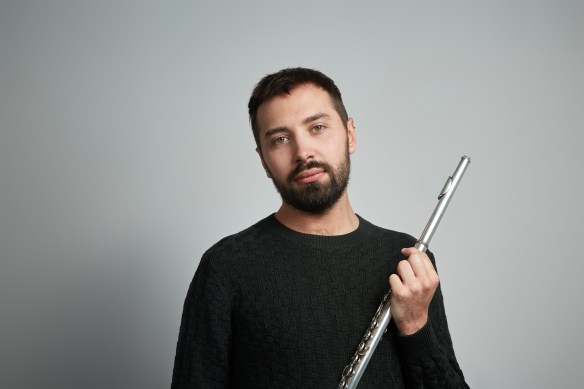
Adam Walker (flute, above), Tabea Zimmermann (viola) & Agnès Clément (harp) (both below)

Bax Elegiac Trio (1916) (1:40 – 11:15 on the broadcast link below)
Debussy Syrinx (1913) (12:47-14:28; Sonata for flute, viola and harp (1915) (17:34 – 35:44)
Stravinsky Elégie for viola (1944) (37:21-43:24)
Gubaidulina Garten Von Freuden Und Traurigkeiten (Garden of Joy and Sorrow) (1980) (45:38-1:02:34)

Wigmore Hall, London
Monday 15 April 2019

To hear the BBC broadcast through BBC Sounds, please follow this link

Photo credits: Adam Walker (c) Marco Borggreve, Agnès Clément (c) Tysje Severens

Commentary and Review by Ben Hogwood

The combination of flute, viola and harp is relatively unusual but has inspired some extremely forward-looking music since the second decade of the 20th century. Within two years of each other Bax and Debussy wrote independently for the combination, responding very differently to the potential of new and open textures.

Sir Arnold Bax was in fact the first to publish, and his Elegiac Trio immediately casts its spell through the rippling adagios of Agnès Clément’s harp (from 1:40 on the broadcast). Above this the flute of Adam Walker and viola of Tabea Zimmermann exchange airy thoughts, introspective but also free of constraint. The watery sound is beautiful and weightless, but Bax’s thoughts become more substantial. The music comes to rest in the major key, having started in the minor, with the feeling of troubles put to rest.

Of all the pieces written for solo flute, Debussy‘s Syrinx (12:47) is both the most magical and the most innovative. And yet when you listen to it there is no effort at all required, the languid lines instinctive but leading to an impressive climax. Adam Walker plays superbly here, ending in the lower register lost in thought.


Debussy’s Sonata for flute, viola and harp (from 17:34) is also a piece deserving of its description as magical, and is regarded as one of the signposts to modern 20th century music for its innovations in sound, harmony and melody. It is ideal when heard after Syrinx, as the flute begins – then the viola. As the programme booklet writer Paul Griffiths vividly observes, this first movement, marked Pastorale, takes time to pause in reflection, while demonstrating Paul Klee’s idea of ‘taking a line for a walk’. It’s elusive yet captivating.

The second movement Interlude (24:50) is graceful and a little dance like. Again the textures are beautifully open, helped by the tone quality of the three soloists, who bring to Debussy’s music that wonderful hazy warmth we associate with the composer at times. Then from 27:38 we hear a joyous tune from flute and viola together, over flowing harp, before the movement subsides to a soft end.

The Finale (31:08) is often singled out for its striking sonorities. The harp tremolo gives a rich backing for the very separate thoughts of flute and harp, one enchanting and the other relatively scratchy with the bow towards the bridge. At all times Debussy is keenly aware of the colours he wants to portray and the three players here respond superbly, bringing their close attention to sonic detail with a convincing unison.

Tabea Zimmermann then goes alone for the understated but striking Elégie of Stravinsky – striking because it is scored for solo, muted viola and sounds as though it has been imported from another civilization. It is also in two parts, so the initial idea (37:21) gives way to an austere dialogue between different ‘voices’ on the same instrument. The end recaps the mournful opening before dying away.

A world very far from the Wigmore Hall is also the destination for the unusual colours (for classical audiences at least) conjured up by Sofia Gubaidulina. East frequently meets West in her compositions, and in Garten Von Freuden Und Traurigkeiten (Garden of Joy and Sorrow) the East is most obviously present in the harp, plucking its responses to the flute’s decorations with slides of pitch. It is eerie but also compelling.

Then from around 50:15 the viola explores its harmonics – the fingers resting very lightly on the string to get a glassy sound that appears to be far-off, but which Gubaidulina uses cleverly. The flute is still the most prominent instrument, but increasingly the viola’s ‘voices of the night’ and the harp’s insistent plucking make themselves known. The music gets more animated, taking the harp right down to its lowest range – from where the flute starts a solo ‘cadenza’ (54:00)

The garden then seems to fall under its own spell, with night noises from all three instruments, until the viola plays a powerful line rising to a height. After this the music of the opening returns, with the striking harp slides again in evidence, before fading to the middle distance.

A superb performance of this piece from three friends, for whom this was their first ever concert as a trio. That would explain the wonderful spontaneity on show, for you would never have known!

Further reading and listening

The music in this concert can be heard here, including a live recording of the Gubaidulina and a legendary recording of the Debussy from the Melos Ensemble:

If Gubaidulina is a new name to your ears, then the strongest possible recommendation can be made for this recording of her Offertorium for violin and orchestra from Gidon Kremer, coupled with the Hommage à T.S. Eliot – a cycle for soprano and an octet featuring today’s viola player Tabea Zimmermann:

For more chamber music featuring the harp, this lovely collection from the Academy of St. Martin-in-the-Fields Chamber Ensemble is a treat. It includes two works by Debussy, the beautiful Introduction and Allegro by Ravel and the delightful Serenade for flute, harp and string trio by this year’s centenary composer Roussel: