Listening to Malcolm Arnold – some reflections

Yesterday we marked 100 years since the birth of English composer Sir Malcolm Arnold, and today I wanted to lift the lid on just a handful of his lesser known orchestral works, which I have been listening to while holidaying in Cornwall – just a few miles from St Merryn, where the composer lived from 1965 to 1972.

The first piece to catch my ear is an early one, however. Arnold wrote the short tone poem Larch Trees in his late teens, when he had just become principal trumpet player for the London Philharmonic Orchestra. He introduced it to them in 1943 but it lay unperformed until 1984. It is as evocative as the title implies, a moody piece creating a colourful autumnal atmosphere but finding darker, more craggy harmonies. As it evolves, Arnold reveals the influence of Sibelius on his early musical thoughts, in particular The late masterpiece Tapiola. There are also hints of Moeran in the slower music, and vivid imagery of the wind sighing in the branches of the trees.

In contrast, the Serenade for Small Orchestra is a pocket dynamo of a piece. It’s bright and breezy first movement makes full use of the smaller forces, with impudent humour and a surprisingly big sound from the small forces. Arnold always has melodic interest in this music, and the soft second movement, followed by a brash third, are packed with ideas.

The Clarinet Concerto no.2, written for Benny Goodman in 1974, is also a loud piece at times – but carries a very different message. Infused with jazz, and channeling the spirit of New York, it has a riotous third movement in the form of a rag – The Pre-Goodman Rag, as titled by Arnold. Composer and performers throw caution to the wind here, improvising and revelling in free musical form. The cadenza of the first movement does the same, the clarinet stepping up with a full repertoire of brays and swoons. Just as revealing is the second movement, turning icy cold with its awkward harmonies. As Arnold’s biographer Piers Burton-Page notes, it is revealing of the composer’s increasing creative and ultimately mental turmoil.

The Viola Concerto has made an equally strong impression. It was written in St Merryn, Cornwall, in response to a commission from Roger Best and the Northern Sinfonia. It has a really strong first movement, the soloist ascending from the busy activity of the orchestra with a melody of power and poise. It is difficult not to equate this with the windswept Cornish Coast. The solo instrument retreats a little in the second movement, sharing the stage with some profound thoughts from the orchestra, and then a vibrant finale exchanges quirky ideas and syncopation. It is a fine vehicle for the viola, proving its strength and versatility.

These are just four pieces from an extensive and sadly underperformed body of work. They show off Arnold’s sense of humour and his gift as a tunesmith but also the depth of feeling lying just beneath the surface. He is an enormously approachable composer, and when could be better than his anniversary year to get acquainted with his music?

Malcolm Arnold at 100 – The Padstow Lifeboat

written by Ben Hogwood

Today marks 100 years since the birthday of English composer Sir Malcolm Arnold.

Arnold has always had a chequered relationship with the concert-going and record-buying public. He was too often seen as a vulgar composer, or someone who couldn’t resist a musical prank, which his work with Deep Purple, in the Concerto for Group and Orchestra of 1969, and his involvement in the Gerard Hoffnung concerts did little to dispel. Writing a piece that included parts for three vacuum cleaners (A Grand, Grand Overture) was a bridge too far for some. His personality is often cited too, for Arnold – who suffered consistently from poor mental health – gained a bad reputation amid his struggles with alcohol and financial problems.

Yet beneath the humour beat a deeply caring musical heart that revealed itself in a myriad of different compositions. The nine symphonies speak with power and concentrated thought of his struggles, and though many still lie dormant the success of the Fifth at the BBC Proms this year said much for the musical quality in the mind behind it.

Arnold mastered many forms, writing concertos for most of the principal orchestral instruments, chamber music that is still all too rarely heard, and stage works that are only just being properly discovered. The Dancing Master, winner of a BBC Music Magazine award this year thanks to a recent recording on Resonus, is testament to that, while the film music has started to get its due reward. The Bridge On The River Kwai, The Inn of the Sixth Happiness and Hobson’s Choice are all fine scores.

Since I am writing this from holiday in Cornwall, I have chosen to focus on some of the pieces Arnold wrote in his time living at St Merryn. The first one is a light-hearted treasure, The Padstow Lifeboat – with a striking written-out part intended to include the foghorn.

The piece was written in 1967 to commemorate the lifeboat’s inauguration, with Arnold still discovering more local musical appeal having not long moved from London. Due in part to the success of the piece, it was not long before he was made Bard of the Cornish Gorsedd in 1968. It is a lively, humourous march that can’t help but raise a smile!

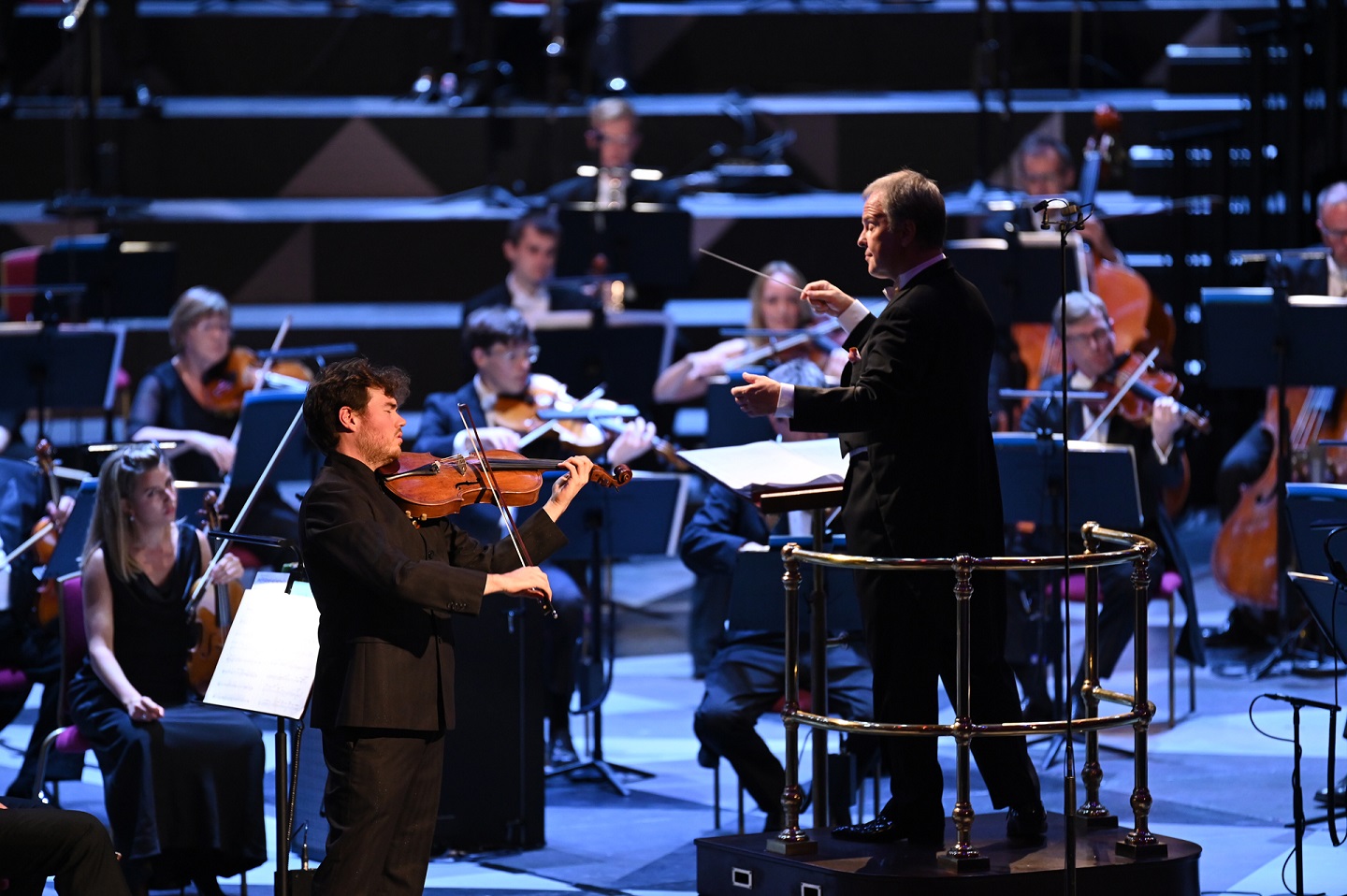
BBC Proms – Timothy Ridout, BBC SO / Oramo: Arnold, Walton, Foulds & Bray

BBCSO_Oramo_Ridout_09_CR.Chris Christodoulou

Timothy Ridout (viola), BBC Symphony Orchestra / Sakari Oramo

Foulds Le cabaret Op.72a (1921) [Proms premiere]
Walton
Viola Concerto (1928-9, rev. 1961)
Bray
 Where Icebergs Dance Away (2021) [UK premiere]
Arnold
Symphony no.5 Op.74 (1960-61) [Proms premiere]

Royal Albert Hall, London
Friday 27 August 2021

Written by Richard Whitehouse; pictures BBC / Chris Christodoulou

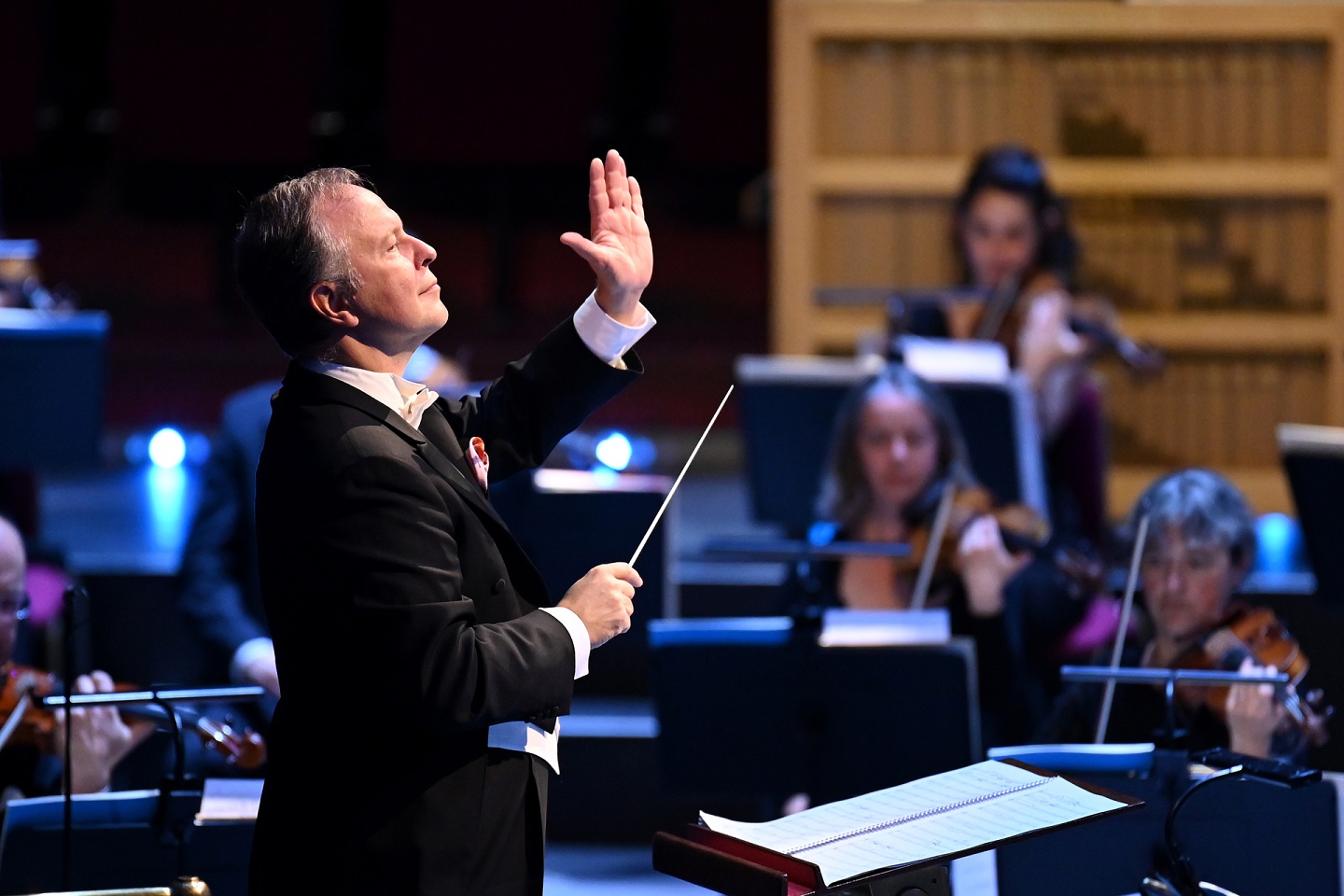
Sakari Oramo tonight returned to the Proms for the first of two concerts as chief conductor of the BBC Symphony Orchestra, in a typically wide-ranging programme of British music as commenced with the overture La cabaret that John Foulds penned as incidental music before it became an autonomous item. For all its vaudevillian aura and unabashed razzmatazz, this ‘Overture to a French Comedy’ throws in numerous stylistic curveballs to point up its intent such as Oramo, given an advocacy of this composer stretching back over two decades, underlined with relish.

Although Walton’s music of the 1920s evinces a not dissimilar extroversion, a very different aspect of the composer is evident in his Viola Concerto – heard this evening in its revision for reduced forces but a notable role for harp. It also brought a Proms debut for Timothy Ridout, his burnished tone and unfaltering intonation much in evidence in the first movement with its smouldering pathos and brief if volatile flights of fancy (qualities which suggest Prokofiev’s First Violin Concerto as the most likely model) that were carefully integrated into the whole.

The central Vivo was the undoubted highlight of this performance – Ridout’s passagework unflagging even at the tempo indicated by the revision, not least in those syncopated asides that amply delineate the spirit of the times. By contrast, the finale began reticently then only gradually intensified towards a climactic tutti that brought out the best in the BBCSO; after which, Ridout’s take on the coda made it seem almost parenthetical in its overt rumination, while rounding off the whole work with appropriate inevitability and unforced eloquence.

After the interval, a first hearing in the UK for Where Icebergs Dance Away – the most recent orchestral piece by Charlotte Bray, whose Cello Concerto was a highlight of the 2016 season. Inspired by the icy landscapes encountered on a visit to Greenland, this brief yet atmospheric piece – a faster central episode placing the relative stasis on either side into meaningful relief – suggested qualities of greater organic growth and emotional intensification which deserved to be expounded on a larger scale, while never feeling underdeveloped in the present context.

It may have taken six decades to appear at the Proms, but Sir Malcolm Arnold‘s Fifth Symphony – if not the finest of his cycle, is surely its most representative by dint of those confrontational extremes which, in the opening Tempestuoso alone, pit acerbic irony against expressive angst as threaten to overwhelm the movement’s formal logic. That it failed to do so was testament to Oramo’s acuity in keeping this music’s seeming excesses within relative proportion – not least in the violent irresolution of the closing pages, with their stark withdrawal into silence.

Featuring one of Arnold’s most potent melodies, the Andante brought a rapt response by the BBCSO strings and if Oramo drew less than the ultimate terror from the central climax, the transition to the pensive second theme then return to the initial melody were breathtakingly achieved. Neither was there any lack of malevolence or sardonic humour in the scherzo – its energy carrying over into a finale that was paced superbly to a climactic restatement of the Andante‘s melody and its collapse into nothingness. A fitting close to an impressive reading.

You can find more information on the BBC Proms at the festival’s homepage. Click on the composer’s names for more information on Charlotte Bray and Sir Malcolm Arnold, while for more on Timothy Ridout click here