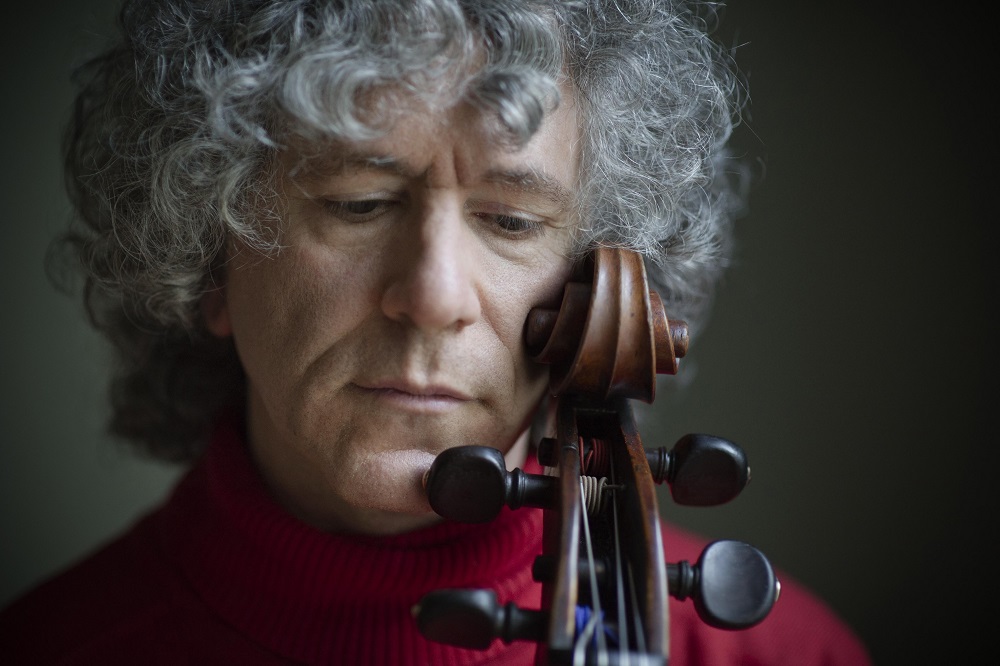
Talking Heads: Steven Isserlis

The cellist talks to The cellist talks to Ben Hogwood about his Wigmore Hall residency, celebrating the music of Fauré, and his new Boccherini album Music of the Angels.

For cellist Steven Isserlis, November 2024 is all about two composers. From the first day of the month he is taking up residence at London’s Wigmore Hall for a five-day exploration of the late chamber music of Gabriel Fauré, who died on 4 November 1924. He has given a valuable insight into his thoughts on the composer in an article just published for the Guardian newspaper, but was generous to spend some time answering specific questions about Fauré’s late music for Arcana.
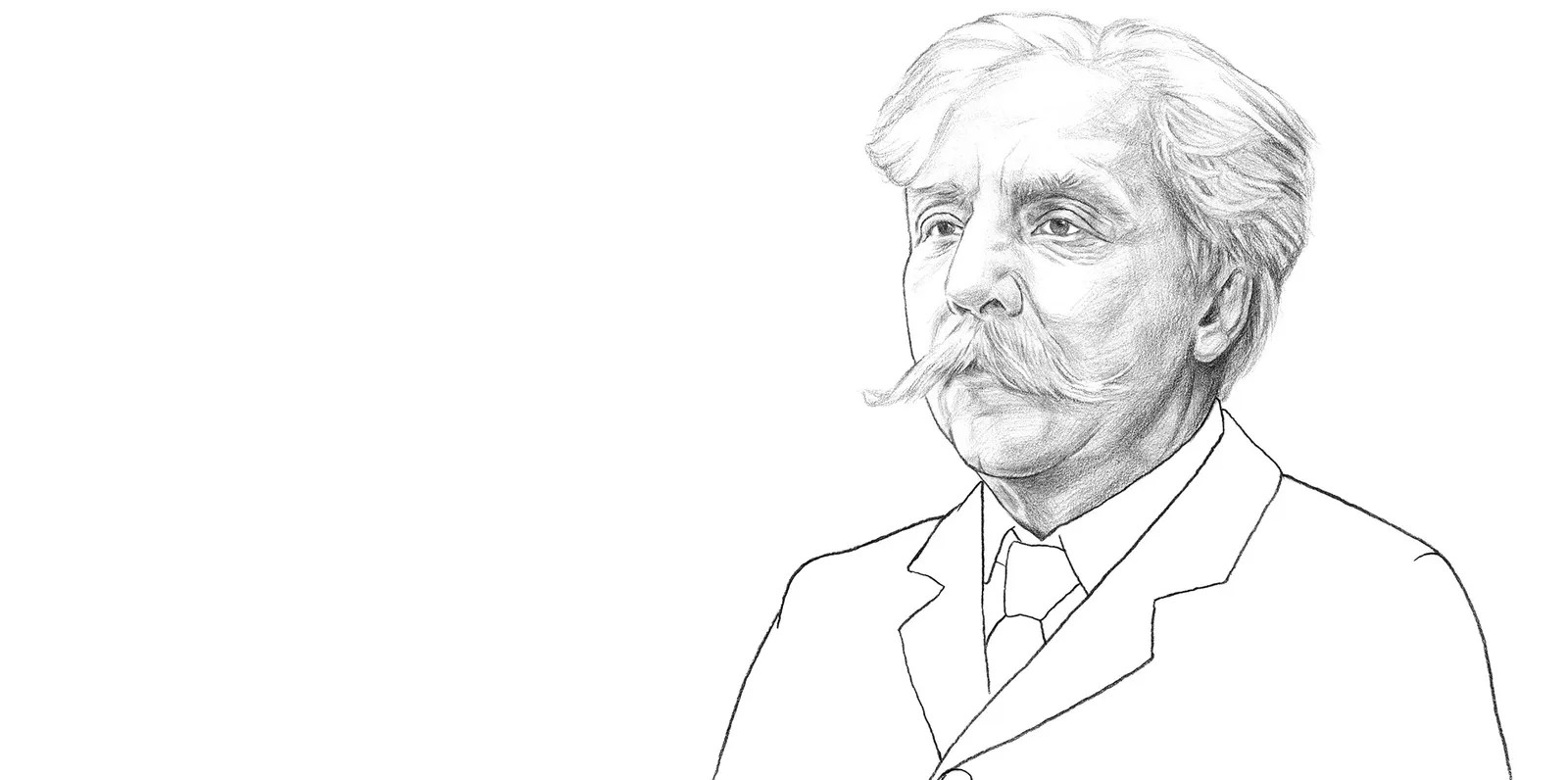

Arcana: The Wigmore Hall concerts put Fauré (above) in context with his contemporaries
– how did you plan them? It’s especially good to see the music of Nadia
Boulanger, Saint-Saëns and Koechlin included.

Steven: Well, first came the idea of doing the complete (major) chamber music of Fauré for the centenary; then everything else had to be worked out around that. It took some time for the programmes to fall into place – and then I was amazed that the Wigmore said yes to all five of them!

How does Fauré’s writing for the cello develop through his works?

I don’t think of his cello writing as such developing – it’s more the musical content. His first work for cello was the Élégie, which is of course wonderful; but if you compare it to the most similar subsequent piece of his, the slow movement of the second sonata, you see how much more profound his music has become. Which is not to put down the Élégie – any more than saying that Beethoven’s last piano sonata in C minor, op 111, is on a higher level than the Pathétique sonata op 13, also in C minor, is a criticism of the Pathétique.

What are the challenges and ‘do nots’ of performing his music in an ensemble such as a piano quartet or quintet?

We just have to agree on our approach – but we do! I call our team – Joshua Bell, Irène Duval, Blythe Teh Engstroem, myself, Jeremy Denk, Connie Shih – Team Fauré. We’re all in love with his music!

Fauré’s late period has some similarities with that of Brahms. Would you say there is anything in common between their approach, late in life?

I suppose, in that there is a ‘new simplicity’; but I think there’s much more in common between late Fauré and late Beethoven. And not just because both men were profoundly deaf!

There is something very special about Fauré’s melodic writing, and the chromatic harmonies he uses. It must be a joy to play!

It is! So long as one understands the chromatic harmonies – one has to be absolutely sensitive to each change of tonal colour.

Would you say Fauré is a composer where repeated listening brings ever
greater rewards?

Well – yes, of course; but I’d say that of any great composer! But perhaps with Fauré’s late works in particular, familiarity with the style is especially helpful.
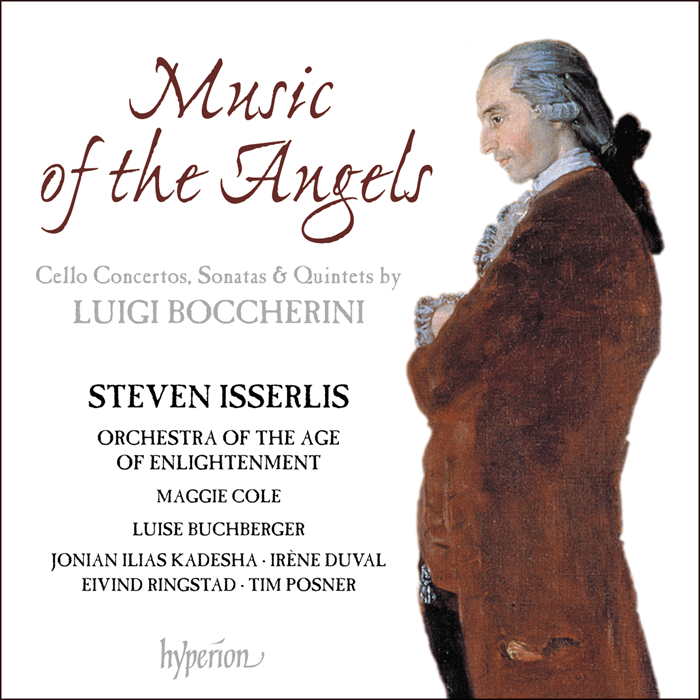

The other composer occupying Steven’s uppermost thoughts in the next month is Luigi Boccherini, with Hyperion releasing Music of the Angels, a generous anthology of the composer’s works for cello with members of the Orchestra of the Age of Enlightenment and harpsichordist Maggie Cole. The album explores the very different forms of Cello Concerto, Cello Sonata and String Quintet – where the composer adds an extra cello to the traditional string quartet line-up. Boccherini is a lesser-known light from the 18th century, and his cause has been close to Steven’s heart right through his recording career.

It’s great to see your Boccherini album. Was it most important for you to present the different types of work – concerto, quintet, sonata – in context?

Thank you! Again, the programme just worked out that way; but yes, I was happy to show different facets of Boccherini’s unique world.

You’ve been playing and recording the music of Boccherini for a good while – what was it that first attracted you to his music?

Well, my teacher Jane Cowan was a great Boccherini fan, which I’m sure influenced me. (She was also a great Fauré fan!) But I’ve always loved his elegance, the otherworldly beauty of his music, his gentle, kind musical soul.

At a guess, I think it might have been the Orchestra of the Age of Enlightenment’s first exposure to Boccherini. Did they enjoy it as much as you?

I think they MIGHT have done some of the symphonies; but I’m not sure. They were certainly lovely to work with – committed, enthusiastic and supportive.

You talk in your notes about the virtuosity Boccherini requires from his soloist – he must have been quite a player. Is it quite intimidating using such a high register of the cello to start with?

Yes! He’s among the most demanding composers for cello, because there’s nowhere one can hide. One can’t just add mounds of vibrato to mask the intonation, for instance. And one has to be able to shape the delicate curves of the music in a way that is naturally graceful; a challenge indeed.

Would you say his music is an ideal ‘next step’ for lovers of Haydn and Mozart?

I think that he’s very different from either Mozart or Haydn – roughly contemporaneous, yes, but another personality entirely. In a way, I think he’s more analogous to Domenico Scarlatti – not because they’re that similar, but because they were both Italians who spent much of their lives in Spain where, relatively cut off from the centre of European musical life, they created their entirely individual compositional worlds.

How does Boccherini’s cello writing contrast with that of Haydn?

Very different! Both can make the cello sing, true; but Haydn uses virtuosity for purposes of excitement, whereas Boccherini uses it much more subtly – usually for lightness and delicacy, frequently evoking birdsong.

With your Boccherini album set for release, are you inclined to record the Fauré trio, quartets and quintets?

Actually, yes; we were originally set to record straight after the festival; but we decided that that would be just too much. So nowthe plan is to record at least the late chamber works (which is the Fauré most in need of advocacy, I feel) next summer in the US. We hope…”

You can book the last remaining tickets for Steven Isserlis and friends’ Fauré residency at the Wigmore Hall website, and explore purchase options for the new Boccherini album Music of the Angels at the Hyperion website. The Wigmore Hall are streaming the Fauré concerts live from their YouTube site

Published post no.2,344 – Sunday 27 October 2024
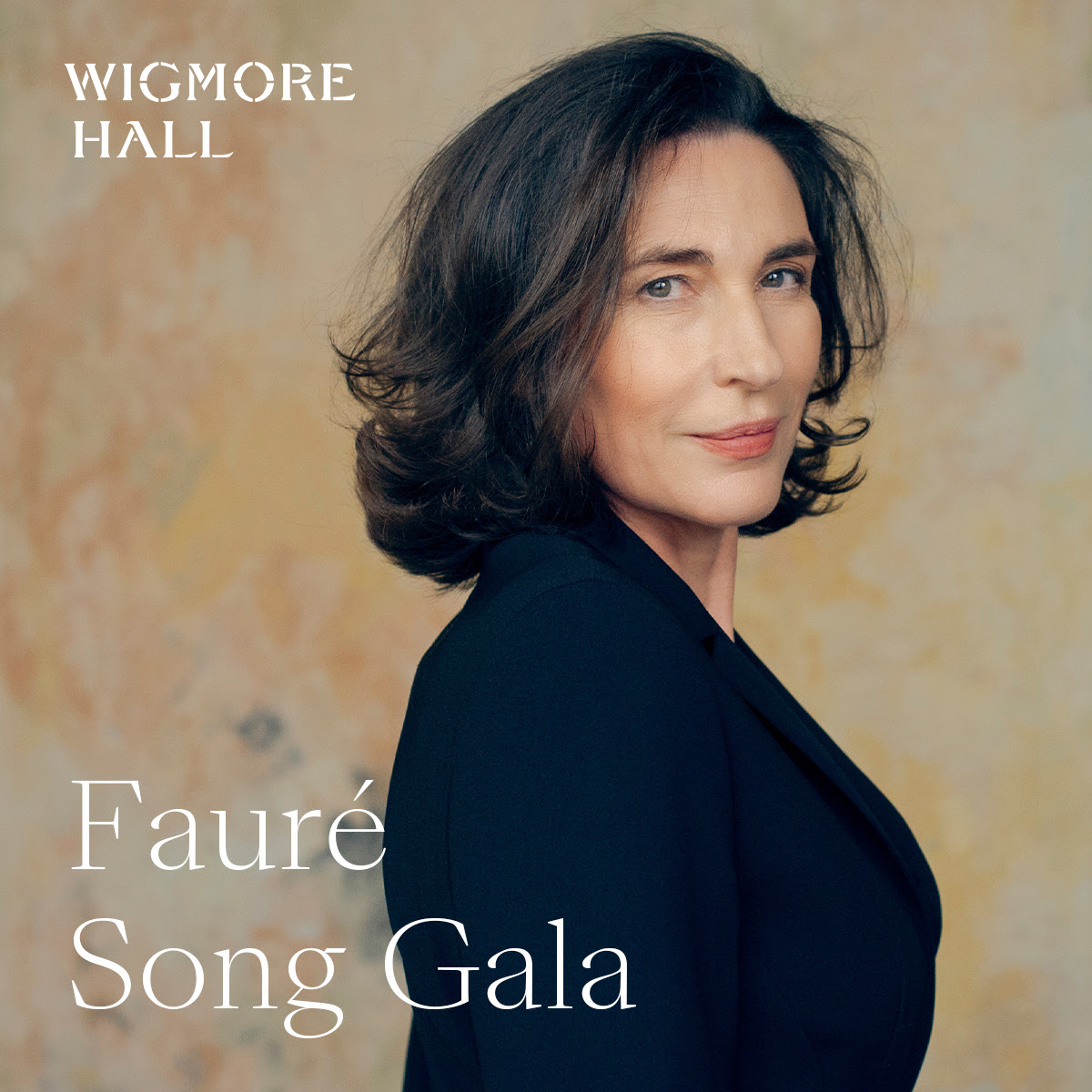
Wigmore Hall news – A season-long celebration of Fauré begins this September

Véronique Gens (soprano), Fleur Barron (mezzo-soprano), Laurence Kilsby (tenor), Stéphane Degout (baritone), Susan Manoff (piano), Julius Drake (piano) – all performing on Friday 13 September 2024 at the Wigmore Hall

The Gabriel Fauré Centenary Celebrations open with a song gala involving some of Fauré’s finest contemporary interpreters, who explore the composer’s output at various stages, and all of whom share in the performance of his cycle La bonne chanson.

The concert will take place on Friday 13 Sep 2024, 7.30pm (click here for tickets) – and marks the start of a celebration which will cover the French composer’s celebrated chamber music.

You can read about the celebrations at the Wigmore Hall website, where you will find details of the five-day festival planned and curated by Steven Isserlis and friends, running from Friday 1 November to Tuesday 5 November. The programme will include all of Fauré’s chamber music, put in context of his friends and contemporaries. It will also give us the rare opportunity to hear both of the piano trios by his good friend Saint-Saëns.

Published post no.2,288 – Thursday 29 August 2024

Online Concert: Steven Isserlis and friends @ Wigmore Hall – Boccherini

Steven Isserlis (cello), Jonian Ilias Kadesha (violin), Irène Duval (violin), Eivind Ringstad (viola), Tim Posner (cello), Lucy Shaw (double bass), Maggie Cole (harpsichord)

Boccherini
String Quintet in D minor Op.13/4 (1772)
Cello Sonata no.2 in C minor (pub. 1772)
Cello Concerto no.7 in G major (pub. 1770)

Wigmore Hall, Monday 20 March 1pm

by Ben Hogwood

Steven Isserlis has been a passionate advocate of the music of Luigi Boccherini for a number of years. One of his very first recordings, made for Virgin Classics, brought together a selection of the prolific composer’s works for cello, two of which were heard in this Wigmore Hall lunchtime concert.

Boccherini was born in Italy in 1743, but made his name and much of his living in Spain, where he lived from 1768 until his death. A prodigious cellist, he joined the string quartet in the court of Don Luis in Madrid and wrote himself into the musical equation, making an unusually weighted quintet with two cellos, a combination that became his calling card with over 100 works. While Mozart would go on to write for a string quintet with two violas in the late 1780s, Boccherini achieved a very different balance. His works may be functional in origin but they show fresh invention, distinctive colours and generous melodic appeal. Unfortunately that appeal has not regularly transferred to the concert hall, at least not in the UK – but on this evidence, where Boccherini’s music brightened a spring lunchtime, they should be available on the NHS!

We heard the String Quintet in D minor Op.13/4 from 1772, from early in the Madrid vocation – but clearly Boccherini was already at home in the two-cello idiom. A rich D minor setting found Tim Posner’s cello initially leading with a sonorous tune, before a genial second section in F major assigned plenty of melodic interest to each of the five players. With a relatively congested texture there was nonetheless a beautiful combination of melodies, though the development clouded over in outlook a little.

The second movement Andante gave first violinist Jonian Ilias Kadesha greater prominence, the other four instruments accompanying at walking pace. Soon the texture thinned to three for an extended cello solo, Isserlis’ wonderful tone rising to a high trill with graceful elegance. Boccherini didn’t leave his second cellist out, either, with Posner also enjoying a rich solo rising to the heights. The finale was a quickly executed fugue, with plenty of counterpoint to enjoy and a distinctive sighing chromatic motif passed between the instruments.

Boccherini wrote frequently and fluently for his principal instrument, including many sonatas with harpsichord. Isserlis and Maggie Cole gave a stylish performance of the Sonata in C minor, a work they have enjoyed since recording it in 1988. The assertive beginning established the home key with a strong theme, leading to more lyrical and ornamented melodic content. Isserlis proved very secure in the upper register, especially with a rising motif towards the end of the first movement. A soulful Largo followed, increasing florid and with a lovely resolution at the end. The economical piece soon cut to a triple time third movement, mixing chirpy motifs with longer, flowing passages with chords from the cello.

It is thought Boccherini wrote 12 concertos, of which the Cello Concerto no.7 in G major is one of the most popular. For this performance the group took an authentic figuration, all seven players on stage with Isserlis in the centre, flanked by first violin (Irène Duval) and viola (Eivind Ringstad). They were his foils in the solo passages, Isserlis revelling in the cello’s free spirit while they enjoyed busy counterpoint of their own. The bright figurations had a spring in their step, like a march Isserlis showing impeccable high register intonation. A grand cadenza sealed the deal in the first movement, while the perky finale had violins bright as a button and both cellos in their high reaches. In between was a radiant Adagio, set in B flat major and featuring some particularly beautiful and longer-phrased, ornamented melodies. This was one of those pieces where music making was a pleasure, pure and simple, with music suited to the rustic outdoors.

Perhaps inevitably – as Isserlis joked to the audience – there was an encore in the form of a popular snippet. Boccherini’s Minuet, itself from a string quintet, is his best-known movement and is often played separately on the radio. This concert proved there is a whole lot more where that came from.

You can listen to recordings of the works in this program on the Spotify playlist below, including Isserlis’ own versions of the sonata and concerto:

For more livestreamed concerts from the Wigmore Hall, click here

In concert: Steven Isserlis, Orchestra of the Age of Enlightenment / Maxim Emelyanychev – Saint-Saëns Cello Concerto no.1 & ‘Organ’ Symphony

Saint-Saëns
Phaéton Op.39 (1873)
Cello Concerto no.1 in A minor Op.33 (1873)
Danse macabre Op.40 (1874)
Symphony no.3 in C minor Op.78 ‘Organ’ (1885-6)

Steven Isserlis (cello, below), Matthew Truscott (violin), Orchestra of the Age of Enlightenment / Maxim Emelyanychev (above)

Royal Festival Hall, London
Thursday 26 January 2023

Reviewed by Ben Hogwood Steven Isserlis picture (c) Satoshi Aoyagi

Top marks to the planning team of the Orchestra of the Age of Enlightenment, for scheduling a night of Saint-Saëns in January! They chose a rousing quartet of works as part of the orchestra’s Sounds For The End Of A Century series, in what may have been a first live encounter for the orchestra with the French composer’s music.

They were matched with a suitably dynamic conductor, Maxim Emelyanychev throwing heart and soul into the music as we explored numerous links between Saint-Saëns and Liszt. This was done through a pair of symphonic dramas, one to open each half, the Cello Concerto no.1 and the Symphony no.3, the Organ, dedicated to Liszt himself.

The first drama told the story of Phaéton. Drawn from Greek mythology, it tells how the child of sun god Helios drives his chariot recklessly across the sky – from which he is felled by Jupiter’s lightning bolt. The action was thrillingly conveyed here, the vehicle veering wildly from the start in the quickfire violin lines. The warm second theme offered a little respite but all too quickly the thunderbolt arrived, delivered with maximum drama by three timpanists, Adrian Bending, Florie Fazio and Tom Hunter.

The second drama was Danse macabre, originally a song but now a seasoned favourite in its orchestral guise. The devilish solo violin role was taken up by orchestra leader Matthew Truscott with some relish, playing with vigour from his position just behind the woodwind. Emelyanychev’s pacing was ideal, and while the dance initially felt a little soft it transpired he had been saving the full fury of the orchestra for the final rendering of the theme, unleashed in a thoroughly satisfying blast.

Steven Isserlis joined the notably reduced orchestral forces for the Cello Concerto no.1, another popular piece full of melody and incident. Isserlis has championed the music of Saint-Saëns throughout his career, and this performance found him in his element, lovingly attending to the tender second theme of the first movement and the opulent Allegretto, while fully opening up to the virtuoso demands of the outer sections. Dialogue with the orchestra was brisk and full of smiles, while the structure of the concerto – a single movement in line with the piano concertos of Liszt – was expertly handled in league with Emelyanychev.

As a thoughtful encore Isserlis marked what would have been the 78th birthday of Jacqueline du Pré, choosing the most appropriate encore – The Swan from Saint-Saëns Carnival of the Animals. Accompanied by Emelyanychev on the orchestra piano, the cellist gave a serene yet searching account.

Finally we had the rare chance to hear the Organ Symphony in period instrument guise, with a blast from the Royal Festival Hall organ and James McVinnie. While the third is by some distance Saint-Saëns’ most popular symphony, it should be noted that a concert of either the fine Symphony no.2 or the work titled Urbs Roma would not go amiss before too long.

Here, however, was a piece written in dedication to Liszt at the surprising invitation from the Royal Philharmonic Society, and premiered at the long-demolished St James’s Hall near Piccadilly in London. It is easy to forget just how original a piece this is, with a large orchestra including not just organ but a piano (with two pianists), two harps and more. There is also an impressive resourcefulness on the part of the composer with his thematic material, which Emelyanychev took the chance to illustrate throughout.

The nervy first movement harked back to the motion of Phaéton’s chariot, albeit now riddled with anxiety, its syncopated nature leaving room for doubt. Consolation was on hand in the form of the substantial section marked Poco adagio, a noble utterance whose poise unexpectedly anticipates Elgar in style. The entrance of the organist here was expertly handled by McVinnie, whose familiarity with the Royal Festival Hall instrument enabled him to achieve an ideal balance with the orchestra. He did this through some wholly rewarding registration choices.

As a consequence the slow movement was deeply emotional, its quiet moments accentuated by Emelyanychev and the soft strings, played with little vibrato. The hurried Scherzo was a vivid contrast to this, and brilliantly played, before the doors were flung open for the famous finale.

McVinnie led with authority, securing a lovely, grainy sound from his instrument for the thunderous C major chord at the start. The two pianists, playing what seemed to be a modern instrument, caressed the upper reaches of the texture with delicate arpeggios. Emelyanychev steered clear of sentimentality in his interpretation, a move which actually heightened the impact of the piece and carried us to a thrilling conclusion.

A blast of C major to see January into the long grass was most welcome – what more could a concert goer want?!

You can read all about the 2022/23 season and book tickets at the Orchestra of the Age of Enlightenment website.

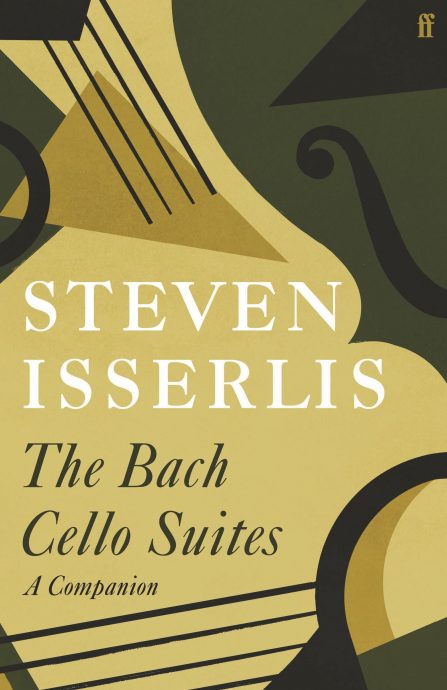
On paper – Steven Isserlis – The Bach Cello Suites: A Companion (Faber)

reviewed by Ben Hogwood

What’s the story?

Ask Steven Isserlis the music he would take to a desert island, and his answer would surely be the six Bach Cello Suites. The cellist has lived with their music all his adult life, and having released his award-winning recording of them for Hyperion in 2007, he now expresses his deep love and admiration for them in written form.

What’s the book like?

In a word, invigorating. Having lived with the suites myself for 35+ years as an amateur cellist, your reviewer is very much a convert – but reading this gave me enthusiasm anew, for Isserlis reveals new treasures about this wonderful music at every turn.

Crucially he does this in a way that will appeal to cellists and non-cellists alike, and even those who struggle with musical terms. A helpful glossary is on hand to help here, but so is an introduction that sets out this celebration of six works where mystery, expression and originality walk hand-in-hand.

The origins of the suites are shrouded in mystery, right down to their authorship. Isserlis tackles these questions head-on, in a wholly compelling way. He confronts the doubts, examines the existing performing editions, and looks at the role of Bach’s second wife Anna Magdalena in their publication, all without getting too bogged down in musicology. There is healthy but qualified assumption and speculation, made as a music lover but backed up with firm arguments from Bach scholars past and present.

Isserlis looks at the construction of each suite in great detail, marvelling at Bach’s consistent marriage of mathematical precision and emotional outpouring. He uses the scholarly texts but also leans heavily and most enjoyably on his perspective from the pure, musical instinct of a performer. This approach lifts the music from the page, frequently inspiring the reader to listen along.

This instinct leads to a central, compelling case for a subtext for the suites, describing the life of Christ in a way that can be keenly experienced by the listener but which also makes a great deal of musical sense, with the caveat that the cellist’s conclusions are largely speculative.

What is beyond doubt is the technical mastery shown by Bach in writing for the cello, and the inspiration that flowed so readily and so inevitably in writing the suites, lifting the instrument and its potential to a higher plain. The six suites are remarkable pieces both individually and collectively, as are the six movements of each – and Isserlis brings them to life as he writes. He celebrates their role in the life of any cellist while also, under his breath, lightly cursing some of the technical difficulties as the cycle progresses.

Readers can opt to take the book from start to finish, taking in each of the 36 movements, but the layout rewards repeat visits to dip in to individual parts and elements of their composition. This is ideal not just for serious, practicing cellists but also for individual listener preferences.

Does it all work?

Yes, in several ways. Isserlis is a fluent and passionate writer, putting the music first at all times, so that reading the book will almost always lead to a first hand encounter with the music. That is the surest guide to success for any book on music, surely!

Is it recommended?

Yes, on pretty much every level. For cellists – either full or part-time, like your reviewer – this book is essential and thought-provoking reading. It reveals afresh the many delights to be found in experiencing this wonderful music, and will also make you want to listen to more Bach, the choral works especially, to explore the fascinating parallels drawn between these and the suites.

Non-cellists should not hesitate to approach the book either, for there are many entertaining and thoughtful stories in the book that prove richly rewarding.

This is a fine achievement, celebrating a body of work that all cellists hold dear. The music lifts from the page and into our homes with an easy candour and compelling storytelling. It is a wonderful achievement.