In concert – Yeol Eum Son, CBSO / Jonathon Heyward: Still, Prokofiev & Sibelius

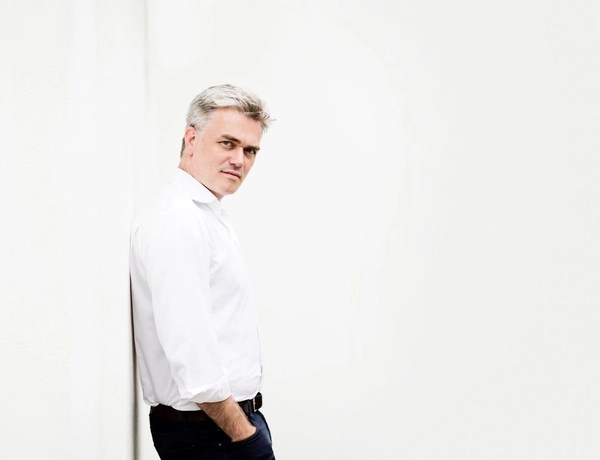
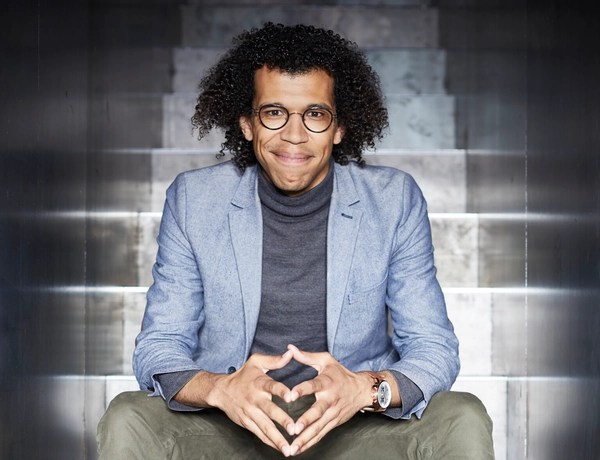
Yeol Eum Son (piano, below), City of Birmingham Symphony Orchestra / Jonathon Heyward (above)

Still Threnody: In Memory of Jean Sibelius (1965)
Prokofiev Piano Concerto no.2 in G minor Op.16 (1912-13, rev. 1923)
Sibelius Symphony no.5 in E flat major Op.82 (1914-19)

Symphony Hall, Birmingham
Thursday 24 October 2024

Reviewed by Richard Whitehouse Pictures (c) Laura Tiesbrummel (Jonathon Heyward), Marco Borggreve (Yeol Eum Son)

American by nationality, and currently music director of the Baltimore Symphony Orchestra, Jonathon Heyward is no stranger to orchestras in the UK and this afternoon’s appearance with the City of Birmingham Symphony Orchestra confirmed a rapport that will hopefully continue in future seasons.

His symphonic output may now be well covered by recordings, but performances of William Grant Still remain infrequent such that his Threnody came as a welcome novelty. Dedicated to Sibelius in the anniversary year of his birth, this finds its composer in understandably sombre mood (akin to that of his masterly concertante piece Dismal Swamp from two decades earlier) and, while there is little about its content that recalls the Finnish master, the interplay between elegy and processional is effectively handled through to its subdued yet highly affecting close.

It might not have enjoyed the popularity of its successor, but the CBSO has given memorable accounts of Prokofiev’s Second Piano Concerto over the decades and the present reading with Yeol Eum Son (above) was as good as it gets in a piece that does not make things easy technically or interpretatively. Starting reticently, the opening movement duly hit its stride in the capricious second theme before the orchestra made way for Son’s electrifying take on a cadenza which encompasses development and reprise; the orchestra’s climactic return being no less visceral.

Wresting coherence out of the unlikely formal design of this work is hardly an easier task but, here again, there was no doubting Son’s insight as she fairly tore through its Scherzo without loss of clarity; she and Heyward then drawing abrasive irony out of an intermezzo which can easily descend into caricature. Nor was there any lack of focus with a Finale whose headlong outer sections frame one of folk-tinged pathos – afforded a cumulative intensity only outdone by the propulsive closing stage where soloist, orchestra and conductor were thrillingly as one.

If the reading of Sibelius’s Fifth Symphony after the interval did not quite maintain this level of excellence, it was no also-ran as a performance. Heyward might have observed the Tempo molto moderato of its initial movement more literally, as his swift underlying pace made for too precipitate a climax into its scherzo-like second half. The accelerating transition between them was adeptly managed, but there was little room left for manoeuvre during the approach to a coda where not even the CBSO’s unfazed commitment could gain the necessary velocity.

Neither did the second movement lack forward motion, though here Heyward found a viable balance between the andante and allegretto elements – its (mostly) ingratiating poise abetted by felicitous playing from CBSO woodwind. Setting off impulsively, the finale rather lacked eloquence in its ‘swan theme’ but the resourceful evolution of its material was never in doubt. Other performances have conveyed greater emotional breadth thereafter yet, as those indelible six closing chords unfolded, there could be no doubting their decisiveness as parting gestures. Overall, then, this was impressive music-making with Heyward evidently a conductor on a mission. Next Wednesday brings a programme of Spanish evergreens conducted by Kazuki Yamada, with Miloš Karadaglić taking centre-stage in a certain guitar concerto by Rodrigo.

For details on the 2024-25 season A Season of Joy, head to the City of Birmingham Symphony Orchestra website. Click on the names to read more about pianist Yeol Eum Son and conductor Jonathon Heyward – and for a special website devoted to composer William Grant Still

Published post no.2,345 – Monday 28 October 2024
In concert – Leila Josefowicz, CBSO / Thomas Søndergård: Richard Strauss, Adès & Brahms

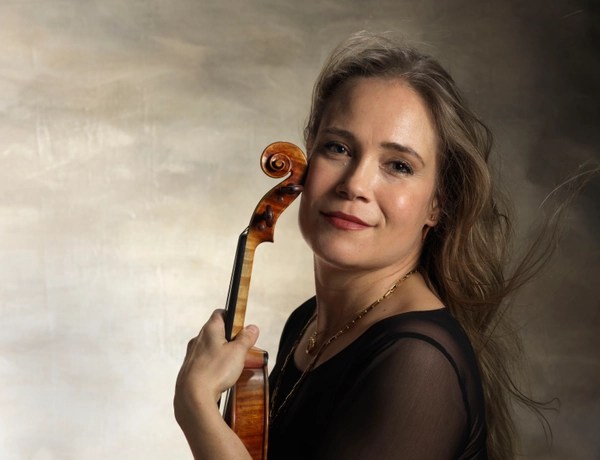
Leila Josefowicz (violin, above), City of Birmingham Symphony Orchestra / Thomas Søndergård (below)

Richard Strauss Don Juan Op.20 (1888)
Adès Violin Concerto, Op.24 ‘Concentric Paths’ (2004)
Brahms Symphony no.2 in D major Op.73 (1877)

Symphony Hall, Birmingham
Thursday 10 October 2024

Reviewed by Richard Whitehouse Pictures (c) Tom Zimberoff (Leila Josefowicz), Chris McDuffie (Thomas Søndergård)

He may be spending more time in the US than in the UK these days, but Thomas Søndergård tonight made a timely reappearance with the City of Birmingham Symphony Orchestra in a programme such as placed a highpoint among recent concertos between two established German classics.

Richard Strauss‘s Don Juan poses few technical issues for an orchestra these days – the only proviso about this performance being its almost too easy unfolding, the initial stages seeming suave rather than impetuous and emotional contrasts following on almost too seamlessly. Yet the central ‘love’ episode featured a melting contribution from oboist Lucie Sprague, with horns duly firing on all cylinders in a unison theme ultimately capped by a silence of tangible anticipation then a postlude of hushed resignation – heroic aspiration submerged in an aura of starkest fatalism.

If much of Thomas Adès’ music the past two decades has been of a conceptual brilliance that outweighs its intrinsic content, the Violin Concerto is destined to endure and rightly so given these Concentric Paths complement each other in a finely balanced totality. One, moreover, with which Leila Josefowicz identifies wholeheartedly: despatching its brief outer movements with an energy and a panache so that Rings conveyed a volatility channelled towards greater affirmation in Rounds; between them, the relatively expansive Paths proved a chaconne as methodical in evolution as it was affecting in its suffused intensity. Assured in her handling of the solo part, Josefowicz dovetailed it unerringly into orchestral writing as resourceful as any the composer has written. Those in the audience unfamiliar with it were most likely won over.

Many of those present were no doubt looking forward to BrahmsSecond Symphony after the interval, where Søndergård (above) and the CBSO did not disappoint. Outwardly its composer’s most equable such piece, this yields more than its share of ambiguities and equivocations that were rarely absent here. Not least in the opening movement, its unforced progress duly taking in an eventful development whose granitic culmination set its easeful themes at a notably uncertain remove, then with a coda whose restive horn solo was eloquently rendered by Elspeth Dutch. Søndergård was no less probing in the Adagio, flexibly paced so its autumnal main theme did not override the more whimsical and anxious elements which inform its longer-term progress. Certainly, the closing reflection on that theme cast a potent shadow on what had gone before.

The other two movements are usually thought to present few if any interpretative problems, so credit to Søndergård for finding no mean pathos in those reiterations of the Intermezzo’s main theme – not least when it returns as a winsome coda. Nor was the final Allegro lacking in incident, such as that spellbinding transition into the reprise whose epiphanic aspect was not lost on Mahler. Given its head without sounding at all rushed, the coda then emerged as the ebullient though never grandstanding peroration which Brahms himself surely intended.

A resounding close to an impressive performance, and there should be more music-making on this level next week when the CBSO is joined for the first time in many years by former chief guest conductor Mark Elder for an enticing programme of Brahms, Janáček and Shostakovich.

For details on the 2024-25 season A Season of Joy, head to the City of Birmingham Symphony Orchestra website. Click on the names to read more about violinist Leila Josefowicz, conductor Thomas Søndergård and composer Thomas Adès.

Published post no.2,331 – Monday 14 October 2024

In concert – Paul Lewis, CBSO / Kazuki Yamada: Ravel, Mozart, Holmès & Mussorgsky / Wood

Paul Lewis (piano, above), City of Birmingham Symphony Orchestra / Kazuki Yamada

Ravel Ma mère l’Oye – suite (1910-11)
Mozart Piano Concerto No. 27 in B flat, K595 (1790-91)
Holmès La Nuit et de l’Amour (1888)
Mussorgsky arr. Wood Pictures at an Exhibition (1874, orch. 1915)

Symphony Hall, Birmingham
Wednesday 21 August 2024

Reviewed by Richard Whitehouse

Although the CBSO has not put on its own Proms season for many years, a concert featuring the programme for its annual Proms appearance has been a regular fixture and this evening’s event proved to be much more than merely a ‘dry run’ for tomorrow’s Royal Albert Hall date.

Despite the timing, this was indeed the suite as orchestrated by Ravel from his Mother Goose piano duets before being expanded into a ballet. It took a while to get going – Pavane of the Sleeping Beauty feeling impassive and Little Tom Thumb enervated, yet Laideronette had the requisite playfulness. Conversations of Beauty and the Beast was ideally poised between whimsy and pathos, before The Enchanted Garden concluded this sequence with an inward rapture made more so thanks to its exquisite contribution from leader EugeneTzikindelean.

Paul Lewis must have played Mozart’s 27th Piano Concerto on innumerable occasions (and several times with the CBSO) but his perspective constantly varies. The opening movement had a spaciousness resulting in an unusually moderate Allegro, albeit never at the expense of a subtly incremental intensity unerringly sustained through to a cadenza of limpid eloquence. Even finer was the Larghetto – dependent, as with much of Mozart’s late music, on what the performer brings to it; here yielding a serenity informed by not a little fatalism. After which the finale provided an ideal complement in its buoyancy and unforced humour, leading into a cadenza (how fortunate Mozart’s own have survived) of pensive understatement, then a coda launched with a guileless interplay of soloist and string that set the seal on this performance.

Opening the second half was Augusta Holmès’s La Nuit et l’Amour – actually, an interlude from Ludus pro Patria, her ‘Ode-Symphonie’ which, even if it might not sustain the present piece’s enfolding passion, should certainly be worth at least a one-off hearing in its entirety.

In Henry Wood’s orchestration, Mussorgsky’s Pictures at an Exhibition proved a highlight of last season. Wood retains only the first appearance of the Promenade but is not unfaithful to the original’s essence. Hence the shock-horror of Gnomus, sombre aura of The Old Castle with its baleful euphonium, playful insistence of The Tuileries or fatalistic tread of Bydlo with its evocative percussion. The whimsical Ballet of the Unhatched Chicks contrasts with the grim realism of Samuel Goldberg and Schmuÿle or the frantic bustle of The Market at Limoges.

Respighi surely took note of this glowering Catacombs with its plangent recollection of the promenade refrain hardly less effective than in Ravel, and while Baba Yaga is unnecessarily curtailed here, its sudden dispersal more than prepares for the crescendo of offstage bells that launches The Great Gate[s] of Kiev. This set the tone for a realization which, if its opulence borders on overkill, could not prevent the CBSO from projecting Wood’s cinematic sonics to the maximum. Those present once again erupted during that echoing resonance at its close.

Quite a way, then, to end an impressive performance and memorable concert. Kazuki Yamada and the orchestra will be doing it all over again tomorrow evening at their Prom, at which this orchestration of the Mussorgsky will be heard in the environs as envisaged by its orchestrator.

The playlist below collects the music from this concert, including the only available recording of the arrangement of Pictures At An Exhibition by Sir Henry Wood:

For details on the 2024-25 season A Season of Joy, head to the City of Birmingham Symphony Orchestra website. Click on the names to read more about pianist Paul Lewis and chief conductor Kazuki Yamada

Published post no.2,279 – Friday 23 August 2024

In concert – Mary Bevan, CBSO / Edward Gardner: Schubert – Symphony no.9 & Songs

Mary Bevan (soprano), City of Birmingham Symphony Orchestra / Edward Gardner

Schubert
Rosamunde D797 – No. 3b, Romanze (1823)
Der Erlkönig D328 (1815, orch. Berlioz 1860)
Die Forelle D550 (1816, orch. Britten 1942)
Im Abendrot D799 (1825, orch. Reger 1914)
Geheimes D719 (1821, orch. Brahms, 1862)
Symphony no.9 in C major D944 ‘Great’ (1825-6, rev. 1828)

Symphony Hall, Birmingham
Wednesday 17 May 2024

Reviewed by Richard Whitehouse Pictures by Benjamin Ealovega (Ed Gardner), Victoria Cadisch (Mary Bevan)

July concerts no longer a consistent fixture in the City of Birmingham Symphony Orchestra’s schedule, it made sense to end the current season with the intended programme for the fourth and final volume of this orchestra’s Schubert cycle with former chief guest conductor Edward Gardner.

If not his final such project, the ‘Great’ was the final symphony that Schubert finished and the culminating orchestral work of his last decade. Now, as almost two centuries ago, it is not an easy work to being off – but this account hit the ground running with a flowing yet purposeful introduction that elided seamlessly with the initial Allegro. Gardner kept momentum on a sure yet flexible rein over those impetuous and capricious themes of its exposition; underlining the subtly eddying tension of its development and a propulsive coda whose link-up with the tempo of that introduction was marred only by the too emphatic final gesture. Respectively plaintive or consoling, the Andante’s alternate episodes were brought into eloquent accord – the fanfare -riven anguish at its climax then the stark fatalism towards its close being especial highlights.

The essential link between the scherzos of Beethoven and Bruckner, the third movement had the right buoyancy but also a suavity in keeping with the Viennese character of its dance-like themes, and complemented by those of its trio whose lilting elegance were tinged by wistful regret. Launched with a commanding call-to-attention, the Finale did not lack for vigour but, unlike so many performances, Gardner was mindful not to rush either here or in the capering second theme whose relentless string accompaniment was vividly rendered. The development more than fulfilled its purpose as an extended transition into the reprise, then the coda opened with a frisson of anticipation such as underpinned the closing pages as they powered towards the decisive but never headlong close to what was a convincing and engrossing performance.

Regarding repeats, Gardner observed that of the first movement’s exposition but not those in the second half during either scherzo or trio, and that of the finale’s exposition. This at least made matters easier for the players, and left options open for their inclusion in the recording.

That forthcoming release on Chandos will hopefully find room for the five songs that formed the first half of this concert, with each of them arranged by a different composer. The pensive Romanze from Schubert’s incidental music to Rosamunde was heard in the composer’s own orchestration, with the compact psychodrama of Der Erlkōnig in a resourceful and nowadays overlooked orchestration by Berlioz. The looping but not always ingratiating playfulness of Die Forelle was expertly attended to by Britten, while the pensive soulfulness of Im Abendrot summoned an appropriate response from Reger; the sombre resignation of Geheimnis making for a welcome encore in its orchestration by Brahms. Throughout the selection, Mary Bevan’s veracity of emotional response and her clarity of enunciation were qualities worth savouring.

This programme may have concluded the Schubert cycle by Gardner and the CBSO, though hopefully it will not see of this partnership in recorded terms – the symphonies of Schumann, and maybe Brahms, being well worth considering as additions to the orchestra’s discography.

For details on the 2024-25 season A Season of Joy, head to the City of Birmingham Symphony Orchestra website. Click on the names to read more about soprano Mary Bevan and conductor Edward Gardner

Published post no.2,243 – Thursday 18 July 2024

Arcana at the opera: Madam Butterfly @ CBSO, Symphony Hall

Madam Butterfly (1903-04)

Semi-staged performance with English surtitles

Cio-Cio San – Maki Mori (soprano), Pinkerton – Pene Pati (tenor), Suzuki – Hiroka Yamashita (mezzo-soprano), Sharpless – Christopher Purves (baritone), Goro – Christopher Lemmings (tenor), Kate – Carolyn Holt (mezzo-soprano), Yamadori/Bonze – Sanuel Pantcheff (baritone), Imperial Commissionaire – Jonathan Gunthorpe (bass), Yakuside – Matthew Pandya (bass), Cousin – Abigail Baylis (soprano), Mother – Hannah Morley (mezzo-soprano), Aunt – Abigail Kelly (soprano), Ufficiale – Oliver Barker (bass)

Thomas Henderson (director), Laura Jane Stanfield (costumes), Charlotte Corderoy (assistant conductor), Charlotte Forrest (repetiteur), Daniel Aguirre Evans (surtitles)

CBSO Chorus, City of Birmingham Symphony Orchestra / Kazuki Yamada

Symphony Hall, Birmingham
Saturday 29 June 2024

reviewed by Richard Whitehouse Photo (c) Yuji Hori

The current season by the City of Birmingham Symphony Orchestra ended on an undoubted high with this performance of Madama Butterfly – if not Puccini’s greatest opera, then likely his most affecting and one with which Kazuki Yamada demonstrably feels an acute empathy.

Semi-stagings can be a mixed blessing, but Thomas Henderson fulfilled this task admirably through several strategically placed screens at either end and across the rear of the stage that enabled the singers to enter or exit without detriment to musical continuity. The costumes by Laura Jane Stanfield brought authenticity without risk of caricature, while whoever handled the lighting should be commended for so discreetly intensifying those emotional highpoints – notably when the ‘heroine’ meets her end in what felt as powerful visually as it did aurally.

The cast was a fine one and dominated (as it needed to be) by the Cio-Cio San of Maki Mori – her unforced eloquence and innate goodness evident throughout, while her only occasionally being overwhelmed by the orchestra underlined her technical assurance. A pity that Pene Pati was not on this level as, apart from his rather cramped tessitura in its higher register, his was a Pinkerton neither suave not alluring but precious and self-regarding – with barely a hint of remorse when forced to recognize the consequences of his actions. Hiroka Yamashita had all the necessary empathy as Suzuki, while Christopher Purves gave a memorable rendering of Sharpless – unsympathetic as to profession yet emerging as a hapless participant conveying real humanity, if unable to prevent what could hardly be other than a tragedy in the making.

Smaller roles were well taken, not least Carolyn Holt as a well-intentioned Kate and Samuel Pantcheff as a yearning if not over-wrought Yamadori. The CBSO Chorus gave its collective all in a contribution that goes a long way to defining the culture and atmosphere in a turn-of-century Nagasaki riven between its Oriental tradition and Occidental intervention. Otherwise, the CBSO was the star of this show in responding to Yamada’s direction, as disciplined as it was impulsive, with a precision and finesse maintained over even the most opulently scored passages. It is often overlooked just how wide-ranging Puccini’s idiom had by then become, with its impressionist and even modal elements duly subsumed into music whose Italianate essence is consistently enhanced while without sacrificing any of its immediacy or fervour.

Some 120 years on and attitudes to what this opera represents have inevitably changed, but it is a measure of Puccini’s theatrical acumen that anti-imperialist sentiment abounds in the narrative without drawing attention to itself conceptually or musically. Conducting with an audible belief in every bar, Yamada ably maintained underlying momentum – not least those potential longueurs in the initial two acts, while his handling of the third act made an already compact entity the more devastating in its visceral drama and ultimately unresolved anguish.

Overall, a gripping account of an opera too easy to take for granted as well as an impressive demonstration of the CBSO’s musicianship after just a year with Yamada at the helm. And, if ‘joy’ was in relatively short supply this evening, next season should more than make amends.

For information on the new CBSO season for 2024-25, click here