In concert – Natalya Romaniw, CBSO / Vassily Sinaisky: Beethoven and Tchaikovsky

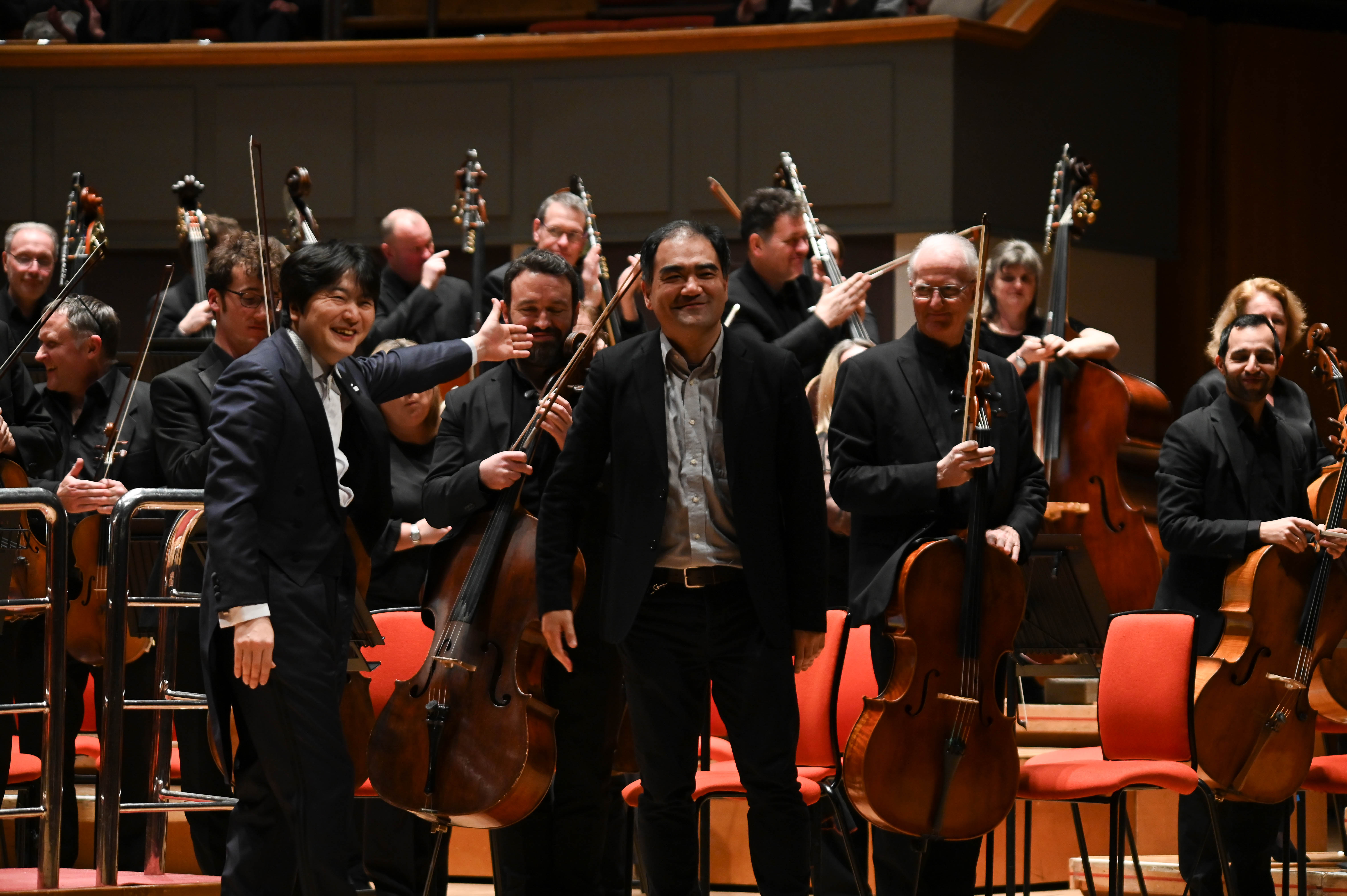
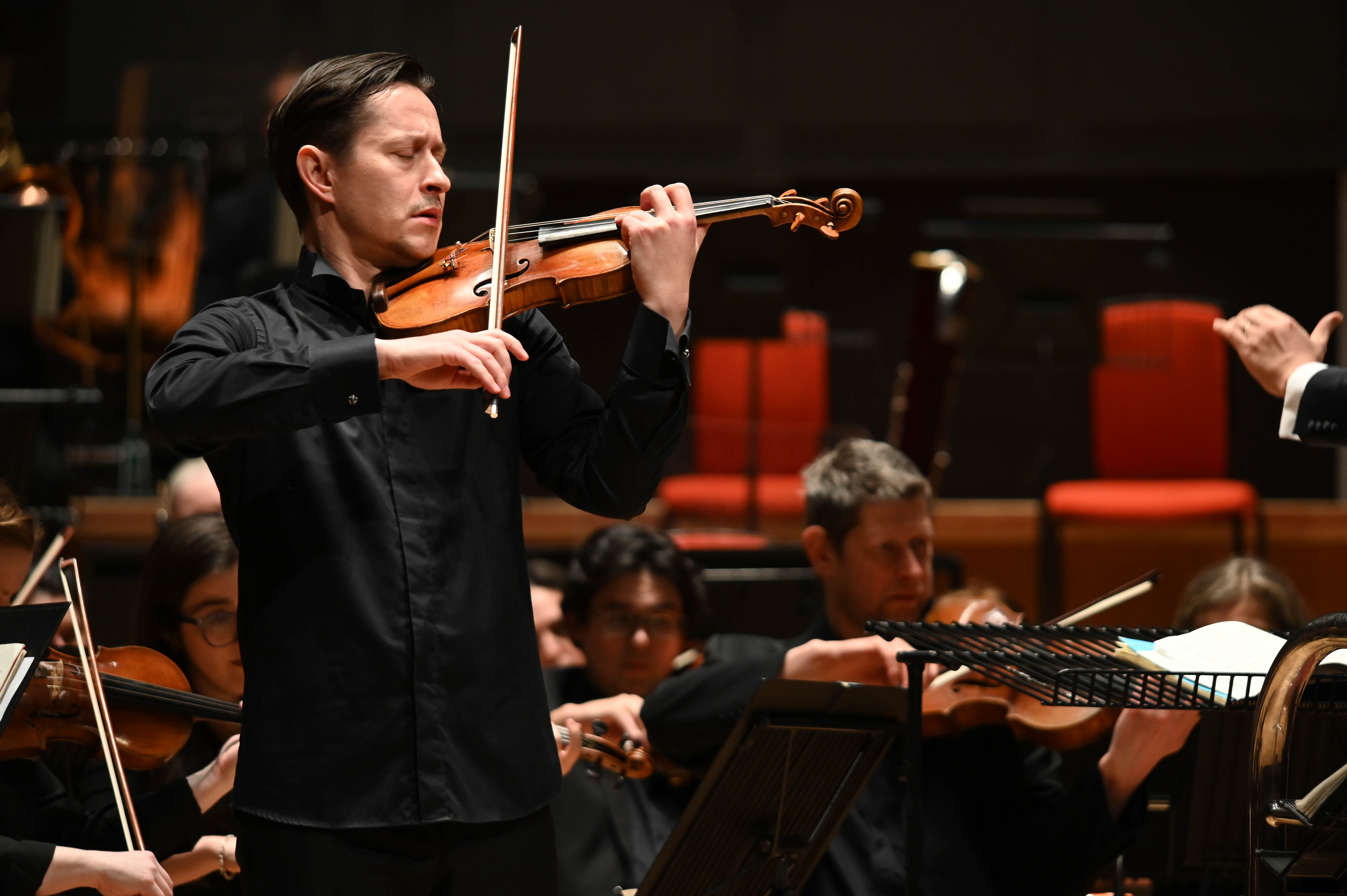
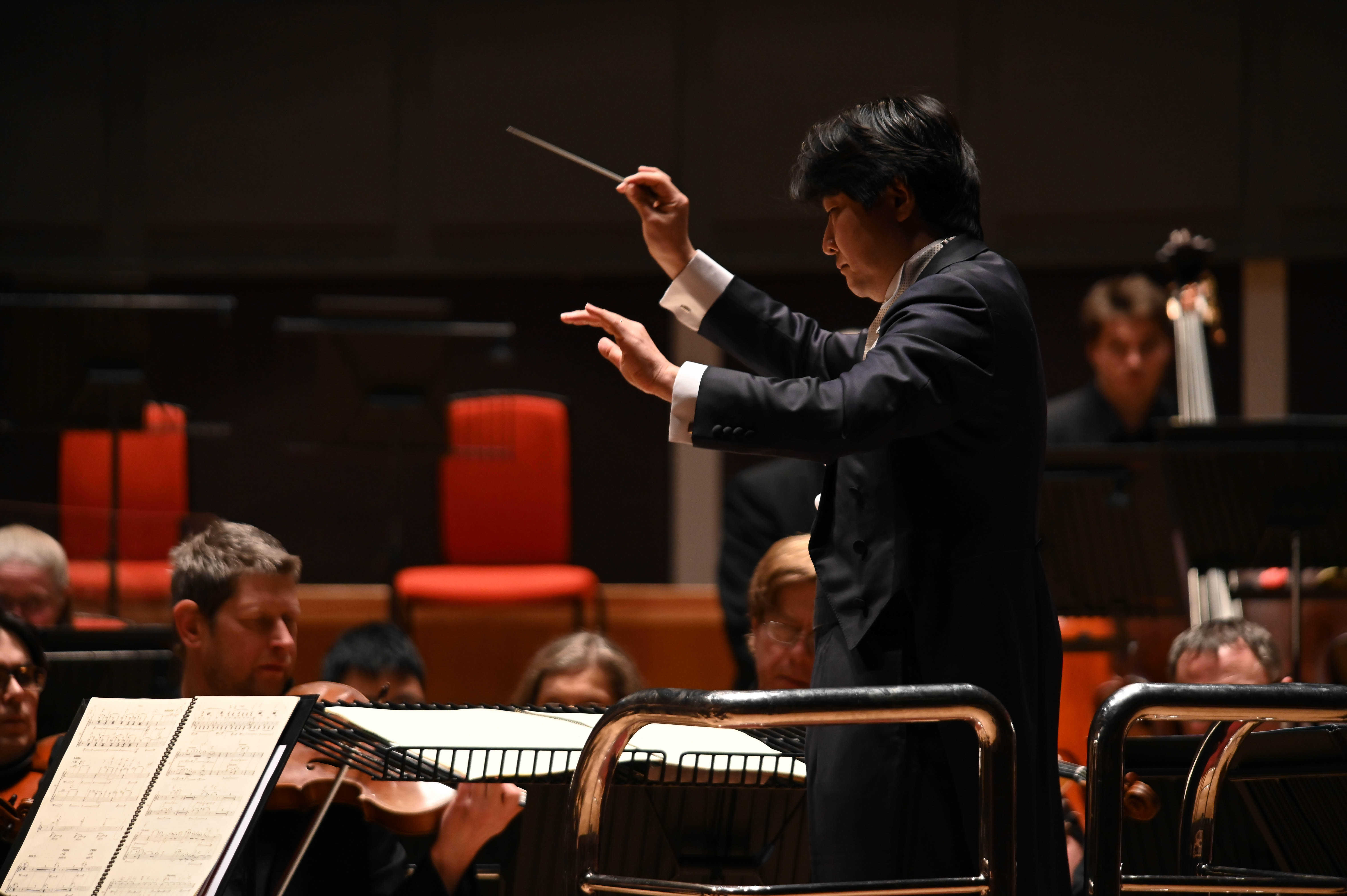
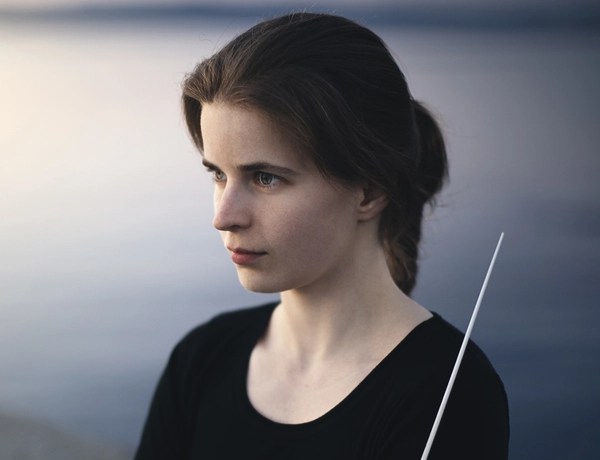
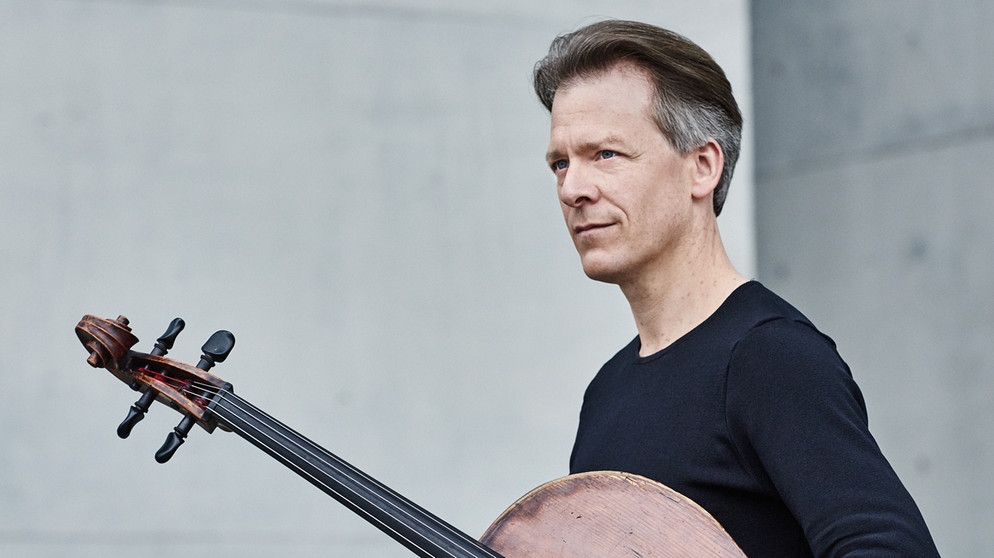
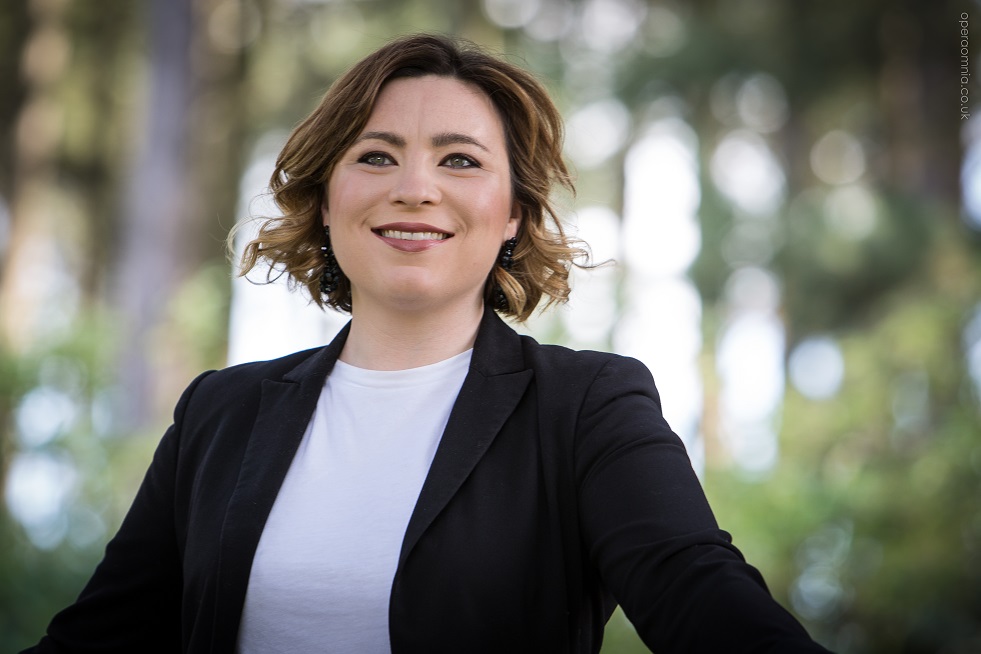
Natalya Romaniw (soprano, above), City of Birmingham Symphony Orchestra / Vassily Sinaisky (below)

Tchaikovsky Romeo and Juliet Fantasy Overture (1869, rev. 1872 & 1880)
Tchaikovsky Eugene Onegin, Op.24 (1877-78) – Letter Scene
Beethoven Ah! Perfido, Op.65 (1796)
Beethoven Symphony no.2 in D major Op.36 (1801-2)

Symphony Hall, Birmingham
Wednesday 14 February 2024

Reviewed by Richard Whitehouse

It might have been billed as a concert for Valentine’s Day and, though there was little about tonight’s programme to reinforce ‘true love reigns supreme’, it did make for a welcome new collaboration between the City of Birmingham Symphony Orchestra and Vassily Sinaisky.

Whether or not there is any more personal significance in Tchaikovsky’s Romeo and Juliet, it remains a potent encapsulation of Shakespeare’s tragedy. The brooding introduction seemed a little inhibited, but Sinaisky brought suitable incisiveness to the warring families and growing ardour to the love music. Nor was there any lack of drama as this ‘fantasy overture’ unfolded to its fateful denouement – after which, the benedictory chorale as Friar Laurence movingly apostrophises these doomed lovers brought an eloquent response from the CBSO woodwind.

Tchaikovsky’s reputation as an opera composer may have altered markedly over the decades, but Eugene Onegin has held the stage since its premiere; the Letter Scene, in which Tatyana knowingly risks all for love of a cynical anti-hero, its highlight. The Welsh-Ukrainian soprano Natalya Romaniw responded with real impulsiveness and, if her projection was too full-on to convey the emotional ambivalence and fragility of its central stages, the joyous abandon of its beginning and reckless determination at its close were duly rendered with unfailing charisma.

Romaniw sounded even more in her element as the jilted lover of Pietro Metastasio’s lyric Ah! Perfido which Beethoven set in his mid-20s. The latter wrote few such concert arias, but the immediacy of his response can hardly be gainsaid and Romaniw gave it her all – whether in its despairing introduction, the more consoling yet hardly untroubled expression that follows, or the steely resolve of those closing pages where the former ‘loved one’ is denounced in no uncertain terms. As in the Tchaikovsky, it was a pity neither text nor surtitles were provided.

Quite how Beethoven’s Second Symphony fitted into tonight’s conception was unclear, other than with its determination to defy fate and live life to the full, but Sinaisky evidently relished putting the CBSO through its paces – not least a first movement whose imposing introduction prepared for an Allegro of driving impetus and emotional fervour ideally intertwined prior to the blazing coda. Easy to underestimate, the Larghetto impressed with its lilting elegance and, in the central development, its teasing modulations – alongside a pay-off of disarming poise.

If, given its textural weight and unabashed rhetoric, this was ostensibly a performance of the ‘old school’, there was nothing portentous about Sinaisky’s take on the Scherzo – as lithe and quizzical as its trio was capricious, then the final Allegro had the character of an opera buffa ensemble refashioned for the post-Classical symphony toward which Beethoven was striving. Not the least attraction of this reading was its differentiation between soft and loud dynamics – crucial to the impact of a lengthy coda which fairly crackled with energy in its closing bars.

A gripping performance of a symphony which, while hardly unknown, is likely the least often played (albeit in the UK) of Beethoven’s nine. Sinaisky has enjoyed a productive relationship with the CBSO across the years, and it is to be hoped that this will continue in future seasons.

Click on the link to read more on the current CBSO concert season, and on the names for more on soprano Natalya Romaniw and conductor Vassily Sinaisky. To read more about the Beethoven works in the program, follow Arcana’s Listening to Beethoven series – which has already included Ah! Perfido and the Symphony no.2

Published post no.2,089 – Friday 16 February 2024

In concert – Jess Gillam, CBSO / Eduardo Strausser: Villa-Lobos, John Williams, Rimsky-Korsakov & Stravinsky

Jess Gillam (soprano & alto saxophone, above), City of Birmingham Symphony Orchestra / Eduardo Strausser

Rossini La Cenerentola (1817) – Overture
Villa-Lobos Fantasia for Saxophone, W490 (1948)
Rimsky-Korsakov arr. Glazunov/Steinberg Le Coq d’or – Suite (1908, arr. 1909)
Williams Escapades (2002)
Stravinsky L’Oiseau de feu – Suite (1910, arr. 1919)

Symphony Hall, Birmingham
Wednesday 31 January 2024

Reviewed by Richard Whitehouse. Photo (c) Robin Clewley

Brazilian conductor Eduardo Strausser made his welcome return to the City of Birmingham Symphony with a programme where three orchestral showpieces were heard alongside two pieces that gave full rein to the charismatic playing and persona of saxophonist Jess Gillam.

Although he featured the saxophone on numerous occasions, Heitor Villa-Lobos wrote just one concertante piece. His Fantasia makes a virtue out of brevity in the lively declamation of its opening movement then the motoric impetus of its finale. No slouch in either, Gillam sounded most involved (understandably so) in the central Lent – its initial melody for viola, soulfully rendered by Adam Römer, soon giving rise to an eloquent dialogue which (hardly for the first time) inferred, that in this most productive of composers, less can often be more.

More compelling overall was Escapades, a concerto drawn from his soundtrack to the Steven Spielberg film Catch Me if You Can by John Williams. A movie as promises rather more than it delivers, this features one of the most appealing of its composer’s latter-day scores with its evoking US culture in the early 1960s that the present work encapsulates to perfection. From the ominous while humorous expectancy as conjured by Closing In, via the lightly applied pathos of Reflections to the coursing energy of Joy Ride – this is Williams at something near his best and Gillam responded accordingly. A pity the contributions of double bass and vibraphone was not as prominent aurally as it was visually (maybe they should have been given more to do?), but this hardly affected the scintillating immediacy of what was heard.

Having opened proceedings with an account of the overture to Rossini’s Cinderella as deft and as scintillating as could be wished, Strausser ended the first half with a (surprisingly?) rare outing for the whole suite from Rimsky-Korsakov’s final opera The Golden Cockerel. For all the controversy aroused by its scenario, this is otherwise an archetypal example of its composer relying on technique rather than inspiration. Most of the best music can be found   in a suite made posthumously by Glazunov and Maximilian Steinberg that provides a telling portrait of Tsar Dodon – whether mired in the superstitious inertia of his palace, hapless (and helpless) on the battlefield, serenaded by the alluring Queen of Shemakha, or exuberant at his intended wedding before meeting his ‘lamentable end’ to the crowing of that pesky cockerel.

The CBSO despatched what is effectively a ‘concerto for orchestra’ before its time with real aplomb, then sounded no less committed in the second of those suites Stravinsky drew from his highly Rimskian ballet The Firebird. Here the sombre aura of its Introduction segued effortlessly into Appearance… and Dance of the Firebird, the latter exuding an infectious lilt, before a plaintive take on the Princesses’ Khorovod. Others have found greater abandon in the Infernal Dance, but the clarity and articulation conveyed here were beyond reproach. Strausser then steered a secure course through the Lullaby, its folk-derived bassoon melody plaintively intoned by Nikolaj Henriques, into a Finale whose hymnic jubilation set the seal on an evening where the absence of any Austro-German element proved its own justification.

Click on the link to read more on the current CBSO concert season, and on the names for more on saxophonist Jess Gillam, conductor Eduard Strausser and composer John Williams

Published post no.2,075 – Friday 2 February 2024

In concert – Eugene Tzikindelean, CBSO / Kazuki Yamada: Dai Fujikura, Walton & Berlioz

Eugene Tzikindelean (violin), City of Birmingham Symphony Orchestra / Kazuki Yamada

Fujikura Wavering World (2022) [CBSO co-commission: UK premiere]
Walton Violin Concerto in B minor (1938-9, rev. 1943)
Berlioz Symphonie Fantastique, Op. 14 (1830)

Symphony Hall, Birmingham
Wednesday 17th January 2024

Reviewed by Richard Whitehouse. Photos (c) Beki Smith

Tonight’s concert by the City of Birmingham Symphony Orchestra brought a varied trilogy of works, one which started with a first UK hearing (following its premiere in Seattle almost two years ago) of Wavering World by the Japanese-born and British-based composer Dai Fujikura.

In his programme note, Fujikura remarks on how little he knew of his traditional culture until having left Japan, and this piece draws upon the myth surrounding creation for an eventful if always cohesive journey through the emergence of the heavenly world, the human world and the underworld. This is achieved by separating the orchestra into stratified layers that do not succeed each other as merge into diverse and intricate textures where these sizable forces are imaginatively deployed; the music gradually moving away from its earlier austerity toward a luxuriance whose salient motifs are recognizable despite their transformation. Directing with unerring focus, Kazuki Yamada secured a vivid rendition which also served as a reminder that Fujikura is less often heard than might be in his country of residence these past three decades.

The fortunes of Walton’s Violin Concerto have lessened this past quarter-century, so Eugene Tzikindelean’s advocacy was its own justification. He had the measure of the initial Andante’s alternation between languor and agitation, ingenuity of thematic transformation offsetting any lack of originality in its themes, then gave of his best during a central Presto whose technical fireworks are tellingly balanced by yearning lyricism. If the final Vivace was less convincing, this might have reflected on the actual music – Walton putting his ideas through their audibly Prokofievian paces before evoking Elgar in a lengthy accompanied cadenza then gratuitously affirmative coda. The CBSO gave stalwart support, just over 50 years since it accompanied Yehudi Menuhin and the composer in a performance commemorating Walton’s 70th birthday.

After the interval, Yamada (above) presided over a ‘no holds barred’ reading of Berlioz’s Fantastic Symphony. The latter-day tendency is to stress its symphonic cogency, but there was little of this in a Daydreams and Passions veering impulsively, even recklessly, between despondency and elation. The waltz element of A Ball was nudged out of shape, but its darker undertones were well judged, with the lengthy build-up then lingering subsidence of Scene in the Fields enhanced by Rachael Pankhurst’s plangent cor anglais and ominous timpani toward the close.

This was hardly the first performance to head off seemingly at a tangent, but March to the Scaffold (shorn of its first-half repeat, as had been the opening movement) quickly became   a parade-ground romp in which the fateful fall of the guillotine went for relatively little. Nor was Dream of a Witches’ Sabbath without its Disney-like element of overkill, though here Yamada ensured a stealthy accumulation through its reiterations of the Dies irae plainchant and fugal episode to a peroration whose thunderous power seemed nothing if not conclusive.

An Episode in the life of an Artist, indeed, as demonstrably left its mark on the enthusiastic audience. Yamada and the CBSO will be doing it all again on April 10th, but next week sees the more Classical appeal of Mozart and Beethoven in the company of Maxim Emelyanychev.

Click on the link to read more on the current CBSO concert season, and on the names for more on violinist Eugene Tzikindelean, conductor Kazuki Yamada and composer Dai Fujikara

Published post no.2,063 – Sunday 21 January 2024

In concert – Paul Lewis, CBSO / Tabita Berglund: Sibelius, Grieg & Tchaikovsky

Paul Lewis (piano), City of Birmingham Symphony Orchestra / Tabita Berglund

Sibelius Pohjola’s Daughter Op.49 (1906)
Grieg Piano Concerto in A minor Op.16 (1868)
Tchaikovsky Symphony no.5 in E minor Op.64 (1888)

Symphony Hall, Birmingham
Thursday 11th January 2024 [2.15pm]

Reviewed by Richard Whitehouse

Entering 2024 with this attractive programme, the City of Birmingham Symphony Orchestra was conducted by Tabita Berglund – the Norwegian who, though unrelated to the late, great Paavo, seems certain to become one of the most significant conductors from her generation.

It was with Sibelius that the programme commenced, Pohjola’s Daughter lying on the cusp between its composer’s nationalistically inclined Romanticism and the relative Classicism that ensued. Pointedly so given the composer derived his inspiration from the Kalevala, in which its totemic figure Väinämöinen is outwitted by the ‘daughter of the North’, as the basis for a symphonic fantasia which critiques as surely as it remodels its underlying sonata design. Other interpreters have ensured a more seamless cohesion, but the acute characterization that Berglund brought to each episode, then the emotional frisson when those main motifs come together for a powerful apotheosis, compelled admiration – as did the closing pages in which Sibelius cannily fragments form and texture so all that remains is an all-enveloping silence.

Its ubiquity across 150 years should not distract attention from the innovative qualities found in Grieg’s Piano Concerto, and if his was not a consciously recreative approach, Paul Lewis gave a performance as appealing as it was insightful. Not least in an opening Allegro whose melodic directness was always balanced by a tangible sense of where this music was headed, and culminating in a take on the lengthy cadenza that infused its rhetoric with an inevitability worthy of Beethoven. There was expressive light and shade aplenty in the central Adagio, as too an unforced progress to the heartfelt restatement of its main theme. The outer sections of the final Allegro had no lack of impetus, as if to emphasize contrast with its rapt flute melody that closes the work in a thrilling peroration where soloist and conductor were rightly as one.

After the interval, Tchaikovsky’s Fifth Symphony emerged as a forceful and combative piece with its occasional longueurs convincingly held in check. Not least in an opening movement, the simmering expectancy of whose introduction intensified throughout what followed. Any short-windedness of phrasing was absent in the Andante cantabile, its indelible horn melody serenely intoned by Elspeth Dutch then its interplay between slow-burning eloquence and violent interjections of the ‘fate’ theme astutely judged on route to a warmly resigned coda.

Ostensibly an interlude, the Valse has a charm and, in its central trio, insouciance as belies its formal ingenuity that Berglund conveyed in full measure. Nor was there any sense of overkill as the Finale pursued a purposeful but never headlong course – its initial restatement of the main theme exuding an expressive focus matched by that of its climactic reappearance, here without risk of bathos in what brought the performance to a decisive and affirmative close. Certainly, the composer’s doubts as to any ‘insincerity’ proved unfounded on this occasion. It also confirmed a rapport between Berglund and the CBSO which will hopefully continue. Next week, however, brings the return of Kazuki Yamada for a wide-ranging programme of Berlioz, Walton and the world premiere of a newly commissioned work from Dai Fujikura.

Click on the link to read more on the current CBSO concert season, and on the artist names for more on Tabita Berglund and Paul Lewis

Published post no.2,054 – Friday 12 January 2024

In concert – Alban Gerhardt, CBSO / Kazuki Yamada: Straight from the Heart

kazuki-yamada

Alban Gerhardt (cello, below), City of Birmingham Symphony Orchestra / Kazuki Yamada (above)

Anderson Litanies (2018-19) [CBSO Centenary Commission: UK premiere]
Dvořák Symphony no.7 in D minor Op.70 (1884-5)

Symphony Hall, Birmingham
Wednesday 30 June 2021 (6.30pm)

Written by Richard Whitehouse Photo of Alban Gerhardt courtesy of Kaupo Kikkias

Losing the greater part of the City of Birmingham Symphony Orchestra’s schedule across the past two seasons has meant postponing many of its ‘Centenary Commissions’, but of those which have been rescheduled, none was more keenly anticipated than that of Julian Anderson’s Litanies.

Anderson produced four works during his tenure as the CBSO’s Composer-in-Residence over 2001-5, this new piece renewing its formal and expressive archetypes by fresh and intriguing means. The first of three continuous sections presents cello and orchestra – its modest forces including double wind, harp and piano, their pitches modified by a quarter-tone – as sparring partners in propulsive, toccata-like music. This gradually mutates into a central slow section, whose fraught lyricism intensifies (with unexpected if effective assistance from the orchestra) towards a chorale in memory of Oliver Knussen. From here an increasingly animated cadenza leads to a capricious, dance-like final section that culminates in a splenetic orchestral outburst; the soloist then resuming for a soulful postlude which brings about a calmly equivocal close.

Alban Gerhardt (below) made the most of some finely gauged technical challenges, as he overcame passing vagaries of sound-balance (and what appeared to be a leg injury) to give a confident realization of a piece already heard in Paris, Örebro and Lausanne. The CBSO was no less assured under Kazuki Yamada; if balance between strings and wind occasionally lost focus (second violins placed further to the rear of the platform than would normally be the case), this did little to offset the attractions of a notable addition to the contemporary repertoire.

During a break for platform rearrangement, the CBSO’s Principal Guest Conductor spoke of his gratitude that audiences were again able to attend live concerts. Something of this evident pleasure came through the ensuing performance of Dvořák’s Seventh Symphony – not least an opening Allegro that, despite a few tentative string entries, undoubtedly had the measure of its stoic defiance and underlying seriousness of purpose. Best was a coda whose dramatic initial stages subsided effortlessly and inevitably into sombre rumination towards the close.

The highlight, however, was a slow movement whose Poco adagio marking was studiously observed – Yamada infusing the emotional ebb and flow of a movement whose formal follow -through can seem fitful with unfailing poise, the CBSO wind eloquent in their contribution. Nor was anything amiss in the Scherzo, its ‘furiant’ rhythm audible not just in the trenchant outer sections but also the trio where its simmering presence ensured no let-up in tension on route to a subtly modified reprise then explosive coda. The final Allegro capped the reading accordingly – Yamada never rushing its stealthy alternation between starkness and lyricism, while ably negotiating several testing changes in tempo as the composer ratchets up tension going into an apotheosis whose inherent fatalism was enhanced by the resplendent playing.

A gripping performance, then, as was met with a suitably enthusiastic response. The CBSO is back this Friday with altogether lighter fare for a programme of Summer Classics (including The Lark Ascending), which is conducted by Michael Seal and presented by Andrew Collins.

You can find information on the CBSO’s Summer Classics concert at their website. For more information on composer Julian Anderson, click here – and for more on cellist Alban Gerhardt, visit his website here