In concert – Eugene Tzikindelean, CBSO / Kazuki Yamada: Dai Fujikura, Walton & Berlioz

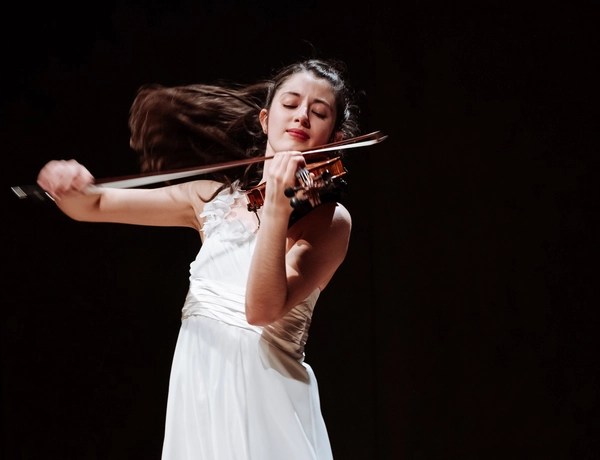
Eugene Tzikindelean (violin), City of Birmingham Symphony Orchestra / Kazuki Yamada

Fujikura Wavering World (2022) [CBSO co-commission: UK premiere]
Walton Violin Concerto in B minor (1938-9, rev. 1943)
Berlioz Symphonie Fantastique, Op. 14 (1830)

Symphony Hall, Birmingham
Wednesday 17th January 2024

Reviewed by Richard Whitehouse. Photos (c) Beki Smith

Tonight’s concert by the City of Birmingham Symphony Orchestra brought a varied trilogy of works, one which started with a first UK hearing (following its premiere in Seattle almost two years ago) of Wavering World by the Japanese-born and British-based composer Dai Fujikura.

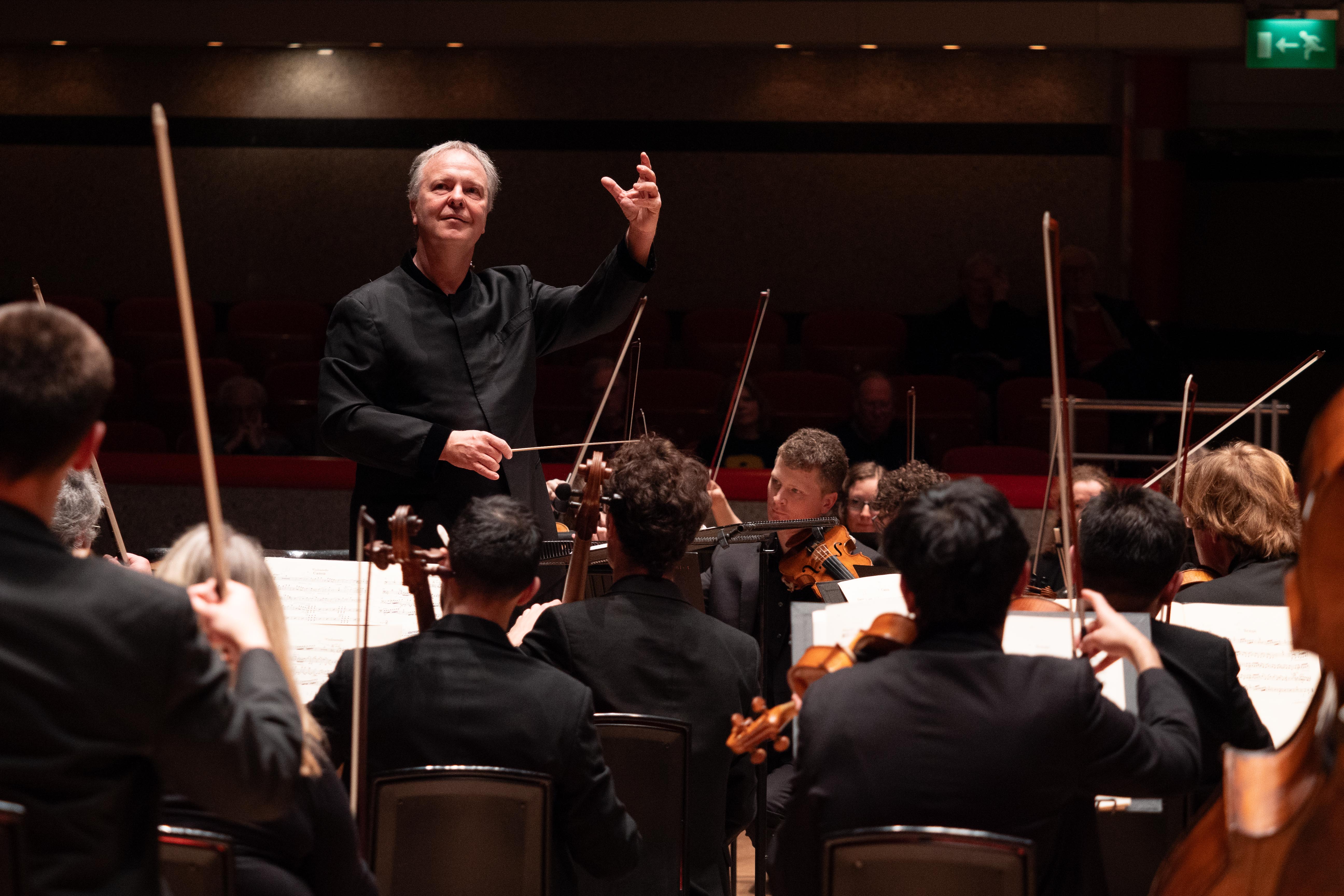
In his programme note, Fujikura remarks on how little he knew of his traditional culture until having left Japan, and this piece draws upon the myth surrounding creation for an eventful if always cohesive journey through the emergence of the heavenly world, the human world and the underworld. This is achieved by separating the orchestra into stratified layers that do not succeed each other as merge into diverse and intricate textures where these sizable forces are imaginatively deployed; the music gradually moving away from its earlier austerity toward a luxuriance whose salient motifs are recognizable despite their transformation. Directing with unerring focus, Kazuki Yamada secured a vivid rendition which also served as a reminder that Fujikura is less often heard than might be in his country of residence these past three decades.

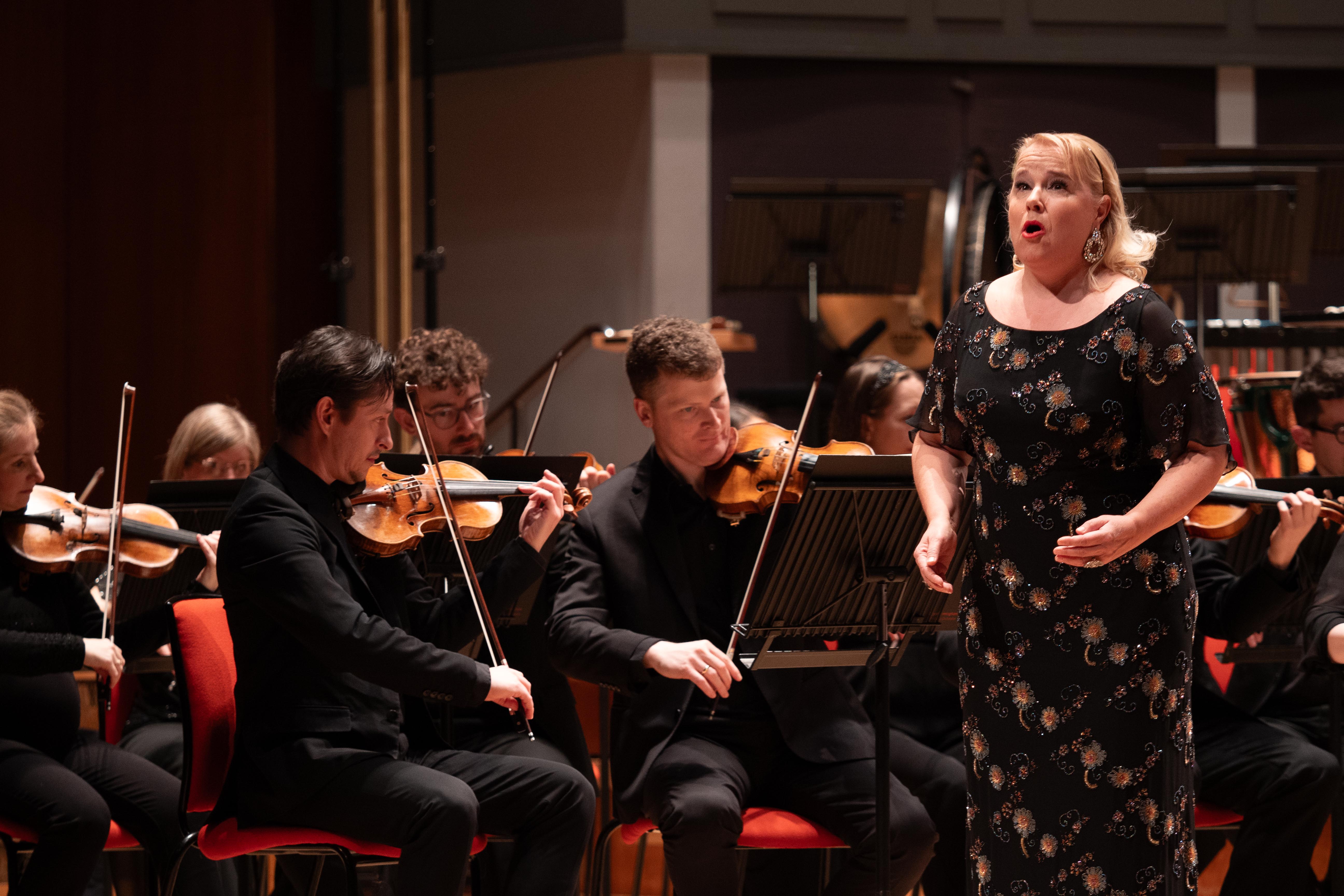
The fortunes of Walton’s Violin Concerto have lessened this past quarter-century, so Eugene Tzikindelean’s advocacy was its own justification. He had the measure of the initial Andante’s alternation between languor and agitation, ingenuity of thematic transformation offsetting any lack of originality in its themes, then gave of his best during a central Presto whose technical fireworks are tellingly balanced by yearning lyricism. If the final Vivace was less convincing, this might have reflected on the actual music – Walton putting his ideas through their audibly Prokofievian paces before evoking Elgar in a lengthy accompanied cadenza then gratuitously affirmative coda. The CBSO gave stalwart support, just over 50 years since it accompanied Yehudi Menuhin and the composer in a performance commemorating Walton’s 70th birthday.

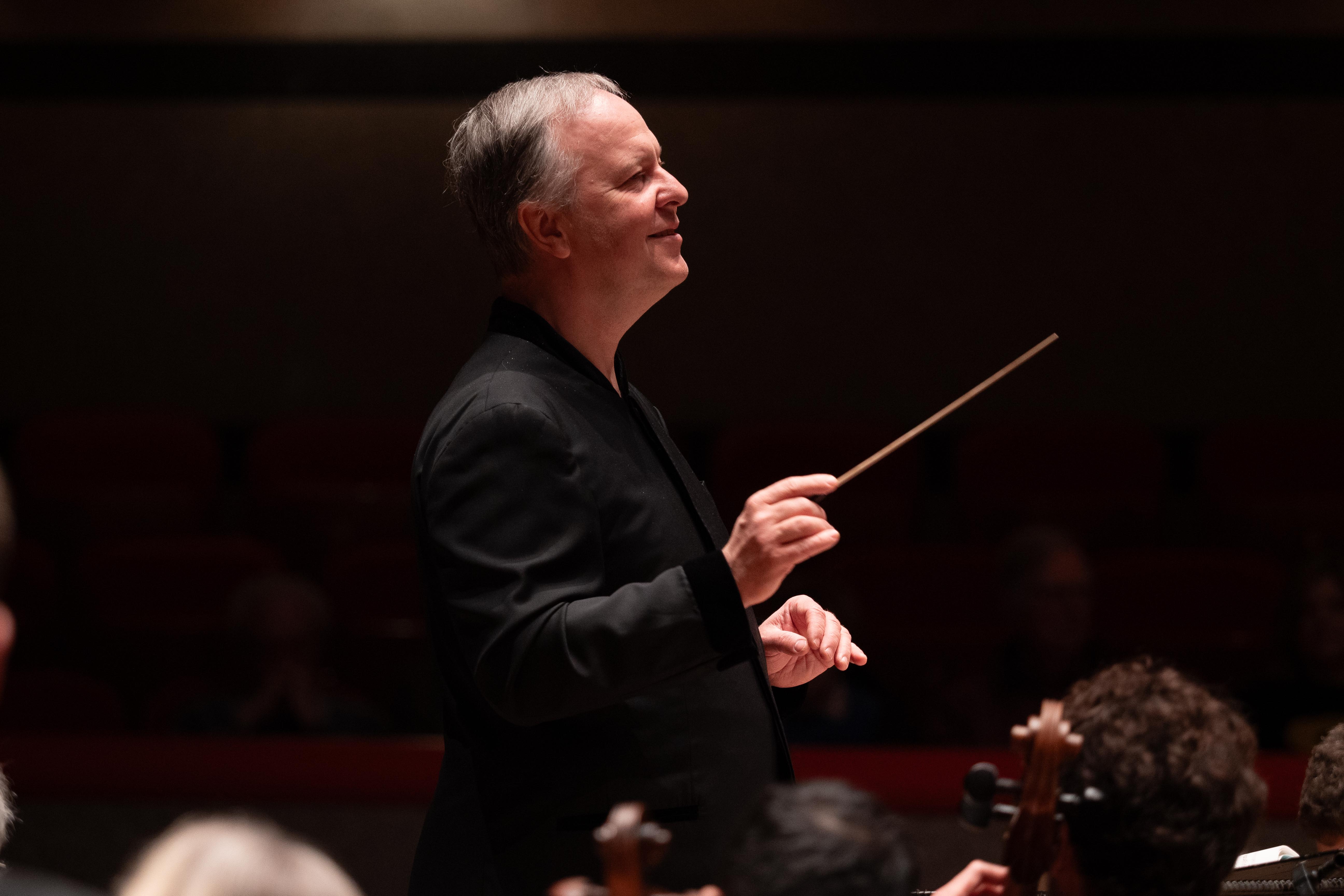
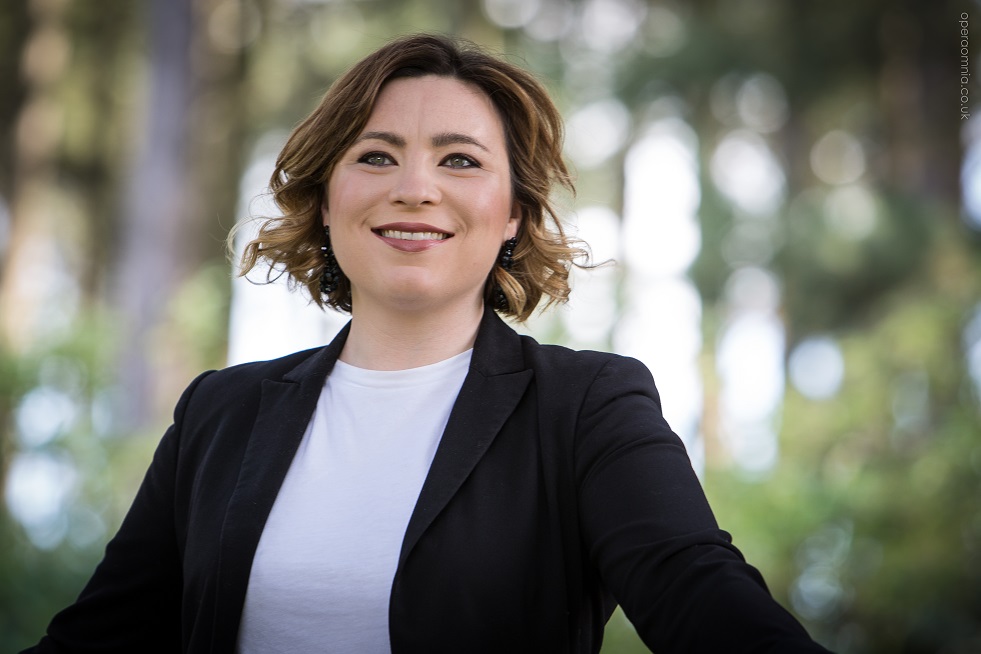
After the interval, Yamada (above) presided over a ‘no holds barred’ reading of Berlioz’s Fantastic Symphony. The latter-day tendency is to stress its symphonic cogency, but there was little of this in a Daydreams and Passions veering impulsively, even recklessly, between despondency and elation. The waltz element of A Ball was nudged out of shape, but its darker undertones were well judged, with the lengthy build-up then lingering subsidence of Scene in the Fields enhanced by Rachael Pankhurst’s plangent cor anglais and ominous timpani toward the close.

This was hardly the first performance to head off seemingly at a tangent, but March to the Scaffold (shorn of its first-half repeat, as had been the opening movement) quickly became   a parade-ground romp in which the fateful fall of the guillotine went for relatively little. Nor was Dream of a Witches’ Sabbath without its Disney-like element of overkill, though here Yamada ensured a stealthy accumulation through its reiterations of the Dies irae plainchant and fugal episode to a peroration whose thunderous power seemed nothing if not conclusive.

An Episode in the life of an Artist, indeed, as demonstrably left its mark on the enthusiastic audience. Yamada and the CBSO will be doing it all again on April 10th, but next week sees the more Classical appeal of Mozart and Beethoven in the company of Maxim Emelyanychev.

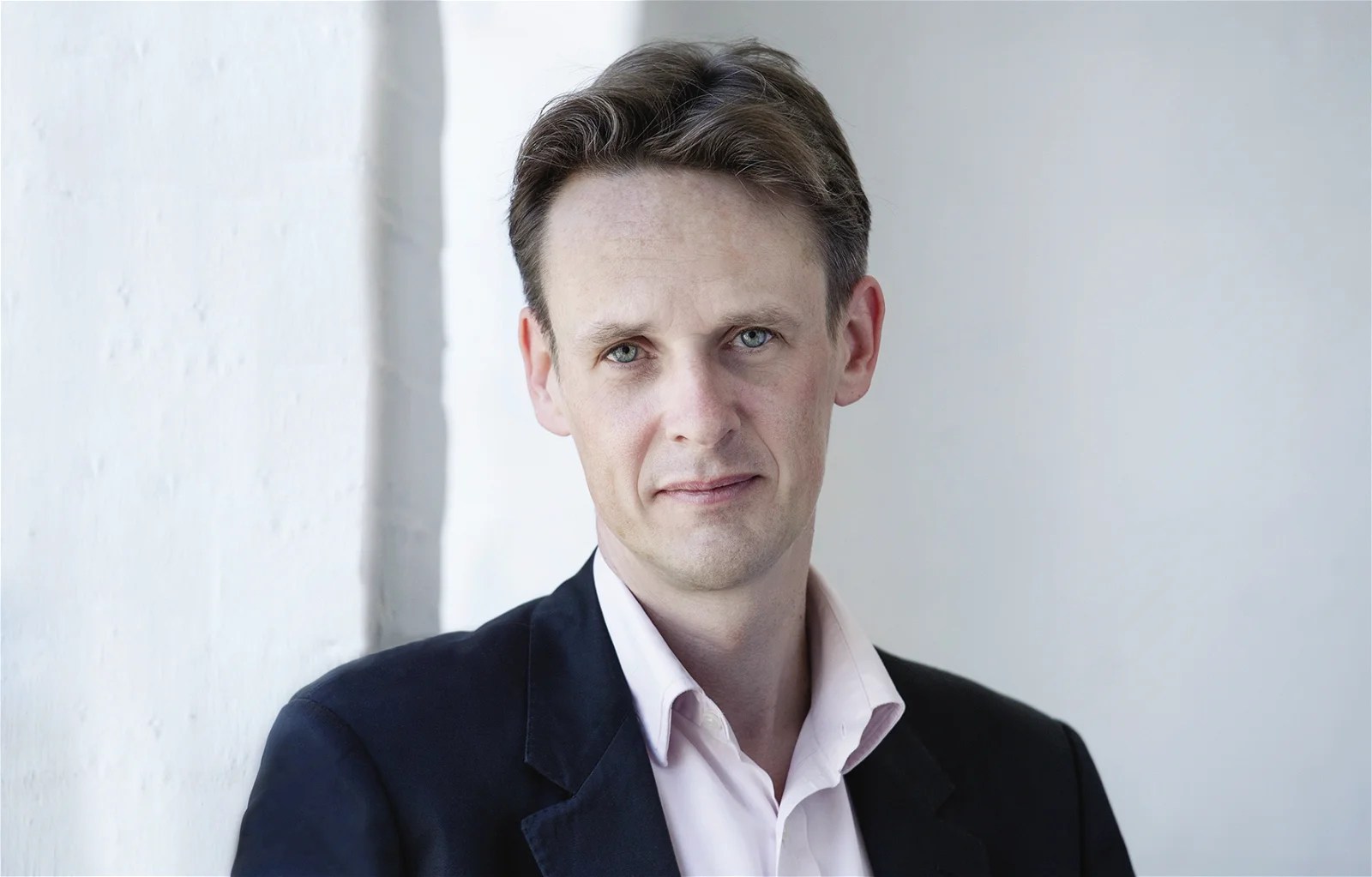
Click on the link to read more on the current CBSO concert season, and on the names for more on violinist Eugene Tzikindelean, conductor Kazuki Yamada and composer Dai Fujikara

Published post no.2,063 – Sunday 21 January 2024

In concert – Paul Lewis, CBSO / Tabita Berglund: Sibelius, Grieg & Tchaikovsky

Paul Lewis (piano), City of Birmingham Symphony Orchestra / Tabita Berglund

Sibelius Pohjola’s Daughter Op.49 (1906)
Grieg Piano Concerto in A minor Op.16 (1868)
Tchaikovsky Symphony no.5 in E minor Op.64 (1888)

Symphony Hall, Birmingham
Thursday 11th January 2024 [2.15pm]

Reviewed by Richard Whitehouse

Entering 2024 with this attractive programme, the City of Birmingham Symphony Orchestra was conducted by Tabita Berglund – the Norwegian who, though unrelated to the late, great Paavo, seems certain to become one of the most significant conductors from her generation.

It was with Sibelius that the programme commenced, Pohjola’s Daughter lying on the cusp between its composer’s nationalistically inclined Romanticism and the relative Classicism that ensued. Pointedly so given the composer derived his inspiration from the Kalevala, in which its totemic figure Väinämöinen is outwitted by the ‘daughter of the North’, as the basis for a symphonic fantasia which critiques as surely as it remodels its underlying sonata design. Other interpreters have ensured a more seamless cohesion, but the acute characterization that Berglund brought to each episode, then the emotional frisson when those main motifs come together for a powerful apotheosis, compelled admiration – as did the closing pages in which Sibelius cannily fragments form and texture so all that remains is an all-enveloping silence.

Its ubiquity across 150 years should not distract attention from the innovative qualities found in Grieg’s Piano Concerto, and if his was not a consciously recreative approach, Paul Lewis gave a performance as appealing as it was insightful. Not least in an opening Allegro whose melodic directness was always balanced by a tangible sense of where this music was headed, and culminating in a take on the lengthy cadenza that infused its rhetoric with an inevitability worthy of Beethoven. There was expressive light and shade aplenty in the central Adagio, as too an unforced progress to the heartfelt restatement of its main theme. The outer sections of the final Allegro had no lack of impetus, as if to emphasize contrast with its rapt flute melody that closes the work in a thrilling peroration where soloist and conductor were rightly as one.

After the interval, Tchaikovsky’s Fifth Symphony emerged as a forceful and combative piece with its occasional longueurs convincingly held in check. Not least in an opening movement, the simmering expectancy of whose introduction intensified throughout what followed. Any short-windedness of phrasing was absent in the Andante cantabile, its indelible horn melody serenely intoned by Elspeth Dutch then its interplay between slow-burning eloquence and violent interjections of the ‘fate’ theme astutely judged on route to a warmly resigned coda.

Ostensibly an interlude, the Valse has a charm and, in its central trio, insouciance as belies its formal ingenuity that Berglund conveyed in full measure. Nor was there any sense of overkill as the Finale pursued a purposeful but never headlong course – its initial restatement of the main theme exuding an expressive focus matched by that of its climactic reappearance, here without risk of bathos in what brought the performance to a decisive and affirmative close. Certainly, the composer’s doubts as to any ‘insincerity’ proved unfounded on this occasion. It also confirmed a rapport between Berglund and the CBSO which will hopefully continue. Next week, however, brings the return of Kazuki Yamada for a wide-ranging programme of Berlioz, Walton and the world premiere of a newly commissioned work from Dai Fujikura.

Click on the link to read more on the current CBSO concert season, and on the artist names for more on Tabita Berglund and Paul Lewis

Published post no.2,054 – Friday 12 January 2024

In concert – Alban Gerhardt, CBSO / Kazuki Yamada: Straight from the Heart

kazuki-yamada

Alban Gerhardt (cello, below), City of Birmingham Symphony Orchestra / Kazuki Yamada (above)

Anderson Litanies (2018-19) [CBSO Centenary Commission: UK premiere]
Dvořák Symphony no.7 in D minor Op.70 (1884-5)

Symphony Hall, Birmingham
Wednesday 30 June 2021 (6.30pm)

Written by Richard Whitehouse Photo of Alban Gerhardt courtesy of Kaupo Kikkias

Losing the greater part of the City of Birmingham Symphony Orchestra’s schedule across the past two seasons has meant postponing many of its ‘Centenary Commissions’, but of those which have been rescheduled, none was more keenly anticipated than that of Julian Anderson’s Litanies.

Anderson produced four works during his tenure as the CBSO’s Composer-in-Residence over 2001-5, this new piece renewing its formal and expressive archetypes by fresh and intriguing means. The first of three continuous sections presents cello and orchestra – its modest forces including double wind, harp and piano, their pitches modified by a quarter-tone – as sparring partners in propulsive, toccata-like music. This gradually mutates into a central slow section, whose fraught lyricism intensifies (with unexpected if effective assistance from the orchestra) towards a chorale in memory of Oliver Knussen. From here an increasingly animated cadenza leads to a capricious, dance-like final section that culminates in a splenetic orchestral outburst; the soloist then resuming for a soulful postlude which brings about a calmly equivocal close.

Alban Gerhardt (below) made the most of some finely gauged technical challenges, as he overcame passing vagaries of sound-balance (and what appeared to be a leg injury) to give a confident realization of a piece already heard in Paris, Örebro and Lausanne. The CBSO was no less assured under Kazuki Yamada; if balance between strings and wind occasionally lost focus (second violins placed further to the rear of the platform than would normally be the case), this did little to offset the attractions of a notable addition to the contemporary repertoire.

During a break for platform rearrangement, the CBSO’s Principal Guest Conductor spoke of his gratitude that audiences were again able to attend live concerts. Something of this evident pleasure came through the ensuing performance of Dvořák’s Seventh Symphony – not least an opening Allegro that, despite a few tentative string entries, undoubtedly had the measure of its stoic defiance and underlying seriousness of purpose. Best was a coda whose dramatic initial stages subsided effortlessly and inevitably into sombre rumination towards the close.

The highlight, however, was a slow movement whose Poco adagio marking was studiously observed – Yamada infusing the emotional ebb and flow of a movement whose formal follow -through can seem fitful with unfailing poise, the CBSO wind eloquent in their contribution. Nor was anything amiss in the Scherzo, its ‘furiant’ rhythm audible not just in the trenchant outer sections but also the trio where its simmering presence ensured no let-up in tension on route to a subtly modified reprise then explosive coda. The final Allegro capped the reading accordingly – Yamada never rushing its stealthy alternation between starkness and lyricism, while ably negotiating several testing changes in tempo as the composer ratchets up tension going into an apotheosis whose inherent fatalism was enhanced by the resplendent playing.

A gripping performance, then, as was met with a suitably enthusiastic response. The CBSO is back this Friday with altogether lighter fare for a programme of Summer Classics (including The Lark Ascending), which is conducted by Michael Seal and presented by Andrew Collins.

You can find information on the CBSO’s Summer Classics concert at their website. For more information on composer Julian Anderson, click here – and for more on cellist Alban Gerhardt, visit his website here

In concert – Karen Cargill, CBSO / Mirga Gražinytė-Tyla: Mirga conducts Weinberg

Mirga

Karen Cargill (mezzo-soprano, below), City of Birmingham Symphony Orchestra / Mirga Gražinytė-Tyla (above)

Weinberg Rhapsody on Moldavian Themes Op.47/1 (1949)
Mahler Rückert-Lieder (1901-02)
Weinberg Symphony no.3 in B minor Op.45 (1949-50, rev. 1960)

Symphony Hall, Birmingham
Wednesday 23 June 2021 (6.30pm)

Written by Richard Whitehouse Photo of Karen Cargill courtesy of Nadine Boyd Photography

The music of Mieczysław Weinberg has been a prominent feature in the City of Birmingham Symphony Orchestra’s programmes with its music director Mirga Gražinytė-Tyla, and the Rhapsody on Moldavian Themes duly started this latest of the orchestra’s concerts in impressive fashion.

Written when Soviet composers were under intense pressure to create music of a populist – or rather, nationalistic – nature, its recourse to melodies emanating from the region of Bessarabia (from where the composer’s parents hailed) draws directly on a lineage from Liszt to Bartók and Kodály. Weinberg’s handling of these, in its subtle take on a slow-fast trajectory, is never less than assured. MGT undoubtedly had its measure, whether in the ruminative opening with its plangent woodwind or the boisterous later stages when brass comes irresistibly to the fore.

Itself a revival (having been played at Symphony Hall in 2019 then at that year’s Proms), the Third Symphony is a more considered response to the anti-formalist campaign spearheaded by Andrei Zhdanov with the intention of making Soviet music more accountable to its public. Hence the inclusion of Belorussian and Polish folksong, though Weinberg is mindful to offset these with a formal rigour as, in the initial Allegro, ensures an emotionally restless unfolding to a coda shot-through with foreboding – one of several passages likely made more explicit in the subsequent revision. Here, as in the wistful second theme (akin to what Malcolm Arnold was writing around this time) then a climactic transition heading into the reprise, the CBSO’s playing underlined its ongoing affinity with this music which held good through to the close.

Hardly less idiomatic was the scherzo’s interplay of capricious with a more sardonic humour, then the Adagio’s sustained yet cumulative progress towards a climax of stark tragedy – only slightly pacified in the inward closing phase. If the animated finale strives to secure an overly affirmative ending, it was a measure of this account that any such optimism was held in check until the peremptory last bars. Weinberg could scarcely have hoped to hear a more perceptive performance: good to hear both this and the Rhapsody were being recorded for future release.

Between these pieces, Karen Cargill joined the CBSO for Mahler’s Rückert-Lieder (evidently the first time the orchestra has given them since baritone Olaf Bär with Simon Rattle in 1992). She drew a keen irony from Blicke mir nicht in die Lieder, then rendered Ich atmet’ einen linden Duft with appealing deftness. With its fugitive writing for woodwind and brass, and a fervent climax capped by garish arabesques from piano, Um Mitternacht is a difficult song to bring off but was notably effective, and the only disappointment was a rather inert take on Liebst du um Schönheit – Max Puttmann’s sub-Léhar orchestration at least partly to blame. Nor was Ich bin der Welt abhanden gekommen ideally transcendent, yet the eloquence of Cargill’s response left no doubt concerning its status as arguably the greatest orchestral Lied.

A judiciously planned concert, then, in which the rapport between orchestra and conductor came through these past 15 months unscathed. The CBSO returns next Wednesday with its principal guest conductor Kazuki Yamada in a programme of Julian Anderson and Dvorák.

You can find information on the CBSO’s next concert at their website

In concert – Piotr Anderszewski, CBSO / Omer Meir Wellber: Bartók & Bruckner

Piotr Anderszewski (piano), City of Birmingham Symphony Orchestra / Omer Meir Wellber (above)

Symphony Hall, Birmingham
Tuesday 10 March 2020

Bartók Piano Concerto no.3 (1945)
Bruckner Symphony no.6 in A major (1879-81)

Written by Richard Whitehouse

It is a measure of how far Bruckner’s Sixth Symphony has come from being one that even dedicated exponents avoided to one relative newcomers tackle as a way into this composer. The indisposition of Mirga Gražinytė-Tyla could have seen its removal from this evening’s programme, though Omer Meir Wellber (who for the past season has been chief conductor of the BBC Philharmonic, among his portfolio of notable positions) was clearly unfazed by this most technically exacting and emotionally unpredictable among Bruckner symphonies.

As was evident from the start of the Majestoso, the City of Birmingham Symphony’s violins rendering its indelible rhythm with real incisiveness and Wellber duly steering a purposeful course through this most animated of Bruckner’s symphonic movements, while never at the expense of those more lyrical and monumental themes to come. The climactic transition into the reprise was thrillingly done, and how persuasively Wellber pointed up the coda’s breath-taking modulations then its surging peroration whose sudden slowing-up was ideally judged. The Adagio was hardly less fine, with the CBSO strings securing burnished eloquence in its alternation between lament and rapture – underpinned by a majesty no less tangible than that in the following symphonies for all its restraint and, in the closing pages, gentle evanescence.

Other conductors might have found greater wit and insouciance in the Scherzo, but Wellber yielded to few in his delineating of its quizzical and propulsive gestures; nor did the trio want for elegance, for all its final phrase was ‘leant on’ a little too insistently. Notoriously difficult to make cohere, the Finale felt all of a piece with what went before – Wellber mindful that its ultimate affirmation is not without its quixotic or even ironic asides; moreover, that its formal divisions are secondary to its being in constant transition, on the way to an apotheosis where this movement audibly chases its tail as an unlikely and even uproarious means of bringing the work full circle. Quite a piece and quite a reading as set the seal on a performance that, if not the last word as interpretation, was never less than confident and assured in its traversal.

Coupling Bruckner with Bartók might seem a risky strategy but, in the event, the Austrian’s ‘cheekiest’ symphony followed-on ideally from the Hungarian’s deftest piano concerto. Piotr Anderszewski’s (above) take on the Third was one of judicious touches, not least an initial Allegretto tougher and more demonstrative than usual, without sacrificing this music’s innate sense of ingratiation. What followed was arguably too slow for an Andante, though how acutely the pianist brought out its ‘religioso’ marking in those poised exchanges of soloist and strings then woodwind – the brief central scherzo a ‘night music’ as delectable as it was evocative. Nor did Anderszewski under-characterize the final Allegro, its underlying vivacity accorded heft and not a little ambiguity on route to the most agile and uninhibited of Bartók’s codas.

A successful concert, then, which should certainly find favour on the (regrettably truncated) European tour the CBSO now undertakes. It is back in Symphony Hall for Verdi’s Requiem, then a varied programme that features the UK premiere of Julian Anderson’s Cello Concerto.

Further listening

Here is a Spotify playlist of music from the concert. The CBSO have not recorded the Bruckner before there is a recent version available from their former chief conductor, Sir Simon Rattle, and the London Symphony Orchestra. The playlist also includes the CBSO, Rattle and pianist Peter Donohoe in a 1992 recording of the Bartók:

For further information on the current season of CBSO concerts, visit the orchestra’s website