In concert – Stewart Goodyear, CBSO / Ilan Volkov: Ives, Zappa, Lewis & Gershwin

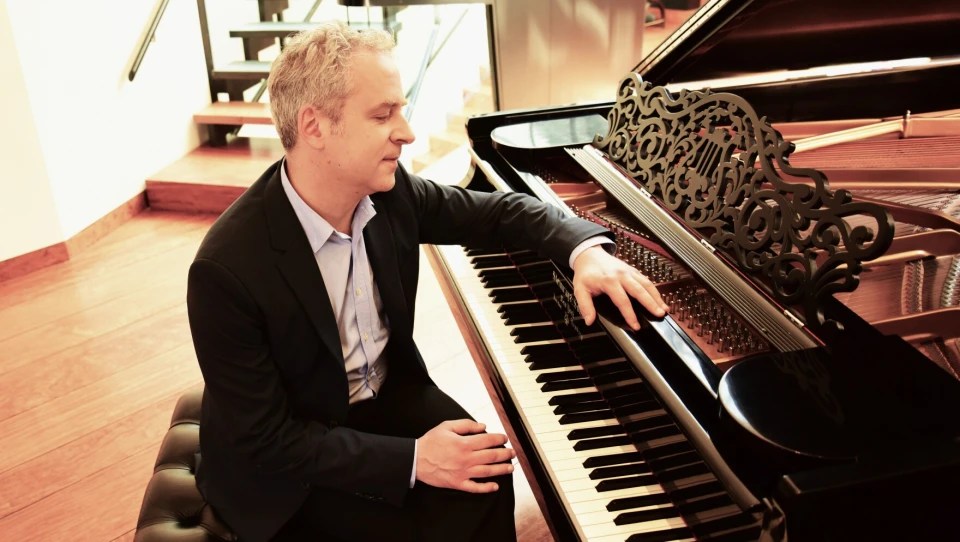
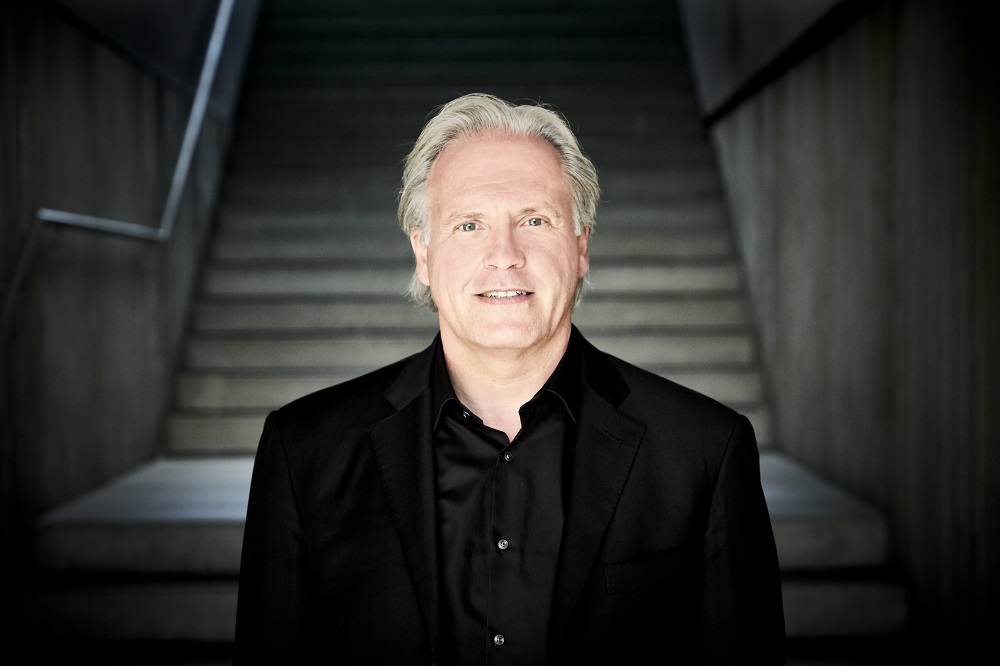
Stewart Goodyear (piano), City of Birmingham Symphony Orchestra / Ilan Volkov (above)

Ives Three Places in New England (1911-14, rev. 1929)
Zappa Bob in Dacron and Sad Jane (1982-3)
Lewis Memex (2014)
Gershwin orch. Grofé Rhapsody in Blue (1924, rev. 1942)

Symphony Hall, Birmingham
Wednesday 27 March 2024

Reviewed by Richard Whitehouse

Ilan Volkov is always a welcome presence on the Symphony Hall podium, and this evening he conducted the City of Birmingham Symphony Orchestra in a fascinating programme of works by American composers – three of them established in music notably removed from classical.

The concert was framed by what have now become repertoire pieces, but Ives’s Three Places in New England had to wait over half a century to be accorded this status. Using what sounded to be the most recent edition, Volkov stressed its late-Romantic impulsiveness and rhetorical eloquence, though some over-emphatic pauses or phrasing slightly undersold the cumulative majesty of The Saint Gaudens and coursing energy of Putnam’s Camp – which latter still teetered (rightly) on chaos at its close. If the build-up in The Housatonic at Stockbridge felt unduly precipitate, Rachel Pankhurst’s rendering of its cor anglais melody had ideal pathos.

The three decades since Frank Zappa’s untimely death have brought into focus his sheer range of musical preoccupations, though his pair of early 1980s albums with the London Symphony Orchestra made plain that being one of rock music’s finest guitarists and leading provocateurs was never enough. Despite their linkage via a ballet with its somewhat dubious scenario, Bob in Dacron and Sad Jane are individual entities and their respective two movements underline Zappa’s concern for musical and expressive diversity – whether in the reckless overkill of the male protagonist or halting fatalism of the female. Volkov secured dedicated playing from the CBSO as brought out Zappa’s debt to ‘third stream’ jazz as much as his modernist forebears.

George Lewis is another figure whose creativity ranges over multiple media – not least that of the orchestra which, thanks not least to Volkov’s advocacy, has gained some familiarity in the UK. Its title referring to a theoretical device for establishing connections across an otherwise unregulated body of information, Memex is typical of the composer through its complexity of textures which affords a heady virtuosity but also a measure of subtlety and inwardness, not least in those final stages when the earlier volatility gradually coalesces into something akin to resolution; as if all that information was, if not dispersed, at least finding discipline. Such, at least, was the impression left by this committed reading of a striking and absorbing piece.

It might have been a conceptual leap too far from here to Gershwin’s galvanizing of the ‘jazz age’ aesthetic almost a century earlier, though Rhapsody in Blue has lost relatively little of its edge during the interim – especially when Stewart Goodyear projected the steely spontaneity of its solo part with such gusto. Admittedly the large orchestral forces (a feature of each work heard tonight) lacked a degree of co-ordination in tutti sections, but Volkov was at one with his pianist in conveying the breezy and often brittle excitement of music which sounded as   if evolving in real-time – not least the final stages that emerged as a high-octane apotheosis.

No little excitement, then, was generated over the course of this performance as of this concert overall: just the sort of event the CBSO should be putting on each season, which latter would certainly be the poorer were artists such as Volkov not encouraged to follow their convictions.

Click on the link to read more on the current CBSO concert season, and on the names for more on pianist Stewart Goodyear, conductor Ilan Volkov and composers Frank Zappa and George Lewis.

Published post no.2,133 – Saturday 30 March 2024

In concert – Anu Komsi, CBSO / Sakari Oramo: Sibelius Tempest Suite & Sypmhony no.7; Richard Strauss & Merikanto

Anu Komsi (soprano), City of Birmingham Symphony Orchestra / Sakari Oramo (above)

Sibelius The Tempest (1925-6) – Suite no.1 Op.109/ 2
Richard Strauss Vier letzte Lieder, AV150 (1948)
Merikanto Ekho (1922)
Sibelius Symphony no.7 in C major Op. 105 (1923-4)

Symphony Hall, Birmingham
Wednesday 28 February 2024

Reviewed by Richard Whitehouse Pictures (c) Hannah Blake-Fathers

Could it really be 15 years since Sakari Oramo last conducted the orchestra of which he was music director for a decade? Time has passed, but his rapport with the City of Birmingham Symphony Orchestra was evident throughout what proved a well-planned and finely executed concert.

Sibelius featured prominently during Oramo’s tenure, with recorded and live cycles of the symphonies, so it was natural his music frame this programme. His music for The Tempest is the most diverse of his theatre works – the First Suite drawn from this lavish score opening with a searing evocation of The Oak Tree, before heading into a characterful Humoreske then Caliban’s Song with its telling bizarrerie. The Harvesters reminded of Sibelius’s gift for ‘light music’, as too the animated Canon and insinuating Scene, to which the plangent Berceuse then ominous Interlude made for startling contrast. A truncated version of The Tempest music that provided the prelude followed on with due seamlessness – its teetering on the metaphorical edge brought up abruptly if convincingly in this gripping performance.

Anu Komsi (above) then joined the orchestra for Richard Strauss’s Four Last Songs – a sequence which often gains emotional gravitas as it proceeds, though a slight edginess in Frühling gave it greater expressive ambivalence prior to the fatalism of September – the most perfectly realized of these songs. The growing rapture of Beim Schlafengehen featured a poised violin solo from Eugene Tzikindelean, then Komsi gave of her eloquent best in Im Abendrot – its euphonious postlude accorded suitably spacious treatment by Oramo as this evanesces towards eternity.

Komsi returned after the interval with what must have been a first hearing in Birmingham for Ekho, a short but arresting scena by Finnish composer Aarre Merikanto. Written just after his opera Juha, at the start of his most innovative period, this draws on the example of Sibelius’s Luonnotar along with the post-Impressionism of Koechlin and Roussel. Its intricately detailed textures complement a vocal line as virtuosic technically as it is audacious expressively, one with which Komsi was in her element as this music heads almost intuitively to a furtive close.

Fascinating to recall while Merikanto was pursuing so fractured a musical discourse, Sibelius was working towards his most integrated statement. Oramo has given many performances of the Seventh Symphony, but the present one felt exceptional in the ease and inevitability of its formal follow-through. The eliding from one section to the next was realized with a rightness which, as with the motivic constituents from which this work emerges, never drew attention to itself other than during moments of greatest expressive focus – notably those appearances of the trombone theme which ensure unity, even when the music retreats from its emotional apex into a coda not so much final as immovable. Nor was this achieved through conscious interpretation, Oramo setting a course that allowed the musicians simply to play the music.

This impressive performance rounded off a no less impressive evening. Before the last work, Oramo spoke about the significance his CBSO tenure had for his conducting and his regret this ‘reunion’ had taken so long. Hopefully his next appearance will not be so long in coming.

Click on the link to read more on the current CBSO concert season, and on the names for more on soprano Anu Komsi and conductor Sakari Oramo.

Published post no.2,106 – Sunday 3 March 2024

In concert – Maria Dueñas, CBSO / Kazuki Yamada: Beethoven Violin Concerto & Elgar ‘Enigma’ Variations

Maria Dueñas (violin, above), City of Birmingham Symphony Orchestra / Kazuki Yamada (below)

Beethoven Violin Concerto in D major Op. 61 (1806)
Elgar Variations on an Original Theme, ‘Enigma’, Op. 36 (1898-9)

Symphony Hall, Birmingham
Thursday 22 February 2024

Reviewed by Richard Whitehouse Picture (c) Tam Lan Truong

Having given its ‘first part’ yesterday evening, Kazuki Yamada and the City of Birmingham Symphony Orchestra moved on to ‘Elgar & Beethoven: Part 2’ this evening, with an astute coupling of the latter’s Violin Concerto being followed by the former’s ‘Enigma’ Variations.

Anyone having heard Maria Dueñas in Lalo’s Symphonie espagnole at last year’s Proms will know she is a violinist destined for great things, as was reinforced her take on the Beethoven. Admittedly she and Yamada were not consistently as one in its lengthy first movement – the soloist’s tendency to rhapsodize and to tease out expressive nuance jarring, however slightly, with the conductor’s forthright assertiveness in tuttis. Yet there was no absence of insight on either part, such undeniable eloquence continuing through a central Larghetto that was more adagio as Dueñas conceived it, though which still conveyed a rapt inwardness. The ensuing Rondo lifted this mood appreciably, its impulsive main theme and whimsical episodes deftly eliding into a purposeful traversal of a finale whose conclusion was nothing if not decisive.

As with her recent recording of this concerto, Dueñas played her own cadenzas. That for the first movement had Bach-like deliberation and a harmonic astringency which readily held the attention; if that connecting the latter two movements seemed a little too protracted, and that towards the close of the finale rather offset its overall momentum, there could be no doubting her underlying conviction. She duly acknowledged the considerable applause with a suitably serene, never cloying arrangement for violin and strings of Fauré’s early song Après un rêve.

In his initial remarks, Yamada recalled conducting a Japanese brass band in the First Pomp and Circumstance March as his first experience with Elgar, and this account of the ‘Enigma Variations amply reaffirmed his identity with the composer. Not that this was an integrated or seamless account – Yamada’s halting, even ambivalent take on the Theme intensified in the first variation and, while the swifter variations had no lack of character or impetus, it was in such as the fifth variation’s suffused earnestness with whimsy that this reading left its mark.

On one level the Enigma is a forerunner of the ‘concerto for orchestra’ with its emphasizing various soloists – not least viola in the sixth variation, dextrously negotiated by Adam Römer, or cello in the 12th where Eduardo Vassallo was at his ruminative best. Initially a little stolid, Nimrod built to a culmination of real pathos, and even finer was Yamada’s take on the 10th variation for an intermezzo of unfailing poise and deftness. A tangible atmosphere pervaded the 13th variation – uncertainty as to its dedicatee just part of its fascination, with those veiled allusions to Mendelssohn elegantly rendered by Oliver Janes. From here to the final variation in all its confidence and anticipation was to be recall the impact this music made at the end of the 19th century, Yamada steering it with unforced rightness towards a resounding peroration. Overall, a performance full of insight and one hopes that Yamada will be continuing his Elgar exploration in future seasons. Next week, though, brings two concerts for which former music director Sakari Oramo will be returning to this orchestra for the first time in some 15 years.

Click on the link to read more on the current CBSO concert season, and on the names for more on violinist Maria Dueñas and conductor Kazuki Yamada. Arcana’s Listening to Beethoven series will reach the Violin Concerto soon!

Published post no.2,101 – Tuesday 27 February 2024

In concert – Natalya Romaniw, CBSO / Vassily Sinaisky: Beethoven and Tchaikovsky

Natalya Romaniw (soprano, above), City of Birmingham Symphony Orchestra / Vassily Sinaisky (below)

Tchaikovsky Romeo and Juliet Fantasy Overture (1869, rev. 1872 & 1880)
Tchaikovsky Eugene Onegin, Op.24 (1877-78) – Letter Scene
Beethoven Ah! Perfido, Op.65 (1796)
Beethoven Symphony no.2 in D major Op.36 (1801-2)

Symphony Hall, Birmingham
Wednesday 14 February 2024

Reviewed by Richard Whitehouse

It might have been billed as a concert for Valentine’s Day and, though there was little about tonight’s programme to reinforce ‘true love reigns supreme’, it did make for a welcome new collaboration between the City of Birmingham Symphony Orchestra and Vassily Sinaisky.

Whether or not there is any more personal significance in Tchaikovsky’s Romeo and Juliet, it remains a potent encapsulation of Shakespeare’s tragedy. The brooding introduction seemed a little inhibited, but Sinaisky brought suitable incisiveness to the warring families and growing ardour to the love music. Nor was there any lack of drama as this ‘fantasy overture’ unfolded to its fateful denouement – after which, the benedictory chorale as Friar Laurence movingly apostrophises these doomed lovers brought an eloquent response from the CBSO woodwind.

Tchaikovsky’s reputation as an opera composer may have altered markedly over the decades, but Eugene Onegin has held the stage since its premiere; the Letter Scene, in which Tatyana knowingly risks all for love of a cynical anti-hero, its highlight. The Welsh-Ukrainian soprano Natalya Romaniw responded with real impulsiveness and, if her projection was too full-on to convey the emotional ambivalence and fragility of its central stages, the joyous abandon of its beginning and reckless determination at its close were duly rendered with unfailing charisma.

Romaniw sounded even more in her element as the jilted lover of Pietro Metastasio’s lyric Ah! Perfido which Beethoven set in his mid-20s. The latter wrote few such concert arias, but the immediacy of his response can hardly be gainsaid and Romaniw gave it her all – whether in its despairing introduction, the more consoling yet hardly untroubled expression that follows, or the steely resolve of those closing pages where the former ‘loved one’ is denounced in no uncertain terms. As in the Tchaikovsky, it was a pity neither text nor surtitles were provided.

Quite how Beethoven’s Second Symphony fitted into tonight’s conception was unclear, other than with its determination to defy fate and live life to the full, but Sinaisky evidently relished putting the CBSO through its paces – not least a first movement whose imposing introduction prepared for an Allegro of driving impetus and emotional fervour ideally intertwined prior to the blazing coda. Easy to underestimate, the Larghetto impressed with its lilting elegance and, in the central development, its teasing modulations – alongside a pay-off of disarming poise.

If, given its textural weight and unabashed rhetoric, this was ostensibly a performance of the ‘old school’, there was nothing portentous about Sinaisky’s take on the Scherzo – as lithe and quizzical as its trio was capricious, then the final Allegro had the character of an opera buffa ensemble refashioned for the post-Classical symphony toward which Beethoven was striving. Not the least attraction of this reading was its differentiation between soft and loud dynamics – crucial to the impact of a lengthy coda which fairly crackled with energy in its closing bars.

A gripping performance of a symphony which, while hardly unknown, is likely the least often played (albeit in the UK) of Beethoven’s nine. Sinaisky has enjoyed a productive relationship with the CBSO across the years, and it is to be hoped that this will continue in future seasons.

Click on the link to read more on the current CBSO concert season, and on the names for more on soprano Natalya Romaniw and conductor Vassily Sinaisky. To read more about the Beethoven works in the program, follow Arcana’s Listening to Beethoven series – which has already included Ah! Perfido and the Symphony no.2

Published post no.2,089 – Friday 16 February 2024

In concert – Jess Gillam, CBSO / Eduardo Strausser: Villa-Lobos, John Williams, Rimsky-Korsakov & Stravinsky

Jess Gillam (soprano & alto saxophone, above), City of Birmingham Symphony Orchestra / Eduardo Strausser

Rossini La Cenerentola (1817) – Overture
Villa-Lobos Fantasia for Saxophone, W490 (1948)
Rimsky-Korsakov arr. Glazunov/Steinberg Le Coq d’or – Suite (1908, arr. 1909)
Williams Escapades (2002)
Stravinsky L’Oiseau de feu – Suite (1910, arr. 1919)

Symphony Hall, Birmingham
Wednesday 31 January 2024

Reviewed by Richard Whitehouse. Photo (c) Robin Clewley

Brazilian conductor Eduardo Strausser made his welcome return to the City of Birmingham Symphony with a programme where three orchestral showpieces were heard alongside two pieces that gave full rein to the charismatic playing and persona of saxophonist Jess Gillam.

Although he featured the saxophone on numerous occasions, Heitor Villa-Lobos wrote just one concertante piece. His Fantasia makes a virtue out of brevity in the lively declamation of its opening movement then the motoric impetus of its finale. No slouch in either, Gillam sounded most involved (understandably so) in the central Lent – its initial melody for viola, soulfully rendered by Adam Römer, soon giving rise to an eloquent dialogue which (hardly for the first time) inferred, that in this most productive of composers, less can often be more.

More compelling overall was Escapades, a concerto drawn from his soundtrack to the Steven Spielberg film Catch Me if You Can by John Williams. A movie as promises rather more than it delivers, this features one of the most appealing of its composer’s latter-day scores with its evoking US culture in the early 1960s that the present work encapsulates to perfection. From the ominous while humorous expectancy as conjured by Closing In, via the lightly applied pathos of Reflections to the coursing energy of Joy Ride – this is Williams at something near his best and Gillam responded accordingly. A pity the contributions of double bass and vibraphone was not as prominent aurally as it was visually (maybe they should have been given more to do?), but this hardly affected the scintillating immediacy of what was heard.

Having opened proceedings with an account of the overture to Rossini’s Cinderella as deft and as scintillating as could be wished, Strausser ended the first half with a (surprisingly?) rare outing for the whole suite from Rimsky-Korsakov’s final opera The Golden Cockerel. For all the controversy aroused by its scenario, this is otherwise an archetypal example of its composer relying on technique rather than inspiration. Most of the best music can be found   in a suite made posthumously by Glazunov and Maximilian Steinberg that provides a telling portrait of Tsar Dodon – whether mired in the superstitious inertia of his palace, hapless (and helpless) on the battlefield, serenaded by the alluring Queen of Shemakha, or exuberant at his intended wedding before meeting his ‘lamentable end’ to the crowing of that pesky cockerel.

The CBSO despatched what is effectively a ‘concerto for orchestra’ before its time with real aplomb, then sounded no less committed in the second of those suites Stravinsky drew from his highly Rimskian ballet The Firebird. Here the sombre aura of its Introduction segued effortlessly into Appearance… and Dance of the Firebird, the latter exuding an infectious lilt, before a plaintive take on the Princesses’ Khorovod. Others have found greater abandon in the Infernal Dance, but the clarity and articulation conveyed here were beyond reproach. Strausser then steered a secure course through the Lullaby, its folk-derived bassoon melody plaintively intoned by Nikolaj Henriques, into a Finale whose hymnic jubilation set the seal on an evening where the absence of any Austro-German element proved its own justification.

Click on the link to read more on the current CBSO concert season, and on the names for more on saxophonist Jess Gillam, conductor Eduard Strausser and composer John Williams

Published post no.2,075 – Friday 2 February 2024