
Lady Macbeth of Mtsensk Op.29 (1932-33)
Opera in Four Acts (Nine Scenes)
Music by Dmitri Shostakovich
Libretto by Alaxander Preys and the composer after the novella by Nikolai Leskov
English translation by David Poutney
Semi-staged performance, sung in English with English surtitles
Katerina – Amanda Majeski (soprano); Boris/Ghost of Boris – Brindley Sherratt (bass); Zinovy – John Findon (tenor); Mill-hand/Priest – Thomas Mole (baritone); Sergey – Nicky Spence (tenor); Aksinya/Convict – Ava Dodd (soprano); Shabby Peasant – Ronald Samm (tenor); Steward – Alaric Green (baritone); Police Sergeant – Chuma Sijeqa (baritone); Teacher – William Morgan (tenor); Old Convict – Sir Willard White (bass-baritone); Sonyetka – Niamh O’Sullivan (mezzo-soprano)
BBC Singers, Chorus of English National Opera, Brass Section of English National Opera, BBC Philharmonic Orchestra / John Storgårds
Ruth Knight (director)
Royal Albert Hall, London
Monday 1 September 2025
Reviewed by Richard Whitehouse Photos (c) BBC / Andy Paradise
In this 50th anniversary year of Shostakovich’s death it made sense for the Proms to schedule Lady Macbeth of Mtsensk, his second and final completed opera, in a performance reminding one of English National Opera’s commitment to this work stretching back almost four decades.
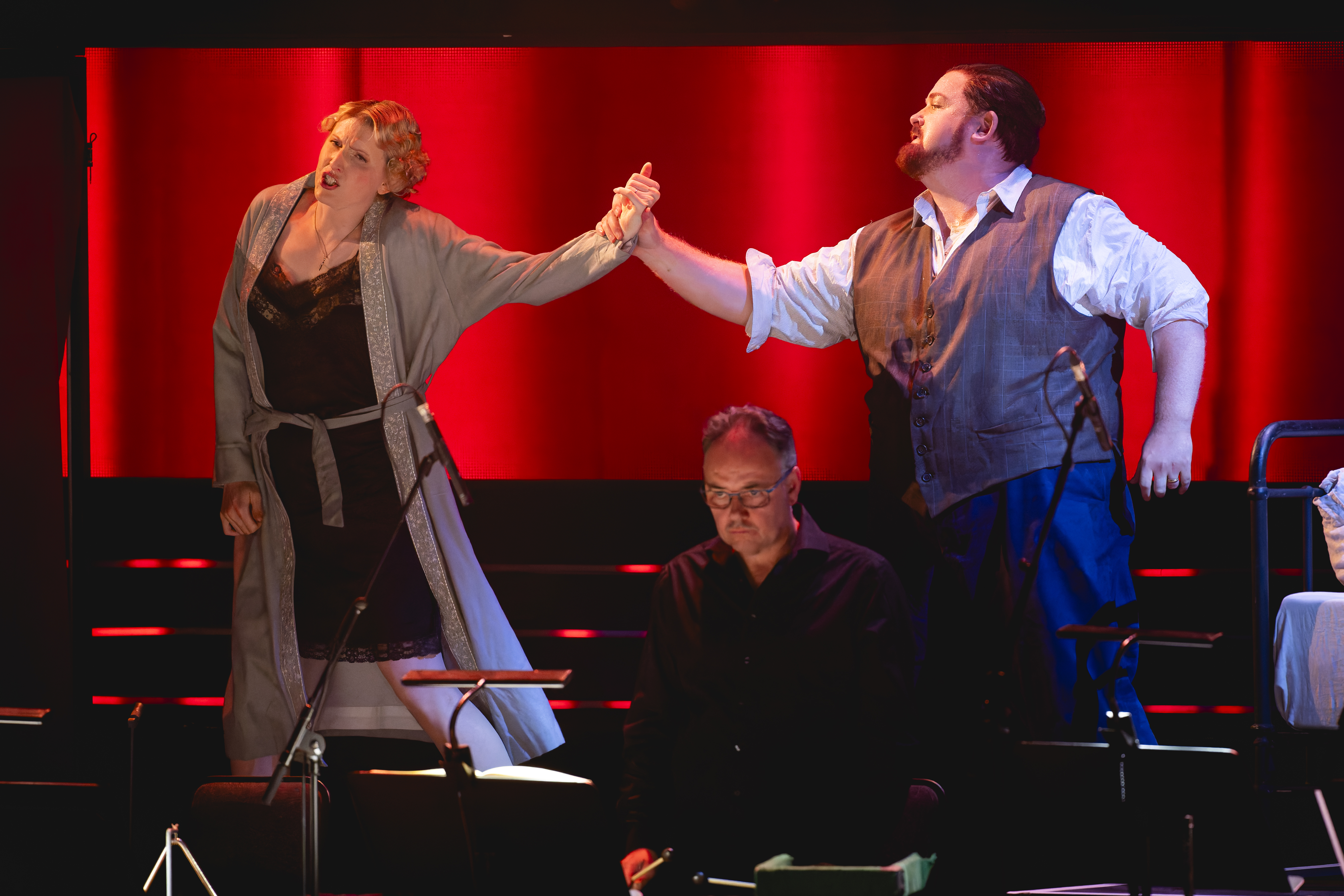
In scenic terms, the semi-staging directed by Ruth Knight was little more than a gloss on what was heard. Its framing device of the heroine in the witness box now seems a tired device that served little purpose, and the emergence of a bed at rear of the platform as a focus for sexual activity had surely passed its sell-by date at the end of the David Poutney era. More effective was the use of lighting to accentuate dramatic highpoints; incidentally reminding one such a procedure had come of age around the time that Shostakovich’s opera first appeared on stage.
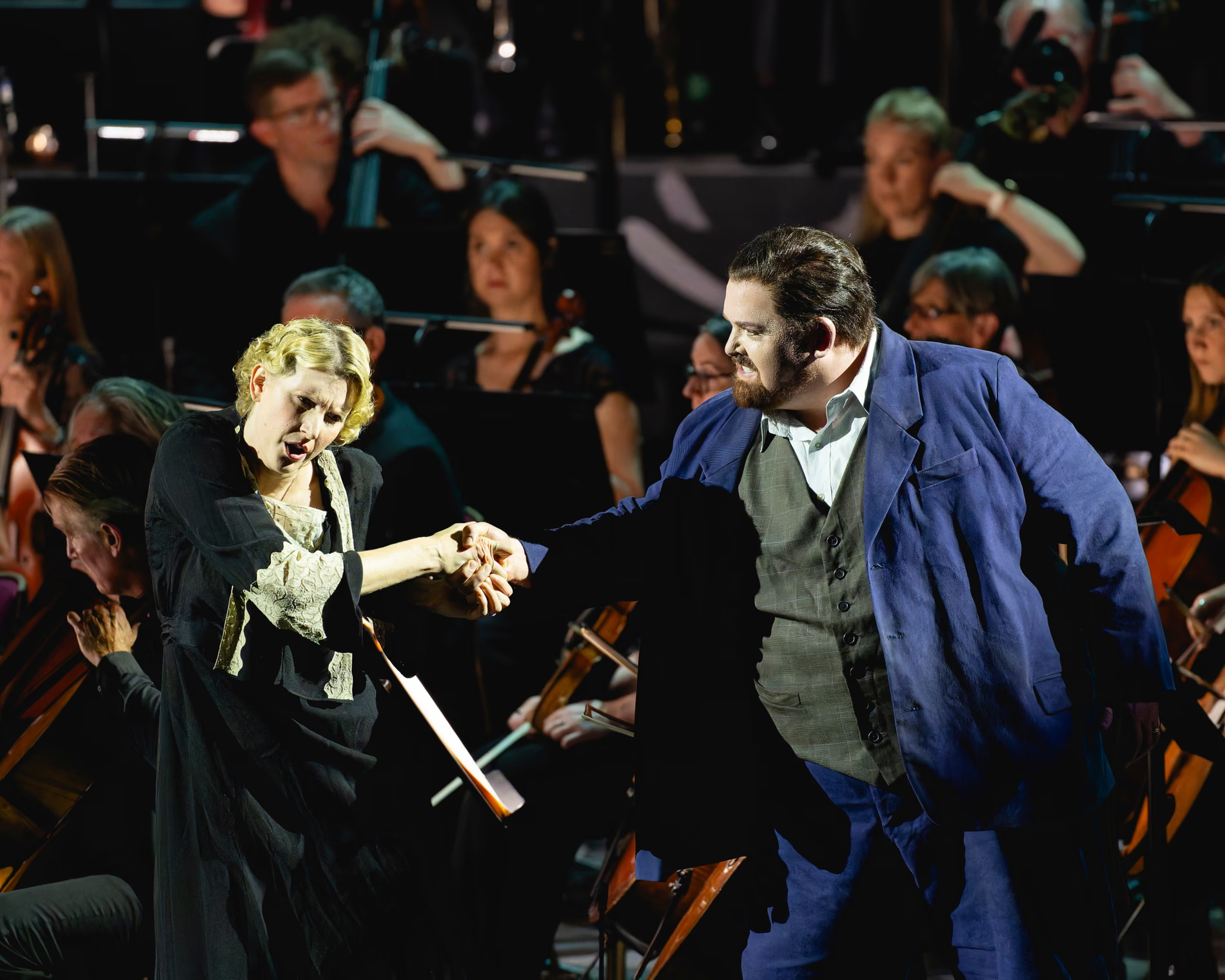
Vocally this was a mixed bag. No-one could accuse Amanda Majeski of lacking presence or, moreover, eloquence in her assumption of the title-role, yet her emotional aloofness made her seem not so much distinct as overly detached from the wretched circumstances all around her. Brindley Sharatt was a shoo-in for Boris, his boorishness yet evincing a cunning intelligence who easily held the stage – not least his latter ‘ghost’ incarnation. Nicky Spence was vocally assured but dramatically two-dimensional as Sergey and, as Zinovy, John Findon resembled more a provincial critic than a merchant, though Thomas Mole made a lively contribution as a dipsomaniac Priest with Chuma Sijeqa uproarious as the Police Sergeant. His cameo as an Old Convict found Sir Willard White in gratifyingly fine voice near the end of his eighth decade.
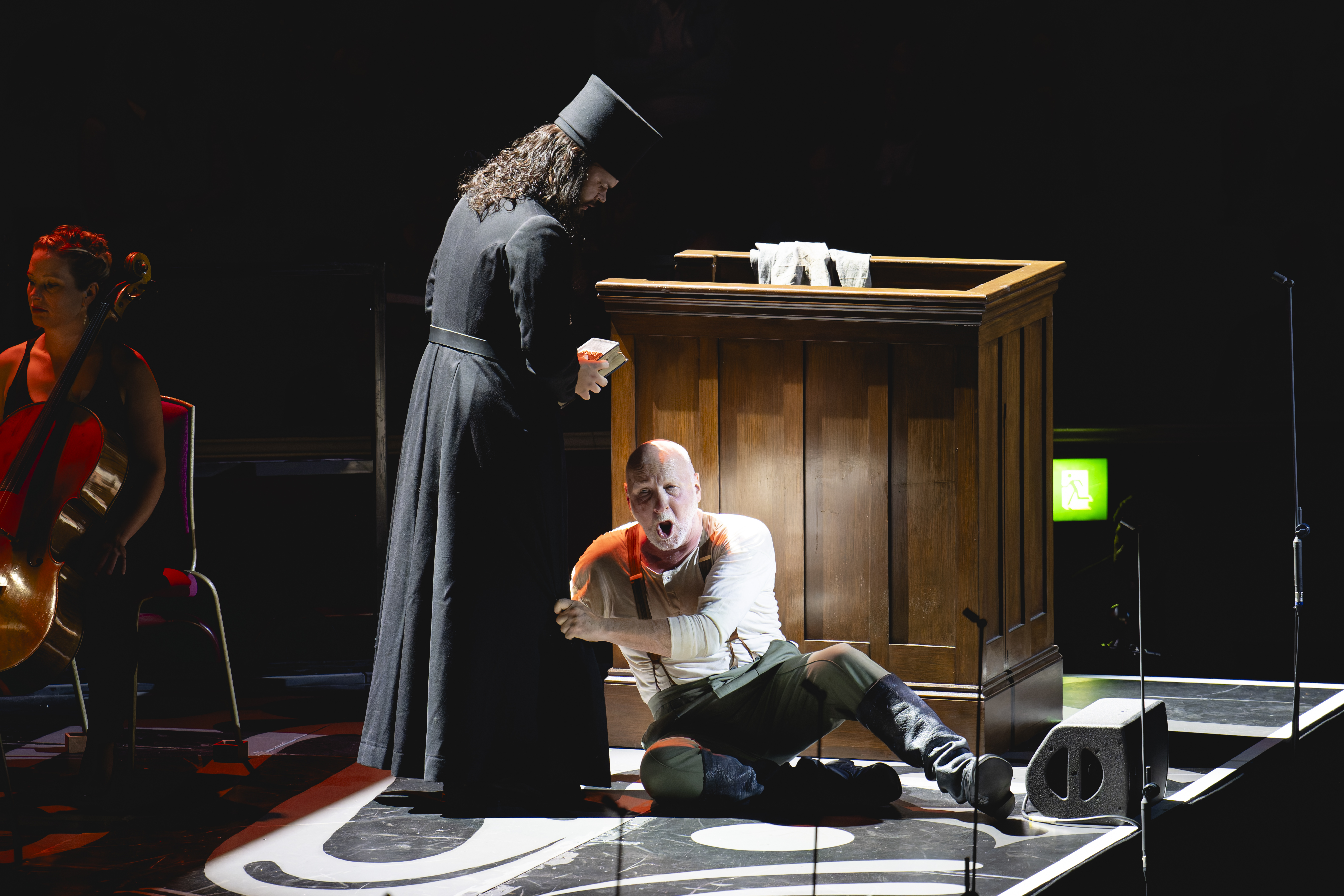
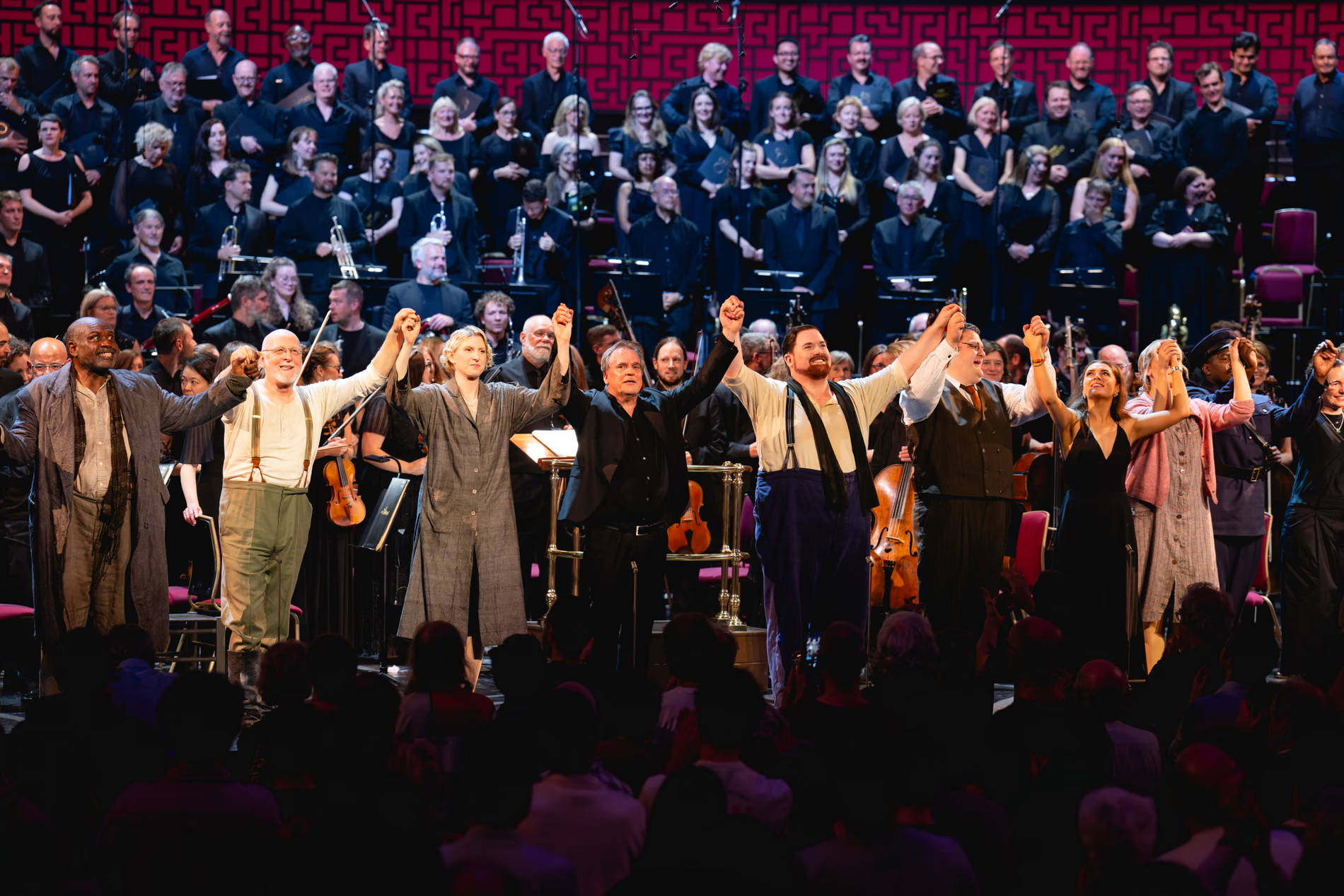
Smaller roles were generally well taken, not least Ava Dodd’s hapless Aksinya and Niamh O’ Sullivan’s scheming Sonyetka, while the ENO Chorus lacked little in forcefulness or clarity of diction, though this latter might have been felt a drawback given the frequent contrivance of Poutney’s translation – which has not aged well. Otherwise, this was very much the BBC Philharmonic Orchestra and John Storgårds’s show. Having impressed with Shostakovich symphonies over recent seasons, the latter had a sure grasp of this opera’s dramatic unfolding and paced it accordingly. No stranger to this composer’s music, his orchestra was as responsive to the seismic climaxes (suitably abetted by ENO brass) as to passages of mesmeric introspection which, in many respects, prefigure the composer Shostakovich was increasingly to become.
It has often been claimed that, had his fortunes not reversed so dramatically as on that fateful evening of 26th January 1936, Shostakovich would have continued upon his path as an opera composer. Yet there is a nagging sense that, whatever its theatrical potency, Lady Macbeth of Mtsensk is intrinsically no more than the sum of its best parts. Leaving aside the intermittent success of his and Alexander Freys’ remodelling of Nikolai Leskov’s ‘shabby little shocker’, dramatic characterization frequently seems to have been laminated onto its musical context.
If tonight’s performance never entirely banished these thoughts, it certainly gave this opera its head in what was a memorable night for orchestra, conductor and, for the ENO contingent, an impressive bowing-out as it prepares for the next phase of its existence – based in Manchester.
Click on the names to read more about soprano Amanda Majeski, director Ruth Knight, the BBC Philharmonic Orchestra and chief conductor John Storgårds. Click also for more on composer Dmitri Shostakovich, the BBC Proms and English National Opera
Published post no.2,645 – Tuesday 2 September 2025
 Arcana.fm