
In concert – Philharmonia Orchestra Music of Today: Messiaen’s Quartet for the End of Time

Mark van de Wiel (clarinet, above), Zsolt-Tihamér Visontay (violin), Karen Stephenson (cello), Tom Poster (piano)

Messiaen Quatuor pour le fin du temps (Quartet for the End of Time) (1941)

Royal Festival Hall, London
Thursday 7 March 2024 (6pm)

Reviewed by Ben Hogwood Pictures (c) Guy Wigmore (Mark van de Wiel, Zsolt-Tihamér Visontay), Marina Vidor (Karen Stephenson), Elena Urioste (Tom Poster)

The Philharmonia Orchestra’s long-running Music of Today series continued with an opportunity to experience Olivier Messiaen’s 1941 masterpiece. Given its first performance in a German prisoner-of-war camp (in what is now Zgorzelec, Poland), the Quatuor pour la fin du tempsQuartet for the End of Time – was very much a product of circumstances.

The composer, in one of his rare forays into chamber music, had just three instruments available to him, plus himself at the piano. He thrived on the restrictions, using the New Testament book of Revelation as his stimulus to create an eight-movement piece that if anything has grown in stature and relevance with every passing year.

Tonight’s venue may have been a great deal more spacious than the cramped conditions of the premiere, but the quartet here lacked nothing in close-up intimacy, the sizeable audience leaning forward in their seats to engage with the music. Initially it was the piano of Tom Poster (below) that provided a strong foundation, his spacious chords catching the chill of the dawn air in Liturgie de cristal as the other three instruments circled with attractive birdsong, the music awakening softly.

The Vocalise, pour l’Ange qui annonce la fin du temps (Vocalise, for the Angel who announces the end of time) provided a firm reality check, though here too its dramatic lines were clear and spacious rather than combative, the players continuing to find an inner serenity through Messiaen’s writing. Violinist Zsolt-Tihamér Visontay and cellist Karen Stephenson thrived on these long melodic phrases, derived from plainchant.

The emotive centre of this performance was undoubtedly the solo for clarinet, Abîme des oiseaux (Abyss of birds), an incredibly moving soliloquy played with exceptional technique by Mark van de Wiel. Some of the notes started with barely audible attack while others were at the outer limits of his volume in a performance of incredible poise and control. Standing while the other musicians sat, he also let the silences between notes speak as loudly as the phrases themselves, so that even the persistent coughing of the audience was rendered into silence.
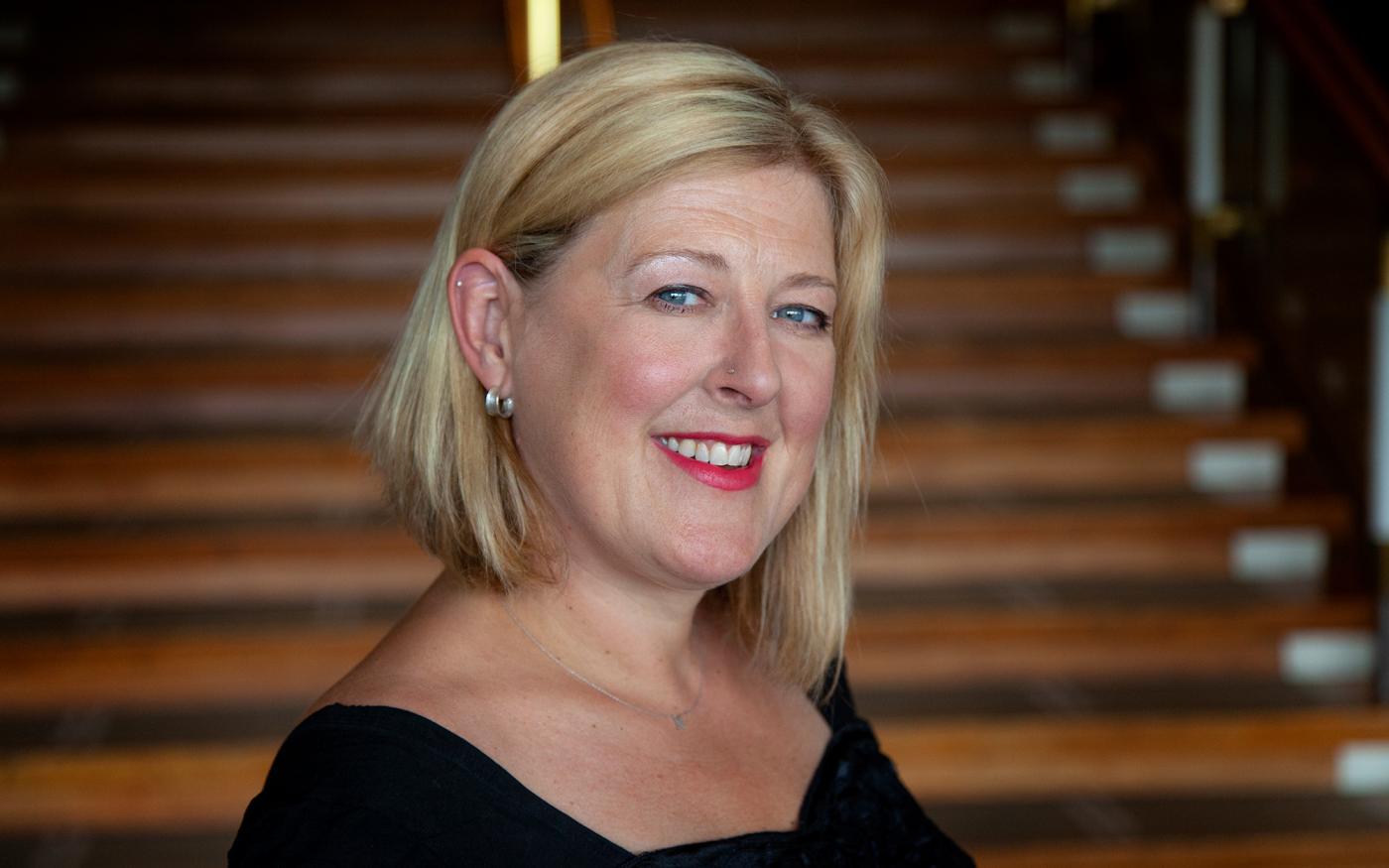
The delicate Intermède broughout out the dance elements of Messiaen’s writing, before Stephenson (above) and Poster gave a thoughtful, meditative Louange à l’Éternité de Jésus (Praise to the eternity of Jesus), beautifully played and appropriately reverent. This ensured a vivid contrast with the following Danse de la fureur, pour les sept trompettes (Dance of fury, for the seven trumpets), where the four instruments played their angular melodies with commendable precision.

Fouillis d’arcs-en-ciel, pour l’Ange qui annonce la fin du temps (Tangle of rainbows, for the Angel who announces the end of time) found Visontay (below) to the fore in the audio balance, van de Wiel slightly backward in the mix, before Visontay and Poster led us to the end itself with a radiant Louange à l’Immortalité de Jésus (Praise to the immortality of Jesus). This remarkable piece of music continues to carry a strong impact, and as the two instruments strained at the edge of audibility, Visontay reaching the highest pitch, the sense of arrival was all-consuming.

They put the seal on a memorable performance, one of the more emotive ‘rush hour’ concerts you could wish to hear, and one whose impact was felt far beyond that evening’s orchestral concert.

You can listen to a recording of Quatuor pour le fin du temps below, with Mark van de Wiel and Zsolt-Tihamér Visontay joined by cellist Mats Lidström and pianist Min-Jung Kym on the Psalmus label:

Meanwhile you can find more information on further concerts at the Philharmonia website

Published post no.2,111 – Friday 8 March 2024
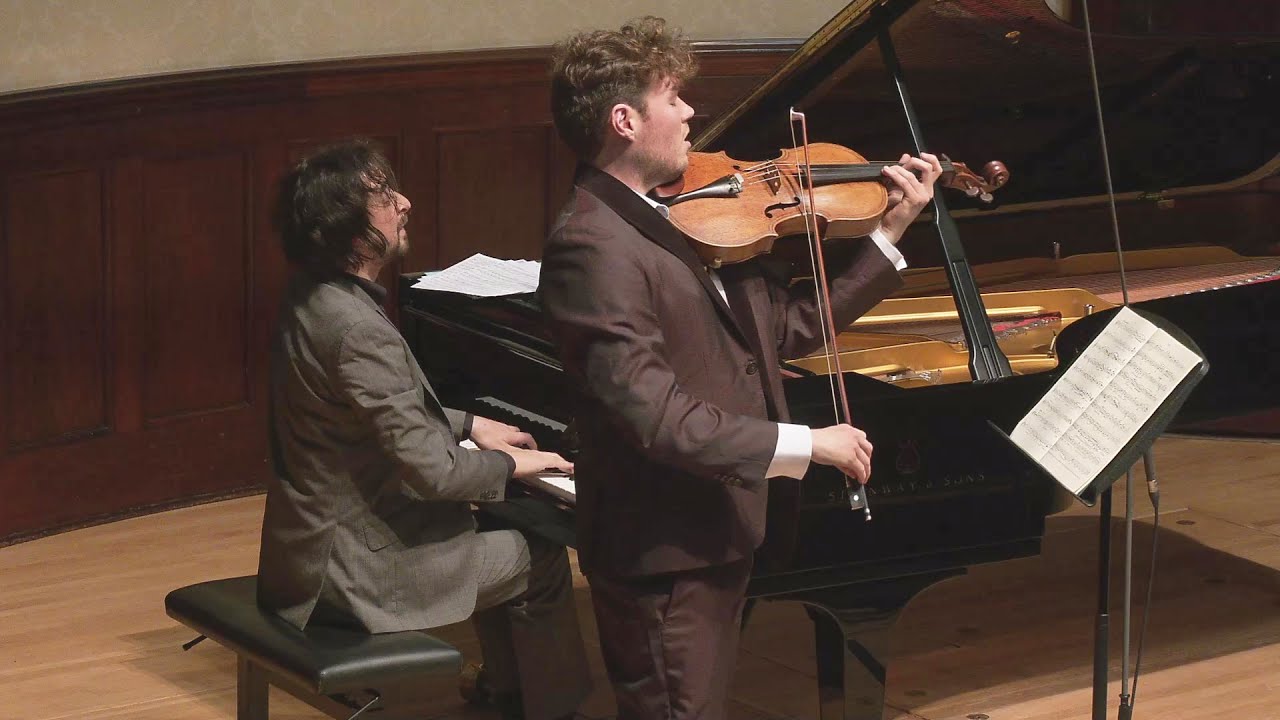
In concert – Timothy Ridout & Tom Poster: Brahms Sonatas & Schwertsik world premiere @ Wigmore Hall

ridout-poster

Timothy Ridout (viola), Tom Poster (piano)

Brahms Sonata for viola and piano in F minor Op.120/1 (1894)
Schwertsik Haydn lived in Eisenstadt (2021, world premiere)
Brahms Sonata for viola and piano no.2 in E flat major Op.120/2 (1894)

Wigmore Hall, London
Monday 10 May (review of the online broadcast)

Written by Ben Hogwood

This was, on paper, an ideal match of repertoire and performers – and it proved that way on screen too, as the Wigmore Hall served us the latest offering in its lunchtime concert program.

Timothy Ridout and Tom Poster are both beneficiaries of the invaluable Young Concert Artists Trust (YCAT) scheme and the BBC’s New Generation Artists program, of which Ridout is still a member. They are both plotting exciting paths as distinctive artists, and as a duo they enjoy an easy rapport, clearly relishing the music they play – an observation which can never be taken for granted!

The two sonatas published as Op.120 are Brahms’ final notes in chamber music, and indeed among his last works altogether. To have younger artists playing them is to reveal the youthful heart amid their autumnal colours, showing off their elusive qualities and winsome melodies.

Both works may have originated for clarinet and piano but work equally well through the burnished tones of the viola. Indeed Ridout proved with the first notes of the Sonata in F minor Op.120/1 that the range is ideal for his instrument, and the tone – not to mention Poster’s complementary piano line – was ideally weighted once he had fully secured the intonation.

The second movement had a cold shiver, thanks to the use of less vibrato, but grew warmer as it progressed. The genial Allegro grazioso was a treat, the finale more celebratory but enjoying its flowing second themes too.

The E flat sonata was if anything even more successful, lighter on its feet and with airy phrases and interplay. The first movement bobbed and weaved beautifully, especially when Ridout was playing in the higher register, which Poster clearly relished. The second movement literally rolled up its sleeves for a powerful outpouring, Ridout’s tone beautifully supple. By contrast the central section benefited from the burnished tones of the double-stopped viola. The finale’s theme and variations were well judged, thoughtful and mellow to begin with but then more capricious as they progressed, finishing with a thoroughly convincing flourish.

Between the two Brahms works was an interesting new piece by Kurt Schwertsik, commissioned by Ridout himself. Schwertsik is a Viennese composer now in his 70s, aware of his place in musical history but making original and intriguing music. This piece was characteristically elusive, under the intriguing title Haydn lived in Eisenstadt. Set in several movements, it posed questions and answers, but remained curiously unsettled. BBC Radio 3 presenter Andrew McGregor thought the piece had ended at one point, only for another two movements to follow – a situation we have all surely experienced as audience members! Ridout swept through the longer phrases of the penultimate movement against softly tolling chords from the piano, before the last movement threw furtive glances into the shadows amid bursts of activity, ending in a similar vein to early Schoenberg.

Poster ensured the harmonies were a point of focus throughout, hinting at exotic late Romanticism but never quite settling in that mood. This was a piece of intriguing thoughts and colours, a substantial utterance well worth hearing again. It proved the ideal complement to the poised Brahms sonatas around it – and the encore of the older composer’s Wie melodien, with which the concert softly concluded.

This concert is available to play for 30 days using the YouTube embedded link above.

Jennifer Pike and friends – Polish Music Day @ Wigmore Hall

Jennifer Pike (violin), Guy Johnston (cello), Tom Poster (piano)

Wigmore Hall London; Saturday 14 October 2017

Szymanowska Polonaise in F minor / Nocturne in B flat (both c1825)

Knapík Partita (1980)

Górecki Pozegnaie (2009)

Chopin Piano Trio in G minor, Op. 8 (1829)

Reviewed by Richard Whitehouse

This evening’s concert formed the final instalment of an all-day event – as curated by Jennifer Pike (above) – that surveyed Polish chamber music from the Renaissance to the present, so enabling a much wider out-look on this (not least in the UK) little explored area than is usually the case.

Even so, not many such programmes can have opened with pieces by Maria Szymanowski (née Wołowska), whose death in 1831 at only 42 robbed the musical world of an evidently fine pianist and, as evinced by the elegant Polonaise and wistful Nocturne that were played with real poise and feeling by Tom Poster (below), an able composer and the plausible link between Hummel or Field and Chopin, who was surely familiar with her output. No great rediscovery, maybe, but a welcome opportunity to open-out the context of this period within Polish music.

The major discovery came with Partita by Eugeniusz Knapík. Now in his mid-60s, he seems to be among the younger members of a generation as moved away from post-war modernism towards a more traditional, though by no means reactionary discourse. Lasting for almost 30 minutes, this work unfolds from its imposing ‘Entrée’ – far more substantial and emotionally varied than its title might suggest – via a lyrical ‘Air’ in which the influence of Messiaen (this composer’s one-time teacher) was unmistakable; thence on to a central ‘Mouvement’ whose capricious interplay of violin and piano brought with it the most inventive music of the whole work, before a brief while forceful ‘Récitatif’ (mainly for violin) segued into a second though appreciably more sombre ‘Air’ which saw this piece through to a conclusion of tenuous calm.

An uneven though arresting work, then, which Pike gave with unstinting commitment, ably accompanied (an understatement in this instance) by Poster. Hopefully more of his Knapík’s will be heard in due course (his 1971 Violin Sonata just might be a worthwhile place to start).

After the interval, music by Mikołaj Górecki – his brief though undeniably affecting Farewell is not so far removed from some of the later pieces by his father Henryk; albeit with a degree of emotional detachment in keeping with one to has pursued a distinctively classicist idiom.

The main programme concluded with Chopin’s Piano Trio – not a work that tends to receive overmuch praise, but which proved highly enjoyable when rendered with the insight afforded here. A performance such as made light of the awkward tonal follow-through in the opening Allegro, then found due vivacity in the scherzo with its appealingly lilting trio. The Adagio had pathos without undue sentiment, while the finale made much of its folk-inflected themes and underlying krakowiak rhythm as it headed through to a decisive if peremptory close. All three players, not least Guy Johnston (above), made much of their sometimes restricted though never limited roles; suggesting the mature Chopin (his valedictory Cello Sonata uppermost in mind) likely had a masterpiece to contribute to this medium had it not been for his untimely death.

As an encore, Pike introduced a touching piece by Michał Kleofas Ogiński (1765-18330 – his polonaise for piano Farewell to my Homeland (1794) heard in an idiomatic arrangement for piano trio by her father, rounding-off this enjoyable and enlightening evening in fine style.

Photo credits: Jennifer Pike (Eric Richmond); Tom Poster (Toby Poster)

For more concert information on the Wigmore Hall head to their website