
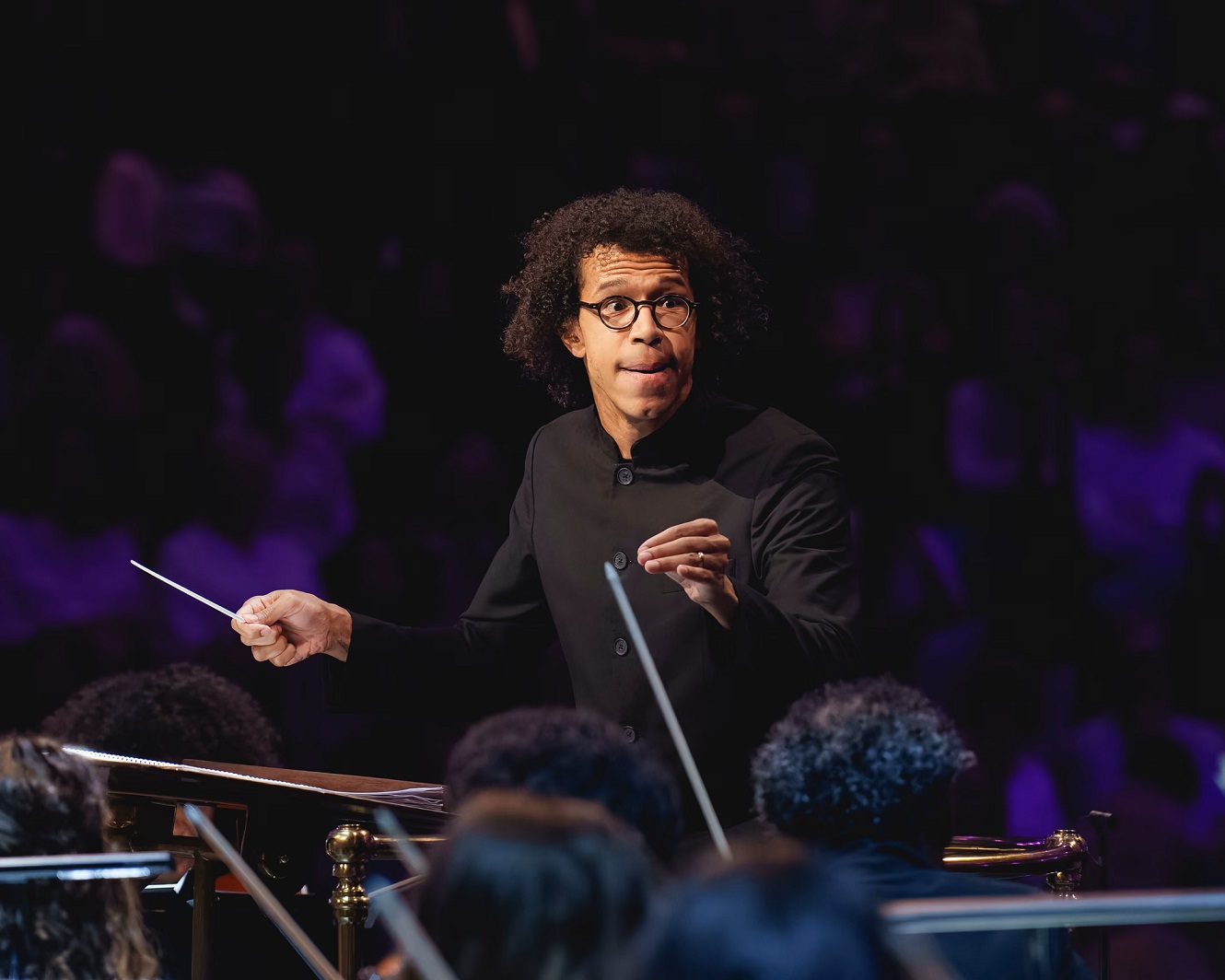
In concert – Chineke! Orchestra / Jonathon Heyward @ BBC Proms: Coleridge-Taylor, Coleman, James Lee III & Shostakovich

Chineke! Orchestra / Jonathon Heyward

Coleridge-Taylor The Bamboula Op.75 (1910)
Coleman Fanfare for Uncommon Times (2021) [UK premiere]
James Lee III Visions of Cahokia (2022) [European premiere]
Shostakovich Symphony no.10 in E minor Op.93 (1953)

Royal Albert Hall, London
Friday 5 September 2025

Reviewed by Richard Whitehouse Photos (c) BBC / Andy Paradise

Sir Simon Rattle may have stood down from his second Prom this season, but as his replacement for Chineke! Orchestra’s eighth appearance here was the highly regarded Jonathon Heyward (current music director of the Baltimore Symphony), a positive outcome was all but ensured.

Curious, if not unexpected, that Samuel Coleridge-Taylor’s The Bamboula enjoyed 16 Prom performances in 22 seasons before going into oblivion for 91 years. Although this ‘Rhapsodic Dance’, inspired by a West African drum that found its way into Haitian spiritual practice, is not among its composer’s major works, the increasingly fluid juxtaposition of animated and soulful dances makes for highly sophisticated light music of its period. Certainly, it came up newly minted in this effervescent and responsive reading under Heyward’s assured guidance.

Two pieces from American composers of the middle generation afforded productive contrast in this first half. Aside from its titular play on Copland’s evergreen, Fanfare for Uncommon Times found Valerie Coleman reflecting societal as well as musical ambiguities in a piece that builds not a little ominously in waves of activity towards a latter half whose interwoven brass and percussion conveys a vibrant if disturbing impression: her call to ‘‘face these ‘uncommon times’ with a renewed sense of hope and determination’’ shot through with not a little anxiety.

From here to James Lee III’s Visions of Cahokia was to be transported back into a Medieval settlement which became a centre for Mississippian culture until its still-unexplained demise in the 14th century. Whatever else, this provided inspiration for an orchestral triptych whose fusing elements from Stravinsky with those of Villa Lobos or even Revueltas was evident in the music’s variegated textures and evocative colours. Effectively a ‘concerto for orchestra’ of compact dimensions yet immediate impact, it might well prove a highlight of this season.
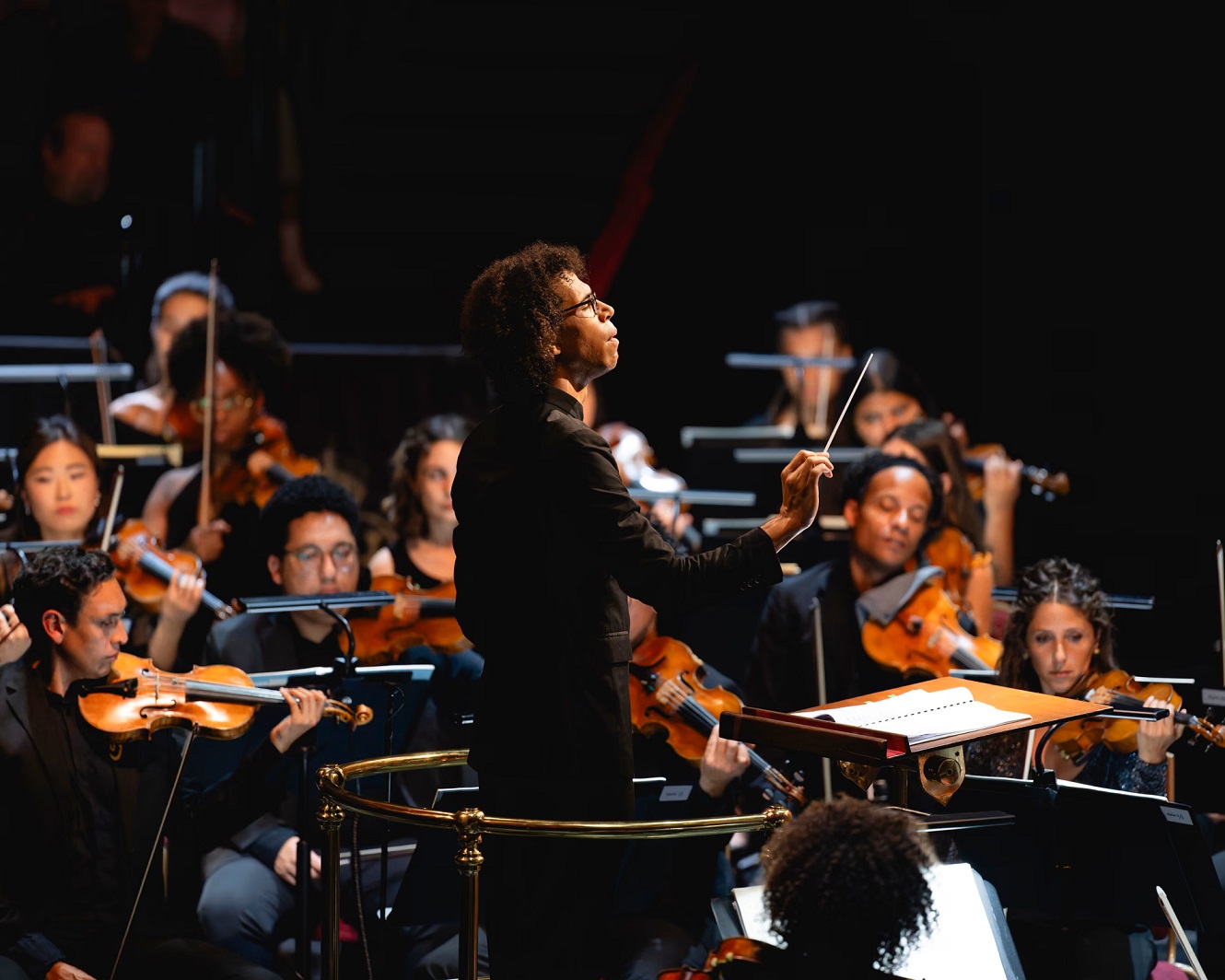
As, interpretively speaking, might the performance of Shostakovich’s Tenth Symphony after the interval. Interesting that this piece is currently the most often heard here of its composer’s symphonies – this being its 36th appearance – with Heyward having its measure not least in an opening Moderato such as built methodically yet assuredly from sombre beginnings to a powerful central climax before regaining its initial introspection. After this, the brief Allegro provided explosive contrast as made its being allegedly a ‘portrait’ of Stalin more irrelevant.

Unexceptionally fine as was Chineke!’s playing in these two movements, it came into its own with the Allegretto that ranks among Shostakovich’s most distinctive and personal creations – not least for its motivic interplay of boundless subtlety capped by a stentorian motto on horn to which Pierre Buizer was in accord. Heyward paced it ideally, as also the lengthy Andante whose plangency is swept aside only to return intensified by the finale’s ensuing Allegro; at the close, giving this music its head on route to a decisive and almost affirmative conclusion.

A memorable reading that rounded off a worthwhile concert and likely this orchestra’s most impressive Proms showing yet. Hopefully Chineke! will go on to tackle further symphonies of the later 20th century – maybe a much-needed UK premiere for Allan Pettersson’s Sixth?

Click on the artist names to read more about the Chineke! Orchestra and conductor Jonathon Hayward, and composers Coleridge-Taylor, Valerie Coleman, James Lee III and Dmitri Shostakovich – and the BBC Proms

Published post no.2,650 – Sunday 7 September 2025

In concert – Steven Osborne, CBSO / Kerem Hasan: Coleman, Grieg & Beethoven

Steven Osborne (piano), City of Birmingham Symphony Orchestra / Kerem Hasan (above)

Coleman Umoja: Anthem for Unity (2001, orch. 2019)
Grieg Piano Concerto in A minor Op.16 (1868)
Beethoven Symphony no.4 in B flat major Op.60 (1806)

Symphony Hall, Birmingham
Thursday 7 November 2024, 2.15pm

Reviewed by Richard Whitehouse Picture (c) Tristan Fewings

Highly regarded for his work with Welsh National Opera and his five years at the helm of the Tyrolean Symphony, British-Cypriot conductor Kerem Hasan’s is a relaxed though attentive presence that resulted in no mean rapport with the City of Birmingham Symphony Orchestra.

Such was evident from the outset of Valerie Coleman’s Umoja. Written for wind quintet, this ‘Anthem for Unity’ (the latter word in Swahili being the title) went through incarnations for wind sextet and concert band before being expanded to a commission from the Philadelphia Orchestra. Essentially a sequence of free-flowing variations on a theme stated by solo violin after an atmospheric introduction, it emerges in sharply contrasted guises before arriving at   a culminative statement – its evocation of ‘unity’ the more powerful for such overt restraint.

If the remainder of this programme consisted of repertoire staples, there was nothing routine or predictable about the performances. Steven Osborne has doubtless given more consistently accurate accounts of Grieg’s Piano Concerto, but his determination here to throw caution to the wind almost always paid off. Not least in an opening movement at its most perceptive in an unusually cohesive development, then a cadenza which ably sustained emotional tension through to a thunderous close. Building to a fervent rendering of its main theme, the Adagio evinced no lack of pathos, and Hasan secured a seamless transition into the finale – its virile main theme tellingly contrasted with that rapturous flute melody (Marie-Christine Zupancic on fine form), which emerged duly transformed as a majestic apotheosis towards the close.

That Hasan was out to make the case for Beethoven’s Fourth Symphony was evident from an introduction whose speculative mystery was tangibly conveyed, thus making contrast with the first movement’s main Allegro the more potent. Nor was the repeat of the exposition a carbon copy of what preceded it, Hasan channelling its impetus into an eventful development whose hushed transition into the reprise brought a surge of adrenalin no less palpable than that of the brief if thrilling coda. The ensuing Adagio might be felt to lack the drama or heroism of those in the symphonies either side, though its wistful main theme accrued considerable profundity on its successive and varied reappearances – not least through the unforced eloquence of the CBSO woodwind in what becomes something of an all-round showcase for that department.

Hasan drove the scherzo sections of the third movement hard, yet there was never any lack of articulation, while the trio sections had all the ingratiating charm needed. Taking the finale at anything that approaches the composer’s metronome marking can easily become a hostage to fortune, but the CBSO held its collective nerve throughout what was an eventful as well as an exhilarating ride – one fully underpinned by Beethoven’s irreverent humour such as comes to the fore in the tonal and emotional punning of those captivating bars that round off this work.

A persuasive case, then, for Beethoven Four as for Hasan’s conducting. Meanwhile, Sunday afternoon brings an intriguing event in the guise of Bach’s Goldberg Variations arranged by Dmitry Sitkovetsky for string ensemble and directed by CBSO leader Eugene Tzikindelean.

For details on the 2024-25 season A Season of Joy, head to the City of Birmingham Symphony Orchestra website. Click on the names to read more about pianist Steven Osborne, conductor Kerem Hasan, and composer Valerie Coleman

Published post no.2,357 – Saturday 9 November 2024