In concert – Sheku Kanneh-Mason, Soloists, Philharmonia Chorus, Royal Philharmonic Orchestra / Vasily Petrenko: Elgar, Weinberg & Rachmaninoff

Sheku Kanneh-Mason (cello), Mirjam Mesak (soprano), Pavel Petrov (tenor), Andrii Kymach (baritone), Philharmonia Chorus, Royal Philharmonic Orchestra / Vasily Petrenko

Elgar In The South (Alassio) Op.50 (1904)
Weinberg Cello Concerto Op.43 (1948/1956)
Rachmaninoff The Bells Op.35 (1913)

Royal Festival Hall, London
Thursday 11 April 2024

Reviewed by Ben Hogwood Pictures (c) Chris Christodoulou

The Royal Philharmonic Orchestra and Vasily Petrenko continued their dual focus on Rachmaninoff and Elgar this season with a deeply satisfying programme. They began with Elgar on holiday, music to match the Mediterranean climate of a rather humid Royal Festival Hall. This was In The South, Elgar’s extended postcard from Alassio, Italy, a sudden burst of inspiration that the composer finished in double quick time. Petrenko and his charges caught the instinctive writing, launching the overture in high spirits that brought the spring sunshine in from outside. Their interpretation grew in stature as it progressed, the central statements from brass given impressive heft. Yet it was the quieter asides that proved most telling, notably a fine viola solo from Abigail Fenna, whose depiction of the ‘canto popolare’ was appropriately reserved and beautifully phrased.

Sheku Kanneh-Mason joined for Weinberg’s Cello Concerto, a fine work sharing the same key (C minor) and elegiac mood of its now neglected equivalent by Nikolai Myaskovsky, completed three years earlier. Sheku’s credentials in Shostakovich (he won the BBC Young Musician prize with a standout account of the Cello Concerto no.1) served him well here, and he was an eloquent guide in the thoughtful first movement. Again this was an interpretation growing in stature, from a silvery first movement to the persuasive habanera of a Moderato that grew increasingly sour in tone, aided by standout solos from trumpeter Matthew Williams. By the third movement Allegro the gloves were well and truly off, incisive solo playing carrying through to an assertive and deeply felt cadenza, before the finale responded with doleful phrases turning us back to the material of the first movement, emotions not fully resolved. The main theme carried more weight second time around, while Kanneh-Mason’s choice of the same composer’s Prelude no.18 for solo cello was ideal as an encore, setting the seal on a fine interpretation. Hopefully his thoughts on the concerto will be set down in the studio by Decca before long.

Rachmaninoff’s four-part choral symphony The Bells formed a dramatic second half, led by an extremely well-drilled Philharmonia Chorus (prepared by Gavin Carr), whose diction and ensemble were most impressive. On first glance the men appeared outnumbered, but when the telling moments came in the third and fourth movements they rose to the occasion with great conviction.

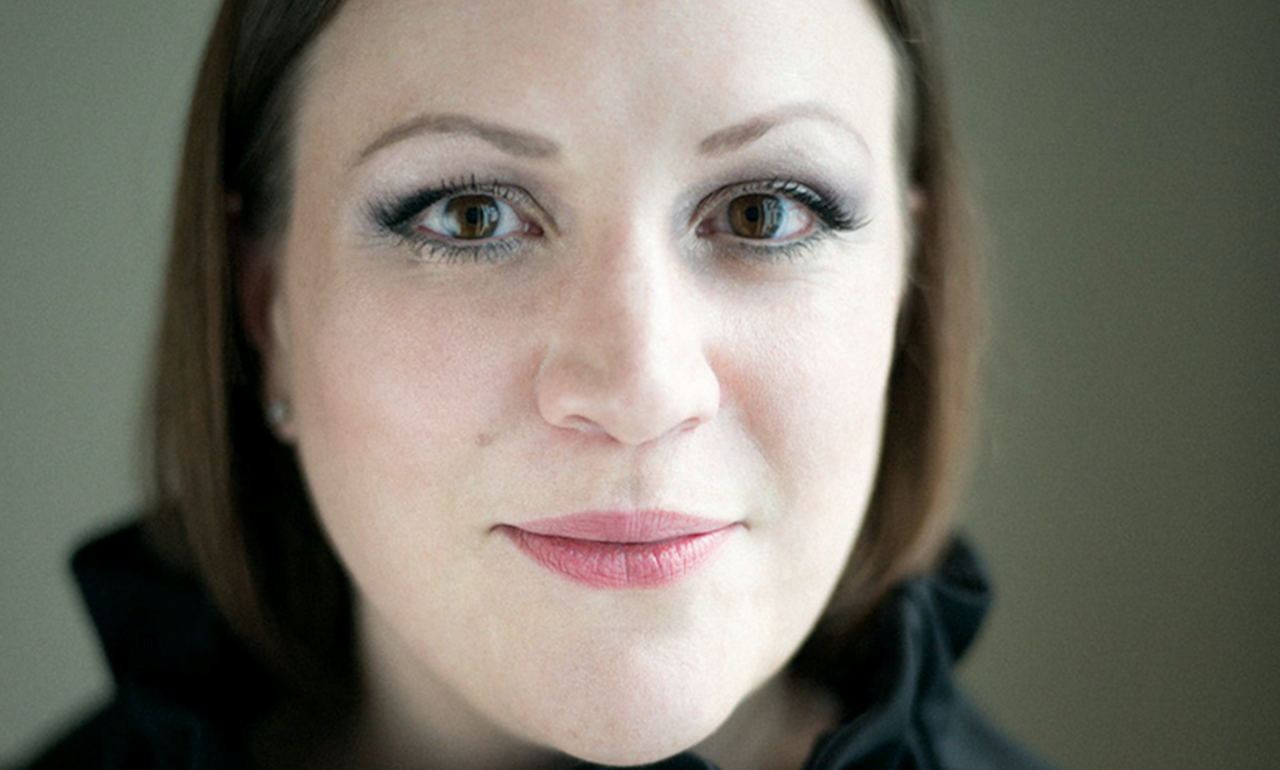
In tenor Pavel Petrov, soprano Mirjam Mesak and baritone Andrii Kymach, Petrenko could call on three excellent soloists, Mesak in particular impressing with her sensitive phrasing and vibrato, passionately singing The Mellow Wedding Bells. Her glittering dress was an ideal match for Poe’s verse, too. Petrov’s ringing delivery set the ideal tone in The Silver Sleigh Bells, while Kymach’s declamation was pitched just right for The Mournful Iron Bells, right after the frenzied scherzo, The Loud Alarm Bells.

The Royal Philharmonic Orchestra gave memorable contributions, with incisive woodwind, plangent brass, strings united as one, and percussion that added punctuation to the choral thunderclaps of The Loud Alarm Bells, Rachmaninoff effectively slamming the door shut on his deepest fears. Following this dramatic high point, the cor anglais solo of Patrick Flanaghan was all the more poignant – and Petrenko made sense of the major key ending, a chink of light in the darkness.

You can find more information on further concerts at the Royal Philharmonic Orchestra website

Published post no.2,146 – Friday 12 April 2024
In concert – Jennifer Johnston, Royal Liverpool Philharmonic Orchestra / Vasily Petrenko – The Divine Poem

Jennifer Johnston (soprano, above), Royal Liverpool Philharmonic Orchestra / Vasily Petrenko (below)

Deutsch Phantasma (2022) [RLPO co-commission: UK premiere]
Mahler Lieder eines fahrenden Gesellen (1884-5)
Scriabin Symphony no.3 in C minor Op.43 ‘The Divine Poem’ (1902-4)

Philharmonic Hall, London
Thursday 4 May 2023

Reviewed by Richard Whitehouse

He may now be the orchestra’s conductor laureate, but the 15-year partnership between Vasily Petrenko and the Royal Liverpool Philharmonic Orchestra was always tangible in this evening’s concert – its refreshingly different programme summoning the best from both orchestra and conductor.

Co-commissioning music by Bernd Richard Deutsch was an astute move – the Vienna-based composer now in his mid-40s and among the leading composers of his generation. Taking its cue from the Beethoven Frieze which Gustav Klimt devised for the 14th Vienna Secessionist Exhibition in 1902, this 15-minute piece takes a pointedly dialectical route as it evolves from the fractured uncertainty of yearning and suffering, via the cumulative intensity of a struggle against hostile forces, to the attainment of happiness through poetic creation. To what degree this might be a commentary on Beethoven’s Ninth Symphony (as embodied in the three parts of Klimt’s opus) is uncertain, but the motivic ingenuity and orchestral virtuosity of Deutsch’s response can hardly be doubted – not least in a performance as assured and committed as this.

If the indisposition of Adela Zaharia meant the regrettable omission of Strauss’s rarely heard Brentano-Lieder from tonight’s concert (though Petrenko has scheduled them with the Royal Philharmonic next season), hearing Jennifer Johnston in Mahler’s Gesellen-Lieder was by no means a hardship. The four songs, to the composer’s own texts, comprise an overview of his preoccupations (creative and otherwise) in his mid-20s with numerous anticipations of what became his First Symphony. Outlining a delicate interplay of pensiveness and wistfulness in the initial song, Johnston was no less attentive to its successor’s mingling of innocence with experience, and if the surging histrionics of the third song bordered on the melodramatic, the fatalistic procession of the final number felt the more affecting for its restrained eloquence.

Petrenko (above) set down a highly regarded cycle of Scriabin Symphonies over his tenure with the Oslo Philharmonic, and if the RLPO lacked any of that orchestra’s fastidious poise, the sheer verve and energy of its playing more then compensated. Not least in an opening movement whose unfolding can seem longer on ambition than attainment, but which was held together with unforced conviction – the most often prolix development duly emerging with a tautness to make it more than usually emblematic of this work’s metaphysical Struggles as a whole.

Outwardly more compact, the remaining movements require astute and cumulative handling such as these received here. The alternately enchanting and ominous Delights melded into an enfolding yet never amorphous entity, out of which the more animated motion of Divine Play gradually brought together earlier ideas on its way to an apotheosis whose amalgam of the work’s principal themes yielded grandiloquence without undue bathos. Scriabin’s cosmic aspirations thereby seemed the more ‘real’ for being the expression of purely musical forces. An expanded RLPO (its nine horns arrayed across the upper tier of the platform) was heard to advantage in the ambience of Philharmonic Hall, contributions by trumpeter Richard Cowen and leader Thelma Handy enhancing what was an authoritative and memorable performance.

You can read all about the 2022/23 season and book tickets at the Royal Liverpool Philharmonic Orchestra website. Click on the artist names for more on Jennifer Johnston and conductor Vasily Petrenko, and for more on composer Bernd Richard Deutsch – who also has a dedicated page at his publisher Boosey

In concert – Hanna Hipp, Tiffin Boys Choir, Philharmonia Chorus, RPO / Vasily Petrenko – Mahler: Symphony no.3 @ Royal Albert Hall

Hanna Hipp (mezzo-soprano), Tiffin Boys Choir, Philharmonia Chorus, Royal Philharmonic Orchestra / Vasily Petrenko

Mahler Symphony no.3 in D minor (1895-6)

Royal Albert Hall, London
Thursday 27 April 2023

Reviewed by Richard Whitehouse Photo of Vasily Petrenko (c) Ben Wright

The Royal Philharmonic Orchestra series of those Mahler symphonies featuring voices came to its conclusion this evening with the Third Symphony, the longest and most encompassing of his cycle with its trajectory ranging from the awakening of life to its divine transcendence.

The first part, comprising Mahler lengthiest purely orchestral movement, presents a stern test in terms of its overall pacing and characterization. Vasily Petrenko had its measure right from the opening fanfare, as powerfully intoned by eight horns in unison, via graphic depictions of inanimate nature (its trombone recitative balefully rendered by Matthew Gee) and its march-like reawakening, to the forceful expressive contrast Mahler invests into this extended sonata design as it advances to a joyous peroration that was superbly controlled and projected here.

Although the published score makes no mention, Mahler evidently favoured a lengthy pause before going into the second part. By allowing barely a minute to elapse, Petrenko arguably left insufficient breathing-space (for the audience if not the musicians) and so undersold the effect of what ensues. Not that this Tempo di Menuetto lacked for poise or insouciance – its chamber-like orchestration exuded a confiding intimacy, with the lingering regret at its close deftly implied. No less persuasive was the third movement, a scherzo whose capricious outer sections found purposeful accord with episodes where the offstage post-horn solos (elegantly delivered by Toby Street) unfolded without hint of indulgence; Petrenko mindful to inject a degree of danger into the final return of the opening music as this heads to its fractious close.

Once again, a slightly longer pause than Petrenko allowed might have given listeners time to settle before the closing three movements – (rightly) played without a break. Not that Hanna Hipp, in situ at stage-left, was other than assured in her contribution to the setting of (part of) Friedrich Nietzsche’s Mitternachts-Lied with its presentiment of eternal life; such unforced eloquence abetted by the hushed intensity of the RPO’s playing. The brief if pertinent setting of Es sungen drei Engel offered the necessary contrast, Hipp sounding a note of uncertainty or even doubt in the context of animated singing from the combined children’s and women’s voices. Here, too, Petrenko’s decision to use actual rather than tubular bells added greatly to the aura of child-like though never merely coy innocence with which this music is infused.

On to the finale – an adagio drawing on precedents from Beethoven and Bruckner, and which crowned this performance in all respects. If the flowing tempo that Petrenko adopted initially seemed a little passive, the seamlessness with which conflicting elements were drawn into the discourse, together with the preparation for and the shaping of each climax, on the way to its apotheosis left no doubt as to his identity with this movement. Neither was there any hint of bathos as striding timpani underpinned those closing bars with their intimations of sublimity.

A memorable performance, then, which brought out the sheer scale and ambition of Mahler’s conception while underlining the all-round excellence of the RPO near the end of its second season with Petrenko. Hopefully there will be further Mahler to come from this partnership.

You can read all about the 2022/23 season and book tickets at the Royal Philharmonic Orchestra website. Click on the artist names for more on Hanna Hipp, Tiffin Boys Choir, Philharmonia Chorus and conductor Vasily Petrenko

From closed doors to a heavenly host: The completion of a Mahler symphony cycle

by John Earls pictures (c) Andy Paradise

Two years ago, in the midst of the pandemic, I wrote a piece for Arcana FM on ‘Mahler’s Eighth and coming out of COVID-19’. I concluded by saying that I wouldn’t get to see a performance of this epic ‘Symphony of a Thousand’ – and complete my personal Mahler live symphony cycle – any time soon, but that when I did it would have a very particular significance.

I certainly didn’t know that the performance would be by the Royal Philharmonic Orchestra conducted by Vasily Petrenko at the Royal Albert Hall on a Sunday afternoon in late October 2022, a concert that was itself rescheduled due to the pandemic.

And what a performance it was. The Royal Albert Hall could be said to be purpose built for this work, accommodating not just an expanded orchestra (including seven off-stage brass players in the gods) but three choirs, two boys’ choirs, eight soloists and a huge concert organ (the Royal Albert Hall’s was once the largest instrument in the world).

You get the full blast of the organ from the off with the tumultuous opening of Part 1’s Veni Creator Spiritus. It’s quite a ride from there on in, and Petrenko and the RPO handled it superbly all the way through to the powerful finale of Part 2’s setting of the end of Goethe’s Faust. This was not just about the big sections, the delicate moments were deftly done too.

But this work is really all about the singing, and the assembled choirs of the Philharmonia and Bournemouth Symphony Choruses and City of London Choir, as well as the Tiffin Boys’ Choir and Schola Cantorum of the Cardinal Vaughan Memorial School were magnificent.

And it wasn’t just the massed voices, as glorious as they were. The soloists – and let’s name them (above): Sarah Wegener (Magna Peccatrix), Jacquelyn Wagner (Gretchen), Regula Mühlemann (Mater Gloriosa), Jennifer Johnston (Mulier Samaritana), Claudia Huckle (Mary of Egypt), Vincent Wolfsteiner (Doctor Marianus), Benedict Nelson (Pater Ecstaticus) and James Platt (Pater Profundus) – were excellent too.

I made the point in my earlier piece that there is something about the combination of the mass assembled forces performing together and being joined by an audience in an even bigger collective. I think the standing ovation from the near sell-out crowd at the end was testimony to this.

Mahler’s Eighth is definitely one of those pieces that you need to see performed live. I’m so glad that I finally did.

John Earls is Director of Research at Unite the Union and tweets at @john_earls

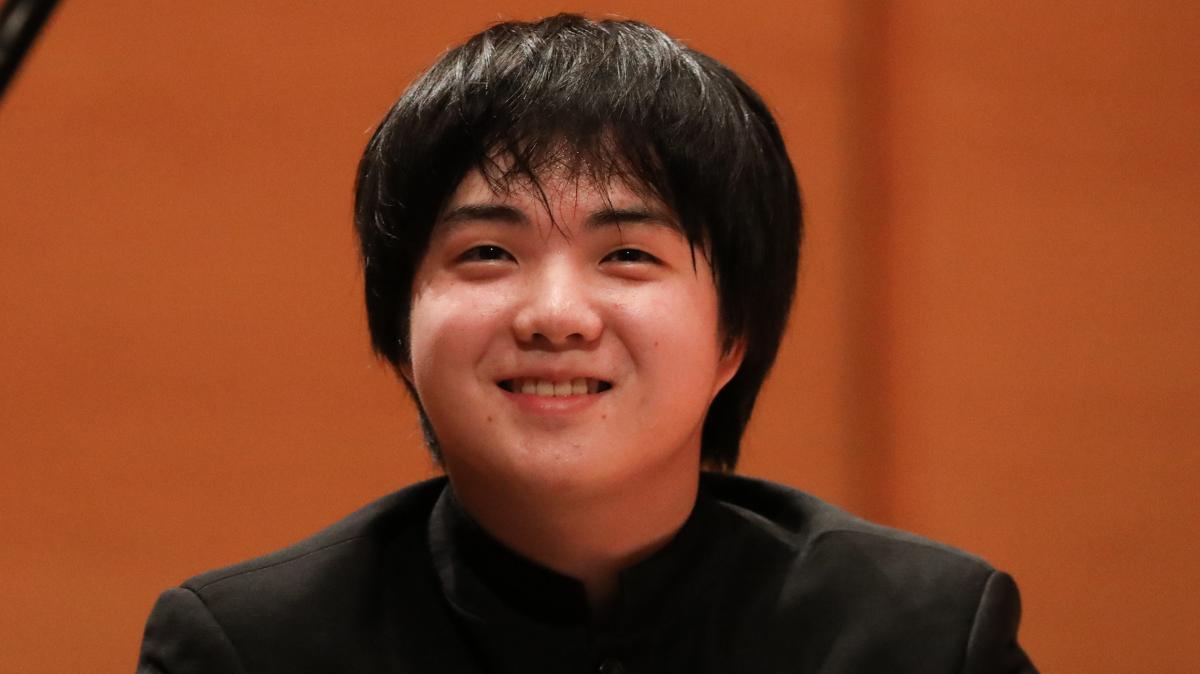
In concert – Mao Fujita, Royal Philharmonic Orchestra / Vasily Petrenko – Dani Howard, Rachmaninov & Holst’s ‘The Planets’

mao-fujita

Howard Ellipsis (2021) [RPO Commission: World Premiere]
Rachmaninov Rhapsody on a Theme of Paganini, Op. 43 (1934)
Holst The Planets, Op. 32 (1914-17)

Mao Fujita (piano, above), Royal College of Music Chamber Choir, Royal Philharmonic Orchestra / Vasily Petrenko (below)

Royal Festival Hall, London
Thursday 3 February 2022

Written by Richard Whitehouse. Photo credit (Mao Fujita) Vyacheslav Prokofyev / Getty Images

Great British Music is the theme underlying the Royal Philharmonic Orchestra’s current series of concerts at Royal Festival Hall – a major work of the earlier 20th century complemented by music elsewhere in Europe and, in this instance, a commission from a young British composer.

Her output widely championed, not least by the RPO’s new music director Vasily Petrenko, Dani Howard is already master of the curtain-raiser. Hence the engaging yet never superficial effect of Ellipsis – her tribute to this orchestra in its 75th anniversary which alludes to various pieces and personages in its history, with a deftness that made for an appealing if not overly memorable listen. Not in doubt, though, was the keen motivic resource with which the piece unfolded from its fanfare-like opening bars towards the fervent apotheosis at its culmination.

Only caution through its origins in borrowed material can have prevented Rachmaninov from designating Rhapsody on a Theme of Paganini as his ‘Fifth Piano Concerto’. Certainly, those volatile mood-swings of its initial 15 variations, inward rapture of the next three then tensile incisiveness of the closing six variations constitute a three-movement design whose Classical proportions are informed by the developmental ingenuity of a later era. Qualities Mao Fujita brought out in notable measure during a performance which lacked little in technical finesse.

One of a handful of pieces whose all-round audacity was the incentive rather than deterrent   to its immediate acceptance, The Planets was destined to prove the defining work of Holst’s career whose sheer impact a century and more has not diminished. Petrenko was evidently keen to emphasize its symphonic dimension through allying its seven movements to a broad consistency of pulse – witness the follow-through from his remorseless while never unduly histrionic take on Mars to his sensuous if never cloying approach to Venus. The former saw a suitably galvanic response from the RPO brass, the latter an elegance and poise from its strings which was no less evident in Petrenko’s lithe Mercury, then a Jupiter whose impetuous outer sections framed an eloquent and unaffected handling of the indelible trio.

Even the (doubtless) spontaneous applause which greeted this most familiar section did not undermine contrast with the emotional starkness of Saturn as it headed towards a climax of wrenching plangency, before finding release in a final stage that was nothing if not cathartic. The only passing disappointment came with Petrenko’s skittish and over-hasty rendering of Uranus, such as forced the martial main theme into a rhythmic straitjacket (for all that the climactic organ glissando made its mark) then detracted from the emptiness of its final bars. Not that this prevented Neptune from casting an otherworldly spell – whether in the modal musing at its start, those ethereal textures near its centre, or the gentle evanescing into which orchestra and wordless voices (the laudable RCM Chamber Choir) withdraw toward its close. If not a revelatory account, this was nevertheless a committed and involving performance that renewed admiration for Holst’s magnum opus as well as reinforcing the overall excellence of the Royal Philharmonic in the early stages of what looks set to be an era of real achievement.

For more information on the Royal Philharmonic Orchestra’s 2021-22 season, visit their website. Meanwhile click on the links for information on the artists Mao Fujita and Vasily Petrenko.