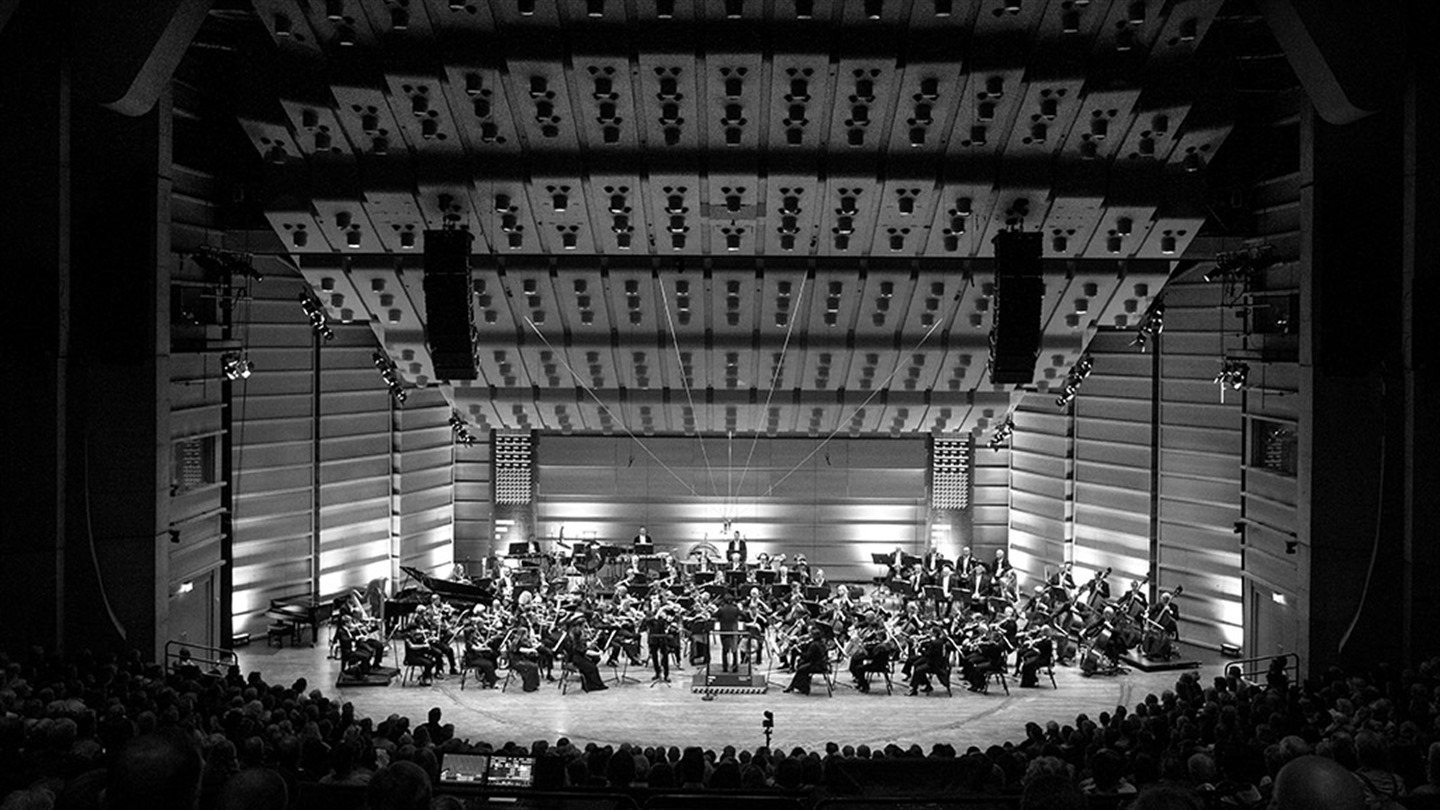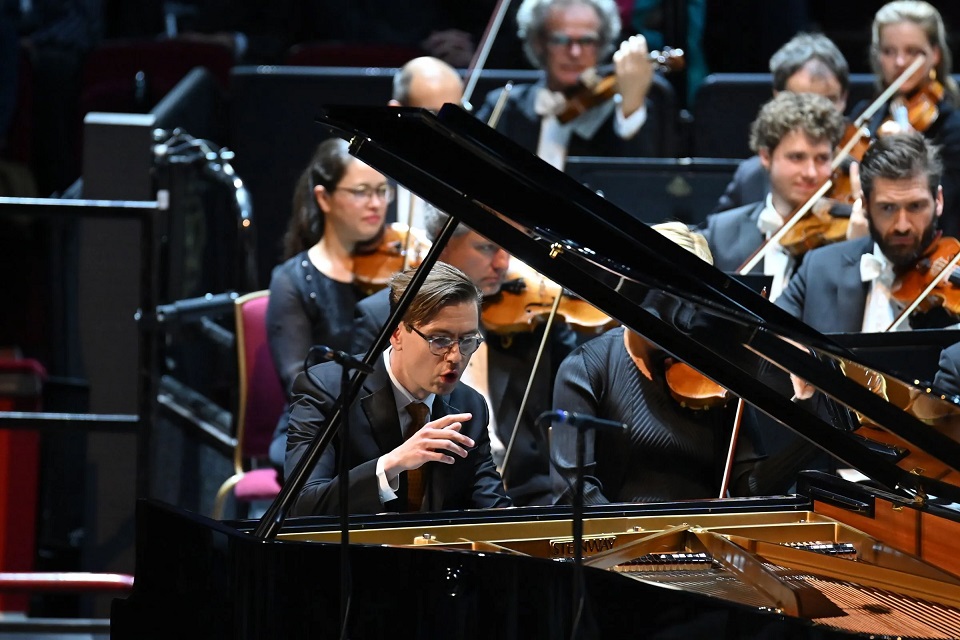
Arcana at the Proms – Prom 55: Vikingur Ólafsson, Berliner Philharmoniker / Kirill Petrenko – Schumann & Smetana

Schumann Piano Concerto in A minor Op.54 (1841-5)
Smetana Má vlast (1874-9)

Vikingur Ólafsson (piano), Berliner Philharmoniker / Kirill Petrenko

Royal Albert Hall, London
Saturday 31 August 2024

reviewed by Richard Whitehouse Photos (c) Chris Christodoulou

This first concert in its latest Proms visit by the Berliner Philharmoniker and chief conductor Kirill Petrenko featured a complete performance of Smetana’s Má vlast as the second half of a programme that, at barely the length of an average Mahler symphony, need not be unusual.

Few would, in any case, object to Vikingur Ólafsson tackle Schumann’s Piano Concerto in an account as dextrously articulated as it was unerringly proportioned. Not least an initial Allegro such as avoided any tendency to mid-tempo ‘drift’, those subtly contrasted themes building a cumulative impetus carried into the combative cadenza then a coda whose tensile energy was judged to a nicety by Petrenko. Some might have felt the Intermezzo too interventionist in its alternation of capriciousness and pathos, but absence of the cutesiness and cloying was more than its own justification and not least when that transition into the final Allegro had such an expectancy. Rhythmically supple with unwavering focus on its overall continuity, this set the seal on a reading whose technical finesse and interpretative insight ensured a riveting listen.

Ólafsson caused some stir at these concerts three years ago with Bach and Mozart concertos, and it was the former composer who provided the encore: the Adagio from the Fourth Organ Sonata (BWV528), transcribed here by August Stradel and rendered with understated poise.

More Czech music so soon after the Czech Philharmonic’s brace of Proms might have been too much of a good thing, but Petrenko’s Má vlast was very different from Jakub Hrůša’s in its lithe expression and streamlined textures. Nor was there was any lack of emotional depth – hence those earlier stages of Vyšehrad as it emerged eloquently on harps towards a fervent climax, its dramatic central section of a razor-sharp precision before subsiding into the main theme’s moving return. Vltava was scenically evocative and formally cohesive as it took in folk-dance, nocturnal landscape and treacherous rapids prior to its resplendent emergence in Prague, then Šárka unfolded its narrative of a matriarchal icon and her heroic demise with an impulsiveness that went into overdrive – without being overdriven – at its dramatic close.

It may be more generalized as to content, but the initial half of From Bohemia’s Woods and Fields is spellbinding as it conjures a pantheist ecstasy (in the process, anticipating Janáček and Minimalism) to which the BPO players were audibly attuned – Petrenko mindful not to overstate the relative blatancy of what follows. Most impressive, even so, were the final two stages whose gaunt rhetoric and granitic sound-world most often make for uneasy listening. Not here, however, as Petrenko gauged the motivic eddying of Tábor so that its underlying momentum held good through to the inevitable segue into Blaník. Emotional tension here was unremitting, the intensive interplay of Vyšehrad-theme with Hussite-chorale building to an apotheosis of Beethovenian power before letting loose for a coda of visceral exhilaration.

Its composite nature makes Má vlast difficult to sustain in performance, but there could be no doubt Petrenko managed this through his and the BPO’s acute yet never wanton control over every facet of the greater concept. A memorable performance and an impressive achievement.

You can get details about this year’s season at the BBC Proms website – and you can click on the names to read more about the Berliner Philharmoniker, their chief conductor Kirill Petrenko and piano soloist Vikingur Ólafsson

Published post no.2,289 – Monday 2 September 2024
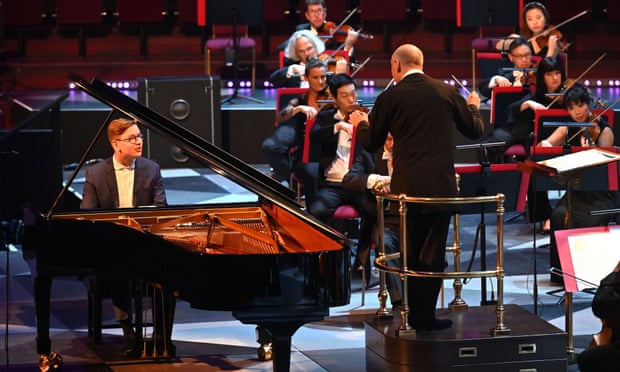
BBC Proms – Víkingur Ólafsson, Philharmonia / Paavo Järvi: Bach, Mozart, Prokofiev & Shostakovich

olafsson-jarvi

Víkingur Ólafsson (piano), Philharmonia Orchestra / Paavo Järvi

Prokofiev Symphony no.1 in D major Op.25 ‘Classical’ (1916-17)
J.S. Bach Keyboard Concerto in F minor BWV1056 (c1738-9)
Mozart Piano Concerto no.24 in C minor K491 (1786)
Shostakovich Symphony no. 9 in E flat major Op.70 (1945)

Royal Albert Hall, London
Saturday 14 August 2021

Written by Richard Whitehouse

Tonight’s Prom brought change of conductor, the always reliable Paavo Järvi stepping in for Santtu-Matias Rouvali in what would have been the latter’s Proms debut, but not of soloist – Icelandic pianist Víkingur Ólafsson duly making his first appearance at these concerts with concertos which, for the most part, played to his strengths.

The number of times that Bach’s keyboard concertos have been heard here on piano in recent decades can be counted on the fingers on one hand (Tatiana Nikolayeva’s D minor resonates in the memory), but that in F minor was a good choice in terms of its succinctness – the outer movements pitting soloist and (sizable body of) strings against each other with a trenchancy as was vividly conveyed here, with the central Andante an oasis of serenity that was not without its plangent asides.

Placing this piece before the interval, however, made for a distinctly short first half – given the relative length of Mozart’s C minor Concerto after the interval. There were many good things in this latter, Ólafsson keeping the first movement on a tight yet never inflexible rein so that its inclination to pathos – if not always its portentous undertones – came through in ample measure; not least in a coda that had been cannily prepared by the soloist’s cadenza. The central Larghetto was none the less the highlight – Ólafsson varying his tone such that piano melded into the woodwind for an early and defining instance of timbral colouration, with its limpid elegance never undersold. Maybe the finale was a little staid in the overall unfolding of its variations, but the coda’s strangely ambiguous poise was tangibly realized.

An auspicious debut, then, for Ólafsson, who underlined his prowess with affecting readings of the slow movement of Bach’s Fourth Organ Sonata (BWV526) in August Stradal’s chaste transcription and Liszt’s not unduly mawkish version of Mozart’s Ave Verum Corpus (K617). These further extended the disparity between each half – the first of which had commenced with Prokofiev’s ‘Classical’ Symphony, not in the least small of scale or mimsyish as Järvi heard it; witness his acerbic and impetuous take on the initial Allegro, trumpets and timpani to the fore, then a Larghetto whose swift underlying tempo left little room for any harmonic piquancy to emerge. The Gavotte was slightly marred by several mannered agogics which tended to impede its rhythmic profile, but the Finale lacked little in sparkle or insouciance.

Among the most travelled and recorded conductors of today, Järvi can seem detached or even aloof in manner – but there was no such reticence evident in Shostakovich’s Ninth Symphony as ended this programme. After a tensile and assertive Allegro, which audibly benefitted from the sizable forces onstage, the Moderato recalled Efrem Kurtz’s classic recording as to overall restraint and a dark-hued introspection rising to anguish in its twin climaxes. Playing without pause, the other movements were of a piece with the foregoing – a driving and almost manic Presto subsiding into a Largo, whose ruminative bassoon soliloquys were eloquently taken by Emily Hultmark, then an Allegretto whose capriciousness was acutely gauged through to its bitingly sardonic climax and breathless final payoff. Undoubtedly a performance to savour.

You can find more information on the BBC Proms at the festival’s homepage

Online recommendations – Bergen International Festival 2020

How long is it since you last experienced live music?

For the vast majority of us it will be two months and counting now…the last for Arcana having been on Monday 16 March at the Wigmore Hall.

Thankfully in that time a huge number of artists, organisations and orchestras have stepped into the breach, either with archive concert footage or with online concerts and recitals. One of the biggest contributions to date, however, comes from the Bergen International Festival, which is streaming over 50 events online for free.

These are genuine live events, given without an audience and streamed across the world from the festival’s website – and there is some quality music making coming up.

The evening of Saturday 23 May will see Leif Ove Andsnes and friends giving an all-Schumann concert at 20:00 (19:00 GMT), capped by the wonderfully invigorating Piano Quintet, while Sunday 24 May (21:15, 20:15 GMT) brings the traditional festival performance of Grieg‘s evergreen Piano Concerto. The soloist will be Víkingur Ólafsson, with the Bergen Philharmonic Orchestra under chief conductor Edward Gardner. Intriguingly, the Grieg will be prefaced by VasksThe Fruit Of Silence, with the Edvard Grieg Kor.

Meanwhile Monday 25 May brings an intriguing concert from ​Leif Ove Andsnes (piano), Sonoko Miriam Welde (violin), Ludvig Gudim (violin), Eivind Ringstad (viola) and Amalie Stalheim (cello). The quintet will perform works by Schubert, Mozart and Jörg Widmann – the composer’s Idyll and Abyss and String Quartet no.3. Nicknamed the Hunt, it will follow Mozart’s quartet of the same name.

These three concerts alone give an idea of the breadth of repertoire and quality we can expect from the festival. Head here to experience it for yourself!

Sound of mind – New releases

This is not a regular feature, but I thought it would be good to highlight new albums released today that fall into Arcana’s ‘circle of interest’ – the idea being that listening to them or hopefully even buying them will reward the creators in these difficult times. So, without further ado…

Víkingur Ólafsson releases his much-anticipated third album for DG today. A collection of music for keyboard by Rameau and Debussy, it has the hallmarks of Ólafsson’s meticulous presentation, and – I suspect – his meticulous and intimate approach, which has proved so effective with his albums of Philip Glass Etudes and Bach keyboard music.

Sticking with classical music but moving ever so slightly closer to Hollywood, the Sinfonia of London and John Wilson release their third collaboration on Chandos today. It sees them returning to Korngold, whose Symphony in F sharp major they played so brilliantly to celebrate their rebirth as an orchestra. This time they are taking on the composer’s glitzy Violin Concerto, with soloist Andrew Haveron stepping up from duties as orchestral leader. This is coupled with the substantial String Sextet, a work definitely worth getting to know:

Switching on the power, we arrive at Daniel Avery and his collaboration with Nine Inch NailsAlessandro Cortini, Illusion Of Time. This is an intriguing match that on first listen is a successful blend of electronic soundscapes, with Avery’s wide open perspective and Cortini’s analogue synth sensibilities complementing each other:

It’s great to see Little Dragon back. The Swedish band have changed labels, arriving at Ninja Tune – and their sixth album New Me, Same Us. It finds them rejuvenated and pressing forward, with Yukimi Nagano providing the ever-distinctive vocals.

Moving outside of Europe we come to Tamikrest. I can’t pretend to have a good knowledge of African music, but here is a band I have latched onto for their unique blend of Tuareg music and rock. Their new record Tamotaït has the same thrilling combination of propulsive rhythms and heat-soaked atmosphere:

Finally – if you’re after a good house party for your nearest and dearest – you would do well to consider including some of the new Dua Lipa album! She may not be someone who needs the investment, but you can guarantee good vibes throughout Future Nostalgia, especially when the likes of hit singles Don’t Start Now and Physical are present.

Víkingur Ólafsson – studying Philip Glass

Víkingur Ólafsson (photo: Ari Magg)

Last year, Arcana defined Víkingur Ólafsson as a true classical music entrepreneur. We explored his introductions to classical music, and talked about the two festivals he helps administer – Sweden’s Vinterfest and the Reykjavik Midsummer Festival. We also covered his friendship with composer Philip Glass, 80 this year. Olafsson professed his admiration for the composer and his creative energy, an admiration he has now transferred to disc in the form of his first recording for Deutsche Grammophon. Time, then, for chapter two in the interview!

When did you first encounter Philip Glass’s music?

It’s quite a specific memory. I was 13 years old, sitting with my two sisters in the back seat of our car on a family vacation. Dad was driving on the highway, heading from France to Switzerland and as we were bored and quarrelling in the back seat, he handed us this recording of Philip Glass Violin Concerto No.1 with Gidon Kremer (on DG as it happens) which we listened to on our Sony Discman players. It was unbelievable to discover this new sound world while passing by the French landscapes on 150 KM per hour.

Some of the Etudes on this album feel like extended meditations. Do you get into a kind of trance when you play them?

Not really, I’d rather have my audience in a trance… I just try to listen intensely and explore the possibilities of the instrument and acoustics, looking for the right proportions of sound and time.

Do you think the Etudes are actually much more emotional than the titles suggest they should be?

What is emotional for one person can be completely impersonal to the next. To me there is a nostalgia to the slow ones, but it’s emotions revealed through the filter of time. Etude means ‘study’, but one can also write etudes on emotions, just as well as on finger dexterity.

What technical challenges does the music present for you?

It’s relatively easy to learn the etudes and play them at an average level. But what I find difficult – as with any music – is to play them in the most specific way, when it comes to rhythm, texture, sound…

To get the clockwork fine tuned in a piece like Opening is extremely delicate and difficult, to take one example. And of course playing a piece like Etude No.6 is quite difficult, and the repeated notes make me feel as if I’m playing a late-20th century Scarlatti.

Etude No.20 requires intense layering of texture and pedal sensitivity and No 15 demands an orchestral palette on the piano. The etudes can be extraordinary when played well, but, like almost all other music, they can also be rather bland when played in a bland way. But blame the performer in that case.

Are you working closely with Philip on any new material?

We’ve discussed briefly a new work, but it’s too early to say more…

Aside from the piano music, what is your favourite piece by Glass?

I saw Einstein on the Beach in Berlin two years ago. It blew my mind to experience it live. I will also mention his Violin Concerto No.1, as it was the first piece I heard by him. And I have to mention Koyaanisqatsi. It’s actually on Youtube, I recommend spending a Sunday afternoon watching and listening to the great work.

Do you play music by any of the other so-called ‘minimalists’?

Yes, but they’re really not minimalists… at least not since the early 70s! I’m playing John AdamsPiano Concerto in Leipzig in June and I’ve played a bit of Steve Reich as well. I love these composers but I’ve played far more Glass than either of those.

What is it like being signed to Deutsche Grammophon, and do you have any plans for future releases on the label?

We are meeting in Berlin in March to discuss next albums. We have roughly three different ideas on the drawing board and they are all very different from one another – and from the Glass album. I don’t want people to know what to expect too much, I’d love for each of my album to tell its own story, independent from the previous ones.

I love working with Deutsche Grammophon as we have a mutual love of listening to, exploring and discussing music. And of course I’ve listened to so many DG records in my life and gotten to know so much great music and so many great performances through the label. It’s both a privilege and pleasure to work with them.

You can find out more about the Midsummer Music festival in Reykjavik here, while you can also discover Vinterfest here. For more information on Víkingur himself, head to his own artist website