Wigmore Mondays – Meta4: String Quartets by Fanny Mendelssohn & Bartók

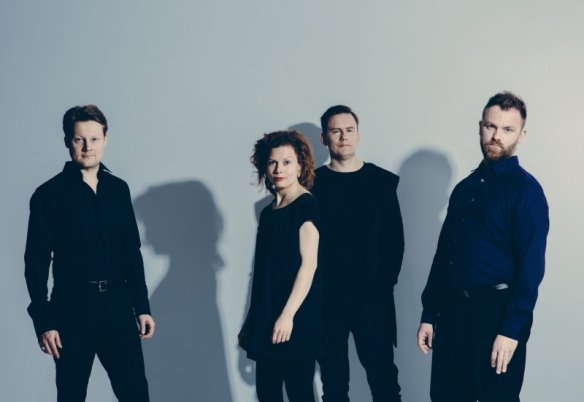
Meta4 [Antti Tikkanen, Minna Pensola (violins), Atte Kilpeläinen (viola), Tomas Djupsjöbacka (cello)]

Wigmore Hall, Monday 17 February 2020 (lunchtime)

You can listen to this concert on the BBC Sounds app here (opens in a new window)

Review and guide by Ben Hogwood

A pleasingly varied program from the Finnish string quartet Meta4, not least because it gave the Wigmore Hall and BBC Radio 3 audience a chance to hear Fanny Mendelssohn’s String Quartet, many undoubtedly experiencing the piece for the first time.

Often overshadowed by her brother Felix Mendelssohn’s musical output, Fanny was clearly a highly accomplished composer in a time when women were not encouraged to follow such musical disciplines. Only now is the quality of her music fully revealed, and this String Quartet stands side by side with the seven completed works of her brother. This one, as its composer freely admits, stands in the shadow of the late quartets of Beethoven.

The work’s dimensions are relatively unusual, pointed towards the third movement by two relatively short movements, slow and fast respectively, and it spends a lot of time in C minor as well as the ‘home key’ of E flat major, creating a tension between darker thoughts and sunnier climes. There is an enjoyable disregard for convention in the slow first movement (from 2:41 on the broadcast), with a broad and quite free approach that Meta4 have fully under their wing, the three standing players swaying and moving around the stage in response to the music.

While this could have been off putting there was no doubting their commitment and involvement, ensuring the first movement Adagio was thoughtful and profound. The following Allegretto (6:55) was quite wary initially, its C minor fluttering speaking of unease, but its central section scurried forward with an energetic fugue started by Atte Kilpeläinen’s busy viola (from 8:01).

The Romanze (10:57), beautifully played, was back in C minor but grew to be the centre of the performance, the soft heart of the movement becoming something really substantial and emotive in this performance. Meanwhile the spirited and full bodied finale (18:18) signed off in a lively fashion, powering forward through unison from viola and cello to a headlong sprint for the finish. Occasionally the intonation was a little off in the upper reaches of the violin line, but this was otherwise a very fine performance.

Bartók’s cycle of six string quartets rank among the very finest achievements in the form, and are rightly a cornerstone of any aspiring group’s repertoire. The First is the longest, in keeping with his earlier works as displaying deep Romantic-inspired passion but changing the musical language, finding a more individual voice as it strays further from tonality. The work came after several discarded attempts in the string quartet form, suggesting Bartók knew already that this would be one of his primary means of expression – and is regarded by many commentators on the composer as the work where his mature style arrives.

Much of the passion in this case was invested by the composer in a relationship with the young violinist Stefi Geyer, dedicatee of the Violin Concerto no.1, and the quartet is effectively a detailed account of their relationship and its ultimately tragic ending. That said, it is effectively a transition from the darkness of the breakup to the light and positivity of what might lie ahead.

Set in three substantial movements, this work often sounds as though there are more than four instruments playing, thanks to the use of multiple stopping (playing more than one note at a time on an instrument).

The first movement, described by Bartók as a ‘funeral dirge’, begins in shadow (26:39) but grows gradually in expressive intent. The quartet stay largely together in their outpouring, though a striking change of emphasis occurs at 31:04 when the cello takes on a drone-like figure. The music is briefly more assured, before dropping back to more threadbare, muted sounds.

The sorrowful first movement is effectively an introduction to the second (35:43) which pulls away from the slow tempo and starts noticeably to look up and outward. The textures become fuller, the dialogue between instruments is much more pronounced and the rhythmic definition starts to make itself known, as though Bartók wants to incorporate more of the traditional music around him. There are still pauses for reflection, but essentially the mood is one of grit and determination.

The third movement (46:06) is marked Allegro vivace – a real sign that the composer wants to get on with things. The cello takes up the mantle, its weighty dialogue with the viola inspiring full-bodied ensemble passages and more obviously folky asides.

The musical language flits between tonal statements, with bold tunes, and sections of music with a much less obvious centre. At 50:42 the music retreats, the quartet together but murmuring confidential asides to each other. The music builds and the statements become wilder and more sweeping. There are big chords from 55:49 where the sound could perhaps be bigger…but then Meta4 are saving themselves for a final push, finishing with a wonderfully robust and rustic chord.

As a side note, it was refreshing to see Meta4’s colourful attire for this concert, brightening up a dull February lunchtime! There need be no rules for dress in classical music like this, and it was good to see the quartet wearing what they felt comfortable with.

Repertoire

This concert contained the following music (with timings on the BBC Sounds broadcast in brackets):

Fanny Mendelssohn String Quartet in E flat major (1834) (2:41)

Bartók String Quartet no.1 (1908-9) (26:39)

Further listening & viewing

The music from this concert can be heard in the playlist below, which includes Meta4’s own recording of the Bartók from 2014:

It has taken an awful long time for the music of Fanny Mendelssohn to break through to anywhere near the centre of classical repertoire – which is unforgivable really, given how good it is. The playlist below collects her Piano Trio and Piano Quartet, bisected by a Piano Sonata in C minor:

Bartók, meanwhile, is an ever-present as one of the 20th century’s musical innovators. The string quartets form the backbone of his career, and the cycle by the Takács Quartet is certainly one of the finest:

You can see details of Meta4’s Bartók release here:
Wigmore Mondays – Daniel Müller-Schott & Annika Treutler: Dvořák, Webern & Franck

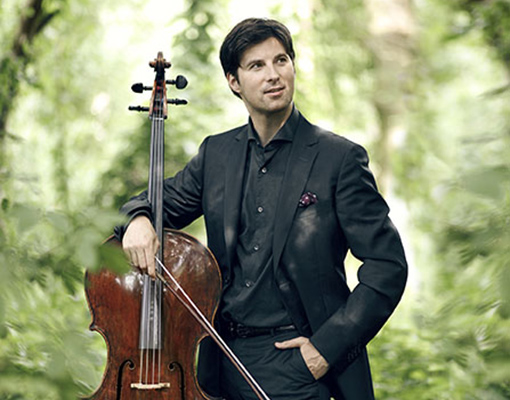
Daniel Müller-Schott (cello, above), Annika Treutler (piano, below)

Wigmore Hall, Monday 17 February 2020 (lunchtime)

You can listen to this concert on the BBC Sounds app here (opens in a new window)

Review and guide by Ben Hogwood

There is so much original music for cello and piano dating from the 19th century that there is a danger of feeling short changed in a concert when presented with music arranged from a different instrument. Yet such was the conviction with which Daniel Müller-Schott and Annike Treutler played these pieces that it was possible to forget those thoughts and enjoy the music, pure and simple.

It also showed just how flexible some of the original music is. Dvořák’s 4 Romantic Pieces began as works for string quartet but their songful nature gives them just as much expression in their better known arrangement for violin and piano, and then in Müller-Schott’s own arrangement here. The first piece, a Cavatina, is a lyrical treat (2:36), while the second has a comparatively stern expression (5:44), ending with imaginative use of harmonics from the cellist. The third and most lyrical of the four pieces (8:28) returns to the same key as the first, and is ideally suited to the cello’s range, while the fourth and longest piece (10:51) is more thoughtful and affecting.

It usually takes longer to write about Webern’s music than it does to perform – which is again the case here. Yet such is the compressed intensity of his writing that the Drei Kleine Stücke will have stuck in people’s memories, despite lasting less than 5 minutes. Webern wrote the three pieces at a particularly fraught time in 1914, and Daniel Müller-Schott’s probing tone communicates their strength of feeling. As did Annika Treutler’s timely interventions, lingering on the mysterious chords of the first (from 19:06) signing off the second piece abruptly (20:15) and then the two savouring the ghostly sonorities of the slow, stretched out notes of the third piece (20:42).

The Violin Sonata in A major is one of César Franck’s most enduring works. Brimming with good tunes, it has an air of spring about it, and its abundance of good feeling makes it a very popular concert piece – as it surely was in its first performance, at the wedding of legendary Belgian violinist and composer Ysaÿe. Although originally written for violin and piano Franck was fully aware of the potential of a version for cello, and specified it could be played as such. This was eventually realised with the help of French cellist Jules Delsart.

Because most of the melodies are an octave lower in pitch it means the sonata does not have quite such a sunny outlook in its cello arrangement – but it does bring out the red blooded Romanticism of the stormy second movement.

Before that, Müller-Schott and Treutler delight in the dreamy first movement, threading Franck’s thematic ideas together beautifully (from 24:11). The second movement, the most effective in the arrangement, powers forward with impressive momentum (30:15), the music flowing freely as Müller-Schott’s probing tone and intonation shine through. At the same time Treutler proves the ideal anchor, the two judging the tempo just right.

The third movement is a freeform recitative for cello with subtly voiced thoughts for the piano (38:22), and the pair’s instinctive feel for the music gives it just the right amount of room to breathe. The finale (46:17) is a masterful bit of writing, a canon where the cello part shadows the piano at a close distance almost constantly. There is little more to say here than simply to enjoy the music and Franck’s powers of invention in an ideal performance!

Repertoire

This concert contained the following music (with timings on the BBC Sounds broadcast in brackets):

Dvořák, arr Müller-Schott 4 Romantic Pieces Op.75 (1887) (2:36)
Webern Drei Kleine Stücke Op.11 (1914) (19:06)
Franck, arr. Desart Sonata in A major (1886) (24:11)

As an encore we had a nicely chosen Schumann treat, the first of 3 Fantasiestücke Op.73 (54:04). Like the Dvořák and Franck before it, this is a piece whose songful nature means it can be arranged for any number of instruments. The cello does just fine here though!

Further listening & viewing

The music from this concert can be heard in the playlist below, most of it recorded by Müller-Schott himself:

Beyond the Violin Sonata and Piano Quintet, very little of César Franck’s chamber music gets a regular airing. This playlist adds the String Quartet and Trio Concertant no.1, two substantial and major works that show off once again Franck’s talent for recycling and developing melodies:

On a very different tip are Webern’s works for chamber forces. Never one to overstay his welcome, he did nonetheless contribute some remarkable works in the smaller form, among them the Concerto for 9 instruments and four distilled pieces for violin and piano. They are included here as part of a disc that begins with the famous Symphony:

As well as writing large scale chamber works, Dvořák was able to put together much shorter pieces for the salon and light entertainment. The Cypresses for string quartet fall into this category, essentially working as songs without words:

In concert – Carolyn Sampson & Joseph Middleton: The Contrast

Carolyn Sampson (soprano, above), Joseph Middleton (piano, below)

Wigmore Hall, Friday 14 February 2020 (lunchtime)

Review and guide by Ben Hogwood
Photo credit Marco Borggreve

Once best known for her interpretations of Baroque music, Carolyn Sampson is revelling in the world of song. With musical partner Joseph Middleton painting pictures from the piano, she has made a number of attractive releases for the BIS label – of which The Contrast is the latest.

This Wigmore Hall concert doubled as the album launch event, and was programmed with a wide range of responses to settings of English text. The pair began with Sir William Walton’s multi-poet cycle A Song for the Lord Mayor’s Table, reminding us just how different London was when this was written in 1962. The balance was tricky in The Lord Mayor’s Table itself, where there is a lot going on in the piano part, but Sampson carried her line with verve. Her accent on Wapping Old Stairs was well judged for subtly comedic effect, while Holy Thursday cast a spell and Rhyme ended the cycle with a flourish.

The songs of Roger Quilter can really blossom in the right hands, and Sampson sang this selection of five beautifully. The flowing My Life’s Delight and softer By a Fountainside showed off her natural delivery, Middleton responding with lovingly caressed accompaniment. Dream Valley was a beautiful reverie as dappled sunlight shone across the Wigmore Hall, while the Arab Love Song was urgent and fleet-footed, while Fair House of Joy ended the selection with a winning smile.

Huw Watkins wrote his Five Larkin Songs for Sampson, and was present for this powerfully affecting performance. The challenge of setting Larkin’s occasionally bleak verse is realised with music of passion and dramatic impact, and as she said from the stage, Sampson clearly loves to sing the songs. The wandering piano line of Who called love conquering? contrasted with the awkward shifts in the soprano line, both of which were handled extremely well. Sampson’s ringing delivery brought expressive power to Love Songs in Age, as did her instinctive use of vibrato. The end of Larkin’s wry poem Money, ‘it is intensely sad’, left a strong aftertaste, while Dawn showed a hint of Britten in its setting. The delivery of the last line, ‘How strange it is for the heart to be loveless, and as cold as these’, made an impression with its completely (and deliberately) flat tone.

Finally we heard five songs from Frank Bridge, whose contribution in this area is still underrated. That is in spite of heartwarming songs such as Go not, happy day, which was full of smiles in this performance, bubbling over with good feeling. Adoration showed of a sumptuous vocal tone, while Come to me in my dreams could have been written for such a voice. Once again Middleton’s accompaniment was ideally weighted and phrased, the two combining for a magical and poignant encore of Bridge’s Yeats setting When You Are Old, powered by an achingly tender melody from the piano.

Repertoire

This concert contained the following music:

Walton A Song for the Lord Mayor’s Table (1962)
Quilter My Life’s Delight Op.12/2 (1908), By a Fountainside Op.12/6 (1908), Dream Valley Op.20/1 (1916), Arab Love Song Op.25/4 (1927), Fair House of Joy Op.12/7 (1908)
Watkins Five Larkin Songs (2009-10)
Bridge When most I wink (1901), Go not, happy day (1903), Adoration (1905), Come to me in my dreams (1906), Love went a-riding (1914)

Further listening & viewing

You can listen to the whole of the In Contrast release on Spotify here:

To hear clips and to purchase, In Contrast can be found on the Presto website

Wigmore Mondays – Lucie Horsch & Thomas Dunford: Music for Recorder and Lute

Lucie Horsch (recorder, above), Thomas Dunford (lute, below)

Wigmore Hall, Monday 10 February 2020 (lunchtime)

You can listen to this concert on the BBC Sounds app here (opens in a new window)

Review and guide by Ben Hogwood

The recorder does not appear to have great appeal or exposure to the concert-going public, yet with a few more concerts like this from Lucie Horsch and Thomas Dunford could change that perception very quickly indeed.

The Dutch player Horsch is still only 20, but she demonstrated incredible virtuosity and command of the four or five different instruments she called upon in this recital. Not only that but her musical instincts were extremely sound, her communication with equally stylish lute player Thomas Dunford borne of friendship and a shared enjoyment of the music. It said much that when the solo pieces were being performed, the instrumentalist not involved listened closely and often smiled in response to the phrases they heard.

The well-planned concert was packed with music from the 16th, 17th and 18th centuries, with a brief excursion to the 20th for a brave and brilliantly realised arrangement of Debussy’s Syrinx. That appeared fourth in a list of 11 pieces from no fewer than 10 composers, performed in four logical blocks.

Horsch and Dunford started together with the Sonata Seconda in stil moderno by Venetian composer Dario Castello (from 1:58 on the broadcast link). If you listen you will hear the purity of the recorder’s tone, on a soprano instrument, and the mottled sound of the lute which complements it ideally. It may sound as though Dunford is playing with a very relaxed air, but watching him confirmed there is a lot of work going on behind the scenes for the part to sound so instinctive. As the sonata unfolds here Horsch demonstrates her bravura in the faster music.

Dowland’s Preludium (7:31) follows, a subdued, slightly downcast piece for lute that works well as an introduction for Horsch’s own arrangement of the famous song Flow, my tears (12:19). Here the two communicated beautifully, even with the vocal line slightly tampered by the recorder’s limitations on producing vibrato.

This is followed by the Suite no.5 in F from the French composer Charles Dieupart, a set of six dance movements prefaced by an Ouverture (16:35). The dances are an Allemande (17:46) with an attractive lilt, then a lively and spiky Courante (20:54); both are countered by a slower Sarabande (22:11). Then comes a Gavotte with a spring in its step (24:24), a Menuet en rondeau (25:19) and finally a lively Gigue (26:46), where Dunford’s lute strumming gives a good snap to the rhythms.

We then jump forward over 200 years for Horsch’s own arrangement of Debussy’s famous solo flute piece Syrinx (28:48). This is a remarkable performance, given the definition Lucie gets from the very difficult lower notes on her recorder. Here the subdued but sonorous tones take on an exotic and faintly South American air.

She turns to a slightly smaller instrument for the Philidor, a Sonata in D minor with four movements. It begins with a slower introduction (32:16), an intricate fast movement with the players swapping melodies (34:33), an elegant Courante (35:37) and a much more deliberate Les notes égales et détachez (36:45), which blossoms into a lively fast section.

For the next sequence of three pieces we get an idea of how far the performers have looked for this programme, with a really nice blend of moods and colours. Les Voix Humaines (40:26), an arrangement of a piece for solo viol by Marin Marais, is subdued but stylish in Dunford’s solo lute performance. That blends into the enchantment of François Couperin’s nightingale, strongly evoked by Horsch in Le rossignol-en-amour (44:00). Horsch then gives a short but moving dance from Dutch composer Jacob van Eyck (46:35). Recercadas by Diego Ortiz (48:47) is a florid response, with the lute strummed like a guitar. Then comes the remarkably modern sounding world of Joan Ambrosio Dalza’s Calate ala spagnola (51:30), with repeated notes anticipating tremolos in much later guitar music, brilliantly played by Dunford before the music fades away.

Finally the Marais Couplets de folies (54:48), a set of variations on the famous tune La Folia. Dunford’s lute sets out the theme before the recorder enters. Its lines grow in difficulty, and there were some eye-popping moments of virtuoso brilliance from Lucie Horsch here. With the two performers sat together they still cut a relaxed presence, as though both were performing in your own front room. An unnamed encore, unfortunately dropping off the end of the broadcast, encapsulated the bright and instinctive music of the previous hour.

Repertoire

This concert contained the following music (with timings on the BBC Sounds broadcast in brackets):

Castello Sonata Seconda in stil modern (published 1629) (1:58)
Dowland Preludium (7:31); Flow my tears (12:19) (both 1600)
Dieupart Suite No. 5 in F major (publ. 1701) (16:35)
Debussy Syrinx (1913) (28:48)
Philidor Sonata in D minor (publ. 1712) (32:16)
Marais Les Voix Humaines (publ. 1701) (40:26)
François Couperin Le rossignol-en-amour (publ. 1722) (44:00)
van Eyck Lavolette (publ. 1646) (46:35)
Ortiz Recercadas (unknown, 16th century) (48:47)
Dalza Calate ala spagnola (unknown, 16th century) (51:30)
Marais Suite in D minor – Couplets de folies (Les folies d’Espagne) (publ. 1701) (54:48)

Further listening & viewing

The music from this concert can be heard in the playlist below, with some of the repertoire appearing on Horsch and Dunford’s most recent release Baroque Journey. The original versions of Dowland’s Flow, my tears and Marais’ Le Voix Humaines are included.

Baroque Journey is itself a very enjoyable listen, showing off the complementary talents of both of the soloists in this concert:

Meanwhile the music of Charles Dieupart can be explored in the company of Henry Purcell, both composers’ music for recorder making up this album from Hugo Reyne and La Simphonie Du Marais:

Finally a link to the remarkable music of Marin Marais and the second book of his Pièces De Viole, played by the masterful Jordi Savall:

Wigmore Mondays – Katharina Konradi & Eric Schneider : Songs by Schubert, Rachmaninov & Richard Strauss

Katharina Konradi (soprano), Eric Schneider (piano)

Wigmore Hall, Monday 3 February 2020 (lunchtime)

You can listen to this concert on the BBC Sounds app here (opens in a new window)

Review and guide by Ben Hogwood
Picture (c) BBC

The BBC’s New Generation Artists scheme has been running for 20 years, and the anniversary was marked by Wigmore Hall over the weekend prior to this concert. Graduates from the scheme are an indication of its value, and you only have to look at the first intake of artists to see how valuable it has been. Baritone Christopher Maltman, violinist Lisa Batiashvili, cellist Alban Gerhardt, pianist Steven Osborne and the Belcea String Quartet were among the first intake back in 2000 – and all are right at the top of their game as classical performers today.

Soprano Katharina Konradi is one of the most recent recruits to the scheme. Born in Kyrgyzstan and of German nationality, she is the first soprano from her country to have a career as a Lied, concert and opera singer. On the basis of this recital, given with regular partner Eric Schneider, hers will be a name to remember.

Konradi has a very fresh tone – unforced, expressive, and beautifully rounded in places. She resists the urge to sing too loudly, which for the purposes of this recital worked beautifully in the hushed moments of the Strauss and Schubert songs particularly, if not the more climactic moments of the Rachmaninov numbers.

Schubert, the father of the modern song, provided the first three numbers, carefully chosen and beautifully delivered. To pick a small selection from the 630 or so in his output is difficult to say the least, but the trio showed a brighter outlook than we normally hear in the concert hall.

Suleika II (2:06) receives a measured performance, gaining pace as the singer hurries to her beloved, while An mein Herz (To my heart) (6:44) is riddled with anxious piano repetitions, Schneider’s restless movement between major and minor keys dominating the mood. Konradi floats serenely above the turbulence. Suleika I (10:10), first of the songs Schubert wrote for Beethoven’s Leonora muse Anna Milder, carries a vivid depiction of the East Wind and the ‘fresh motion of its wings’, brought to rest after a lovely, floated final verse.

From Schubert to Rachmaninov, and a quartet of songs fresh with the promise of spring. The well-known Lilacs (17:26) is brightly voiced, then Konradi finds the top notes for Beloved, let us fly (19:15) with relative ease, the tumult of the city left behind. Meanwhile the beautiful, soaring line of How fair this spot (21:42), with its effortless top notes, is countered by the wordless but highly expressive Vocalise (23:53), one of Rachmaninov’s best-known works.

Richard Strauss is still not as well-known as a song composer as he might be, possibly on account of the difficulty of his works for singer and pianist alike. This was a very satisfying selection, however, and on the broadcast you can here that on Du meines Herzens Krönelein (You, my heart’s coronet) (30:42) the singer is at ease with his style. She shows off a wide range in Das Rosenband (The rose garland) (32:47), where Schneider does well to keep pace with the changes of mood and harmony, while both find the soft, rapturous heart of Glückes genug (Abundant happiness) (35:52). The famous Morgen!… (Tomorrow!)… (38:25) is where we really get a glimpse of Konradi’s potential as an interpreter, for she refuses to over-sing, her restrained approach securing a beautiful purity of tone.

Back to Schubert for the final three songs, and again some less-experienced positivity. Im Abendrot (Sunset glow) (44:08) is one of his ‘stiller’ songs, nicely observed here, while Lied des Florio (Florio’s song) (47:38) is graceful, apart from the pain of the higher notes describing the bittersweet love of the subject. Delphine (51:05) is also a double edged sword, strongly characterised and with a powerful finish where Konradi rises to a great height.

Repertoire

This concert contained the following music (with timings on the BBC Sounds broadcast in brackets):

Schubert Suleika II D717 (written in 1821) (2:06); An mein Herz D860 (1825) (6:44); Suleika I D720 (1821) (10:10)
Rachmaninov Lilacs Op.21/5 (1902) (17:26); Beloved, let us fly Op.26/5 (1906) (19:15); How fair this spot Op.21/7 (1902) (21:42), Vocalise Op.34/14 (1915) (23:53)
Richard Strauss Du meines Herzens Krönelein Op.21/2 (1889) (30:42), Das Rosenband Op.36/1 (1897-98) (32:47), Glückes genug Op.37/1 (1898) (35:52), Morgen!…Op.27/4 (1894) (38:25)
Schubert Im Abendrot D799 (44:08); Lied des Florio D857/2 (47:38); Lied der Delphine D857/1 (all 1825) (51:05)

After the Radio 3 transmission we were treated to a well-placed Schubert encore. The pointers towards Mahler were clearly audible in Nacht und Träume, another song from 1825.

Further listening & viewing

The music from this concert can be heard in the playlist below, including versions of the Strauss songs by Katharina herself.

For further listening to the songs of Schubert, Carolyn Sampson and Joseph Middleton are assured guides, in this attractive collection recorded for BIS recently:

The songs of Richard Strauss certainly repay repeated listening. While the complete works have been recorded on Hyperion, a rather good collection – again on BIS – can be heard here from soprano Camilla Tilling and pianist Paul Rivinius:

It’s only a month since Arcana was enthusing about another soprano singing Rachmaninov at the Wigmore Hall. Louise Alder and Joseph Middleton delivered a wonderful recital based on their new album Lines written during a Sleepless Night, which can be heard here: