Wigmore Mondays – Boris Giltburg plays Rachmaninov Preludes

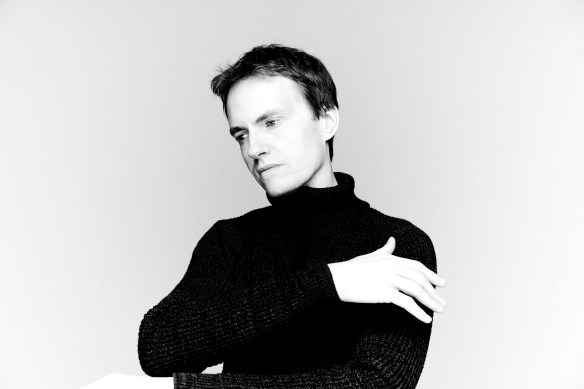
Boris Giltburg (piano, below)

Wigmore Hall, Monday 30 September 2019 (lunchtime)

You can listen to this concert on the BBC Sounds app here

Review and guide by Ben Hogwood

When Bach finished the first set of his celebrated Well-Tempered Clavier in 1722, he set in motion an approach to writing for the keyboard that has captured the imagination of several other composers through the centuries, writing a prelude and / or a fugue in each of the 24 keys and having them performed as a collection.

Sergei Rachmaninov was one of those composers so influenced, though he didn’t approach it as a collection initially. In fact he began with just one piece, the Prelude in C sharp minor, which sat in the middle of the 5 Morçeaux de Fantaisie for piano when published in 1892. With the composer still in his late teens, this Prelude shot him to stardom – and so he was only too happy to revisit the form with another 23 pieces, delivered in two installments in the years 1903 and 1910.

The prelude became one of Rachmaninov’s primary methods of expression in his solo piano music, and the pieces are much loved. Boris Giltburg’s selection here did not however include the two most famous examples – the C sharp minor piece, nor the famous G minor prelude from the Op.23 set, Boris Giltburg preferring instead to show that the other 22 are absolutely not to be overlooked! From these he picked a selection of 14, arranged chronologically but also logically in their key groups.

Rachmaninov’s writing for piano is almost instantly recognisable, and only a few seconds of the Prelude in B flat major Op.23/2 (1:27) are needed to confirm his authorship. The ready and natural flow of notes, the power of the right hand, working in octaves on this occasion, and an outpouring of passion. Giltburg kept a fine measure of expression and control.

He complemented this heady start with the soft yet ardent Prelude in D major Op.23/4, and then another stream of consciousness from the Prelude in C minor Op.23/7, carrying all before it to an emphatic end. Giltburg’s phrasing was ideal here, knowing when to ‘breathe’ in the longer phrases.

The Prelude in A flat major Op.23/8 shows something of the influence of Chopin, and this one too flowed nicely under Giltburg’s direction. Shifting the base to the Prelude in E flat minor Op.23/9 brought a more worrisome outlook, the right hand more agitated and becoming relatively sombre in its closing statement. The last of this set, the Prelude in G flat major Op.23/10, negotiated calmer waters, Giltburg lost in thought and the music.

The Op.32 selection begins in the ‘purest’ key, C major, so named as all its notes are the white keys on the piano – yet from Rachmaninov this is his shortest prelude, powered here by Giltburg’s weighty left hand opening. It formed a nice gateway to the Prelude in B flat minor Op.32/2, from which we were led to the heroic Prelude in E minor, the fourth in the set. This was brilliantly characterised and paced by Giltburg, a darkly dramatic performance.

The serenity of the Prelude in G major Op.23/5 was beautifully observed, as was the stark contrast to the following Prelude in F minor Op.32/6, which erupted out of the blocks. Most impressive of all, perhaps, was the substantial Prelude in B minor Op.32/10, a response to Arnold Böcklin’s painting Die Heimkehr (The Homecoming, above), a piece of genuine, bittersweet emotion, especially at the end where Rachmaninov struggles to choose between the minor and the major key.

After this the penultimate Prelude in G sharp minor Op.32/12 had a touch of the Mediterranean in its tremolo passages, and here Giltburg again gave the music plenty of room to breathe, his virtuosity extremely impressive. The final, substantial Prelude in D flat major Op.32/13 had a keen sense of homecoming, given a regal air in this performance.

Repertoire

Boris Giltburg played the following Rachmaninov Preludes (with timings on the BBC Sounds broadcast in brackets):

Rachmaninov
10 Preludes Op.23 (1902-03) – excerpts: in B flat Op.23/2 (1:27); in D Op 23/4 (5:09); in C minor Op 23/7 (9:27); in A flat Op 23/8 (12:04); in E flat minor Op 23/9 (15:56); in G flat Op 23/10 (18:15)
13 Preludes Op.32 (1910) – excerpts: in C Op 32/1 (23:05); in B flat minor Op 32/2 (24:34); in E minor Op 32/4 (27:31); in G Op 32/5 (33:03); in F minor Op 32/6 (36:18); in B minor Op 32/10 (37:50); in G sharp minor Op 32/12 (43:17); in D flat Op 32/13 (45:48)

He also played Schumann’s Arabeske in C major Op.18 (52:00) as an encore:

Further listening

All the preludes in this concert can be heard on this playlist in the order they were performed, using Giltburg’s own recently issued recording:

Giltburg proclaims Rachmaninov to be a favourite composer, and his recent recording of the composer’s Piano Concerto no.3 gives the listener little doubt in that respect! It’s coupled with the solo Variations on a Theme of Corelli:

Meanwhile this earlier release for Naxos gives a welcome coupling for the second set of Rachmaninov’s Études-Tableaux Op.39 – one of his best achievements for solo piano – and the impressive 6 Moments musicaux Op.16, which between them last around half an hour and contain some deeply expressive music:

Wigmore Mondays – Marnis Petersen & Camillo Radicke: Anderswelt (The Otherworld)

Marnis Petersen (soprano, above), Camillo Radicke (piano, below)

Wigmore Hall, Monday 23 September 2019 (lunchtime)

You can listen to this concert on the BBC Sounds app here

Review and guide by Ben Hogwood

A song recital that was truly out of this world.

German coloratura soprano Marnis Petersen and pianist Camillo Radicke brought the concept of their most recent recording, Dimensionen: Anderswelt, to the Wigmore Hall for an hour of 20 songs by no fewer than 18 composers.

The description ‘coloratura soprano’ depicts a singer that specialises in an operatic style, often high in the register – and that fits the music in this extraordinary collection. Most of the songs – and a couple of the composers – will surely have been new even to the most devoted Wigmore Hall attendee, and as Petersen and Radicke threaded the links cleverly through sections entitled The Otherworld, Elves, Mermaids and Mermen and Northern Lights, they plotted a course from deepest Germany to northern Iceland.

To begin Petersen read a short passage before the first group of five songs. Hans Pfitzner’s Lockung (Temptation) (2:25), with its twinkling piano and entreating mermaids, beckoned us in to the first of the Elves sections. Here we found Reger depicting a ‘pert and wanton’ elf, to a suitably heady vocal from Petersen, then the first of three settings of Eichendorff’s Elfe poem from Bruno Walter (7:28).

Camillo Radicke was superb here, with the insistent trills high up in the piano’s register, over which Petersen floated beautifully. Julius Weismann’s setting of the same text (9:43) again opted for the high register, this time in an attractive triple time dance. Though written in the same year as the Walter, it felt considerably older – and transitioned nicely to Brahms, setting Heine’s seductive water nymph in Sommerabend (Summer evening) (11:21), which found Petersen’s vocal control in very fine shape.

The Mermaids and Mermen section, again five songs in length, had an intriguing juxtaposition of composers. Hans Sommer’s Lore im Nachen (Lore in the skiff) found Radicke catching the ‘shimmer in the evening gold’ on a tranquil lake, as Petersen again soared high in the register. Grieg’s Med en Vandlilje (With a water lily) (18:09) introduced a wary atmosphere with the lurking water sprite (18:09) before Carl Loewe, heard to such great effect in Benjamin Appl and Kristian Bezuidenhout’s recital the previous week, was at it again with the boldly descriptive Der Nöck (The nix) (20:46). The nix (Petersen) and its harp (Radicke) were both strikingly portrayed, and Petersen’s vocal was superb. Sinding’s Ich fürcht’ nit Gespenster (I fear no ghosts) (29:18) was also a striking song, appropriately ghoulish in its coda from Radicke after Petersen had confidently confronted her spectres. Finally we heard a pupil of Hindemith, Harald Genzmer, and the agitated Stimmen im Strom (Voices in the river) (31:32)

To another quintet of songs on Elves, beginning with the cheeky Elfenlied, Wolf’s subject humourously caught by Petersen, who sang into the piano as her subject staggered about having banged his head. Friedrich Gulda’s setting of Elfe – the third of the concert – was a collector’s item (37:34), the 16-year old intriguingly matching the other two in the high treble area for an impish setting. Carl Loewe’s second appearance was with the operatic Die Sylphide (39:20), Petersen’s voice again reaching sparkling heights. Franz Schreker’s Spuk (Spook) (41:42) felt like some of the most modern music here, flitting about with uncertainty and tension, while in a rare outing for the music of conductor-composer Hermann Zumpe, Liederseelen (Song-Souls) (43:58) was affectionately sung.

Petersen and Radicke saved the most adventurous part of their concert until last, with four songs from Scandinavia and Iceland. Ariels Sang (48:06) was a rapturous contribution from Nielsen, boldly delivered, before Sinding reappeared with Majnat (May night) (50:26), a more thoughtful affair. Swedish composer Stenhammar’s Fylgia (53:25) was fulsome and florid in its praise of the spirit, but Sigvaldi KaldalónsHamraborgin (Castle crags) (55:46) painted its subject with uncanny atmosphere, depicting the rarefied atmosphere of the Northern Lights. Petersen capped her vocal performance here with a stunning top ‘B’ at the end.

It was a great way to finish – though after Radio 3 had departed there was another gem in store courtesy of the Finnish composer Yrjö Kilpinen, and an encore of his song Berggeist.

This was a recital of great imagination and technical brilliance. As an introduction to the classical song it would present some challenges to the casual listener, but with the enchantment offered by Petersen and Radicke’s partnership it would prove difficult to resist. Those familiar with the world – or otherworld in this case – should dive right in, as there will definitely be something new!

Repertoire

Marnis Petersen and Camillo Radicke performed the following songs (with timings on the BBC Sounds broadcast in brackets):

The Otherworld

Pfitzner Lockung Op.7/4 (1888-9) (2:25)

Elves I

Reger Maiennacht Op.76/15 (1903-4) (5:23)
Walter Elfe (1910) (7:28)
Weismann Elfe Op.43/4 (1909-10) (9:43)
Brahms Sommerabend Op.85/1 (1878) (11:21)

Mermaids and Mermen

Sommer Lore im Nachen Op.13/1 (publ. 1891) (15:25)
Grieg Med en Vandlilje Op.25/4 (1876) (18:09)
Loewe Der Nöck Op.129/2 (1857) (20:46)
Sinding Ich fürcht’ nit Gespenster (1885) (25:42)
Genzmer Stimmen im Strom (1941) (31:32)

Elves II

Wolf Elfenlied (1888) (35:24)
Gulda Elfe (1946) (37:34)
Loewe Die Sylphide Op.9 (1837) (39:20)
Schreker Spuk Op.7/4 (1898-1900) (41:42)
Zumpe Liederseelen (publ. 1895) (43:58)

Northern Lights

Nielsen Ariels Sang (1916) (48:06)
Sinding Majnat Op.22/3 (1893) (50:26)
Stenhammar Fylgia Op.16/4 (1893-7) (53:25)
Kaldalóns Hamraborgin (c. 1910) (55:46)

Encore – Kilpinen Berggeist Op.99/3

Further listening

All the songs in this concert can be heard from Petersen and Radicke’s recording on the Spotify playlist below:

One of many possible further steps is Wings In The Night, a collection of Swedish songs from mezzo-soprano Anne Sofie von Otter and pianist Bengt Forsberg:

There are so many songs by Carl Loewe that it is difficult to know where you could start. Given his artistry, tenor Christoph Prégardien would seem to be a good bet, this album of songs recorded with pianist Cord Graben:

Wigmore Mondays – Benjamin Appl & Kristian Bezuidenhout: Schumann, Loewe, Mendelssohn & Zelter

Benjamin Appl (baritone, above), Kristian Bezuidenhout (fortepiano, below)

Wigmore Hall, Monday 16 September 2019 (lunchtime)

You can listen to this concert on the BBC Sounds app here

Review and guide by Ben Hogwood

Lieder can be downright miserable sometimes, as Benjamin Appl acknowledged when thanking us for attending this recital of ‘jolly German music’, with which the Wigmore Hall opened their 2019-20 season of BBC Radio 3 Lunchtime Concerts.

Appl, a baritone of ever-growing reputation, was performing with Kristian Bezuidenhout, who played a Blüthner fortepiano dating back to Leipzig in 1856 – the year of Schumann’s death. The instrument, an attractive rosewood colour, proved the ideal foil for an interesting programme looking at the Lied in Germany around the first half of the 19th century. In an hour we covered some little known ground from the output of Schumann himself, complemented by settings by Mendelssohn, Zelter and Loewe.

The pairing began with three later Robert Schumann songs, all based around the character Harper, from Goethe’s novel Wilhelm Meister’s Apprenticeship. Schumann set the songs in 1849, the centenary of the poet’s birth. Appl stood tall and upright in front of the piano, communicating directly with the audience through his eyes as well as his voice. Wer nie sein Brot mit Tränen ass (Who never ate his bread in tears) was a sombre note on which to start, though the pain eased a little before the end, Bezuidenhout’s spread chords giving an indication of the fortepiano’s rounded sound. Wer sich der Einsamkeit ergibt (Who gives himself to loneliness) had a penetrating delivery from the singer, with a dark and unsettled postlude from the piano, while An die Türen will ich schleichen (From door to door will I steal) had a slightly lighter touch.

There followed three songs by Mendelssohn setting the poetry of Nikolaus Lenau. The short song An die Entfernte (To the distant beloved) danced lightly and was nicely phrased, before the nocturnal Schilflied (Reed song) was distracted and occasionally lost in thought. Frühlingslied (Spring song) emphatically blew away the cobwebs, the positive energy of the new season blowing the dark thoughts away.

The music of Carl Friedrich Zelter, a good friend of Goethe, is not often heard in the concert hall these days. He had his friend’s blessing however, the author approving of his direct methods of word setting, without too much in the way of musical dressing. His three Harfenspieler are bold settings and Appl sung them with clarity here, hitting the high notes of the second song with impressive intensity. Bezuidenhout was subtle in his complementary melodic lines on the fortepiano.

Contrasting with these were the dramatic songs of Carl Loewe. Herr Oluf is a self-contained Danish legend against the dangers of meeting Elves, and was performed with no quarter given, a terrific introduction from Bezuidenhout setting the energy level high. On occasion the singer has quite an unusual melodic profile, but this was straightforward for Appl’s vivid interpretation. The mischievous Hinkende Jamben was gone in an instant, with its mannerisms and lisps, before an expansive introduction to Tom der Reimer brought a grand tone from the singer. In a legend comparable in profile to Herr Oluf, it finished with brightly ringing bells, courtesy of Bezuidenhout’s picture painting.

When Schumann made his six settings of Lenau’s verse, he added a short Requiem in the mistaken knowledge that the poet had died. However when the day of the first performance arrived in 1850, news reached the gathering that Lenau had only just passed away, making the composer’s tribute strangely prophetic.

It is a dark cycle, reflecting perhaps the struggles of both men with mental illness – but illustrating at the same time the inner strength that music and poetry gave them. The steely Lied eines Schmiedes (Blacksmith’s Song) found Appl gathering himself with impressive projection, before the mood and heart softened a little for a languid account of Meine Rose (My Rose). Meanwhile Kommen und Scheiden (Meeting and Parting) had a devastating pay-off in the form of the emphasised last word, where the ‘last dream of my youth was taking leave of me’

Die Sennin (The Cowgirl) began with flowing piano, which led to Appl’s ringing delivery of ‘spring’s first song in the trees’, one of the recital’s most memorable moments. From there the cycle took a darker tone, Bezuidenhout breeding anxiety with the restless fortepiano line of Einsamkeit (Solitude), where Appl’s vocal was bold, and then to Der schwere Abend (The Sultry Evening) which was darker still, with a cold final line ‘to wish us both dead’. Thankfully the Requiem itself – a short Latin text – offered consolation and rest, as well as a rousing central section looking to the heavens.

This was a magnificent recital, with grace and power in equal measure from both performers, and the sound of the fortepiano a real treat in complement to Appl’s caramel tone. As a bonus we heard Mendelssohn’s Auf Flügeln des Gesanges (On Wings of Song), finishing in celebratory mood.

Repertoire

Benjamin Appl and Kristian Bezuidenhout performed the following songs (with timings on the BBC Sounds broadcast in brackets):

Schumann Wer sich der Einsamkeit ergibt Op.98a/6 (1:54); Wer nie sein Brot mit Tränen ass Op.98a/4 (4:55); An die Türen will ich schleichen Op.98a/8 (all 1849)
Mendelssohn An die Entfernte Op.71/3 (1842) (9:56); Schilflied Op.71/4 (1832 (11:17); Frühlingslied Op.47/3 (14:08) 1839)
Zelter Harfenspieler I-III (18:03)
Loewe Herr Oluf Op.2/2 (24:18) Hinkende Jamben (29:51); Tom der Reimer (30:35)
Schumann 6 Gedichte von Nikolaus Lenau & Requiem, Op.90 (37:53). Individual songs: Lied eines Schmiedes (37:53), Meine Rose (39:05), Kommen und Scheiden (42:52), Die Sennin Schöne (44:00), Einsamkeit (46:08), Der schwere Abend (49:11), Requiem (50:49)

Encore – Mendelssohn Auf Flügeln des Gesanges Op.34/2 (56:07)

Further listening

Benjamin Appl has not yet recorded any of the repertoire in this concert, save the encore, but suitable recorded versions can be heard on this Spotify playlist:

Wigmore Mondays – Imogen Cooper plays Brahms & Liszt

Imogen Cooper (piano)

Brahms Intermezzi Op.117 nos.1 & 2 (1892) (1:23 – 11:13)
Liszt Gretchen (Second movement of A Faust Symphony) (1854, arranged 1874) (11:52 – 30:05)
Brahms 7 Fantasien Op.116 (1892) (31:31 – 53:24)

Wigmore Hall, London
Monday 8 July 2019

To hear the BBC broadcast through BBC Sounds, please follow this link

Commentary and Review by Ben Hogwood Photo credit: Sim Canetty-Clarke

Brahms’ late piano music occupies a special place in 19th century repertoire. Rather like late Beethoven he makes use of the piano for some extremely confidential writing that starts to push at the boundaries of tonality and conventional rhythm. While Beethoven complemented his late piano works with a renewed inspiration for the string quartet, Brahms found the clarinet was his ideal ‘other’ vehicle in the early 1890s. Yet in the solo piano writing, here is a level of intimacy rarely found in the music of his time.

Imogen Cooper began her Wigmore Hall recital with two of the three late Brahms Intermezzi Op.117 – an example of where the composer would give a deliberately ambiguous title to a short piece, allowing himself the greatest possible freedom of form and expression. That said, the first – in E flat major – is simplicity itself, a much loved melody that Brahms used as consolation from the recent losses in his life. For this he drew inspiration from the Scottish ballad Lady Anne Bothwell’s Lament, and the piece benefits from Imogen Cooper’s unhurried approach in this performance (from 1:23 on the broadcast). The second piece in B flat minor is more flowing but also more directly troubled as it progresses (from 6:37), finishing in the lower recesses of the piano.

Published adjacently to the Op.117 Intermezzi are seven piano pieces Brahms called Fantasies – separate entities that work best as an overall whole. There are three Capriccio pieces, placed 1, 3 and 7 in the group, complemented with 4 Intermezzi, Brahms again keeping ambiguous labels for artistic freedom. Immediately however there is more heart on sleeve here, the first Capriccio in D minor (31:31) full of power and passion. The second piece, an Intermezzo in A minor, turns inwards, lost in thought (33:54), though there are brief glimpses of light in the central section.

The third piece, a Capriccio in G minor (37:42), has grand designs but still glints with a metallic darkness, using a falling melody whose outline is common to a number of late Brahms piano works, falling in melodic intervals of a third. A solemn central section is more hopeful before this music returns at 40:03. The fourth piece (40:55) is the first of three centred on the pitch of E, which seem to exist between major and minor keys. It is quite ambiguous, with a questioning harmony and uncertain rhythm – but finds calmer acceptance in its brief central section.

The fifth piece – another Intermezzo, now in E minor (45:06) is more mysterious still, its rhythm elusive, as though Brahms is in a dream state. Moving to E major for the sixth piece (47:58) we return towards earth, though the composer – and performer – are still in deep thought. A sudden jolt arrives with the final piece, another Capriccio in D minor (50:59), Brahms suddenly alert and on the front foot, and ending unexpectedly – and exultantly – in the major key. It is an ending hard won, but also slightly false, as it proves difficult to erase the deeply profound thoughts from earlier pieces.

The Liszt piece is a long slow movement taken from the composer’s orchestral / choral epic, A Faust Symphony. This is a portrait of Gretchen that transcribes particularly well for piano, Liszt’s gifts adapting his music and that of others between forms at its very best here. This is after all a composer who thought nothing of transcribing all nine Beethoven symphonies for solo piano.

Gretchen is tender and romantic, unfolding from the very start in a loving and flowing manner as played here by Imogen Cooper. Gradually the music becomes deeply passionate, Liszt building towards a series of weighty climaxes – the first around 19:10 and then again at 23:45. It can be heard as almost one unbroken phrase, and Cooper keeps a very natural feel to her phrasing, until the main theme returns at 24:14, where there is a very natural return to the mood and tenderness of the opening – before more extended dialogue. The period from 27:45 represents the coda, where a settled mood takes hold.

Throughout this concert Imogen Cooper let the music do the talking, as she always has done – not playing to the audience but producing beautifully rendered and carefully thought performances, with very impressive technical command – especially in the big-boned Brahms pieces. Of equal importance was her use of ‘rubato’, which is essentially breathing naturally in a musical sense so the rhythms sound more like phrases of a spoken or sung sentence. Everything came together wonderfully here, as it did in an encore of more Brahms – a beautifully observed account of the Waltz in A flat major Op.39/15, not heard on the broadcast.

Further reading and listening

The music in this concert can be heard below, in leading available versions. Imogen Cooper has yet to record late Brahms, so the playlist includes timeless versions of the pieces from Radu Lupu and Emil Gilels, along with Cooper’s recently recorded Liszt:

Cooper’s Liszt is part of an intriguing disc of piano music by Liszt and his contemporary and close relative Wagner, recorded for Chandos:

Another Imogen Cooper recommendation brings together piano music by Robert and Clara Schumann – a family affair with the former’s stormy Piano Sonata no.1 and Humoreske, nicely complemented with two of Clara’s Pièces caractéristiques:

Wigmore Mondays – Colin Currie Quartet in music by Pereira, Volans, Stockhausen & Reich


Colin Currie Quartet (Colin Currie, Sam Walton, Adrian Spillett, Owen Gunnell (percussion)

Pereira Mallet Quartet (2013 (1:36 – 10:08 on the broadcast link below)
Volans 4 Marimbas (2016) (12:38 – 33:21)
Stockhausen Vibra-Elufa (2003) (35:40 – 41:27)
Reich Drumming Part 1 (1970-71) (44:30 – 59:59)

Wigmore Hall, London
Monday 1 July 2019

To hear the BBC broadcast through BBC Sounds, please follow this link

Commentary and Review by Ben Hogwood

What a refreshing change to have percussion taking centre stage for a Monday lunchtime concert at the Wigmore Hall. Not only that but two of the four pieces had that ‘just off the shelf’ feeling, with the Joseph Pereira and Kevin Volans pieces written for Colin Currie’s ensemble. As an added bonus, South African composer Volans – 70 this year – was in the audience.

Pereira, principal percussionist with the Los Angeles Philharmonic, gave us bright metallic sounds from the start (1:36 on the broadcast). Crisp unison blocks of sound were broken up by quicker figures that gave the Mallet Quartet energy. With a broad range of timbres and pitches, the bursts of activity were often followed by pauses, giving a stop-start feel but ultimately heightening the drama. At 7:30 the quartet converged on a single pitch, D, the high point of the piece at which point the music takes a natural breather. Then the pitches regroup from the depths, returning to a treble pitch from which we tumble down what feels like a waterfall. Pereira’s music pictorial to the close.

Kevin Volans4 Marimbas (from 12:38) exhibited a warmer sound, the players using softer sticks to create a fluid and soothing experience, like running water. As it developed the players negotiated twists and turns skillfully, interpreting the piece an experience of ambient yet positive energy. Around the 19-minute mark the pitch rose, concentrating the mind, but then the sonorous tones of the marimbas’ lower ranges came in again.

Then at 21:45 the performers noticeably reined in the dynamic range, their sticks closer to the instruments as the sound shrunk before our ears. This is a tactic Volans has used on several occasions, working especially well here as percussion is not normally known for quiet performance! The audience subconsciously leant forward in the Wigmore Hall before the reassurance of the full marimba timbre came in again around a minute later. Towards the end it happened again and stayed quiet, proving even more effective second time around.

Stockhausen’s Vibra-Elufa, a short piece (from 35:40), was notable for its intensity and sinuous lines. Performed by Currie alone on marimba, it had moments of tender beauty but also shrill edges, especially when high in the treble range. It left an otherworldly, enchanting impression in the manner of the large-scale stage piece from which it is drawn and arranged, Freitag aus Licht.

Then we were on to Drumming, Steve Reich’s breakthrough masterpiece of 1971 that confirmed minimalism as a community-based musical form (from 44:30). It was a visit to Ghana in 1970 that convinced Reich he was on the right track with what has turned out to be his longest instrumental piece to date. Over time Drumming has evolved, and can even be divided into constituent parts, as here – with Part 1 concentrating on tuned bongos. The technical challenges remain, even over 15 minutes, with improvisational skills and a strong sense of form brought into play. Listen to the broadcast from 44:30 and you will hear how the quartet unite in big strokes of sound but gradually tumble out of phase, picking up kinetic energy as they do so, before aligning again for another commanding statement.

The players were superb, with clear visual communication the secret to a performance notable for its drive, accuracy and flair. Listen to it and lose yourself in the rhythms!
Each of the four pieces in this concert received technically brilliant performances. Currie was the natural leader but Walton, Spillett and Gunnell all stepped forward when required, emphasising the communal approach they have to their music and especially their new commissions. On the way out of the Wigmore Hall I overheard a regular saying it was one of the best lunchtime concerts he had ever been to in the venue, and I am inclined to agree!

Further reading and listening

The music in this concert is not available online, with the exception of Drumming – which exists in a recording made by Steve Reich, Synergy Vocals and the Colin Currie Group. It’s as close to authentic as you could wish for!

Since that recording Currie and Reich have made a live disc from the Foundation Louis Vitton, with a broad range of Reich’s work that includes the classic Clapping Music, the choral piece Proverb, the Mallet Quartet, Pulse and Music for Pieces of Wood. Typically functional titles from the composer there!

There is not a great deal of Kevin Volans’ music on Spotify, but one very good way into his music is via the string quartet – which is where a disc from 1994 from the Balanescu Quartet comes in. Hunting, Gathering, his second string quartet, is particularly evocative: