Nash Ensemble – German Romantics I: Clara Schumann & Fanny Mendelssohn

Nash Ensemble: Stephanie Gonley (violin), Adrian Brendel (cello), Ian Brown (piano)

Clara Schumann 3 Romances for violin and piano Op.22 (1853)
Mendelssohn Variations Concertantes for cello and piano Op.17 (1829)
Fanny Mendelssohn Piano Trio in D minor Op.11 (1847)

Wigmore Hall, London
Saturday 12 January 2019 (5.30pm)

Review by Ben Hogwood

As part of the Nash Ensemble’s German Romantics season at the Wigmore Hall, it was gratifying indeed to find a concert paying tribute to Fanny Mendelssohn and Clara Schumann as composers in their own right rather than simply inspiration for their more frequently performed husbands.

Clara was the muse for Robert Schumann, and even after his death sacrificed her own career as a composer to ensure his music was best heard. Here we heard her last published work, the 3 Romances of 1853, written when Robert was still alive. Using a method of presentation her husband often employed in chamber music, she wrote these three attractive pieces for great violinist Joseph Joachim, with whom Clara gave the first performance in Germany. Stephanie Gonley and Ian Brown gave a thoughtful and rather beautiful account here, Gonley’s tone and phrasing ideally suited to the longer romantic melodies. The first piece was tender and expressive, the second thoughtful but with glimpses of sunshine, and the third a flowing account with an attractive, long-phrased melody.

There followed the Variations concertantes Op.19, the first of several works by Felix Mendelssohn for cello and piano. Written for his younger brother Paul, they are a virtuoso collection of far reaching interpretations of a theme, and were brilliantly played here by Adrian Brendel and Ian Brown, whose eager dialogue caught the energetic approach of the early Mendelssohn. The music moved from affirmative major key to tempestuous minor, but its return was a beautifully realised shift in mood.

We then heard Fanny Mendelssohn’s final published work, a Piano Trio to place alongside – if not even slightly ahead of – the two great works in the form by her brother. With the unison opening from violin and cello, presented above flowing piano figurations, she immediately ensures the audience are held in the drama of a piece that picks you up from the outset and doesn’t let you go.

Gonley, Brendel and Brown were ideal vehicles to present the piece, revelling in the exchanges of the first movement and the warmly romantic themes when the music became more affirmative. The middle two movements, effectively Songs Without Words in the Mendelssohn tradition, were beautifully presented with lyricism and charm, the third becoming distinctly chilly towards its close, leading to a cadenza from Brown to resume the drama in the final movement. The considerable struggles here were played out with thrilling virtuosity, distilling even the most complicated counterpoint before a glorious closing section that swept all before it.

It is to be hoped Clara Schumann’s 200th anniversary year – together with festival’s such as Venus Unwrapped at Kings Place – will raise the profile of women composers, which it has to be said could hardly have been lower in previous years. Concerts such as this help immensely, bringing forward the quality evident from both Clara and Fanny, with the pertinent reminder that neither Schumann nor Mendelssohn – nor indeed Brahms – could have achieved their musical goals without these creative forces.

For more information on the Nash Ensemble and their German Romantics series, visit their website

Further listening

You can listen to the music from both concerts of the latest German Romantics evening on the Spotify playlist below:
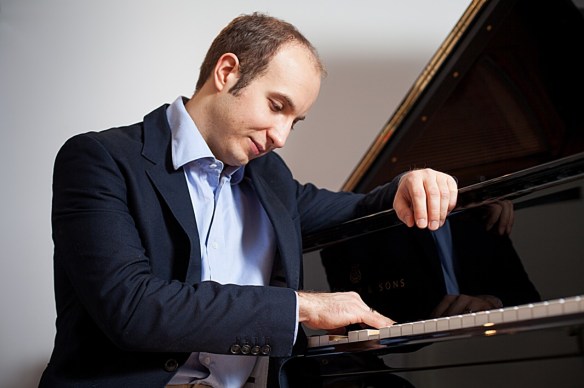
Wigmore Mondays – Alexander Gavrylyuk plays Prokofiev, Mozart & Rachmaninov

Alexander Gavrylyuk (piano)

Mozart Piano Sonata in C major K330 (c1783) (1:56-20:20 on the broadcast link below)
Rachmaninov Preludes: in G flat major Op.23/10 (1903), in G minor Op.23/5 (1903), in G sharp minor Op.32/12 (1910) (22:04-32:25)
Prokofiev Piano Sonata no.7 in B flat major Op.83 (1942) (34:12-51:06)

Wigmore Hall, London
Monday 7 January 2019

To hear the BBC broadcast through BBC Sounds, please follow this link

Commentary and Review by Ben Hogwood

On his website, Ukrainian-Australian pianist Alexander Gavrylyuk makes the profound statement that ‘not many things in this world can unite people – no form of diplomacy could ever do that. I think that music comes the furthest in revealing that perhaps on a deeper level we are all quite similar’.

The quote is especially instructive given the work with which Gavrylyuk ended this concert, Prokofiev’s Piano Sonata no.7. Yet in these uncertain times his words are appropriate to any musical experience. Few have the purity of his Mozart, an account of the Piano Sonata in C major K330, the composer’s tenth published work in the form which was written just after he moved to Vienna. Published in his late twenties, it is very much a ‘white’ work – as in, written in the key whose scale uses all the white notes on the keyboard.

Yet, as a listen to this performance (from 1:56 on the broadcast link) will show, Mozart enjoys a good deal of chromatic movement, using the black notes to add considerable spice and intrigue to what initially seems like an extremely polite piece. Gavrylyuk plays with poise and elegance, enjoying the composer’s good manners but equally thriving on the diversions as they get more pronounced.

The slow movement (from 8:59) reveals much more of these tendencies, especially in its central minor key episode, a deeply personal piece of writing with tragic overtones (from 11:28). It casts a shadow from which the whole movement takes a while to recover, even when moving back into the safer intimacy of the major key (13:38). With a cutesy flourish the finale (15:22) returns us to happier music making, and seems to take on the influence of Scarlatti while looking forward to early Beethoven. Again Mozart enjoys more exotic melodies than the key suggests, keeping wit and positivity to the fore.

Rachmaninov’s big early success as a composer came through the famous Prelude in C sharp minor, its declamation a big hit with audiences. From this he was inspired to write 24 Preludes, one in each key, published in two subsequent books of 13 and 10 works respectively. The three heard here are fine pieces in their own right, beginning with the relatively confidential Prelude in G flat major Op.23/10 (22:04). This leads to the raw power of the Prelude in G minor Op.23/5 (25:24), one of Rachmaninov’s best-loved piano pieces, which builds into a march of real substance in Gavrylyuk’s performance. The Prelude In G sharp minor Op.32/12 (29:40) is an intriguing work, its bell-like sonorities hinting at the influence of the East and leaving quite an impression in this performance.

The reason Gavrylyuk’s statement is so pertinent to Prokofiev’s Piano Sonata no.7 is because the piece was written – as with so many Soviet pieces of its era – on two levels. Its crowd-facing elements were to please Stalin, to ensure Prokofiev stayed in his favour with works that left his audience in an ultimately positive frame of mind. How could they be otherwise, given the ferocity of the final movement? And yet the private elements are there for all who listen closely, for this is the central of Prokofiev’s three ‘War Sonatas’, completed in 1939. The first movement may be loud and brash (from 34:12) but it also has music of barely concealed turmoil, revealed clearly in the second theme two minutes later, where the virtuosity is completely absent.

Prokofiev is one of the most percussive of earlier 20th century composers for the piano, alongside Bartók and Stravinsky, and as the first movement proceeds there is an impressive rhythmic drive. All that is removed for the profound slow movement, however (42:11), where he quotes from Wehmut (Sadness), part of Schumann‘s Op.39 cycle Liederkreis, another private clue to his predicament.

In this performance Gavrylyuk has the sonata’s measure to a tee, investing a lot of feeling in the slower music while seemingly using the louder moments to banish evil from his sight. The last movement (47:57) is thrill-a-second, the repeated three note motif in the left hand taking over and driving to a hugely impressive finish, by which time the pianist was so far back he was almost horizontal!

Appropriately we had calming Schumann for an encore, providing a consoling link to the slow movement of the Prokofiev. This was Von fremden Ländern und Menschen (Of Foreign Lands and Peoples) from his 1838 collection Kinderszenen (Scenes from Childhood) Op.15 (52:28).

Further listening

You can listen to the music from this concert on the Spotify playlist below, including Alexander Gavrylyuk’s own recording of the Prokofiev:

The recording of the Prokofiev is part of an intriguing recital disc released in 2011, which includes works by fellow Russian composers Rachmaninov (his underrated Moments Musicaux Op.16) and Scriabin (his Piano Sonata no.5):

Meanwhile to further explore the Prokofiev piano sonatas, Denis Kozhukhin is an excellent guide. This album contains the other two sonatas in the so-called ‘war trilogy’ of works:

Live review – RTÉ Contempo Quartet & members of Ad Libitum & Arcadia Quartets: Enescu & Bartók

RTÉ Contempo Quartet [Bogdan Sofei & Ingrid Nicola (violins), Andreea Banciu (viola), Adrian Mantu (cello)]; members of the Ad Libitum Quartet [Remus Azoitei (violin) and Filip Papa (cello)] and Arcadia Quartet [Rasvan Dumitri (violin) and Traian Boala (viola)]

Wigmore Hall, London
Sunday 30 December 2018, 11:30am
Given in association with the Romanian Cultural Institute, London and RTÉ

Bartók (arr. Naughtin) Romanian Folk Dances BB68 (1915)
Enescu Octet in C major Op.7 (1900)

Written by Richard Whitehouse

This last of the Sunday Morning Concerts for 2018 at Wigmore Hall proved a culmination in every respect – a performance of the Octet for strings with which the teenage Enescu saw in the twentieth century, and which remains among his most innovative and impressive works.

Completed in 1900, the Octet then had to wait almost a decade for its first public hearing and subsequent performances were more likely from string orchestras; even when this piece was given as intended, the eight instruments were often coordinated by a conductor – testament to a contrapuntal intricacy and emotional intensity that ensembles have only recently felt able to take in their collective stride. Such was undoubtedly true of the present reading, in which the RTÉ Contempo Quartet was partnered by members of the Arcadia and Ad Libitum Quartets.

In his own Octet the teenage Mendelssohn had 75 years earlier hinted at an overall unity, via long-term thematic links, which Enescu takes much further by designing his first movement an extended exposition that is ‘developed’ across two successors before the finale brings an intensified reprise and climactic apotheosis. Not that this account took risks with the work’s formal or expressive audacities; rather its numerous insights were unassumingly drawn into an ongoing continuity which proceeded from an alternately febrile and languorous Scherzo, then raptly eloquent slow movement, to a finale whose heady rhetoric was vividly channeled into the culmination – a fervent augmentation of the work’s opening theme, propelled by an elemental waltz motion, that the young Enescu arguably never surpassed for sheer panache.

A technical as well as interpretative challenge, then, that was triumphantly brought off – any flaws in intonation or ensemble far outweighed by the cumulative impact of this performance. Not its least notable aspect was the tangible interplay between musicians responsive not only to their own parts but also to those of their colleagues, so rendering superfluous any need for a conductor. Certainly, the near-capacity audience responded with real enthusiasm to a piece that, if they were unfamiliar with beforehand, they had evidently taken to heart by the close.

An as entree into the main work, the RTÉ Contempo gave a fluent and atmospheric reading of Bartók’s Romanian Folk Dances – here in an idiomatic while texturally slightly too fussy arrangement by Matt Naughtin as set the scene for what followed in suitably bracing terms.

For more information on the RTÉ Contempo Quartet, visit their website. A Spotify playlist of the music given in this concert is included below, with the Romanian Dances in the more frequently heard version for string orchestra:

Wigmore Mondays: Augustin Hadelich & Charles Owen – Brahms, Ysaÿe & Adams

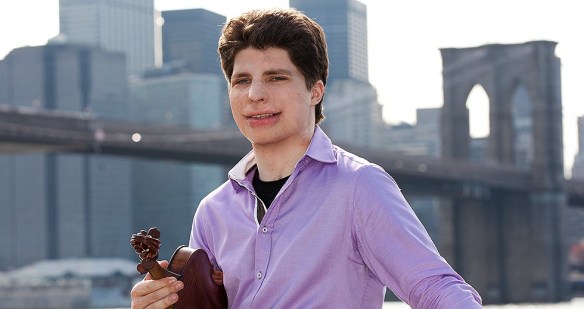
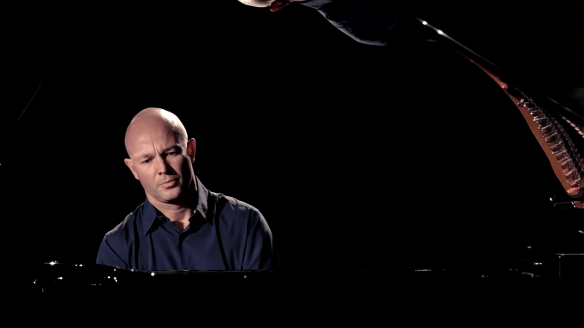
Augustin Hadelich (violin, above), Charles Owen (piano, below)

Brahms Violin Sonata no.1 in G major Op.78 (1878-9) (1:57-28:08)
Ysaÿe Sonata for solo violin no.4 in E minor Op.27/4 ‘Fritz Kreisler’ (1923) (30:31-40:44)
Adams Road Movies (1995) (43:33-1:00:24)

Wigmore Hall, London; Monday 10 December 2018

You can listen to the BBC Radio 3 broadcast by clicking here

Written by Ben Hogwood

This was the third Monday lunchtime in the last six weeks where BBC Radio 3 and the Wigmore Hall have been concentrating on music for violin and piano. This nicely constructed recital complemented the previous pair from Aleksey Semenenko and Inna Firsova, and Tai Murray and Silke Avenhaus, where we had heard two of the three violin sonatas by Grieg.

On this occasion we heard a contemporary of those works, the BrahmsViolin Sonata no.1 in G major – a work written for his friend, the great violinist Joseph Joachim – and one also picked up by Clara Schumann. It is a highly attractive work and received an affectionate performance here, Augustin Hadelich and Charles Owen straight into the beatific air of the first movement (from 1:57 on the broadcast) With an equally genial theme from 3:24, this was Brahms at his most radiant, with a sweet tone from the violinist and flowing countermelodies from Owen. The airy role reversal at 5:20, with Owen playing the tune and Hadelich giving pizzicato (plucked) accompaniment was a lovely moment – as was the content beginning of the coda (11:35). In between this the music was passionate and animated, Brahms developing his source material.

The second movement (from 12:34) also benefited from Hadelich’s sweetly toned instrument, shaping up to be a lovely reverie until a much more animated central section blew away the cobwebs (15:00). Returning at 16:23, the main theme gained an extra layer from double stopping on the violin (playing more than one string at once), and Owen’s piano line continued as a model of sensitivity.

Clara Schumann stated that she would happily have the last movement of this sonata to accompany her on her journey ‘to the next world’, and you could hear why in this performance (from 20:05), which brought out its bittersweet quality. Brahms moves between G minor and G major, a delicate balancing act of music that sounds a bit fretful and gentler, uplifting thoughts. Hadelich and Owen caught them perfectly here, the latter’s nicely pointed piano working particularly well on the dance-like second idea of the movement. From 25:37 the major-minor tension resumed, resolved in a serene coda from 26:20, ending quietly.

Ysaÿe wrote his six solo violin sonatas at great speed, publishing them all together in 1923. The fourth pays particular homage to Bach, incorporating the dance forms that were used in his Sonatas and Suites for solo stringed instruments. It was dedicated to the violinist-composer Fritz Kreisler, one of the very greatest string players. Not surprisingly it makes technical demands on the performer but Hadelich was brilliant here (from 30:31), careful not to overdo the virtuosity at the expense of musical communication.

The three sections of the sonata moved from a dramatic first movement Allemanda (30:31) through a slowly evolving Sarabande used by the composer as a fugue (34:50) and then a bracing Finale (37:57). The Sarabande had the most striking sonorities of the three, thanks to the inventive pizzicato techniques matched spotlessly by Hadelich, but the last movement was a tour de force with which to finish!

Following this was one of the first pieces John Adams wrote for chamber forces, his evocative trip Road Movies, after a period where he admits to ‘studiously avoiding the chamber music format’. Yet, as this entertaining three movement piece proves, his music translates effortlessly to the smaller scale. The piano (played heroically here by Charles Owen!) supplies a lot of the rhythmic impetus and the bass foundations, leaving the violin to operate more freely up top.

The first movement, Relaxed Groove, is described by the composer as ‘a relaxed drive down a not unfamiliar road. Material is recirculated in a sequence of recalls that suggest a rondo form’. Both performers got to the nub of the bluesy music straight away, and also evoked the ‘solitary figure in an empty desert landscape’ in the second movement, entitled Meditative (49:11), where Hadelich had to detune his bottom string from a ‘G’ to an ‘F’. Finally the toe-tapping 40% Swing (55:19) closed out this virtuosic piece, both players smiling as they enjoyed its grooves and motifs.

We disembarked from the Adams vehicle, but an encore was waiting to see us on our way – a rather fine arrangement by Ysaÿe of the Chopin Nocturne in C sharp minor, played with appropriate tenderness by Hadelich. Owen’s flowing accompaniment, too, was finely judged.

Further listening

Augustin Hadelich has not yet recorded any of the works in this recital, but the following playlist brings together the music heard in the concert, including a version of the encore arranged by Nathan Milstein:

For those enjoying the Ysaÿe Solo Sonata, a logical next port of call would be the unaccompanied 24 Caprices by Paganini, which Hadelich has recently recorded:

For those enjoying the Adams, here is a disc including not just Road Movies but a collection of the composer’s works for keyboard:

Wigmore Mondays: Lara Melda – Ballades by Chopin & Liszt

Lara Melda (piano, above)

Chopin Ballades for piano: no.1 in G minor Op.23 (c1835) (2:11-12:09 on the broadcast link; no.2 in F major Op.38 (1839) (13:10-20:38)
Liszt Ballade no.2 in B minor S175 (1853) (22:30-39:40)
Chopin Ballades for piano: no.3 in A flat major Op.47 (1841) (41:28-49:15); no.4 in F minor Op.52 (1842-3) (50:38-1:02:39)

Wigmore Hall, London; Monday 3 December 2018

You can listen to the BBC Radio 3 broadcast by clicking here

Written by Ben Hogwood
Photo credit Emrah Bostan

A very well planned and presented hour of Ballades from Lara Melda, contrasting beautifully the approaches to the form by Chopin and Liszt.
Chopin’s Ballades are some of the finest works in all his output for solo piano, and contain numerous innovations in form, style and substance. The four works are very different in character, each telling a very different story – but a private one to the composer, too.

The Ballade no.1 in G minor Op.23 gives a stern call to arms at the start of proceedings (from 2:11 on the broadcast), Melda taking a long (and appropriate) pause before beginning, but starting very slowly too. Though arguably too slow, it is a dramatic interpretation, beautifully paced and technically very strong, remaining straight faced throughout but really working up a head of steam from 4:45 onwards. A slower section follows, nicely phrased, before a return to the stern outlines of the minor key, Melda’s octaves probing sharply (from 7:10). From 10:40 the music gathers itself for a powerful and deliberate (but again very effective) finish.

The Ballade no.2 in F major Op.38 (13:10) has an almost Christmassy feel to start with, the gentle theme making itself known in a rocking formation. This contrasts to a violent intervention (15:17) in a completely different mood and key, Melda keen to make a wide difference between the two approaches. Initially this is a flash in the pan, the soft theme returning at 16:18, but the brittle intervention has not gone away for long, and appears once more from 18:30. Here the pianist does not feel quite so controlled or disciplined – possibly intentionally. The quiet music does return again (20:09), crucially now in a minor key, to indicate force has not quite won the day.

Liszt’s approach to the Ballade, perhaps not surprisingly, is to make it an all-encompassing literary whole, telling the story of Gottfried Bürger’s Lenore in fifteen minutes of high drama. Beginning in the murky depths of the piano at 22:30, the more extensive Ballade no.2 in B minor S175 immediately makes an impact under Lara Melda’s direction, the probing lower range theme setting the scene. The next section, from 26:40, is jagged and unhinged, beginning Lenore’s ride on the horse with her dead lover. This macabre setting full of octaves in the piano’s right hand is brilliantly played, as is the softer, bell-like section that follows at 29:50. Then a tumultuous section shows off Melda’s ability for clarity at speed, a typical whirlwind of Liszt octaves reaching its climax at 32:10. From 34:09 a chorale-like theme begins to develop, reaching its apex at 36:57 and then subsiding to a quiet end.

Chopin’s Ballade no.3 in A flat major Op.47 (41:28) contrasts nicely with the bombast of the Liszt, its relatively reserved but lyrical opening theme one of the composer’s very best. A contrasting waltz section (43:38) is much more assertive, and finds Melda adding a nice lilt to the music. These two alternate as though in a quest for domination, and were beautifully played here. The only slight blot on the landscape was what appeared to be a memory blip from Melda on the last few chords, but she recovered to finish in the ‘home’ key.

Finally the Ballade no.4 in F minor Op.52 (50:38), arguably the most difficult of the four – and an extremely intense piece of music. Melda played it with the same assurance she gave the other three ballades, capturing the deep melancholy at the heart of its waltz-like theme. This was a very concentrated reading, leading inevitably to the quiet five chords (1:01:01) and the incredibly powerful coda that follows (1:01:38)

A fine concert, then, from a pianist with a keen sense of drama, a near-impeccable technique and a clear passion for this music.

Further listening

Lara Melda has plans to release an all-Chopin disc next year, which will be her first recording. The playlist below includes well-loved accounts of the Ballades from Vladimir Ashkenazy, while for completeness I also included the encore Melda played at the Wigmore Hall after Radio 3 had gone off the air:

Another Romantic composer to write Ballades for the piano was Brahms, whose early examples for the piano were published in 1854 as 4 Ballades Op.10. This legendary recording by the pianist Emil Gilels forms part of a disc of Brahms’ Piano Quartet no.1 in G minor, which has the same key and a similar mood to the first of Chopin’s Ballades: