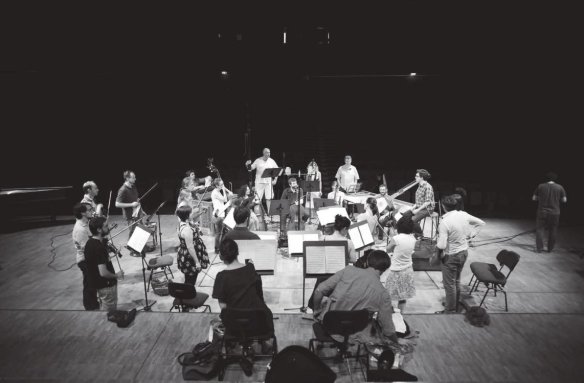
Julia Fischer & Igor Levit – Beethoven at Wigmore Hall

fischer-levit

Richard Whitehouse on a complete cycle of Beethoven’s Sonatas for piano and violin given at the Wigmore Hall over three nights, from Monday 4 – Wednesday 6 July

Monday 4th – Sonatas Op.12 nos.1-3 (1797-8); A minor, Op.24 (1800)

Tuesday 5th – Sonatas in F, Op. 25, ‘Spring’ (1800-1); Op.30 nos.1-3 (1801-2)

Wednesday 6th – Sonatas in A, Op. 47, ‘Kreutzer’ (1802-3); in G, Op. 96 (1812)

Julia Fischer (violin), Igor Levit (piano)

Unlike his symphonies, string quartets or piano sonatas, Beethoven’s violin sonatas cannot be taken as representative of his output as a whole. The first nine were written in barely six years up to the threshold of the composer’s second period, whose ending is duly marked by his final such work. The cycle nevertheless makes for an ideal mini-series as is frequently encountered, with the present one – spread plausibly yet unequally over three recitals – from Julian Fischer and Igor Levit having already been heard in Munich, Berlin, Zurich and Paris.

A violinist who has few equals for consistency of line, with a pianist of abundant insight over a broad repertoire, promised much for this traversal and so it proved – whether in the robust expressive contrasts of the Op. 12 trilogy, the more pronounced differences between those of Opp. 24 and 25, the almost perfect balance that prevails between the widely varied threesome of Op. 30, then the virtuosity and high-flown rhetoric of Op. 47; with the formal subtlety and emotional restraint of Op. 96 at far more of a remove than its temporal distance might suggest.

One of the chief attractions of such a cycle is hearing pieces that rarely surface independently in recital. Hence the Sonata in A which forms an unobtrusive centrepiece to the Op. 12 set, its elegant intermezzo-like Andante preceded by an Allegro whose waltz-like insouciance amply complemented the drily humorous finale. Arguably a little too knowing here, Fischer sounded more at ease with the Sonata in D – not least its questing initial Allegro and tonally deceptive finale, though the central variations felt a little over-calculated for their poise fully to register.

The Sonata in E flat brought out the best in this partnership, Levit pointing up the emotional breadth of the opening Allegro as surely as Fischer maintained the unbroken melodic span of its Adagio, before the duo laid on the rhetoric of the combative finale. Hardly less impressive was the Sonata in A minor – its coursing initial Presto unfolded with propulsive energy, then its successor duly emerging as a quixotic amalgam of slow movement and scherzo such as is offset by a finale whose restless modulations anticipate Schumann, Brahms and even Reger.

Opening the second recital, the ‘Spring’ Sonata presented less of an expressive contrast than expected – not least as Fischer downplayed the Schubertian elegance of its initial Allegro as surely as the Mendelssohnian sentiment of its Adagio. The brief Scherzo was wittiness itself, even if the finale’s easefulness felt a little matter of fact. Not so the Sonata in A that launches the Op. 30 set, the airy lyricism of its Allegro a deft foil to the searching Adagio that may be Beethoven’s most elusive such movement, with the final variations having minx-like charm.

The Sonata in C minor inevitably dominated this sequence, its initial Allegro of an expressive vehemence comparable to its formal ingenuity then the Adagio with a simmering tension that burst forth in the stark coda. Levit made play with the Scherzo’s fractious piano part, while it was Fischer who took the lead in a final Allegro of an energy purposefully held in check until its coruscating coda. Not that the Sonata in G was unduly anti-climactic: the knowingness of its minuet manqué a telling foil to those respectively tensile and deadpan Allegro’s either side.

The final recital comprised the last two sonatas in a short measure yet ideally complementary programme. Too often an exercise in rhetorical overkill, the ‘Kreutzer’ Sonata was notable for an unusually close-knit integration of the first movement’s Presto with its Adagio introduction – opening-out without dissipating its driving impetus, then the Andante’s eloquent variations building to a searching coda. The final Presto capped the whole with fine style, its underlying tarantella replete with a teasing archness and sufficient pathos to make it a fitting conclusion.

Nine years on and the Sonata in G closes Beethoven’s ‘heroic’ second period with a poise at times verging on the ethereal. Fischer and Levit amply evoked such a quality in the unhurried opening Allegro, its trills and arpeggios as whimsical as they were profound, then the Adagio plumbed depths as were deftly offset on seguing into the Scherzo with its terse rhythmic gait and winsome trio. If the final Allegro felt at all uneventful, the inwardness and decisiveness of its closing two variations were tellingly conveyed as the work (and the cycle) neared its end.

And that was it – with, as in the previous two recitals, no room for encores or for Beethoven’s relatively minor sundry pieces for violin and piano. No matter, this was an impressive as well as an absorbing traversal – not least for its underlining those collaborative strengths as makes the Fischer/Levit duo a potent one. Hopefully it will be taking this music into the studio at the earliest opportunity, so leaving a permanent record of three evenings as amply reinforced the strengths of what remains the most significant contribution to its genre over two centuries on.

You can read Arcana’s interview with Tasmin Little about the Beethoven sonatas here
Wigmore Mondays – Daniel Ottensamer & Christoph Traxler

daniel-ottensamer

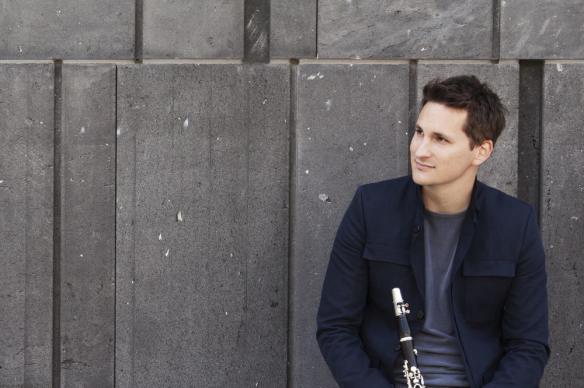
Daniel Ottensamer (clarinet, above), Christoph Traxler (piano)

Wigmore Hall, London, 27 June 2016

written by Ben Hogwood

Audio (open in a new window)

http://www.bbc.co.uk/programmes/b07h6cn8

Available until 27 July

What’s the music?

Luigi Bassi Concert Fantasia on themes from Verdi’s Rigoletto (1901) (13 minutes)

Zemlinsky arr. James Breed 2 Fantasies on Poems of Richard Dehmel Op. 9 (1990) (6 minutes)

Poulenc Clarinet Sonata (1962) (13 minutes)

Horovitz Clarinet Sonatina (1981) (13 minutes)

Spotify

Daniel Ottensamer and Cristoph Traxler have not recorded this music, but the Spotify playlist below gives a guide to other versions in the event you are unable to access the broadcast link:

About the music

A range of music for clarinet and piano, most of which lies slightly off the beaten track compared to repertoire staples.

We begin in Italy, with the clarinettist and composer Luigi Bassi (1833-1871), whose concert fantasia on themes from Rigoletto is arguably his most popular work. We then move to Vienna and Alexander Zemlinsky, a composer who for a long time was better known as teacher to Arnold Schoenberg. In more recent times his music has taken on greater prominence, for it sits between the romantic approach of Brahms and Mahler and the music of his pupil, which eventually left tonality behind altogether.

The Richard Dehmel fantasies were written for piano, but James Breed discerned suitable lines for clarinet and arranged them with the instrument in mind.

Poulenc’s Clarinet Sonata is his last piece of chamber music, written in the summer before his death in 1962. Dedicated to Arthur Honegger, it was written for the clarinettist Benny Goodman.

Joseph Horovitz has been a prolific English composer, particularly for woodwind, and at the age of 90 still cuts a sprightly figure – he was in the audience for this concert! Born in Vienna, Horovitz emigrated to England at the start of the Second World War, and studied music in London. His sonatina for clarinet and piano, a short work with jazzy inflections, was completed in 1981.

Performance verdict

A fine and varied program of music for clarinet and piano, given with some panache by Daniel Ottensamer and Christoph Traxler. The Poulenc was an especially fine performance, with the faster movements taken at a daring pace. This meant a little bit of phrasing on the melodies was compromised, but the overall effect was thrilling.

This was also the case with Bassi’s Concert Fantasia, a real crowd-pleaser of a performance, which was nicely complemented by the heady romanticism of the Zemlinsky, effectively transcribing for clarinet and piano in James Breed’s sensitive arrangement.

The Horovitz was great to watch, especially with the composer’s enthusiastic reaction at the end. There were some persuasive rhythms here, some of which seemed to have been directly imported from the West Indies, and Ottensamer moved around the stage as he played, fully immersed in the music.

Another special moment was to follow in Popov’s arrangement of a late Brahms Intermezzo, bringing pure contemplation to the hall and some incredibly sensitive, quiet playing from both clarinet and pianist Christoph Traxler, who expertly shaded his lines throughout.

What should I listen out for?

Bassi

1:20 – the piano begins with a fanfare to make the audience sit up, preparing the way for the clarinet in a manner that suggests a grand orchestral piece. The clarinet arrives at 2:07, almost imperceptibly but then showing off through music of great athleticism. Once arrived it settles into a graceful theme. Then after another grand passage the clarinet showcases one of Verdi’s main themes at 4:23. The music becomes light and agile.

There is some very enjoyable back and forward between the clarinet and piano as they play Verdi’s themes and their variants, as though they are dancing on the stage themselves. The theatrical performance tricked the audience (including me!) at 10:10, where we thought the two had finished – but instead there were more athletics to come, finishing with a flourish at 14:00.

Zemlinsky / Breed

15:38 – Voice of the evening – as you might expect for music of the evening the mood is languid, the clarinet murmuring above the hazy piano. The harmonic language is rich with added notes, adding to the enchanted atmosphere.

18:45 – Forest rapture – this piece is more outwardly expressive in the clarinet part, but still carries a humid atmosphere, the trees close at hand. The arrangement for clarinet is a natural one.

Poulenc

23:28 – a bright, staccato start soon leads to one of the main themes of the sonata’s first movement, given on the clarinet at 23:43. Poulenc utilises the instrument’s capacity for bittersweet emotions, with music that alternates between charm and mischief. At 25:40 the music takes on a slow, thoughtful mood which the clarinet tops with a melody of great beauty. Then the music of the opening reappears, in a more sombre form.

28:49 – the second movement is a deeply felt Romanza, led by the clarinet with a lyrical opening, before another gem of a quiet melody at 29:36. This is countered by a higher, more raucous thought.

33:33 – after some introspection both clarinet and piano burst out of the blocks with an exuberant finale. It’s hard to resist the bright and breezy clarinet theme!

Horovitz

37:43 – a settled and fluid start from both clarinet and piano, quite lyrical in its delivery, though the music becomes livelier and has an undercurrent of angst in the exchanges between the two instruments. Then we return to the more convivial mood of the opening.

42:56 – a shadow falls across the start of the slow movement, with both instruments quiet and reserved.

47:14 – this is the most distinctive movement of the three, with a swaying rhythm immediately given out from the piano. This is a license for the clarinet to roam free, and it does so with persuasive good spirits.

Encore

51:30 – an arrangement of a Brahms piano piece – the Intermezzo, Op.118 no.2, made by Nicolai Popov. It is a lovely, autumnal piece of music.

Further listening / viewing

The clarinet was a very important instrument for one of this year’s anniversary composers, Max Reger. Reger is an undervalued composer, and some of his most expressive music was written for clarinet and piano, as this album from Eduard Brunner and Gerhard Oppitz reveals:


Wigmore Mondays – Les Ambassadeurs

les-ambassadeurs

Les Ambassadeurs / Alexis Kossenko (above)

Les Ambassadeurs (Lina Tur Bonet, Stefano Rossi (violins), Tormod Dalen (cello), Allan Rasmussen (harpsichord) / Alexis Kossenko (flute, director)

Wigmore Hall, London, 20 June 2016

written by Ben Hogwood

Audio (open in a new window)

http://www.bbc.co.uk/programmes/b07gnc3g

Available until 20 July

What’s the music?

Blavet Flute Concerto in A minor (1745) (14 minutes)

Pisendel Sonata in D for violin and basso continuo (c1717) (11 minutes)

Leo Flute Concerto in G (unknown) (8 minutes)

Leclair Ouverture No 3 in A major, Op 13 No 5 (1746) (4 minutes)

Vivaldi Recorder Concerto in A minor, RV108 (1724) (7 minutes)

Spotify

Les Ambassadeurs have not recorded this music, but the Spotify playlist below gives a guide to other versions in the event you are unable to get the broadcast link to work:

About the music

It is more than possible that you will only have heard of one of the five composers in this concert, which also presented Les Ambassadeurs in their first visit to the Wigmore Hall. The ensemble is normally around fifteen strong, though to fit the confines of the venue here it was scaled down to five.

Les Ambassadeurs is modelled on the Dresden Hofkapelle, an orchestra in Bach’s time that was regarded as one of the best in Europe. The music they choose comes from the 18th century, naturally, but here presents contemporaries who are not often heard.
Michel Blavet (1700-1768) was a French flautist and composer, and a prominent part of Les Concerts Spirituel in Paris. His Flute Concerto of 1745 was rediscovered in 1954.

Meanwhile the Italian composer Leonardo Leo (1694-1744) was a prolific composer for the stage, but wrote in particular for cello and flute. This concerto appears to be a recent discovery.

Composer-violinist Leclair (1697-1764) appears with an overture intended for his only opera Scylla et Glaucus, while Johann Georg Pisendel (1687-1755), an employee of the Saxon court in Dresden, wrote his Violin Sonata in an Italian style, bringing to mind the compositions of Vivaldi.

Speaking of which, the concert concludes with one of Vivaldi’s many concerti for flute / recorder and strings. This one was composed at a time when the composer was often away from Venice, but sent scores by post for his pupils to play.

Performance verdict

A series of excellent performances gave a valuable insight into a corner of the eighteenth century not often visited in concert.

Alexis Kossenko led his charges with great enthusiasm, and the planning of the concert was ideal to give a contrast between the works for flute and recorder and those smaller scale pieces for violin – brilliantly played by Lina Tur Bonet.

The works of Blavet, Pisendel and Leo stood up well in comparison to their more illustrious contemporaries, with lively introductions from the strings in the flute concertos, setting the tone for some considerable virtuosity from Kossenko.

What should I listen out for?

Blavet

5:46 – the strings begin with a purposeful tune, the start of a lively Allegro. They are joined by the flute at 6:32. The flute is then the dominant character in proceedings, which includes quite a substantial development of the first tune. At 10:43 we hear the flute alone in a showy cadenza, over a single held note from the other players, before they wrap up the movement.

11:39 – Blavet stays in the key of A minor for his slow movement, a solemn piece of music – but then there is a switch to A major at 13:07, and a lighter outlook. Then at 14:16 the harmonies turn once more to the minor key, though there is now a more positive feel to the music.

15:07 – the strings begin with some brisk music, and you might hear the slap of bow on string as they strive for maximum thrust. The flute joins at 15:49 with a similar sense of purpose. At 16:35 there is a flashy cadenza, but then at 18:12 and 19:02 we hear it in some very difficult music, taking the solo role to extremes.

Pisendel

20:45 – the ‘basso continuo’ (cello and harpsichord) set out a bright opening to which the violin quickly responds, before taking the lead in light hearted dialogue. Then at 22:00 the harmonies open out into more complex areas and the solo violin is given a really testing workout. Eventually Pisendel works his way back to the original key.

24:19 – a slow second movement, still in the original key of D major, but making moves towards the minor key a lot, giving the harmonies more colour in music of greater strife.

27:40 – back to the major key for the third movement, where the violin has a free standing part over the continuo, which anchors the music. From 30:30 Pisendel makes greater demands on his soloist, with rapid string crossing. There is a false end at 31:42, then a proper finish a couple of seconds later.

Leo

33:16 – the strings start off with a perky theme, setting out the main melodies and figures before the flute joins them at 33:57. Before long Leo is asking a lot of the flute, with some breathless phrases before we hear the strings’ theme again at 35:28, now in the key of E minor – the closest ‘relative’ to the work’s home key of G.

37:21 – for the slow movement Leo moves back to the ‘relative’ minor for a slow dance, gracefully introduced by the violins before handing over to the flute at 38:01.

41:23 – after the relative anguish of the slow movement the breezy finale is a nice contrast, the violins flourishing with their tunes, complemented by the flute from 41:58.

Leclair

45:54 – a series of rapidly ascending scales on the cello and violin form the basis of the musical material for this characterful overture. It is a lively, bright piece of music.

Vivaldi

51:16 – Vivaldi gets straight down to business in this piece, with no way of introduction – the strings and recorder are straight in together with some quick exchanges. From 53:30 the recorder has a tricky, virtuosic passage.

54:17 – slow, chugging violins over spread chords from the harpsichord set the scene, after which the recorder comes in with longer phrases.

56:44 – a triple time dance, led by the recorder with enthusiastic support from the strings.

Further listening

As a complement to this concert, here is a link to Les Ambassadeurs in accompaniment to the soprano Sabine Devieilhe, in an enticing album of vocal works by Rameau:

Wigmore Mondays – Gli Incogniti and Amandine Beyer play Vivaldi

gli-incogniti-clara-honorato

Gli Incogniti / Amandine Beyer (above, photo Clara Honorato)

Wigmore Hall, London, 13 June 2016

written by Ben Hogwood

Audio (open in a new window)

http://www.bbc.co.uk/programmes/b07f6nvn

Available until 12 July

What’s the music?

Vivaldi Sinfonia from L’Olimpiade, RV725 (1733) (6 minutes)

Violin Concerto in F, RV282 () (11 minutes)

Violin Concerto in G minor, RV322 (1728) (10 minutes)

Concerto in G for violin ‘in tromba marina’, RV313 () (7 minutes)

Ballo Primo from Arsilda, regina di Ponto, RV700, & Giga, RV316 (1716) (4 minutes)

Violin Concerto in D, RV228 (c1720-30) (9 minutes)

Spotify

In case you cannot hear the broadcast, Gli Incogniti have recorded all the Vivaldi music played in this concert, and it can be heard here:

About the music

Vivaldi wrote a vast amount of music, a lot of it functional. Yet through the duty of being a court composer there was always the spirit of invention in his music, especially when certain restrictions were imposed, such as for the concerto written for a violin ‘in tromba marina’, where Amandine Beyer plays an instrument where she has virtually destroyed the bridge to give an unusually distorted sound.

The G minor violin concerto, RV322, has been reconstructed by Beyer herself, while the Ballo Primo and Giga is a nice combination of three movements that effectively make up a concerto. The third of these is actually by Bach, but based on a work of Vivaldi.

Finally the group and Beyer play one of the composer’s ‘Dresden’ concertos, which Vivaldi wrote for the Dresden Hofkapelle, whose army of forty or more players made it one of the largest orchestras at the time.

Performance verdict

Gli Incogniti exhibit pure enjoyment when they play the music of Vivaldi, and the concert here was full of the enthusiasm they bring to his music. Because of this there was plenty of energy on display, with the solo violinist and conductor Amandine Beyer responsible for some gravity defying solo virtuosity.

She also had to battle against the elements, for her instruments seemed determine to go out of tune – a hazard for all period instrument groups – but she battled with the elements with impressive ease.

What should I listen out for?

Sinfonia

1:38 – the Sinfonia starts like the wind in the branches of a tree, with repeated notes (tremolandi) on the strings creating momentum. The music is lively and quite ceremonial.

3:49 – for the bittersweet slow movement Vivaldi turns to a minor key, and the violins take a reflective tone.

6:25 – a perky fast movement to complete a typical three-movement format. The lower parts are much more active than the upper this time.

Violin Concerto in F major RV282

8:37 – quite a cheeky start to the first movement concerto, with a breezy main theme. Eventually the music winds up so the soloist can show their mettle, and the violin’s bright tone dominates proceedings from here on.

13:12 – as is customary for a concerto in a major key (F major in this case) Vivaldi uses what is known as the ‘relative minor’, that is the minor key closest related to F major – which is D minor. It is suited for the sombre and relatively stern mood that the music takes. Again the violin leads proceedings.

15:28 – the carefree mood is resumed with another bright and breezy tune from the strings, the violin taking over at 16:07.

Violin Concerto in G minor, RV322

20:28 – the serious tones of the opening lessen a little as the music becomes more energetic, but there is still a darker atmosphere around this music. The violin takes over early on, and you may be able to hear the metallic glint of the harpsichord behind it.

24:49 – staying in G minor, Vivaldi slows the tempo almost to a complete stop. This is an especially poignant movement, the textures quite sparse with a searching melody given to the solo violinist.

27:47 – the third movement feels like a statement of defiance after the sorrow of the slow movement. It has the characteristic Vivaldi energy, whether in the bold strings or the tricky solo part. It ends with impressive gusto.

Concerto in G for violin ‘in tromba marina’, RV313

The violin for this has been adapted by Amandine Beyer so that it rattles when she plays the strings, so it might sound a bit unconventional!

32:07 – the rasp of Beyer’s instrument can be heard as part of the powerful thrust that begins this piece. At times the distortion sounds almost electronic, but is put in context by the steady accompaniment by bass section and harpsichord.

34:50 – a rather beautiful but stark tone from Beyer’s instrument as the music moves into the slow movement.

37:05 – a vigorous, scrubbing motion brings in the music of the third movement, after which we hear Beyer in a solo capacity again, with what sounds like some really tricky passage work!

Ballo Primo and Giga

41:15 – quite a gentle, lilting piece of dance music in triple time, with an attractive colour to the violins.

43:08 – staying in triple time, the next movement is a quicker one, harder on the hips I suspect!

44:07 – the tempo is even faster for the ‘giga’, the violins playing a distinctive three-note motif that takes over the whole dance.

Violin Concerto in D major RV228

47:20 – a brisk theme begins the violin concerto with a sense of purpose on the part of the ensemble, which the solo violin takes up at 47:48.

50:13 – the textures change for the slow movement, as the violins adopt use plucking in the background. The soloist becomes really elaborate in her playing, with some emotive trills and turns to the melody, complemented by some colourful harmonies from the cello and harpsichord. This all takes place in B minor, the ‘relative’ minor key of the concerto’s key of D major.

52:21 – a rush of melodies from the violins return the mood back to one of optimism. There is a highly virtuosic cadenza for the soloist from 54:40.

Encore

58:45 – as fresh as a spring day, this encore (the slow movement from a Violin Concerto in B flat major, RV372a) again uses plucked violins before the solo violin arrives with an expressive and endearing simple melody over the top.

Further listening

As a complement to their Vivaldi, here is another album from Gli Incogniti and Amandine Beyer, concentrating on his French contemporary François Couperin:

Wigmore Mondays – Lars Vogt plays the Bach Goldberg Variations

lars-vogt

Lars Vogt (piano)

Wigmore Hall, London, 6 June 2016

written by Ben Hogwood

Audio (open in a new window)

http://www.bbc.co.uk/programmes/b07dkdt8

Available until 4 July

What’s the music?

J.S. Bach Goldberg Variations, BWV 988 (1742) (55 minutes)

Spotify

In case you cannot hear the broadcast, Lars Vogt has recorded the Goldberg Variations which can be heard here:

About the music

The Goldberg Variations have an intriguing genesis. The generally accepted account is that they were written by Bach for performance by Johann Gottlieb Goldberg, who needed something to play to pass the time when his master, Count Keyserlingk – the Russian ambassador to the court of Dresden – was unable to sleep.

Bach wrote the variations for him and published them in 1742, though their lack of a dedication coupled with a few other factors have led some to doubt their authenticity as a work for Goldberg.

That is a minor aside, though, for the Goldberg Variations are one of the pinnacles in keyboard music. Lasting almost an hour, they are a huge set of variations on an Aria, which is a three-minute, self-contained unit in itself. Throughout the duration Bach reaches profound emotional depths, especially in the minor key variations, while in the more exuberant fast music he explores complex but extremely positive music. They are a tour de force for any keyboard player, and are perhaps the work by which the legendary Canadian pianist Glenn Gould is best remembered.

Performance verdict

Lars Vogt clearly has a great deal of admiration and affection for this music, for this was a spellbinding performance of one of the great cornerstones of the keyboard repertoire. The Goldbergs make great demands on the versatility of an artist, exposing any limitations in their technique – but where Vogt was concerned, there did not appear to be any.

It was helpful that he paused after some of the bigger variations, allowing Bach’s revelations in the minor key in particular to sink in. Others he linked very closely together, so that there was a natural ebb and flow between the fast music and the slow.

This was an incredibly assured performance, after which Vogt simply raised the music itself to the audience – a gesture that spoke volumes for the stature in which the work continues to be held.

What should I listen out for?

1:23 – the Aria, which is a slow Sarabande. It is heavily ornamented – by which it is meant the right hand of the piano decorates its melodies. Yet there is a sense of time standing still as Bach announces the main theme for his variations.

5:02 – Vogt moves straight into the lively Variation 1, where Bach builds up a fluid momentum.

5:54 – the bright Variation 2, a little quieter and beautifully poised with discussion of the melodies between both hands (or ‘counterpoint’ as it is commonly known!)

6:41 – Variation 3, a Canon – where one part shadows the other throughout. Again Bach gives this a totally natural appearance, in a lilting triple time.

8:32 – the more rigid Variation 4.

9:34 – the quickfire Variation 5, with a rapid figuration of semiquavers as the music hurtles forwards.

10:17 – Variation 6, the second Canon in the variations and one that explores some advanced harmonic movements.

11:28 – a detached profile to the melody of Variation 7, with a detached and staccato nature that gives it a French flavour.

12:14 – the busy eighth variation brings the two hands close together on the keyboard, and streams forward, leading straight into…

13:08 – the ninth variation, a slower, poised affair, and the third of Bach’s Canons.

14:43 – Variation 10, a ‘fughetta’ – by which you can hear each part entering individually with Bach’s new theme. The counterpoint builds in a compact statement.

15:28 – Variation 11 is quicker, and tricky to execute.

16:24 – Variation 12, and Bach’s fourth canon, is a stately and expansive affair.

19:24 – Variation 13 is a Sarabande, the first to fully evoke the spirit of the Aria and to behave in a similar, decorated way.

21:38 – the reverie is burst by Variation 14, a brisk affair that has some striking, jumpy rhythms in the right hand. Legendary pianist Glenn Gould compared this variation to Scarlatti.

22:38 – Variation 15, the fifth canon. It has some adventurous chord progressions, moving mysteriously through the minor key as it becomes progressively more anguished. Gould says this would not be out of place in Bach’s St Matthew Passion, as a genuine piece of mourning. A period of silence at the end only heightens the impact.

26:18 – the flavour of a French Ouverture runs through Variation 16, which has a ceremonial air, with some florid statements from both hands. It opens out into a faster section.

28:57 – a virtuosic Variation 17

29:56 – the dance returns for Variation 18, which is another canon, the parts dancing in a calculated but surprisingly breezy near-unison.

31:19 – Variation 19, and Bach still as prodigiously inventive as he was at the beginning. This is a relatively gentle, triple time dance.

31:58 – Variation 20 quickens the pace again, with quick interaction between the hands.

32:58 – for the seventh canon, Variation 21, Bach moves back to the minor key and a solemn exchange of melodies.

35:23 – back to the major key for 22, where Bach often fills out the texture to four parts.

36:05 – a bright Variation 23, where the hands are higher up the keyboard, exchanging some florid ideas.

36:59 – another canon, the eighth, for Variation 24, a triple time dance with an attractive lilt.

39:47 – the third and last minor key variation, 25, is a darker turn after the positivity of the previous one. It is also a lot slower, with time seemingly coming to a halt towards the end of Bach’s discourse. Because of its emotional impact it has been described as ‘the black pearl’ of the set.

43:23 – after the depths of the minor key, Variation 26 sounds like a frivolous thought, with a burbling idea exchanged between the two hands.

44:27 – Variation 27, a little stern in its set canon but with a strong air of positivity.

46:29 – Variation 28 is higher up the keyboard, with repeated figures that Bach moves around a harmonic sequence. There is a lot of hand crossing for the pianist here.

48:13 – in Variation 29 the tempo is still quick and the hands stay close together, though the right one does run off alone at times.

50:16 – Variation 30, the last one, is given the title of Quodlibet, a kind of improvised work. Here Bach really lets his invention go, using the melodies of a couple of folksongs as he strays far from the original.

52:01 – a note for note repeat for the Aria from the start, closing the entire Goldberg Variations.

Further listening

Rather than another set of variations, the recommended further listening is for a set of shorter Bach pieces played on the piano. These can be heard in a stylish album from Alexandre Tharaud, who has incidentally also recorded the Goldberg Variations. Here he focuses on some of Bach’s works with an Italian flavour, including the Italian Concerto among others: