Wigmore Mondays: Golda Schultz & Jonathan Ware – Mozart, Schubert, Amy Beach & John Carter

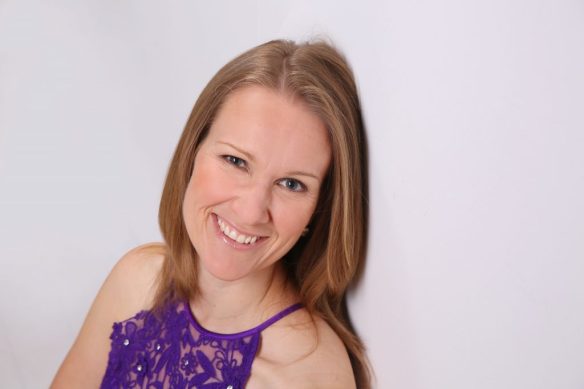
Golda Schultz (soprano, above) and Jonathan Ware (piano, below – credit Kaupo Kikkas)

Mozart An Chloe, K524; Das Lied der Trennung, K519 (both 1787)
Schubert Heimliches Lieben, D922 (1827); Romanze (Rosamunde, D797 No 3b) (1823); Suleika I, D720; Suleika II, D717 (both 1821)
Amy Beach Three Browning Songs, Op 44 (1900)
John Carter Cantata (1964) (40:33-53:30)

Wigmore Hall, London; Monday 5 February 2018

You can listen to the BBC Radio 3 broadcast by clicking here

Written by Ben Hogwood

It is always welcome to see a singer make their debut at a venue like the Wigmore Hall with a less than usual recital programme in tow. South African soprano Golda Schultz did just that, giving with pianist Jonathan Ware a concert ranging some 200 years and crossing from Europe to North America as it progressed.

Europe first, and two songs from Mozart. While known as a vocal composer, Mozart’s songs are relatively rarely heard in the concert hall, and it was nice to hear two substantial, more mature examples, from around the time of Le Nozze di Figaro. An Chloe made a relatively graceful start, Schultz exhibiting a full voice with a lovely bright top end to the soprano voice, but the more substantial Das Lied der Trennung (6:49-11:30) told a story of greater angst.

The Schubert selection (from 19:32-29:28) was a quartet of the composer’s settings of women poets, beginning with the late (for him, anyway!) song Heimliches Lieben. Written when the composer was still only 29, it is a deeply passionate affair, and Schultz involved herself completely. Then we heard the lovely Romanze (16:20), with its deep longing, persuasively phrased in accompaniment by Ware.

Both Suleika songs followed, often wrongly attributed to Goethe but with words by Marianne von Willemer. The first, initially an edgy affair (19:32), was described by Brahms as ‘the loveliest song ever written’, and here benefited from Schultz’s poise and Ware’s telling shifts from major to minor key before evening out for a radiant coda. The second (25:16) included the same shifts, but danced lightly on its feet.

Amy Beach was one of the first women composers to really make a lasting impression in classical music, terrible as that sentence sounds. Some of her songs are well known, in particular these three short settings of poetry by Robert Browning (31:02-33:50 on the broadcast). The first, The Year’s at the Spring! (31:02), was a rapturous picture postcard with which to throw open the doors, while Ah, Love, but a Day! (32:13) grew gradually higher in range, Schultz making the most of this with an exquisitely floated delivery. Finally I Send My Heart Up To Thee (33:50) was a joyful ray of light.
Ending the program was a real curiosity, the Cantata by little-known Afro-American composer John Carter (1932-c1981). Written for and premiered by Leontyne Price in 1964, it is based on settings of Negro spirituals, but adds some particularly vivid descriptions in the piano part, heroically played here by Jonathan Ware. His Prelude (40:33) set out an impressive stature for the piece, which Schultz built on with Peter, Go Ring Dem Bells (41:23). This developed into a tour de force, increasingly fervent with peals of bells in the right hand and a soaring top B flat from Schultz, brilliantly delivered.

After this a step backwards was needed – and found – in Sometimes I Feel Like A Motherless Child (45:12), a solemn utterance, before the contemplative Let Us Break Bread Together On Our Knees (48:02). From the silence came a tumultuous final movement (51:22), the Toccata Ride On King Jesus. Both performers gave it everything, capturing the mysterious power of Carter’s music.

There were two encores – an affectionate account of Somewhere Over The Rainbow (54:48), vibrato beautifully controlled, and then, closer to home for Schultz, an Afrikaan song entitled Homesickness (1:00:28).

Further listening

You can watch an intriguing interview with Golda Schutz below, in which she candidly discusses her own stage fright – which certainly was not on show at the Wigmore Hall!

Meanwhile to hear recordings of the music from this concert you can use the Spotify playlist below:

Listening to the John Carter Cantata I was reminded of Copland’s Old American Songs – and you can hear them in their choral versions below, conducted by Michael Tilson Thomas:

Joanne Lunn, Hallé Orchestra / Ryan Wigglesworth – Mozart & Mahler

Joanne Lunn (soprano, above), Hallé Orchestra / Ryan Wigglesworth (conductor and piano)

Mozart Ch’io mi scordi di te, K505 (1786)
Mozart Symphony no.34 in C major, K338 (1780)
Mahler Symphony no.4 in G major (1892, 1899-1900, rev. 1901-10)

Bridgewater Hall, Manchester; Wednesday 8 November 2017

From 24 November you will be able to listen to a BBC Radio 3 broadcast of this programme – link to follow

Written by Ben Hogwood

This was a nicely programmed afternoon concert, an attractive set of pieces with a Viennese connection that could initially be seen as lightweight but which were anything but.

First up was an inventive choice, Mozart’s standalone concert aria Ch’io Mi Scordi De Te?, a tribute to the soprano Nancy Storace. Written for soprano with piano and reduced orchestral forces, the composer used a text attributed to Lorenzo Da Ponte, who wrote the libretto for Don Giovanni, The Marriage of Figaro and Così fan tutte. Joanne Lunn sang with great purity of tone, with her high notes particularly well-judged, while Ryan Wigglesworth (below) directed with sensitivity from the piano in the tender duet sections, where the orchestra felt like eavesdroppers.

This was followed by an extremely tasteful reading of Mozart’s Symphony no.34. This is a work that doesn’t get to poke its head above the parapet as much as its neighbouring ‘named’ symphonies in the composer’s output such as the Haffner and Linz. Wigglesworth chose his speeds well, so that the lovely Viennese textures were just the right density for Mozart’s lighter (but not lightweight) melodies. The energetic Hallé strings went well with the more graceful woodwind, particularly in the joyful finale, while the serene slow movement was also a highlight.
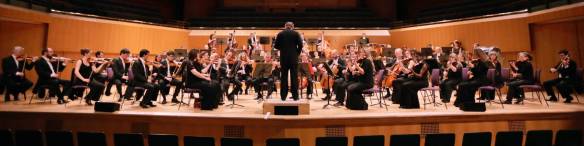
Mahler’s Symphony no.4 is, on face value, his most ‘classical’, following traditions established by Schubert and the like, innovatively adding a soprano for the final movement, a child’s vision of heaven. Wigglesworth’s interpretation was carefully thought out and extremely well played, the woodwind of the Hallé rising to the considerable challenges posed by this deceptively difficult symphony.
On the surface, the Fourth is grace and charm personified, but the cracks often show in the music, the lower you go in the orchestra. The first movement was crisp and clear, a bright outdoors scene beautifully painted, but a chill shadow was cast in the second movement thanks to leader Paul Barritt’s solo contribution on a specially tuned violin, not to mention those ominous rumblings in the bass. The slow movement had a beautiful serenity but the feeling of slight unease persisted, quelled briefly by a magnificent evocation of the gates of heaven, Wigglesworth securing rich, bright colours from the orchestra.

Lunn returned to the stage for the child’s vision of heaven, a radiant encounter but with the macabre orchestral elements present and correct. Wigglesworth consistently found the delicacy of Mahler’s scoring, as well as the ghoulish apparitions that are never far from the surface of this enchanting piece.

While this concert is not yet available online, you can listen to a Spotify playlist of the works performed below:

ECMA showcase – Pacific Quartet Vienna at the Wigmore Hall

pacific-quartet

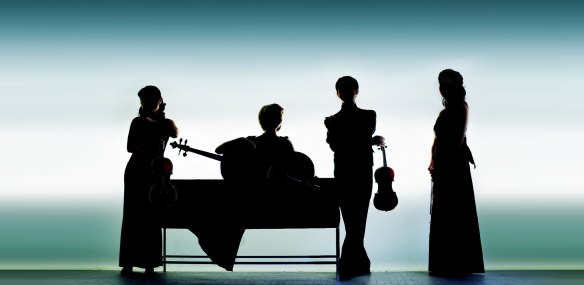
Pacific Quartet Vienna (Yuta Takase, Eszter Major (violins), Chin-Ting Huang (viola), Sarah Weilenmann (cello))

Mozart String Quartet in D minor, K421 (1783)

Schumann String Quartet in A major Op.41/3 (1842)

Wigmore Hall; Saturday January 28, 2017

Flying in the face of Brexit, the European Chamber Music Academy is a body established in 2004 by the Alban Berg Quartet founder Hatto Beyerle.

It provides training for flourishing chamber ensembles, and here gave a showcase for the Pacific Quartet of Vienna, a chance for them to play at the hallowed Wigmore Hall for the first time.

There was much to admire. A nicely balanced program of Mozart and Schumann began with one of the six quartets the former composer wrote and dedicated to Haydn. The D minor is the darkest quartet of the six, exploring more oblique harmonies and melodies than the composer normally would. The quartet gave a nicely poised performance, the obdurate and slightly gruff outer movements punctuated by flashes of light. The slow movement was light and beautifully floated, as though they were performing an aria, while the trio section of the stern minuet took the weight away completely, a note of mischief added to the duets between leader Yuta Takase and violist Chin-Ting Huang.

For the Schumann the quartet had a noticeably warmer sound, and they bought joy to one of the composer’s happiest utterances, written in the wake of his marriage to Clara. The lyrical first movement and romantic third were affectionately played, Huang giving maximum expression to the melodies. The scherzo was fun but eventually paled in the shadow of the finale, which gets obsessed with a ten note motif to the point of distraction. Here it cropped up with amusing regularity, the intervening sections deliberately contrasted with it so that it felt like home.

This was an impressive first Wigmore outing for the quartet, who clearly enjoyed the experience and the music they brought with them. I would wager it won’t be the last!

You can read more about forthcoming ECMA events at their website, while further information about the Pacific Quartet Vienna can be found by clicking here

Oberon Symphony Orchestra : Mahler Symphony 4 with Anousheh Bromfield

oberon-symphony

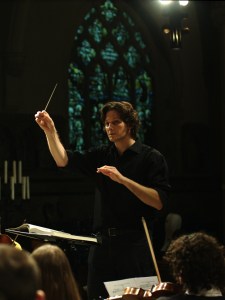
Anousheh Bromfield (soprano), Oberon Symphony Orchestra / Samuel Draper (above)

St James’s, Sussex Gardens, London. Saturday 21st January, 2017

Mozart Vorrei spiegarvi, oh Dio!, K418 (1783); Ah sie in ciel, benigne stele, K538 (1788); Nehmt meinen Dank, K383 (1782)

Mahler Symphony No.4 in G (1892; 1899-1900)

L-R Wolfgang Amadeus Mozart (1756-1791); Gustav Mahler (1860-1911)

Written by Richard Whitehouse

The Oberon Symphony Orchestra continued its season with this pertinent juxtaposition of Mozart and Mahler. The second half was devoted to the latter composer’s Fourth Symphony, in a performance that brought out a great deal of its ethereal rapture as also its oblique irony.

Opting for a steady though never sluggish underlying tempo for the first movement, Samuel Draper (below) made much of this music’s constant eliding between affection and agitation; the latter quality to the fore during a development that built stealthily and incrementally toward its (in context) visceral climax, with the ensuing textural fragmentation then resumption of the main theme in media res tellingly done. Nor was there any lack of eloquence in the Oberon strings’ response to the blissful final pages, before a heady accelerando into the resolute closing bars.

The second movement upped the ironic ante accordingly. Draper knitted together its sardonic scherzo and ruminative trio sections with no mean subtlety, while also emphasizing the aura of malevolence – this latter abetted by leader Matt Bain’s adept switching between violins as tuned normally as well as a tone higher. No less pleasing was Draper’s unaffected approach to portamento – an expressive device only belatedly reintroduced but that, when handled so unobtrusively, adds greatly to the cohesion of this music whatever its emotional disjuncture.

If the adagio was marginally less well integrated in terms of its overall follow-through, there was little doubt as to the poise of Draper’s conception across these variations on contrasted themes in what is arguably Mahler’s most Beethovenian movement. If the slowly emerging angst seemed overtly reined-in, moreover, the breath-taking sense of the coda opening-out onto new expressive vistas was palpably conveyed; the music that follows evincing a highly personal take on the essence of serenity which was – and has remained – unique to Mahler.

Following on (rightly) attacca, the finale needs to lighten the prevailing mood without that unworldliness seeming trivial. In which respect this account succeeded admirably, whatever the occasional failings in ensemble. It helped to have a soloist who, in Anousheh Bromfield, had the measure of the vocal writing’s pert insouciance and often edgy naivete. The lengthy orchestral introduction into the final verse had an ideal lilting motion, with the closing bars not so much tapering-off into nothingness as making toward a point of unwavering stillness.

samuel-draperBefore the interval, Bromfield joined the orchestra for a selection of Mozart concert arias     as complementary as it was unexpected. There was no want of technical finesse in Vorrei spiegarvi, oh Dio! or Ah sie in ciel, benigne stele, though the greatest delights came with a rare outing for Nehmt meinen Dank which incidentally pointed up the unfettered melodic appeal common to Mozart’s settings in German. In each of these pieces, moreover, Draper and his players provided accompaniment of a poise and elegance necessary for this music.

Overall, another fine showing for the Oberon Symphony Orchestra – which returns on April 29th with a further notable first: the UK premiere of Enescu’s Fourth Symphony as realized by the late Pascal Bentoiu, together with shorter orchestral pieces from Bartók and Schubert.

Further information at the Oberon Symphony Orchestra website

Ask the Audience at the BBC Proms – Annie Turner on the BBC Symphony Orchestra

Ask The Audience Arcana at the Proms
annie-turnerThis is the latest in the series where Arcana invites a friend to a Prom who does not normally listen to classical music. In an interview after the concert each will share their musical upbringing and their thoughts on the concert – whether good or bad! Here, Annie Turner (above) gives her thoughts on Prom 62.

Baiba Skride (violin), Siobhan Stagg (soprano), Christopher Maltman (baritone) BBC Symphony Orchestra / Siobhan Young

Bayan Northcott Concerto for Orchestra (2014-2016, world premiere); Mozart Violin Concerto no.5 (1775); Zemlinsky Lyric Symphony (1922-23)

You can listen on the BBC iPlayer here

Arcana: Annie, what was your musical upbringing?

I was born in 1980 and so my earliest musical memories would be Vangelis, Dire Straits, Phil Collins and stuff like that, so I’m very fond of that music in a sentimental way. I was really interested in playing music, and I remember when I was about seven or eight I was absolutely desperate to learn the recorder, as the older kids in school were playing them. My mum asked the teachers but they said I was too young, and I had to wait until I was nine!

I learned recorder and got to play in the school concerts, but after that you pick up another instrument, so I did keyboard. I went to a country school in Australia, so there wasn’t a big music program. I learned piano for a while but struggled with the music because I didn’t find it interesting! It was classical, and it was a bit boring for me as a kid, but I really loved listening to music and working out the fidelity for myself. My dad was really into Andrew Lloyd Webber, and I used to work out bits of melody from Phantom of the Opera and Cats.

Then I stopped and didn’t pick it up again until high school when I was interested in bands. I got interested in grunge and wanted to play it, so I got into drums and guitar lessons, and really loved that. By the time I was that age I got really shy and didn’t want to play in front of anybody, so I was a bedroom musician. I still kept studying music at school though, and then when I graduated from high school I really wanted to play in a band.

I moved to Melbourne to go to university, and it was my dream to play in a band, so I just had to get over my stage fright! I joined any band that would have me…and I’ve played in some terrible bands and some awesome bands, but I mostly ended up playing drums in all of them, so I dropped the guitar. I played in a heavy metal band, a punk band and an experimental bands, a few jam bands. I did that for a few years, and we recorded and toured which was great. Then I moved to London and didn’t do it again, because London was a bit too big and intimidating and it was hard to have the resources. So that was my musical upbringing!

Could you name three musical acts you love, and why you love them?

There is a Norwegian black metal band called Satyricon, which I love, and I love them because I find their music is well written, well-constructed, engaging, it’s very melodic, atmospheric, it’s quite dark as well which I find when you’re in that mood. It’s frenetic, there’s a lot of energy to it, and I find it really interesting.

I don’t find I listen to acts any more, I listen to songs rather than acts…but I actually love Calvin Harris! I’ve followed his career, and I don’t love everything that he’s done, but I really love the fact he’s a pop purist. He writes and produces but he does it very well in a purely pop way but I think he respects that genre. He does quality work and it’s such good, good pop I think it’s genius – the construction, the way he has that mix of happiness and sadness in one song. Pop music you have to capture the kind of strategy of teen romance, which is kind of ‘gaggy’ but at the same time it’s got drama, some of it’s got humour, and I just think he’s excellent and very intelligent pop auteur.

For the third I would have to say I love Nirvana really, because that was the band I really got into in depth, because it was rebellious, artistic, subversive, but also even though it was very aesthetically abrasive it was pop music right down the line in the middle. It got me very interested in playing music as well as listening to music, and as well it had more implications for popular music. I was very obsessed with that band for a good five years!

What has been your experience of classical music so far?

I’m generally familiar with the big hits because you hear them on TV, and on adverts, and there are definitely pieces I’ve come to know and like, but other than that it’s really through watching films. I did a degree in film theory, and studied lots of films, but didn’t really study the music on the film.

I guess also there was a time when I would tune the radio to Classic FM because I didn’t want anybody to sing at me, I didn’t want to hear any words! I wanted something I knew would be relatively calm and peaceful. I know it’s not always like that though, and that classical music can be tumultuous! I was seeking something that would be a bit more calming I suppose. I remember I did buy an iTunes album of the greatest hits of the classics, but I didn’t really follow it any further than that.

How did you rate your first Proms experience?

I really enjoyed it. I had no expectation, and I guess I thought I might have got bored because if I didn’t know the music I might not follow it. I was surprised that I really did find myself getting enthralled, so I rated it to the point where I would definitely come back on my own. I would like to investigate it more, ask for tips, you know?

I like the opera Carmen, but any other opera I don’t like, because sometimes it sounds to me like yelling. I know you could say I listen to death metal, and that’s shrieking, but you know, it’s just yelling! The vocal music we just saw I didn’t think about it that way, I heard the music and looked at their faces, saw that emotion, and it felt a bit like I was watching a play. I think I might be coming around to being converted!

What did you think of the Bayan Northcott Concerto for Orchestra, the first piece?

That started off really avant-garde, and more modern, and I guess that surprised me in how it developed. It developed very smoothly into something that was a bit more formulaic in a classical sense. I had to remind myself that I didn’t really know what was going on, and the transitions I enjoyed. I felt that one took you on a bit of a journey that was quite surprising. I particularly liked the dynamics where you could hear something that was really loud, layered and reverberant, and then you could get something that was really quiet and minimal on one instrument. I enjoyed the delicacy of the sound, because when you see a band or a DJ you don’t get that, you just get ‘loud’ or ‘off’!

What did you think of the Mozart?

I thought I recognised it from having heard it before. I really liked it, and having someone palying solo you can focus in on it and follow their emotion, which was new and interesting, and I thought it was interesting too how the orchestra seemed to be all on the same level.

Normally you go to see a band and you think I’m seeing my idols, or seeing this famous person, and the people who created the music. They’re in a higher hierarchy so to speak. With the orchestra I had this sense that they’re just normal people, serving the music and all enjoying it. I liked it when it wasn’t about the composer, the rock star, and not about the conductor – they’re not facing us, they’re just delivering it. I really liked that sense of the music being the star. That was a new experience, you could see a different perspective even in the formalities of ‘now it’s my tern to stand up and play’, the ritual of it. It was really touching, and I think classical music might tend to have this image of being a little bit posh, a little bit fancy, but actually these people are not royalty, they’re working for the music. There wasn’t any grandiosity, it was very humble.

And the Zemlinsky?

That was probably my favourite. I was a bit apprehensive because it was like opera, and I’ve not really liked opera before, plus it sounded like it was in German. I don’t speak German, but I wouldn’t have thought it would be a language that would lend itself to singing! But OK, I was really surprised. I stopped thinking about the music. My mind did keep wandering and I was thinking about my own life, and I don’t know if the music was really influencing that or not, but it wasn’t like I was standing there going oh, that was a great bit of trombone, I was thinking about my own life! I was thinking about what was going on in my life.

I’ve recently started doing meditation, and know that it’s good to be present and mindful, so I did start to drag myself back and focus on the sounds and what was going on. It was good, though I did feel like it was a soundtrack to my thoughts. There was a lot of percussion and I really liked the textures of the drums, how deep that sound is, and I think there was a lot of melancholy and ‘blue’ notes. I like that darker sound, I guess that might be a bit of a cliché, but the sadder stuff probably says more to me than the jolly little dances I suppose!

I deliberately didn’t research the program, so think I will read that on the bus home which will be really interesting, to see what was in the text!

Would you go again?

I would. It would be amazing to see a piece I was already familiar with and really liked, so next year I can find out which composers I like more and make a plan to see more of them. At the same time I would also select something at random – something familiar and something new – and see how that works!

Verdict: SUCCESS