
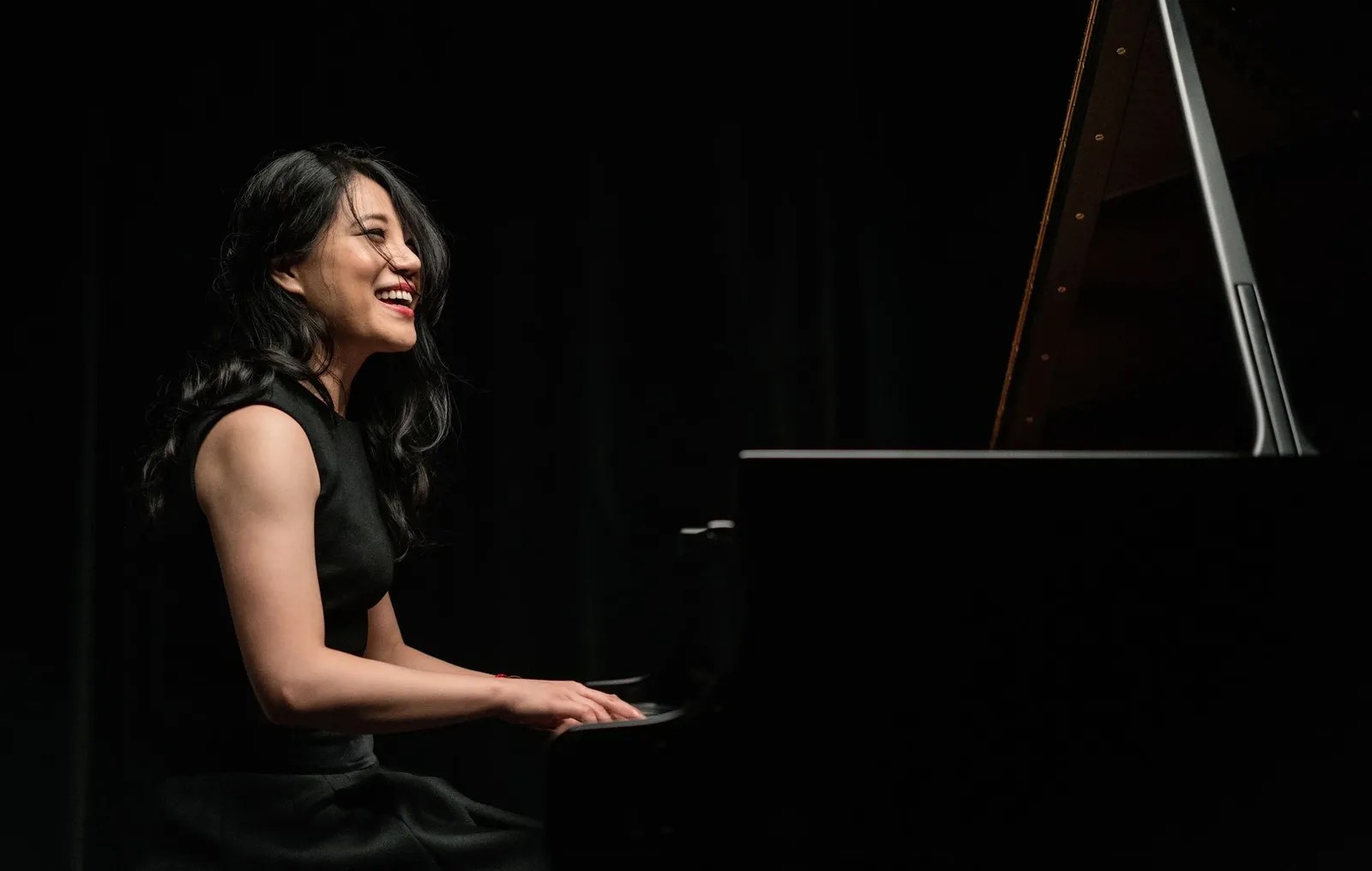
Zee Zee (piano)
Schubert arr. Liszt Der Müller und der Bach from Die schöne Müllerin S565/2 (1846); Liebesbotschaft from Schwanengesang S560 (1839)
Schubert Piano Sonata no.19 in C minor D958 (1828)
Liszt Les jeux d’eaux à la Villa d’Este (from Années de pèlerinage, troisième année S163) (1877-82) ; Tarantella (from Venezia e Napoli S162) (1859)
Wigmore Hall, London
Thursday 24 September (lunchtime)
Reviewed by Ben Hogwood
Facing the end of his life at the age of just 31, Schubert dug deep to deliver a series of remarkable late works, with a speed of composition whose quality and quantity was truly remarkable. Among the celebrated works delivered were three large scale piano sonatas, the first of which – the Piano Sonata no.19 in C minor D958 – formed the centrepiece of this lunchtime recital.
Zee Zee (the stage name for Chinese-American pianist Zhang Zuo) delivered a commanding performance, stern in expression but always allowing room for the dance that is never far from the surface of Schubert’s music. Even before the sonata began she established the atmosphere, taking a minute for performer and audience to fully settle before the first notes were delivered. It was a highly effective tactic, typical of a deeply felt and carefully planned account that has matured over time since Arcana last reviewed her interpretation in 2015. Zee’s left hand was notable for its melodic clarity, the right delivering the second theme of the first movement with attractive, balletic phrasing. The turbulent development section often chased the restless right hand but Zee Zee was sure in her direction, contrasting the warmth of the second theme when in C major with the chill wind as things turned sour in the minor key.
The Adagio was intimate, yearning for the lighter moments that appeared like shafts of light in Schubert’s unexpected switches of tonality, though these were ultimately snuffed out and earthbound by the ideally paced closing pages. The serious Menuetto – its trio dancing in spite of the musical weight upon it – was fluently played, leading without a break into the finale. Here Zee Zee’s definition of the repeated notes was crystal clear, the agile left hand ably supporting the Tarantella theme at every turn, before an emphatic signing off to seal a most impressive account.
The Schubert was framed by four watery Liszt pieces – beginning with well-studied accounts of two of his many Schubert song transcriptions. The temptation with Liszt is often to show virtuosity at the expense of musicality, but here the blend between the two was perfect. Zee Zee told the story through the wordless singer’s lines, dressed with exquisite accompaniment.
The first of the two Liszt originals brought the Fountains of the Villa d’Este to life, the rush of water evident in the brilliant right-hand figurations, adding colour but leaving room to define the left-hand melody through the spray. Again the technique was impeccable, with well-chosen ‘rubato’ ensuring the music breathed as it should. The sparkling Tarantella was a study in pace, poise and power, delivered with the minimum of fuss but with no mean virtuosity. Zee Zee’s octave work – so critical in Liszt – was without blemish; equally her quiet playing was also beautifully rendered.
This was a superb recital, with one more feather in its cap in the shape of a beautifully flowing encore, the Intermezzo from Schumann’s Faschingsschwank aus Wien. Zee Zee will hopefully return to the Wigmore Hall before long, for as this healthy lunchtime audience appreciated, pianist and venue are a great match.
Published post no.3,028 – Friday 25 September 2026

