On Record – Zoë Beyers, English Symphony Orchestra / Kenneth Woods: Elcock: Violin Concerto, Symphony no.8 (Nimbus)

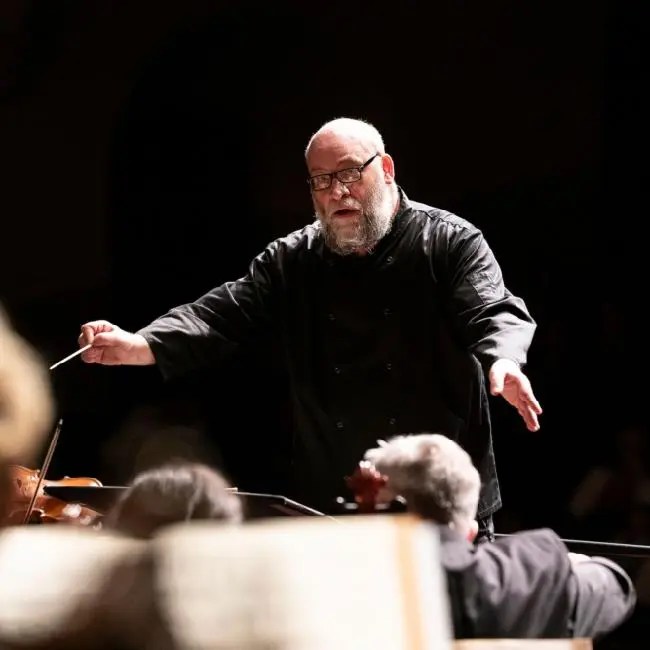
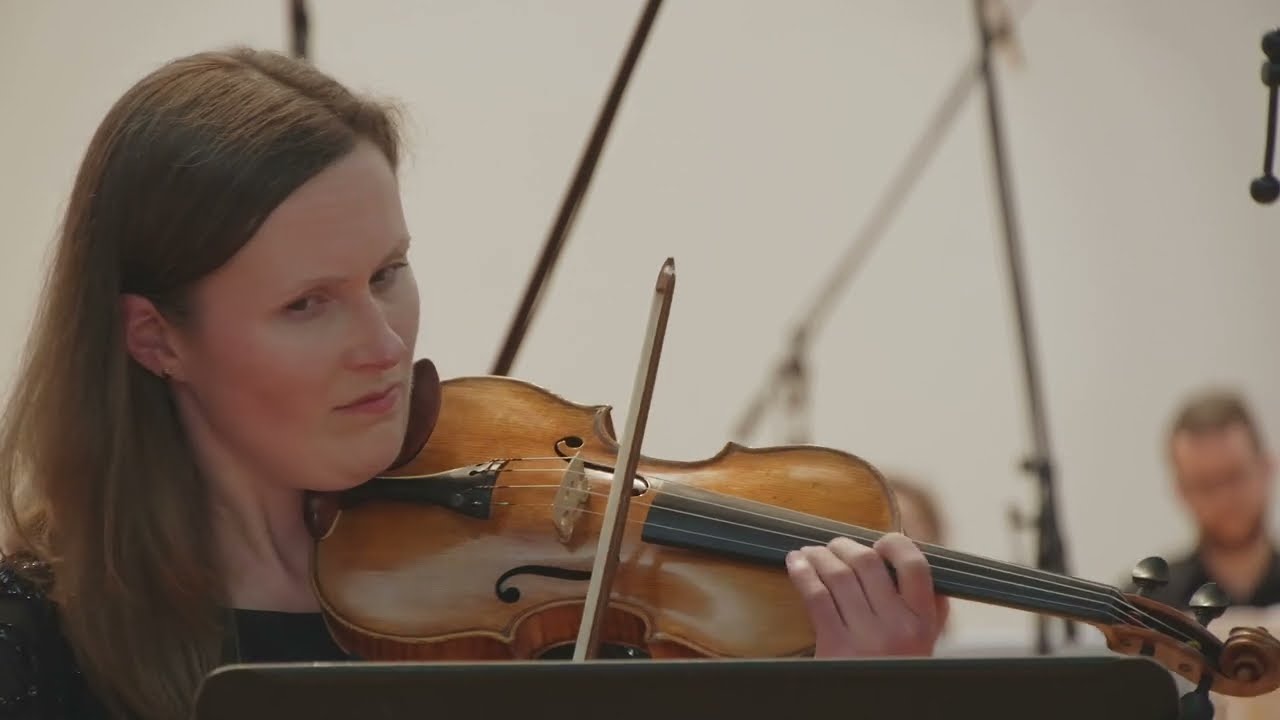
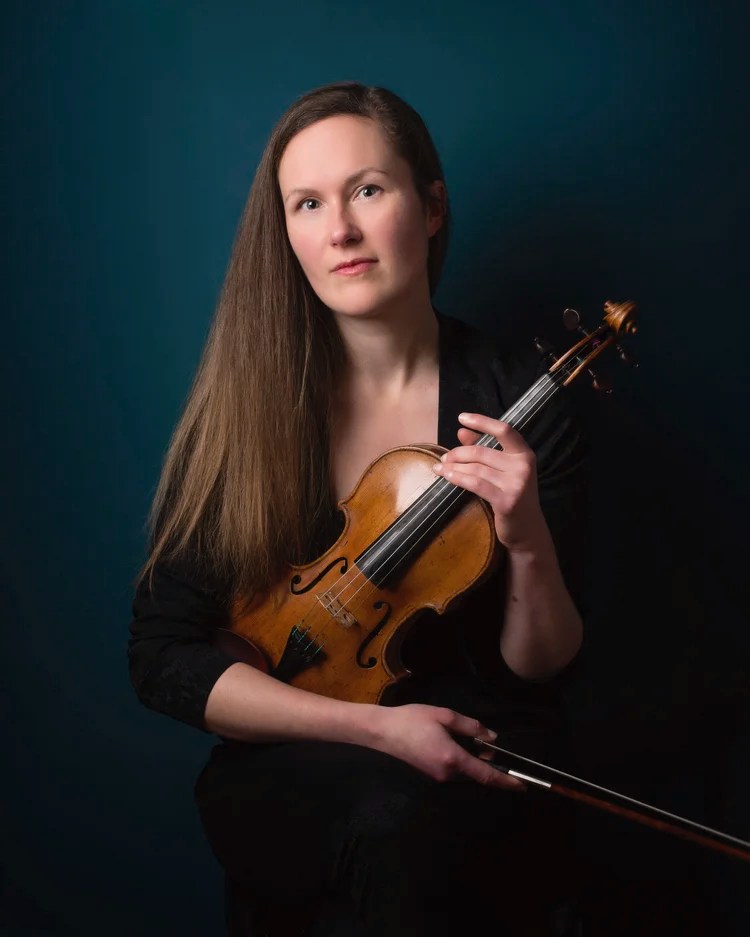
Zoë Beyers (violin), English Symphony Orchestra / Kenneth Woods

Elcock
Violin Concerto Op.13 (1996-2003, rev. 2020)
Symphony no.8 Op.37 (1981/2021)

Nimbus NI6446 [56’24’’]
Producer and Engineer Phil Rowlands
Recorded 28 July 2021 (Symphony), 26 May 2022 (Violin Concerto) at Wyastone Concert Hall, Monmouth

Reviewed by Richard Whitehouse

What’s the story?

The English Symphony Orchestra and Kenneth Woods add to their much lauded 21st Century Symphony Project with this release devoted to Steve Elcock (b.1957), juxtaposing two major works which confirm his standing among the leading European symphonists of his generation.

What’s the music like?

Both works heard here only gradually assumed their definitive form. Composed at stages over almost a decade, the Violin Concerto marks something of a transition between less ambitious pieces for local musicians and those symphonic works which have come to dominate Elcock’s output. Its initial Allegro vivo is a tensile sonata design whose rhythmic energy is maintained throughout, with enough expressive leeway for its second theme to assume greater emotional emphasis in the reprise. There follows a Molto tranquillo whose haunting main theme, at first unfolded by the soloist over undulating upper strings in a texture pervaded by change-ringing techniques, is a potent inspiration. A pavane-like idea soon comes into focus while the closing stage, reaching an eloquent plateau before it evanesces into silence, stays long in the memory. The short but eventful finale is a Passacaglia whose theme (audibly related to previous ideas) accelerates across five variations from Andante to Presto, before culminating in a heightened cadenza-like passage on violin and timpani then a peremptory yet decisive orchestral pay-off.

The Eighth Symphony has its antecedents even further back, having begun as a string quartet in the early 1980s, though it continues those processes of evolution and integration central to the seven such works which precede it. It reflects the impact of the Sixth Symphony by Allan Pettersson (still awaiting its UK premiere after 58 years), but whereas that epic work centres on fateful arrival, Elcock’s single movement is more about striving towards a destination that remains tantalizingly beyond reach. Numerous pithy motifs are stated in the formative stages, as the music alternates between relative stasis and dynamism before being thrown into relief by the emergence (just before the mid-point) of a trumpet melody that goes on to determine the course of this piece as it builds inexorably towards a sustained climax then subsides into a searching postlude. Overt resolution may have been eschewed, yet the overriding sense of cohesion and inevitability duly outweighs that mood described by the composer as ‘‘one of desperation in the teeth of impending catastrophe’’ which, in itself, becomes an affirmation.

Does it all work?

Certainly, given both works receive well prepared and finely realized performances – notable for the way Elcock’s demanding yet idiomatic string writing is realized with real conviction. The concerto is a tough challenge for any soloist and one Zoë Beyers meets with assurance – its close-knit interplay of soloist and orchestra brought off with admirable precision, and its occasional modal subtleties rendered as enrichments of the tonal trajectory. Elcock has been fortunate in his recorded exponents, and this new ESO release is emphatically no exception.

Is it recommended?

Indeed, and good to hear that, as the ESO’s current John McCabe Composer-in-Association, Elcock will feature on a follow-up issue of his pieces Wreck and Concerto Grosso, along with the recent Fermeture. For now, this latest release warrants the strongest of recommendations.

Listen & Buy

You can listen to sample tracks and purchase on the Naxos Direct website. For further information on the artists, click on the names for more on Zoë Beyers, the English Symphony Orchestra and their conductor Kenneth Woods. Click on the name for more on composer Steve Elcock

Published post no.2,182 – Saturday 18 May 2024

Online concert – Zoë Beyers, English Symphony Orchestra / Kenneth Woods: Elcock: Violin Concerto

Elcock Violin Concerto Op.13 (1996-2006)

Zoë Beyers (violin), English Symphony Orchestra / Kenneth Woods

Filmed at the Wyastone Concert Hall, Monmouth, Thursday 26 May 2022. Producer Phil Rowlands / Videographer Tim Burton

by Richard Whitehouse

The English Symphony Orchestra’s online schedule got off to a fine start for this year with a studio account of the Violin Concerto by composer-in-association Steve Elcock. It may have taken shape across nearly a decade, but the work is no less impressive for that. It also marks something of a transition from less ambitious pieces, often conceived with local musicians in mind, to the symphonic works as have recently been performed and recorded to great acclaim – whose formal as well as expressive concerns it anticipates and shares in various instances.

The concerto opens with an Allegro vivo whose rhythmic energy is maintained throughout, yet with sufficient contrast for its second theme to assume greater emotional emphasis in the reprise, prior to a forceful conclusion. The undoubted highlight is a Molto tranquillo whose haunting main theme, first unfolded by the soloist over undulating upper strings in a texture evidently inspired by change-ringing techniques, is a memorable inspiration. A pavane-like idea latterly comes into focus and the closing stage, which opens onto an eloquent plateau before evanescing almost regretfully into silence, lingers long in the memory. The finale is a relatively taut passacaglia whose theme accelerates through five variations from Andante to Presto, culminating in a combative ‘cadenza’ for violin and timpani then a decisive pay-off.

A tough challenge, indeed, for any soloist and one such as Zoë Beyers and the ESO, under Kenneth Woods, met with assurance over its 33 minutes. Aside from its sheer velocity, the first movement is notable for a close-knit interplay between soloist and orchestra here brought off with admirable precision, while the modal subtleties of the slow movement were deftly rendered as enhancements to its overall tonal trajectory. If its sequence of accelerating variations seemed to be over rather too soon, the finale was nevertheless a cohesive entity that saw this piece to a defiant conclusion.

Good to hear that this performance will be released commercially in due course, as a coupling for the Eighth Symphony which the ESO premiered in 2021 and the tone poem Wreck it gave last year – hence making for a persuasive overview of this increasingly significant composer.

This concert can be accessed free until 7 February 2023 at the English Symphony Orchestra website, but remains available through ESO Digital by way of a subscription. Meanwhile click on the names for more on the English Symphony Orchestra and Kenneth Woods, or on composer Steve Elcock

Online concert – English String Orchestra / Kenneth Woods: Elgar Festival 2022

Elgar arr. Fraser Nursery Suite (1931 arr. 2022) World premiere of this arrangement
David Matthews Shiva Dances Op.161 (2021) World premiere

English String Orchestra (soloists Zoë Beyers, Suzanne Casey (violins), Carl Hill (viola) and Joely Koos (cello) / Kenneth Woods

Filmed at the Guildhall, Worcester, Friday 3 June 2022

by Richard Whitehouse

Welcome listening for the new year provided by the English String Orchestra, as taken from a programme at this year’s Elgar Festival and which featured the premiere of that composer’s last notable work in what is an idiomatic and often perceptive arrangement by Donald Fraser.

His previous Elgar arrangements ranging from miniatures to the Piano Quintet, Fraser duly captured the wistful charm of the initial Aubade then discreet pathos of The Serious Doll. The ESO steered a secure course through the headlong intricacy of Busy-ness, with the deft profundity of The Sad Doll afforded full rein. Solo strings against an implacable rhythmic ostinato offset any lack of visceral impact in The Waggon (sic) Passes, then the high spirits of The Merry Doll were jauntily in evidence. The extended finale, Dreaming is a threnody of tangible emotional import and a resume of earlier themes on its way to a forthright if not a little regretful coda. Kenneth Woods ensured this had gravitas without losing focus, while a bravura showing from Zoë Beyers was but the last in a sequence of solos all admirably taken.

Solos are by no means absent from Shiva Dances by David Matthews. The combination of string quartet and string orchestra has potent Elgarian connotations, of which the composer avails himself in this continuous sequence inspired as much by Aldous Huxley’s description of the Hindu god Shiva as by Indian classical music. Moving from a slow introduction given piquancy by its modal intonations, the work comprises four dances that between them outline the four elements: an impetuous workout representing ‘earth’, a quixotic interplay for soloists and ensemble that of ‘water’, the scherzo-like agility of ‘air’, and an animated waltz for ‘fire’. This latter builds to a forceful restatement of the opening theme, before a coda intensifies the overall expression such that what came before is rendered from a more ethereal perspective.

It says much for the prowess of the ESO that this first hearing betrayed few signs of caution or uncertainty, Woods directing a confident account with which Matthews must have been well pleased. Those listening to this online programme can also hear an encore in the guise of Nimrod from Elgar’s Enigma Variations, taken from a performance during last year’s Elgar Festival and which exudes a searching eloquence as seems to look beyond forthcoming celebrations to that overtly commemorative atmosphere from only a matter of weeks later.

This concert could be accessed free until 1 January 2023 at the English Symphony Orchestra website, but remains available through ESO Digital by way of a subscription. Meanwhile click on the names for more on the English Symphony Orchestra and Kenneth Woods, or on composer David Matthews

In concert – Zoë Beyers, English String Orchestra / Kenneth Woods – Journeys of Creation and Renewal: Vaughan Williams, Pritchard, David Matthews and Elgar

Vaughan Williams Fantasia on a Theme of Thomas Tallis (1910)
Pritchard Violin Concerto ‘Wall of Water’ (2014)
David Matthews Shiva Dances Op.160 (2021)
Elgar Introduction and Allegro Op.47 (1905)

Zoë Beyers (violin), English String Orchestra / Kenneth Woods

Holy Trinity Church, Hereford
Thursday 24 November 2022

Reviewed by Richard Whitehouse

Just a day after The Journey Home, the ESO reverted to its ‘String’ guise for this judiciously sequenced programme with two contrasted commissions framed by classics of the repertoire for string orchestra – these latter written not so far away from where this concert took place.

Acclaimed at its premiere in Gloucester Cathedral some 112 years ago, Vaughan Williams’s Fantasia on a Theme of Thomas Tallis has never been so popular as it has become this past decade. This performance did it justice – the placing of the ‘echo’ orchestra, behind the altar-screen in the imposing Victorian confines of Holy Trinity Church, abetting those antiphonal exchanges in the central section. Solo string quartet building steadily toward an impassioned culmination, from where Tallis’s theme is movingly recalled prior to the final evanescence.

Next came the welcome revival of an earlier ESO commission by Deborah Pritchard. Inspired by an eponymous series of paintings by Maggi Hambling, Wall of Water is a violin concerto which makes tangible reference to these 13 canvases as it unfolds. Their projection to the rear of the orchestra underlying a visceral as well as imagistic allure, even though the work itself is fully intelligible on its own terms – not least with a three-movement trajectory coalescing out of continuous 13 sections. Elements of Penderecki and Lutosławski can be discerned over its course, but a distinct and engaging personality is also in evidence along with a technical finesse with regard both to the solo writing and that for the strings. Zoë Beyers gave a superb account of a piece which seems sure to enter the repertoire of 21st-century violin concertos.

As too does Shiva Dances by David Matthews. The combination of string quartet and string orchestra is a potent one (see below), of which the composer has availed himself fully in this continuous sequence likely inspired as much in a description of Hindu god Shiva by Aldous Huxley as by Indian classical music. Proceeding from a slow introduction given piquancy by its modal intonations, the work comprises four dances which between them outline the four elements: an impetuous workout that represents ‘earth’, a quixotic interplay for soloists and ensemble that of ‘water’, the scherzo-like agility of ‘air’, then a lively waltz for ‘fire’ – this latter building to a forceful restatement of the opening theme, before the coda opens-out the overall expression such that what went before is rendered from a more ethereal perspective.

Kenneth Woods secured an engaging account of this appealing work, as he did of Elgar’s Introduction and Allegro that concluded the evening. As he pointed out, its main melody is a rare instance of this composer using an actual folksong, yet that never entails a lessening of formal intricacy in what becomes a latter-day recasting of the concerto grosso – reaching its emotional apex in a developmental fugue that bristles with technical challenges. A tough test for the London Symphony Orchestra, with whom Elgar enjoyed a productive association.

Suffice to add the ESO was equal to this task as in the sustained fervency of the final pages. It rounded off another worthwhile evening from this always enterprising ensemble. December brings the seasonal performance of Handel’s Messiah, with further concerts in the new year.

For more information on the artists in this concert, click on the links to read about Zoë Beyers, Kenneth Woods and the English Symphony Orchestra. For more on the composers, click on the names Deborah Pritchard and David Matthews

In concert – Zoë Beyers, English Symphony Orchestra / Kenneth Woods: Celebrating the Queen’s Platinum Jubilee

Beethoven Egmont, Op. 84 – Overture (1809-10)
Elcock Violin Concerto, Op. 13 (1996-2006) [UK premiere]
Vaughan Williams The Lark Ascending (1914/20); Symphony no.5 in D major (1938-43)

Zoë Beyers (violin), English Symphony Orchestra / Kenneth Woods

Routh Hall, Bromsgrove School
Friday 27 May 2022

There will be many concerts over the next fortnight celebrating Queen Elizabeth II’s Platinum Jubilee, but few (if any) of more substance than that given tonight by the English Symphony Orchestra with its principal conductor Kenneth Woods, taking place on the attractive campus of Bromsgrove School some miles from Birmingham.

It might not have been written for this occasion, but the Violin Concerto by the ESO’s current composer-in-association Steve Elcock (above) was no less impressive for that. This marks something of a transition from those less ambitious pieces written for local musicians and the symphonic works now being recorded to great acclaim. It opens with an Allegro vivo whose rhythmic energy is maintained throughout, yet with enough expressive contrast for its second theme to assume greater expressive emphasis in the reprise. The highlight is a Molto tranquillo whose haunting main theme, initially unfolded by the soloist over undulating upper strings in a texture inspired by change-ringing techniques, is a memorable inspiration. A pavane-like idea later comes into focus and the closing stage, opening onto an eloquent plateau before evanescing into silence, lingers in the memory. The finale is a Passacaglia whose theme accelerates in five variations from Andante to Presto, culminating in a ‘cadenza’ for violin and timpani then a decisive pay-off.

A tough challenge, indeed, for any soloist and one which Zoë Beyers met with assurance over its 30-minute course. Aside from its sheer velocity the first movement is notable for a close-knit interplay between soloist and orchestra that was brought off with admirable precision, while the modal subtleties of the slow movement were rendered as enhancements to its overall tonal trajectory. Aside from a slight falling away of tension toward its centre, the finale saw the piece to a forceful close. Good to hear these performers recorded it prior to this performance, as a coupling to the Eighth Symphony that the ESO premiered last year, and which should be released over the coming months.

Beyers returned after the interval to launch a Vaughan Williams second-half (this year being the 150th anniversary of his birth) with The Lark Ascending. Easy to take for granted now that it is so frequently performed, the piece can still work its magic in an attentive rendering such as this. The underlying tempo might have been on the slow side, but the elegance and poise invested into the solo line were not to be gainsaid, nor was the translucency of orchestral textures which Kenneth Woods shaped with due restraint through the folk-like central section then into the easeful closing pages. Suffice to add that the unaccompanied final bars held those present spellbound with their artlessness.

There was at least as much to admire in the reading of VW’s Fifth Symphony which here followed on inevitably. A steady overall tempo for the Preludio did not exclude a palpable accumulation of energy in its development, nor a build-up of real fervency with the thrilling re-entry of its second theme. Understated it may be, but the Scherzo is replete with rhythmic quirks and while these were not always ideally negotiated, the music’s sardonic humour and ultimate evaporation were tellingly rendered. Doubtless this work’s emotional heart, the Romanza was admirably realized in its gradual coalescing of hymnal and folk-inflected elements towards a nobly wrought apex, but Woods kept enough in reserve so the final Passacaglia never risked becoming an anti-climax. It earlier stages conveyed  an emotional release as is countered by the ensuing anxiety then fateful reappearance of the work’s opening theme, subsiding into a coda which feels as much a benediction now as when it was first heard almost eight decades ago.

Beethoven‘s overture to Goethe’s Egmont might have seemed anomalous in this context but, as Woods pointed out in his opening remarks, the heroes and villains of 16th-century ‘Spanish Netherlands’ were not so far removed from those of today and, as the heady closing pages reminded us, triumph over adversity can never be taken for granted.

For further information on Steve Elcock, click here to visit his dedicated site, and for more on Vaughan Williams click here. To find out more about the artists, click on the names for more on Zoë Beyers, Kenneth Woods and the English Symphony Orchestra.