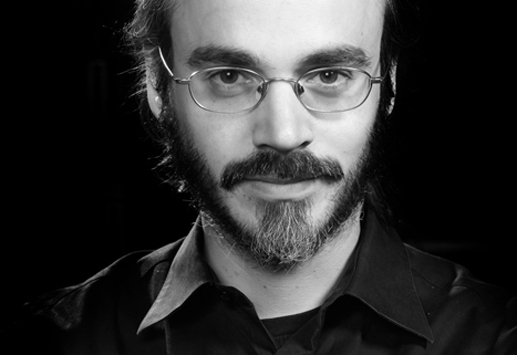
Songs for Europe – Olena Tokar and Igor Gryshyn

Songs for Europe – Ukrainian duo Olena Tokar and Igor Gryshyn perform a selection of songs by Brahms, Rimsky-Korsakov, Dvořák and Richard Strauss
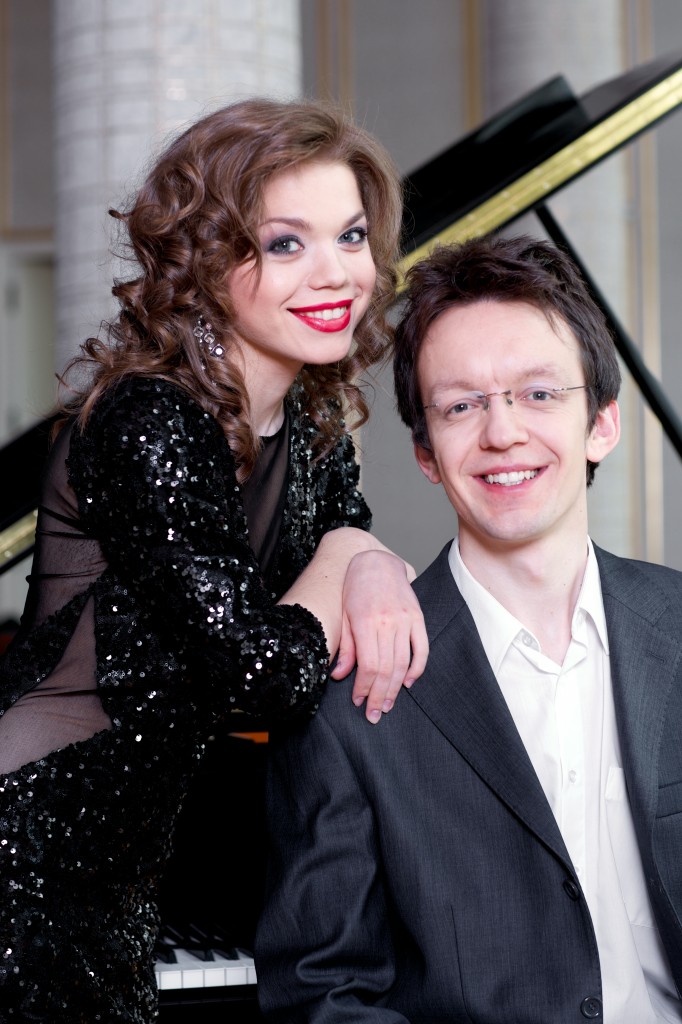
Olena-Tokar-und-Igor-Gryshyn-©-Jörg-Singer-682x1024Olena Tokar and Igor Gryshyn – Wigmore Hall, live on BBC Radio 3, 9 February 2015. Photo © Jörg Singer

Listening link (opens in a new window):

http://www.bbc.co.uk/programmes/b051chkl

on the iPlayer until 10 March

For non-UK listeners, this Spotify playlist is available:

For those unable to hear the broadcast I have put together a Spotify playlist. Olena and Igor have not recorded this repertoire, so I have chosen suitable available versions:


What’s the music?

Brahms – a selection of four songs (1868-1877) (10 minutes)

Rimsky-Korsakov – a selection of four songs (1897) (7 minutes)

Dvořák – Gipsy Songs (1880) (14 minutes)

Richard Strauss – a selection of four songs (1885-1918) (11 minutes)

What about the music?

This recital was a reminder of the power of music as a universal language – a Ukranian duo performing works from across Europe in the languages in which they were written. The intriguing hour-long recital alighted in some diverse parts of the continent, exploring song writing from the 19th century.

Brahms and Richard Strauss are no strangers to a recital such as this, but Dvořák and especially Rimsky-Korsakov are less commonly heard. It was interesting to hear Rimsky’s brief songs and Dvořák’s equally concise cycle, placed alongside some well-chosen Brahms and some of Richard Strauss’s most popular output, four of some 200 songs he wrote through his career – culminating in Cäcilie, the song that became a wedding present to his wife.

Performance verdict

Olena Tokar has a bright tone, sometimes a little on the shrill side – for Richard Strauss in particular – but singing the notes with commendable security and expression. Her communication with the audience was good, helped by the fact she had memorised the program – no mean feat given its use of three languages.

The Dvořák was especially good, harnessing the dance rhythms with pianist Igor Gryshyn’s springy accompaniment while finding a little melancholy in some of the slower songs. The Brahms was unexpectedly light. He is often cast as a composer who writes music of dense texture but that was not the case here, and Gryshyn gave some nice, light touches to Über die Herde (Over the Heath) as well as a turbulent, frothy seascape for Verzagen.

The Strauss selection had a curious order – and I couldn’t help but feel that Mörgen would have worked better in last position. It was nice to hear a young singer tackle the big songs, though at the same time a more experienced voice can lend the depth this music often thrives on.

The encore – and its massive piano part – was a bit breathless, but this was a spirited and often invigorating recital.

What should I listen out for?

Brahms

4:10 – Über die Herde (Over the Heath) – this song has palpable uncertainty, particularly in the third stanza when ‘Bravende Nebel geisten umher’ (‘Swirling mists ghost about’)

6:25 – Es träumte (I dreamed) – a song full of longing. Tokar’s floated vocal is lovely, while Grysyhn gives the piano part plenty of sustain (maybe a bit much for some tastes!)

Rimsky-Korsakov

13:29 – Of what I dream in the quiet night – a good illustration of the simplicity of Rimsky’s songwriting, with a basic yet effective piano part to support Tokar’s clear singing.

15:32 – Cool and fragrant is thy garland – heady words, but an airy song, from the gentle piano arpeggios to the top ‘G’ from the soprano at the end.

Dvořák

22:12 – My Song of Love Rings Through the Dusk – there is an immediate indication from the piano part that we have changed countries. Tokar’s clear voice and the piano exchange a melancholy motif.

29:25 – Songs my mother taught me – one of Dvořák’s best-loved songs, laced with nostalgia and with a rather beautiful melody.

31:29 – Come and join the dance – an energetic dance song with a distinctive call.

Richard Strauss

37:26 – Mörgen (Morning) – the most serene intro to one of Strauss’s most performed songs. It’s easy to hear how this song works so well in orchestral guise too – though Tokar and Gryshyn are a bit fast here.

41:20 – Schlechtes Wetter (Dreadful weather) – a later song. The tumbling piano part paints a picture of the elements, and it’s easy to imagine an umbrella blown inside-out to this song!

43:25 – Allerseelen (All Souls’ Day) – another of Strauss’s famous songs, the last from his set of eight. Again it has an expansive piano intro.

46:37 – Cäcilie (Cecily) – the rapturous birthday love letter from Strauss to his wife, Pauline de Ahna.

Encore

50:18 – Tchaikovsky’s Whether day dawns – another bold song, with something of a piano concerto as a postlude! Very expansive and romantic.

Want to hear more?

It’s difficult to know what to suggest next after such a varied program – but one disc that comes to mind early on is Bernarda Fink and Roger Vignoles’ relatively recent disc of Dvořák songs, including the Gipsy Songs alongside several other song groups. It can be heard on Spotify here:


Meanwhile one of Brahms’ very best vocal works is also recommended, the Alto Rhapsody available on Spotify here:

For more concerts click here

Emika

emikaEmika picture © Katja Ruge

Up until now, singer-songwriter Emika has been best known for her one-woman electronica, best witnessed on her Emika and DVA albums for Ninja Tune. Yet she has always carried a torch for classical music, and recently released Klavirni, an album of piano miniatures, on her own Emika Records label. She is therefore the ideal artist to kick off Arcana’s interview section! She does so by talking about her watershed encounters with classical music, and the ambitious plans she has as a composer and label owner.

Can you remember your first encounter with classical music?
It was actually the first moment I cried from listening to music. I was 12 and even though I was on my own I felt very embarrassed. I was forced to stay with my parent’s friends during our family holiday and I was being mega grumpy and did not want to join in doing any ‘nice’ things such as going on a long walk, so I decided to stay at the house on my own. I went through all their CDs and found Chopin piano nocturnes. The piece was Chopin’s Nocturne in E-Flat Major, Op.9 No. 2:

Your ‘Klavirni’ album is inspired by Janácek and Bartók – were there any piano pieces in particular that inspired you when writing the album?
I’m very impressed by Erik Satie‘s work, it is so touching and so precise. I think playing lots of notes is quite achievable on the piano as it’s always based on scales and anyone can learn to move their fingers in a spider-like pattern. But having the confidence to leave space in between phrases, to not play every possible note, to not feel the need to show-off. That is also skill in my opinion and I think Satie and Janáček were not only great piano players but they were also fantastic composers and therefore didn’t need to be ‘virtuosic’. I love piano pieces with a sense of space inside them.

Is some of your work improvisatory? The recordings have a very natural flow to them, as if you recorded them in one take.
They are all one-take improvs. Sometimes if my cat jumped on my chair or my mum got a phone call, I cut out these kinds of unwanted sounds. But there are lots of moments when it started to rain outside (in England of course it rains a lot) and you can feel this pressure change in some of the recordings. That stuff is pretty cool and ‘real’. I like to explore ‘real’ space within recordings and not only work with synthesis.

Was it important to keep some electronic elements from the work you’ve done before, such as the sampling, re-sampling and other processes you have used on the album?
Yes for sure. I have an itch to scratch! It’s fun to pull sounds apart and also get to know the music on a sonic level.

Although you have used these processes, you have made sure the music keeps its simplicity. Do you think sometimes classical music overcomplicates itself?
Yes. Too much diddle-di-di. I don’t like most classical music to be honest, just a few composers / conductors / performers and specific pieces from each.

Do you think moving between electronic club music and classical music means it becomes more accessible to the listener…and do you plan to keep writing in both styles?
I don’t like the stiff wall between these worlds. There’s no need to be just one way or the other and I plan do what I do until there is no difference between them in relation to my work. It’s all music.

What further classical music do you have planned…and might it involve you singing?
I’m going to record my first really big orchestral piece this year in Prague which features the beautiful Czech soprano Michaela Srumova and around 70 players. The music is rooted in grief, and features a miracle which pushes you over the edge and then you fall into a great unknown. It’s so full of life, things which I cannot express through words or any other way. Some things really are best expressed purely as musical forms.

What does classical music mean to you?
Life itself.

If you could recommend one piece of classical music to Arcana readers, what would it be and why?
Barber‘s Adagio for Strings. It doesn’t get more sincere then this.

Emika‘s new album Klavirni is available to buy now, either digitally, on CD or on vinyl. The vinyl has intonation included, while the CD has an option to email Emika Records direct to have the notation sent.

Emika has completed a DJBroadcast podcast in the form of an ambient mix, which can be heard here – while Dilo, one of the recordings from the album, can be downloaded for free here

The Borrowers – Village People: Go West

What tune does it use?

The much-loved Canon by the 17th century composer Johann Pachelbel.

Pachelbel (1653-1706) was a composer and organist who seems destined to be celebrated for just one work. He seemed to specialise working in very strict forms such as the chaconne* and the canon, whose rules dictate that once the harmonic progression is heard it must be repeated with almost exact precision for the rest of the piece. What happens above this progression is up to the composer.

This way of working fits in perfectly with pop music, because a lot of pop songs use the same chord progressions throughout – so to make a song over a predetermined chord sequence is a great challenge. The Village People did it in their use of Pachelbel’s Canon:

So did Pet Shop Boys, in their cover of the same song:

Even Kylie Minogue and her production / writing team of Stock Aitken & Waterman used a very similar sequence for the chorus of I Should Be So Lucky. Indeed Pete Waterman went as far as to describe it as ‘almost the godfather of pop music’. Having listened closely the references are not quite as obvious…but Pete’s comment illustrates how it was inevitable Arcana would be mentioning this piece early on!

Yet another pop song to use the chords is an altogether different dance track, The Farm’s 1990 hit All Together Now. It even adopts the same key as the Village People:

How does it work?

It really is as simple as a direct lift of the chord progression from the whole Canon. Village People take the chord structure as outlined in the clip below:

They even keep it in the same key as the original:

What else is new?

The Canon has been arranged for literally hundreds of musical combinations – but it is worth remembering it is not the only piece of note by Pachelbel. Here is his Chaconne in F minor, for instance. Who can spot any pop tune that uses this? I can’t yet…but it wouldn’t sound out of place in a record by any band from the so-called ‘Canterbury scene’!

Glossary

*chaconne – a form of music commonly used in Pachelbel’s time, where a repeated, pre-determined cell of chords and / or bass-line would become the foundation for a whole piece

Under the surface – Ustvolskaya Chamber Works on ECM

ustvolskaya-ecm

Composer: Galina Ustvolskaya (1919-2006)

Nationality: Russian

What did she write? Ustvolskaya wrote little published music, but her output still extends to five symphonies and a number of highly regarded chamber works.

Why isn’t she more popular? In general women classical composers have had an extremely raw deal over the centuries, but there are at least now a few contemporaries who are coming through to more prominent positions – among them Dame Judith Weir, now Master (Mistress!) of the Queen’s Music, Thea Musgrave and Sofia Gubaidulina. Ustvolskaya’s music is not perhaps as immediately as theirs, but she is arguably the most inventive and original.

What are the works on this new recording? Two works for violin and piano – the Sonata (1952) and Duet (1964) given characteristically sparse titles. They sandwich an earlier Trio for clarinet, violin and piano (1949), recorded for the second time by ECM.

What is the music like? Challenging. Not in a bad way, you understand!

The Duet is a fascinating piece, because there are some moments where it feels like the violin and piano are in open combat. The piercing high notes from the violin are haunting initially, but at about two and a half minutes in this cuts to some music that I can only describe as bloodthirsty, with violin and piano locked in battle.

There is a greater sense of togetherness between the instruments in the Sonata, where once again Kopatchinskaja and pianist Markus Hinterhäuser play with fearsome intensity. This work is where the influence of teacher Shostakovich is at its keenest, with a five-note motif on the violin that becomes obsessive and disconcerting. There are however some lovely slower moments of deep thought, where the violin makes bird-like calls over the soft piano.

The Trio is another dramatic work, its sonorities reminiscent of Messiaen’s Quartet for the End of Time, written for the same combination with cello. The music is especially effective when Ustvolskaya works the violin and clarinet together, effectively taking the bottom out of the music, while there is often a stronger sense of forward movement. Reto Bieri’s beautiful tone is notable in this performance.

What’s the verdict? If you’re willing to put the work in with Ustvolskaya’s music there are rewards to be had. She is a composer who seems never to waste a note, and although sometimes her writing is austere, it is packed with a deep-seated emotion.

Give this a try if you like… Shostakovich, Messiaen or Bartók

Spotify Playlist

An Ustvolskaya playlist is available on Spotify below, including the Trio and Violin Sonata detailed above, the highly regarded Octet and the Symphony no.5.

A Russian Song and Dance

A Russian Song and Dance – a varied program of Shostakovich, Musorgsky and Glazunov from the BBC Scottish Symphony Orchestra and Ilan Volkov

ilan-volkov

Yuri Vorobiev (bass voice), BBC Scottish Symphony Orchestra / Ilan Volkov (pictured) – City Halls, Glasgow, live on BBC Radio 3, 5 February 2015

Listening link (opens in a new window):

http://www.bbc.co.uk/programmes/b050xqzs

on the iPlayer until 6 March

For non-UK listeners, this Spotify playlist is available.

With no recordings of this music made by the BBC Scottish Symphony Orchestra to date, I have chosen suitable alternatives:


What’s the music?

Shostakovich – a selection from King Lear (1971) (18 minutes)

Musorgsky – Songs and Dances of Death (1875-1877) (18 minutes)

Glazunov – The Seasons (1900) (38 minutes)

What about the music?

king-lear

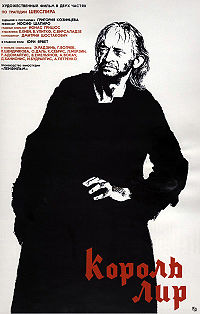
A poster for the 1971 Grigori Kozintsev’s King Lear

Russian composers took frequent inspiration from the works of Shakespeare, especially Tchaikovsky and Prokofiev, responsible for arguably the two most famous interpretations of Romeo and Juliet. Shostakovich wrote a mass of film and ballet scores, but only encountered The Bard twice – once in Hamlet and twice in the darkly scored King Lear – for the stage in 1940 and then in 1971 for Grigori Kozintsev’s film.

Musorgsky wrote Songs and Dances of Death, his last and most popular song cycle* for voice, between 1875 and 1877, but he did not live to be old enough to orchestrate the four songs. The collection was orchestrated initially by Glazunov and Rimsky-Korsakov, who worked together in making a number of the composer’s scores fit for orchestral purpose. Shostakovich himself arranged a version in 1962, but here the conductor Ilan Volkov opts to use a ‘cleaner and simpler’ version by Edison Denisov from 1982.

As to the texts, they are each a nail in the coffin – but Lullaby, Serenade, Trepak and The Field Marshal do on occasion have slightly lighter moments, the rich timbre of the Russian bass is offset by gallows humour from the accompaniment. The texts are difficult – a mother’s last vigil over an infant in Lullaby, with death standing at the door, then the story of a terrible courtship in Serenade, an apparition in a forest for Trepak and finally, famously, The Field Marshal, who surveys his dead soldiers as though in victory.

Glazunov is often looked down on by people outside of the history of Russian music, regarded as an inferior composer to those around him such as Rachmaninov or his teacher Rimsky-Korsakov. Yet he had a big part to play in the country’s musical history and was hugely admired by Shostakovich and Prokofiev if not Stravinsky. As well as teaching and conducting he wrote nine symphonies, ballets, concertos and a number of orchestral pieces – The Seasons among them. As Ilan Volkov says in a brief interview before the performance here, Glazunov is in effect a bridge between Tchaikovsky and Stravinsky where ballet is concerned. As you will hear from this work, there is rarely anything less than a hummable tune!

Glazunov opts to begin with the Spirit of Winter, expressed through dance variations for Frost, Ice, Hail and Snow that have orchestral touches similar to those used by Tchaikovsky in The Nutcracker. The music gets warmer as Spring arrives, then positively bathes in the Summer sunshine, before the big tune of the whole evening is revealed at the onset of Autumn. Not for Glazunov the bleakness of the trees stripped bare – rather he prefers to celebrate the leaves whirling around his head!

Performance verdict

A really well thought out program from the typically enterprising Ilan Volkov, leading his BBC Scottish Symphony Orchestra charges in a powerful concert. The Shostakovich is dark and rather foreboding, and although lacks the intensity of the composer’s symphonies it still carries some of his distinctive musical fingerprints, which the woodwind in particular find.

Yuri Vorobiev gives a thoroughly authentic performance of the Musorgsky, and even listening on the radio you can catch a glint in the eye at times. The reduced orchestration of Denisov helps with clarity when placing the words.

The Seasons is a warm-hearted performance, with charm aplenty from the orchestra. The woodwind sparkle, with excellent contributions from flute (winter) and oboe, while the strings have a really nice bounce to their rhythms.

The rustic Autumn Bacchanal is a winner!

What should I listen out for?

Shostakovich

3:40 – a stern brass statement

9:03 – The creeping (and creepy) line assigned to low bass strings – pure Shostakovich, this! It opens out into a tense orchestral discourse at 10’58”

14:47 – The start of the storm. A curiously slow storm, this does nonetheless have staying power.

19:33 – another dark passage of music, culminating in a bold clarinet cry at 20:42 (brilliantly played!)

Musorgsky

The words can be found here, on page 20 of the pdf booklet

23:40 – A reedy introduction cuts to the singer who sings sorrowfully. Listen to the single strike of the percussion when he proclaims how “death the deliverer is here!” Vorobiev shows beautiful control at the end

28:05 – The Serenade, and the “magical, tender night!” has a silvery sheen in Denisov’s orchestration. There is a terrible stroke of death right at the end from the orchestra.

31:58 – The dance of Trepak is a rather grotesque affair, Vorobiev taking the lead even as the forest closes in through swirling woodwind and strings.

36:12 – a triumphant start to The Field Marshal, with strings swirling and trumpets blazing in the heat of battle. A thrilling and ultimately uplifting end, the singer defiant even in death.

Glazunov

1:05:22 – the cold winter casts its frozen spell, but with elaborate flourishes from the orchestra less than two minutes in Glazunov quickly sets out his stall for a colourful piece.

1:11:37 – a jaunty second part of the Ice variation, showing off the composer’s prowess with orchestration

1:21:07 – a sweeping violin melody that sees the culmination of Spring.

1:22:35 – The lovely Waltz of Corn Flowers and Poppies, music that brings summer in with a real swing – though Volkov is very subtle in this performance, the poise of the waltz reminding me of the Strausses.

1:26:36 – the Variation within Summer, complete with burbling clarinet.

1:31:58 – probably the most famous tune heard within The Seasons. This is the soaring Bacchanal, the dance that opens Autumn. The accompaniment effectively describes the leaves swirling around!

1:39:55 – the bracing final section, The Satyr.

Want to hear more?

For more Glazunov, the Violin Concerto is heartily recommended, a single movement piece lasting 20 minutes that packs in thrills and spills with plenty more good tunes.

This website is already exploring a fair bit of Musorgsky, having talked about Pictures at an Exhibition earlier in the week. For even more I would take a deep breath and explore the incredible epic opera Khovantschina, one of the great cornerstones of Russian opera.

For Shostakovich there is plenty more to hear, but keeping in with his works for stage and screen, I would suggest the ballet The Age of Gold, a story about football!

Glossary

*song cycle – as the name suggests, a group of songs written by a composer tending to focus on a specific theme or author.

For more concerts click here