
Live review – Leonidas Kavakos, LSO / Sir Simon Rattle: Brahms, Debussy & Enescu

Leonidas Kavakos (violin, above), London Symphony Orchestra / Sir Simon Rattle (below)

Barbican Hall, London
Sunday 16 December 2018

Brahms Violin Concerto in D major Op.77 (1878)
Debussy Images (1905-12)
Enescu Romanian Rhapsody no.1 in A major Op.11/1 (1901)

Written by Richard Whitehouse

Sir Simon Rattle and the London Symphony Orchestra tonight continued their ‘Roots & Origins’ project with a diverse programme ranging from the innate classicism of Brahms, through the refracted (post-)impressionism of Debussy then on to the unaffected nationalism of Enescu.

A change in the running order saw a first half devoted to Brahms’s Violin Concerto – easy to pigeon-hole as archetypally Austro-German, though fairly permeated with elements derived from popular and traditional sources. Nor did Leonidas Kavakos deliver a bland or uneventful account, maintaining palpable momentum across the expansive initial movement that carried through to an uncommonly perceptive take on Joachim’s monumental cadenza, followed by an easeful coda in which the symbiosis between soloist and orchestra was at its most tangible.

While there was no undue lingering in the Adagio, Kavakos brought out its gentle eloquence in full measure – abetted by playing of burnished warmth from the LSO’s woodwind, though there was no lack of agitation in the contrasting central section. The Hungarian overtones of the finale were then given full rein, Kavakos projecting the music’s rhythmic drive as surely as he propelled the coda to its effervescent close. Throughout this performance, Rattle was at one with his soloist in a work he has no doubt given many times during the past four decades.

A dynamic and vividly projected reading, then, from Kavakos (very different from the inward and almost self-communing one he gave during last year’s Enescu Festival), who returned for a predictably scintillating account of the Les furies finale from Ysaÿe’s Second Solo Sonata.


Debussy’s Images has long been a Rattle staple: his running-order differs from that published – though there is arguably no ideal sequence for such a contrasting assemblage. Certainly, the fatefully understated Gigues makes a plausible opening, its fugitive gestures and searching ambivalence more an evocation of the composer in his last years as of any English environs. Rondes de printemps is the positive corollary, its vernal freshness and simmering energy an indication of that renewal in French culture made explicit by the late sonatas. In both pieces, Rattle secured a superfine response from the LSO and if characterization in Ibéria was less acute, this may have been owing to the music’s broad-brush Spanish quality than to any lack of insight. Not in doubt was the cohesion that Rattle drew from this composite work overall.

Cohesion was also key to his performance of Enescu’s First Romanian Rhapsody. More than a medley of popular tunes, its integration is that of a borne symphonist and Rattle responded accordingly as he built momentum across the suave initial episodes before cutting loose with the bacchanal. The degree of detail lost was outweighed by the visceral excitement that held good through to the coda. A piece associated with Rattle since the early 1980s, and of which the LSO gave a memorable televised reading a decade earlier, ended this concert in fine style.

The question remains why Rattle has never added further Enescu to his repertoire. Perhaps he considers him lesser to Szymanowski, whom he has championed assiduously? Pieces such as the Second Symphony, Third Suite and Vox Maris cry out for his advocacy. Maybe one day?

For more information on forthcoming concerts from the London Symphony Orchestra in 2019, you can visit their website. Meanwhile you can enjoy Kavakos in a recent performance of the Brahms Violin Concerto below:
Wigmore Mondays: Augustin Hadelich & Charles Owen – Brahms, Ysaÿe & Adams

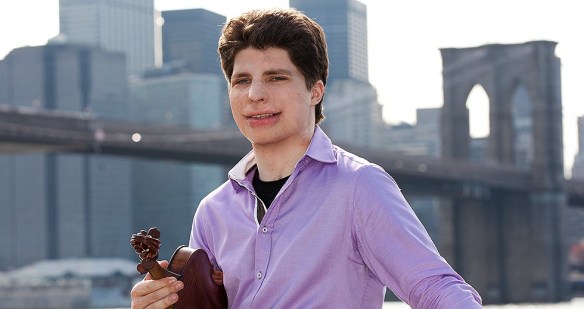
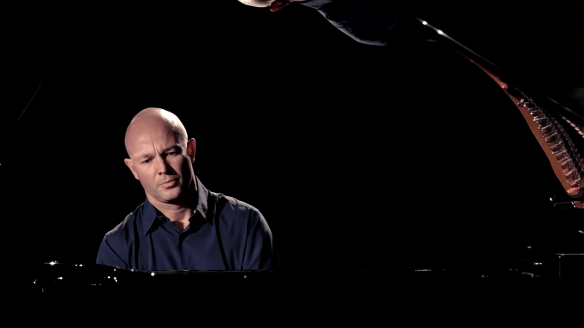
Augustin Hadelich (violin, above), Charles Owen (piano, below)

Brahms Violin Sonata no.1 in G major Op.78 (1878-9) (1:57-28:08)
Ysaÿe Sonata for solo violin no.4 in E minor Op.27/4 ‘Fritz Kreisler’ (1923) (30:31-40:44)
Adams Road Movies (1995) (43:33-1:00:24)

Wigmore Hall, London; Monday 10 December 2018

You can listen to the BBC Radio 3 broadcast by clicking here

Written by Ben Hogwood

This was the third Monday lunchtime in the last six weeks where BBC Radio 3 and the Wigmore Hall have been concentrating on music for violin and piano. This nicely constructed recital complemented the previous pair from Aleksey Semenenko and Inna Firsova, and Tai Murray and Silke Avenhaus, where we had heard two of the three violin sonatas by Grieg.

On this occasion we heard a contemporary of those works, the BrahmsViolin Sonata no.1 in G major – a work written for his friend, the great violinist Joseph Joachim – and one also picked up by Clara Schumann. It is a highly attractive work and received an affectionate performance here, Augustin Hadelich and Charles Owen straight into the beatific air of the first movement (from 1:57 on the broadcast) With an equally genial theme from 3:24, this was Brahms at his most radiant, with a sweet tone from the violinist and flowing countermelodies from Owen. The airy role reversal at 5:20, with Owen playing the tune and Hadelich giving pizzicato (plucked) accompaniment was a lovely moment – as was the content beginning of the coda (11:35). In between this the music was passionate and animated, Brahms developing his source material.

The second movement (from 12:34) also benefited from Hadelich’s sweetly toned instrument, shaping up to be a lovely reverie until a much more animated central section blew away the cobwebs (15:00). Returning at 16:23, the main theme gained an extra layer from double stopping on the violin (playing more than one string at once), and Owen’s piano line continued as a model of sensitivity.

Clara Schumann stated that she would happily have the last movement of this sonata to accompany her on her journey ‘to the next world’, and you could hear why in this performance (from 20:05), which brought out its bittersweet quality. Brahms moves between G minor and G major, a delicate balancing act of music that sounds a bit fretful and gentler, uplifting thoughts. Hadelich and Owen caught them perfectly here, the latter’s nicely pointed piano working particularly well on the dance-like second idea of the movement. From 25:37 the major-minor tension resumed, resolved in a serene coda from 26:20, ending quietly.

Ysaÿe wrote his six solo violin sonatas at great speed, publishing them all together in 1923. The fourth pays particular homage to Bach, incorporating the dance forms that were used in his Sonatas and Suites for solo stringed instruments. It was dedicated to the violinist-composer Fritz Kreisler, one of the very greatest string players. Not surprisingly it makes technical demands on the performer but Hadelich was brilliant here (from 30:31), careful not to overdo the virtuosity at the expense of musical communication.

The three sections of the sonata moved from a dramatic first movement Allemanda (30:31) through a slowly evolving Sarabande used by the composer as a fugue (34:50) and then a bracing Finale (37:57). The Sarabande had the most striking sonorities of the three, thanks to the inventive pizzicato techniques matched spotlessly by Hadelich, but the last movement was a tour de force with which to finish!

Following this was one of the first pieces John Adams wrote for chamber forces, his evocative trip Road Movies, after a period where he admits to ‘studiously avoiding the chamber music format’. Yet, as this entertaining three movement piece proves, his music translates effortlessly to the smaller scale. The piano (played heroically here by Charles Owen!) supplies a lot of the rhythmic impetus and the bass foundations, leaving the violin to operate more freely up top.

The first movement, Relaxed Groove, is described by the composer as ‘a relaxed drive down a not unfamiliar road. Material is recirculated in a sequence of recalls that suggest a rondo form’. Both performers got to the nub of the bluesy music straight away, and also evoked the ‘solitary figure in an empty desert landscape’ in the second movement, entitled Meditative (49:11), where Hadelich had to detune his bottom string from a ‘G’ to an ‘F’. Finally the toe-tapping 40% Swing (55:19) closed out this virtuosic piece, both players smiling as they enjoyed its grooves and motifs.

We disembarked from the Adams vehicle, but an encore was waiting to see us on our way – a rather fine arrangement by Ysaÿe of the Chopin Nocturne in C sharp minor, played with appropriate tenderness by Hadelich. Owen’s flowing accompaniment, too, was finely judged.

Further listening

Augustin Hadelich has not yet recorded any of the works in this recital, but the following playlist brings together the music heard in the concert, including a version of the encore arranged by Nathan Milstein:

For those enjoying the Ysaÿe Solo Sonata, a logical next port of call would be the unaccompanied 24 Caprices by Paganini, which Hadelich has recently recorded:

For those enjoying the Adams, here is a disc including not just Road Movies but a collection of the composer’s works for keyboard:

Wigmore Mondays: Lara Melda – Ballades by Chopin & Liszt

Lara Melda (piano, above)

Chopin Ballades for piano: no.1 in G minor Op.23 (c1835) (2:11-12:09 on the broadcast link; no.2 in F major Op.38 (1839) (13:10-20:38)
Liszt Ballade no.2 in B minor S175 (1853) (22:30-39:40)
Chopin Ballades for piano: no.3 in A flat major Op.47 (1841) (41:28-49:15); no.4 in F minor Op.52 (1842-3) (50:38-1:02:39)

Wigmore Hall, London; Monday 3 December 2018

You can listen to the BBC Radio 3 broadcast by clicking here

Written by Ben Hogwood
Photo credit Emrah Bostan

A very well planned and presented hour of Ballades from Lara Melda, contrasting beautifully the approaches to the form by Chopin and Liszt.
Chopin’s Ballades are some of the finest works in all his output for solo piano, and contain numerous innovations in form, style and substance. The four works are very different in character, each telling a very different story – but a private one to the composer, too.

The Ballade no.1 in G minor Op.23 gives a stern call to arms at the start of proceedings (from 2:11 on the broadcast), Melda taking a long (and appropriate) pause before beginning, but starting very slowly too. Though arguably too slow, it is a dramatic interpretation, beautifully paced and technically very strong, remaining straight faced throughout but really working up a head of steam from 4:45 onwards. A slower section follows, nicely phrased, before a return to the stern outlines of the minor key, Melda’s octaves probing sharply (from 7:10). From 10:40 the music gathers itself for a powerful and deliberate (but again very effective) finish.

The Ballade no.2 in F major Op.38 (13:10) has an almost Christmassy feel to start with, the gentle theme making itself known in a rocking formation. This contrasts to a violent intervention (15:17) in a completely different mood and key, Melda keen to make a wide difference between the two approaches. Initially this is a flash in the pan, the soft theme returning at 16:18, but the brittle intervention has not gone away for long, and appears once more from 18:30. Here the pianist does not feel quite so controlled or disciplined – possibly intentionally. The quiet music does return again (20:09), crucially now in a minor key, to indicate force has not quite won the day.

Liszt’s approach to the Ballade, perhaps not surprisingly, is to make it an all-encompassing literary whole, telling the story of Gottfried Bürger’s Lenore in fifteen minutes of high drama. Beginning in the murky depths of the piano at 22:30, the more extensive Ballade no.2 in B minor S175 immediately makes an impact under Lara Melda’s direction, the probing lower range theme setting the scene. The next section, from 26:40, is jagged and unhinged, beginning Lenore’s ride on the horse with her dead lover. This macabre setting full of octaves in the piano’s right hand is brilliantly played, as is the softer, bell-like section that follows at 29:50. Then a tumultuous section shows off Melda’s ability for clarity at speed, a typical whirlwind of Liszt octaves reaching its climax at 32:10. From 34:09 a chorale-like theme begins to develop, reaching its apex at 36:57 and then subsiding to a quiet end.

Chopin’s Ballade no.3 in A flat major Op.47 (41:28) contrasts nicely with the bombast of the Liszt, its relatively reserved but lyrical opening theme one of the composer’s very best. A contrasting waltz section (43:38) is much more assertive, and finds Melda adding a nice lilt to the music. These two alternate as though in a quest for domination, and were beautifully played here. The only slight blot on the landscape was what appeared to be a memory blip from Melda on the last few chords, but she recovered to finish in the ‘home’ key.

Finally the Ballade no.4 in F minor Op.52 (50:38), arguably the most difficult of the four – and an extremely intense piece of music. Melda played it with the same assurance she gave the other three ballades, capturing the deep melancholy at the heart of its waltz-like theme. This was a very concentrated reading, leading inevitably to the quiet five chords (1:01:01) and the incredibly powerful coda that follows (1:01:38)

A fine concert, then, from a pianist with a keen sense of drama, a near-impeccable technique and a clear passion for this music.

Further listening

Lara Melda has plans to release an all-Chopin disc next year, which will be her first recording. The playlist below includes well-loved accounts of the Ballades from Vladimir Ashkenazy, while for completeness I also included the encore Melda played at the Wigmore Hall after Radio 3 had gone off the air:

Another Romantic composer to write Ballades for the piano was Brahms, whose early examples for the piano were published in 1854 as 4 Ballades Op.10. This legendary recording by the pianist Emil Gilels forms part of a disc of Brahms’ Piano Quartet no.1 in G minor, which has the same key and a similar mood to the first of Chopin’s Ballades:

Live review – Scottish Chamber Orchestra & Laurence Equilbey: Tales of Mendelssohn I

Rowan Pierce (soprano), Jessica Gillingwater (mezzo-soprano), Hilary Summers (contralto), Martin Mitterutzner (tenor), Huw Montague Rendall (baritone), SCO Chorus, Scottish Chamber Orchestra / Laurence Equilbey (above, photo credit Julien Benhamou

City Halls, London
Friday 30 November 2018

Mendelssohn
A Midsummer Night’s Dream: Overture Op.21 (1826) and Incidental Music Op.61 (1842)
Die erste Walpurgisnacht (1844)

Written by Ben Hogwood

Four seasons in one day. That phrase could apply not just to the Glasgow weather on the last day in November, but also to this enticing pair of stage works beginning the Scottish Chamber Orchestra’s Tales of Mendelssohn series at City Halls. One, the composer’s music to Shakespeare’s A Midsummer Night’s Dream, is well known and loved, but the other, a setting of Goethe’s text for Die erste Walpurgisnacht, is barely heard – and made a strong dramatic impact here.

It was the well-known first, with Laurence Equilbey leading a winsome account of some wonderful incidental music. The Overture skimmed and shimmered into the half light, pressing forward with captivating energy – as did the following Scherzo. The Scottish Chamber Orchestra may have been missing a few of their principal players and regulars but that did not dampen their enthusiasm or ensemble, the music given a zestful quality under the encouragement of the stylish conducting of Equilbey.

The bright voices of the ladies of the Scottish Chamber Orchestra Chorus helped, too – and Ye spotted snakes received a charming account, especially with the clarity and control of soloists Rowan Pierce (above) and Jessica Gillingwater, both of whom sang beautifully. The Nocturne and Wedding March were charming too, the latter briskly dispatched, but if anything the lesser known Dance of Clowns and choral finale Through this house made an even stronger impression.

What a contrast between this music and that which began Die erste Walpurgisnacht (The First Walpurgis Night). From the outset this was music of sturm und drang, of fire and brimstone, the composer seemingly relishing the opportunity to set Goethe’s text in a fiery context, interpreted as a barely concealed riposte to anti-Semitism.

The lean strings were quite a shock, as were the striking sonorities with the composer imaginatively doubling horn and bassoon. The tension went up a notch when the chorus joined, singing with real vehemence in the Chorus of the Druid Guards and Heathen People. The three soloists were excellent, too – the probing tone of tenor Martin Mitterutzner complemented by the fuller sound of Huw Montague Rendell (above), whose baritone carried effortlessly to the corners of the hall, and the rounded, velvety quality of Hilary Summers’ contralto.

This was a bracing and at times alarming account, exploring Mendelssohn’s choral writing with no stone unturned, passionately overseen by Equilbey, who clearly loves the piece. So much so that we had an encore of the Chorus of the Druid Guards and heathen People, the chorus deserving of their starring role again. There are two more installments to come in the Tales of Mendelssohn series this month – and if you have the chance they are warmly recommended, revealing contrasting aspects of this fascinating composer and the development of his style.

Further listening

The music from this concert can be heard on the Spotify playlist below:

Live review – BBC Scottish Symphony Orchestra: John Wilson’s Roman Festivals

BBC Scottish Symphony Orchestra / John Wilson (above)

City Halls, London
Thursday 29 November 2018

Donizetti Overture: Don Pasquale (1843)
Puccini Capriccio sinfonico (1883)
Respighi Feste romane (Roman Festivals) (1928); Fontane di Roma (Fountains of Rome) (1915-16); Pini di Roma (Pines of Rome) (1923-4)

Written by Ben Hogwood

If ever an antidote was needed for a blustery November evening, this was it. The BBC Scottish Symphony Orchestra and their Associate Guest Conductor John Wilson began with a sprightly overture – that written by Donizetti for his opera Don Pasquale, complete with romantic solo from cellist Rudi de Groote.

We then heard Puccini’s impressive student piece Capriccio sinfonico, where the orchestra dug in to its substantial outlines and memorable triple-time dance theme.

These two pieces served as effective preludes to the main action in this all-Italian concert – Respighi’s triptych of symphonic poems inspired by the centre of his life, Rome. All too often Respighi is held up as a brilliant orchestrator lacking in musical craft, but these performances under John Wilson utterly refuted those claims. This is music of wonderful colour and texture, certainly, but there are great melodies too, scored in such a way that future composers – among them surely John Williams and Jerry Goldsmith – would surely have fallen under the Italian’s spell.

Respighi himself knew how to use his influences for good. Stravinsky looms large, as do Debussy and Ravel – but nobody else could have written the gladiatorial opening to Roman Festivals, its fire and brimstone blowing the cobwebs away from all corners of City Halls.

The BBC Scottish brass were brilliant here, with Simon Johnson’s blowsy trombone solo in Epiphany and the off-stage trumpets in Circuses both highlights. Jubilee, the second movement of the four, painted vividly the downtrodden pilgrims on the highway, rising up as they glimpsed the Holy City in a shower of glistening colour.

The duet between lead violin and cello in The October Festival (Laura Samuel and de Groote again) was a beauty, while the finale built on its influences from Stravinsky’s Petrushka with music of athleticism and raw power, where pianists Lynda Cochrane and Julia Lynch also deserve a mention, their virtuosity underpinning the sound.

Fountains Of Rome was next, sensibly placed to provide a more restrained complement to the bombastic first poem. Here the wonder lay in four beautiful depictions of water, first heard undulating through The Fountain of Valle Giulia at dawn. The Triton Fountain at mid-morning was a thrilling scherzo in this performance, while the organ (Michael Bawtree) added extra colour and splendour to The Trevi Fountain at midday. Finally the magical, twinkling image of The Fountain of the Villa Medici showed off the slightly smaller orchestra in all its glory, the strings on top form with the notably tricky figures.

Pines of Rome is the most celebrated of the triptych, and though well known its emotional impact here was considerable. The busy, blustery Pines of the Villa Borghese set a colourful scene, but Wilson paced the Pines near a catacomb to perfection, shaping the apex of the Gregorian chant to spine-tingling effect, helped once again by the brilliant BBC Scottish brass section.

Clarinetist Yann Ghiro provided a solo of exceptional control during The Pines of the Janiculum Hill, where we heard the nightingale from afar – an innovative and controversial role for the gramophone in 1924, and even now making unsuspecting audience members sit up in surprise. Yet the whole evening was still to reach its apex, The Pines of the Via Appia, with what was quite simply the loudest orchestral playing I have ever heard. This was Respighi turned up to eleven, and when it shouldn’t have been possible for the music to get any louder or bigger it just kept going.

John Wilson ensured this was always a controlled ascent and never vulgar, so as the hairs stood up on the neck once again his orchestra reached a tumultuous finish, capping a wonderful evening of music. Now that’s what I call a concert!

Further listening

This concert was recorded for future broadcast on BBC Radio 3. John Wilson has not recorded any of the music in this concert, but you can hear a playlist of ‘Roman Festivals’: