by Ben Hogwood Picture courtesy Wise Music Classical
Today marks the 110th anniversary of the birth of Henri Dutilleux, one of the finest composers of the second half of the 20th century.
Dutilleux wrote distinctive music notable for its colour, clarity and concision, with works for orchestra and piano in particular that have proved both compelling and durable.
You can listen to two of these stand out works below – beginning with Métaboles, an orchestral work completed in 1964 and notable for its original orchestration and intensity:
Meanwhile Timbres, espace, movement, inspired by Vincent van Gogh’s painting La nuit étoilée (The Starry Night), was completed in 1978. The work is remarkably brought to life in this account:
Published post no.2,775 – Thursday 22 January 2026
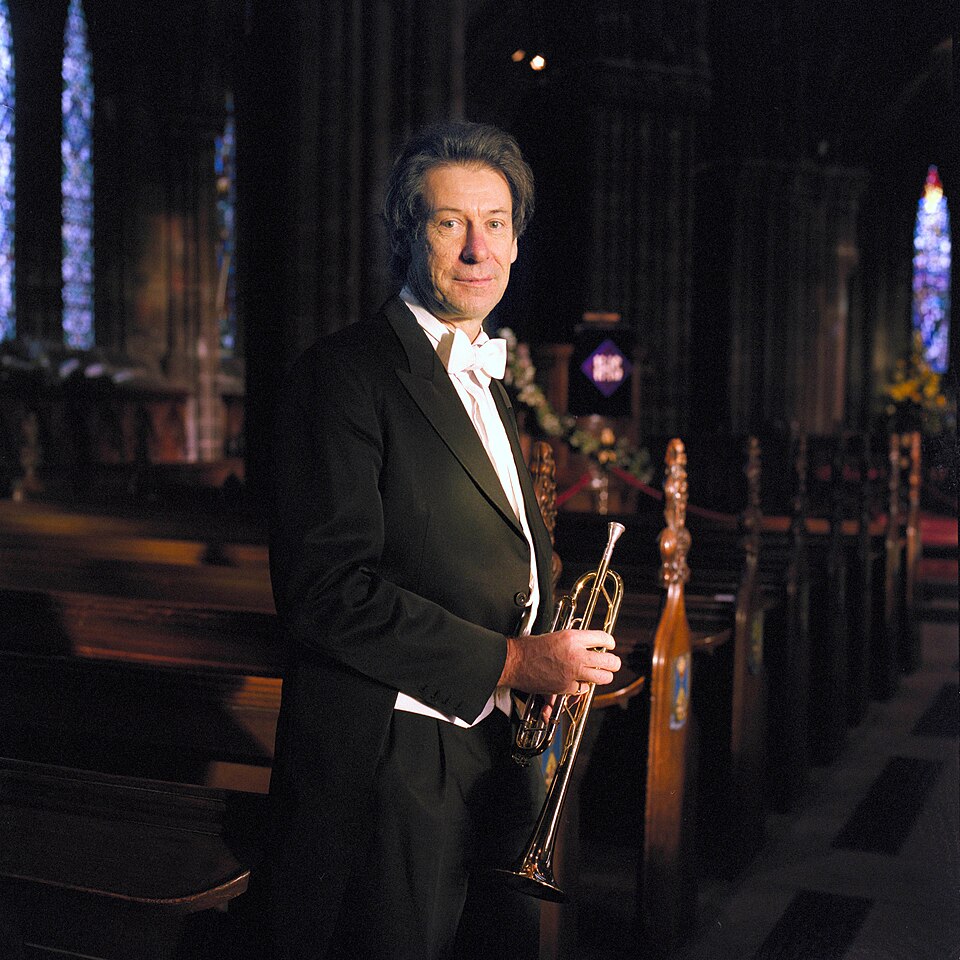
by Ben Hogwood Picture courtesy of Wikipedia / Thechisholm
Last week we heard the sad news of the death of trumpeter and conductor John Wallace, at the age of 76. There have been a number of affectionate obituaries for John that refer to his character, musicianship and academic influence among many other positive qualities. Wallace was principal trumpet of the London Symphony Orchestra from 1976 to 1995, and along the way blossomed into an international soloist of considerable repute.
In 1981 he played at the wedding of Price Charles and Princess Diana, joining soprano Kiri te Kanawa in a performance of Handel’s Let The Bright Seraphim:
He also formed The Wallace Collection in 1986, an influential brass ensemble whose flexible approach brought brass music to new audiences. Several composers wrote for Wallace, among them Sir Peter Maxwell Davies, Sir Malcolm Arnold, Sir James MacMillan and Robert Saxton.
Arcana has put together a playlist in honour of John Wallace, featuring the concertos written by Arnold and Maxwell Davies, along with the latter’s Litany for a Ruined Chapel between Sheep and Shore, written for Wallace to perform solo in 1999.
Wallace also features as soloist in Haydn’s much-loved Trumpet Concerto, Prayer of St Gregory by Alan Hovhaness and a commanding performance by the Wallace Collection of Berlioz’s Grande Symphonie Funèbre et Triomphale. There is also a pop nugget, Wallace playing piccolo trumpet on The Alan Parsons Project’s Don’t Let It Show, from the album I Robot.
Listen, enjoy, and appreciate the ability of a wonderful player whose presence will be greatly missed
South London quartet Dry Cleaning have been establishing themselves as a unique and original voice in pop music. Their first two albums, New Long Leg and Stumpwork, reveal a band whose many distinctive features are headed by vocalist Florence Shaw, with a largely spoken word delivery, backed by a fulsome instrumental section that features at its root the sonorous bass of Lewis Manyard.
For their third album they undertook sessions in Dublin and Chicago before hooking up with fellow leftfield popster Cate Le Bon in the Loire Valley, where she produced the record.
What’s the music like?
As distinctive as ever. Dry Cleaning have an unusual ability among pop bands to keep you hanging on every word and every note, and manage to make even their most oblique melodies and harmonies make sense.
Under Le Bon’s production, they are very much playing to their strengths here, if anything encouraging their unpredictable side to be let loose on the listener, confounding and delighting at equal measure.
The compelling vocals from Shaw are mostly spoken but have a pitch that gives them unexpected melodic meaning, with leftfield lyrics that are original, wirry and meaningful. Cruise Ship Designer is one of the best examples where everything comes together, but the loose funk of Hit My Head All Day, with the supple bass of Manyard is also notable. Shaw’s directness pays dividends on Let Me Grow And You’ll See The Fruit, where lovely guitar lines are spun above the vocal while the fulsome, dubby bass operates down below.
Sometimes Dry Cleaning’s music resembles a coiled spring, like a sotto voce version of Pixies, and Shaw’s quieter vocals, such as “Fuck the world”, in the coda of I Need You, are as effective as a full-blown shout.
Does it all work?
It does. Avant Garde pop is scarcely as rewarding as this, and yet none of it feels contrived. This is where Dry Cleaning are meant to be.
Is it recommended?
Very much so. Secret Love is a peak in the Dry Cleaning output so far, a natural progression from their first two albums and one that leaves you scratching your head, tapping your feet and smiling – all at the same time. The first must-hear album of 2026.
For fans of…Stereolab, Jane Birkin, Broadcast, Cate Le Bon
Today is known as Blue Monday, the day where New Year’s resolutions have traditionally worn off…and people have had enough of January. It happens also to be the name of one of the best electronic music songs ever made…so it seems right to make it the launch day for Our Friends Electric!
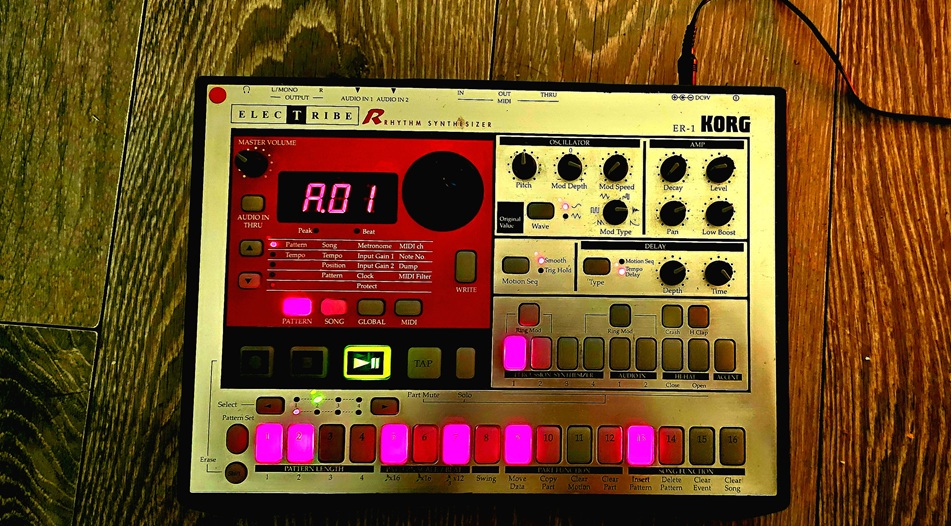
This will be Arcana’s celebration of electronic music in all its forms, where I will be listening to and writing about electronic music across the spectrum. It will be an expedition from early ventures in the 1920s to the most recent tracks from present day technology. Along the way there will be interviews, playlists, thoughts and music – so much music.
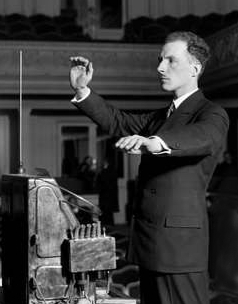
Lev Termen demonstrating the theremin, December 1927 by Bettmann, Corbis
It would be great to think we could cover all the electronic music there is, but that’s clearly impossible – so the focus will be on key works and albums, listening chronologically from early on in the 20th century. We will move from Varèse to Kraftwerk, from Delia Derbyshire to Kelly Lee Owens, taking in classical and pop pioneers side by side. We will also moving off-piste here and there, to take in all manner of successful – and failed – experiments with early computer music. There will be interviews, too!
To start, I plan to take a look at the music of Erik Satie and his influence, a composer who opened his mind to using mechanics and technology in music, and who looked to embrace new inventions. I will try to do the same.
My perspective is a Western one, so viewpoints from across the globe will be especially welcome. Please do contribute as much as you would like, from listening along on the playlists provided, to commenting on the findings and sharing in the delights we uncover. It promises to be a huge amount of fun.
So let’s switch on, power up and get listening!
Ben Hogwood, editor Arcana.fm
P.S.…for those of you following the Beethoven project – thank you! – I can promise you it hasn’t been cancelled but will resume in the composer’s ‘other’ anniversary year, 2027.
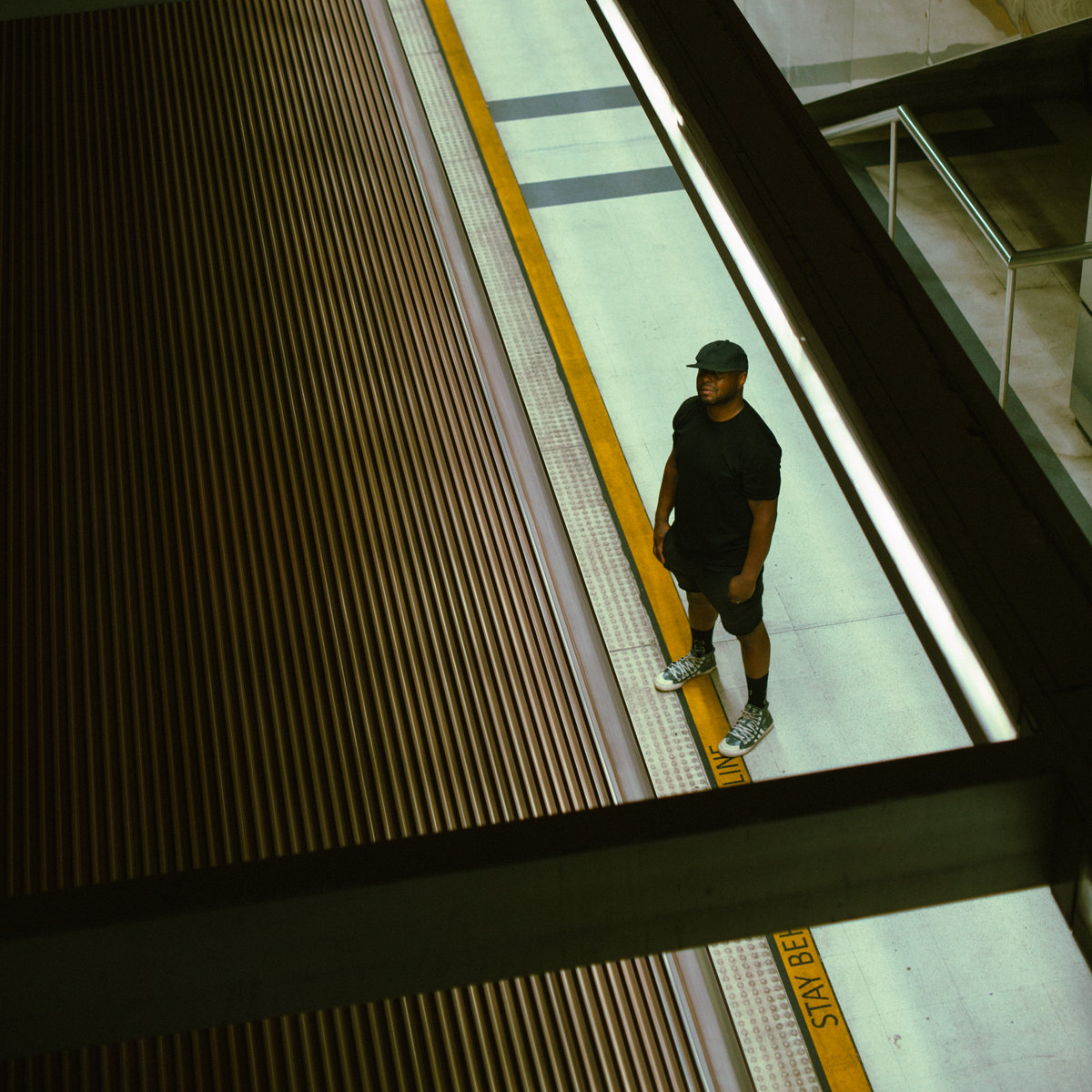
This is the second album from Ben Marc, the pseudonym for Neil Charles – who uses it to bring together two split musical personalities. ‘Ben’ covers his jazz side, playing bass, guitar and keys as a member of the groups Tomorrow’s Warriors and Zed-U, with Shabaka Hutchings and Tom Skinner, as well as touring experience with Mulatu Astatke. ‘Marc’ brings in the hip-hop, reggae and soul from Birmingham, where he grew up, and covers the appropriations of J Dilla that worked so well in debut album Glass Effect.
Who Cares Wins is a play on the British SAS motto, and captures Marc’s musical personality, featuring carefully thought-out instrumentation and subtle humour. It is perhaps telling that one of his key influences in writing the album was Peter Falk’s detective Columbo.
What’s the music like?
Consistently engaging. This is music for the brain and the feet, with spoken word that is both thoughtfully compiled and instinctive. At times there is a classical purity to Marc’s scoring, which we hear in the extended string quartet episodes of the title track, or even the long-breathed guitar line on Love.
The musical language is fresh and interesting, a cosmopolitan approach that isn’t afraid to mix it up between West Coast warmth, a bit of East Coast grit and English humour. At times the music is reminiscent of Arrested Development, which is fitting as Back Again, the album’s choice track, features them alongside Speech.
Confucius MC is a telling presence on Days & Nights, which closes out the album, but by the time we get there Ben Marc has given us plenty of music and words for thought.
Does it all work?
It does, thanks to an ideal ebb and flow between each track that benefits the greater good. Profound insights and humourous asides sit comfortably hand in hand.
Is it recommended?
Enthusiastically. Who Cares Wins might have been lost in the release schedule, dropping as it did at the start of December, but it is a fine album that deserves to grace many a player.





 Arcana.fm