Unknown's avatar

About Arcana

My name is Ben Hogwood, editor of the Arcana music site (arcana.fm)

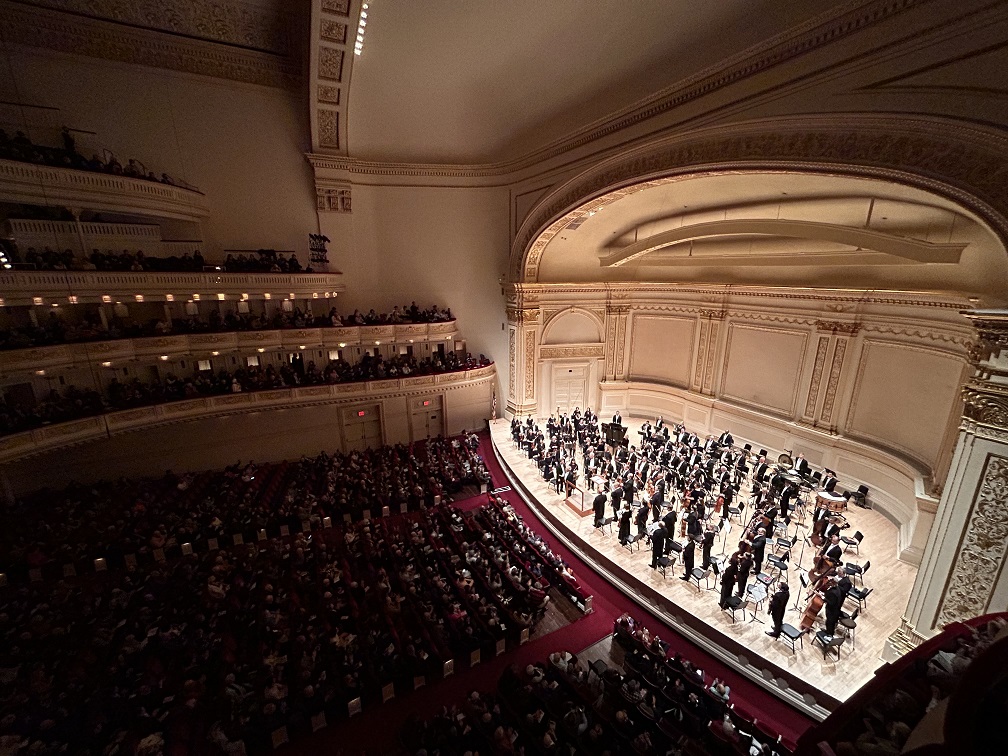
In concert – Cleveland Orchestra / Franz Welser-Möst @ Carnegie Hall: Prokofiev & Webern symphonies

Prokofiev’s trademark technicolour orchestration contrasted with Webern’s sparse score for his Symphony Op.21 performed by the Cleveland Orchestra with Franz Welser-Möst.

Cleveland Orchestra / Franz Welser-Möst

Prokofiev Symphony No. 2 in D Minor Op. 40 (1924-1925)
Webern Symphony, Op. 21 (1927-1928)
Prokofiev Symphony No. 5 in B-flat Major, Op. 100 (1944)

Carnegie Hall, United States
Sunday 21 January 2024

Reviewed by Jon Jacob. Photo (c) Jon Jacob

Most concerts start with some kind of concert opener. An overture, for example, gives the band on stage the opportunity to get accustomed to the acoustic with an audience in it, while giving the audience a chance to settle down before the main event. That the Cleveland Orchestra got underway so deftly with the epic industrial landscape of Prokofiev’s Second Symphony immediately hinted at the kind of concert this would turn out to be. 

Conducted by their music director, Austrian conductor Franz Welser-Most, the Cleveland Orchestra presented three works as part of Carnegie Hall’s ongoing series examining the fall of the Weimar Republic: two symphonies by Russian composer Prokofiev, contrasted with Webern’s Symphony for chamber ensemble. 

Prokofiev’s Second Symphony, written in 1924 and premiered in Paris in 1925, is an epic work brimming with fiendish detail and tantalising textures. The first movement’s brutal industrial landscape is depicted with a gargantuan, lumbering brass section, piercing brass top lines, and occasionally shrill woodwind. The combination did at times cause the person sat next to me at Carnegie Hall to put her fingers in her ears. This was contrasted by a tender oboe solo at the beginning of the short second movement theme, followed by a series of short variations which saw a remarkable range of colours and textures from the strings and woodwind. This was a polished, confident and assertive performance throughout, right from the start.  

In contrast, the material in the Prokofiev’s Fifth Symphony, written in 1944 when the composer had returned to the Soviet Union, is lighter and the treatment of it far more playful, energetic and in places vigorous. In the performance, the orchestra sometimes sounded underpowered meaning things felt overly romantic. The second movement Allegro had spirit and bounce, moving through multiple personalities and moods, cheerful, cheeky and, from to time, just a hint of macabre too, though, like the final movement, it did feel like it lacked a bit of grit. After Franz Welser-Most paused for a police siren to disappear out of earshot down 7th Avenue, the third movement opened with tantalizingly papery strings over which the solo was passed effortlessly between different combinations of woodwind instruments whilst still making everything feel whole. Later we heard rich, warm, heart-tugging string sounds (the leaps in the upper strings got me every single time).

Webern’s ‘miniature’ ten-minute, two-movement Symphony, written three years after Prokofiev’s Second Symphony, could have sounded like an academic curiosity in comparison to the Russian composer’s technicolour orchestration. Yet in this concert, Webern’s Op. 21 acted as a palette cleanser, pivoting us from the epic Second to the more box-office appealing Fifth of Prokofiev’s symphonies.

Special praise to Cleveland’s principal clarinet Afendi Yusuf, whose rounded burgundy tone was simply to die for. A gorgeous sound throughout. Excitable applause also for some fruity queues from bass clarinetist Amy Zoloto and contrabasoonist Jonathan Sherwin.

Further listening

Some recommended recordings to listen to are based simply on the final movement allegro which in the case of Herbert von Karajan’s Berlin Philharmonic recording is a tour-de-force. On the other hand, in Valery Gergiev and the London Symphony’s performance, there’s a crazed sense of menace. In concert, Franz Welser-Most seemed to pull out a more playful character in the final movement and this is also reflected in the Cleveland’s 2023 recording under his direction. I’m always going to prefer the unhinged characterisation, but that probably says more about my character than it does about the performance.

Meanwhile the Cleveland Orchestra recorded Webern’s Symphony as part of an album devoted to the composer’s orchestral music, under their former music director Christoph von Dohnányi in 1998.

Jon Jacob is a writer, digital content producer and strategist, authors the Thoroughly Good Classical Music Blog, and produces the Thoroughly Good Podcast.

Published post no.2,064 – Monday 22 January 2024
In concert – Eugene Tzikindelean, CBSO / Kazuki Yamada: Dai Fujikura, Walton & Berlioz

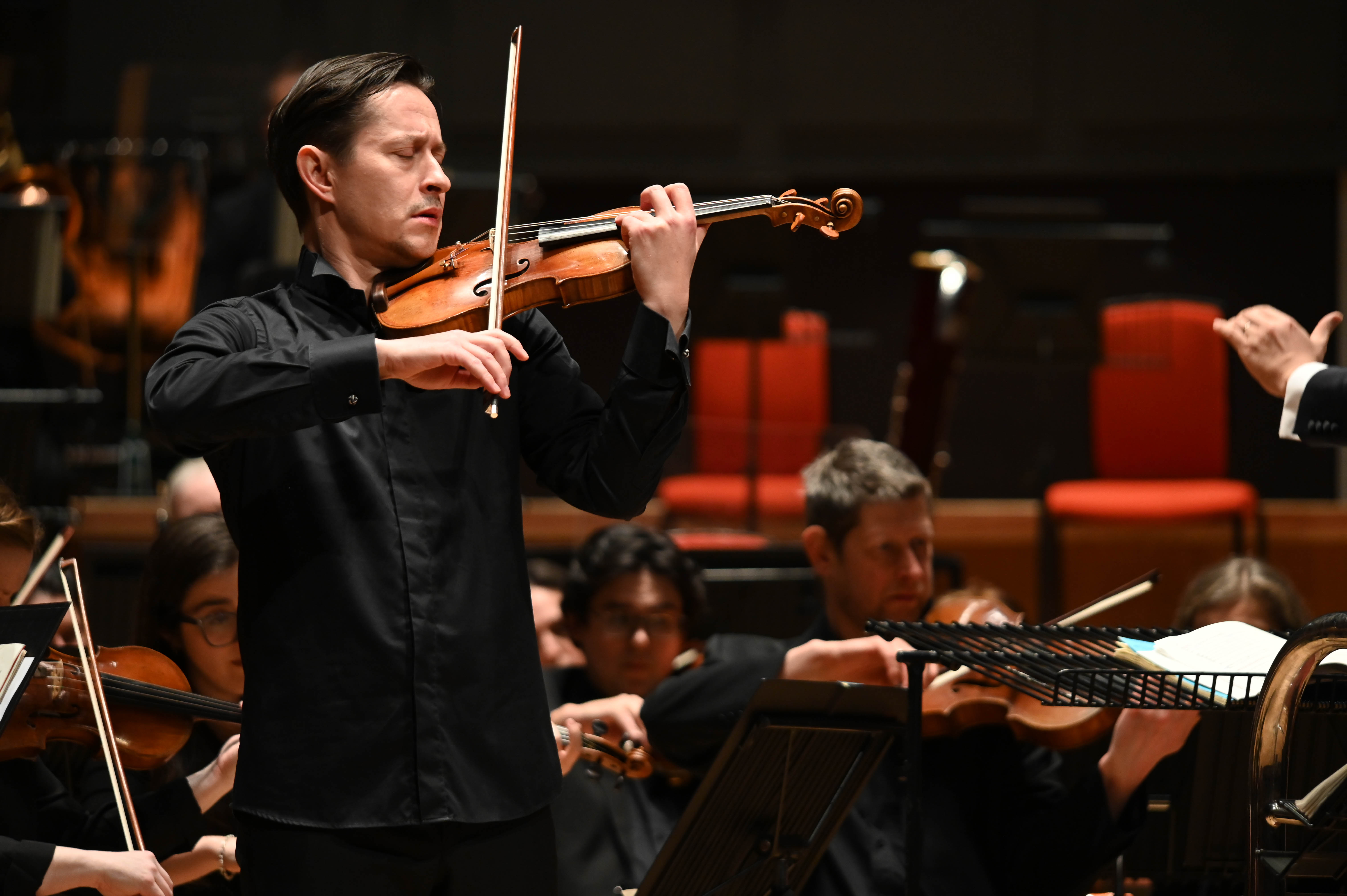
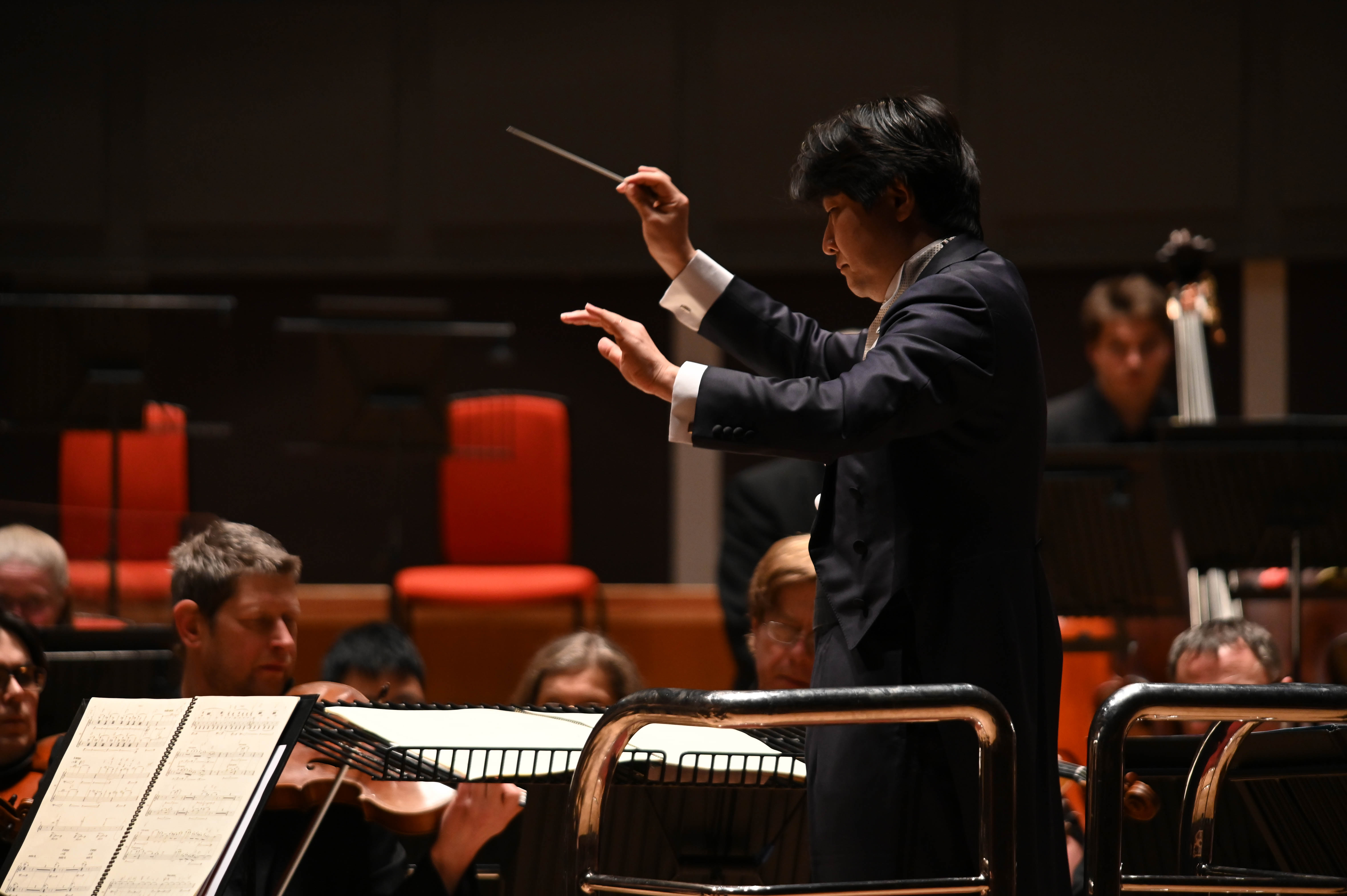
Eugene Tzikindelean (violin), City of Birmingham Symphony Orchestra / Kazuki Yamada

Fujikura Wavering World (2022) [CBSO co-commission: UK premiere]
Walton Violin Concerto in B minor (1938-9, rev. 1943)
Berlioz Symphonie Fantastique, Op. 14 (1830)

Symphony Hall, Birmingham
Wednesday 17th January 2024

Reviewed by Richard Whitehouse. Photos (c) Beki Smith

Tonight’s concert by the City of Birmingham Symphony Orchestra brought a varied trilogy of works, one which started with a first UK hearing (following its premiere in Seattle almost two years ago) of Wavering World by the Japanese-born and British-based composer Dai Fujikura.

In his programme note, Fujikura remarks on how little he knew of his traditional culture until having left Japan, and this piece draws upon the myth surrounding creation for an eventful if always cohesive journey through the emergence of the heavenly world, the human world and the underworld. This is achieved by separating the orchestra into stratified layers that do not succeed each other as merge into diverse and intricate textures where these sizable forces are imaginatively deployed; the music gradually moving away from its earlier austerity toward a luxuriance whose salient motifs are recognizable despite their transformation. Directing with unerring focus, Kazuki Yamada secured a vivid rendition which also served as a reminder that Fujikura is less often heard than might be in his country of residence these past three decades.

The fortunes of Walton’s Violin Concerto have lessened this past quarter-century, so Eugene Tzikindelean’s advocacy was its own justification. He had the measure of the initial Andante’s alternation between languor and agitation, ingenuity of thematic transformation offsetting any lack of originality in its themes, then gave of his best during a central Presto whose technical fireworks are tellingly balanced by yearning lyricism. If the final Vivace was less convincing, this might have reflected on the actual music – Walton putting his ideas through their audibly Prokofievian paces before evoking Elgar in a lengthy accompanied cadenza then gratuitously affirmative coda. The CBSO gave stalwart support, just over 50 years since it accompanied Yehudi Menuhin and the composer in a performance commemorating Walton’s 70th birthday.

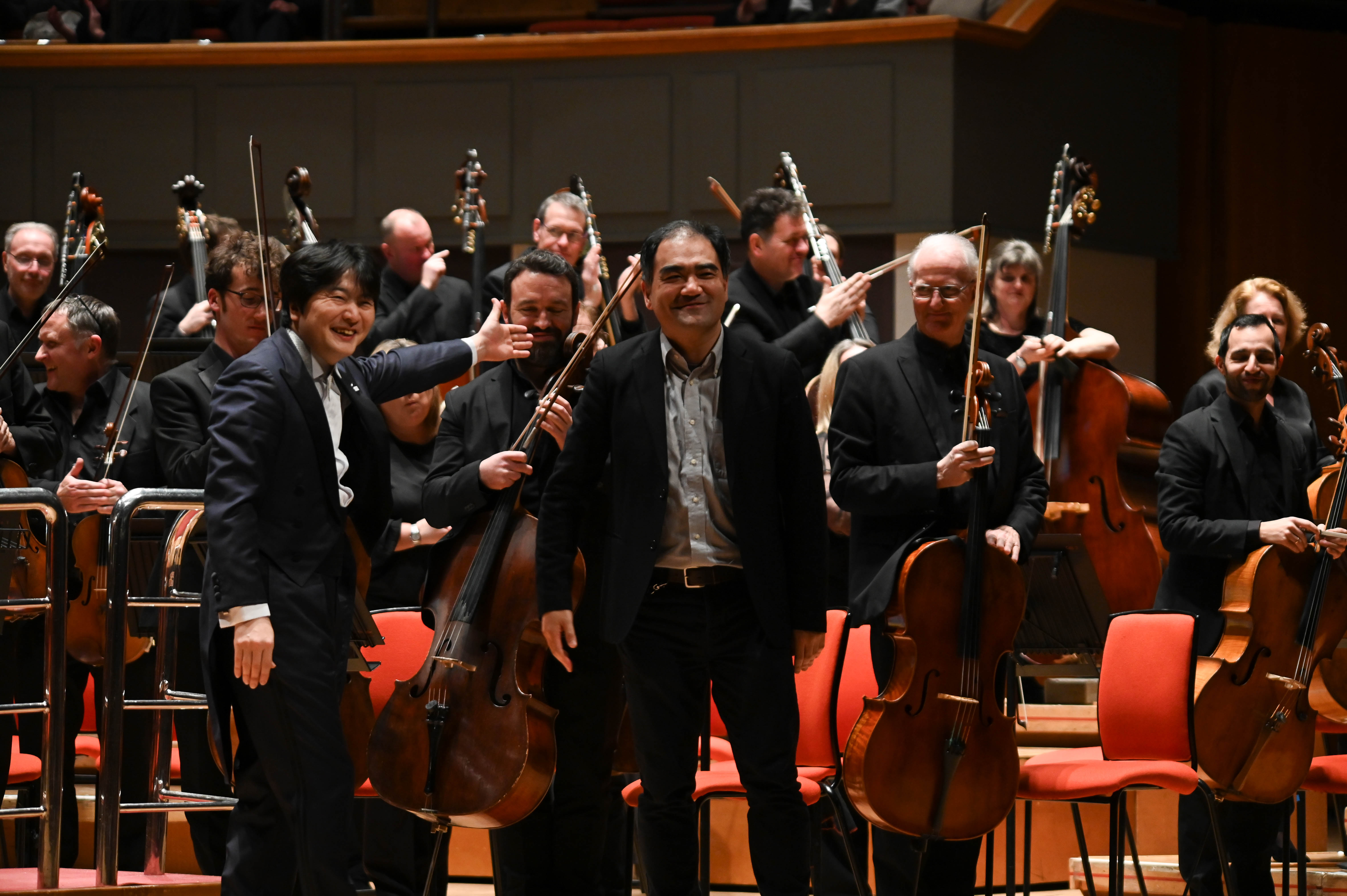
After the interval, Yamada (above) presided over a ‘no holds barred’ reading of Berlioz’s Fantastic Symphony. The latter-day tendency is to stress its symphonic cogency, but there was little of this in a Daydreams and Passions veering impulsively, even recklessly, between despondency and elation. The waltz element of A Ball was nudged out of shape, but its darker undertones were well judged, with the lengthy build-up then lingering subsidence of Scene in the Fields enhanced by Rachael Pankhurst’s plangent cor anglais and ominous timpani toward the close.

This was hardly the first performance to head off seemingly at a tangent, but March to the Scaffold (shorn of its first-half repeat, as had been the opening movement) quickly became   a parade-ground romp in which the fateful fall of the guillotine went for relatively little. Nor was Dream of a Witches’ Sabbath without its Disney-like element of overkill, though here Yamada ensured a stealthy accumulation through its reiterations of the Dies irae plainchant and fugal episode to a peroration whose thunderous power seemed nothing if not conclusive.

An Episode in the life of an Artist, indeed, as demonstrably left its mark on the enthusiastic audience. Yamada and the CBSO will be doing it all again on April 10th, but next week sees the more Classical appeal of Mozart and Beethoven in the company of Maxim Emelyanychev.

Click on the link to read more on the current CBSO concert season, and on the names for more on violinist Eugene Tzikindelean, conductor Kazuki Yamada and composer Dai Fujikara

Published post no.2,063 – Sunday 21 January 2024

On Record – Rone: D’Argent et De Sang (Original Series Soundtrack (InFiné)

by Ben Hogwood

What’s the story?

The InFiné press release for this soundtrack does a fine job of setting the brief for the most recent soundtrack release from Rone. The French musician and composer has been tasked with writing a score for D’Argent & De Sang (originally titled Tikkoun), produced by Curiosa Films and directed by multi-César winning showrunner Xavier Giannoli.

Rone mixes orchestral textures with electronic elements to ‘symbolize the heterogeneity of the worlds that intersect on the story’. The story is that of the Carbon Tax scam, and Rone talks about how ‘we needed repetition and redundancy to highlight the theme of obsession, which is central to Xavier’s work – and to support the developments in the investigation and its characters’.

What’s the music like?

There is no doubt that Rone is a composer to watch, as his skill in blending orchestral and electronic music is becoming ever more accomplished and imaginative.

With D’Argent & De Sang he succeeds comfortably in following the brief, and the theme of obsession is hammered home. It helps for the listener to know the plot beforehand, as it explains Rone’s continued return to the main theme – but he is clever enough to set it in different context and give it different musical meaning.

The twinkling, shimmering opening pages of Tikkoun present the recurring theme, imaginatively scored. We here the sequence in various guises, from forthright string quintet to steely piano, expressively played by Vanessa Wagner. Rone’s pair of Electronic Variations are serene, in contrast to the grainy strings that darken the mood on Stress, with the use of creeping quarter tones. dRONE03 is ominous, while Jackpot is a powerful climax, combining the strings and electronics to good effect.

Does it all work?

It does – though there is the familiar issue with listeners to soundtracks that some ideas do not get developed as much as you would like, simply because Rone is following the brief. That said, his work is consistently rewarding, from the orchestra that bloom on headphones or widescreen, or the intimacy of the single piano.

Is it recommended?

It is – this is impressive stuff from the Frenchman, who is really carving a name for himself as a composer of some repute.

For fans of… Max Richter, Daft Punk (the TRON soundtrack), Jean-Michel Jarre and Vanessa Wagner

Listen

Buy

Published post no.2,061 – Friday 19 January 2024

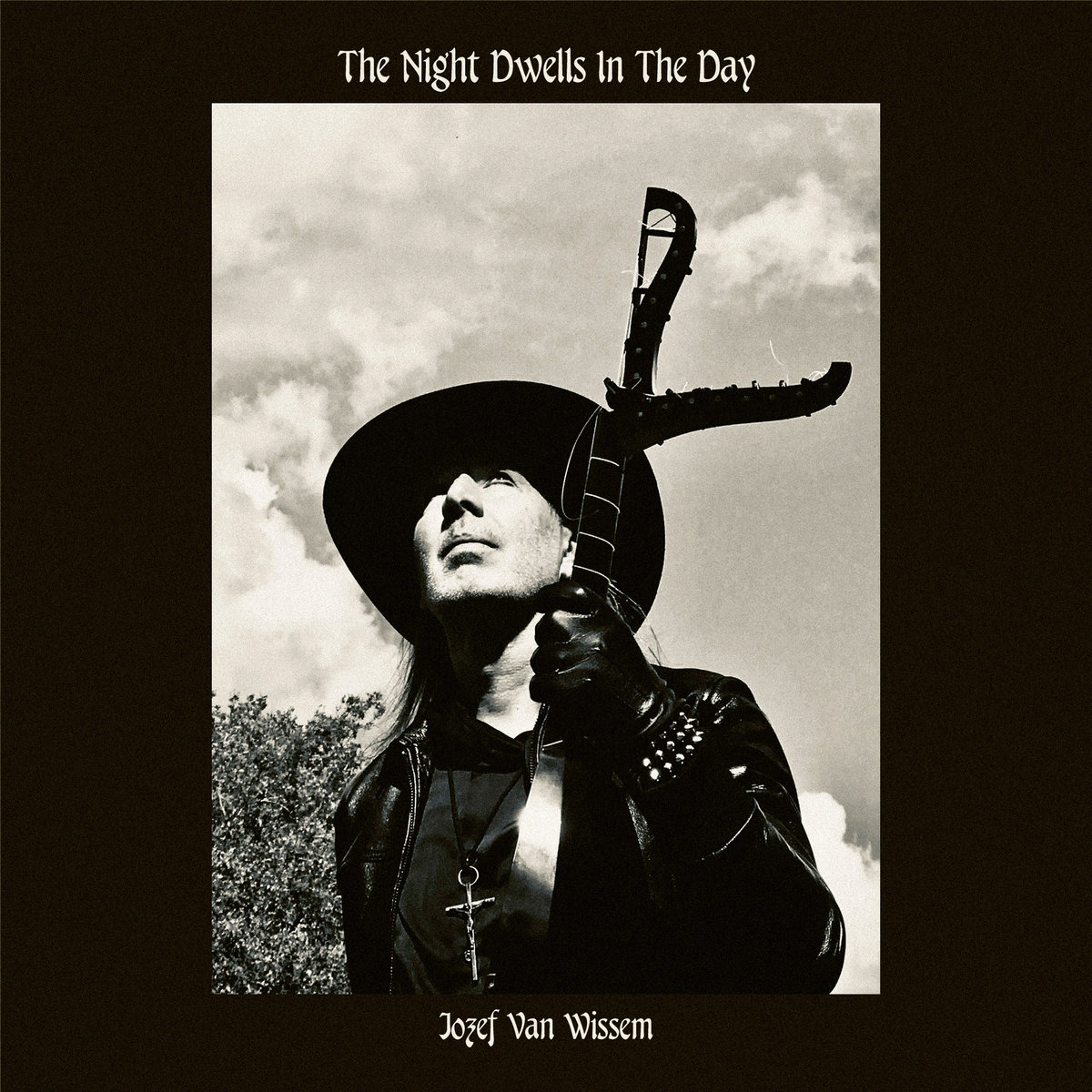
Switched On – Jozef Van Wissem: The Night Dwells In The Day (Incunabulum Records)

by Ben Hogwood

What’s the story?

Jozef Van Wissem is a musician whose music transcends time. His instrument, the lute, has an ancient tradition with a huge amount of music written for it in the Renaissance and Baroque periods. Yet, as the Dutch composer has shown, it has little trouble fitting in with contemporary styles and practices, showing its versatility with guitar-like figures and sounds but with a distinctive tone.

He has enjoyed collaborations with Jim Jarmusch and Tilda Swinton and written soundtracks for computers and films, the latest of which is Pierre Creton’s film A Prince last year. The Night Dwells In The Day began life in the pandemic, Van Wissem writing the standout track The Call Of The Deathbird, on which he makes a rare appearance as a vocalist alongside his guest Hilary Woods. The rest of the album charts the reaction of the world as it moved on, and the elements of darkness and light existing side by side.

What’s the music like?

Don’t expect anything too bright in the course of Van Wissem’s album…but don’t let that put you off, either. There are some truly unique musical colours that unfold during the course of this work, and a theatrical poise that gives the music a good deal of drama.

As you might expect, The Call Of The Deathbird is the album’s calling card. It is a startling piece of music, led by the lute with an urgent undulating figure. What proves even more striking than the lute, however, are the voices – Van Wissem’s tones with a sonority approaching Nick Cave. When Hilary Woods appears, almost off stage, the effect is genuinely ethereal, and the electronic effects give the effect of sonic displacement. The Day Of The Lord also has the feeling of a ritual, and here Van Wissem’s haggard, weather-beaten vocals carry it forward.

The lute proves to be a versatile instrument, capable of soft intonations but also coarse arpeggios, and when multiple layers are built up, as they are on In Exile Here We Wander, the effect is genuinely thrilling. When the electronics complement the acoustic material, which they often do with subtle effects, then there is plenty for the listener to get hold of. Slowly The Rays Of Daylight Fade takes on the form of the winter sun, a stark timbre for the instrument as the light drops over the horizon.

Does it all work?

A good deal of the time. On occasion the writing for lute does retreat into quite lengthy loops of arpeggios, which aids the meditative aspect of Van Wissem’s writing if the listener is in the moment, but they do sound repetitive as the album progresses.

Is it recommended?

It is – provided the mood is right. This is an imaginative album, dark but glinting at the edges, and with a protagonist who knows how to soundtrack a drama. Jozef Van Wissem has an unusual talent for blending ancient and modern at the same time.

For fans of… Nick Cave, Mark Lanegan, PJ Harvey, Gravenhurst

Listen

Buy

Published post no.2,061 – Friday 19 January 2024

Switched On – Mike Sheridan: Atmospherics (hfn music)

by Ben Hogwood

What’s the story?

Mike Sheridan returned to the long playing game in late November 2023 with his first album since 2012. It had been a while in the making, evolving over three years, with the Danish producer taking his time in comparison to his first album I Syv Sind, released in 2008 at the age of 17.

Sheridan has had a good deal of life experience since then, and Atmospherics was planned as a quiet release, almost devoid of melodies. The title refers to electrical disturbances, such as those that occur during a thunderstorm and tamper with wireless signals. Rather than being devoid of melodies, he adds to them with vocal guest slots for Agnes Aldén and Indra-Rios Moore.

What’s the music like?

Very…atmospheric. Sheridan writes in a compelling style however, so while the music works in an ambient context the events on each track do combine to pull the listener in.

He operates in a widescreen environment, established early on with the instrumental Impulse, but there is a lot of detail in the foreground, too. On occasion the dark colours and textures hint at an industrial setting, the listener placed up the end of a large structure while mechanical processes work their way out in a largely ambient way. The interference he speaks about is generally easy on the ear, aiding the ambience rather than interfering with it, but there are moments of unexpected beauty where brief string loops (Impulse, CME), vocals or gentle guitar lines (Strata) make themselves known.

The beats are effective, too, slower patterns that walk forward at an easy pace, but generate a kind of subtle urgency. The vocals are well chosen and ideally spaced, headed by the two contributions from Swedish singer Agnes Aldén – whose turn on the urgent Minds I is particularly good. BYLJA appears on the unexpectedly uptempo Subspace, where the audio scenery suddenly goes past at a quicker rate.

Everything comes together to great effect on the finale. Universal Automation, made with Janus Rasmussen, is a superb piece of work where the beats flick around the edges of a broad sonic canvas like the flames of a candle, before taking over emphatically.

Does it all work?

It does. Sheridan is an impressive composer who writes with no padding – everything is there for a reason, no matter how the ambience is created. This is especially rewarding on headphones when the layers of detail can be fully appreciated.

Is it recommended?

Yes. Mike Sheridan’s brand of electronics may be ambient, but it proves a stimulating listen too.

For fans of… Dave Gahan solo, Trentemøller, Jon Hopkins, The Black Dog

Listen

Buy

Published post no.2,060 – Thursday 18 January 2024