Unknown's avatar

About Arcana

My name is Ben Hogwood, editor of the Arcana music site (arcana.fm)

Beyoncé’s Break My Soul – making house music all night long

by Ben Hogwood

Last week we saw the return of Beyoncé with her first new music in three years – and as so often happens with artists of her standing and calibre, it didn’t take the direction everyone was anticipating:

In fact, Break My Soul is something of a history lesson in dance music, and could have been released at any time in the last 35 years. That is definitely not a criticism, as the music sounds fresh out of the studio, but in using a sample of classic house music the former Destiny’s Child singer has put the focus firmly on recent American music history.

The principal sample on Break My Soul is the Robin S classic Show Me Love, in its 1992 Stonebridge club mix form:

Several records have sampled it of late, including Craig David on My Heart’s Been Waiting For You (where he also namechecks the song in the lyrics) and Charli XCX’s Used To Show Me, both taking the main hook of the track for their inspiration. Beyoncé has been a bit more subtle, lifting just a short snippet from the middle of the riff.

Other records come to mind when hearing Break My Soul for the first time, over and above Show Me Love. Firstly, there are some very similar vocal techniques used in the early Chicago house classic Jack Your Body, the genre-defining track from Steve ‘Silk’ Hurley – which also happens to be in the same key:

Detroit, too, is not far off where influences are concerned. I was put in mind of this Gospel-flavoured treat from Terrence Parker a few years back:

There is no suggestion that Beyoncé, or her writers (principally Tricky Stewart and The-Dream) have copied any of these records, more an observation that they have respectfully mined a long-standing tradition of house music influence, using its heritage to create something that could only be a Beyoncé song.

It will be interesting to chart the direction of the album, as house music gains an ever-greater hold on this year’s new American music.

In concert – Janai Brugger, Karen Cargill, CBSO Chorus & CBSO / Markus Stenz: Mahler ‘Resurrection’ Symphony

CBSO season finale: Mahler.

Mahler Symphony no.2 in C minor ‘Resurrection’ (1888-94)

Janai Brugger (soprano), Karen Cargill (mezzo-soprano), CBSO Chorus, City of Birmingham Symphony Orchestra / Markus Stenz

Symphony Hall, Birmingham
Saturday 25 June 2022

Written by Richard Whitehouse Photos courtesy of Beki Smith

At the end of another season by the City of Birmingham Symphony Orchestra what could be more fitting than the symphony to have been programmed by the orchestra’s last five principal conductors, defining the Simon Rattle era and been scheduled during the majority of seasons ever since?

Tonight’s performance (and that on the previous Wednesday) was to have been conducted by Mirga Gražinytė-Tyla, but maternity leave occasioned an infrequent UK appearance (at least since his highly regarded tenure with London Sinfonietta in the mid-1990s) for Markus Stenz, who has recorded a Mahler cycle with the Gürzenich Orchestra of Cologne as centrepiece of his discography majoring on 20th-century music and that of the post-war era. A ‘Resurrection’, indeed, where this work’s ‘darkness to light’ trajectory seemed by no means a fait accompli.

Many are the conductors who, even now, ride roughshod across the first movement’s fraught trajectory or fall victim to a deceptively sectional unfolding; under Stenz, there was no doubt as to the cohesion with which dramatic and pastoral elements were drawn into an integrated and dynamic whole. Suffused if not overloaded with pathos, those closing pages carried over the ensuing (two-minute) pause into an Andante whose alternation of the genial and ominous was pointedly but never self-consciously evident. Felicitous playing here from CBSO strings and woodwind, then by the brass in a scherzo whose barbed irony and ‘dancing on a volcano’ volatility was tangible. Stenz was right to proceed directly through the latter four movements with minimal pause – so ensuring an intensifying emotional curve into those conflicts ahead.

First, Karen Cargill made for an eloquent though not ideally steady exponent of the ‘Urlicht’ setting with its calm before the storm of the vast closing movement. Positioned at upper left of the platform, she and Janai Brugger gave of their best in a setting of Friedrich Klopstock’s (suitably Mahler-ized) hymn Die Auferstehung where the relatively lean CBSO Chorus gave notice of its long familiarity in this music. The route taken there brought out the best from the CBSO but also Stenz’s interpretive focus – the starkly contrasted orchestral episodes evincing a formal logic and expressive inclusiveness that, with playing of unfailing clarity (not least by his antiphonal placing of the violins), ensured the finale never degenerated into a sequence of dramatic tableaux – the sureness of Mahler’s symphonic reach tangible throughout its course.

At around 85 minutes, this was a spacious while never lethargic reading which positioned the work as a precursor to the existential symphonic battles ahead rather than the culmination of a symphonic lineage stretching back to Beethoven’s Fifth. Nor was there any impersonality or lack of conviction with Stenz’s approach – his grip on the formal dimensions of the outer movements being matched by his conception of the work as a cohesive and cumulative unity. The CBSO’s playing married assurance with a palpable sense of responding ‘to the moment’.

Birmingham might have waited until 1975 to hear Mahler Two, but it gave the premiere of Stanford’s Requiem back in 1897 and gives this work again when Martyn Brabbins directs the CBSO in a revival next Saturday. An event which, in itself, is of no mean significance.

For more information on the CBSO visit their website, and for more on the soloists click on the names to read about Janai Brugger, Karen Cargill and conductor Markus Stenz

New release – Wordcolour

Here’s a nod in the direction of a particularly interesting new release from Wordcolour, aka Nicholas Worrall.

His new album, The trees were buzzing, and the grass, was released on Houndstooth yesterday – and it looks set to be one of the most intriguing debuts of the year.

A collaborative work, it features guest slots from friends and acquaintances including percussionist Michael Anklin, voice artist Natasha Lohan and performance artist Es Morgan.

Morgan and Worrall worked together on a script for the album, which they chopped and dispersed through the music, interspersed with narration from friends. The music itself flits between scenes, ambient environments and acoustic backdrops in the manner of a film shoot, creating a compelling story.

The wide range of colours are typified by Blossom, which you can watch below:

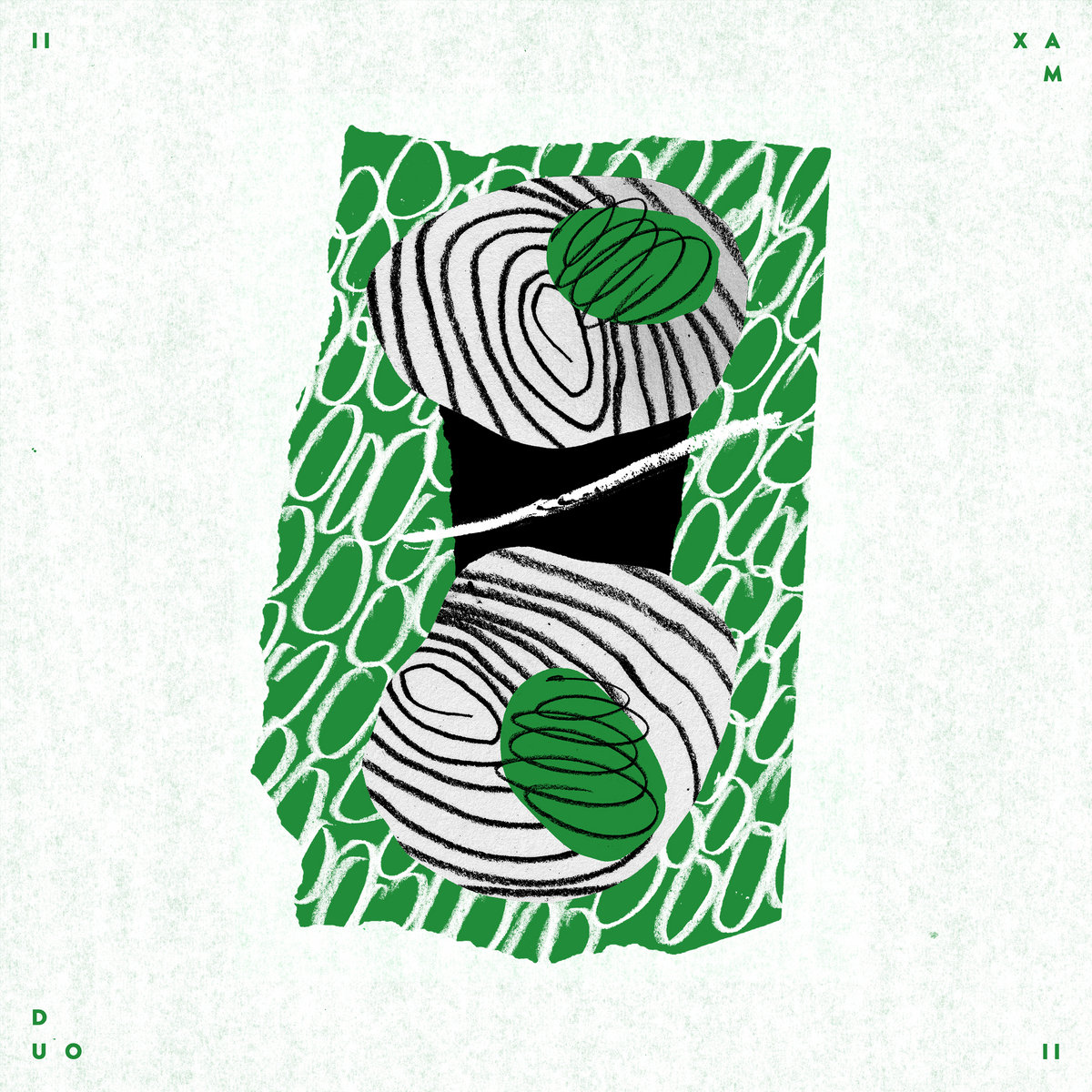
Switched On – XAM Duo: XAM Duo II (Sonic Cathedral)

by Ben Hogwood

What’s the story?

XAM Duo’s second album is a nifty half an hour. Christopher Duffin and Matthew Benn have been working on their second opus for nearly five years, and their efforts pay dividends as they arrive at a structure of six instrumentals that tell a story. Some are beat driven, others not – and all are part of an effort to write what the duo call ‘emotional computer music’.

Duffin has spoken of how the record ‘can be used in a functional way while setting out on your day, doing chores’ – and while it fulfils that function, XAM Duo II deserves more foreground listening for the reasons below.

What’s the music like?

Rather wonderful, and as Duffin hints, ideally structured for a single listen. From the off the colours achieved by the duo are warm and luxurious, with big synthesized textures you can dive into. The first track, the single Blue Comet, would work well as opening credits for a slightly retro TV series, with a probing melodic line. LGOC proves to be the ideal foil, creating a golden glow with its shimmering tones and high register saxophone.

The saxophone is a leading feature of the album, adding richness to the treble lines. Lifeguard At Mohang Beach is particularly attractive, holding still against the breaking waves, though the slight variations in pitch introduce a bit of uneasiness. Cold Stones has a wonderfully wide scope, with those fulsome sax tones above a cavernous drum sound. It is a majestic epilogue, a bigger structure that is beautifully scored.

Does it all work?

Yes – the rich colours are ideal for summer listening.

Is it recommended?

Definitely. If you have a weakness for the more melodic side of Warp Records’ output, to use an example, then XAM Duo will definitely do the job for you.

Listen

Buy

The joy of polls

There are a number of reasons to love Twitter, even now!

There are a number of reasons to love Twitter, even now!

I won’t go into the reasons not to love Twitter, which are all pretty obvious and usually involve politics, trolls and rampant prejudice or discrimination…but for me it remains a place where like minds can hang out and appreciate things they know and love, as well as discovering whole new worlds of culture. The latter is one of the main reasons for me continuing to use the platform. It is continually inspiring to discover and share other people’s love of music, as well as keeping up with news and developments in all musical forms.

There are a good number of polls or questionnaires to be found on Twitter, in which you can engage, spectate or ignore as you see fit. I did want to mention one in particular, from the reliable source that is Michael Irons, which got me thinking. It went like this:

I saw it late, but since reading it my mind has been occupied for several days. Having given it some thought, the ten composers I listen to most of all are probably as follows:

Sibelius, Prokofiev, Schumann, Beethoven, Ravel, Debussy, Haydn, Brahms, Shostakovich and Dvořák

Now, which ten composers’ music would I like to explore further and / or hear more in concert?

This one is trickier, but going on first instinct I would like to take five of each. There are some composers I still think are massively underappreciated, and I would like to hear more of them in concert. Off the top of my head those five are:

Hindemith, Grieg, Franck, Holst (beyond The Planets) and Joan Tower. Oh, and Liszt as a bonus.

Then five composers I would really like to explore further are:

Rameau, John Foulds, Ruth Crawford Seeger, Caroline Shaw and Andrea Tarrodi, whose music I first heard at the Proms back in 2017.

I’m going to throw the question to electronic and pop music, too – with the ten outfits I listen to most being these:

James, Super Furry Animals, Ed Sheeran (not by choice, but through the radio!), Tears For Fears, New Order, Blur, Stereolab, Depeche Mode, Björk and Erland Cooper

Five outfits I would love to hear in concert are Lady Gaga, Depeche Mode (sadly looking less likely with recent events), Def Leppard (I know!), Stevie Wonder and Joni Mitchell (also unlikely). The five acts I want to hear more of, on recent recommendation, are Robert Palmer, The Hollies, Joni Mitchell and Stevie Wonder (reappearances) and Can.

These names, of course, are just the tip of the iceberg. What I wanted to ask, is which composer(s) or pop acts would you like to read more (or less) of on Arcana? I know there is a big Beethoven project ongoing, but generally we try to adopt a complete lack of any policy on the music we cover! Please let me know, on social media (on Twitter we are here or through e-mail (editor@arcana.fm)

by Ben Hogwood