Unknown's avatar

About Arcana

My name is Ben Hogwood, editor of the Arcana music site (arcana.fm)

In concert – BBC Singers / Martyn Brabbins @ St Paul’s Knightsbridge – Holst, Britten, Garrard, Elgar & Pickard

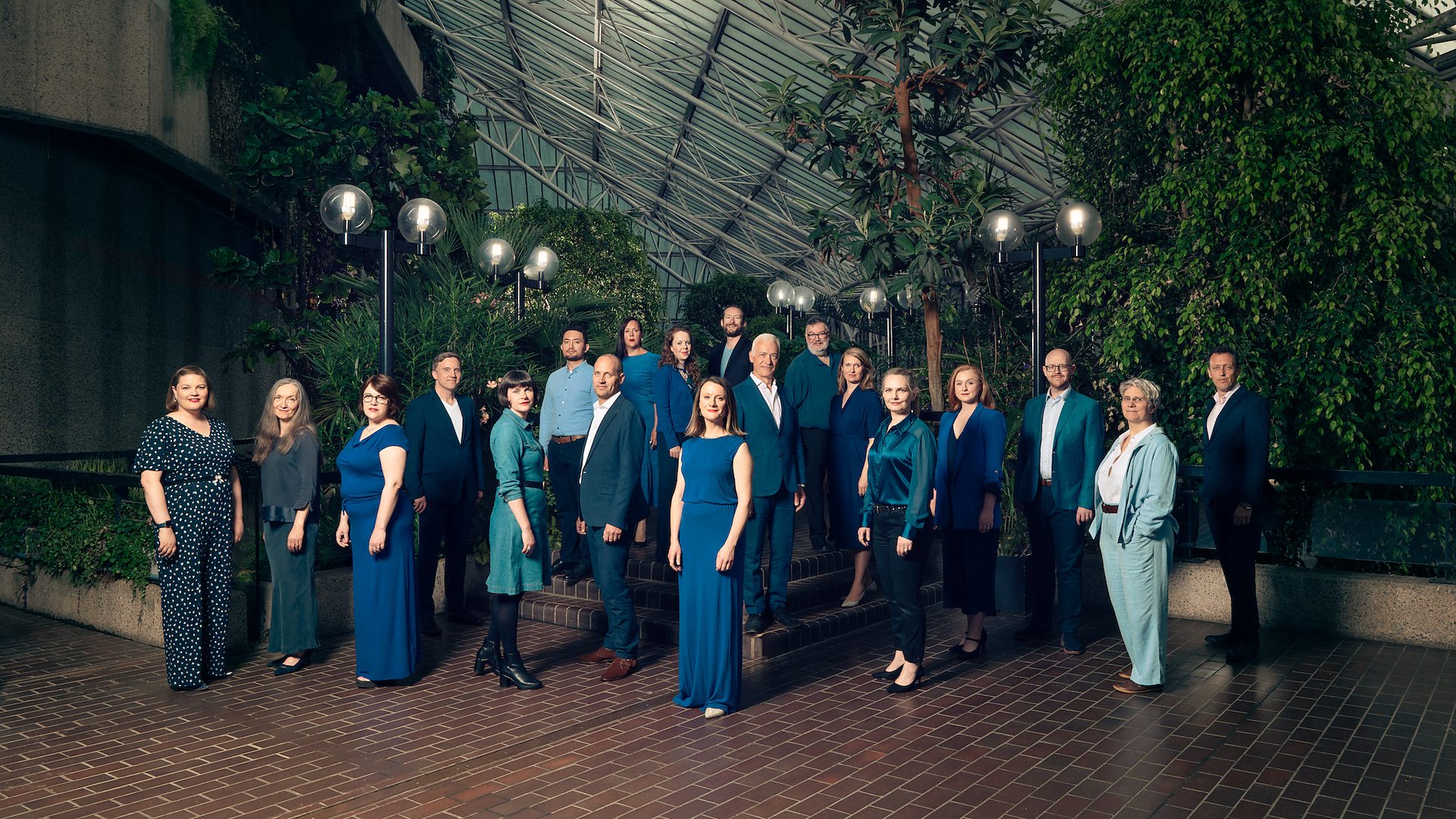
BBC Singers, Elizabeth Bass (harp), Richard Pearce (piano), Andrew Barclay (percussion) / Martyn Brabbins

Holst Choral Hymns from the Rig Veda – Group 3, H90 (1910)
Britten The Ballad of Little Musgrave and Lady Barnard (1943)
Garrard Missa Brevis (2017-18)
Elgar Five Part-Songs from the Greek Anthology Op.45 (1902)
Pickard Elemental (2024-25) (BBC commission: World premiere)

St Paul’s, Knightsbridge, London
Friday 19 September 2025

Reviewed by Richard Whitehouse

The upsurge of interest in and performances by the BBC Singers in the wake of its intended demise shows little sign of abating, and there could be few vocal ensembles able to put on a programme as stylistically inclusive or as technically demanding as that heard this afternoon.

Nowhere more so than Elemental by John Pickard, its first performance occupying the second half. Never absent from the composer’s output, choral music came into own with the powerful Mass in Troubles Times (premiered nearby at St Peter’s, Eaton Square in 2019) and the present work can be heard as a continuation in terms of its underlying concept. A further collaboration with author and theologian Gavin D’Costa, its form is of a journey through the elements such as Pickard had favoured earlier in his output but here with its emphasis firmly on the spiritual arising out of human concerns. Whether individually or collectively, the writing for 18 voices could hardly be more varied and imaginative, while the obbligato roles for harp plus a single percussionist playing across the spectrum of instruments enhances these settings accordingly.

After the evocative Prologue with its Paracelsian take on living matter, Earth draws on the recollections of those in the Tham Luang Cave Rescue – notably teenagers of the Wild Boars football team – in music whose initial bravado gradually assumes a near metaphysical import. Fire integrates its Shakespeare quotations into consideration of this most transformative and cathartic of elements. Air centres on Bessie Coleman with her ambition, racially rather than personally motivated, to become the first professional pilot from African-American ancestry – her combative and ultimately ill-fated career depicted with often graphic immediacy. Water then illustrates the Biblical flood narrative from an oblique and even ambivalent perspective, before Epilogue returns to evocation of the numinous as it builds with a frisson of emotion.

Not that the first half was any mere preparation. Most intimate and alluring of four such sets, the third group of Holst’s Choral Hymns from the Rig Veda traverses the ethereal, the limpid, the hieratic then the questing in the company of female voices and harp. The former were no less attuned to the greater astringency of Sara Garrard’s Missa Brevis – its bracing inclusion of traditional Estonian music offset by the greater introspection elsewhere; these contrasted aspects finding at least a degree of release with the emotional immediacy of the Agnus Dei.

Heard in alternation, the male voices duly came into their own with Britten’s The Ballad of Little Musgrave and Lady Barnard – its folk melody (Matty Groves) stretched through this plangent wartime setting with piano of illicit love, innocent betrayal, desperate revenge and stark lament. Facets that barely feature in Elgar’s Five Part-Songs from the Greek Anthology yet these brief if characterful treatments of translations by Alma Strettell, no less typical than his major choral and orchestral works from this period, were dispatched here with due relish.

Whatever else, this showcase with substance was conducted with unfailing insight by Martyn Brabbins, whose prowess in choral repertoire needs hardly more reiterating than his advocacy of Pickard, and is absolutely worth hearing when broadcast by BBC Radio 3 this Wednesday.

You can hear the BBC Radio 3 broadcast on Wednesday 24 September by clicking here

For more information on the artists, click on the names: BBC Singers, Martyn Brabbins, Elizabeth Bass, Richard Pearce and Andrew Barclay, and composers John Pickard and Sara Garrard

Published post no.2,664 – Sunday 21 September 2025

In appreciation – Jean Sibelius

by Ben Hogwood. Picture by Henry B. Goodwin – The last masterpieces 1920–1927 (Public Domain, used from Wikipedia)

On this day in 1957, Finnish composer Jean Sibelius died at the age of 91.

Even now the extent of Sibelius’s genius and influence has not fully been established, for his is a unique and powerful voice, particularly in the field of orchestral music. Here is his relatively unsung Symphony no.3, a propulsive work that is a remarkable combination of economy and expression:

Published post no.2,663 – Saturday 20 September 2025

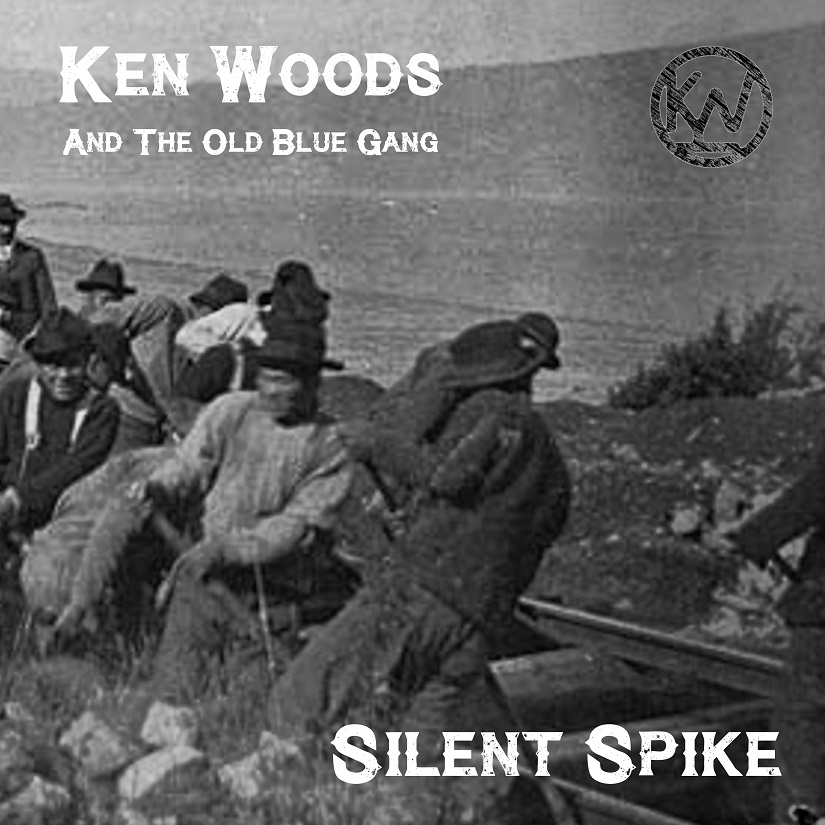
On Record – Ken Woods and the Old Blue Gang – Silent Spike (Kenneth Woods)

by Richard Whitehouse

What’s the story?

Kenneth Woods issues the debut of his band The Old Blue Gang, less a concept album per se than themed reflections on a shameful while all too typical incident (then as now) of migrant workers who were first exploited then betrayed in the American West of some 150 years ago.

What’s the music like?

Best known as a conductor, notably at the helm of the English Symphony Orchestra for over a decade, Kenneth Woods also works extensively as cellist and guitarist. This latter career is showcased in Silent Spike, the first album with his band The Old Blue Gang, which affords a probing take on the largely forgotten role of Chinese immigrants involved in constructing the Transcontinental Railway line from California via Oregon to Washington. A tale of alienation, exploitation and ostracization which has lost none of its horrific impact over ensuing decades.

Opening track The Voyage emerges ‘Déjà Vu’-like into focus, its commentary about those coming to the New World with little or no expectation delivered in suitably deadpan fashion by Woods, whose searing guitar affords contrast with Joe Hoskin’s methodical yet ominous bass and Steve Roberts’s forceful yet flexible drumming. The arduous workload endured by the immigrants is vividly conveyed by the grunge-inflected Steel Stretcher, before Dead Line Creek puts musicians (and listeners) through their collective paces with its unsparing depiction of mass murder by the gang fronted by Old Blue – an outlaw whose reward is as much destructive as monetary. Much the longest track at 21 minutes and its evolution more instrumentally than narratively driven, this is alt-Americana at its most uncompromising.

It might have been preferable to sequence this epic after the next three tracks, each of them streamed as singles in advance of the album. Sundown Town evokes its intolerance with a fatalism redolent of Johnny Cash, intensified by Lilly White with its chilling recollection   of miners being deliberately incarcerated so they need not be paid. Ride the Rails provides a natural continuation with its tale of the immigrants being driven out of town by the under-employed during economic depression, who were (inevitably) acquitted of any wrongdoing. It remains for closing track Gather the Ghosts and Bones to inject a degree of empathy as it recounts the returning of remains of those who received burial in their native China – people otherwise known only through the handful of faded photographs that have come down to us.

Does it all work?

Indeed. Ensemble is unusually dense and layered for a three-piece outfit, though this does not mean excessive ‘noodling’ or wanton virtuosity; the playing being characterized by a restraint or even austerity such as fittingly underlines the grimness of the narrative and the austerity of its realization. Pertinent comparison, conceptually if not musically, can be made with Fairport Convention’s 1971 masterpiece ‘Babbacombe’ Lee – for all that this album touches, however obliquely, upon a redemptive quality understandably absent from what is encapsulated here.

Is it recommended?

Very much so. It hardly makes for comfortable listening, but Silent Spike is a plangent while resourceful treatment of a subject whose contemporary relevance cannot be gainsaid. It also offers intriguing pointers as to where The Old Blue Gang might be headed on future albums.

Listen / Buy

You can explore purchase options on the Kenneth Woods website

Published post no.2,662 – Friday 19 September 2025

New music – Chris Liebing & Speedy J – Collabs 3000 (NovaMute)

adapted from the press release by Ben Hogwood

Collabs 3000 – Chris Liebing & Speedy J (aka Jochem Paap) -announce the 20th Anniversary Edition of their smouldering collision of taught techno rhythms and sonic abstraction, Metalism,and the release of tracks from their first collaboration in nearly two decadesMetalism will be available in full on vinyl for the first time, and on CD and digitally – both with the original artwork by The Designers Republic – on 14 November. That will be preceded by the ‘2025 EP’, available now on vinyl (limited edition of 500), with the digital following on 7 November, via NovaMute.

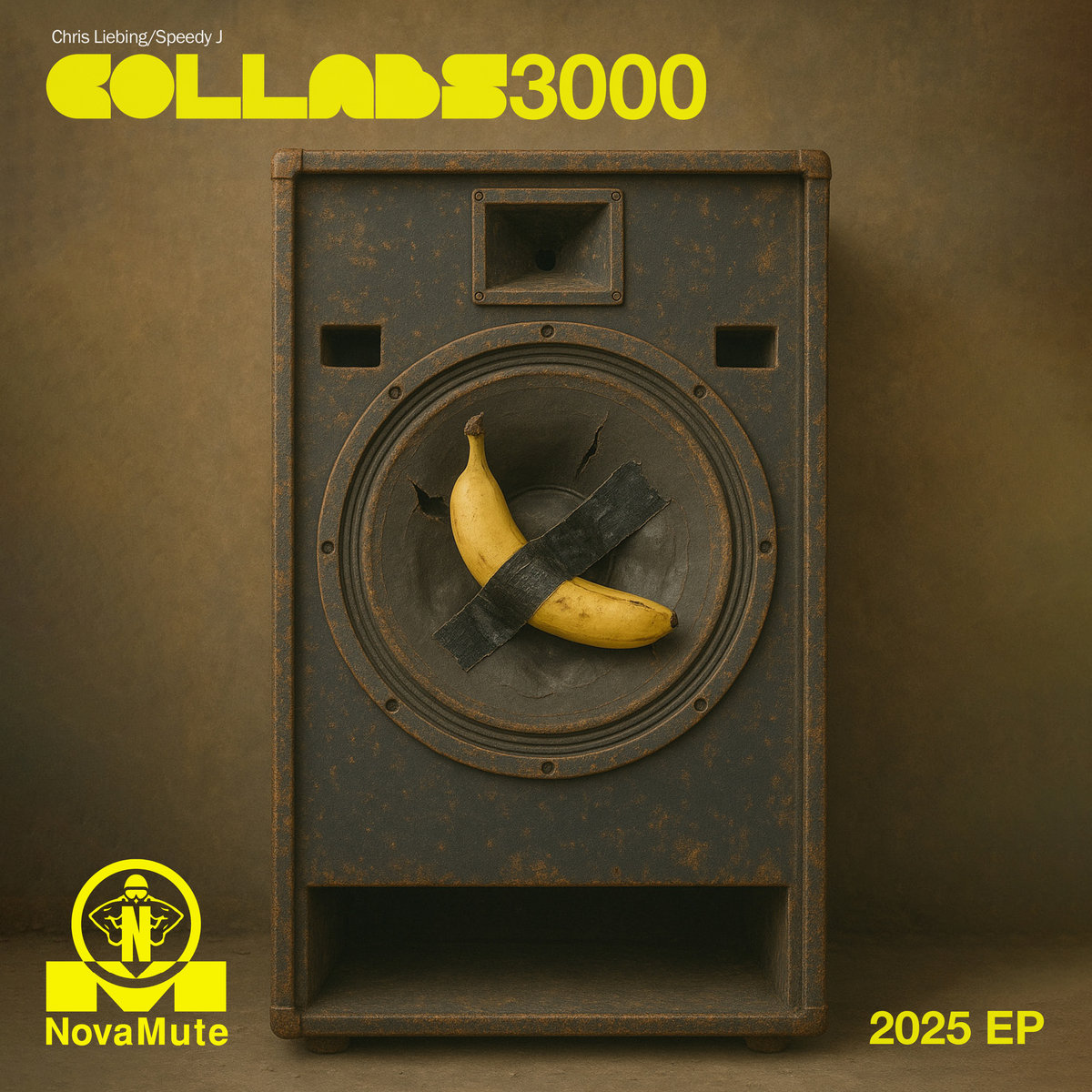
The 2025 EP kicks off with ‘Zwart’, a track of driving kaleidoscopic techno burrowing deep into your brain and limbs, and ‘Spiegeling’, where propulsive techno rhythms, and minimal ricocheting melodies coalesce for this essential dancefloor track. Both cuts offer a tantalising glimpse of what these two these two Techno titans have been creating nearly 25 years after they originally joined forces for Collabs 3000. Artwork for the EP is a playful nod to ‘Comedian’, Maurizio Cattelan’s controversial conceptual artwork and references the duo’s “bass banana”, which is passed between them to signal whose turn it is to lead the beats.

Techno innovators, Chris Liebing & Speedy J, began their Collabs 3000 project in 2001, at Frankfurt’s notorious U60311 club. Liebing and Paap, already key players in the European Techno scene, performed an off-the-cuff set that saw Liebing mixing out of a Speedy J live set and Speedy J bouncing off Liebing’s selections behind the deck, creating an utterly unique set.

Soon after that set the pair recorded at Paap’s studio in Rotterdam for a release for Speedy J’s celebrated collaborative series on NovaMute, Collabs. The resulting 12” helped to define the sound of early ‘00s Techno and their chemistry in the studio meant that they soon reconvened to record an album, Metalism.

The 20th Anniversary edition of Metalism has been remastered by Chris Liebing, and comes housed in the original art by The Designers Republic. The eleven relentless, layered tracks that move from brutal tough drums and dancefloor bound techno to more experimental meanderings, combine the pair’s mastery of subversive electronics and peak time techno and have lost none of their sheer power in the intervening years. 

The 20th Anniversary Edition of Metalism is available on double vinyl, CD and digitally on 14 November via NovaMute. Pre-order HERE
2025 EP is out now on limited vinyl, and digitally on 7 November via NovaMute. Pre-save HERE

Published post no.2,661 – Thursday 18 September 2025

New music – The Utopia Strong – The Atavist (Rocket Recordings)

adapted from the press release by Ben Hogwood

The Utopia Strong (Steve Davis, Kavus Torabi and Mike York) have shared a new track, the latest to be taken from their forthcoming album, Doperider out via Rocket Recordings on 10 October 2025.

You can listen to their new release, The Atavist, below. It is a wonderfully atmospheric piece, a cloud of synthesized sound with a passing similarity (in a good way!) to Mark Snow’s music for The X-Files:

The life of a psychonaut can take one to many plateaus of reality. Opinions vary as regards which of these are either desirable or optimal. All things considered though, it’s fair to say that once the average cerebral wanderer finds themselves a stoned skeleton on a motorbike, it’s a sign that they’re going places.

Such were the movements of The Utopia Strong, in making their third and arguably trippiest full-length album for Rocket Recordings. As the band explain: “When recording we tend to have books, bits of art and interesting things lying around the place. (Kavus) had recently bought the Paul Kirchner compendium, Awaiting The Collapse. Paul’s character Dope Rider (the skeleton in question) drives around the desert, getting into all manner of high jinx and spouting cosmic philosophy, highlighting the absurdities of life, death and the American mythos. “When we had created that particular track, one of our most beautiful and outré, it seemed to name itself. Certainly, we were looking at the comic strips while listening to it and something about its wide-screen vibes and the beautiful desert seemed to marry together.”

Serendipity has always played a strong role in The Utopia Strong, with the improvisatory approach of Steve Davis, Kavus Torabi and Mike York – as well as the innate chemistry between the trio – allowing them to take extensions through dimensions that frequently end up as much of a surprise to the band as the listener.

The band has summarily found ways to evolve its approach to facilitate the most adventurous exploratory missions possible. In this realm, the band’s formidable history – Steve as a snooker champion and bona fide household name, Kavus as a psychedelic and progressive polymath in the like of Gong, Cardiacs et al, and Mike in his work with Coil, Current 93 and as one of the UK’s foremost bagpipe makers – is transcended and usurped by their combined psychic chemistry.

Yet more than anything else this remains an evolutionary process. “All the pieces on Doperider began as purely electronic pieces, with Mike and Steve on modular synths and Kavus on an analogue synth” the band relate. “We were deliberately trying to not repeat ourselves and, for this reason, made a point of changing the model a little. Not that we’ve ever been necessarily conventional but I think this album goes a little deeper than the previous two studio albums.”

Doperider does indeed take the band down a variety of auditory pathways previously unexplored, and further into the realms of more surrealistic visions akin to the systems-built bliss of Caterina Barbieri, the unforgiving noisescapes of Hiro Kone or the alien soundtracks of latter-day Laurie Spiegel. “Certainly, Steve’s listening habits have changed somewhat since the first album, he has gone deeper into abstract electronica and musique concrete as well as becoming increasingly adept with his modular set up. This seems to have formed a backbone to how the music developed” reflects Kavus.

Hence the coruscating intensity of the title track and the elegiac rapture of ‘Unity Of Light’ showcase a still more moving and melancholic approach to their art, alongside the blissful ‘Harpies’, which features the vocals of Katharine Blake (Miranda Sex Garden/Mediaeval Baebes). Elsewhere curveballs strike such as the strident and stentorian curtain-raiser ‘Prophecy’, which utilises the influence of Magma and Zeuhl music – a longstanding passion for all three members – for the first time in earnest.  “It sits better at the start of the album as otherwise it would disrupt the decent into the beautiful hell hole that unfolds” as Steve notes.

Essentially however, the mission of The Utopia Strong remains intact – to offer a transformative pathway to wonders anew. “Well, we are making psychedelic music or, if you will, head music” reflects Kavus. “We put an awful lot of detail into each piece. It’s certainly not minimalist. Often after our shows people will remark that we had made them feel like they were on drugs. That’s the idea really. We’ll take you on a voyage of self-discovery that won’t preclude showing up to work on time the next day. Although really the core message of our music is ‘Quit your job and start a commune.”

As Steve notes: “Hopefully we’ve done justice to the comic book character Dope Rider and that he’d have loved riding along on his Harley Davison on another quest, with the wind blowing through his rib cage, listening to this album. If the audience choose the psychonaut road, then we are delighted to have been of service.”

Doperider is out on vinyl, CD and digitally on 10 October 2025.

Published post no.2,660 – Wednesday 17 September 2025