Unknown's avatar

About Arcana

My name is Ben Hogwood, editor of the Arcana music site (arcana.fm)

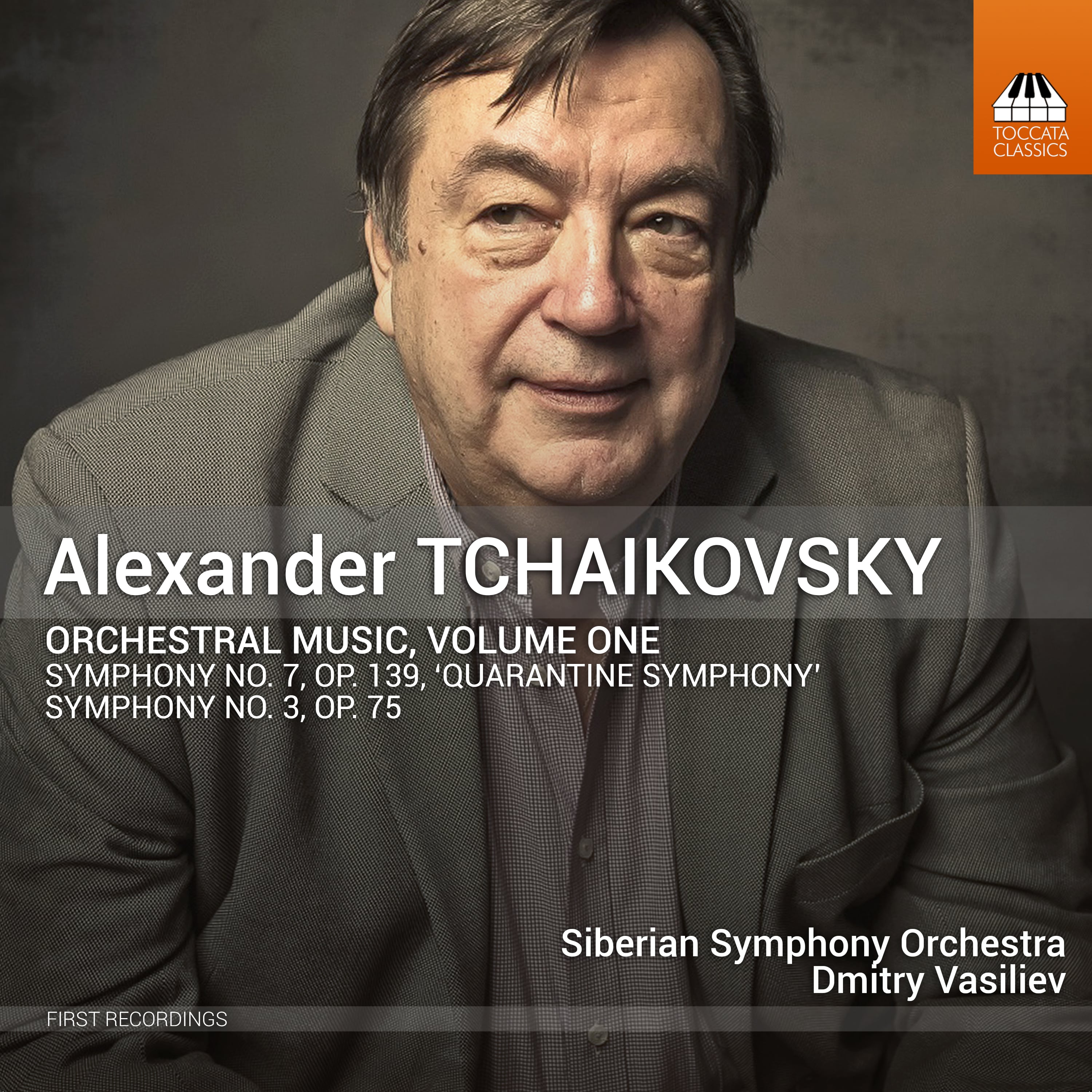
On record – Alexander Tchaikovsky: Orchestral Music Volume One (Siberian Symphony Orchestra / Dmitry Vasiliev) (Toccata Classics)

alexander-tchaikovsky

Alexander Tchaikovsky
Symphony no.3 Op.75 (1995-2002)
Symphony no.7 Op.139 ‘Quarantine Symphony’ (2020)

Siberian Symphony Orchestra / Dmitry Vasiliev

Toccata Classics TOCC0587 [60’12”]

Producer Vadim Dedik
Engineer Adaq Kahn

Recorded in live performances: 19 May 2019 (Symphony no.3), 20 September 2020 (Symphony no.7) at Philharmonic Hall, Omsk

Written by Richard Whitehouse

What’s the story?

Toccata Classics continues to investigate those paths lesser trod with this first instalment of symphonies by Alexander Tchaikovsky, likely the leading composer of the older generation in Russia, whose music is directly and audibly in the lineage of his geographical forebears.

What’s the music like?

Born in Moscow in 1946, Alexander Tchaikovsky is a nephew of composer and pianist Boris – but, in contrast to the latter’s selective output, has built an extensive catalogue featuring 14 operas (in addition to operettas and musicals) and three ballets, alongside numerous concertos and (to date) seven symphonies that frequently evince an illustrative or at least programmatic aspect. This is borne out in music highly evocative in import if without loss of that formal or expressive focus needed to sustain the two, wholly different, abstract arguments pursued here.

With its lengthy gestation and opulent instrumentation, the Third Symphony is a key work in the composer’s output. Its minimalist aspects occasioned more by Nielsen or Prokofiev than any post-war figure, the initial Allegro opens stealthily as its main theme gradually comes to the fore – tension increasing through a series of dissonant outbursts towards a massive climax across the orchestra that subsides into a sombre close. The central Allegro molto is described as ‘‘essentially a sequence of waltzes’’, which indicates its motion but not its stark emotional contrasts and violent denouement. It remains for the final Andante, proceeding without pause, to attempt a reconciliation; its furtive gestures opening-out onto a sustained expression whose restive and volatile content does not pre-empt the inexorability of the waltz music at the close.

Its title referring to the COVID-19 pandemic that occasioned its compact design and smaller forces (strings with percussion and piano), the Seventh Symphony comprises two movements. The first of these alternates between a plaintive Andante and trenchant Allegro molto, which latter gradually comes to the fore in a conclusion of unbridled abandon. Almost twice as long, the Adagio unfolds on the lines of a ‘prelude and fugue’ – the initial section sustaining a rapt eloquence that is intensified after the strings’ airy ascent and the commencement of the fugue in its methodical while deeply felt progress towards a fervent close. It is worth noting that the composer himself contracted the virus soon after completing this work – and which duly led to his missing the premiere in Omsk – but from which he has fortunately made a full recovery.

Does it all work?

For the most part, yes. This is music governed by the impulses as brought it to fruition, such that its underlying logic can be difficult to discern even on repeated hearings, while ensuring that a sense of destination – and arrival thereat – is never absent. The playing of the Siberian Symphony Orchestra is up to the standards of earlier releases for this label, Dmitry Vasiliev bringing a discipline and cumulative momentum to the often lengthy individual movements. There is little evidence of audience ‘presence’ in what are designated as live performances.

Is it recommended?

Indeed. The sound conveys the impact of these symphonies (the Third in particular) with no lack of immediacy, and there are insightful notes by pianist and composer Jonathan Powell. Hopefully more volumes of Alexander Tchaikovsky’s orchestral music will be forthcoming.

Listen

Buy

You can discover more about this release at the Toccata Classics website, where you can also purchase the recording. You can read more about Alexander Tchaikovsky here, and more about conductor Dmitry Vasiliev here

Playlist – K.D.A.P. (Kevin Drew)

It is our great pleasure to bring you a playlist from Broken Social Scene’s Kevin Drew…or K.D.A.P. as he is currently known for his solo activities.

K.D.A.P. (Kevin Draws A Picture) has not long released his Influences album, a fascinating document of his experiences ‘locked down’ in the English countryside. In that time Drew made very creative use of the Endlesss app, and as you will read in an interview with Arcana coming soon, he captured his natural experiences and sights on a form of musical film.

In our interview we also asked Drew for a playlist of the music he has been listening to of late, and he obliged with this:

Have a listen – you will hear music from Daniel Avery & Alessandro Cortini’s collaboration, two impressive works from Gigi Masin and longer form treasures from Laurel Halo, Teebs and Emily A. Sprague. Drew raised himself on a diet of early Warp treasures and Brian Eno, but as you will hear from this selection his musical tastes are considerably broader than you might expect.

Listen, and enjoy – and come back in a few days for the interview!

K.D.A.P.’s new album Influences is out now on Arts & Crafts Productions – and it can be streamed and purchased via Bandcamp below:

Switched On – Neil Cowley: Hall Of Mirrors – Reflected (Mote)

neil-cowley-remixed

reviewed by Ben Hogwood

What’s the story?

On its release in March, Neil Cowley’s Hall Of Mirrors album made a very strong impression, not least on Arcana – the verdict being ‘a heartfelt and inventive biography of his musical exploits to date’. The album focused on Cowley’s relationship with the piano, but now he hands it over to a carefully chosen set of collaborators for the remix treatment.

What’s the music like?

Cowley’s originals, beautiful and moving in their simplicity, are ripe for the remix treatment – and each of the ten remixers bring a respectful approach to the table, letting the originals speak for themselves, but each of them adding something new. Cowley himself remixes the last track, I Choose The Mountain, by which time the album’s raw material has worked its spell all over again.

Ben Lukas Boysen immerses Prayer in a few ambient clouds, the music floating slowly but surely like a plane crossing the sky. Berlin Nights introduces a few glitchy elements courtesy of Louf, with a dubby beat – a quality replicated by Jacana People for Souls Of The S-Bahn and applied with a bit more force to the bass end and a triple-time beat.

The Kilig remix of Circulation is an intimate, end of day moment, the conversational piano twinned with some quite busy but nicely worked beats. Kate Simko, meanwhile, takes Stand Amid The Roar to the Mediterranean poolside, in a fuzzy remix that Cowley’s old band Fragile State would have been very happy with. The fuzzy feeling continues into Seb Wildblood’s take on Just Above It All, with a lazy guitar, muted trumpet and dappled beats that give a bit more urgency to proceedings.

The Sad City remix of She Lives In Golden Sands has a lovely, windswept start before its amiable electronic chatter, and this moves on to Hector Plimmer’s thoughtful remake of Saudade, with some beautifully rich piano chords.

For the first time we hear a greater emphasis on the percussion in Otzeki’s remix of Tramlines, a dubby deep houser, then it’s back to a wider panorama for The Allegorist’s beatless encounter with Time Interrupted. Finally Cowley’s own work, I Choose The Mountain, takes an urgent beat but gets swept away in the heat haze.

Does it all work?

It does. These alternative versions work really well on their own but also make an album as carefully sequenced as the original Hall Of Mirrors. Cowley’s past as a member of Fragile State makes itself known more clearly in the execution of an album that would work perfectly as an accompaniment to sunset at Café Mambo, but it still keeps the intimacy of the original.

Is it recommended?

It is. The two Halls of Mirrors make ideal companions.

Stream

Buy

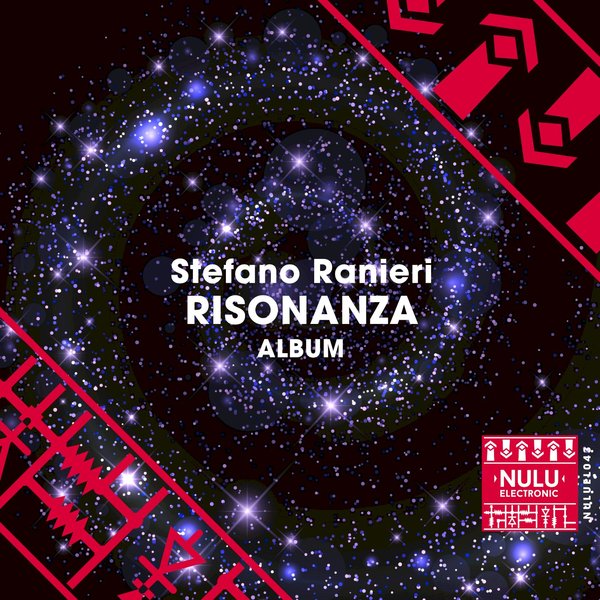
Let’s Dance – Stefano Ranieri: Risonanza (Nulu Electronic)

stefano-ranieri

reviewed by Ben Hogwood

What’s the story?

This is the first album for Italian producer Stefano Ranieri. He has been making and releasing music for around 15 years, and is now ready to dip his toes into the long player format. A list of the DJs supporting Ranieri’s work includes Carl Cox and Masters At Work, says much about his reputation built up in that time, and also the styles of dance music he gravitates towards.

What’s the music like?

Excellent. Ranieri uses all his experience of making dancefloors move to come up with a wide range of tracks that fulfill that brief perfectly. Koncept One has a touch of Lil Louis about it, with a great vocal rant ‘you’re not free, you’re a slave’. It comes after Your Time Is Up has set a smoky scene with a really good loping beat.

1942 has a powerful vocal and a strong piano line. C’est Terrible goes more acidic but counters that with a really good, slightly tribal sample. Saulè punches through a bassy electro riff, while a minimal cut like Karming Deep works really well as it has a good vocal cut to go with its keyboard hook. Die Of Pain has a real gravitas, taking the tail end of a Martin Luther King speech. Of Course is excellent too, rolling along nicely.

Does it all work?

Consistently. Ranieri knows what works on the most basic level, and has the confidence to let his beats do the talking. Each of the fifteen tracks is excellent, really well paced, and does all the right things – without ever being routine.

Is it recommended?

Enthusiastically. Risonanza is a really fine piece of work, whether you approach it from a house, techno or electro direction. Stefano Ranieri can be proud of his achievement.

Stream

Buy

You can listen to clips from the album and purchase Anywhere Here on Traxsource

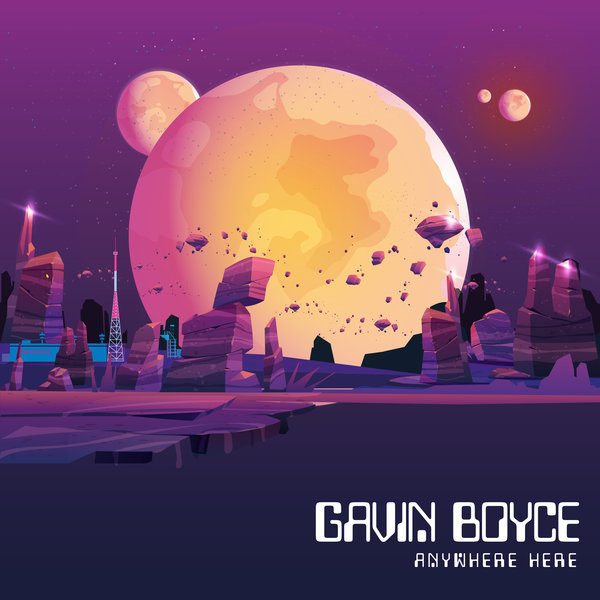
Let’s Dance – Gavin Boyce: Anywhere Here (Nordic Trax)

COVER_4.7

reviewed by Ben Hogwood

What’s the story?

It has been out for a couple of months, but when you consider the debut album from Irish producer Gavin Boyce has been two decades in the releasing, what’s a few days between friends?! In that 20 years Boyce has been concentrating his endeavours on the single or EP format, with a stream of high quality house, techno and deep disco releases, many of them released on the excellent Canadian label Nordic Trax.

Their relationship goes back to 2012, and includes the much-loved Haboo, but his reputation for quality and positive house goes back a long way before then, with a fine bouncy vocal track called So Obvious getting pride of place on a Sessions mix by Mark Farina in 2006.

Anywhere Here contains a 2021 album mix of Haboo and a new version of Boyce’s 2008 release Face Down, alongside 10 other originals.

What’s the music like?

You don’t have to spend much time at all with Anywhere Here to know that it carries the imprint of an experienced production hand. Yet with Boyce experience has never bred over-familiarity, and he has always had a strong inventive streak running through his house music. Each of the instrumental tracks here on the carries a spark, a spring in its step, with a bit of class too.

Try Be Grand, a really strong nocturnal track that introduces itself with a slightly dubby tread. Haboo is predictably brilliant, an airy version for the album capitalising on its strong reputation, while Radarz has a similar open air feel, powered largely by a two chord progression on the piano.

Boyce’s beats are reassuringly solid throughout, with tracks like Olive Groves ideally paced and structured. Face Down introduces some sharper tones, while the flowing piano on Kitui has an end of day warmth, with the poolside beckoning. Anywhere Here, the last of the dozen, is arguably the best with its probing melody.

Does it all work?

Yes. Boyce stretches his 12 tracks over 80 minutes and structures them like a DJ set, so the peaks and troughs are beautifully managed, with an assured selection of beats and grooves that keep their vitality throughout.

Is it recommended?

It is, provided you bolster your Gavin Boyce collection with a selection of mixes from the singles he’s already released on Nordic Trax. Anywhere Here shows off his prowess as an album artist though, capable of keeping the floor full as the dozen tracks take us on a journey filled with strong, colourful grooves. All Boyce needs to do now is make sure he doesn’t leave it another two decades for the next one!

Stream

Buy

You can listen to clips from the album and purchase Anywhere Here on Beatport