
Unknown's avatar

About Arcana

My name is Ben Hogwood, editor of the Arcana music site (arcana.fm)

Let’s Dance – Gavin Boyce: Anywhere Here (Nordic Trax)

COVER_4.7

reviewed by Ben Hogwood

What’s the story?

It has been out for a couple of months, but when you consider the debut album from Irish producer Gavin Boyce has been two decades in the releasing, what’s a few days between friends?! In that 20 years Boyce has been concentrating his endeavours on the single or EP format, with a stream of high quality house, techno and deep disco releases, many of them released on the excellent Canadian label Nordic Trax.

Their relationship goes back to 2012, and includes the much-loved Haboo, but his reputation for quality and positive house goes back a long way before then, with a fine bouncy vocal track called So Obvious getting pride of place on a Sessions mix by Mark Farina in 2006.

Anywhere Here contains a 2021 album mix of Haboo and a new version of Boyce’s 2008 release Face Down, alongside 10 other originals.

What’s the music like?

You don’t have to spend much time at all with Anywhere Here to know that it carries the imprint of an experienced production hand. Yet with Boyce experience has never bred over-familiarity, and he has always had a strong inventive streak running through his house music. Each of the instrumental tracks here on the carries a spark, a spring in its step, with a bit of class too.

Try Be Grand, a really strong nocturnal track that introduces itself with a slightly dubby tread. Haboo is predictably brilliant, an airy version for the album capitalising on its strong reputation, while Radarz has a similar open air feel, powered largely by a two chord progression on the piano.

Boyce’s beats are reassuringly solid throughout, with tracks like Olive Groves ideally paced and structured. Face Down introduces some sharper tones, while the flowing piano on Kitui has an end of day warmth, with the poolside beckoning. Anywhere Here, the last of the dozen, is arguably the best with its probing melody.

Does it all work?

Yes. Boyce stretches his 12 tracks over 80 minutes and structures them like a DJ set, so the peaks and troughs are beautifully managed, with an assured selection of beats and grooves that keep their vitality throughout.

Is it recommended?

It is, provided you bolster your Gavin Boyce collection with a selection of mixes from the singles he’s already released on Nordic Trax. Anywhere Here shows off his prowess as an album artist though, capable of keeping the floor full as the dozen tracks take us on a journey filled with strong, colourful grooves. All Boyce needs to do now is make sure he doesn’t leave it another two decades for the next one!

Stream

Buy

You can listen to clips from the album and purchase Anywhere Here on Beatport
Listening to Beethoven #186 – 6 Variations on an original theme in F major Op.34

Beethoven-op34

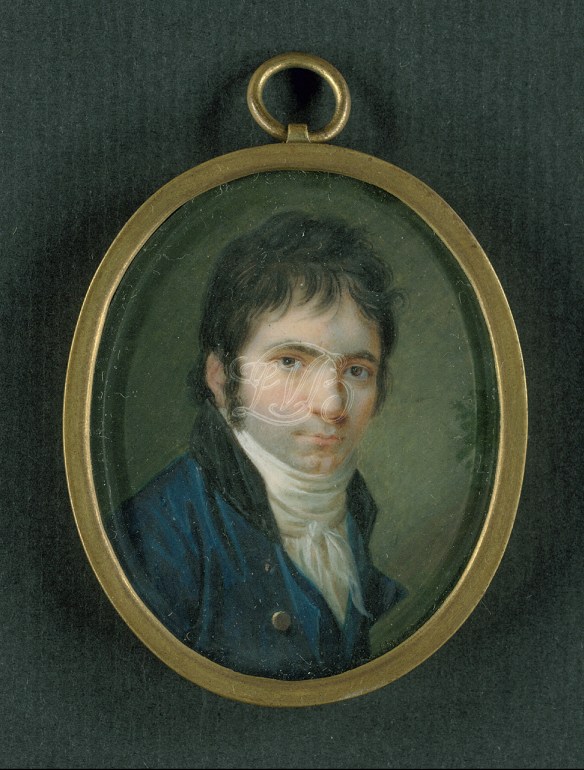
Beethoven: Bust en face in oval – ivory miniature, 1802 by Christian Hornemann, courtesy of Beethoven-Haus, Bonn

6 Variations on an original theme in F major Op.34 for piano (1802, Beethoven aged 31)

Dedication unknown
Duration 15′

Listen

What’s the theme like?

The theme is Beethoven’s own, unusually – and is a slow, stately number with an expansive chord in the middle.

Background and Critical Reception

Beethoven’s stay in the village of Heiligenstadt was a turning point in his life. The principal reason for this was the onset of his deafness, and he used the change of location as a time to come to terms with that, hence the Heiligenstadt Testament referred to previously.

Yet his increasingly original approaches to composition were there for all to see, not least in this set of variations from 1802. For the first time in a long while he did not use another composer’s music for the theme, writing one himself – and he proceeded to turn it into a number of very different variations, each one of the six in a different key.

Angela Hewitt has recently recorded the work for Hyperion, and writes a telling quote from the composer. ‘Usually I have to wait for other people to tell me when I have new ideas, because I never know this myself. But this time – I myself can assure you that in both these works the manner is quite new for me.’

The originality is also noted by Harold Truscott, writing about the piano music in The Beethoven Companion. ‘The whole outlook is utterly different from that of any first-period work’, he writes. ‘The Adagio theme has the luxurious sprawl of so many of his first-period slow movements – on the surface; in fact it is as tight as a drum, and there is not a note that does not contribute to the basic theme and harmonic texture essential for the variations.’

Hewitt identifies the penultimate variation as a key component. ‘What really makes this work is…a funeral march in C minor (foreshadowing his Eroica symphony). Nothing could be further from the mood of the original theme.’ She also points out how the sixth and ‘final’ variation actually contains a further two ‘bonus’ variations.

Thoughts

This is not your typical set of Beethoven variations. Right from the start it is clear something will be different, from the expansive theme that stresses the home key of F major – but presents some lavish, added-note chords as it does so. Beethoven then leaves said home key behind as he embarks on a harmonic and melodic adventure, having fun but preserving the musicality.

The appearance of D major for the first variation is a surprise, employing a very similar tactic to the fourth bagatelle of the Op.33 set he was working on at almost the same time. The B flat second variation feels like a piece of early Schumann, a rustic march-like affair, while the third in G major is an airy aside, operating in much longer melodic units.

The fourth variation is a bit more playful, its roots in the dance, while the fifth probes deeper, as Hewitt identifies, with raw emotion and full, red-blooded chords as punctuation. The sixth variation turns out to be a remarkable section showing Beethoven’s fearsome powers of invention. Lasting one third of the work, it starts with a long build-up on a ‘C’ chord before playfully throwing the theme around back in the ‘home’ key. This leads to a section of trills, like an elaborate cadenza in a piano concerto, before a relatively calm, measured finish.

Full of invention and unpredictability, this is without doubt one of Beethoven’s finest variation sets to date – and yet it is still not well known! Something to put right…

Recordings used and Spotify links

Angela Hewitt (Hyperion)
Cécile Ousset
(Eloquence)
Ronald Brautigam
(BIS)
Alfred Brendel
(Philips)
Rudolf Buchbinder
(Teldec)
Glenn Gould
(Sony)

The Spotify playlist below includes all but one of the versions listed above – with the opportunity to hear a clip from Angela Hewitt’s version on the Hyperion website

There are some terrific versions of this piece, led by Angela Hewitt’s new recording for Hyperion, which shows just how much she loves the work with some wonderful characterisations. Cécile Ousset is also outstanding in her flowing account, as is Rudolf Buchbinder, who contributes a steely funeral march. Ronald Brautigam has a great deal of bravura and punch in his account on the fortepiano.

Also written in 1802 Clementi Piano Sonata in G major Op.40/1

Next up 15 Variations on an Original Theme in E flat major Op.35 ‘Eroica’

BBC Proms – Pierre-Laurent Aimard, Mahler Chamber Orchestra / Sir George Benjamin : Knussen, Ravel & Benjamin

george-benjaminPierre-Laurent Aimard (piano), Mahler Chamber Orchestra / Sir George Benjamin
Knussen The Way to Castle Yonder Op.21a (1988-90)
Purcell
(transc. Benjamin) Three Consorts (1680) [World premiere]
Ravel
Piano Concerto in G major (1929-31)
Benjamin
Concerto for Orchestra (2021) [BBC co-commission: World premiere]

Royal Albert Hall, London
Monday 30 August 2021

Written by Richard Whitehouse; pictures BBC / Chris Christodoulou

The cancellation of last year’s Proms meant the loss of several pieces by George Benjamin in recognition of his 60th birthday. Tonight’s concert, featuring the Mahler Chamber Orchestra with whom this composer-conductor has often collaborated, provided something of a redress.

The programme (its hour-long duration not unreasonably given without interval) began with The Way to Castle Yonder, a brief yet potent ‘potpourri’ from Oliver Knussen’s second opera Higglety Pigglety Pop! as amply conveys the aura of winsome yet ominous playfulness that suffuses the larger work. While they enjoyed a 40-year friendship, Benjamin’s own aesthetic is appreciably removed from that of the older composer so that a detachment, even aloofness was evident – without, however, detracting from this music’s always deceptive whimsicality.

Transcriptions of Renaissance and Baroque sources have been a mainstay of post-war British music, Three Consorts following an established pattern with Benjamin’s take on these Purcell miniatures underlining their intricate textures and piquant harmonies. The (to quote Benjamin) ‘‘visionary moment of harmonic stasis near the middle’’ of In nomine 1 went for little, with the ‘‘mesmerising intersection of line and harmony’ in Fantasia 7 effecting a Stravinskian objectivity, but the understated humour of Fantasia upon One Note was tellingly delineated.

Pierre-Laurent Aimard then joined Benjamin and the MCO in a performance of Ravel’s Piano Concerto in G major that, though it had precision and refinement in abundance, was almost entirely lacking in the qualities that define this music’s essential persona. The opening Allegramente evinced a desiccated manner with such as the blues-inflected coyness of its transitions or the heart-stopping stasis prior to the reprise of the second theme going for little, while the central Adagio took on an all-enveloping inertia as it unfolded – the inward rapture of its expressive apex then the pathos of its ensuing cor anglais dialogue all too enervated in their repose. The closing Presto drew an incisive response from pianist and orchestra alike, but here again any sense of this music’s more provocative demeanour was absent from the prevailing stolidity.

Aimard returned for an animated reading of Benjamin’s early Relativity Rag which provided an admirable entree into the world premiere of the latter’s Concerto for Orchestra. Unfolding as a continuous span (a pause just past its mid-point may be structurally meaningful) across a little over 15 minutes, this is typical of Benjamin’s recent music in its systematic – but rarely predictable – formal trajectory and alluring emotional reticence. The various instruments are highlighted singly or in groups in what becomes an intensifying progression, albeit without a tangible momentum, to a climax which brings first violins to the fore, before subsiding into a close of serene equivocation. Superbly realized by the MCO, for whom it was written, this is a thoughtful addition to a genre in which ‘display’ has all too readily become the watchword.

One final thought – at his untimely death, Oliver Knussen had several large-scale orchestral works in progress and maybe even nearing completion. Might it not still be feasible to bring at least one of the pieces to performance? The UK music scene would be all the richer for it.

You can find more information on the BBC Proms at the festival’s homepage. Click on the composer’s names for more information on Sir George Benjamin, and on the performers’ names for more information on Pierre-Laurent Aimard and the Mahler Chamber Orchestra.

Let’s Dance – Conclave: Conclave (Love Injection Records)

conclave

Conclave: Conclave (Love Injection Records)

reviewed by Ben Hogwood

What’s the story?

Conclave is a musical collective under the wing of the multi-talented instrumentalist and vocalist Cesar Toribio. With his roots in the Dominican Republic and Florida, Toribio acquired a love of rhythm-based music through playing drums in church, studying jazz music in Boston, and garnering an appreciation of Afro and Latin-based rhythms.

The name ‘Conclave’ is an accurate identity for his aims, explained in the press release as an amalgamation: con (with) + clave (a unifying rhythm that holds the key to unlock dances both ancestral and contemporary).

What’s the music like?

Joyous. When thinking about dance and rhythm-based music it is so easy to take it for granted, to forget what an impact it can have on a community and how important it is to boosting moods in these difficult times. Cesar Toribio takes music back to those first principles, recognising the elemental feelings his music can provide, and because of that his self-titled album feels like a pure celebration of music. The album turns out to be as colourful as its cover.

To give some of the many highlights, the rich layers of There’s Enough are brightly coloured and enormously uplifting. Habla has a persuasive, swaying rhythm capped by a brilliant trumpet solo. Somehow All That I Need, featuring Sharin, is even better, with a winsome give and take between the two vocalists. Meanwhile Twice, while a little more introspective, features a squelchy bass and sun-drenched keys.

A soaring vocal takes Rise to the next level, while the much loved Perdón dazzles with its shimmering textures, a strong communal presence. The extended Alati Yeye Chege is hypnotic, while the album signs of with some irresistible, Todd Edwards-type funk on Take Heed (No Sunlight).

Does it all work?

Yes. The rhythms are gloriously instinctive, and production levels are just right so that the music has plenty of room to breathe, keeping its elements to the fore.

Is it recommended?

Heartily. For those of us in the Northern Hemisphere who are mourning the loss of our summer, the occasional appearance of the sun should be soundtracked by this album. It may have been out for a couple of months but if you haven’t got it yet, you are encouraged to invest in some warmer musical weather. It will go far – and comparisons with Masters At Works’ Nu Yorican Soul offshoot are well-earned.

Stream

Buy

here

BBC Proms – Patricia Kopatchinskaja, Folktone, BBC SSO / Ilan Volkov: Bartók Roots

Patkop Konzerthaus artist in Residence serie

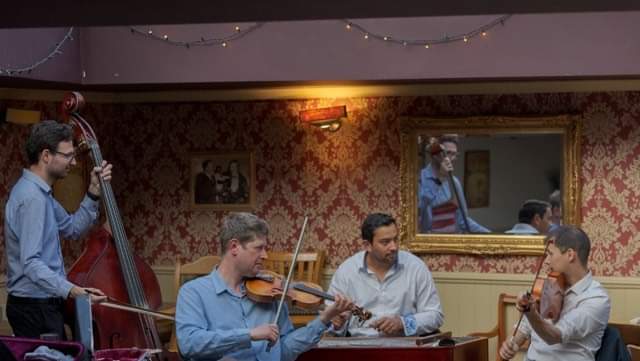
Folktone [below – Adam Römer (violin), Tamás Ferencz (violas, percussion, dance), János Kállai (dulcimer), András Lovászi (double bass)]
Patricia Kopatchinskaja (violin), BBC Scottish Symphony Orchestra / Ilan Volkov

Traditional Hungarian folk music
Bartók
Violin Concerto no.2 BB117 (1937-8)
Traditional
 Hungarian folk music
Bartók
Suite no.2 BB40 (1905-7, rev. 1920 & ’43)

Royal Albert Hall, London
Saturday 28 August 2021

Written by Richard Whitehouse; picture of Ilan Volkov by Astrid Ackermann

This evening’s Prom may have seen the BBC Scottish Symphony Orchestra’s chief conductor Thomas Dausgaard replaced by its principal guest Ilan Volkov, but the ‘Bartók Roots’ concept remained unchanged so as to provide a fascinating and instructive overview of the interface between folk and art music.

Each Bartók piece was preceded by a selection of (mainly) dances courtesy of the band Folktone (led by Adam Römer, familiar as section-leader violist with the City of Birmingham Symphony Orchestra). It was hardly a surprise that Patricia Kopatchinskaja, making her belated Proms debut, should have joined this enterprising quartet to make even more explicit the process whereby Bartók translated those folk melodies directly into the thematic content of his mature compositions – the seamless transition of one to the other doubtless giving Proms listeners pause for thought.

No performance by Kopatchinskaja could be described as routine, as it proved with Bartók’s Second Violin Concerto – less an interpretation than recreation of this greatest from a ‘golden age’ of such works, not least for the way it integrates formal rigour with that spontaneity of emotion emblematic of its composer. While there was no mistaking the all-round correlation between the outer Allegros, the means by which Kopatchinskaja emphasized this without loss of subtlety or expressive nuance underlined just how each of these movements reflects then transforms the other. Volkov secured playing of due sensitivity and poise from the BBCSSO – here and in an Andante whose variations on one of Bartók’s most disarming melodies was never more affecting than when this returns, only to evanesce into silence towards its close.

Kopatchinskaja herself returned for an apposite encore of Ligeti’s early Ballad and Dance in partnership with orchestra-leader Laura Samuel, the BBCSSO then joining-in with a repeat of the second piece. A further selection of folk pieces followed the interval, and prior to the performance of the Second Suite – among several early orchestral works by Bartók that are seldom revived but which throw a fascinating light on his evolution. If less amenable to the pointing up of its derivations from folk sources, the putative connections are no less evident.

At just over 30 minutes and scored for relatively reduced forces, this piece catches Bartók on either side of his initiation into collecting then absorbing of folk material. Such glimpses that emerge during the first three movements tend to be brushed aside by recurrences of that late-Romantic ethos stretching back via Strauss and Wagner to Liszt – hence the genial urbanity of the initial Serenata, rhythmic energy of the ensuing Allegro diabolico with its intensive fugal workout (this movement being the only piece its composer ever conducted in public), rhapsodic progress of the Scena della Puszta with its ruminative preamble for bass clarinet or new expressive vistas of the Per finire as it elides between folk melodies and voluptuous harmonies through to a close the more provisional for its having set out on a new beginning.

The BBCSSO recently recorded this work with Dausgaard (Onyx), but the present rendition with Volkov was no less idiomatic and maybe even more responsive to the chameleon-like aspect of its stylistic remit. It certainly ended this Prom in appealingly understated fashion.

You can find more information on the BBC Proms at the festival’s homepage. Click on the performers’ names for more information on Folktone and Patricia Kopatchinskaja, while for more information on the BBC Scottish Symphony Orchestra’s most recent Bartók release on Onyx Classics click here