Unknown's avatar

About Arcana

My name is Ben Hogwood, editor of the Arcana music site (arcana.fm)

Switched On: Kasper Bjørke: Sprinkles (hfn Music)

kasper-bjorke

reviewed by Ben Hogwood

What’s the story?

Kasper Bjørke is a prolific producer, with two decades’ worth of music under his belt. Much of that has been in a solo capacity for the Copenhagen artist, who has proved himself equally effective as a songwriter and instrumentalist.

His new album Sprinkles falls into the latter category, and appears to have its roots in a lockdown climate. Recorded and produced on his laptop, in a cabin by the beach in Denmark, the aim is to draw on energy and positive feelings from Bjørke’s experience gigging worldwide. It should provide music to fill the considerable hole left by empty dancefloors over the last year and a half.

What’s the music like?

Polished, dancefloor-friendly, and summery. Bjørke writes with a fluent, listener-friendly approach, providing plenty of hooks but working them in to textures as suitable for a Balearic poolside as they are for the darker club. Elements of house, techno and electro combine with instinctive ease.

The three singles already released – Baybi, Running and Kites – are excellent, and the way Baybi unfolds with a lazy saxophone is especially attractive. Grace has bubbling synths, its analogue approach working well, while Mirage flickers brightly at the edges, with some nicely applied textures.

As the album progresses so does Bjørke’s tendency to experiment, and RDVSpecial sharpens the synth tones to good effect. Finally Viewwws throws a few longing looks back towards 1990s ambient, with its loping, dubby tread.

Does it all work?

It does. Nothing here is too demanding, but nor is it lacking in substance. The Danish seaside gives itself away in the warm textures, and the sepia-tinted edges to some of Bjørke’s tracks are attractive.

Is it recommended?

It is. Kasper Bjørke’s output has been consistent and varied up until now, but there is room for the deeper side in his output – and the productions here are linked together rather nicely. Sprinkles is an ideal summer album.

Stream and Buy

Sprinkles  is released on 30 July. To hear the first three singles and to purchase, you can visit Bandcamp here:
Listening to Beethoven #172 – 6 Lieder von Gellert Op.48

songs-op48
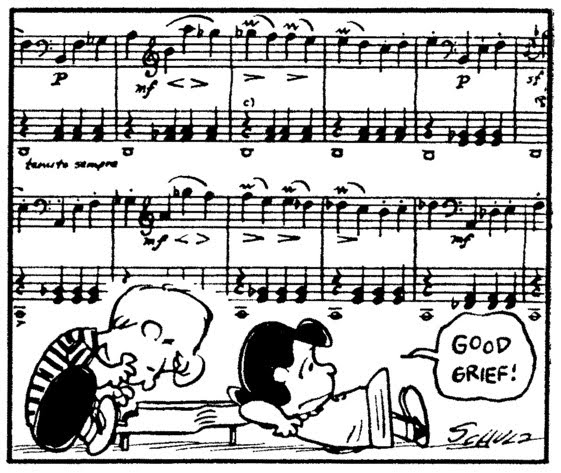
Peanuts comic strip, drawn by Charles M. Schulz (c)PNTS

6 Lieder von Gellert Op.48 for voice and piano (1801, Beethoven aged 30)

1 Bitten
2 Die Liebe des Nächsten
3 Vom Tode
4 Die Ehre Gottes aus der Natur
5 Gottes Macht und Vorsehung
6 Busslied

Dedication not known
Text Christian Fürchtegott Gellert
Duration 14′

Listen

Background and Critical Reception

Although Beethoven was enjoying a fierce period of creativity in his compositions, his health was suffering – and in particular his hearing. This cycle of six Gellert settings captured his state of mind at the realisation that his loss of hearing may well be temporary.

Jan Swafford feels the anguish in songs whose roots go back several years. ‘That Beethoven turned to the artless North German piety of these poems, and set them in a style more interested in declaiming the words than in waxing lyrical, is another indication of his state of mind’, he writes. ‘If doctors could not help him, maybe God could, at least in giving him consolation. These song come from the heart of his anguish and incipient depression.

The texts are revealing, perhaps nowhere more so than the third song Vom Tode, with its line ‘Meine Lebenszeit verstreicht, Stündlich eil ich zu dem Grabe (My life is ending and with each hour I move swiftly to the grave)’.

This is followed by two hymns of praise, before an expansive final song Busslied which explores both sides of the ‘argument’.

Thoughts

The deeper emotion Beethoven has been investing in his instrumental pieces can also be keenly felt in these six settings.

The music of Bitten, in a pure C major, offers a kind of cold and rather downcast consolation, the poet (and composer) contemplating their fate. The tone of Die Liebe des Nächsten, however, is upward looking, and more than a little operatic, the piano answering the voice as a Handel orchestra might have done.

Vom Tode itself has a very hollow ring, and is a sombre affair indeed, one of Beethoven’s most moving songs – and we can surely allow him the exploration of his fate. In the wake of such an empty song, deep in the minor key, Die Here Gott also sounds a little hollow in spite of its status as a genuine hymn of praise. The musical language remains stern, but when Beethoven switches to the major key it becomes genuinely exultant, with massive peals from the piano at the close. Gottes Macht is very much in the same vein, all about strength and power – and here the stance is a Handelian one too.

Busslied is an epic in comparison to these shorter settings, as long as the previous three songs put together. It starts in very withdrawn fashion but moves to a more positive outlook, with a hymnlike melody in the voice. The piano scampers to keep up, turning in some particularly athletic counterpoint.

This is a side of Beethoven we have not yet seen in the vocal music, a deeper and more personal expression which seems more suited to the world of the Lied than the stage. It is a private and rather moving 15 minutes spent with a composer whose physical ailments were destined to challenge him greatly, but ultimately not to overcome his fierce will to compose.

Recordings used

Dietrich Fischer-Dieskau (baritone), Hartmut Höll (piano) (Warner Classics)
Hermann Prey (baritone), Leonard Hokanson (piano) (Capriccio)
Roderick Williams (baritone), Iain Burnside (piano) (Signum Classics)
Matthias Goerne (baritone), Jan Lisiecki (piano) (Deutsche Grammophon)

These are four really excellent versions, from the ‘old-school’ and imperious approach from Hermann Prey and Dietrich Fischer-Dieskau to the newer versions from Roderick Williams and Matthias Goerne. Goerne is especially fine here in his new recording with Jan Lisiecki, finding a moving and reverent stillness in the slower songs and tempering the exuberance of the hymns of praise. Roderick Williams phrases Vom Tode beautifully, with a deliberately flatter tone (not pitch) to the voice.

Spotify links

A playlist of four different versions of the Op.48 Lieder can be found here:

Also written in 1801 Haydn The Spirit’s Song Hob.XXVIa:41

Next up 7 Variations on ‘Bei Männern, welche Liebe fühlen’

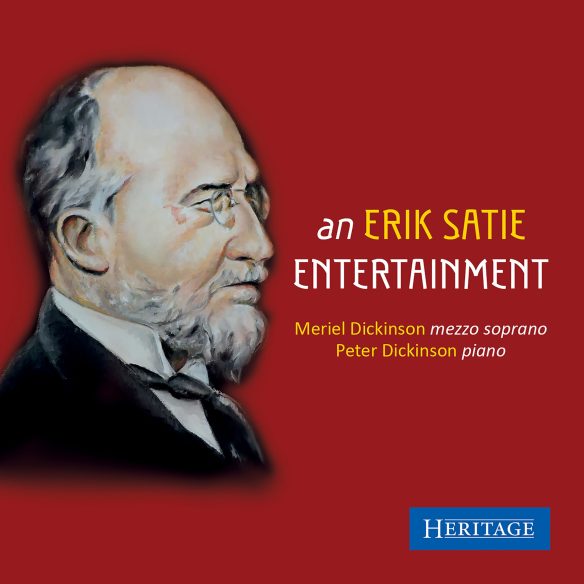
On record: Meriel & Peter Dickinson: An Erik Satie Entertainment (Heritage Records)

satie-dickinson

Meriel Dickinson (mezzo-soprano / reader), Peter Dickinson (piano / reader)

Heritage Records HTGCD171 [68’09”] French texts included
Producer Antony Hodgson
Engineer Tony Faulkner

Recorded 6 October 1975 at All Saints’ Church, Petersham (Unicorn LP only) Remastered by Peter Newble

Reviewed by Richard Whitehouse

What’s the story?

The Heritage label continues its worthwhile excavation of overlooked ‘deep catalogue’ with this selection of Erik Satie’s piano pieces, songs and prose as performed by Meriel and Peter Dickinson, whose recitals were a notable fixture of the UK music-scene over several decades.

What’s the music like?

After the lively and rumbustious march Le Piccadilly (1904), Trois melodies (1887) show the composer’s poignant take on domestic song-writing from the period. The haunting Deuxième Gnossienne (1893) is followed by the hieratic plangency of Hymne: ‘Salut Drapeau!’ (1891), while the Deuxième Pièce froide (1897) anticipates the quirky humour to come. Tendrement (1902) ranks among Satie’s most disarming songs, as does the amiable Proudre d’or (1900/1) within his piano music. Two winsome songs from incidental music for the play Geneviève de Brabant (1899/1900) precede two piano pieces – the mystically aloof Première Gymnopédie (1888) and the demurely anarchic Vexations (1893) – which, between them, outline the extent of Satie’s creative thinking. Similarly, the gently facetious humour of Trois melodies (1916) affords pointed contrast with the introspective mystery of the early Chanson (1887) then the considered evocation which is Chanson medieval (1906); further reminders that demarcation between this composer’s seemingly serious and humorous sides cannot be taken as absolute.

An undoubted bonus of the added live material is the Dickinsons’ readings from Satie’s own writings. Thus, there is Peter’s deadpan rendering of Satie’s Self-Portrait as provided for his publisher, its barbed whimsy duly complemented by brief piano interludes from his comedy Le Piège de Méduse (1913), while those gnomic expressions that are Quatres petites melodies (1920) inhabit similarly elliptical domain. Peter reads from the composer’s fanciful outline of his ‘routine for living’ in A Musician’s Diary, while Meriel tells of his ironic attitude towards Beethoven in Satie’s Fakes; between them, she sings the compact confessionals that are Trois Poèmes d’amour (1914). The gnomic song-cycle Ludions (1923), among Satie’s final works, makes a suitably telling foil to Peter’s reading of the archetypal Satie text In Praise of Critics. The selection concludes with a brace of songs – the blithely sardonic La Diva de l’Empire (1904) then the quintessentially Satie confection Je te veux (1897), its deftest interplay of charm and guile with a knowing sentimentality evidently to the pleasure of those listening.

Does it all work?

Very much so, given that Meriel and Peter are so attuned to the facets of Satie’s inimitable genius. At the time of this LP and its attendant recitals, its sheer extent had still to be fully assessed, which does not lessen the significance of the Dickinsons’ efforts (as with Satie’s younger contemporary and English counterpart Lord Berners) in championing this music at the highest artistic level. Both the transfer of the original Unicorn disc and the live extracts (mono) have been capably done – revealing few, if any, limitations in the source-material.

Is it recommended?

It is, not least as an informed and appealing introduction to this music by artists for whom its advocacy was clearly a labour of love. A pity that English translations of the song-texts were not included, though these are mostly accessible online, and their omission is a minor caveat.

For further information on this release, and to purchase, visit the Heritage Records website, and for more on Meriel and Peter Dickinson click here

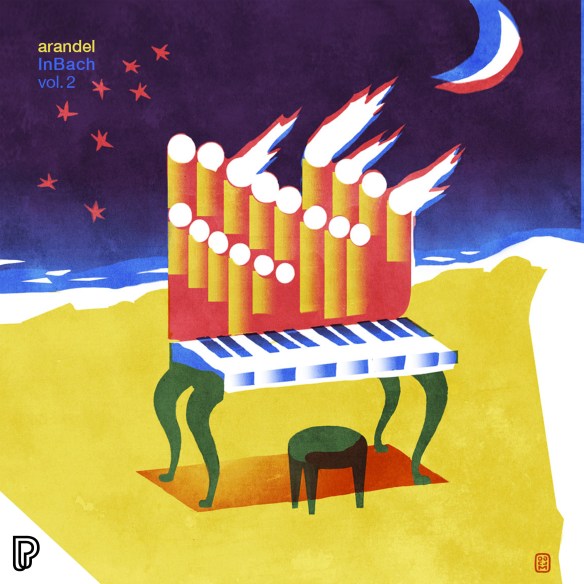
Switched On: Arandel: InBach Vol.2 (InFiné)

arandel

reviewed by Ben Hogwood

What’s the story?

The second instalment of Arandel’s InBach project comes just a year after the first. The French producer, who chooses to remain anonymous for now, has been discovering a wide range of raw material beyond last year’s reinterpretations, and has enjoyed the new perspectives offered by live performance of the first album material.

Now the music takes on more spoken word contributions, as well as using rare instruments recorded at the Musée de la Musique in Paris. The record also features Ondes Martenot player Thomas Bloch and the cello of label mate Gaspar Claus.

What’s the music like?

Extremely varied. Arandel has an orchestral mind, which means he can approach music from many different directions. The stripped-back woodwind of Invention 5, for instance, builds from almost nothing to a full, symphonic climax with electronic choral voices, showing how the French producer ‘gets’ Bach’s increase in intensity.

Concerto for No Keyboard, on the other hand retreats to the lower end of the spectrum and applies the sort of electronic squiggles you would expect to hear from Wendy Carlos – whose Switched On Bach was a big influence on Arandel’s working.

The starry-eyed Doxa Notes is a beautiful way to start the album, and develops into a lush palette of electronics, with a spoken word top from Myra Davies. It is a reinterpretation of Aux Vaisseaux, itself based on Bach’s 14 Canons on The Goldberg Ground, BWV 1087.

Spoken word is an important component of this album and Nos Contours is an even better vocal number. Developed from Bodyline, a track on the first album, it features bubbling electronics under Ornette’s low but steady vocal, both bending under the weight of increased percussion towards the end.

Arandel’s handling of Bach’s original material is always respectful but is more than happy to take risks. Capriccio is otherworldly but in a good way, a reworking of Bach’s Capriccio on the departure of a beloved brother which is in fact a memorial to Arandel’s own brother. Its spectral voicing is almost overrun by a large electronic choir, but is in fact swept up by its power.

Praeludium takes a dubby, four to the floor beat and pushes resolutely onwards, while the autotune of Fabula’s vocal over Bach’s Meine Seele Warter Auf Den Herrn will be more divisive, but it is nothing if not effective.

Confirmation of Arandel’s more adventurous approach can be found in Octobre, a pleasingly unconventional take on the famous Air. Luxurious in its Hamlet cigar promotion, this music is stripped back to a chamber organ and oboe sound here, together with well chosen atmospherics and a time-taken voiceover from the producer’s nephew, with a dreamlike story of an ominous gang of children.

Finally Myriade provides a soothing and rather moving close, with another voiceover – from no less than Bridget St.John – complementing the slow-moving, majestic harmonies.

Does it all work?

Yes. Some of the interpretations are more divisive than others, but this is a good thing, as Arandel is showing a wide range of possibilities when working with Bach’s music. When it comes to electronic music his is surely the most flexible of original material with which to work, and the fact it can be reproduced more or less faithfully says a lot about its staying power.

Is it recommended?

Yes. An essential purchase for those familiar with Arandel’s way of working, InBach Vol.2 suggests that the ideas are only just getting going rather than drying up! These powers of invention and imagination will surely serve the producer well as he moves on to even more ambitious things.

Stream

Buy

On record – Mihalovici: Piano Music (Matthew Rubinstein) (Toccata Classics)

TOCC-0376-Mihalovici-piano-music-cover

Mihalovici
Sonatine, Op. 11 (1922-3). Quatre Caprices, Op. 29 (1928). Ricercari, Op. 46 (1941). Quatre Pastorales, Op. 46 (1950). Sonate, Op. 90 (1964). Passacaille (pour la main gauche), Op. 105 (1975)

Matthew Rubinstein (piano)

Toccata Classics TOCC0376 [73’52”]

Producer Boris Hofmann
Engineer Henri Thaon

Recorded 5 & 6 June, 30 & 31 July 2018 at Jesus-Christus-Kirche, Berlin

Written by Richard Whitehouse

What’s the story?

Toccata Classics turns to the Romanian émigré Marcel Mihalovici (1898-1985) whose music has been poorly served by recording but whose works for piano, most often premiered by his wife Monique Haas, affords (in this selection) a representative overview of his sizable output.

What’s the music like?

Among the shorter pieces, the Sonatine typifies the neo-classical objectivity of the composer’s earlier music with the nimble fluidity of its outer movements framing an Andante of winsome delicacy. More testing pianistically, the Quatre Caprices recall Mihalovici’s slightly younger (and similarly Paris-based) contemporary Alexander Tcherepnin in their oblique poise along with that stealthily accumulating energy made manifest in the motoric Allegro – its ‘furioso’ marking subtly underlined here – though not before an Andantino of ruminative elegance. If the Quatre Pastorales strikes a deeper note, this is likely through the deft folk inflections as are manifest across the alternate whimsy and exuberance of these miniatures – culminating with a final Allegro reminiscent of Enescu in its ringing sonorities and cascading harmonies.

A breakthrough in several respects, Ricercari proceeds less as a set of variations than of free variants on a discursive theme whose indebtedness to a passacaglia – not merely for its tempo – is explored intensively during what follows. Surprisingly, perhaps, most of the ‘variations’ are rapid or at least flowing in manner – the propulsive ninth of these heading into a fugue as revisits the theme with renewed impetus in a gradual accumulation of energy; culminating in a notably equivocal restatement of the theme, itself making way for the tenuous final gesture.

The latter two works come from Mihalovici’s high maturity – the Sonate outwardly evoking Classical precepts with its clearly defined three movements. Less so the opening Allegretto’s nonchalant overriding of expected formal divisions, the central Lento’s freewheeling play on gesture and phrase (with its tangible recourse to the ‘doina’ crucial to Romanian traditional music), then the final Allegro’s capricious yet purposeful unfolding towards a conclusion of no mean agility in which the composer’s pianism is at its most combative and declamatory.

The left-hand Passacaille is a fair definition of ‘late masterpiece’, its gnomic theme made the basis of 18 variations whose diversity of motion and consistent brevity belie the formal focus with which the composer builds towards the lengthier closing brace. Hence the 17th with its plaintive demeanour and probing introspection, then the 18th – a ‘quasi una cadenza’ – that steers a determined course through to its unexpectedly stark close: mastery of means allied to that of technique in this undoubted enhancement of a distinctive if often intractable medium.

Does it all work?

It does, not least because Mihalovici is clearly a master at combining different stylistic facets that are more than the sum of their influences. Matthew Rubinstein evidently appreciates this with interpretations of methodical attention to detail, allied to playing of undoubted panache.

Is it recommended?

It is, given that only two pieces had been earlier recorded with only Ricercari easily available. Spaciously defined sound from the fabled Jesus-Christus-Kirche, and detailed notes by Lukas Näf. Hopefully, recordings of Mihalovici’s orchestral and chamber music will prove feasible.

Listen

Buy

You can discover more about this release at the Toccata Classics website, where you can also purchase the recording.