Unknown's avatar

About Arcana

My name is Ben Hogwood, editor of the Arcana music site (arcana.fm)

Online concert review – Lars Vogt, Estonian Festival Orchestra / Paavo Järvi @ Pärnu Festival – Mozart & Tubin

paavo-jarvi

Lars Vogt (piano), Estonian Festival Orchestra / Paavo Järvi (above)

Mozart Piano Concerto no.24 in C minor K491 (1786)
Tubin Music for strings (1963); Suite from The Goblin (Kratt, 1961)

Pärnu Concert Hall, Estonia
Wednesday 14 July 2021, available online

Written by Ben Hogwood
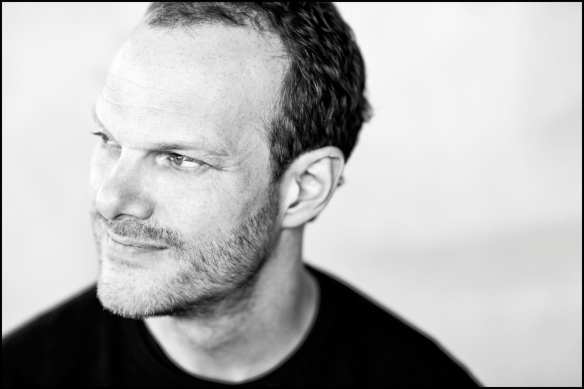
Picture of Lars Vogt (c) Giorgia Bertazzi

This attractive concert was one of the calling cards for the Pärnu Festival, an annual event marking the end of its first decade in the Southern Estonia city. Its patron, conductor Paavo Järvi, was conducting his ‘home’ orchestra, the Estonian Festival Orchestra, inspired by Lucerne’s festival orchestra, in a nicely devised program of Mozart and the seldom-heard composer Eduard Tubin.

To begin with, Järvi and the orchestra were joined by pianist Lars Vogt in one of Mozart’s stormier utterances, the Piano Concerto no.24 in C minor. Vogt has been an inspiration in his career but particularly of late, documenting his battle with cancer in an admirably forthright fashion. Part of his therapy is to play music, to the extent of playing on an upright piano during his chemotherapy sessions, and also to take every chance offered to him to playing music live.

This only heightened the admiration and enjoyment for his performance here, as with heartfelt playing Vogt got right to the centre of this most dramatic of Mozart’s concertos. Järvi followed his lead and was helped by some very fine wind playing, particularly in the slow movement. The first movement had a great deal of Sturm und Drang, the angular contours of the main theme ideally phrased. Vogt’s solo episodes were impeccably delivered but always had an ear towards the orchestra, where the strings gave incisive commentary. The final Allegretto allowed a bit more room for playful exchange, and there was a wonderful shaft of sunlight as the music turned from minor to major key, sensitively engineered by the conductor. As a suitable ⁹encore, Vogt chose Brahms’ Intermezzo in A major Op.118/2, watched appreciatively from the sidelines by Järvi.
Lars-Portrait-3-©-Giorgia-Bertazzi

Eduard Tubin‘s Music for Strings was an intriguing choice just after the interval, representing a desire for the festival to showcase the music of Estonia itself. Tubin, who died in 1982, is still under-represented on the stage, but this was the ideal platform from which to appreciate it. Music for Strings is a slightly elusive but compelling piece, resilient and attractively scored. It brings an economical and slightly classical approach, but with forward looking harmonic language. When the bass strings dug in during the passacaglia first movement the furrowed brow of Shostakovich could be glimpsed, yet the upper reaches of the violins felt as though the music was reaching further north. The second movement was more mysterious and questioning, while the finale, an Adagio, featured excellent solo violin playing from the unnamed Estonian Festival Orchestra concertmaster.

The program finished with a suite from Tubin’s 1943 ballet Kratt (The Goblin). Composition for the whole work began in 1938, making use of melodies from the Estonian Folklore Archive in Tartu. Although the Russian occupation of Estonia in 1940 forbade modern music, Kratt passed the sensors on account of its use of traditional themes, and not the way in which they were treated – which has reminiscences of Stravinsky and Prokofiev. Tubin constructed the shorter suite in 1961, to a commission from the Royal Stockholm Philharmonic Orchestra.

The ballet is based around a peasant who builds a magical figure (Kratt) in order to make him rich – but to do this he has to give three drops of blood to the devil. Perhaps not surprisingly the story does not run smoothly, with the peasant – and his soul – meeting a grisly end at the hands of the goblin. Yet the side plot of a love affair on the farm where the peasant lives brings more light hearted material.

Tubin’s music is ideal concert fayre, tuneful and with lively orchestration. Järvi ensured the syncopations of the dance numbers were sharply rendered, bringing through Tubin’s imaginative writing for wind and brass in particular. The final dance scene was the most captivating, with a soulful cor anglais solo leading into the driven rhythms of the Dance of the Exorcists, featuring the added punch of the orchestral piano. The Goat and The Cock were sharply characterised, bringing reminders of Mussorgsky’s Pictures At An Exhibition, before snarling brass punctuating the outgoing Dance Of The Northern Lights, a more rustic affair. The brass themselves were completely on point, especially in the final statement, warmly received by the audience.

This was a most enjoyable concert, confirming the warm atmosphere in which this festival operates. It is clear Paavo Järvi and friends are building something special here, and it is to be hoped when restrictions are finally lifted that the chance will arise to experience it in person.

You can watch the concert on the festival’s dedicated TV channel here

Lars Vogt talks about his music making after his cancer diagnosis in February and his ongoing treatment with Kate Molleson on BBC Radio 3’s Music Matters, available on BBC Sounds

For more information on the Pärnu Festival you can visit their website

On Record – Daniel Wylie’s Cosmic Rough Riders: Atoms and Energy (Last Night From Glasgow)

daniel-wylie

reviewed by Ben Hogwood

What’s the story?

Daniel Wylie has had a long and distinguished career in songwriting, whether with his band, Cosmic Rough Riders, or as a solo artist. Throughout he has stayed true to a classic approach with plenty of room for influences from the 1960s onwards, but with room too for originality of thought in both music and lyrics.

Atoms And Energy is confirmation that the fire still burns brightly. Recorded in Glasgow’s La Chunky Studios in 2019, the album is headed by Wylie but includes contributions from Neil Sturgeon (acoustic guitars), Stu Kidd (percussion) and Johnny Smillie (electric guitars and arrangements), who also engineered the album

What’s the music like?

A mark of Wylie’s career has been his consistency. Even when he returned from the relative wilderness in 2004 to start his solo career with Ramshackle Beauty, the songs confirmed his quality threshold had not dimmed a bit – and the same is true now. If anything, life experience and the discipline of writing songs on an almost daily basis has fed into the music for Atoms And Energy, taking it right up there among the best work Wylie has yet produced.

The lyrics can always be clearly heard – a property often underrated in songs! – and they are notable for their frank and occasionally uncomfortable take on life, warts and all, especially on songs like God Is Nowhere. A melodic approach is sustained throughout, and after several hearings the listener will have several of these songs firmly embedded in the brain.

The lyrics are key to understanding where Wylie is at. A good deal of the memory bank is used as the songwriter harks back to childhood days, but he does so from the context of adulthood and particularly in the wake of his mother’s death. A Memory brings these reminiscences to life with great clarity, while the breezy Heaven’s Waiting Room hangs on to treasured memories while asking the pertinent question ‘why does everybody leave?’ Red Sunset (Green Eyes) is a whimsical number, and although Wylie is ‘feeling sad about my plight’, the outlook – musically at least – is positive.

Many of Wylie’s songs are bittersweet or have darker shades around the edges. The Bruises And The Blood is one such song, a thoughtful opener, while Ruth The Truth ups the ante on the guitar sound, a punchy number where ‘I caught her lying again’.

His wife remains the chief muse, and she appears to be the obvious inspiration for songs like Our Love Will Never Die, an unabashed and tender ode to a long relationship. Saddle Up The Horses comes from a similar emotional place, the album closer doffing its cap to Neil Young along the way.

Arguably the most striking of the nine here, however, is Listen To The Sound Of The Rain, a shimmering beauty that could have been written and imported from the late 1960s. Its dappled psychedelia stretches far in Wylie’s hands, the vocals beautifully poised as he sings of ‘a world full of wonder’, the guitar sound dancing on the musical horizon.

Does it all work?

Yes. Anyone familiar with Wylie’s previous work will know what to expect here – but with part of that expectation comes the knowledge that the songs won’t be routine and won’t be presented without emotive input or instrumental dexterity. The guitar playing is a strong feature of the record, and the lovely shimmering textures are a possible reflection of the cloud-strewn skies under which they were written.

Is it recommended?

Wholeheartedly. Daniel Wylie continues to write moving songs with hooks that take gradual root in the listener’s mind and then prove very difficult to dislodge. Atoms and Energy offers more of the same – but with even greater conviction and quality. 

Stream

Buy

You can purchase Atoms and Energy from the Last Night From Glasgow website


Switched On: Toby Wiltshire – Shunyata : Emptiness (Cue Dot Records)

toby-wiltshire

reviewed by Ben Hogwood

What’s the story?

The Cue Dot model deserves some examination, for this is no ordinary record label. It is a not-for-profit organisation, run by Paul Scott in Derbyshire, and is fronted by the flagship Cue Dot Series, now up to seven records strong. This is an opportunity for collaboration within electronic music, and the participating artists are given full control over the content and titles. The artwork, however, follows the same distinctive and particularly attractive circle pack design, best explained in the press release as ‘representing the infinite possibilities opened up through an electronic palette’.

The seventh in the series is given to Leeds-based composer Toby Wiltshire, who responds with an album using Buddhist imagery and concepts as its stimulation. Wiltshire’s free-standing style allows for slow, untethered musical movement, adding field recordings, modular synths and software to the equation. It is music for mindfulness, but with a license to develop along the way.

What’s the music like?

Wiltshire achieves a very appealing blend of stillness and activity in his work, which immediately carries the promise of outdoor activity. This in itself is stimulating, given the amount of time we have all spent indoors over the last 15 months, so the running water and soft, sleepy tones of Mist Clearing On The Mountain give the listener a chance to acclimatise to the new surroundings.

Wiltshire works and intertwines the seven recordings with the ease of a man who has been composing for 20 years, and he knows instinctively how to let the music breathe as much as it needs to. There are no explicit melodies but there are thoughts and moods that recur as each track proceeds, each keeping a firm grasp on tonality.

Running water and soft tones are also an appealing feature of Floating Consciousness, aptly named, with harmonics on the stringed instruments that give a glint to the edge of the overall sound. Karuna holds a beautiful poise, shifting slowly in the equivalent of a soft musical breeze, while Glimpse uses higher, quite shrill pitches but counters them with sounds in the middle distance. Orange Light is lovely, painting a series of closely matched, complementary musical colours like a Rothko painting.

One of the most restful scenes is found within Sakura, where bird-like noises call across the rippling texture. We could be in a vast cave, or out on the edge of a swamp in the rain – both examples of the pictures Wiltshire’s music forms in the listener’s mind. The Wave And The Water brings everything to rest at the end, with the gentle undulations implied by the title gradually evening out.

Does it all work?

It does – and if anything could be extended to an even longer piece of work. Yet Wiltshire leaves the listener wanting more, and as his work responds to repeated listening, it is easy to go round again immediately – a good state to be in. Talking of states, you will certainly end this album in a calmer condition then when you began it!

Is it recommended?

Very much so – and if like me you are using this as a point of entry to the Cue Dot series, it works as a starting point from which to enjoy the other six. There is much to admire about this label, and we will explore more in due course, but for now the wide open stage is Toby Wiltshire’s, and his music is very easy to experience and admire.

Stream and Buy

Switched On: Aria Rostami & Daniel Blomquist: Time Apart In The West (Intimate Inanimate)

aria-rostami-daniel-blomquist

reviewed by Ben Hogwood

What’s the story?

The partnership of Aria Rostami & Daniel Blomquist release their second album in five months, again recording in separate cities due to conditions imposed by the pandemic. Rostami currently resides on the East Coast in Brooklyn while Blomquist has remained in San Francisco, but the two have honed their recording process to an effective method of musical communication across the country.

For Time Apart In The West the compositions were written separately and then the ideas developed, with Blomquist sampling and altering Rostami’s composed and recorded contributions. Like a piece of chain mail, the music was passed back and forth until both were satisfied.

What’s the music like?

The titles are simple and indistinct, divided into 14 Months, but in spite of its minimal construction Time Apart In The West contains music of warmth and meaning. It contrasts nicely with the pair’s previous release Still, on Glacial Movements, which explored how time could change motion in cold weather.

The constructions on that release were much longer, clocking in around the ten minute mark, but some of the tracks here are short, descriptive sketches like Month 1 and Month 13, suggesting slightly more mechanical origins.

They are complemented by much more expansive scenes such as Month 2 or Month 10 which hang on the air beautifully, the latter like a white cloud on a hot summer’s day. This surely has its origins in the Californian heat haze, as Month 5 would seem to have, though the shimmering horizon here has a set of discords ensuring a level of tension remains throughout.

Does it all work?

It does – either on headphones as a calming soundtrack, or on a bigger system as an immersive experience. Both composers have a keen ear for texture, with the extended melodies and chord sequences easy to follow, and the ambient white noise offering extra depth. Often the slow speeds mean the music acts like a weather system, gradually evolving and unfolding.

Is it recommended?

Very much so. Time Apart In The West is the warmth to Still’s cold, and both make excellent companion pieces.

Stream

Buy

On paper – Kick It: A Social History of the Drum Kit by Matt Brennan

kick-it

Kick It: A Social History of the Drum Kit
by Matt Brennan
Oxford University Press 2020 (371 Pages, ISBN: #978-0-19-068387-0)

Reviewed by John Earls

Matt Brennan starts his magnificent social history of the drum kit by citing one of the many frequently made ‘jokes’ about drummers based on the stereotype of them being unintelligent (in fact all chapters start with ‘jokes’ concerning drummer stereotypes). He then demonstrates how the supposed stupidity of drummers is rooted in the history of racial stereotypes (primitive-savage drummer) and goes on to explain how the drum kit is “not only a product of musical ingenuity at the turn of the [twentieth] century, but also an outcome of massive historical changes in human migration, trade and engineering, beginning with the forced migration of the transatlantic slave trade”.

This is an ‘academic’ book (Brennan is Reader in Popular Music at the University of Glasgow) and the book is rigorous and detailed in its research and analysis. But it’s an incredibly rich story that Brennan makes sure never gets dry in the telling. It’s a riveting account of the importance of drums and drummers in music’s history (and future), deftly done through a largely chronological narrative cleverly structured in chapters focused on six ‘drummer’ themes: clever, noisy, studious, creative, working and indispensable.

We see the development of so-called ‘highbrow’ and ‘lowbrow’ music with drums and drummers confined to an inferior status both between and within musical genres, and are then taken on a journey through the development of jazz, rock, and hip hop that challenges and upends many perceptions and myths.

The book also covers the role of drums and percussion in classical music which has its own ‘highbrow’ and ‘lowbrow’ story. The French composer Hector Berlioz, for example, published a guide for composers that divided percussion into two categories: a first order of instruments with recognisable pitch (e.g. timpani, bells, glockenspiel) and a lower order of “noises designed for special effect” (e.g. bass drum, snare drum, cymbals) which, as Brennan points out, would form the core components of the drum kit.

Of course, composers would later write works for dedicated percussion ensembles including Edgard Varèse’s Ionisation, John Cage’s Quartet for Percussion, and Steve Reich’s milestone piece Drumming.

The role of jazz is central to this story, including the evolution of styles, development of equipment, and status of drummers. Gene Krupa, the ‘King of Swing’ and ‘World’s Highest Paid Drummer’ as a 1939 Slingerland catalogue has it, is identified as playing a key role in all these aspects.

Many jazz greats are also woven into the narrative, with Max Roach and Kenny Clarke rightfully explored.

The chapter on ‘Working Drummers’ is particularly good, capturing drumming as a “distinct form of musical labour” and showing not only how the economic and cultural value assigned to a drummer’s work has changed over time, but “how the seat behind the drum kit became a gendered workplace”. Brennan examines the tragic story of Karen Carpenter and suggests that it can be used as a kind of parable to illuminate a bigger picture of the sexist social conditions faced by women drummers. The same ‘social history’ approach helps explain why nineteenth-century American drum manufacturers tended to be overwhelmingly white.

The book is also good on the raw deal that drummers often get in respect of musical authorship using Clyde Stubblefield, who played in James Brown’s band, and his role in Funky Drummer as a case study.

Two ‘star’ drummers often perceived in the ‘wild animals of rock’ mythology are John Bonham (Led Zeppelin) and Keith Moon (The Who) and Brennan writes brilliantly about their styles and roles in their respective bands, but also movingly about issues concerning lack of self-esteem.

By contrast, the role of modest rock drummer is exemplified by Charlie Watts (The Rolling Stones) who whilst undoubtedly extremely knowledgeable and skilful at his craft is more interested in praising the artistry of others – “there are a million kids who can play like me”.

Brennan neatly challenges this in a nice piece about the Stones Sympathy for the Devil and its opening groove and shows how comments by Stones’ frontman Mick Jagger reveal how “Jagger’s ignorance comes across on several levels”. (By the way, Mike Edison’s Sympathy for the Drummer – Why Charlie Watts Matters is another excellent book, but it’s a rollicking read of a very different type).

The final chapter explores the relationship between drums, drummers, technology and the rise of the machines. It’s a fascinating take on the “back and forth influence between acoustic kit drummers and beatmakers” such as J Dilla. Incidentally, the relationship between drummers and technology is not just about electronic devices. One of the best examples explored earlier in the book is the ingenuity of drummers and equipment manufacturers in respect of the bass drum pedal.

This is a wonderful book and Brennan has done a great service to drummers and all lovers of music. As he says himself “we are all drummers now.”

John Earls is Director of Research at Unite the Union (and a former drummer). He tweets at @john_earls

For more information and to purchase, visit the Oxford University Press website