The music of Ahmed Raxon has been a familiar feature on house and techno dancefloors for at least five years now, and he has previous with Kompakt as part of their Speicher series in 2019. The Egyptian DJ, now based in Barcelona, has label-hopped with a number of successful releases, but now turns to the longer playing format with his debut album.
What’s the music like?
Raxon’s versatility makes him the ideal producer for an electronic album. Sound Of Mind has plenty of variety, moving between slow and fast tempos, four to the floor and broken beat, but always with a surety of hand. The range of speeds and beats is impressively mastered, assembled in an order that makes the album more like a DJ set.
Raxon has a healthy penchant for music of the recent past, too, which helps him pull a couple of surprises out of the hat. Almost Human is one of these, a curveball with widescreen riffing and breaks that look more in the direction of Brighton than Barcelona. Flyby is an appealing slower jam with rich keyboards, while the sharp edges of El Multiverse are part of a really strong floor filler. Phantom Report has darkly coloured, solid beats – an examples of Raxon’s techno with depth – while Vice puts its bruising break beat to good use.
Does it all work?
It does. Raxon’s previous endeavours for a wide variety of labels helps enormously, as does his sense of structure – there are no fillers here, and a strong set of grooves in the locker.
Is it recommended?
Yes. An excellent debut long player from a producer whose versatility and confidence stand him good stead, Sound Of Mind is an album that avoids cliche and presents freshly made grooves with some style.
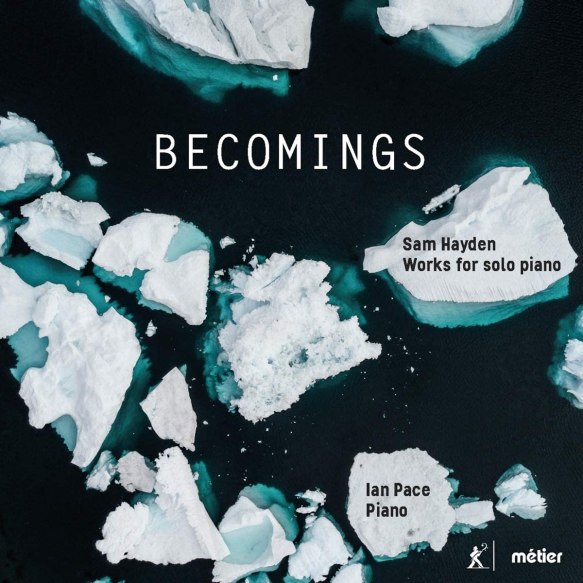
Sam Hayden
Becomings (Das Werden) I-VII (2016-18)
Fragment (After Losses) (2003)
…still time… (1990)
Piano Moves (1990)
Ian Pace (piano)
Métier MSV28611 [two discs, 89’31”]
Producers / Engineers Will Goring, Sophie Nicole Ellison, Sam Hayden
Recorded August & September 2020 at City University, London
Written by Richard Whitehouse
What’s the story?
A major release of music from Sam Hayden (b1968), currently Professor of Composition at Trinity Laban Conservatoire of Music and Dance – the extent (thus far) of whose output for piano is featured here, and which makes for listening as engrossing as it can seem daunting.
What’s the music like?
It may be significant that, as if mindful of the reception that is nowadays accorded the more radical of today’s music, the composer’s own annotations seem intent on observing his music from the outside – as if to encourage objectivity on the part of those listening. This is by no means an unreasonable gambit for approaching his sometimes intricate, frequently oblique, and always provocative music which is made more so through the constant tension between the systematic and the spontaneous in his thinking. Not least with Becomings (Das Werden), whose notion – as has preoccupied philosophers from Heraclitus to Wittgenstein and beyond – of the state of ‘becoming’, as opposed to ‘being’, pervades the seven pieces at conceptual and semantic as well as musical levels; any tangible sense of finality remaining out of reach.
‘I’ functions as a prelude, but its textural dexterity and hectic passagework plunge straight in. ‘II’ takes this harmonic and polyphonic interplay much further as the intensifying waves of activity culminate in music of assaultive impact, whereas ‘III’ adopts a more improvisatory approach to formal elaboration. ‘IV’ assumes the guise of a central slow movement with its leisurely evolution and trill-permeated texture almost claustrophobic in its intricacy, while ‘V’ finds the superimposition of chromatic and spectral harmonic cycles at its most clearly defined. ‘VI’ unfolds as though a toccata of jagged expressive contrasts before it subsides into simmering anticipation, then ‘VII’ brings this sequence full-circle with its allusions to the opening piece as if a coda whose finality is pointedly offset by the desire to begin anew.
Of the other items, Fragment (After Losses) takes its material from an earlier orchestral piece as the basis for a short while eventful study in disjunct alternations of rhythm and timbre. As his earliest acknowledged work for solo piano, …still time… is audibly a statement of intent with its abrupt if methodical contrasts across the spectrum of pianistic facets; one whose debt to earlier composers (notably Stockhausen) is discharged via the constant pivoting between stasis and dynamism. Larger in overall conception, Piano Moves utilizes an amplified piano in music whose encroaching resonance and polyrhythmic intricacy gradually and inexorably saturate the sound-space; an extended ‘coda’ reducing previously dense textures to a hieratic succession of repeated chords such as sets the primary material at a vastly different remove.
Does it all work?
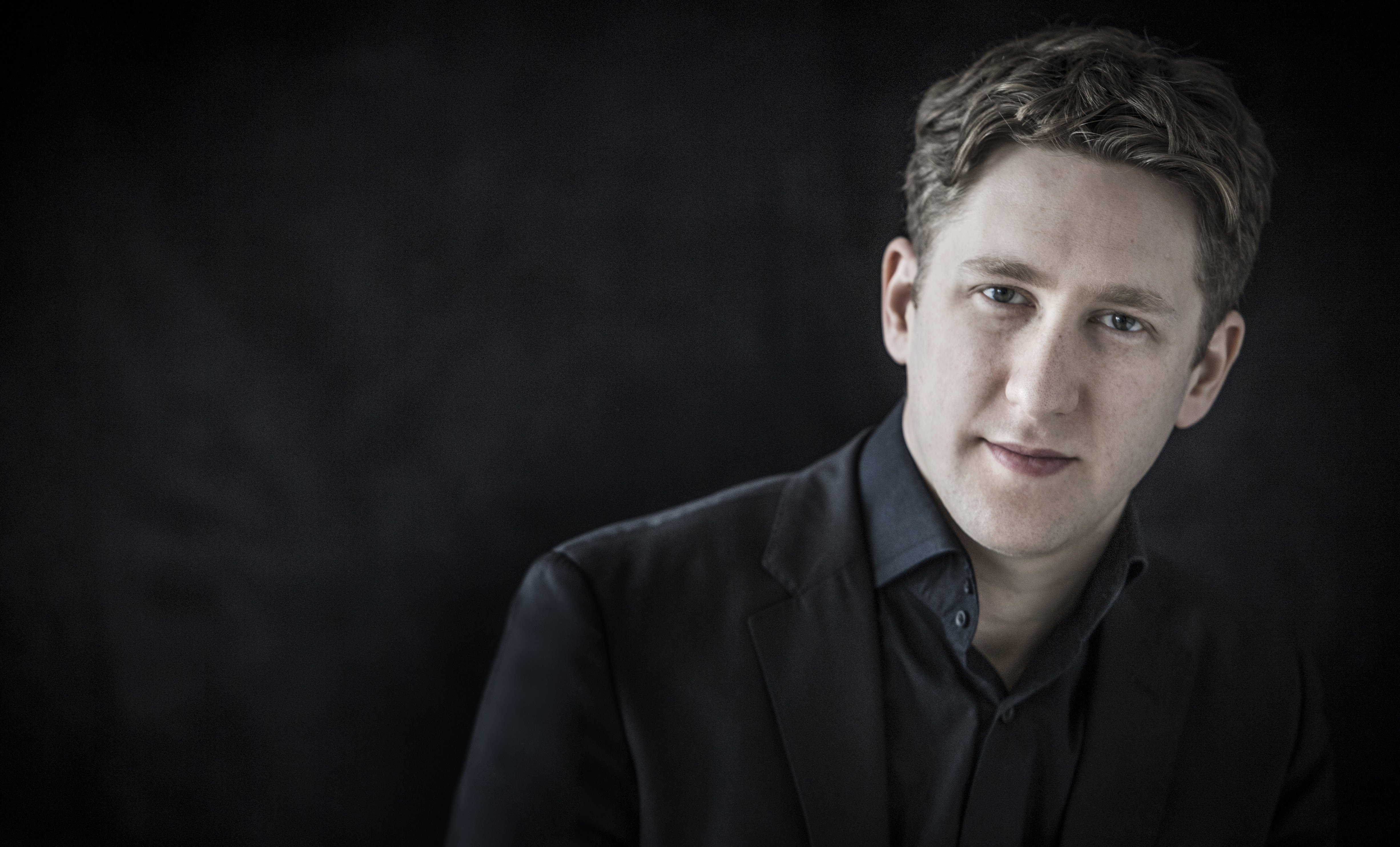
It does, not least through the unwavering focus of Ian Pace (who gave the complete premiere of Becomings two years back) in clarifying and articulating music whose complex textures never feel merely abstruse – thereby making for an experience seldom less than intelligible.
Is it recommended?
Indeed. These are fiercely committed readings, recorded with clarity and presence, making for a release worthy of attention from all adventurous and inquiring listeners for its dedicated and impressive music-making. Hayden’s chamber music (NMCD168) is also worth investigation.
Listen
Buy
You can discover more about this release at the Divine Arts website, where you can also purchase the recording. For the composer’s website, click here, and for more information on Ian Pace click here
Alina Ibragimova (violin, below), City of Birmingham Symphony Orchestra / Joshua Weilerstein
Weir Heroic Strokes of the Bow (1992) Prokofiev Violin Concerto no.1 in D major Op.19 (1915-17) Beethoven Symphony no.7 in A major Op.92 (1811-12)
Symphony Hall, Birmingham Wednesday 7 July 2021 (6.30pm)
Written by Richard Whitehouse Photo of Joshua Weilerstein courtesy of Sim Canetty-Clark; Alina Ibragimova courtesy of Giorgia Bertazzi
While not the centenary season as had been anticipated, the City of Birmingham Symphony Orchestra’s current run of live concerts has nevertheless found the orchestra in great shape, reinforced by the final event that marked an equally unexpected if auspicious debut for Joshua Weilerstein.
He may have substituted the planned account of Schubert’s Fourth Symphony, but Weilerstein retained Judith Weir’s Heroic Strokes of the Bow to begin the programme. Although written before her spell as the CBSO’s Composer-in-Residence (1995-8), the present piece is among her most characteristic larger works – taking its cue from Paul Klee’s similarly titled painting for a 15-minute study in frustrated momentum, whereby violins pursue an eventful trajectory constantly undermined by rhythmic discontinuity. A belated coming to the fore of woodwind propels this music towards a peroration which never quite materializes prior to its subsiding then terse pay-off. Not a straightforward or necessarily rewarding piece to tackle, the CBSO strings still sounded engaged throughout a piece typical in its sense of ultimate anti-climax.
Alina Ibragimova then joined the orchestra for Prokofiev’s First Violin Concerto, its modest scale and prevailing inwardness only partly belying technical demands that were confidently surmounted here. The partnership with Weilerstein, moreover, was a good one – whether in the first movement’s gradual expressive opening-out from, then retreating-back to sustained lyricism, or the Scherzo’s cavorting high-jinx and playful nonchalance. Ibragimova’s tempo for the finale seemed initially a little too deliberate, but the panache of those brief orchestral tuttis then stealthy intensification to the rapturous return of the opening theme left no doubt as to either soloist’s or conductor’s sense of exactly where the music was going – the violin’s airy arabesques melding into the deftest of orchestral textures for the spellbinding final bars.
The inclusion of Beethoven’s Seventh Symphony made for a near full-length concert which, being given twice, says much for the CBSO’s collective stamina. Ensemble faltered slightly in the first movement’s introduction, relatively weighty as Weilerstein heard it, but the main Vivace proved unanimous in response as it was trenchant in conception – highlights being an uninhibited transition to the reprise, then inexorable build-up toward a coda whose clinching of the overall design felt more potent through a slight if perceptible acceleration at the close.
Weilerstein (rightly) went directly into the Allegretto, its alternation of pathos and sanguinity ideally gauged, then the scherzo exuded a joyous animation and its trio an eloquence which was no less apposite. The finale may have lacked its exposition repeat, but the seamlessness with which this movement unfolded left no feeling of its being sold short – not least through an astute judging of dynamic contrasts then a final peroration which, if it lacked for a degree of visceral excitement, none the less concluded this symphony with unwavering affirmation. Hopefully, Weilerstein will soon be returning to this orchestra. Next month, though, the CBSO heads to the Proms for a programme featuring Ruth Gipps’s Second Symphony and Brahms’s Third, along with a delayed premiere for Thomas Adès’s The Exterminating Angel Symphony.
You can find information on the CBSO’s appearance at the Proms at the festival’s website.
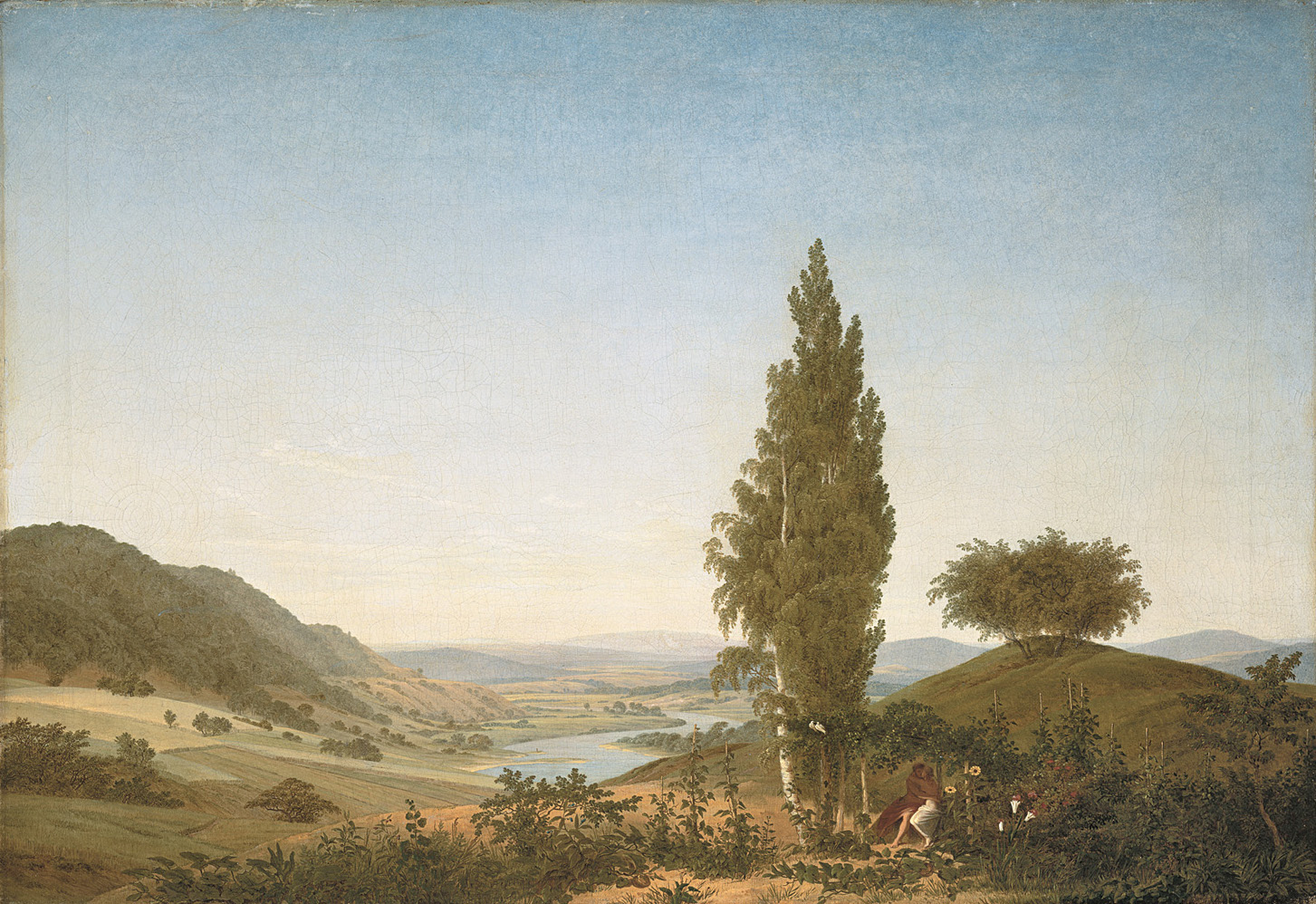
Der Sommer (Landschaft mit Liebespaar)The summer (Landscape with lovers) by Caspar David Friedrich (1807)
Piano Sonata no.15 in D major Op.28 ‘Pastoral’ for piano (1801, Beethoven aged 30)
1. Allegro 2. Andante in D minor 3. Scherzo: Allegro vivace 4. Rondo: Allegro ma non troppo
Dedication Count Joseph von Sonnenfels Duration 25′
Listen
written by Ben Hogwood
Background and Critical Reception
The fourth piano sonata from Beethoven in the year 1801 is every bit as remarkable as the other three. Having experimented with free forms in the two three-movement works labelled ‘quasi una fantasia’, Beethoven reverts to what initially seems a traditional four-movement format.
In spite of the quiet beginning to the Pastoral, however, commentators are quick to note its poetic qualities and the more radical aspects of its design. Angela Hewitt calls it ‘one of the most beautiful of all beginnings’, observing that the work gained its nickname through a publisher’s reference to the bagpipe-like drones from the start.
‘In the first movement, though it is outwardly so tranquil and friendly, Beethoven is still concerned with construction and conciseness’, writes Hewitt. The contemporary composer Carl Czerny described it as one of Beethoven’s own favourite pieces – and especially the second movement Andante, a solemn march-like movement.
András Schiff is also fulsome in his praise. ‘This is a work that pulsates, it’s full of inner voices, opens up huge spaces of sound, and yet does without any dramatic outbursts throughout’. He draws out several anticipations of Schubert in the third movement, particularly in the way ‘the trio wavers between major and minor’.
On the finale, he writes, ‘To me, the finale has traces of a barcarolle, even though it’s constructed as a genuine sonata-rondo’. Hewitt says how Beethoven ‘preferred a bravura ending…it’s as if he can’t contain his joy’. In conclusion she writes, ‘Beethoven’s love of nature is well documented, and it was his most comforting source of nourishment. In this Pastoral sonata he seems to express his thankfulness for all it gave him’.
Thoughts
If anyone asks you for a definition of serenity in music you could easily play them the first minute of Beethoven’s Pastoral sonata. This is a lovely passage of music, every bit as calm as the close of the Moonlight sonata was turbulent. Yet as the first movement progresses it is clear this is not light music, for as Angela Hewitt observes Beethoven brings in several motifs that contrast with the flowing main subject, helping us appreciate it all the more.
The second movement switches to the minor key and spends more time in the shadows as a result, a slow-ish dance with a steady, march-like tread that gradually reels the listener in. The third movement throws off the shackles and also shows off how Beethoven could make musical motifs out of almost nothing. It is simply a set of repeated F# notes in different octaves of the piano, but is made into a humourous phrase that carries a true scherzo.
The finale brings in reminders of the opening with its flowing discourse, almost like running water, with music of pure exuberance. Again the tune is deceptively simple, but it travels through some impressive and pretty complex development, which can be seen if the listener examines closely – but is not essential to enjoyment.
Small wonder that the Pastoral is one of Beethoven’s most popular piano works. It has an enduring happiness made all the more remarkable given the composer’s health issues at the time, but it shows – as all the sonatas of 1801 do – a renewed mastery of the piano and its power to express.
Recordings used and Spotify links
Emil Gilels (Deutsche Grammophon) Alfred Brendel (Philips) András Schiff (ECM) Angela Hewitt (Hyperion) Paul Badura-Skoda (Arcana) Stephen Kovacevich (EMI) Igor Levit (Sony Classical) Claudio Arrau (Philips) Daniel Barenboim (Deutsche Grammophon)
Pianists clearly love this work, and among the very fine versions it was difficult to deviate from the versions by Gilels, Brendel, Schiff and Daniel Barenboim. Paul Badura-Skoda also radiates pure enjoyment in his version using a Viennese piano of the time.
You can hear clips of Hewitt’s recording at the Hyperion website
You can chart the Arcana Beethoven playlist as it grows, with one recommended version of each piece we listen to. Catch up here!
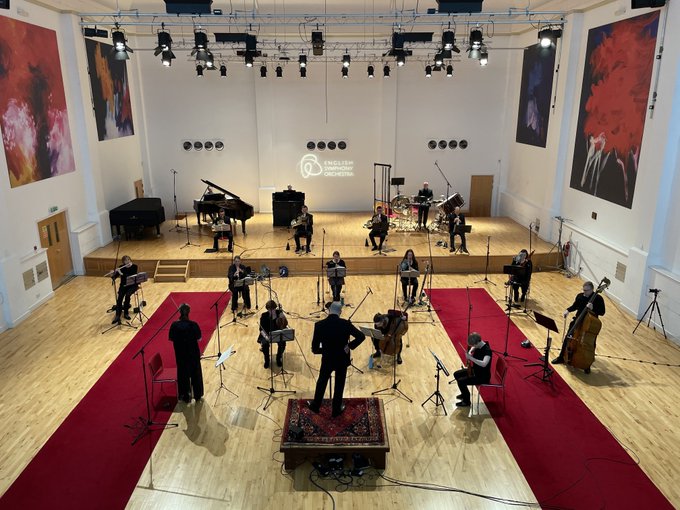
Members of the English Symphony Orchestra / Kenneth Woods
Mahler arr. Simon Symphony no.9 in D major (1908-10, arr. 2011)
Wyastone Concert Hall, Monmouth
Recorded March 23-25 2021 for online broadcast, premieres 7 July 2021
Written by Richard Whitehouse
The chamber reductions of orchestral works, as pioneered by the Society for Private Musical Performances founded by Schoenberg after the First World War, has gained renewed impetus these past 15 months given the unfeasibility of full-scale performances. Few can have been as ambitious as Mahler’s Ninth Symphony – arranged by pianist and conductor Klaus Simon for an ensemble of single strings and woodwind (with doublings), two horns, trumpet, percussion (one player), piano and harmonium; its textural and motivic content thereby remaining intact.
This is evident in the opening Andante, arguably Mahler’s most perfectly realized symphonic movement, whose formal trajectory of interlocking arcs is made explicit so that its long-term expressive intensification and release become no less tangible. To this end, the roles of piano and harmonium are much more than the mere filling-out of texture – respectively articulating and reinforcing the harmonic profile through to a coda which more than usually clinches the overall tonal journey with a serenity the more poignant for its remaining, as yet, unfulfilled.
The ensuing Ländler was no less lucid in terms of its unfolding, Kenneth Woods resisting any temptation to play up the emotional contrasts across a movement whose deceptive blitheness of spirit is only gradually undermined (and a quality this music shares, doubtless unbeknown to the younger composer, with Ravel’s La valse). Equally significant is the way that Simon’s arrangement discreetly emphasizes disparities of timbre and texture, on the way to a closing section where the music only too audibly fragments into a bemused parody of how it began.
More questionable is the Rondo-Burleske – Woods’s underlying tempo for the outer sections, while enabling the music’s contrapuntal intricacy to emerge unimpeded, feeling too dogged to convey its frequently assaultive manner to the degree that the composer surely intended. This is less of an issue in a trio section whose aching regret was potently conveyed, with the stealthy regaining of tension no less in evidence. Animated and accurate, this final section again lacked that seething energy which propels the movement towards its anguished close.
No such questions affect the final Adagio – only equivocally conclusive now that the Tenth Symphony has all but been accepted into the Mahler canon, yet remaining a test of all-round cohesion such as this account rendered with unwavering conviction. Having thus gauged the balance between its alternate paragraphs, Woods assuredly controlled the winding down of tension towards a coda of inward rapture despite its sparseness of gesture – while affording the speculative dialogue between solo strings the necessary temporal and emotional space.
It hardly needs to be said that the playing of this 15-strong ensemble drawn from the English Symphony Orchestra was consistently attuned to the spirit of this music – as, too, is Simon’s methodical and apposite arrangement. Whether such reductions can continue to be relevant in the (presumed) aftermath of the pandemic, it would be a pity were these not to enjoy revival in their own right: revival, moreover, out of aesthetic rather than just didactic considerations, as this impressively conceived and executed rendition demonstrated to often moving effect.
You can watch the concert on the English Symphony Orchestra website here
Further information on Klaus Simon is here, while for further information on the Music from Wyastone series, you can click here. ‘Fiddles, Forests and Fowl Fables’ is now available from the English Symphony Orchestra Website.




 Arcana.fm