Unknown's avatar

About Arcana

My name is Ben Hogwood, editor of the Arcana music site (arcana.fm)

Listening to Beethoven #169 – Piano Sonata no.14 in C sharp minor Op.27/2 ‘Sonata Quasi una fantasia’ (‘Moonlight’)

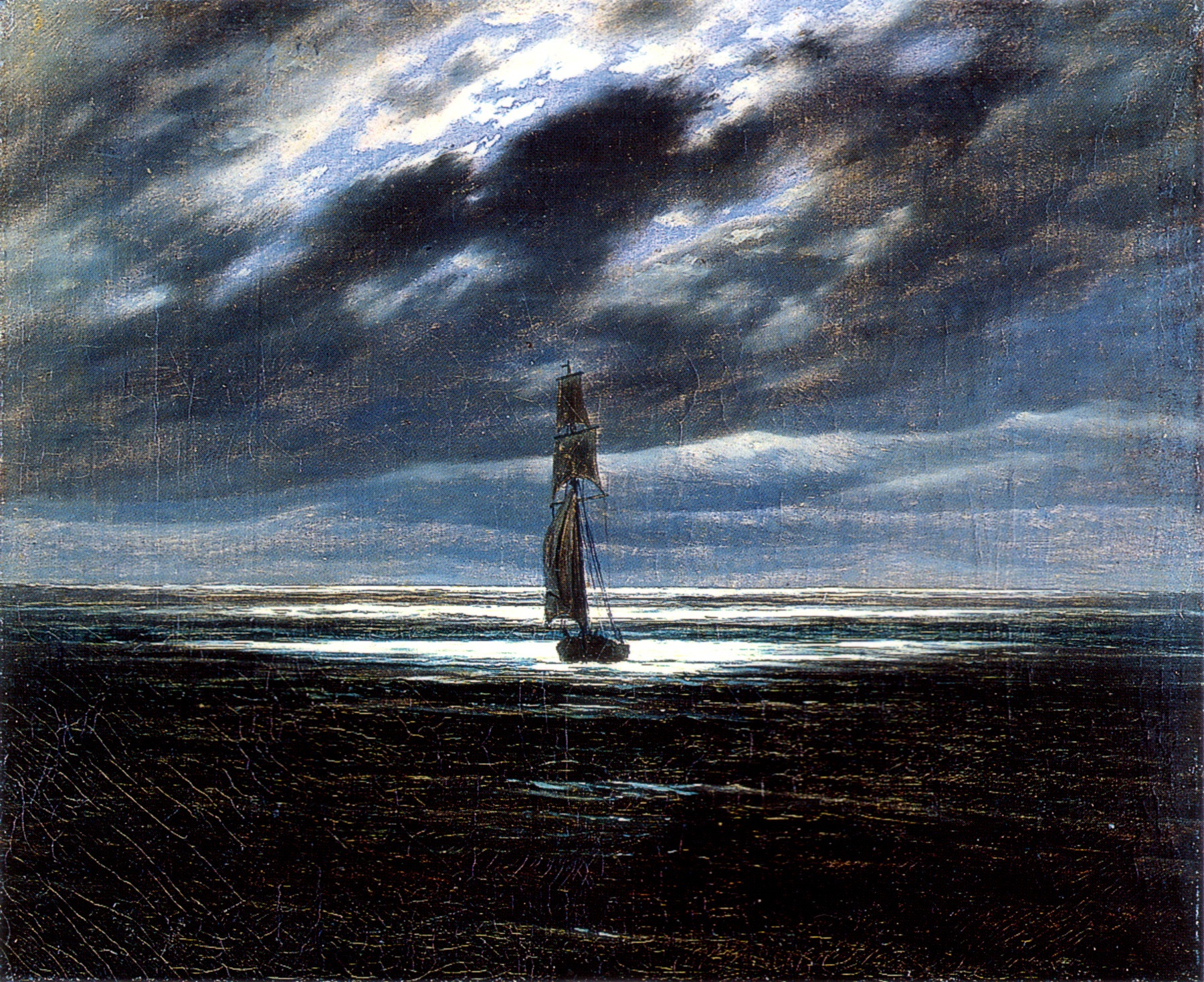
Seascape by Moonlight) by Caspar David Friedrich (c1835)

Piano Sonata no.14 in C sharp minor Op.27/2 ‘Quasi una fantasia’ (‘Moonlight’) for piano (1801, Beethoven aged 30)

1. Adagio sostenuto
2. Allegretto
3. Presto agitato

Dedication Countess Giulietta Guicciardi
Duration 16′

Listen

written by Ben Hogwood

Background and Critical Reception

And so we reach one of the most famous pieces in classical music. The second of Beethoven’s Op.27 sonatas, the Moonlight is the second piece to be published with the qualifying title of Sonata quasi una fantasia, reminding us of Beethoven’s intention to move away from the conventional sonata form.

He did not provide the Moonlight nickname, which was suggested by poet and critic Ludwig Rellstab. For him the first movement represented ‘a boat, visiting, by moonlight, the primitive landscapes of Lake Lucerne’. The dedication, to Countess Giulietta Guicciardi, has prompted much speculation – but although Beethoven was in love with her at the time, the dedication, as Angela Hewitt writes, was ‘an afterthought when another piece he had dedicated to her had to be given to somebody else’.

Critics and musicologists note the power of Beethoven’s writing, from the restraint of the first movement to the turbulent storm of the finale. In between these two lies a balletic central movement set in the major key, described by Liszt as ‘a flower between two abysses’. When it comes to the famous opening movement, Hewitt writes about the importance of refreshing the sustain pedal with each bass note on a modern piano, to avoid clouding the harmonies. On an older instrument this would not be necessary, but ‘the most important thing’, she says, ‘is to capture a magical mood’. But then, ‘all hell breaks loose in the final Presto agitato’.

It was not long before Beethoven was tiring of the airtime his most famous piece was getting. ‘People are always talking about the C sharp minor Sonata’, he said. ‘Really, I have written better things!’

Thoughts

What is there left to say about the Moonlight sonata that hasn’t been said already? It is surely one of the most written-about pieces in musical history, and certainly one of the most famous piano pieces there is – made all the more accessible because the relative beginner can play its most famous theme.

Yet the Moonlight sonata is a vital cog in the 32-strong output of Beethoven’s published piano sonatas. It is another step away from the classical tradition towards a free and much more emotive approach, and it could even be said to contain the first notes of the so-called ‘Romantic’ period in classical music.

It is Beethoven’s first published piece in C sharp minor, a key Mozart did not use for a single published work, and Haydn very little. That is perhaps part of why the music sounds so striking from the start, when the bare arpeggios set the nocturnal scene. No matter how slowly this passage is played it is laden with feeling, and the enchanted atmosphere only deepens as the music progresses.

The second movement is a beautiful contrast, a poised and relatively carefree dance with an attractive lilt. It is the light to the first movement’s shade and points towards something more positive…until we arrive at the gates of the last movement. What an incredible passage of music this is, especially in concert, where you get to witness the pianists’ arms whirring up and down the keyboard as the whirlwind arpeggios take effect. With the suddenly loud interjections from the first movement it must have had an alarming impact on its first audience, by far the most dramatic sonata they had seen. The enchantment of the first movement had been swapped for something altogether more terrifying.

How remarkable that Beethoven could write such music as part of a piano sonata, scaling emotions and technical feats that were out of bounds. Yet it all works within those confines, with music of great tension and drama that is somehow wrapped up in 15 minutes. The composer has scaled new heights.

Recordings used and Spotify links

Emil Gilels (Deutsche Grammophon)
Alfred Brendel (Philips)
András Schiff (ECM)
Angela Hewitt (Hyperion)
Paul Badura-Skoda (Arcana)
Stephen Kovacevich (EMI)
Igor Levit (Sony Classical)
Claudio Arrau (Philips)
Rudolf Serkin (Sony)

Paul Badura-Skoda is very subdued in the first movement but gets the level of sustain just right, helped by his 1790 Viennese instrument. The second movement is a bit laboured, but the third tears along. Sir András Schiff, playing a dfgd, is a full 100 seconds quicker than Emil Gilels in the first movement, a little rushed for some tastes – while Gilels creates an atmosphere where the listener hangs on every note.

Angela Hewitt finds a really nice turn of phrase in the second movement, with a balletic poise, while interpretations of the third movement range from a race to the finish to a stark evocation of terror. Both Hewitt and Schiff are terrific with the dynamic contrasts.

You can hear clips of Hewitt’s recording at the Hyperion website

You can chart the Arcana Beethoven playlist as it grows, with one recommended version of each piece we listen to. Catch up here!

Also written in 1801 Field Piano Sonata in C minor Op.1/3

Next up Piano Sonata no.15 in D major Op.28 ‘Pastoral’

In concert – Jonathan Martindale, CBSO / Michael Seal: Summer Classics

michael-seal

Jonathan Martindale (violin, below), City of Birmingham Symphony Orchestra / Michael Seal (above)

Dvořák Carnival Op.92 (1891)
Vaughan Williams
The Lark Ascending (1914/20)
Elgar
Chanson de matin Op.15/2 (1889)
Grieg
Peer Gynt Suite no.1 Op.46 (1875/88) – no.1, Morning; no.4, In the Hall of the Mountain King
Mendelssohn
A Midsummer Night’s Dream Op.21 (1826)
Vivaldi
The Four Seasons Op.8 (1718/20) – no.2 in G minor RV315 ‘Summer’
Price
Symphony no.1 in E minor (1931-2) – Juba Dance
Tchaikovsky
The Nutcracker Op.71 (1892) – Waltz of the Flowers

Symphony Hall, Birmingham
Friday 2 July 2021 (2pm)

Written by Richard Whitehouse Photo of Jonathan Martindale courtesy of Upstream Photography

The penultimate event in the City of Birmingham Symphony Orchestra’s current season, this afternoon’s Summer Classics featured a wide-ranging selection of pieces that between them spanned over two centuries, and whose ‘feel good’ factor at no time precluded stylish or committed playing.

With longstanding associate director Michael Seal at the helm, the orchestra made the most of Dvořák’s effervescent Carnival overture; the alluring pathos of its central interlude accorded due emphasis, and with some eloquent woodwind solos. Its popularity during recent years has made Vaughan Williams’s The Lark Ascending a regular inclusion in such programmes, and Jonathan Martindale (below, who also led the concert) gave a thoughtful while never flaccid reading – most perceptive in the middle section with its folk-like whimsy and fanciful evocations of birdsong. The CBSO responded with limpid dexterity, the whole performance a reminder that this work is best tackled as a concertante piece and by a player (recalling such as Hugh Bean, Iona Brown and, more recently, Richard Tognetti) who knows the orchestra from the inside.

Next came an ingratiating take on Elgar evergreen Chanson de matin, then excerpts from the First Suite of Grieg’s incidental music to Peer Gynt – a rapturous Morning and stealthy In the Hall of the Mountain King skirting headlong terror at the close. Mendelssohn’s overture to A Midsummer Night’s Dream made for an unlikely but effective centrepiece – the highlight being those fugitive imaginings towards its centre, along with the disarming eloquence of its final bars where the teenage composer conjures a fulfilment he was only rarely to recapture.

The Summer concerto from Vivaldi’s The Four Seasons again saw Martindale as soloist in an account that lacked little of that rhythmic vitality his contemporaries (notably Bach) seized on with alacrity; nor was there any absence of poise in its atmospheric second movement. One who has come in from the cold partly through the recovery of her manuscripts, Chicago-based Florence Price broke with convention by introducing the Juba Dance into her symphonies in lieu of a scherzo; the CBSO responding in full measure to its rhythmic verve. A winning harp solo from Katherine Thomas launched Waltz of the Flowers from Tchaikovsky’s ballet The Nutcracker and ended the main programme in fine style – Seal and the CBSO acknowledging the applause with the final ‘galop’ from Rossini’s William Tell overture as a dashing encore.

Throughout the concert, film expert Andrew Collins interspersed proceedings with his remarks and recollections (not least on that seminal 1970s supergroup The Wombles). The music itself was accompanied by varying shades and colours of lighting, but these rarely seemed intrusive – not least compared to the garish ‘Moulin Rouge’ effects routinely encountered nowadays at the Proms. Certainly, anyone in the process of getting the know just what classical music was all about, and those merely in search of a pleasurable afternoon’s listening, were well served.

Next Wednesday brings the last in this current series of concerts, the CBSO being conducted by Joshua Weilerstein (who is replacing an ‘unable to travel’ Edward Gardner) in an enticing programme of Judith Weir, Prokofiev (with the violinist Alina Ibragimova) and Beethoven.

You can find information on the final concert in the CBSO’s season at their website. For more information on composer Florence Price, click here

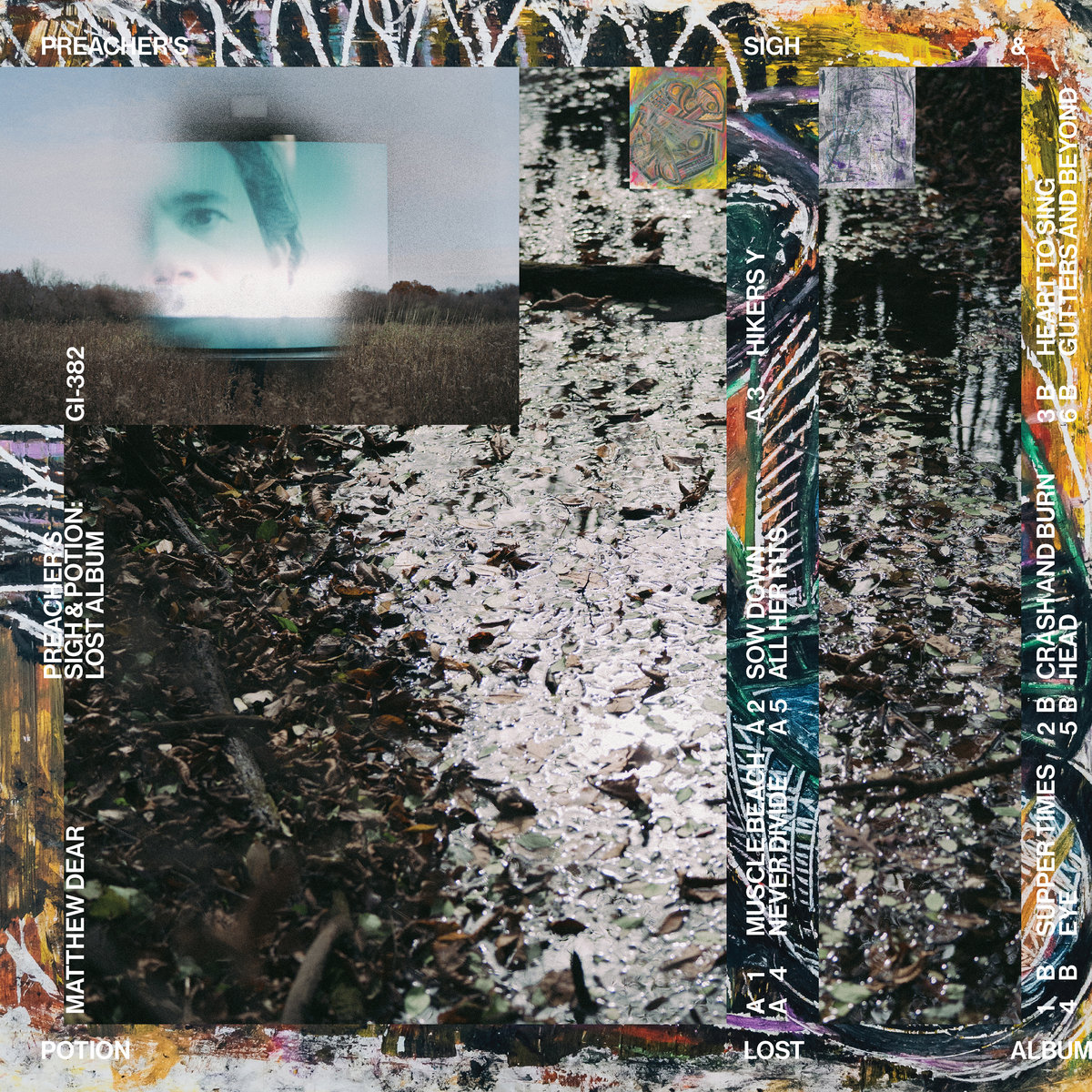
Switched On: Matthew Dear: Preacher’s Sigh & Potion: Lost Album (Ghostly International)

matthew-dear

reviewed by Ben Hogwood

What’s the story?

Matthew Dear has shown himself to be an incredibly versatile electronic music artist over the years. His distinctive baritone has powered a number of successful song-based albums, while on the instrumental side his Audion alias has shown him to be a techno producer of some repute. Preacher’s Sigh & Potion comes to light twelve years after its composition, at a point where the success of his Asa Breed album was pushing Dear in a more electronic direction.

This opus, entertainingly described as ‘a spirited country romp in the techno barn’ in the press release, was shelved as Dear followed his ‘switched on’ path, but its finger-picked guitar roots can now be revealed in songs that trace back to the music his father was making in the late 1960s. Dear wrote the music in Texas, and something of the wide open spaces works its way into the music.

What’s the music like?

A fascinating blend of influences and styles. As Dear himself notes, the production is not at all fussy, leaving rough edges and raw vocals that work really well given the musical styles at play. Those who are only familiar with Dear’s sleek electro pop might be surprised at the twanging guitar sound on Crash And Burn, which brings Beck’s Devil’s Haircut to mind, and also on Heart To Sing, where the instrument twangs against a murmured vocal. It appears right from the start, too, powering the easy paced Muscle Beach.

Despite the guitar craft the main pull for this album is once again Dear’s voice, the key instrument. He has a tone similar to Depeche Mode’s Dave Gahan in its midrange, but at the same time he is capable of plumbing the depths alongside the bass, not to mention the occasional falsetto.

The highly expressive vocals power some excellent songs. Hikers Y is the most meaningful, Dear placed against a lone beat as he finds solace alone, admitting ‘I’m through with all the conversation, I was never good with conversations’. Sow Down has a familiar chugging rhythm but a full acoustic guitar sound, while All Her Fits has a softer centre, cushioned by slow moving string lines. The dappled electronics of Supper Times continue this thread.

Does it all work?

Largely. The uncluttered production is a plus, speaking of an instinctive recording process, though there are some song structures Dear might have changed and stretched. Less is definitely more in this instance though, as the shorter songs still leave their mark.

Is it recommended?

Yes. For fans, this will be an important piece of the Matthew Dear jigsaw, left incomplete until now. It also places the excellent Asa Breed and Black City in context, illustrating in the process just what a versatile producer and vocalist he continues to be.

Stream

Buy

Listening to Beethoven #168 – Piano Sonata no.13 in E flat major Op.27/1 ‘Sonata Quasi una fantasia’

Frau vor untergehender Sonne (Woman before the Rising Sun) by Caspar David Friedrich (1818)

Piano Sonata no.13 in E flat major Op.27/1 ‘Quasi una fantasia’ for piano (1801, Beethoven aged 30)

1. Andante – Allegro – Andante
2. Allegro molto e vivace
3. Adagio con espressione
4. Allegro vivace

Dedication Princess Josephine von Liechtenstein
Duration 16′

Listen

written by Ben Hogwood

Background and Critical Reception

The year 1801 was all about the piano sonata for Beethoven, who expanded the form with each of the four pieces completed in that year. Having stretched formal and expressive boundaries with Op.26, he moved on to a pair of sonatas published as Op.27. Both bore the inscription ‘Sonata quasi una fantasia’, recognising their experimental approach and formal ambiguity. The form was becoming less conventional and more emotional in his hands, and the first of the Op.27 pieces made several new advances.

Unfortunately for the E flat major piece, its neighbour – the rather well-known Moonlight sonata – has stolen all the thunder. Yet as Jan Swafford writes, it is deserving of much higher exposure and regard. ‘Like all his sonatas it has a singular personality, from stately to haunted to ebullient’, he declares. ‘Its opening Andante is something of a blank sheet, offering little in the way of melody or passion but a great deal of pregnant material’. The four movements last around 17 minutes, and are played without a break.

Sir András Schiff, in the notes accompanying his recording on ECM, holds the piece in high esteem. ‘In its freedom, this sonata points the way forward much more clearly than Op.26’, he writes. ‘In its moods it is a psychological piece, but from the point of view of its formal criteria it shows an astonishing interweaving of sonata and fantasy’. He draws a link between this work and later pieces from the Romantic era such as Schubert’s Wanderer Fantasy, Schumann’s Fantasie in C and the Liszt Piano Sonata in B minor. For him it shows ‘a master of experimentation at work’. Angela Hewitt describes it simply as ‘wonderful’.

Thoughts

Beethoven is by now the master of starting a piece with what feels like minimal, inconsequential material. So it is with the measured start to this piece, but soon the deeply expressive side is clear. In it we hear an approach similar to that taken up by Schubert in his Impromptus, and Schumann in his character pieces.

The deceptively gentle start has moments of light when the music moves unexpectedly to C major, but the opening movement is largely thoughtful. Soon, however, we are in a grittier second section, before the slow movement returns us to A flat major, a similar, deeply thoughtful mood to the Op.26 funeral march. The final movement is a celebration, taking off at quite a pace, but just when it seems about to slam into the buffers Beethoven brings back the music of the opening, which is a masterstroke. With some really striking dissonances that only just resolve, this slow music feels more profound the second time around, before the piece signs off with a rush to the finish.

This work benefits from several listens to reveal its workings, but it is a model of economy and, ultimately, genius. Emotive and forward-looking, Beethoven is on a roll.

Recordings used and Spotify links

Emil Gilels (Deutsche Grammophon)
Alfred Brendel (Philips)
András Schiff (ECM)
Angela Hewitt (Hyperion)
Paul Badura-Skoda (Arcana)
Stephen Kovacevich (EMI)
Igor Levit (Sony Classical)
Claudio Arrau (Philips)
Rudolf Serkin (Sony)

This piece works well on the 1790 instrument used by Paul Badura-Skoda. Some of the faster music can sound quite cluttered but it communicates the rush of discovery, linking Beethoven back to the freeform music of C.P.E. Bach.’ Emil Gilels takes the second part of the first movement at a terrific pace, not so much a stream of consciousness as a raging torrent – which contrasts with the return to the soft melody of before. Schiff and Hewitt contribute two of the best versions here – of which there are many.

You can hear clips of Hewitt’s recording at the Hyperion website

You can chart the Arcana Beethoven playlist as it grows, with one recommended version of each piece we listen to. Catch up here!

Also written in 1801 Field Piano Sonata in A major Op.1/2

Next up Piano Sonata no.14 in C sharp minor Op.27/2 ‘Quasi una fantasia’ (‘Moonlight’)

In concert – Alban Gerhardt, CBSO / Kazuki Yamada: Straight from the Heart

kazuki-yamada

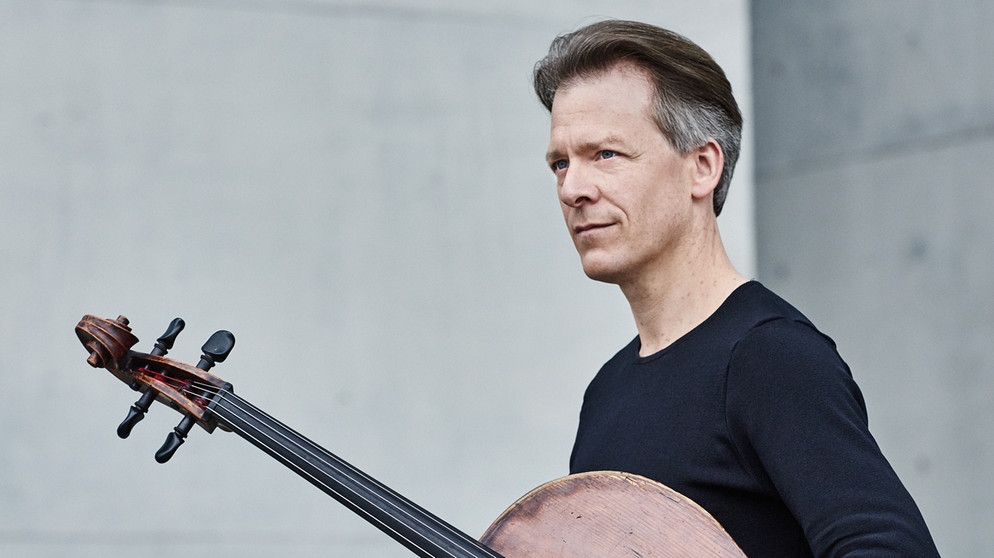
Alban Gerhardt (cello, below), City of Birmingham Symphony Orchestra / Kazuki Yamada (above)

Anderson Litanies (2018-19) [CBSO Centenary Commission: UK premiere]
Dvořák Symphony no.7 in D minor Op.70 (1884-5)

Symphony Hall, Birmingham
Wednesday 30 June 2021 (6.30pm)

Written by Richard Whitehouse Photo of Alban Gerhardt courtesy of Kaupo Kikkias

Losing the greater part of the City of Birmingham Symphony Orchestra’s schedule across the past two seasons has meant postponing many of its ‘Centenary Commissions’, but of those which have been rescheduled, none was more keenly anticipated than that of Julian Anderson’s Litanies.

Anderson produced four works during his tenure as the CBSO’s Composer-in-Residence over 2001-5, this new piece renewing its formal and expressive archetypes by fresh and intriguing means. The first of three continuous sections presents cello and orchestra – its modest forces including double wind, harp and piano, their pitches modified by a quarter-tone – as sparring partners in propulsive, toccata-like music. This gradually mutates into a central slow section, whose fraught lyricism intensifies (with unexpected if effective assistance from the orchestra) towards a chorale in memory of Oliver Knussen. From here an increasingly animated cadenza leads to a capricious, dance-like final section that culminates in a splenetic orchestral outburst; the soloist then resuming for a soulful postlude which brings about a calmly equivocal close.

Alban Gerhardt (below) made the most of some finely gauged technical challenges, as he overcame passing vagaries of sound-balance (and what appeared to be a leg injury) to give a confident realization of a piece already heard in Paris, Örebro and Lausanne. The CBSO was no less assured under Kazuki Yamada; if balance between strings and wind occasionally lost focus (second violins placed further to the rear of the platform than would normally be the case), this did little to offset the attractions of a notable addition to the contemporary repertoire.

During a break for platform rearrangement, the CBSO’s Principal Guest Conductor spoke of his gratitude that audiences were again able to attend live concerts. Something of this evident pleasure came through the ensuing performance of Dvořák’s Seventh Symphony – not least an opening Allegro that, despite a few tentative string entries, undoubtedly had the measure of its stoic defiance and underlying seriousness of purpose. Best was a coda whose dramatic initial stages subsided effortlessly and inevitably into sombre rumination towards the close.

The highlight, however, was a slow movement whose Poco adagio marking was studiously observed – Yamada infusing the emotional ebb and flow of a movement whose formal follow -through can seem fitful with unfailing poise, the CBSO wind eloquent in their contribution. Nor was anything amiss in the Scherzo, its ‘furiant’ rhythm audible not just in the trenchant outer sections but also the trio where its simmering presence ensured no let-up in tension on route to a subtly modified reprise then explosive coda. The final Allegro capped the reading accordingly – Yamada never rushing its stealthy alternation between starkness and lyricism, while ably negotiating several testing changes in tempo as the composer ratchets up tension going into an apotheosis whose inherent fatalism was enhanced by the resplendent playing.

A gripping performance, then, as was met with a suitably enthusiastic response. The CBSO is back this Friday with altogether lighter fare for a programme of Summer Classics (including The Lark Ascending), which is conducted by Michael Seal and presented by Andrew Collins.

You can find information on the CBSO’s Summer Classics concert at their website. For more information on composer Julian Anderson, click here – and for more on cellist Alban Gerhardt, visit his website here