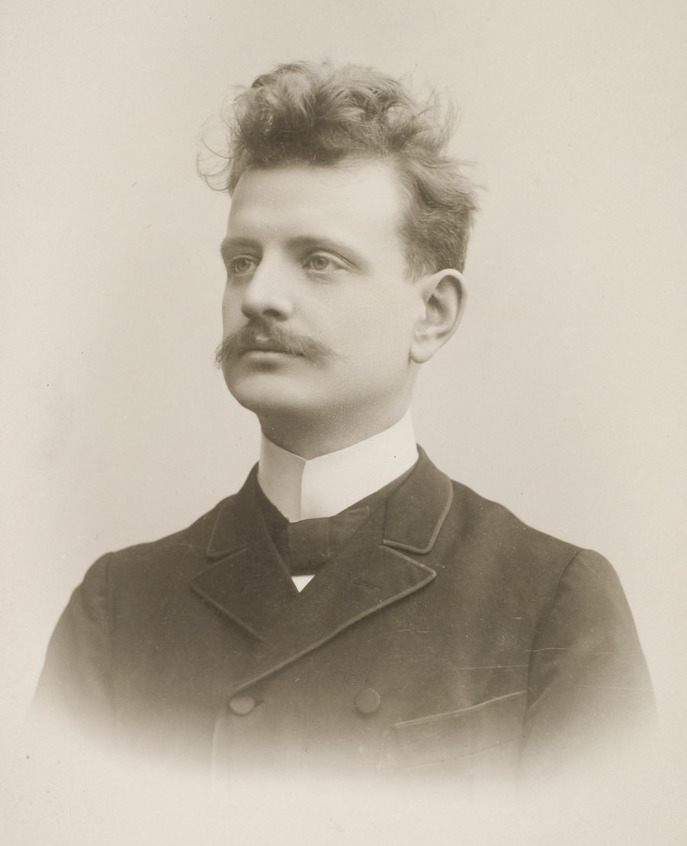
by Ben Hogwood Image of Sibelius courtesy of Wikipedia, and Finnish photographer Daniel Nyblin
On this day in 1896, the world premiere of Jean Sibelius’ Lemminkäinen Suite took place in Helsinki. The suite, in four distinct movements, has become a popular concert piece and is an early indication of the composer’s ability to tell dramatic tales through the orchestra. In this case the story follows Lemminkäinen in the Kalevala, the Finnish epic of folklore and poetry. The four movements are Lemminkäinen and the Maidens of the Island, The Swan of Tuonela (sometimes placed third and the most popular of the four), Lemminkäinen in Tuonela and Lemminkäinen’s Return
You can listen to a performance below from the Toronto Symphony Orchestra, conducted by Jukka-Pekka Saraste:
by Ben Hogwood, with text lifted from the press release
It is interesting to monitor the regularity with which Samuel Barber’s Adagio for Strings gets remixed in dance circles. The track is clearly a hugely popular bridge between classical music and trance – and another new take confirms its staying power.
Here, from the press release, “Three major names in electronic music come together for a powerful new take on one of the most recognizable records in dance music history. Brennan Heart, HI-LO, and Project Zeitgeist (alter ego of Australian hardstyle act Toneshifterz) unite on Adagio For Strings, out now via HILOMATIK – delivering a modern reinterpretation of the legendary Tiësto classic” (Tiesto, of course, putting his own slant on the Barber original).
The press text continues from a dance music perspective. “Looking at the track through a 2026 lens, the trio reshape the iconic melody into something darker, heavier, and built for today’s dancefloors. While the emotional core that made the original so memorable remains intact, this version leans into driving techno rhythms and hard dance intensity.
The result is a track that balances nostalgia with modern production. Brennan Heart brings his unmistakable hard dance energy, HI-LO adds a raw techno edge, and Project Zeitgeist contributes a cinematic touch that amplifies the composition’s drama. That track has already been supported by the likes of Armin van Buuren (live), Space 92 (live), Maddix (live), Nifra (live), and Lilly Palmer.
You can listen below:
“What do you do with one of the most iconic records in dance music history? I have been playing and messing around with different versions of this Tiesto classic over the years, as you may have heard in my sets, but when Brennan Heart sent me a collab idea for a proper hard techno rework of Adagio for Strings, “I knew this one would really stand out and would be perfect for 2026! I had a lot of fun working on this one with him and Project Zeitgeist, and it’s been amazing to see all the reactions to this banger at the shows! :)” – HI-LO
For many listeners, the original Adagio For Strings holds a special place in dance music history. This new version honors that legacy while opening the door for a new generation of festival moments and club memories.
Brennan Heart, HI-LO, and Project Zeitgeist Adagio For Strings is available now via HILOMATIK.
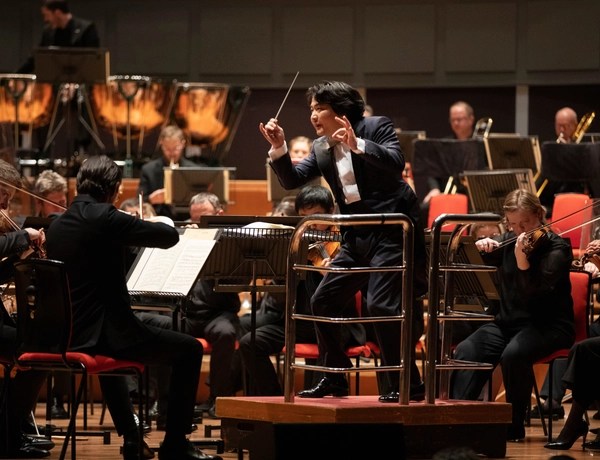
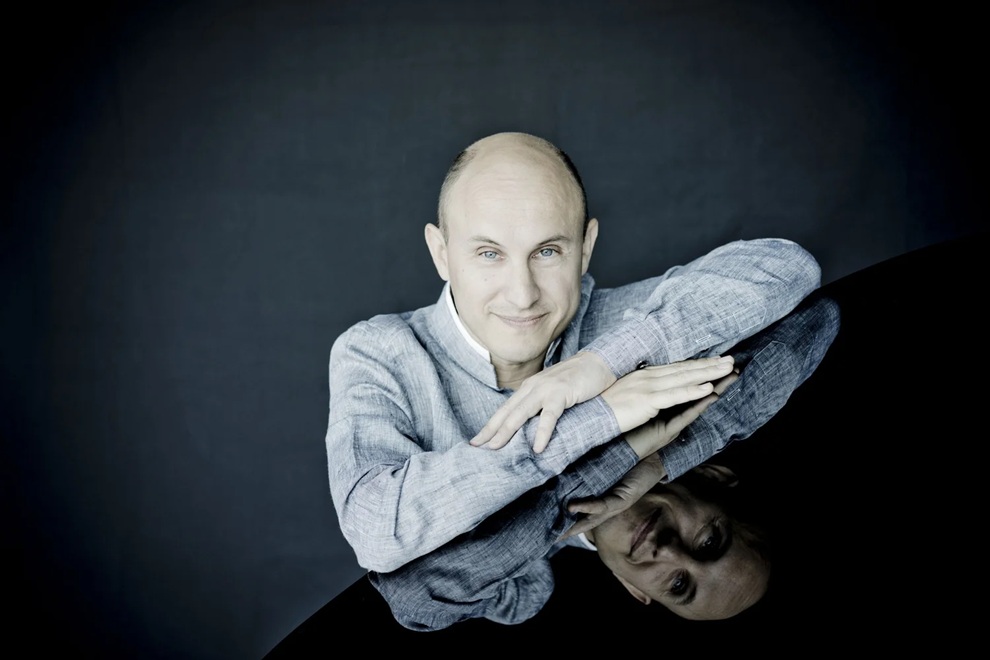
Nelsen Goerner (piano) City of Birmingham Symphony Orchestra / Kazuki Yamada
Hindemith Symphonic Metamorphosis of Themes by Carl Maria von Weber (1943) Rachmaninoff Rhapsody on a Theme of Paganini Op.43 (1934) Bartók Concerto for Orchestra BB123 (1943)
Symphony Hall, Birmingham Thursday 9 April 2026
Reviewed by Richard Whitehouse Pictures (c) Andrew Fox (above) and Marco Borggreve (below)
There was a pleasing overall balance to this evening’s concert from the City of Birmingham Symphony Orchestra and its music director Kazuki Yamada: the three works, written within a decade of each other, drawing extensively on earlier composers or, indeed, traditional music.
If not as familiar as it once was (and not least in Birmingham), Symphonic Metamorphosis of Themes by Carl Maria von Weber is always worth revival – not least for finding Hindemith at his most approachable and uninhibited. It was this latter aspect which came over most vividly here – Yamada securing a forceful though never blowzy response in the opening Allegro, then making the most of its ‘Turandot’ Scherzo’s freewheeling play on Weber’s already recalcitrant overture to which the CBSO responded in like fashion. Easily to underestimate, the Andantino emerged as music of no mean pathos as well as a foil to the final March’s breezy treatment of incisive then jocular melodies, with a close of real panache. Did a smile on the face of certain older punters indicate the latter tune’s audible resemblance to a once popular wartime song?
Rhapsody on a Theme of Paganini has become increasingly familiar in recent decades, as has Rachmaninoff’s music as a whole, and tonight’s performance amply underlined why. He may not have partnered the CBSO for several years, but Nelson Goerner secured a rapport from the outset – the initial 15 variations pivoting between impetuosity and inwardness with dextrous assurance, then those three which constitute a ‘slow movement’ rendered with a soulfulness and, in the evergreen Variation XVIII, a deftness such as banished any hint of sentimentality. The closing six variations duly unfolded as a ‘finale’ capricious and scintillating, Goerner at one with the orchestra in rounding off this work with a deathless payoff. Impeccably played if emotionally aloof, Brahms’ Intermezzo in A major (Op. 118/2) was the less than apposite encore.
The CBSO has an association with Bartók’s Concerto for Orchestra itself going back decades with the present account notable, above all, for its sheer virtuosity of playing. Interpretatively things was not quite this consistent – the expressive contrasts in its Introduzione just a little inflexibly drawn so that the movement felt no more than the sum of its admittedly impressive parts, with the succession of duets in Presentando le coppie a little too detached from each other for this to become the genial though equally vulnerable scherzando it ideally should be.
Conversely, the Elegia had an ideal balance between wrenching anguish and that unworldly ‘night music’ from which it emerges and into which it ultimately withdraws, while the quirky interplay of styles and parodies – whether Léhar or Shostakovich seems beside the point – in the Intermezzo interrotto never sounded at all contrived. Neither did the Finale disappoint as it navigated between pulsating energy and brazen high jinx, on route to a coda of hushed anticipation capped by a peroration which set the seal on this work in an exhilarating QED.
Overall, a fine showing for the CBSO and Yamada in the wake of their latest European tour. The orchestra returns next week in an enterprising programme of Respighi and Puccini, the latter represented by syntheses from two of his operas devised by the conductor Carlo Rizzi.
To read more about the CBSO’s 2025/26 season, visit the CBSO website. Click on the names for more on their principal conductor Kazuki Yamada and pianist Nelson Goerner
MF Robots is proving to be an unstoppable train of feelgood music. The project was begun by Brand New Heavies founder Jan Kincaid together with former band vocalist Dawn Joseph, with the idea of achieving musical liberation without any ties to genre.
Despite that, soul, funk and jazz inevitably feature high in the mix, with the two linking on a series of carefree club-based songs.
What’s the music like?
Summer was invented for bands like MF Robots! Their music takes you into the sunshine with immediate effect, as soon as the opening strains of That’s The Way kick in. This breezy first song is backed up by the call to arms that is Children Of The World, a classic soul number.
Cares are well and truly thrown to the side as the album unfolds, with a style rooted somewhere in the late 1970s of Earth, Wind & Fire but with Brazilian, jazz and soul thrown in to the melting pot in liberal measure. Through The Pain is the pick of these freer numbers, a persuasive sway to its rhythms and heat-soaked keyboards.
The Pressure offers a sultry complement to the quicker tracks, while Glide, a love story, and Hello Sunshine offer up radio-friendly choruses. Lay It Back, meanwhile, harks back to the best, communal numbers of the Brand New Heavies.
Does it all work?
The best indication of the effectiveness of this album is that once it finishes you’ll want to hear it all over again. It may be short, but III delivers!
Is it recommended?
Yes, enthusiastically. Dawn Joseph has a great voice, and the band deliver summery funk in abundance. If you have an acre of sunshine to fill, use MF Robots as your soundtrack!
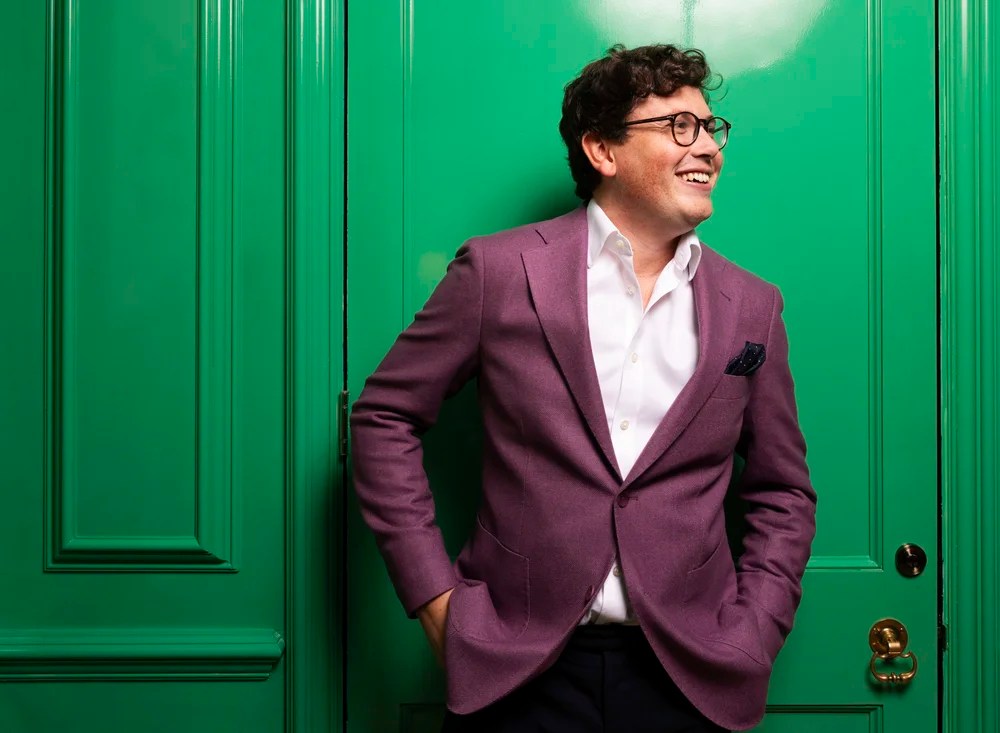
In this interview, the affable pianist talks about his new album of Bach, Mozart and Britten works for piano and orchestra, delighting in the opportunity he had to record it in Salzburg, and giving insight into the performance, recording and instrument he played.
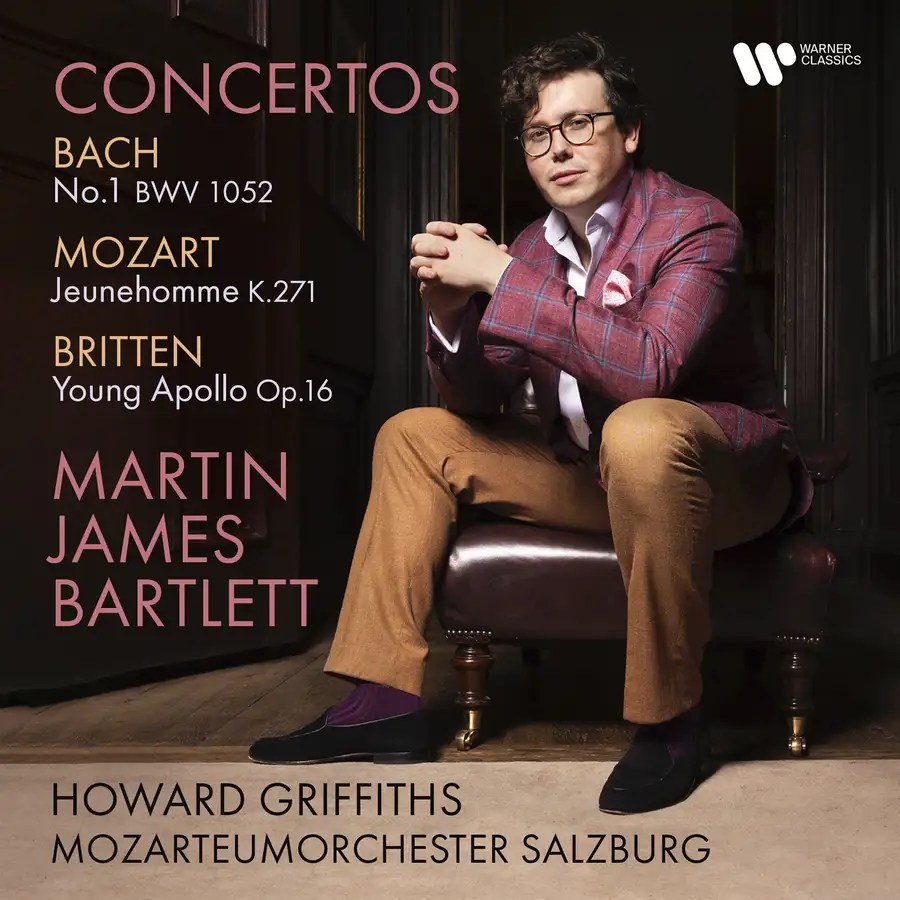
Pianist Martin James Bartlett has joined Arcana to talk about his cleverly programmed new album of concertos. Bartlett, who won the BBC Young Musician of the Year competition in 2014, has since earned a regular contract with Warner Classics, recording themed solo albums, Rhapsody with the London Philharmonic Orchestra, and now an album of works by J.S. Bach, Mozart and Britten, made with the Salzburg Mozarteum Orchestra and conductor Howard Griffiths.
When we speak, Bartlett has already had the pleasure of giving two enthusiastically received concerts at London’s Wigmore Hall in 2026 – a solo recital and a piano duo concert with his friend and label mate Mariam Batsashvili.
“It has been wonderful – twice in two months – but I’m not going to be there every month! John Gilhooly has invited me back again, but in 2029 – because they book so far ahead. There’s a great song history of the Wigmore Hall, which is fabulous, because you go into the backs and you see all the photos of pianists and singers!” He confesses to being more than a little unnerved by the pictures. “It’s terrifying! You’re warming up backstage in the room where there is a picture of Artur Rubinstein, and it is quite imposing because you are stepping onto hallowed ground. In the end, it comes down to thinking, “I love this music, and I know the audience are there to have a good time. People don’t buy tickets unless they want a good evening out, and you’ve just got to enjoy it and have fun with it, even in spite of the pressure from the previous greats who have trod the boards.”
Does he think he might venture onto record with Batsashvili, in the form of some two-piano repertoire? “Well, it would be lovely to do it”, he says. “It’s one of those ones where there can often be so much red tape about who you can record with. It really helps that we’re both with Warner Classics, and the lovely thing is that they came along to see us both at the Wigmore concert. I’m sure we would have a great time working together if the opportunity arose.”
Bartlett’s new album is a clever and sprightly walk through works that initially appear to have little in common, but which all enjoy a youthful disposition. That by Johann Sebastian Bach is the substantial Keyboard Concerto in D minor, BWV1052, and it is refreshing to hear this work back on the piano. “It’s one of those things”, says Bartlett, “that when you look back at the great composers they were all in favour of the progression of the instrument as well as the art form. Liszt himself was trying out all of these new instruments, and Bach was interested in cultivating the future form of the instrument. Whenever you record something that is a ‘period piece’, it’s always a choice of how historically informed you want to be, and how modern and individual you wish to make it. For me, playing on the piano is an amazing thing, because I have no doubt that Bach would have really loved the piano as well. I love the harpsichord too, and that’s the nice thing – I love all forms of today’s instrument. I love the clavichord, where you can do vibrato on each note because it holds the string. I love the organ works of Bach, too – it just so happens that I’m a pianist, so that’s the instrument I use!”
The versatility of Bach is a key helping factor, too. “You could play Bach on a hollowed-out carrot, and it would still move you! That music transcends everything, and when the intention is so strong, you can do what you like with it. There are so many recordings of people singing the First Cello Suite, and there’s the wonderful singer Angélique Kidjo, who has worked with Alexandre Tharaud – they do Bach together, and it works so brilliantly.”
The youthful thread through the album is enhanced by Mozart’s Piano Concerto no.9, the young composer’s first notable piano concerto success – and a daring piece of music for its time. Bartlett agrees. “It’s the piece that helped Beethoven’s Fourth Piano Concerto come along, and that idea of there not being a huge opening ‘tutti’. The piano interrupts almost precociously, which would not be surprising given that it’s Mozart. I loved when I was thinking about the album how these pieces pushed classical music forward. Bach’s piece is one of the first keyboard concertos, and it takes so much from the past. It’s quite evidently inspired by Vivaldi – however it’s also pushing forward. That’s exactly the same with the Mozart, which really is such a beautifully conceived work.”
He goes into more detail. “I read some theories about the last movement, and the confusion around the name Jeunehomme. It was apparently misunderstood from Jenamy, the surname of the pianist Victoire Jenamy, and because Mozart had the most ghastly French accent, it had been noted down incorrectly! Her father was a choreographer, and ground breaking in the dance world. I surmise that’s why Mozart puts that minuet in the last movement, because it is ‘Presto’, and it’s moving quickly, and then suddenly there’s that breath of fresh air which is this little Minuet. I have no doubt it was written for her, or as side note to gain some favour with her father, who would have appreciated it. There is so much of a story in this music.”
The last movement, in fact, is almost a concerto in itself. “It has all those interlocking cadenza passages that get you back to that main theme that’s possibly bustling with energy. You have so many choices of what you can do there, and I just love that sort of creativity. It’s spontaneous music, written down!”
Was it helpful working with the experience of conductor Howard Griffiths? “I met Howard a couple of years back, and before we came up with this project, I was lucky enough to work with him in the Tonhalle in Zurich, and we did a beautiful concert where we played this concerto. It’s one of those relationships that you don’t come across very often, with artistic connection that is so easy. There are no laborious discussions about how to do something because you come to music from a similar perspective, and way of feeling it. That’s what I felt when I first worked with Howard.”
The rapport extends well beyond Mozart. “With the Bach concerto, how many different speeds is it possible to use to play the first movement well? You’ve got Glenn Gould on one hand, the slowest side, and then you have these harpsichord recordings, which are far more nippy and sprightly. Howard asked me to play the first beat, and he said “Brilliant, I was just hoping we would be able to move through it. For me the speed of these pieces dependent on the harmonic progression, and how quickly the harmonies change indicates the feel you want from it. Howard and I were on the same page, thank goodness!”
The pair were clearly having fun with Britten’s impetuous Young Apollo, too. “It’s interesting,” says Martin, “to choose a piano for an album like this. There are very different characteristics you might require for all three pieces, but this piano was just a dream. We got it from Bösendorfer, and I went to try it in Vienna. This one stood out to me, as it’s got such a beautiful tone – individual and characterful. I got a very nice message from Benjamin Grosvenor the other day, who had listened to the Bach, and he noted it was a Bösendorfer. It goes to show it has such an individual sound, that worked perfectly for this! What surprised me was I tried the beautiful bits of the Mozart and some of the sprightly bits of the Bach, and I thought, “Will it have the monumental sheer power to illuminate the sun god, Apollo? And my goodness, it did! When I crashed down on the bottom ‘A’ I thought it had was something of a ‘beautiful beast’, with the beauty and the power to work the Britten.”
His enthusiasm is contagious. “It has a capacity to do that “pearls on a string”, Rembrandt-esque thing, where you can see every facet of everything. At any speed, this piano provides the most gloriously rich sound in every note.” This works especially in the Mozart, with the dance being played out – to which the orchestra respond. “The perspective with Howard was that this was chamber music. Gone are the days where you have Mozart concertos that have a huge orchestral introduction but it is mismatched with the piano. We wanted it to feel like a piece of spontaneous chamber music where everybody is active in the production, and listening.”
The start of the Britten is indicative of this, with its bright colours. “It’s one of those works where I understand it musically very well, but I don’t understand the mystery behind it. It’s shrouded in mystery a bit for me, the love affair he had with this young German boy, and then Peter Pears. I only read recently that the man to whom it is dedicated, Wulff Scherchen, was discovered to be alive until very recently, and had been married 70 years – but still had all this incredible correspondence between him and Britten.”
The album’s tracklisting acknowledges the old form classical album, with full works and a linked programme, but also the new, where music streaming is key, and record labels look to release singles ahead of album release. “Again, it helps to have the versatility of Bach – that first movement especially. Playlisting is a double-edged sword – it’s wonderful, as it puts our music out there to so many more people. As an artist, though, I want my music to be on the ‘Wake Up’ playlist rather than the ‘Go To Bed’ one! I would rather my music thrill someone rather than put them into a lengthy snooze! However, when I think about the Bach first movement, it is perfect study music, because it is relentless in the way the harmony evolves. We came to this album from a slightly old-fashioned point of view, making it because it has incredible music – which hopefully means it will be on some playlists, which the first movement of the Bach already is, happily!”
The album was enjoyable to make, too. “The recording process for me was incredibly special, because I’ve never recorded anything in a different country to England. All of my albums so far have been recorded in London, but recording in Salzburg, where Mozart spent his youthful career working, was very special. To be able to get up every day, staying in the centre of Salzburg in those beautiful, crooked streets with cobblestones, get out of bed and know you’re going to record Mozart, walking down the streets that he would have walked himself, and in the snow too – it was so Romantic! If not a little hazardous and evocative.”
Bartlett immersed himself in the city. “I went into these wonderful restaurants, where they serve specialities like boiled dumplings. You feel close to being his friend, with a couple of hundred years in between! Then at the other end, the only place that was open late at night was a kebab shop across a river, across an icy bridge, about a 40-minute walk from my hotel. That brought me back to reality sharply!”
He is enjoying travelling after a concentrated period of work in England, with another visit to Bösendorfer in Vienna where the album was launched, “nestled into the Musikverein”. Thinking back to the Young Musician competition, was this what he hoped might happen as a result? “Every time something new comes up, it somewhat surprises me, as mentally I feel like I’m still the same person as when I was doing Young Musician! I feel incredibly grateful, especially with Warner Classics, who have allowed me to record whatever repertoire I want, and have really been on board when I’ve come with themes of Love and Death, you know? I’ve had such a wonderful opportunity, working with the London Philharmonic Orchestra for my Rhapsody, with their symphonic excellence, and now, with the Salzburg Mozarteum Orchestra, the most incredible chamber experience. To have that contrast has been wonderful, and it’s what I love about music. My albums are widely different to each other, as I’m a glutton for this amazing music! As Rachmaninov said, “Music is enough for a lifetime, but a lifetime isn’t enough for music!” That’s how I feel, especially being a pianist!”
You can listen to clips from Martin James Bartlett’s new album, and purchase the recording, at the Presto Music website. You can read more about Martin at his website