Unknown's avatar

About Arcana

My name is Ben Hogwood, editor of the Arcana music site (arcana.fm)

Switched On – Kennebec: Departure (Night Time Stories)

reviewed by Ben Hogwood

What’s the story?

The Olympic Peninsula in Washington state is a world away from downtown New York, but the two link Eric Phillips’ first album as Kennebec. Suffering from the sensory overload that many can experience in one of the world’s most vibrant cities, Phillips and his friends were looking for an escape, and their time in the Northwest gave them not just solace but musical impetus.

Phillips is now based in Portland Oregon, but Departure will serve as a musical diary of his Washington sojourn.

What’s the music like?

Departure is the result of two years’ musical endeavour, but rather than sounding like a long, laborious piece of work, it is notable for its freshness. The wide open textures speak of pure musical and mental freedom, while the rich selection of instruments and textures suggest a complete lack of restrictions. The musical language is open too – with electronica as a loose base, Phillips and friends explore Western musical forms but are open to inclusion and variety.

In the course of its 35 minutes Departures makes good and imaginative use of Mirabai Peart’s violin and viola, with a silvery tone the base for Kalahari and some nice, multiple string work on A Monsoon. Phillips also uses the ngoni and kalimba in the course of his musical explorations, as well as classical guitar – all of which he plays himself. They give tracks like Pipe Dreams and As We Grow Older a rarefied air.

Add to this some imaginative studio-based rhythms and you have a flexible style of music that rewards several approaches.

Does it all work?

Yes. Departure works from several musical angles. Electronica lovers will enjoy its fresh approach and freely cast rhythms, while traditional music fans will appreciate the sensitive blending of different styles. This is fusion of genres at its best, done in a way that needs no labelling at all.

Emotionally the music is very open, reflective on occasion but imbued with a fresh energy at others, as though the creator has emerged from a particularly good and invigorating night’s sleep. Spend more time with it and it will have a similar effect on you, the listener!

Is it recommended?

Very much so. Departure works at either end of the day and provides the opportunity of a clean and clear mindful state for its listeners. Think of it as a palette cleanser and a fresh approach, and you will take plenty from its charms.

Stream

Buy

Switched On – Recondite: Dwell (Ghostly International)

reviewed by Ben Hogwood

What’s the story?

Recondite has been criticised for sounding the same between albums – as recently as the last few days – but when your output is as beautifully set up as his it would seem churlish to change your style unless you feel a strong conviction to do it. Real name Lorenz Brunner, he also recognises that his devoted fanbase thrive on his ability to continue doing what he does so well – and Dwell is the result of those endeavours.

What’s the music like?

Introverted but rhythmic. Dwell stays on the darker side where harmonies and atmospherics are concerned but there is a strong element of comfort to its vibes, a nice balance of warmth and cold.

Nobilia and Black Letter are two of the best tracks, both with starry flickers. In spite of the delicate drum tracks there is still a good deal of movement too. Mirror Games explores some rather lovely effects that are the sonic equivalent of dancing light patterns, refracting out over a bigger perspective. Moon Pearl is dubby, with light and shade, while Interlude 2 and Surface also explore a slower tempo to good effect. Wire Threat is extremely deep, the muffled kick drum and held bass a bed for slowly shifting, twinkling keyboards to move over.

Does it all work?

Yes. Brunner’s music reveals more than you think it might on first listen, describing a picture the listener can create for themselves. It is darkly shaded and nocturnal, but is ultimately a strong companion to have around. Turn the music up and it works well in a small club space too.

Is it recommended?

Yes. Our perception might be that Recondite may not be challenging himself overly, but it takes great craft and invention to keep interesting in electronic music. Dwell is full of good things, and provides proof that Brunner is still producing some beautiful music. Those who already love his output will see no reason to hesitate here.

Stream

Buy

Wigmore Mondays – Daniel Müller-Schott & Annika Treutler: Dvořák, Webern & Franck

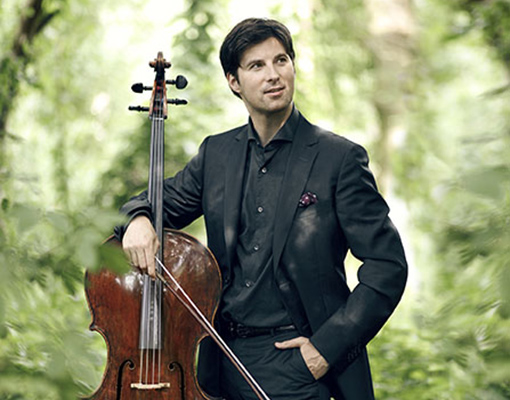
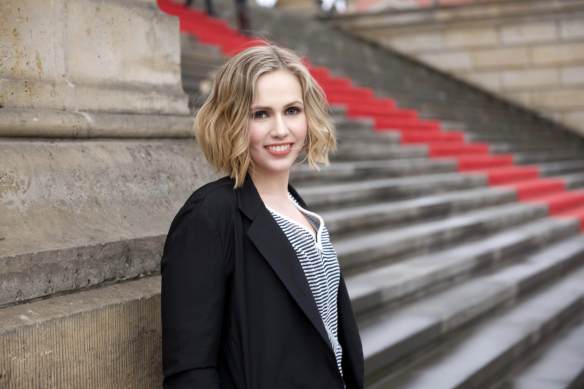
Daniel Müller-Schott (cello, above), Annika Treutler (piano, below)

Wigmore Hall, Monday 17 February 2020 (lunchtime)

You can listen to this concert on the BBC Sounds app here (opens in a new window)

Review and guide by Ben Hogwood

There is so much original music for cello and piano dating from the 19th century that there is a danger of feeling short changed in a concert when presented with music arranged from a different instrument. Yet such was the conviction with which Daniel Müller-Schott and Annike Treutler played these pieces that it was possible to forget those thoughts and enjoy the music, pure and simple.

It also showed just how flexible some of the original music is. Dvořák’s 4 Romantic Pieces began as works for string quartet but their songful nature gives them just as much expression in their better known arrangement for violin and piano, and then in Müller-Schott’s own arrangement here. The first piece, a Cavatina, is a lyrical treat (2:36), while the second has a comparatively stern expression (5:44), ending with imaginative use of harmonics from the cellist. The third and most lyrical of the four pieces (8:28) returns to the same key as the first, and is ideally suited to the cello’s range, while the fourth and longest piece (10:51) is more thoughtful and affecting.

It usually takes longer to write about Webern’s music than it does to perform – which is again the case here. Yet such is the compressed intensity of his writing that the Drei Kleine Stücke will have stuck in people’s memories, despite lasting less than 5 minutes. Webern wrote the three pieces at a particularly fraught time in 1914, and Daniel Müller-Schott’s probing tone communicates their strength of feeling. As did Annika Treutler’s timely interventions, lingering on the mysterious chords of the first (from 19:06) signing off the second piece abruptly (20:15) and then the two savouring the ghostly sonorities of the slow, stretched out notes of the third piece (20:42).
The Violin Sonata in A major is one of César Franck’s most enduring works. Brimming with good tunes, it has an air of spring about it, and its abundance of good feeling makes it a very popular concert piece – as it surely was in its first performance, at the wedding of legendary Belgian violinist and composer Ysaÿe. Although originally written for violin and piano Franck was fully aware of the potential of a version for cello, and specified it could be played as such. This was eventually realised with the help of French cellist Jules Delsart.

Because most of the melodies are an octave lower in pitch it means the sonata does not have quite such a sunny outlook in its cello arrangement – but it does bring out the red blooded Romanticism of the stormy second movement.

Before that, Müller-Schott and Treutler delight in the dreamy first movement, threading Franck’s thematic ideas together beautifully (from 24:11). The second movement, the most effective in the arrangement, powers forward with impressive momentum (30:15), the music flowing freely as Müller-Schott’s probing tone and intonation shine through. At the same time Treutler proves the ideal anchor, the two judging the tempo just right.

The third movement is a freeform recitative for cello with subtly voiced thoughts for the piano (38:22), and the pair’s instinctive feel for the music gives it just the right amount of room to breathe. The finale (46:17) is a masterful bit of writing, a canon where the cello part shadows the piano at a close distance almost constantly. There is little more to say here than simply to enjoy the music and Franck’s powers of invention in an ideal performance!

Repertoire

This concert contained the following music (with timings on the BBC Sounds broadcast in brackets):

Dvořák, arr Müller-Schott 4 Romantic Pieces Op.75 (1887) (2:36)
Webern Drei Kleine Stücke Op.11 (1914) (19:06)
Franck, arr. Desart Sonata in A major (1886) (24:11)

As an encore we had a nicely chosen Schumann treat, the first of 3 Fantasiestücke Op.73 (54:04). Like the Dvořák and Franck before it, this is a piece whose songful nature means it can be arranged for any number of instruments. The cello does just fine here though!

Further listening & viewing

The music from this concert can be heard in the playlist below, most of it recorded by Müller-Schott himself:

Beyond the Violin Sonata and Piano Quintet, very little of César Franck’s chamber music gets a regular airing. This playlist adds the String Quartet and Trio Concertant no.1, two substantial and major works that show off once again Franck’s talent for recycling and developing melodies:

On a very different tip are Webern’s works for chamber forces. Never one to overstay his welcome, he did nonetheless contribute some remarkable works in the smaller form, among them the Concerto for 9 instruments and four distilled pieces for violin and piano. They are included here as part of a disc that begins with the famous Symphony:

As well as writing large scale chamber works, Dvořák was able to put together much shorter pieces for the salon and light entertainment. The Cypresses for string quartet fall into this category, essentially working as songs without words:

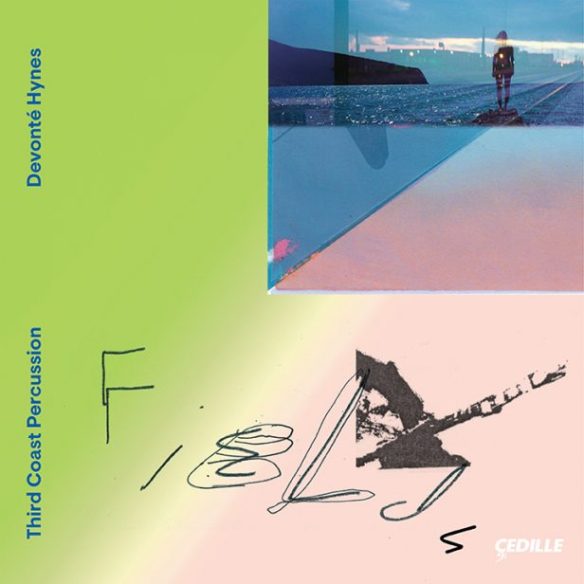
On record – Devonté Hynes & Third Coast Percussion – Fields (Cedille Records)

Devonté Hynes
For All Its Fury
Perfectly Voiceless
There Was Nothing

Devonté Hynes and Third Coast Percussion

Cedille Records CDR 90000 192 [60’49”]

Producer Jesse Lewis
Engineer Kyle Pyke

Recorded 17-20 July 2018, Chicago Recording Company & 13-14 October 2018 (Electrical Audio)

Written by Ben Hogwood

What’s the story?

It has become quite a challenge keeping track of Devonté Hynes’ musical activities of late. While releasing a mixtape of quality offshoots from his Blood Orange project (reviewed on Arcana here), he has also released the soundtrack to Queen & Slim. With those in the can, there was always a danger this set of compositions, his most ‘classical’ opus to date, would fall below the radar. Indeed it did on its release in October – but Arcana decided to pick it up and write about it!

There are three pieces here – the substantial For All Its Fury and two shorter pieces, Perfectly Voiceless and There Was Nothing. Hynes wrote them on a Digital Audio Workstation, sending them to Third Coast Percussion for arrangement and orchestration, before meeting up with them to record the works in the second half of 2018. All three pieces have their roots in dance, and were originally written for choreography by the Hubbard Street Dance Chicago company.

What’s the music like?

Accomplished, stylish and with a few surprises in store – but Hynes’ music needs the chance to establish itself. Those familiar with his language might expect his forays into longer compositions to be relatively simple in content, but Fields shows that not to be the case. Instead he takes his lead from the shorter form songs for Blood Orange, picking motifs and textures with the flexibility to blossom into something more substantial.

Reach and Blur, the first two movements of For All Its Fury, set out a picture of cloudy ambience, reminding us of Hynes’ love of Debussy. Only in Coil does the music really begin to flex its muscles. This takes place through a deceptively simple marimba riff that Hynes takes through a number of settings and developments. The murky ambience returns, with warm synthesizer chords, and the music – though sonically attractive – threatens to lose its direction.

Gather, the seventh section, restores the momentum with busy xylophones and chimes, creating a lovely space with bowed marimbas, after which the music floats and creates an enchanting world with the chimes of Tremble. Those chimes spill over into the treble-rich Cradle, before Hynes starts to work in the lower reaches and rich sonority of the marimba sound. This section – Press – generates the most energy, before evaporating into the ambient wash of Fields itself, which then builds to a substantial and satisfying finish.

The other two pieces are self-contained. Though their titles indicate they will be lacking, Perfectly Voiceless and There Was Nothing do have some appealing music. The former busily gets on with creating loops and developing them, though doesn’t quite break free of the influence of Philip Glass. The instrumental colours are again really attractive, and the surrounding musical ambience is rather beautiful, with the shrill treble of chimes complemented by rich, lower marimba writing. There is a sense of petering out at the end, however.

There Was Nothing starts with more soft, starry-eyed ambience, the colours familiar from the other pieces, but there is more evidence of electronic manipulation here with a warm backdrop to the fluttering marimba figures. There is a less obvious shape to this piece – inevitably, given the title – but it has a broader set of textures which are charming on headphones.

Does it all work?

Most of the time. On occasion it feels as though Hynes’ music loses its sense of direction, but given the context of the pieces they serve their brief well. Fields is certainly an appealing album to listen to for its warm colours and consonant harmonies, and Hynes shows enough technique in his mastering of percussion instruments to suggest there is a lot more potential here.

Is it recommended?

Yes. If you’ve followed Hynes’s various pseudonyms, but especially Blood Orange, you will enjoy the warm colours presented by Fields. Hynes’ understated and poignant vocals may be missing, as well as an electronic drum kit, but his next level of expression – analogue percussion instruments – serve him well.

There is however the nagging feeling that these are works in the early stages of progress, but that in itself is intriguing. It will be very interesting to follow where Hynes goes next, and how his obvious talents are harnessed.

Listen

Buy

You can read more about Fields at the Cedille website, together with options for purchasing on analogue and digital formats

In concert – Carolyn Sampson & Joseph Middleton: The Contrast

Carolyn Sampson (soprano, above), Joseph Middleton (piano, below)

Wigmore Hall, Friday 14 February 2020 (lunchtime)

Review and guide by Ben Hogwood
Photo credit Marco Borggreve

Once best known for her interpretations of Baroque music, Carolyn Sampson is revelling in the world of song. With musical partner Joseph Middleton painting pictures from the piano, she has made a number of attractive releases for the BIS label – of which The Contrast is the latest.

This Wigmore Hall concert doubled as the album launch event, and was programmed with a wide range of responses to settings of English text. The pair began with Sir William Walton’s multi-poet cycle A Song for the Lord Mayor’s Table, reminding us just how different London was when this was written in 1962. The balance was tricky in The Lord Mayor’s Table itself, where there is a lot going on in the piano part, but Sampson carried her line with verve. Her accent on Wapping Old Stairs was well judged for subtly comedic effect, while Holy Thursday cast a spell and Rhyme ended the cycle with a flourish.

The songs of Roger Quilter can really blossom in the right hands, and Sampson sang this selection of five beautifully. The flowing My Life’s Delight and softer By a Fountainside showed off her natural delivery, Middleton responding with lovingly caressed accompaniment. Dream Valley was a beautiful reverie as dappled sunlight shone across the Wigmore Hall, while the Arab Love Song was urgent and fleet-footed, while Fair House of Joy ended the selection with a winning smile.

Huw Watkins wrote his Five Larkin Songs for Sampson, and was present for this powerfully affecting performance. The challenge of setting Larkin’s occasionally bleak verse is realised with music of passion and dramatic impact, and as she said from the stage, Sampson clearly loves to sing the songs. The wandering piano line of Who called love conquering? contrasted with the awkward shifts in the soprano line, both of which were handled extremely well. Sampson’s ringing delivery brought expressive power to Love Songs in Age, as did her instinctive use of vibrato. The end of Larkin’s wry poem Money, ‘it is intensely sad’, left a strong aftertaste, while Dawn showed a hint of Britten in its setting. The delivery of the last line, ‘How strange it is for the heart to be loveless, and as cold as these’, made an impression with its completely (and deliberately) flat tone.

Finally we heard five songs from Frank Bridge, whose contribution in this area is still underrated. That is in spite of heartwarming songs such as Go not, happy day, which was full of smiles in this performance, bubbling over with good feeling. Adoration showed of a sumptuous vocal tone, while Come to me in my dreams could have been written for such a voice. Once again Middleton’s accompaniment was ideally weighted and phrased, the two combining for a magical and poignant encore of Bridge’s Yeats setting When You Are Old, powered by an achingly tender melody from the piano.

Repertoire

This concert contained the following music:

Walton A Song for the Lord Mayor’s Table (1962)
Quilter My Life’s Delight Op.12/2 (1908), By a Fountainside Op.12/6 (1908), Dream Valley Op.20/1 (1916), Arab Love Song Op.25/4 (1927), Fair House of Joy Op.12/7 (1908)
Watkins Five Larkin Songs (2009-10)
Bridge When most I wink (1901), Go not, happy day (1903), Adoration (1905), Come to me in my dreams (1906), Love went a-riding (1914)

Further listening & viewing

You can listen to the whole of the In Contrast release on Spotify here:

To hear clips and to purchase, In Contrast can be found on the Presto website