Unknown's avatar

About Arcana

My name is Ben Hogwood, editor of the Arcana music site (arcana.fm)

Wigmore Mondays – Meta4: String Quartets by Fanny Mendelssohn & Bartók

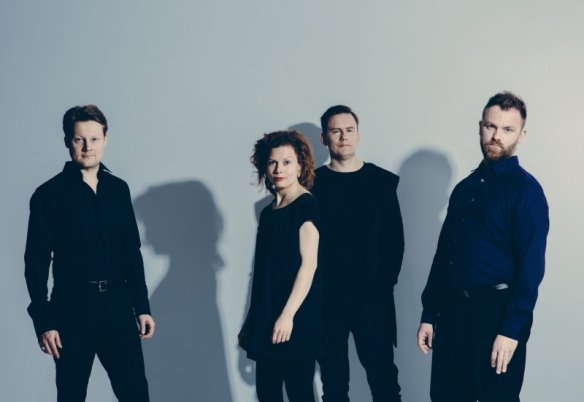
Meta4 [Antti Tikkanen, Minna Pensola (violins), Atte Kilpeläinen (viola), Tomas Djupsjöbacka (cello)]

Wigmore Hall, Monday 17 February 2020 (lunchtime)

You can listen to this concert on the BBC Sounds app here (opens in a new window)

Review and guide by Ben Hogwood

A pleasingly varied program from the Finnish string quartet Meta4, not least because it gave the Wigmore Hall and BBC Radio 3 audience a chance to hear Fanny Mendelssohn’s String Quartet, many undoubtedly experiencing the piece for the first time.

Often overshadowed by her brother Felix Mendelssohn’s musical output, Fanny was clearly a highly accomplished composer in a time when women were not encouraged to follow such musical disciplines. Only now is the quality of her music fully revealed, and this String Quartet stands side by side with the seven completed works of her brother. This one, as its composer freely admits, stands in the shadow of the late quartets of Beethoven.

The work’s dimensions are relatively unusual, pointed towards the third movement by two relatively short movements, slow and fast respectively, and it spends a lot of time in C minor as well as the ‘home key’ of E flat major, creating a tension between darker thoughts and sunnier climes. There is an enjoyable disregard for convention in the slow first movement (from 2:41 on the broadcast), with a broad and quite free approach that Meta4 have fully under their wing, the three standing players swaying and moving around the stage in response to the music.

While this could have been off putting there was no doubting their commitment and involvement, ensuring the first movement Adagio was thoughtful and profound. The following Allegretto (6:55) was quite wary initially, its C minor fluttering speaking of unease, but its central section scurried forward with an energetic fugue started by Atte Kilpeläinen’s busy viola (from 8:01).

The Romanze (10:57), beautifully played, was back in C minor but grew to be the centre of the performance, the soft heart of the movement becoming something really substantial and emotive in this performance. Meanwhile the spirited and full bodied finale (18:18) signed off in a lively fashion, powering forward through unison from viola and cello to a headlong sprint for the finish. Occasionally the intonation was a little off in the upper reaches of the violin line, but this was otherwise a very fine performance.

Bartók’s cycle of six string quartets rank among the very finest achievements in the form, and are rightly a cornerstone of any aspiring group’s repertoire. The First is the longest, in keeping with his earlier works as displaying deep Romantic-inspired passion but changing the musical language, finding a more individual voice as it strays further from tonality. The work came after several discarded attempts in the string quartet form, suggesting Bartók knew already that this would be one of his primary means of expression – and is regarded by many commentators on the composer as the work where his mature style arrives.

Much of the passion in this case was invested by the composer in a relationship with the young violinist Stefi Geyer, dedicatee of the Violin Concerto no.1, and the quartet is effectively a detailed account of their relationship and its ultimately tragic ending. That said, it is effectively a transition from the darkness of the breakup to the light and positivity of what might lie ahead.

Set in three substantial movements, this work often sounds as though there are more than four instruments playing, thanks to the use of multiple stopping (playing more than one note at a time on an instrument).

The first movement, described by Bartók as a ‘funeral dirge’, begins in shadow (26:39) but grows gradually in expressive intent. The quartet stay largely together in their outpouring, though a striking change of emphasis occurs at 31:04 when the cello takes on a drone-like figure. The music is briefly more assured, before dropping back to more threadbare, muted sounds.

The sorrowful first movement is effectively an introduction to the second (35:43) which pulls away from the slow tempo and starts noticeably to look up and outward. The textures become fuller, the dialogue between instruments is much more pronounced and the rhythmic definition starts to make itself known, as though Bartók wants to incorporate more of the traditional music around him. There are still pauses for reflection, but essentially the mood is one of grit and determination.

The third movement (46:06) is marked Allegro vivace – a real sign that the composer wants to get on with things. The cello takes up the mantle, its weighty dialogue with the viola inspiring full-bodied ensemble passages and more obviously folky asides.

The musical language flits between tonal statements, with bold tunes, and sections of music with a much less obvious centre. At 50:42 the music retreats, the quartet together but murmuring confidential asides to each other. The music builds and the statements become wilder and more sweeping. There are big chords from 55:49 where the sound could perhaps be bigger…but then Meta4 are saving themselves for a final push, finishing with a wonderfully robust and rustic chord.

As a side note, it was refreshing to see Meta4’s colourful attire for this concert, brightening up a dull February lunchtime! There need be no rules for dress in classical music like this, and it was good to see the quartet wearing what they felt comfortable with.

Repertoire

This concert contained the following music (with timings on the BBC Sounds broadcast in brackets):

Fanny Mendelssohn String Quartet in E flat major (1834) (2:41)

Bartók String Quartet no.1 (1908-9) (26:39)

Further listening & viewing

The music from this concert can be heard in the playlist below, which includes Meta4’s own recording of the Bartók from 2014:

It has taken an awful long time for the music of Fanny Mendelssohn to break through to anywhere near the centre of classical repertoire – which is unforgivable really, given how good it is. The playlist below collects her Piano Trio and Piano Quartet, bisected by a Piano Sonata in C minor:

Bartók, meanwhile, is an ever-present as one of the 20th century’s musical innovators. The string quartets form the backbone of his career, and the cycle by the Takács Quartet is certainly one of the finest:

You can see details of Meta4’s Bartók release here:
Live review – CBSO Youth Orchestra / Kazuki Yamada: Elgar Symphony no.1, Takemitsu & Richard Strauss

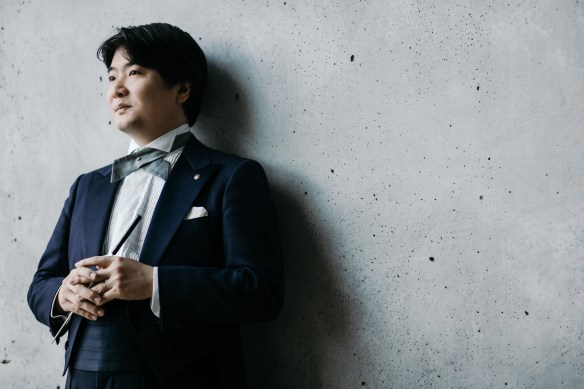
CBSO Youth Orchestra / Kazuki Yamada (above)

Symphony Hall, Birmingham
Sunday 23 February 2020 (3pm)

Takemitsu Dreamtime (1981)
Richard Strauss Till Eulenspiegels lustige Streiche Op.28 (1894-5)
Elgar Symphony no.1 in A flat major Op.55 (1907-08)

Written by Richard Whitehouse

It is hardly an understatement to say that the concerts given each season by the CBSO Youth Orchestra are frequently among the most enterprising and engaging of all those to be heard in Symphony Hall, with this afternoon’s event under Kazuki Yamada proving no exception.

A contrasted pair of tone poems comprised the succinct first half, beginning with a welcome revival of Toru Takemitsu‘s Dreamtime. Conceived as a dance piece for Netherlands Dance Theatre, this is typical of the music from its composer’s maturity in its dissonant (but rarely abrasive) harmonies and its diaphanous textures. Both of these were fully in evidence, with Yamada also mindful to instill a sense of cumulative unfolding as ensures cohesion in music that can easily drift or lose focus. Suffice to add there was little sense of that happening here.

Takemitsu was not a composer given to the humour (ironic or otherwise) permeating Richard Strauss‘s Till Eulenspiegel, heard in an account that initially felt a little stolid in its depiction of that prankster from the Middle Ages; but which soon gained in conviction over the course of Till’s encounters monkish, amorous and social on the way to a vivid depiction of his trial and execution – with its irrepressible pay-off. Assured playing by woodwind and brass were the highlights of a reading to remind one of just how technically exacting this music remains.

112 years on from its premiere and Elgar‘s First Symphony exudes a very different if equally unequivocal virtuosity, such as happily held few fears for these musicians. Japan has a noted line of Elgar interpreters (not least the conductor Tadaaki Otaka), and Yamada demonstrated his credentials with a taut while never inflexible take on the lengthy opening movements – its indelible ‘motto’ theme eloquently and un-fussily rendered, then the main Allegro securing an almost ideal balance between anxiety and rumination across music which strives without ever regaining that calm assurance whose glimpses become the more affecting for their transience. No less impressive was Yamada’s handling of the coda as this winds down towards becalmed resignation, abetted by playing of exquisite finesse from the CBSOYO woodwind and strings.

There was little to fault in a scherzo that alternated the incisive and the wistful with unforced rightness, and how unerringly Yamada judged its transition into an Adagio that, less moulded than it often is, yet unfolding seamlessly towards its serene close. Not that there was anything bland or uninvolving about this music, or a finale that (rightly) followed with minimal pause; the barely suppressed expectancy of its introduction heading into an Allegro whose impetus hardly faltered. Strings never sounded fazed by the contrapuntal intricacy of its development, while brass came into their collective own during an apotheosis where the re-emergence of the motto theme evinced a triumph shorn of bombast or self-regard; the closing bars setting the seal on a performance of a maturity the more remarkable given the age of its exponents.

Elgar One has over the years come in for more than its fair share of objections to its supposed overtones of jingoism and self-gratification. That there was nothing of that here was tribute to Yamada in his drawing so ardent and insightful an interpretation from the CBSOYO players.

Switched On – Ocoeur: Everything (n5MD)

reviewed by Ben Hogwood

What’s the story?

Franck Zaragoza’s sixth album as Ocoeur comes with a plea. It is about getting people to restore their communication to a more direct level of humanity, rather than spending all the time gazing at devices, heads down.

With a wish that we engage with ‘Everything’ around us, Zaragoza gets to work on a broad, ambient canvas, producing an album of six rather beautiful tracks. The one-word titles speak of the simplicity he is searching for in his music.

What’s the music like?

Everything is a beauty. With it Zaragoza manages to suspend conventional feelings of time. Setting out its scope with the Jean Michel Jarre leanings of Ascent, laden with melancholy, it presents a simple, tonal musical language that evolves beautifully.

The title track introduces a kick drum as punctuation, though the appearance of any drums is relatively rare. Current has icy percussion around the edges as it unwraps a chilly, watery scene. Glow also uses shards of rhythm to accompany its luminous keyboards, unfolding at a natural pace.

It is however the closing pair of Dawn and Dusk that leave a lasting mark. At 20 minutes between them, they have an easy, natural progression across space and time in direct opposition to the busy digital environments around us. There is very little to anchor either production to the ground, but the floated motifs work really well.

Does it all work?

Yes. The softly reflective nature of this music makes it ideal for either end of the day, and Ocoeur’s slow yet measured progressions take place through sounds the listener can dive into.

Is it recommended?

Wholeheartedly. Its sentiment is spot on, but so is the feeling you get after 40 minutes spent in Ocoeur’s company. A cleansing and subtly uplifting experience.

Stream

Buy

Everything is released on Friday February 28 on n5MD

Talking Heads: Paavo Järvi

Interviewed by Ben Hogwood

If anyone typifies the flexibility of the modern conductor today, that person is Paavo Järvi. Like his father Neeme and younger brother Kristjan, he has an eye-watering workload and schedule, but such is his deep love for his art that it is not a factor in his musical life.

When our conversation starts, Järvi has just finished rehearsing in Estonia – in his home city of Tallinn. This time his role is that of a visiting conductor, in charge of the NHK Symphony Orchestra. The Japanese group, now 95 years old, appointed him as their chief conductor in 2016 and recently extended the arrangement until 2022. Their recent recording releases present a partnership that can only be described as going from strength to strength.

On the night of our conversation they have a concert in Tallinn itself, followed by a visit to the Royal Festival Hall in London three days later. Their program is an enticing one, beginning with Takemitsu’s orchestral piece How slow the wind. Järvi confesses to being a slow starter with his music. “I have been an admirer of his music for a long time, but recently in the last couple of years we have recorded his works with the orchestra. It has just been released in Japan, and it includes all of his orchestral music. In the last couple of years it was a big project that we took on, especially with him being so big in Japan. He died before I ever had a chance to meet him unfortunately, but as you know he is a major figure in Japanese musical life. His is the only real name from the Western world that we would know as being from Japanese music. I grew up knowing the name but not the music. It’s been a new experience for me but something I am very proud of, a new musical experience.”

One of the NHK Symphony Orchestra’s recent releases with Järvi is a searing account of Mahler’s Symphony no.6, which they gave to great acclaim in London in 2017. Wishful thinking it may be, but I suggest that some of Takemitsu’s writing draws from Mahler’s ability to write chamber-like music in the depths of the Sixth. “I think it is more likely that the influences are Messiaen”, says Järvi, his sonorous voice deeper than ever. “It was Messiaen who taught him, and the line goes back to Debussy before that, but there are echoes of certain other worlds in Takemitsu’s music for sure. Mahler could have been one of them.”

Sol Gabetta joins the orchestra for Schumann’s Cello Concerto, a work which has seen its fortunes on the stage revitalised in more recent years, before Järvi leads the orchestra in Rachmaninov’s Symphony no.2 in E minor. This is a work he recorded with the Cincinnati Symphony Orchestra back in 2006, but as he admits his view of the piece has changed since then. “It has changed, and I have changed in that time too”, he admits. “I have fewer inhibitions since I made that recording, and I am not as cautious about the piece as I used to be. It is one of the most Russian works of Rachmaninov’s output, but it cannot be taken too literally. The orchestra have played the Second quite a lot, and it is extremely familiar music within Japan. There is certain music that they play really well, and the Second Symphony is certainly one of those pieces.”

Nor have they required much persuasion or coaching to make the move to Mahler in their recorded output. “The orchestra is extremely well versed in German Romantic music, and they have had a lot of conductors who have encouraged them to play it. Herbert von Karajan and Karl Böhm used to conduct regularly in Japan, and so did Eugen Jochum. Most of the Western conductors came with their own orchestras. A lot of Western conductors were connected with the NHK Symphony Orchestra – Wolfgang Sawallisch, Herbert Blomstedt and Horst Stein just to name a few – so they know the repertoire extremely well.

Alongside the Mahler release is a programme of Bartók orchestral works, comprising the Divertimento for string orchestra, the Dance Suite and the Music for Strings, Percussion and Celesta. Jarvi prides himself on the output, and the overall orchestral sound, which has an extraordinary clarity. “That’s something we have been trying to get”, he admits, “the directness of sound, so that it is transparent and clear. We had to work on that a bit for the Bartók, but as you can hear the orchestra is very versatile.”

The London leg of the NHK’s mini tour will take place on Estonia’s Independence Day, which Järvi describes as ‘a very nice coincidence’. This helpfully leads me on to a new recording he has made with the Estonian Festival Orchestra of the music of fellow countryman Erkki-Sven Tüür. The main work here is his Symphony no.9, dedicated to Järvi himself, with orchestral pieces Sow the Wind… and Incantation of Tempest.

He describes the new Ninth. “It’s a big piece, and very interesting. It describes the Estonian history from its beginnings right up to today, so it is a very long narrative – but it is very atmospheric too. He (Tüür) is a master of creating great layers of sound. I think it’s an epic piece, and because I have a lot of years performing his music it is very special for me as a culmination with the Estonian Festival Orchestra. It makes it even more special because it is very close to home.”

Järvi’s familiarity with the music of Tüür goes right back to the 1990s, and a disc of new music by him and fellow Estonian contemporaries. “It’s a great place for new music”, says Järvi of his home country. We have a lot of good new music, and established composers like Arvo Pärt and others.” In spite of his worldwide travelling, he keeps up with developments. “ It’s not difficult to keep in touch with the possibilities for Estonia”, he says, “as they are all there with the internet. I am always looking at what’s happening in musical life in Estonia, and even when I am far away my heart is here all the time.”

This year will see the tenth season of the Pärnu festival, founded by Paavo Järvi in 2011 together with his father, Neeme. How does he look to bring new audiences to classical music? “This is what we are always thinking about”, he says with feeling. “I don’t have a magic formula, other than one has to do it really well and be engaged. If the programme is interesting then that is the first important thing. The other thing is to enjoy the music. Very often with orchestras it can look like business as usual, and they play as if they are working.”

That was emphatically not the case with the Estonian Festival Orchestra when they made their BBC Proms debut last August, and who were noticeably all smiles. “I think that’s the way it should be”, says Järvi. “It is very hard for me to imagine playing music and looking like you’re not enjoying it, it’s not logical to me. Orchestras that come together occasionally, like the festival orchestra does, have an advantage, but it has to happen with every orchestra. It’s such a very logical thing, and if you enjoy it makes sense to do something which is very contagious. Energy comes through being contagious!”

The NHK Symphony Orchestra and Paavo Järvi perform Takemitsu, Schumann and Rachmaninov at the Royal Festival Hall on Monday 24 February.

You can listen to the orchestra’s new recordings of Mahler and Bartók on Sony Music on Spotify above, and follow the link to find samples and buying options on the Presto website – the Mahler here and the
Bartók here.

Järvi’s disc of Tüür’s Symphony no.9 will be available on the Alpha label in March – for more details click here

Live review – Vilde Frang, CBSO / Kazuki Yamada: Shostakovich Violin Concerto no.1 & Respighi’s Roman Trilogy

Vilde Frang (violin, below), City of Birmingham Symphony Orchestra / Kazuki Yamada (above)

Symphony Hall, Birmingham
Wednesday 19 February 2020

Shostakovich Violin Concerto no.1 in A minor Op.77 (1947-8)
Respighi Feste romane (1928); Fontane di Roma (1916); Pini di Roma (1924)

Written by Richard Whitehouse

Spending parts of their careers under two of the most potent dictatorships this past century, Shostakovich and Respighi might not appear to have much else in common – so all credit to Kazuki Yamada for making the juxtaposition work so effectively for this evening’s concert.

Never planned as a symphony, Shostakovich’s First Violin Concerto is the most symphonic of his six concertante works and responded accordingly to Vilde Frang’s long-breathed while highly involving approach – whether in the introspective probing of the Nocturne (Graham Sibley deftly lucid in the obligato tuba part) or folk-infused fervency of the Scherzo, then a Passacaglia of wrenching eloquence; its speculative postlude giving rise to a cadenza whose cumulative impetus was carried over into the final Burlesque with its irresistible high-jinx then sprint towards the end where soloist and orchestra very nearly finished in sync. Typical, moreover, of this most self-effacing among present-day virtuosi that Frang evidently had no intention of providing an encore – so completely was her performance its own justification.

Hard to imagine the mature Shostakovich setting much store by the orchestral pyrotechnics of Respighi’s Roman Triptych – yet these heady evocations of time and place in the Eternal City remain audience pleasers of a high order, especially when scheduled as this ‘triple whammy’.

Beginning with Roman Festivals might risk premature overkill, but Yamada brought out the ceremonial fervour of Il Giubileo as surely as the teasing playfulness of L’Ottobrata with its journeying forth and amorous encounters. Yamada’s unbridled enthusiasm rather got the better of him in the imposing if unruly climax of Circences, while the CBSO sounded just slightly inhibited during the all-out celebrations of La Befana – its melee of colliding tunes and textures lacking the subtlety that Respighi instils into even his most uproarious passages.

As the late Gerald Larner pointed out, Fountains of Rome pre-dates the incipient era of Italian grandiloquence. Yamada allowed full rein to the effervescent joy of Triton at Morning, then dazzling majesty of Trevi at Midday – its prolonged evanescence hanging as if suspended in Symphony Hall’s ambience. The outer evocations felt less successful, Valle Giulia at Dawn too passive to be alluring and Villa Medici at Sunset lacking pathos (an offstage bell might have helped), yet the delicacy and suppleness of their melodic lines could hardly be gainsaid.

On to Pines of Rome and Yamada was again at his most perceptive in those central episodes – Near a Catacomb yielding a baleful anguish (offstage trumpet judged to perfection), then At the Janiculum bringing rapture without coyness and a closing string tremolo hardly less exquisite than the nightingale above it. Of the Villa Borghese seemed almost too fractious to be exhilarating, but while Yamada set slightly too rapid a tempo for On the Appian Way, the final peroration (organ and additional brass right on cue) was nothing if not resplendent.

Not a triptych for all occasions but a feast of scintillating sonority and one to which the CBSO responded with panache. Principal guest Yamada returns on Sunday afternoon at the helm of the CBSO Youth Orchestra for a varied programme that closes with Elgar’s First Symphony.

Further listening

Here is a Spotify playlist of music from the concert. The CBSO have not recorded these works before but these are fine alternatives:

Further information on the next CBSO concert with Kazuki Yamada as described by Richard can be found at the CBSO website