Unknown's avatar

About Arcana

My name is Ben Hogwood, editor of the Arcana music site (arcana.fm)

Sir Stephen Cleobury – A Tribute

Yesterday King’s College Cambridge announced the very sad death of their long-time music director of 37 years, Sir Stephen Cleobury.

Many will know him from the traditional Christmas Eve Festival of Nine Lessons and Carols, the annual broadcast live from King’s that is seen as the beginning of Christmas for many. Yet Cleobury’s work extends well beyond that sphere, not just as day to day conductor of the choir but for his work with the BBC Singers and the Cambridge University Musical Society. As a conductor and organist he made a good number of excellent recordings, a selection of which are included with this article.

One of Cleobury’s most recent releases highlighted one of his favourite composers, Herbert Howells – in recordings of An English Mass and the Cello Concerto:

His association with Howells extended to the organ works, which he recorded for the Priory label back in the mid-1990s. Here is Volume 1 from 1993, including the four wonderful Rhapsodies:

With the King’s College Choir, Cleobury made a number of recordings for EMI Classics in repertoire stretching from Handel to Rachmaninov and Arvo Pärt. Perhaps the best of these is the Ikos disc he released with the choir in 1995, including the music of Pärt, Górecki and John Tavener. It was one of the first releases to recognise a new more minimal approach to sacred music headed by Eastern European composers:

Within the Festival of Nine Lessons and Carols Cleobury introduced a rather special tradition of commissioning a new carol each year. This led to wonderful new works for voices from Sir Peter Maxwell Davies, Judith Weir, John Tavener and Mark-Anthony Turnage among many. The King’s College’s own record label, in tribute to their departing music director, had already released his final service from 2018, a typically thoughtful and inspiring blend of ancient and modern settings of Christmas subjects:

Finally we include here a year-old BBC programme looking at a year in the life of the college choir, led of course by its conductor:

All this serves as an appreciation of just some of Sir Stephen Cleobury’s work and achievements, which he has brought to so many listeners over the last 40 years.
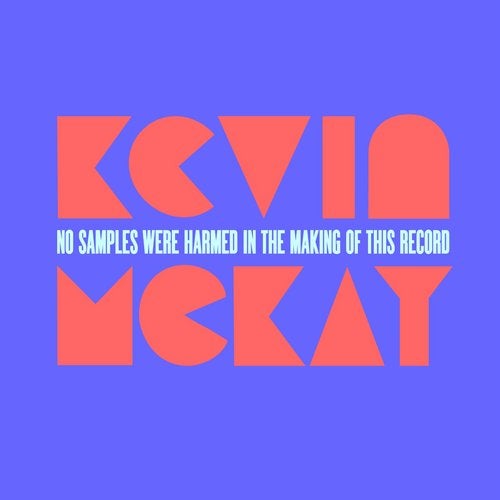
Let’s Dance – Kevin McKay: No Samples Were Harmed In The Making Of This Record (Glasgow Underground)

reviewed by Ben Hogwood

What’s the story?

Traditionally dance music has paid homage to its heroes through the sample rather than the cover version. DJs and producers have tended to use material from the originals, from complete chunks right down to the bare hi-hats, updating them for current and future dancefloors. This has often carried baggage, however, in the time spent clearing samples from their original owners and with money often having to be exchanged prior to the tracks being released.

Glasgow Underground owner Kevin McKay has taken a different approach. Removing the problem stage at a stroke, he releases an album of 14 choice house and disco covers without sampling a single note. The first fruits of this fresh angle were a joint cover with David Penn of Randy Crawford’s Hallelujah in May, followed by a take on Whitney Houston’s Million Dollar Bill in June – and now we have these freshly minted covers to enjoy as an album.

What’s the music like?

Excellent. McKay’s approach works really well, giving us new dancefloor winners but also letting us here the originals in a different light, showing us just how good they really are. The hand-picked vocalists deliver, so much so you can often sense them literally throwing their hands to the sky.

“You blow my troubles away like the winds of autumn”, goes the vocal on Hallelujah, and it’s difficult not to agree when the gospel chorus kicks in afterwards. This is arguably the pick of the tracks, though several run it close. Such A Good Feeling benefits from Joshwa’s excellent contribution, throwing off its cares completely, while the way McKay brings in the piano riff for a cover of XpansionsMove Your Body is also a thrill.

Elsewhere the version of I Got The Feeling is a Nile Rodgers-influenced high, while Million Dollar Bill is brilliantly executed, with disco bounce and classy keyboards. This track was made with Start The Party, who McKay also enlists for the immortal Donna Summer classic I Feel Love. A brave move, but he emerges intact with an excellent cover that doesn’t try to do to much with Moroder’s timeless source material.

Also well worth noting are a suitably deadpan cover of Technologic with Marco Anzalone – excellent cold bass sound here – and a well-judged version of A Deeper Love. Get Ur Freak On takes a while to get used to – the Missy Elliott original is so distinctive it’s odd to hear it done any other way – but the version of Paul Johnson’s Get Get Down, with Matt Fontaine, is spot on. That also applies for the final Start The Party collaboration, Don’t Leave Me This Way wrapping the collection up in style.

Does it all work?

Mostly. McKay has all the experience needed to make the dancefloor a heaving mass of bodies, and the vast majority of these tracks fit the blueprint comfortably. The music is at its best when disco meets house and throws in a few extras, and it is clear these covers are made with a true love of the music and its history.

Is it recommended?

Without hesitation. Who knew when it started in the late 1980s that dance music would be so durable and flexible? Albums like this only prove its longevity and continued ability to raise us from the doldrums.

Stream

Buy

You can buy No Samples Were Harmed… at Traxsource here

Live review – Jeremy Denk, CBSO / Gustavo Gimeno: Beethoven & Stravinsky

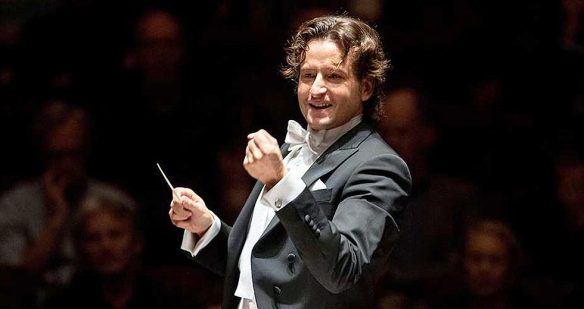
Jeremy Denk (piano, below), City of Birmingham Symphony Orchestra / Gustavo Gimeno (above)

Symphony Hall, Birmingham
Wednesday 20 November 2019 (2.15pm)

Beethoven
Egmont Op.84 – Overture (1810)
Piano Concerto no.3 in C minor Op.37 (1800, rev. 1803)
Stravinsky
Petrushka (1911, rev. 1947)

Written by Richard Whitehouse

Beethoven and Stravinsky might not be felt natural bedfellows (whatever the latter claimed in later life), but this afternoon’s concert with the City of Birmingham Symphony Orchestra and fast-rising conductor Gustavo Gimeno was evidently intent on demonstrating otherwise. The overture from Beethoven‘s music for Goethe’s play Egmont duly launched the programme in imposing fashion, Gimeno securing a trenchant while slightly inflexible response across the main Allegro, with no lack of rhythmic definition as held good during an incisive peroration.

If his Third Piano Concerto finds Beethoven more overtly indebted to Classical precedent, its palpable emotional breadth is a clear pointer to what lay ahead. As soloist, Jeremy Denk had the measure of the opening movement’s often abrupt alternation between imperiousness and intimacy – not least a probing take on the development with those eloquent woodwind contributions. If the cadenza was a shade too volatile in its later stages, the fateful emergence of the coda (timpani and strings) was suitably rapt in its intensity. Raptness was equally the watchword of the central Largo, Denk pointing up the stark contrast of his E flat entry then duetting blissfully with bassoon and flute in its transition to the main theme, but as the coda (seemingly) evanesces into silence a greater dynamic subtlety would have been welcome.

Interestingly, Denk supplied this in abundance at that mesmeric point in the finale when the rondo theme ventures into the major as if to goad the music back to the prevailing C minor. Elsewhere, this was an impetuous and assured account which reached its culmination with a heady solo transition into a coda that dispersed preceding tensions through its unchecked ebullience. Denk returned for an unlikely yet appealing encore – a paraphrase (his own?) on the Pilgrims’ Chorus from Wagner‘s Tannhauser as rapidly evolved into a full-blown rag.

Few British orchestras can have performed Stravinsky‘s early ballets with the frequency and consistency of the CBSO, which is not to suggest Gimeno was other than his own man in this reading of Petrushka – heard in its streamlined 1947 revision rather than the texturally more imaginative 1911 original (which this past nine decades the orchestra has only played under Pierre Boulez). Certainly the revision’s tendency to encourage a headlong and even ruthless approach was evident in an overly regimented take on the Russian Dance, the scene-setting that precedes it audibly lacking atmosphere, but thankfully not the central tableaux depicting Petrushka and the Blackamoor – the former as nervous and agitated as the latter was moody and, not least following the arrival of the Ballerina, ominous in its smouldering sexuality.

No less impressive were the surrounding evocations of the Shrovetide Fair – the latter with its various set-pieces vividly and tellingly characterized, on route to the sudden reappearance of the main protagonists then Petrushka’s death and ghostly apparition for what remain some of the composer’s most affecting pages. The stentorian trumpet writing was fearlessly delivered, and if those concluding pizzicato chords might have been more unanimous, it only marginally detracted from the conviction of what was a well conceived and finely executed performance.

This performance will be repeated at Symphony Hall, Birmingham, on Saturday 23 November at 7pm. For more details head to the CBSO website

Switched On – NETHERWORLD: Algida Bellezza (Glacial Movements)

reviewed by Ben Hogwood

What’s the story?

There is a deeply personal story behind the composition of Algida Bellezza. The man behind NETHERWORLD is the founder of Glacial Movements, Alessandro Tedeschi, and he wrote the core music of the album, which loosely translates as ‘frozen beauty’, in 2015. Each of the five ‘movements’ were born – literally – as he cradled his new daughter. In June 2019 the music was mixed and mastered by Tedeschi’s good friend, sound engineer Matteo Spinazzè Savaris – and the completed album ready for release.

As the cover would suggest it is a great example of Tedeschi’s chilly ambience, which this time takes the all-important Greenland sled dog as its principal focus. The titles of the five tracks all relate to a prominent species of the area – respectively Vulpes lagopus (Arctic Fox), Somniosus microcephalus (Greenland Shark), Orcinus orca (Orca), Monodon monoceros (Narwhal) and Ursus maritimus (Polar Bear).

What’s the music like?

Tedeschi has a way of working that is both ambient but incredibly intense too. The five soundscapes here are characterised by thick textures that resemble weather systems, each putting forward prominent melodic features that work in slowly orbiting loops.

Vulpes lagopus is large in scope, the arctic fox taking very slow, recurring musical breaths, establishing ‘D’ as a tonal base but allowing for other thoughts too. Somniosus microcephalus is almost claustrophobic, its profile like that of a big ocean liner or an incredibly dense cloud with small musical points of reference to hang on to. It effectively wraps the listener in a comforting swathe of cotton wool.

Orcinus orca captures the good and the bad of the killer whale, the passage of a large body expertly portrayed but also its foreboding and potentially inflammatory nature. Monodon monoceros – like the narwhal it portrays – is slower and gentler, the music dominated by soft minor key chords.

Finally Ursus maritimus matches the white of the polar bear, with a lovely sound the listener can really dive into. Tedeschi uses a big bass drum and cymbal effect akin to large waves crashing in the near foreground, before the music settles onto a long sustained note and ultimately settles to rest – even hibernation.

Does it all work?

Yes. Tedeschi brings remarkable depth to his compositions, a blend of easy on the ear ambience and cautionary harmonies that imply everything on the surface is not as comfortable as it seems. This is cold, wintry music that moves slowly, best summarised in visual terms like an icebreaker in the Antarctic – but also managing to portray the five different species in the track titles.

Knowing of Tedeschi’s connection to his little girl only heightens the emotional impact of the music.

Is it recommended?

Yes. Despite its difficult title, Algida Bellezza is typical of Glacial Movements’ output. It works for listeners approaching it from the electronic side but also the classical, where listeners will appreciate the natural, stately development of its ideas. Crucially it is also incredibly ambient and immersive!

Stream

Buy

Switched On – Quarion: Shades (Drumpoet Community)

reviewed by Ben Hogwood

What’s the story?

Music and colour have a strong relationship of course, one that has been incredibly productive over the years – and which really came to the fore in early 20th century classical music. The bond has remained strong, particularly in electronic music with use of lights and images. It is not a great surprise, then, to find the likes of Quarion – aka Yanneck Salvo – exploiting the connection with an album of different shades. Getting the music to accurately represent a colour, however, is a harder task.

Initially Shades began as a series of EPs but soon outgrew the concept, meaning Quarion’s previously lauded single releases could be knitted together as an album and combined with a few more experimental tracks.

What’s the music like?

The icy washes of Turquoise (’99 til Infinity) begin Shades with a glacial calm, but it’s not long until Indigo (Aries) asserts a rhythm-based presence, with bleeps and percussion that suggest a Detroit influence.

Shades then shows itself to be a really strong albums of tracks that stand as well on their own two feet as they do in the longer playing context. Cobalt is excellent, and is ideally complemented by the beatless Ultramarine. Azure (Émotion), a collaboration with Ripperton, is notable for its subtle layering, while Sapphire lays more acidic squiggles into the electronic mix.

As you might expect Teal allows you to dive deep into lush, exotic textures, while Cerulean is nicely done, with attractive melodic lines and deep beats. Three of the longer tracks are over eight minutes but pass in a flash – Indigo (Aries), Cobalt (Plains) and Azure (Émotion) all develop with an impressive and compelling command of structure.

Blue is definitely the implied colour here, but there are many shades that are beautifully interwoven by Quarion’s craft.

Does it all work?

Yes, and it all feels natural too. The colours and the music behind them are strong matches, and the move between the tougher, more acidic beats and atmospheric washes of sound means that Shades embraces light and dark ends of the spectrum with ease.

Is it recommended?

Yes, strongly. In an age where some seem determined to turn their back on the album format for playlists, while others celebrate the format anew, it is a real plus to see Quarion embracing the format for all its strengths, and putting together such a coherent and ultimately danceable piece of work. From happy experience, Shades is a record that repays many repeated hearings. Ultimately it proves that even if you have been making music at the top level since 2006, as Salvo has, it’s never too late for an album!

Stream

Buy